
Real money pokies on Android in Australia: what an offshore app is, what it isn’t, and what it costs
If an Android phone in Australia can install a real-money pokies app, the question worth asking first is what kind of app it actually is. The short answer shapes everything that follows. The “real money” part is the easy half: an offshore casino app takes a deposit, plays a digital slot, and pays out through a method the app names. The hard part is everything around it. No state or territory in Australia licenses an online casino to offer real-money pokies to a person on Australian soil, and the Australian Communications and Media Authority has spent years saying so in writing. An app that advertises “real money pokies” to an Australian punter is, by definition, not licensed for that punter.
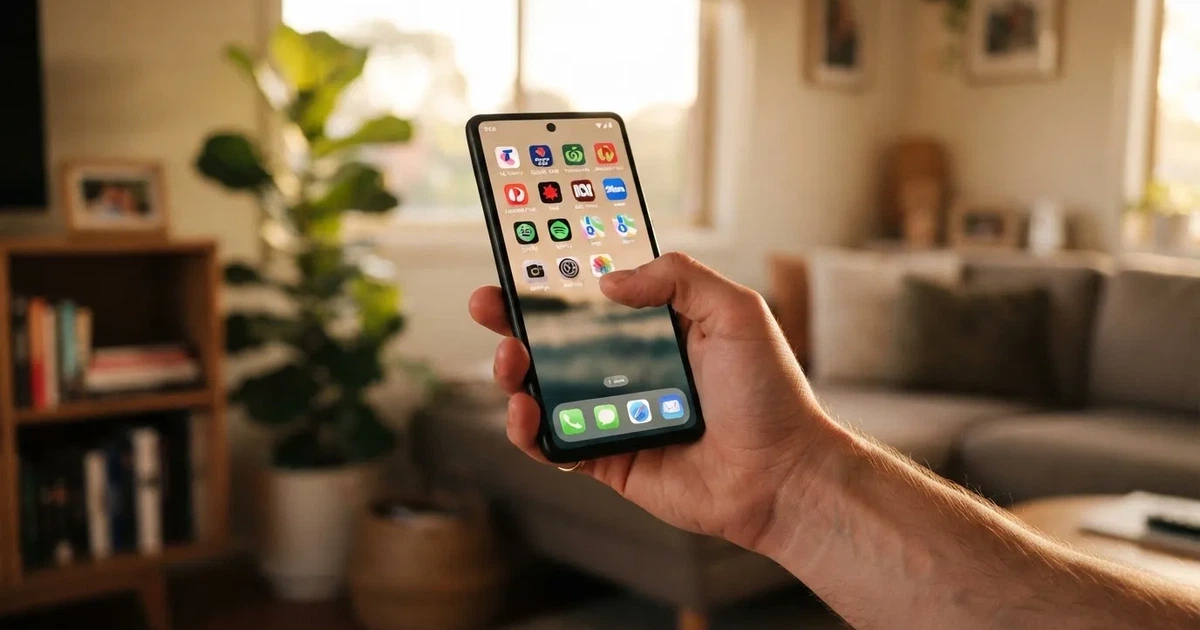
This page sets out how such apps behave on Android, what protections an Australian player keeps and which ones they give up, and what the regulator has been doing about the brands most heavily advertised. The angle throughout is cost — not the dollar cost alone, but the cost in protection, recourse and legal position that an Australian accepts by installing one.
Current as of 28 September 2026; operator and licence claims verified against the ACMA’s published formal warnings and blocklists.
Table of Contents
- Responsible play comes before any app download
- How an Android pokies app actually behaves on the phone
- The legal prohibition Australians actually face
- What an Australian gives up by going offshore
- Payment, withdrawal and verification: the casino’s terms versus the player’s
- The ACMA’s formal warnings, block by block
- Operator-by-operator: what the warnings actually mean
- The blocking rate, put into context
- Frequently asked questions
Responsible play comes before any app download
A real-money pokies app, whether it sits on a phone or a desktop, takes money from a person who, on most machines, will lose most of it over time. The maths is not subtle. Across roughly 195,000 poker machines operating in licensed Australian venues, the legal minimum return-to-player ranges from 85% to 90% depending on the state — meaning the machine keeps between ten and fifteen cents in every dollar wagered over its life. Offline, that ten to fifteen cents is a tax with a paper trail, a venue licence, and a regulator attached to it. Online, through an offshore app, the same percentage house edge exists, but the licence and the regulator do not.

Before going further, the practical support services an Australian has are worth naming once, up front. The National Gambling Helpline on 1800 858 858 is free, 24/7 and staffed by counsellors. Gambling Help Online runs live chat and email counselling around the clock. BetStop, the National Self-Exclusion Register, has been live since August 2023 and binds every Australian-licensed wagering operator to honour an exclusion request — but only those licensed operators. An offshore casino is not connected to BetStop, and an exclusion set on BetStop does not reach into an app downloaded from a third-party store or sideloaded as an APK. Anyone who finds themselves opening a pokies app to chase a loss, or spending more than they meant to, will get more from a call to that helpline than from any comparison of apps.
That ordering matters, because the rest of this page describes the market. It does not persuade anyone to enter it.
How an Android pokies app actually behaves on the phone
The “app” in such an offer is a small piece of software, usually built for Android using a cross-platform wrapper, that the user installs and then opens to find a lobby of slot games, a cashier, an account page and a button to contact support. Mechanically it is not very different from a sports-betting app — same login screen, same deposit flow, same “My Account” panel — but the games inside it are digital versions of slot machines rather than betting markets.
The technical shape is consistent across the brands the ACMA has acted against. The app typically asks for a long list of Android permissions before first launch: storage access to read media files, network access for the casino’s backend, often location, sometimes the camera (for an account-verification photo), and on phones running older Android versions, full SMS read access — used for one-time codes during sign-in. A pokies app has no honest reason to read the SMS inbox, but the verification flow on some offshore sites still works that way. Permission to overlay other apps is rarer but does appear; it lets a casino push a notification on top of another app when a “bonus” is offered, which is a marketing pattern the user cannot easily switch off once granted.
The interface itself mirrors a desktop lobby: featured games at the top, a search bar, a long alphabetical tail, jackpots highlighted in their own section, and a banker-style “live wins” ticker that updates in real time. The ticker is a piece of marketing fiction — a casino showing other players’ recent wins, which it has every reason to over-represent. A pokies game’s actual outcome is decided by a random number generator that the player cannot see, and the ticker’s job is to suggest momentum where none exists. It is a “feature” worth naming for what it is.
Games run full-screen on a touch display. A spin takes one tap; the reels settle in two or three seconds; the result, win or loss, is added to the balance and the next spin is one tap away. The cadence is fast — markedly faster than a physical poker machine, where inserting notes or tickets and waiting for animations slows the rhythm down. Research on poker machines has long pointed to event frequency as a driver of how much gets wagered per hour; an app on a phone, with no physical handling and no time pressure beyond the player’s own thumb, sits at the fast end of that range. It is exactly the cadence that produces a high hourly cost.
The “free Aristocrat pokies” apps that turn up in searches are a different object. Aristocrat Leisure Limited is an Australian slot-machine manufacturer whose games — Buffalo, 50 Lions, Big Red, Queen of the Nile — appear on physical machines in pubs and clubs around the country. Apps that claim to be “Aristocrat pokies” or “free Aristocrat slots” outside the licensed venue environment are not made or licensed by Aristocrat for Australian players. Some use Aristocrat’s game artwork without permission; some use similar-looking games from other studios; some are social-casino apps that pay nothing at all and exist to harvest data. The presence of a familiar name on a casino app does not mean Aristocrat made it, licensed it, or has any relationship to it. Aristocrat’s online operations are routed through its subsidiaries and licensed platforms, none of which are approved to offer real-money play in Australia.
Free-play apps are also the route by which some operators move a player from no-money play to real-money play. The pattern is familiar: a social casino app with virtual coins runs banner ads for a sister real-money brand, or sends an email once a player has spent enough time in the free app offering “real prizes this time.” The free app’s purpose, in those cases, is to build a list of players who already play pokies on their phone.
The legal prohibition Australians actually face
Australia’s position on online casino games is unusually clear and unusually hard to get around. The Interactive Gambling Act 2001, tightened by the Interactive Gambling Amendment Act 2017, makes it an offence to provide online casino games, online pokies or in-play betting to a person physically in Australia. The Act does not target the individual player — no Australian has been prosecuted for placing a bet — but it does target the provider, which is why the operator behind an offshore app faces the ACMA and not the player.
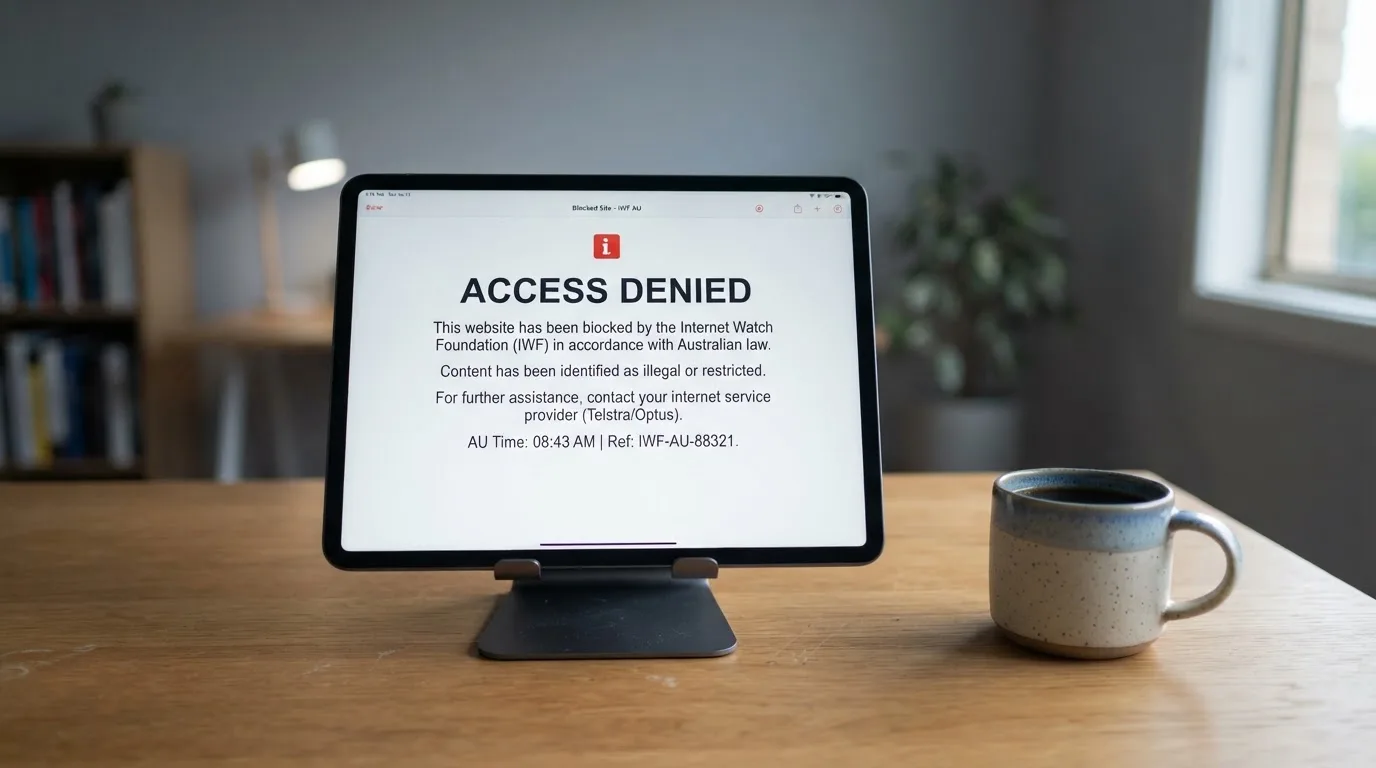
The carve-outs are narrow and worth listing because they are the only gambling services an Australian can use online legally. Wagering on a race or sporting event placed before the event starts is allowed, provided the wagering operator holds an Australian licence. Lotteries are allowed, and keno, in the jurisdictions that run them. Online casino games — pokies, blackjack, baccarat, roulette — are not on the list, in any state or territory, no matter which offshore licence the casino displays on its website.
The licensing framework that does exist has a quirk the ACMA’s critics often raise. The Northern Territory Racing and Wagering Commission regulates 52 of Australia’s online bookmakers, including Sportsbet, Bet365 and Ladbrokes, through a single part-time body. The commission has no full-time staff and meets once a month in Darwin. The fact that licensed Australian wagering is overseen by a commission that meets monthly is not a reason to treat an offshore casino as safer; it is a reason to read the Australian wagering market on its own terms and to understand that no equivalent regulatory body exists for online casino play, because no equivalent licence exists to grant.
What this means for an Android pokies app is straightforward. If the app is offered by an offshore operator and takes real money from a person in Australia for online pokies, it is providing a prohibited interactive gambling service. The “licensed in Curaçao” or “licensed in Anjouan” line at the bottom of the casino’s homepage is a statement about the regulator that issued the licence, not a statement about Australian law. No offshore licence authorises that casino to take bets from Australia, and an Australian does not gain consumer protection from a Curaçao licence when the underlying transaction is illegal in Australia in the first place.
Enforcement runs through three channels. The ACMA investigates suspected breaches, issues formal warnings naming the operator and the breach, and can ask the Federal Court to direct Australian internet service providers to block the offending sites. As of June 2026, the ACMA had directed ISPs to block 1,751 illegal gambling and affiliate marketing websites since the first such request in November 2019, and more than 230 unlicensed gambling services had left the Australian market since the regime was strengthened in 2017. The pace has not slowed. A blocking round reported on 26 June 2026 added twelve more names: 7Signs, ChromaBet, Donbet, Duospin, Freshbet, Slots Gem, Jacks Club, Lucky Start, Pointsbetz, Spinrise, Vinyl Casino and Wildsino. A player who has installed an app, deposited with it, and finds it blocked from Australian internet the next day will find their balance inside the app — accessible technically, but with the operator already under notice and withdrawal outcomes uncertain.
The 2026 reform wave is worth knowing about, even though its most consequential provisions are not yet in force. The Interactive Gambling Amendment (Gambling Reform) Bill 2026 passed Parliament on 19 August 2026, and its advertising and inducement measures commence on 1 January 2027. As of the current year, those rules are law with a start date, not law in operation. An Australian who sees a banner or an influencer promoting a real-money pokies app today is being advertised to under the older, weaker rules; from January 2027 the inducement regime bites, with penalties attached. The Bill does not legalise online casino games, and it does not change the underlying prohibition. It tightens the marketing around it.
What an Australian gives up by going offshore
The mechanics of prohibition matter less to a player than the practical consequences. The Act targets providers, but the player is the one who lives with the consequences of an offshore relationship. Four of them come up over and over.
No Australian consumer protection. An offshore casino is not subject to the Australian Consumer Law, the ePayments Code, or any Australian dispute resolution scheme. If the casino refuses a withdrawal, voids winnings it claims were won under a bonus condition the player never saw, or simply closes the account, the player has no Australian body to complain to. The Curaçao Gaming Control Board and the Anjouan regulator exist, and they do handle complaints, but the process is slower, the remedies smaller, and the threshold for non-cooperation effectively zero.
No BetStop coverage. BetStop has been live since August 2023 and binds every Australian-licensed wagering operator. A person who self-excludes through BetStop is excluded across every Australian wagering site for a chosen period. An offshore casino is not on BetStop, and the exclusion does not reach into it. Self-exclusion is one of the more effective harm-reduction tools available; an offshore app defeats it by design.
Credit-card and crypto bans do not apply. Since 11 June 2024, credit cards, credit-related products and digital currency have been banned as payment for licensed online wagering in Australia, with penalties up to A$247,500 for an operator that takes them. An offshore casino is not bound by this rule. The same app that an Australian cannot fund with a credit card on a licensed wagering site will happily take one through its offshore cashier. That the payment is accepted is itself a sign of where the operator sits.
Withdrawal risk. The single most common complaint about offshore casinos, by a wide margin in player forums and dispute records, is delayed or refused withdrawals. The pattern is consistent: a player wins, requests a withdrawal, and is asked for new verification documents — utility bills, source-of-funds declarations, additional photo ID — that the casino could have requested at deposit but did not. The verification stage is where the operator can stall indefinitely, and an Australian has no regulator with leverage to speed it up. A balance blocked by ISP blocking, on top of a stalled verification, is a position no Australian consumer protection regime can resolve.
Tax treatment is the one piece of welcome news. Recreational gambling winnings are not assessable income in Australia, and losses are not deductible, unless the person is carrying on a business of gambling. The Australian Taxation Office’s position is that an occasional punter does not need to declare winnings and cannot claim losses against other income. The model in research is explicit: a recreational player does not owe tax on a pokies win, but should check with the ATO if the activity has any of the features of a business.
Payment, withdrawal and verification: the casino’s terms versus the player’s
The way an offshore casino actually handles money on Android is the part of the offer the marketing underplays, and it is worth spelling out.
Deposits on a licensed Australian wagering site run through debit card, bank transfer, PayID/Osko or BPAY. Each leaves an Australian bank record and is subject to Australian financial dispute rules. The same cashier at an offshore casino may offer all four of those plus e-wallets (Skrill, Neteller, MiFinity), prepaid vouchers (Paysafecard), credit cards the Australian operator would refuse, and a selection of cryptocurrencies. The longer the list of accepted methods, the more clearly the casino is operating outside the Australian rules — a sign that is normally framed as a feature.
Withdrawals are slower than deposits, almost by design. The marketing says “instant deposits”; the small print names a “pending period” of 24 to 72 hours during which the casino can review the request. After that, bank transfer takes three to five business days, an e-wallet one to three, and a crypto withdrawal is fast once the pending period ends. A player who treats “instant” as instant loses the pending period every time.
Verification is where the operator’s terms meet the player’s documents. A casino that takes a deposit on day one without verifying identity, then asks for a passport scan, a utility bill and a photograph of the card used to deposit when the player asks to withdraw, is operating to a standard the player accepted by signing up. Reading the terms before depositing is the only protection that exists; the ACMA does not negotiate withdrawals on an Australian’s behalf. The argument that “the casino will pay out if I’m patient” is the argument of a person who has not yet had a withdrawal refused.
The single clearest signal that an offshore casino is one to avoid is a bonus structure with a heavy wagering multiple and a maximum cashout. Where an Australian operator is forbidden from offering inducements that the new 2026 regime will further restrict, an offshore casino’s welcome package typically carries a wagering multiple of 35 to 50 times the bonus, a maximum bet per spin during the wagering period, a list of games that count at a reduced rate, and a maximum cashout from the bonus that bears no relation to the headline figure. The arithmetic on these offers is brutal and is covered in detail on the comparison page that follows. The headline number — “A$1,500 plus 200 free spins” — bears no relationship to what the player actually receives, and reading the small print is the only way to find out what it does.
The ACMA’s formal warnings, block by block
The ACMA’s enforcement file is the most concrete record an Australian has of which operators the regulator has acted against. The list below covers the eleven brands that appear most often in Australian-facing pokies marketing and the formal warning issued for each. It is not a ranking and not a recommendation; it is the regulator’s own record, transcribed for a reader who needs to know which brands have been named, by whom, and when.
| Brand | ACMA action and date | Operator named by the ACMA | Subject support |
|---|---|---|---|
| RocketPlay | Formal warning, March 2026; earlier Dama N.V. warning, May 2022 | Pulsup Ltd | — |
| Level Up Casino | Formal warning, May 2022 | Dama N.V. | Listed by game aggregators (BGaming) |
| Woo Casino | Formal warning, March 2025 | Dama N.V. | — |
| Spirit Casino | Formal warning, May 2025 | Dama N.V. | — |
| National Casino | Formal warning, July 2025 | Consolutetish S.R.L. | Listed in public game directories |
| Bizzo Casino | Formal warning, July 2025; earlier TechSolutions warning, 2022 | Consolutetish S.R.L. | — |
| Ignition Casino | Formal warning, July 2025 | Bamboo Media | — |
| Instant Casino | Formal warning, February 2025 | EOD Code SRL | — |
| Jackbit | Formal warning, April 2026 | Ryker B.V. | — |
| Casino Intense | Formal warning, April 2025 | Sterplay Holding Ltd | Listed by Australian media coverage |
| Sky Crown | Formal warning, September 2022 | Hollycorn N.V. | — |
Each row is one regulator’s word against one operator’s marketing. The shape of the table — formal warning after formal warning, against operator after operator — is itself the information. The ACMA has not had to reach the Federal Court blocking stage for most of these; a formal warning is the regulator’s first step, and the operator’s compliance record after the warning is what determines whether the next step is a block. An Australian reading this table is not reading an indictment; they are reading an enforcement record.
Operator-by-operator: what the warnings actually mean
RocketPlay
RocketPlay is the brand for which the ACMA issued the most recent formal warning on the list, in March 2026, naming Pulsup Ltd as the operator. It had earlier appeared in a May 2022 warning that the ACMA issued to Dama N.V. covering six casino brands at once. The two operators are different legal entities; the brand has moved between them. RocketPlay has no Australian licence; it offers online casino games including pokies, which is the prohibited service that triggered the warning. The page’s verdict: a brand whose operator history the ACMA has had to address twice in four years is a brand on which the regulator has already spent the goodwill it had. Whatever welcome bonus the marketing names is being offered by a casino that the Australian regulator has formally told to stop.
Level Up Casino
Level Up Casino was named in the same May 2022 Dama N.V. warning as five other brands. The game library is supplied in part by BGaming, a studio whose titles appear on the brand’s listings, which is the only verifiable point of contact with the wider industry; the studio’s involvement does not give the casino an Australian licence. An Australian considering this brand is considering one the ACMA named in its first major formal warning round against offshore operators. This is a brand that appeared on the regulator’s early warning list and has since remained in the market despite clear enforcement.
Woo Casino
Woo Casino received a fresh formal warning from the ACMA in March 2025, again naming Dama N.V. as the operator. The pattern is the same as RocketPlay: an earlier omnibus warning in 2022, then a fresh individual warning three years later. The repeat warning is the regulator’s signal that the brand did not change its behaviour after the first letter. The page’s verdict: a second formal warning carries more weight than a first, because the regulator has documented that the operator knew about the breach and continued. For a player weighing a “we accept Australian players” footer against that record, the scale tips toward the regulator.
Spirit Casino
Spirit Casino received a formal warning in May 2025, again with Dama N.V. as the named operator. The brand is one of three (RocketPlay, Woo Casino, Spirit Casino) associated with the same operator entity, each with its own warning. The clustering is itself a data point: an operator running multiple brands through a single corporate structure is not three separate operators for the regulator’s purposes; it is one operator running three front doors. The page’s verdict: one operator, three warnings. The marketing gives the brands different names and different themes; the regulator has treated them as one.
National Casino
National Casino received a formal warning in July 2025 with Consolutetish S.R.L. named as the operator. The brand appears in public game directories, which is the only verifiable point of contact with the wider industry; the brand’s “we are licensed and regulated” footer does not extend to Australia, and the ACMA has explicitly said so. The page’s verdict: a brand whose only Australian-facing regulator action is a recent formal warning is a brand the regulator has named within the last twelve months. The currency of the warning matters; older warnings can be argued to have been “addressed”; 2025 warnings cannot.
Bizzo Casino
Bizzo Casino received a formal warning in July 2025 with Consolutetish S.R.L. named as the operator, the same entity as National Casino. It had also been the subject of a 2022 formal warning to TechSolutions (CY) Group Limited and TechSolutions Group N.V. — meaning the brand has been warned twice, under two different operating companies. The page’s verdict: a brand that has cycled through two corporate parents and received a formal warning under each is a brand that the regulator’s record treats as persistent. A player who takes “different operator, different brand” as a fresh start is reading the regulator’s record the wrong way around.
Ignition Casino
Ignition Casino received a formal warning in July 2025 with Bamboo Media named as the operator. The brand is one of the more heavily advertised names in offshore poker and casino marketing targeting Australian traffic. No verifiable point of contact with the wider game-supply industry is recorded. It is a brand whose visibility and legal status simply do not align, relying on marketing reach rather than a secure regulatory standing in this country.
Instant Casino
Instant Casino received a formal warning in February 2025 with EOD Code SRL named as the operator. The brand is one of the more aggressive advertisers on Australian-facing traffic, with paid search and influencer marketing as its main acquisition channels. The page’s verdict: an aggressively marketed brand that has already received a formal warning is a brand the regulator has named in writing within the last eighteen months. The marketing spend does not address the warning; the warning addresses the marketing.
Jackbit
Jackbit received a formal warning in April 2026 with Ryker B.V. named as the operator. The brand sits at the crypto-friendly end of the offshore market, with Bitcoin, Ethereum and a long tail of altcoins accepted at the cashier. Australian rules ban digital currency as a payment for licensed wagering; an offshore casino accepting crypto is operating outside that frame. The page’s verdict: a crypto-first casino is the exact operator type the Australian payment ban was drafted against. An Australian depositing Bitcoin into Jackbit is paying through a method that licensed Australian wagering is not allowed to accept, and that is the cleanest single signal of where the operator sits.
Casino Intense
Casino Intense received a formal warning in April 2025 with Sterplay Holding Ltd named as the operator. The brand has been covered in Australian media and named in regulator publications, which is the only verifiable record of contact with the wider market. The page’s verdict: a brand whose Australian footprint is media coverage and an ACMA warning has not built a position in the market through product or reputation — it has built it through acquisition channels that an Australian reader is now seeing.
Sky Crown
Sky Crown was named in a formal warning by the ACMA, with Hollycorn N.V. as the operator, in September 2022. It is one of the older entries on this list. The page’s verdict: a 2022 warning is older than most of the others, but a formal warning is not time-limited. The operator did not contest the warning at the time, and the regulator’s record stands. A reader who treats a 2022 warning as “out of date” is reading the regulator’s record the way an affiliate page would prefer it read.
The blocking rate, put into context
The ACMA’s published figure — 1,751 illegal gambling and affiliate marketing websites blocked since November 2019 — is one number that does a lot of work in this market. Reading it as a flat count understates the pace; reading it as a rate overstates what it includes. The honest reading is a band.
Drawn out from November 2019 through the June 2026 reporting round, the running total sits at roughly 270 blocks per year on average across the full period. The early years were quieter and the recent rounds are heavier, so the trailing rate over the last two reporting cycles is higher than the long-run average. A reader who wants a current pace is looking at well over 300 per year on a trailing basis, while a reader who wants a full-history average is looking at the lower number. Both are true; the band runs from about 270 to 350 per year, depending on whether the window is full history or trailing. Neither figure includes the affiliate marketing sites that were blocked alongside the casinos themselves — the ACMA counts both in the same total, and breaking them out is not something the published figures allow.
The point of the band is not the precision; it is what the band is doing. The regulator has been blocking illegal gambling sites at a sustained pace for almost seven years and the pace has not slowed. A brand that is not on the list today can be on it within a quarter; an Australian with a balance inside a newly blocked site is in exactly the position the blocking regime was built to produce.
Frequently asked questions
Can a real-money pokies app actually be downloaded through the Google Play Store in Australia?
No. Google Play’s policies prohibit apps that facilitate online gambling in jurisdictions where it is illegal, and Australia is one of them. Real-money casino and pokies apps targeting Australian players are not available through Google Play. Any “Play Store download” an Australian sees advertised is either a social casino app with no real-money play, a misleading install flow that redirects to an APK, or an affiliate page dressed up to look like the Play Store.
Is sideloading a real-money pokies APK onto an Android phone something Australians can legally do?
Sideloading — installing an APK from outside the Play Store — is technically possible on Android and is not itself illegal in Australia. The activity that is illegal is the offshore casino providing online pokies to a person in Australia, which the casino is doing whether the player installs the app from a store or sideloads it. The player is not the target of the law, but is also not protected by it, and the APK itself is a piece of software from an unregulated provider running with extensive permissions on a personal device.
How does a free Aristocrat-style pokies app differ from one that claims real-money play?
Aristocrat Leisure is the Australian slot-machine manufacturer behind games like Buffalo, Big Red and Queen of the Nile. A free Aristocrat-style app outside a licensed venue is almost never made or licensed by Aristocrat for Australian players; it is either a social-casino app with virtual coins, a game using Aristocrat’s artwork without permission, or a marketing funnel toward a sister real-money brand. Aristocrat’s own online operations run through licensed subsidiaries in jurisdictions where online casino is legal, none of which include Australia for real-money play.
What permissions does a real-money pokies app typically ask for on an Android phone?
The standard list is storage, network access, location, and the camera. Older apps may request SMS read access, used for verification codes at sign-in. Less common but worth watching for: overlay permission, which lets the casino push notifications on top of other apps, and accessibility service access, which is overreach for any pokies app. A player who has not read the permission list before tapping “install” is the player the marketing is written for.
Why would an app be advertised as “download for Android” rather than just playable in a browser?
Three reasons. First, an installed app gives the casino a permanent icon on the home screen and a push-notification channel, which a browser tab does not. Second, an installed app can be configured to bypass some of the ACMA’s ISP-level blocks by switching to a different domain or to a dedicated IP. Third, the app frame lets the casino request permissions a browser cannot. The browser-based version of the same casino is usually available at a different URL and is functionally identical.
What should someone check before trusting an app’s claim to pay real money on Android?
The honest checklist is short and most items on it are negative. Is the casino licensed by an Australian regulator for online casino games? No — none are, because none can be. Is the casino on the ACMA’s current blocklist or the subject of a formal warning? Check the ACMA’s published list. Does the cashier accept credit cards or cryptocurrency for an Australian player? If yes, the casino is operating outside the Australian rules, because licensed wagering has been banned from accepting either since 11 June 2024. Does the withdrawal process have a pending period, a maximum cashout on bonus winnings, and a wagering multiple above 35x? If yes, the headline bonus number is a marketing word, not a payout. The single most useful test is the last: read the small print before the deposit, not after the loss.