
Bitcoin pokies in Australia 2026: offshore access, ACMA action, and the real cost of crypto deposits
 Available in US
Australians asking whether they can play pokies with bitcoin usually arrive at the same two answers. The first, repeated across affiliate pages, says yes: open a wallet, choose a coin, spin. The second, written into the Interactive Gambling Act 2001, says no online casino or pokie can lawfully be supplied to a person in Australia, regardless of the currency used. Both statements can be true at once, and the page below is written from the second one.
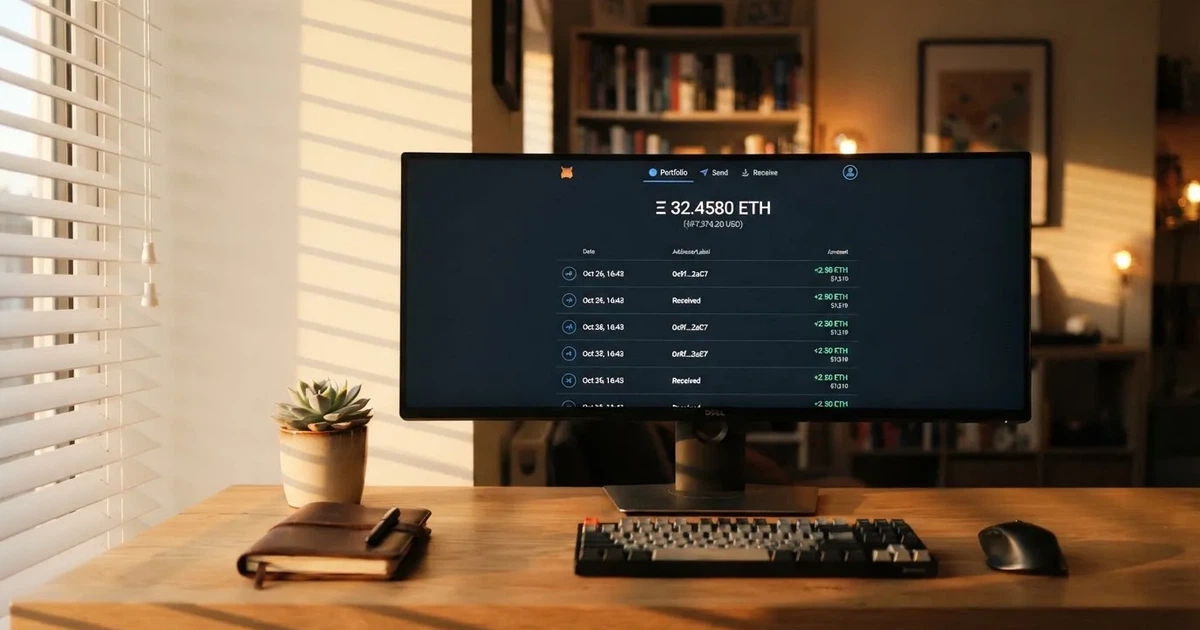
The reason a reader searching for this topic deserves that framing is straightforward. Cryptocurrency changes how money moves into a site; it does not change what that site is allowed to do under Australian law. Where the law and the marketing diverge, the divergence is what costs the punter. That cost runs in three places a reader can actually feel: the regulator’s reach, the tax treatment of the asset, and the absence of any local complaint path when a payout stalls. Each is treated at depth in the sections that follow.
The data here is current as of 23 September 2026 and was checked against the ACMA’s published blocking list and formal-warning register.
Table of Contents
- Responsible gambling in the Bitcoin pokies context
- Crypto and anonymity: what bitcoin actually buys a punter
- How the Bitcoin pokies ranking is put together
- Bitcoin pokies in Australia: the lay of the land
- The ACMA’s blocking rate, in one calculation
- Legality and regulation: the IGA in plain language
- RocketPlay
- Level Up Casino
- Woo Casino
- Spirit Casino
- National Casino
- Bizzo Casino
- Ignition Casino
- Instant Casino
- Jackbit
- Casino Intense
- Sky Crown
- What this leaves a punter to decide
- Frequently asked questions
Responsible gambling in the Bitcoin pokies context
Responsible-gambling support in Australia is built around Australian-licensed wagering services. BetStop, the National Self-Exclusion Register, has been live since August 2023 and binds every Australian-licensed online and phone wagering operator. Offshore Bitcoin pokie sites are not connected to it; a self-exclusion lodged with BetStop does not close an account at any of the brands reviewed below, and it does not stop a wallet-to-wallet transfer. For a punter trying to control spend, the practical toolset lives elsewhere.

The National Gambling Helpline, 1800 858 858, is free, available 24/7 and routes callers to Gambling Help Online, where live chat and callback are available. Each state and territory runs its own face-to-face counselling service; Gambling Help Online carries the directory. None of these services depend on which account a punter holds or which coin was used to fund it. That is their value, and it is also why they apply whether a player bets with a debit card at a licensed bookmaker or with bitcoin at an offshore casino.
For a punter trying to block themselves from offshore crypto sites specifically, the practical route is a different one. BetStop cannot do it. The honest options are wallet-level controls (some self-custody wallets support per-address spending caps) and the harder route of asking a partner or family member to hold the seed phrase. The latter is the one that works for the punter who has tried the rest; a friend holding a wallet’s seed phrase is the closest an Australian punter gets to a BetStop-grade exclusion on an offshore Bitcoin site, and it is the right step to take before any of the brands reviewed later in this article get a deposit.
The limits to note: BetStop exclusions are not honoured by offshore sites, and offshore sites are not required to run affordability checks, offer deposit limits or display problem-gambling messaging in the Australian format. The site’s own controls, where they exist, are the only ones that apply. That is a meaningful gap in the safety net, and it is the gap that makes the next section on crypto and anonymity worth reading carefully.
Crypto and anonymity: what bitcoin actually buys a punter
The marketing of Bitcoin pokies leans on two words: bitcoin and anonymous. Each of them does some work, and neither of them does as much work as the marketing suggests.

How Bitcoin works at the deposit screen
A Bitcoin transaction is a signed message on a public ledger. To receive it, the punter generates a Bitcoin address — a short string of letters and numbers — and gives it to the casino’s cashier page. Once the punter’s wallet broadcasts a payment to that address, it sits in the network’s mempool until a miner includes it in a block. Each new block is added to the chain roughly every ten minutes on average, but the discovery is probabilistic: a confirmation can arrive in one minute or in several hours, with no guaranteed minimum or maximum. A casino that credits deposits after one confirmation accepts the payment quickly; a casino that waits for three or six confirmations makes the punter wait for the network rather than the cashier.
For the punter, three things follow from that design. First, a Bitcoin address is reusable but not anonymous by default. Anyone who can link a real-world identity to one address can follow the rest of the chain from it, and most fiat on-ramps in Australia are required to collect that identity under the AML/CTF Act. Second, every block is public, so the deposit, the wager and the payout all sit on a ledger anyone can read in perpetuity. Third, the casino that receives the payment sees only the address, not the punter’s name, until the punter supplies it at withdrawal — at which point a withdrawal back to fiat requires the same identity checks the on-ramp did, plus a fresh round of sanctions screening.
Why “anonymous” is a marketing word, not a description
“Anonymous play” is the phrase Bitcoin pokie affiliates lean on, and it is the phrase that needs puncturing. Three reasons:
- The blockchain is a public ledger. A punter’s deposit address, the casino’s receiving address, and the change address the punter’s wallet generates are all visible to anyone with the address. Tools used by chain-analysis firms — and increasingly by regulators — can cluster addresses, follow funds through mixers, and de-anonymise most flows with a high success rate over time.
- AUSTRAC registration is required of any business offering digital currency exchange services to Australians. Since 31 March 2026, that registration extends to crypto-to-crypto exchanges, custody providers and stablecoin issuers. AUSTRAC-registered exchanges are required to collect identifying information under the AML/CTF Act, which means the fiat on-ramp and off-ramp — where a punter actually touches the banking system — collect the identity the blockchain does not.
- The casino still needs to verify the punter before paying out. The “no KYC” claim in crypto casino marketing usually means the casino defers KYC until withdrawal, not that it does without it. A punter who wins at an offshore site and tries to move a large balance back to a bank account will meet the same identity checks as at any licensed venue.
The conclusion a reader can take from this: bitcoin changes the shape of the payment trail, not its existence. The trail still leads back through exchanges, wallets and counterparties who keep records, and the trail is the same one any payout in any currency follows.
Bitcoin Cash, Ethereum and the wider coin list
Most Bitcoin pokie sites accept more than Bitcoin, and the differences matter at the cashier but not at the regulator. Bitcoin Cash launched on 1 August 2017 as a hard fork at block height 478,558 and shares Bitcoin’s proof-of-work design; its larger block size lets it advertise lower fees and quicker confirmations, and its supply is capped at 21 million. Ethereum, the other coin usually listed alongside Bitcoin, switched to proof-of-stake on 15 September 2022 and produces a new block roughly every twelve seconds, which is the reason ETH deposits tend to credit faster than BTC deposits. None of that changes the legal status of the receiving casino.
The other piece of marketing worth puncturing is “provably fair”. Provably fair games use a cryptographic seed the punter can audit after the spin, and at a licensed venue that is a redundant feature: the regulator and the auditor do the audit. At an offshore site it is the only audit available, and it is the audit the casino itself publishes. That is a meaningful difference.
The tax position the marketing rarely mentions
Crypto is property in the hands of the ATO, not money. Most disposals — selling bitcoin for AUD, swapping it for another coin, or spending it at a casino — are CGT events. A recreational punter’s gambling winnings are not assessable income and losses are not deductible, but a punter holding bitcoin as an investment who spends it on a deposit has disposed of a CGT asset, and the difference between the acquisition cost and the value at the moment of disposal is a capital gain or loss. The ATO’s 50% CGT discount applies to assets held longer than twelve months. From 1 July 2027 the flat discount is replaced by CPI indexation of the cost base plus a 30% minimum tax rate on net capital gains, so the tax treatment of a long-held bitcoin spent at a casino in 2026 will look different from the same disposal in 2028. Either way, the disposal happened, and the records to prove it sit on the public ledger.
The $10,000 personal-use exemption is worth knowing and rarely worth claiming on a casino deposit. A capital gain on a crypto asset held as a personal use asset is disregarded for CGT, but only if the asset cost $10,000 or less to acquire. A punter who buys a fraction of a bitcoin for a deposit is unlikely to clear that threshold; a punter who buys one to chase a jackpot will. Capital losses on personal-use crypto assets are disregarded outright and cannot offset other gains or be carried forward.
Price volatility, in one sentence
A punter who buys bitcoin today and uses it at a casino next week has paid the casino in an asset whose price may have moved ten per cent in either direction in between. That is a real cost — sometimes it is a real gain, but the casino’s house edge applies to the value of the bitcoin at the moment of the spin, not the value at the moment of the purchase.
How the Bitcoin pokies ranking is put together
This is not a comprehensive list of operators. The brands that appear below are listed because the ACMA itself issued a formal warning over each of them for offering prohibited services to Australians. That makes the comparison a regulator’s ledger, not a recommendation. The order is the ACMA’s order, from the most recent action backwards to earlier ones, and it is the order the ranking takes.
What the comparison actually compares
Three things matter across the table below:
- The ACMA action itself: the operator the regulator named, the date of the formal warning, and whether the regulator has acted more than once against the same company. A repeated action is information; a single warning is information; a warning the operator simply ignored is also information.
- The operator named by the ACMA, which is sometimes the licensee displayed on the site and sometimes a parent or sister company. The legal person the regulator named is the one any further enforcement runs against.
- Subject support — whether the marketing for that brand advertises Bitcoin or Bitcoin-Cash deposits. Where research marks this “confirmed”, the brand states the support in its own material. Where it is “listings-only”, what is recorded is what third-party affiliate pages have written about the brand, not what the brand says of itself. Where it is “no-data”, the brand is not tied to a Bitcoin claim in either direction.
| Brand | ACMA action and date | Operator named by the ACMA | Subject support |
|---|---|---|---|
| RocketPlay | Formal warning, March 2026; earlier Dama N.V., May 2022 | Pulsup Ltd; earlier Dama N.V. | — |
| Level Up Casino | Formal warning, May 2022 | Dama N.V. | — |
| Woo Casino | Formal warning, March 2025 | Dama N.V. | Listings only — affiliate pages |
| Spirit Casino | Formal warning, May 2025 | Dama N.V. | — |
| National Casino | Formal warning, July 2025 | Consolutetish S.R.L. | Listings only — affiliate pages |
| Bizzo Casino | Formal warning, July 2025; earlier TechSolutions, 2022 | Consolutetish S.R.L.; earlier TechSolutions | — |
| Ignition Casino | Formal warning, July 2025 | Bamboo Media | — |
| Instant Casino | Formal warning, February 2025 | EOD Code SRL | — |
| Jackbit | Formal warning, April 2026 | Ryker B.V. | — |
| Casino Intense | Formal warning, April 2025 | Sterplay Holding Ltd | — |
| Sky Crown | Formal warning, September 2022 | Hollycorn N.V. | — |
The em-dashes in the right-hand column are the point of the table. A punter scanning this list will not find a brand here that has confirmed Bitcoin support in its own material; the brands that do confirm it are not in the table at all, because the ACMA has not acted against them. That is the most useful reading of the table, and it is the one the page closes on.
Why the ranking does not include “best for”, “fastest payouts” or “most bonuses”
Three reasons. First, the ACMA’s enforcement record is the only ranking criterion a page can stand behind without stepping into the marketing the regulator has acted against. Second, the IGA prohibits offering these services in the first place, so a column that ranked one prohibited service above another is ranking within a category that does not exist. Third, and most practically, affiliate pages that publish those comparisons are the same pages the regulator has named in its warnings. The comparison a reader was probably looking for is already published elsewhere; this page is the one that explains why the search returned the comparison at all.
Bitcoin pokies in Australia: the lay of the land
The first thing a reader needs to understand is what bitcoin does and does not change about a pokie site.
A pokie — short for poker machine — is a slot-style casino game. Online pokies are slot-style casino games offered over the internet. The two are the same game; one is on a machine in a licensed venue and one is on a server at an offshore operator. The legal distinction between them in Australia is not about the coin used to fund them. It is about whether the offering is licensed in Australia, which no online casino game is. Bitcoin does not move an offshore offering into the licensed category. It moves the deposit rail.
The second thing is what the licensed Australian landscape actually offers. What is licensed for online wagering in Australia is wagering on races and sport placed before the event, lotteries, and keno. Bookmakers such as Sportsbet, Bet365 and Ladbrokes are licensed in the Northern Territory — fifty-two online bookmakers fall under the NT Racing and Wagering Commission, which has no full-time staff and meets once a month in Darwin. None of those bookmakers takes Bitcoin deposits. Crypto is a banned payment method for licensed Australian online wagering since 11 June 2024, alongside credit cards and credit-related products; penalties for operators that breach that ban run up to A$247,500. Legal deposit routes for a licensed Australian bookmaker are debit card, bank transfer, PayID, Osko and BPAY. A site asking for a Bitcoin deposit is, by definition, operating outside the Australian rules.
The third thing is what an offshore site does offer. Offshore sites accept Bitcoin and a range of altcoins, run a pokie library that mirrors a licensed venue’s, and credit deposits faster than the licensed alternative because they do not run the Australian identity and affordability checks the law now requires. The trade is the inverse of what the marketing suggests: speed in, accountability out. An offshore site gives the punter no Australian consumer protection, no Australian complaint body and no enforcement mechanism if a withdrawal stalls. The ACMA can direct ISPs to block the site, and a punter with a balance still on it has no recourse.
What the ACMA has actually done
The enforcement record is the proof of the trade. As of June 2026, the ACMA had asked ISPs to block 1,751 illegal gambling and affiliate marketing websites since the first blocking request in November 2019, and more than 230 unlicensed gambling services had left the Australian market since enforcement was strengthened in 2017. The blocking rate is a computation that turns the regulator’s record into a rate a reader can reason about and is treated at depth in the next section.
Beyond the blocks, the ACMA has issued formal warnings naming the operators behind specific brands. The list on this page is the subset of those warnings tied to a Bitcoin pokie context; the warnings themselves run longer. A punter cross-referencing any brand with the regulator’s site will find the action recorded there.
The individual player is not prosecuted under the IGA — the Act targets the provider, not the punter. That is a true statement and a misleading one in the same breath, because the consequence for a punter is not prosecution but loss of every protection an Australian licence would otherwise bring: a regulator to complain to, an audit trail a tax office can follow, a self-exclusion register that actually closes accounts, and a complaints mechanism that has the legal power to compel a payout.
The cost behind the marketing
A punter weighing the marketing word “anonymous” against the regulator’s actual reach will land on a number that is not in the marketing. The blocking rate between November 2019 and June 2026 is 1,751 sites blocked over roughly six and a half years. Across the most recent reporting window — the round reported on 26 June 2026 — the ACMA asked ISPs to block twelve more sites in a single round. The blocking rate tells a punter two things at once: that the regulator is acting consistently, and that the supply of sites the regulator has to act against is replenishing at a rate the marketing has not yet caught up with.
What licensed, land-based pokies still offer
Pokies remain a lawful game in licensed venues in every Australian state and territory. The legal age is 18. Each venue is required to display problem-gambling signage and to offer a self-exclusion process; state-level registers exist for that purpose. The trade a punter makes at a pub or club pokie is the trade the offshore site markets against. The machine pays less in the long run; the player is paid in protection.
The ACMA’s blocking rate, in one calculation
This is a computation that turns the regulator’s record into a rate a reader can reason about.
Inputs
- Total sites blocked to date: 1,751 (the running total cited by the ACMA as reported in June 2026).
- First blocking request: November 2019.
- Most recent round reported in the same data point: 12 sites blocked in the round of 26 June 2026.
Method
The rate is total sites blocked divided by the time elapsed between the first blocking request and the data point. A precise month count between November 2019 and June 2026 is 79 months. Dividing 1,751 by 79 gives a monthly blocking rate of roughly 22 sites per month, or about 265 sites per year.
The result, as a band
The blocking rate is best stated as a band rather than a single figure, because the regulator’s monthly output is not even. Earlier reporting shows larger single-round blocks; later rounds run smaller and more frequently. A reasonable reading is 200 to 280 sites per year, with the more recent rhythm sitting toward the lower end of that band.
What the band tells a punter
The regulator’s action is steady enough to plan around. A punter who opens an account at an offshore site today is joining a category that the ACMA is blocking at a rate of roughly one site per business day, on average. That is what the marketing means by “lifetime of the brand”, and the marketing does not say it. The site may not be the one that gets blocked tomorrow, but the category will be the one that gets blocked in the months ahead.
A note on the calculation: the headline monthly figure of 22 sites is an arithmetic mean over 79 months. It conceals the variance. The 26 June 2026 round alone blocked 12 sites — over half the monthly mean in one announcement — which is consistent with the ACMA batching blocking requests rather than spreading them evenly. A punter who treats the lower bound of the band as the working assumption is the punter who is right most often; a punter who treats the upper bound as the working assumption is the punter who notices the ACMA’s block announcements more often.
Legality and regulation: the IGA in plain language
The Interactive Gambling Act 2001, strengthened by the Interactive Gambling Amendment Act 2017, makes it an offence to provide online casino games, online pokies or in-play betting to a person physically in Australia. No state or territory licenses them. The prohibition runs at the supply end — the Act targets the provider, not the player — and the prohibition is uniform across the country.
What is licensable is wagering on races and sport placed before the event, lotteries and keno. In practice, online wagering is licensed by the Northern Territory Racing and Wagering Commission, which regulates 52 of Australia’s online bookmakers, including Sportsbet, Bet365 and Ladbrokes. The Commission meets once a month in Darwin and has no full-time staff. That is the de facto regulator behind most of the licensed online wagering in Australia, and it is the regulator offshore sites do not answer to.
The Interactive Gambling Amendment (Gambling Reform) Bill 2026 passed Parliament on 19 August 2026; its advertising and inducement measures commence on 1 January 2027. The Bill is law with a future commencement date, not law currently in force. The mechanics of the new regime — what it permits, what it prohibits, what it requires — fall outside the scope of a page current to 2026.
Payments and the credit-card ban
Credit cards, credit-related products and digital currency have been banned as payment for licensed online wagering since 11 June 2024. The ban runs at the operator level, not the punter level, with penalties up to A$247,500 for an operator that breaches it. The legal deposit routes for a licensed Australian bookmaker are debit card, bank transfer, PayID, Osko and BPAY. A punter who tries to deposit Bitcoin at a licensed bookmaker will find the option absent; a punter who finds a site that accepts it has found a site outside the licensed regime.
Player protection, in three pieces
BetStop, the National Self-Exclusion Register, has been live since August 2023 and binds every Australian-licensed online and phone wagering operator. An exclusion lodged with BetStop closes accounts across the licensed category at once. An offshore site is not connected to BetStop.
The National Gambling Helpline is 1800 858 858, free and 24/7, with chat and callback at Gambling Help Online. The service is paid for by the Australian government and is independent of any operator.
State and territory counselling services handle face-to-face support, with the directory carried at Gambling Help Online. These services apply whether the punter bets with a debit card at a licensed bookmaker or with bitcoin at an offshore casino.
The three pieces are the safety net. None of them catch a punter at an offshore crypto site.
Tax treatment the marketing can’t write around
A recreational punter’s gambling winnings are not assessable income under section 6-5 of the ITAA 1997, and losses are not deductible, unless the punter carries on a business of gambling. Crypto held by a punter as an investment is a CGT asset, and spending it at a casino is a disposal. The records of that disposal sit on a public ledger, and the ATO has the analytical tools to follow them. The personal-use exemption ($10,000 acquisition cost, no losses recognised) is the only CGT relief available to a casual punter and it is narrow in its application. The advice the ATO publishes is consistent: model the tax, check with the ATO.
RocketPlay
The ACMA issued a formal warning to Pulsup Ltd over RocketPlay in March 2026; an earlier warning over the same brand had been issued to Dama N.V. in May 2022. Two operators, four years apart, named by the same authority over the same brand. The brand has changed hands at least once under regulator scrutiny, which is more useful information than any marketing line the brand publishes. Subject support for Bitcoin is not stated in Rocketplay’s own material; what is published on the brand is the marketing the regulator has acted against.
Level Up Casino
The ACMA issued a formal warning to Dama N.V. over Level Up Casino in May 2022. Dama N.V. is the operator behind a long list of brands the ACMA has named in formal warnings over the years, and Level Up is one of the earliest in that record. A punter cross-referencing the brand will find the warning on the regulator’s register, dated 2022, naming the legal person the regulator holds accountable.
Woo Casino
The ACMA issued a further formal warning to Dama N.V. over Woo Casino in March 2025, on top of the warning the regulator had already issued to Dama N.V. in May 2022 over a separate set of Dama brands. The brand has affiliate-page listings describing its crypto support; what the brand itself publishes is the marketing the regulator has acted against, and the listings themselves are not the same thing as the brand confirming the support.
Spirit Casino
The ACMA issued a formal warning to Dama N.V. over Spirit Casino in May 2025. Spirit is among the more recent Dama brands in the regulator’s record and sits in a category where the regulator has already named the operator multiple times. The pattern is more useful than any single warning: the regulator has named Dama N.V. often enough that the operator’s identity is the first thing a punter should know about any brand in the Dama portfolio.
National Casino
The ACMA issued a formal warning to Consolutetish S.R.L. over National Casino in July 2025. Affiliate-page listings describe the brand’s crypto support; the brand’s own material is not in the research record, and the listings carry the absence as much as the presence. Consolutetish is the operator the regulator named, and Consolutetish is the legal person any further enforcement runs against.
Bizzo Casino
The ACMA issued a formal warning to Consolutetish S.R.L. over Bizzo Casino in July 2025, on top of an earlier formal warning to TechSolutions (CY) Group Limited and TechSolutions Group N.V. over the same brand in 2022. Two operators, four years apart, named by the regulator over the same brand. The brand has changed hands under regulator scrutiny at least once; the brand’s own material does not appear in the research record. Affiliate listings describe crypto support; the listings are not the same thing as the brand confirming it.
Ignition Casino
The ACMA issued a formal warning to Bamboo Media over Ignition Casino in July 2025. Bamboo Media is the operator the regulator named. Ignition is one of the older offshore casino brands in the market, and the ACMA’s action against the brand sits in the same July 2025 round that named Consolutetish. The operator is the first useful reading: a punter who wants to know who they are paying should look for Bamboo Media, not for the trade name on the site.
Instant Casino
The ACMA issued a formal warning to EOD Code SRL over Instant Casino in February 2025. EOD Code SRL is the operator the regulator named. Instant Casino is one of the more visible crypto-marketed brands in the offshore market, and the ACMA’s action names the operator the brand sits behind.
Jackbit
The ACMA issued a formal warning to Ryker B.V. over Jackbit and CasinOK in April 2026. Two brands named in one warning, one operator, and the brand is the one most recently the subject of the regulator’s action. Jackbit is one of the more visible crypto-native brands in the offshore market, and the ACMA’s action is the most recent item in the regulator’s record covered on this page. The operator — Ryker B.V. — is the legal person the regulator holds accountable for both Jackbit and CasinOK.
Casino Intense
The ACMA issued a formal warning to Sterplay Holding Ltd over Casino Intense in April 2025. Sterplay is the operator the regulator named. Casino Intense is a smaller brand than the others on this list; the ACMA’s action is recorded on the regulator’s register and is the relevant information a punter cross-referencing the brand will need.
Sky Crown
The ACMA issued a formal warning to Hollycorn N.V. over its Sky Crown and Blue Leo casino services, recorded in September 2022. Hollycorn is the operator the regulator named, and Hollycorn is also the operator behind Blue Leo, a brand named in the same warning. The Sky Crown record is the older item in the regulator’s record covered here, and it is the one a cross-reference will turn up first.
What this leaves a punter to decide
The list above is the ACMA’s list, not a ranking. The brands sit on it because the regulator has named them in a formal warning for offering prohibited services to Australians, and the order is the ACMA’s order. A punter using this page to compare one offshore Bitcoin pokie against another is comparing within a prohibited category, and the comparison the punter actually needs is the comparison the page below recommends.
The licensed Australian alternative is wagering on races and sport placed before the event, lotteries and keno, at operators licensed in the Northern Territory and subject to the Australian rules. Those operators do not accept Bitcoin deposits. They accept debit card, bank transfer, PayID, Osko and BPAY. The legal age is 18. The consumer protection is real and Australian. The payout paths are slower, the marketing is quieter, and the regulator is local.
The other alternative is no wagering at all, and the supports for that choice — BetStop, the National Gambling Helpline 1800 858 858, Gambling Help Online and state-level counselling — are listed above. They apply whether the punter bets with a debit card or with bitcoin, and they apply to the punter who has decided to stop.
Frequently asked questions
Does paying with Bitcoin make an offshore pokies site legal for Australians to use?
No. The Interactive Gambling Act 2001 prohibits the supply of online casino games and online pokies to a person in Australia, regardless of the deposit currency. Cryptocurrency changes the payment rail; it does not change the legal status of the receiving site. Bitcoin-funded play at an unlicensed offshore operator remains prohibited under the same law that prohibits credit-card-funded play.
How long does a typical Bitcoin transaction take to confirm?
A new block is discovered roughly every ten minutes on average, but the discovery is probabilistic: a confirmation can arrive in one minute or in several hours, with no guaranteed minimum or maximum. Casinos that credit deposits after one confirmation accept the payment quickly; casinos that wait for three or six confirmations defer to the network rather than to the cashier. The average is a working figure, not a promise.
Why is Bitcoin’s block interval described as probabilistic rather than fixed?
Mining is a search for a hash below a difficulty target, and the difficulty readjusts roughly every two weeks to keep the long-run average near ten minutes. The next block can arrive at any time within that readjustment window. A punter who needs a same-day deposit should not assume the average is the arrival time.
Can licensed Australian pokies venues accept cryptocurrency as payment?
Land-based licensed venues are not part of the online wagering regime that accepts crypto, and licensed online wagering has been prohibited from accepting digital currency since 11 June 2024. Legal deposit routes at a licensed Australian online bookmaker are debit card, bank transfer, PayID, Osko and BPAY. A site asking an Australian punter for a crypto deposit is operating outside the Australian rules, whatever licence the site displays.
What risk does price volatility add to holding Bitcoin before it is used anywhere?
The casino’s house edge applies to the value of the bitcoin at the moment of the spin, not the value at the moment of purchase. A punter who buys bitcoin today and spends it next week has paid in an asset that may have moved ten per cent in either direction in between. That movement is a real cost — sometimes a real gain — but it sits outside the casino’s RTP calculation.
Why do offshore casino sites promote “anonymous” Bitcoin play to Australian visitors?
Because anonymity is the trade the site is selling, not a description of the underlying mechanics. The Bitcoin ledger is public; AUSTRAC registration requires identity collection at the fiat on-ramp and off-ramp; and the casino’s withdrawal process runs the same identity checks a licensed venue does. What the site actually offers is a faster deposit and a lighter sign-up, not an absence of identity tracking.
Written by the editors at Instant bank transfer casino Australia.