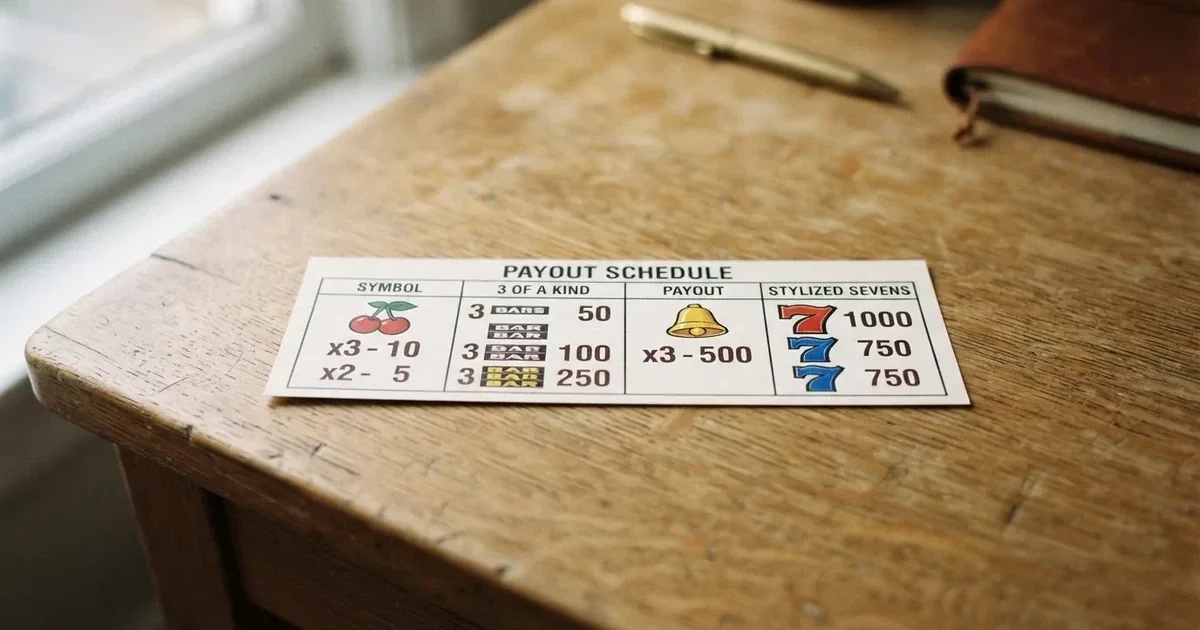
Five-reel slots in Australia: what the format actually costs a player
 Available in US
Five-reel online slots sit in an unusual place in the Australian market. The format itself is older than most readers — a recognisable descendant of Charles Fey’s three-reel Liberty Bell mechanism from the late nineteenth century, expanded from three to five reels and grafted onto video in the late 1970s — but every online casino game and online pokie is prohibited under the Interactive Gambling Act 2001, and no state or territory issues a licence for one. What exists for an Australian player is a long list of offshore sites the Australian Communications and Media Authority has been moving against, formal warning by formal warning, for the better part of a decade.
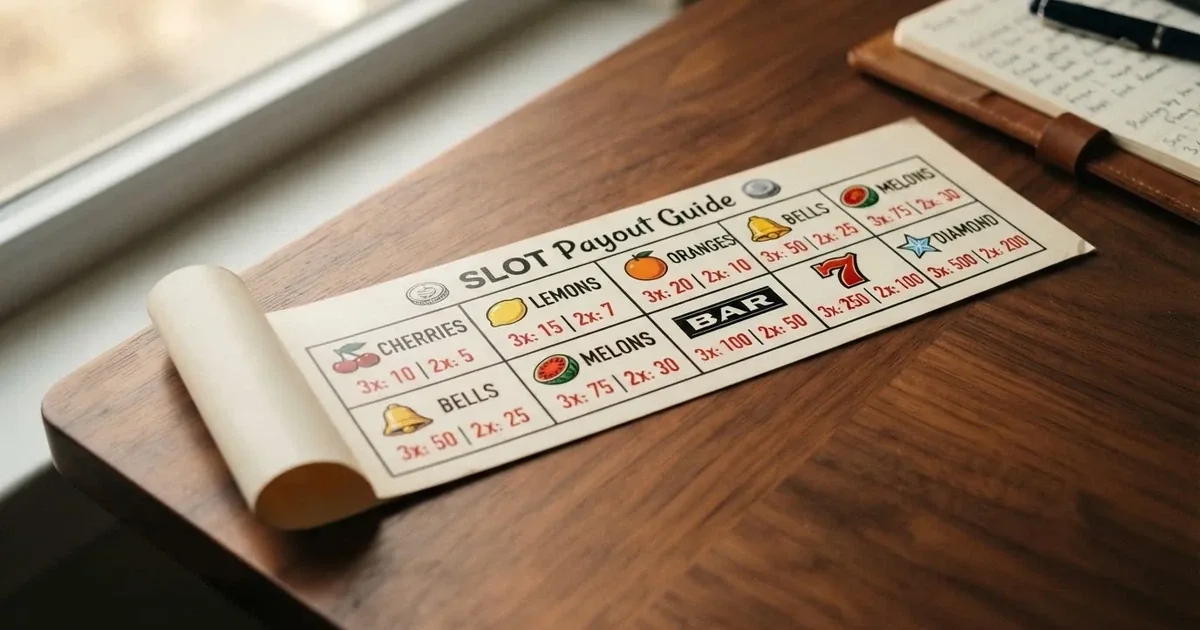
This page is written for readers who have either typed something like “best 5 reel slots” into a search engine or are weighing up the format against newer five-reel video titles. It explains how a five-reel slot is built, what a paytable generally shows, what bonus mechanics actually cost the player who clears them, and where the format stands in Australian law. The angle is cost: every offer is read against the edge the house keeps, every bonus is read against the turnover it requires, and the offshore route is read against the protection an Australian licence would have given and does not.
Currency stamp: verified against the ACMA’s published formal-warning register as of 23 September 2026, and against H2 Gambling Capital’s 2025 estimate of offshore gambling losses.
Table of Contents
- When play starts to feel compulsory, free help is one call away
- Bonuses and free spins: what the format’s offer actually costs
- Regulatory and help resources
- What a fair comparison of five-reel offers would weigh
- The fundamentals of the five-reel format
- The prohibition: where Australian law stands on five-reel slots
- The operators the ACMA has named, and what that record shows
- Market landscape
- The blocking rate: what 1,751 blocked sites actually says
- Frequently asked questions
When play starts to feel compulsory, free help is one call away
The reason responsible-gaming material opens a page on five-reel slots is mechanical. The format is built to keep a player inside it: low-cost spins, repeated near-misses, bonus rounds with names that sound friendlier than their maths. None of that is unique to five-reel slots, but the offshore sites Australians reach for the format are also outside the Australian protection net — they are not connected to BetStop, the National Self-Exclusion Register, and they do not route a player to Gambling Help Online on the way in. The protection that does exist is a phone call, a website and a registration form that have nothing to do with the casino the player came from.
Gambling Help Online runs a free, confidential service around the clock. The site is reached at gamblinghelponline.org.au and includes live chat, with the same service staffed by counsellors across Australia. The National Gambling Helpline is 1800 858 858, free from any Australian phone, answered twenty-four hours a day. For readers who would rather exclude themselves across every Australian-licensed wagering provider at once, BetStop — the National Self-Exclusion Register, live since August 2023 — accepts a single registration that binds Australian-licensed online and phone wagering services. It does not, and cannot, bind an offshore casino: BetStop is an Australian scheme, and a Curacao- or Costa Rica-licensed operator is not connected to it. That asymmetry is the single most important thing on this page for a reader who has already started to feel the pull of the format.
The edge of the maths is the other half of the responsible-gaming frame. On a five-reel video slot with a published return-to-player of 96 per cent, every A$100 wagered returns A$96 on average across a long session, and the house keeps A$4. Over a session of A$1,000 the expected loss is A$40; over A$10,000 it is A$400. None of those figures is a guarantee for any individual player — RTP is a long-run statistical property, and short sessions deviate widely — but they are the right numbers to carry into a session before it begins, because the alternative is reading the marketing word “return” as a promise rather than a fraction.
The free, statutory help is summarised in the legality section below in one line; the maths is dealt with in the bonuses section, where the figures that decide whether a bonus is worth taking are run through the calculation this page is built around. Readers who want the responsible-gaming frame first can stop here. The rest of the page assumes the choice is made with that frame in view.
Bonuses and free spins: what the format’s offer actually costs
Five-reel slots carry bonuses in three shapes. The first is the deposit match — the casino adds a percentage of the player’s deposit as bonus money, with the bonus then subject to a wagering requirement before it converts to withdrawable cash. The second is the free-spins bundle, where the casino credits a fixed number of spins on a named five-reel title at a fixed coin value, with anything won either paid as cash or, more often, returned as bonus money subject to a wagering requirement of its own. The third is the no-deposit free chip, a small amount of playable credit offered for opening an account, with the winnings capped and almost always subject to a wagering requirement well above the deposit bonus. All three have the same plumbing underneath: a turnover target the player has to hit before any bonus money becomes theirs.
The marketing word in each case is some article-language equivalent of “free”. A free spin is not free: the casino has paid for it in advance by taking it out of the bonus budget, and the player pays for it again in time, because the wagering requirement is calculated on the bonus, on the deposit, or on both. A 100 per cent deposit match up to A$200 with a 40x wagering requirement on the bonus alone means a player who takes the full A$200 bonus has to wager A$8,000 before the bonus converts. A 40x requirement on the bonus plus the deposit doubles that figure. The wagering multiple is the single number a player should read before reading anything else on the offer page, and it is the number an affiliate page is least likely to surface prominently.
Free-spin bundles are costed differently. A bundle of 100 free spins at A$1 per spin on a standard 96 per cent RTP slot implies A$100 of stake and an expected return of A$96 across the bundle, meaning the player gives up A$4 on average before any wagering requirement is even applied to the winnings. If the winnings are then subject to a 40x requirement, the player has to wager the winnings 40 times over before they can withdraw — a step that can take a free-spin win from a small, tidy payout to a heavy time cost on the same five-reel title. On such a 96 per cent RTP game, every A$100 of that bonus-cycle wagering costs the player about A$4 in expected house edge.
The no-deposit free chip is the worst-priced of the three. The chip is small — typically A$10 to A$20 — and the wagering requirement is heavier, often 50x or 60x, applied to the winnings rather than the chip itself. A A$10 chip at 50x on the winnings means the player has to run the winnings through fifty times before any of it can be withdrawn, and the maximum cashout is usually capped at a small multiple of the chip. The expected cost is built in twice: once at the slot’s house edge during the wagering, and once at the cashout cap that takes the rest of the winnings off the table. A reader who treats a no-deposit chip as the cheapest way to test a five-reel slot is reading the offer the way the marketing was written.
Bonus cost on a five-reel slot, in plain prose. A A$100 bonus at 35x wagering on the bonus alone is A$3,500 of required turnover; on such a 96 per cent RTP game that turnover costs about A$140 in expected house edge, before any time spent or any further deposit. The same A$100 bonus at 50x on the bonus plus deposit is A$10,000 of required turnover and about A$400 of expected house edge. The offer’s “value” and its real cost are not the same number, and the difference between them is the wagering multiple.
The offshore casino adds a layer the licensed Australian wagering market does not. There is no Australian consumer protection on a Curacao-licensed site: no Australian Complaints body, no Australian dispute resolution, no obligation to pay a verified withdrawal. The promotion may pay out, and many do, but a withdrawal refusal on an offshore site is a matter for the casino’s own licence regulator in its own jurisdiction, on the player’s own legal costs. The bonus is offered by an entity the Australian regulator has formally warned for offering prohibited services, and the protection that would normally accompany a bonus — the kind a state-licensed sports bookmaker is required to provide — does not apply.
A reader who is going to take a five-reel bonus in spite of all that should at minimum read four numbers before claiming it: the wagering multiple, the contribution percentage of five-reel slots to that wagering (often 100 per cent, sometimes lower for table games, occasionally excluded for certain titles), the maximum cashout from bonus play, and the time limit on the wagering window. None of those numbers is on the front of the offer page, and all of them decide whether the bonus is worth the time it costs to clear.
Regulatory and help resources
| Resource | Service / Function | Contact / Link |
|---|---|---|
| BetStop | National Self-Exclusion Register | Self-exclusion portal |
| Gambling Help Online | 24/7 Counselling & Support | 1800 858 858 / Website |
| ACMA | Gambling regulation & enforcement | acma.gov.au |
| PayID/Osko | Licensed payment methods | Australian banks |
A five-reel slot is built from a paytable, a reel set and a set of win lines. The paytable lists every symbol that can land on the reels, the value of each symbol at the chosen coin size, and the combinations that pay. The reel set is the strip of symbols on each of the five reels, drawn at random by a number generator for every spin. The win lines are the patterns across the five reels that the game reads as a winning combination — anything from a single horizontal line in the centre to a set of fixed patterns that snake across the reels in different shapes. The combination of paytable, reel set and win lines is what makes a five-reel slot the game it is; change any one of those and the game becomes a different game.
The older, classic five-reel slot — the format Charles Fey’s three-reel Liberty Bell was extended into — typically carried three rows and a small number of win lines, often nine or ten, all of them fixed and visible on the screen. The modern five-reel video slot carries the same five-by-three frame but stretches the symbol set and the win-line count: fifty or more symbols per reel, dozens of paylines or a “ways to win” mechanic that pays on every left-to-right combination regardless of line position. The odds against the top combination on a modern video slot can run as high as 300 million to one, against a classic three-reel mechanical machine’s roughly 1,000 possible combinations. A five-reel slot sits between those figures, depending on the symbol count.
Reading a five-reel paytable is the most useful skill a player can take into the format. Three things matter, and the rest is decoration. The first is the symbol values: each symbol pays a multiple of the coin size for the required number in a row, and the multiples are written on the paytable for the chosen coin size. The second is the wild symbol: a symbol that substitutes for others, sometimes paying on its own, sometimes only as a substitute. The third is the scatter symbol: a symbol that pays anywhere on the reels regardless of line position, often triggering a bonus feature when three or more land in a single spin. The paytable also carries the bonus feature rules — free spins, pick-a-prize screens, wheel bonuses — and the conditions under which each is triggered.
What a paytable does not carry is the volatility. Volatility is a statistical property of the game’s hit frequency and the size of its payouts: a high-volatility slot pays less often but in larger amounts when it does, and a low-volatility slot pays more often in smaller amounts. The two slots can carry the same return-to-player percentage and feel like different games to the player at the reels. The paytable shows the symbol values, but it does not show the player’s chance of hitting any of them on a given spin; for that the player is reading the developer’s own volatility classification, which is usually a low, medium or high label on the game info screen. The label is worth treating as advisory rather than exact.
The reel set, behind the paytable, is the second piece of the format worth understanding. Each reel carries a fixed strip of symbols, and the random number generator picks one position on each reel per spin. The probability of a given symbol landing on a given reel is the count of that symbol on the strip divided by the strip length, and the probability of a five-symbol combination across all five reels is the product of the five individual probabilities. A five-reel slot with one top symbol per reel on a 32-symbol strip has a top-symbol combination probability of 1 in 32⁵, which is 1 in about 33.5 million. The actual figures for any given game are set by the developer and are not on the paytable.
What this means for the player is that the paytable and the reel set together decide almost everything the player will see across a session. Symbol values decide the size of each payout. Win lines decide how often those payouts are read off the screen. The random number generator decides the order in which the symbols land. Bonus features add a layer on top, but the base game — the 95 to 99 per cent of spins that are not inside a bonus round — runs on those three variables, and any player who has read the paytable once has read the bulk of the game.
What a fair comparison of five-reel offers would weigh
A fair comparison of five-reel slots, on a page where no online slot is licensed in Australia, has to start with the comparison’s own limits. The features below are what the comparison would weigh in a market where the offers are licensed. They are stated here as the framework a reader can carry into the offers, not as a ranking of any specific operator.
The first axis is the licence and the protection that comes with it. A state-licensed Australian wagering service is bound by the Australian consumer protection law, by the BetStop self-exclusion register, and by the responsible-gaming obligations of its licence. An offshore site offers none of those, and the comparison between them is not a comparison between two offers of the same kind — it is a comparison between an offer and the absence of an offer. The protection is not a feature the offshore site is missing; it is the frame that makes the feature legible in the first place.
The second axis is the bonus cost. A reader who has decided to take a bonus can weigh it on three numbers: the wagering multiple, the contribution percentage and the maximum cashout. The lower the multiple, the lower the contribution shortfall on five-reel slots and the higher the cashout cap, the better the offer priced against the cost the player will pay to clear it. The comparison is in cost per A$100 of bonus, expressed as the expected house edge across the wagering cycle, and the reader who runs the same calculation on two offers can rank them on that number alone.
The third axis is the game library. A five-reel slot on an offshore site is one of typically hundreds or thousands of titles, and the question is which of them is worth the time. A library that includes a few low-volatility classics alongside the high-volatility video slots gives a player more choice on session shape than a library built around a single volatility class. The paytable matters here, because a paytable read once is reusable across the library: a player who has read the paytable of one five-reel slot has read the grammar of every five-reel slot.
The fourth axis is the payment side. An offshore site asking for a credit card or a cryptocurrency deposit is operating outside the rules that bind a state-licensed Australian wagering service. Legal deposit routes for licensed wagering are debit card, bank transfer, PayID/Osko and BPAY; credit cards and crypto are banned as payment for licensed online wagering since 11 June 2024, with penalties up to A$247,500 for operators who accept them. A payment request that does not match that list is a marker the reader can read for free.
The fifth axis is the responsible-gaming frame. An offshore casino is not connected to BetStop and does not offer the same exclusion routes; the player is relying on the casino’s own voluntary tools, on the offshore licence regulator’s complaint process, and on the free Australian help lines if play becomes a problem. The comparison on this axis is short: a state-licensed wagering service has the frame, an offshore casino does not, and the frame is part of the cost of the offer to the player.
A reader who has read those five axes can take any five-reel bonus on any offshore site and rank it against itself, which is what the page is for. No site on this page is recommended, because no site on this page is licensed in Australia, and a recommendation of an unlicensed site to a reader would be a misreading of the format and the law.
The fundamentals of the five-reel format
The five-reel slot is older than most readers, and its history is short. Charles Fey’s late-nineteenth-century three-reel mechanism — five symbols on each reel, three bells in a row paying ten nickels — set the grammar every later slot has used. Bally’s 1963 Money Honey added a bottomless hopper and automatic payout of up to 500 coins without an attendant, removing the need for a manual payout and clearing the way for the bigger, faster machine. The first video slot was developed in 1976 by Fortune Coin Co. in Kearny Mesa, California, replacing the mechanical reels with a video screen and the physical stops with a random number generator. Five-reel video slots followed in the 1980s and 1990s, and the format has been the dominant slot layout in casinos and online since the late 1990s.

The Australian history of the format is separate from the format’s own history, and it is mostly the history of the poker machine. New South Wales legalised slot machines in 1956, and by 2010 Australia operated an estimated 97,103 gaming machines outside casinos — a per-capita rate about five times that of the United States. The current Australian machine stock, by state, is large in the two biggest states and small in the smallest: 87,298 pokies-style machines outside casinos in New South Wales as of June 2023, 26,380 in Victoria for 2021–22, 21,122 in Queensland as of October 2023, 11,672 in South Australia as of September 2023 and 3,587 in the ACT as of November 2023. Those figures are all for machines in pubs and clubs, and none of them is an online five-reel slot.
The five-reel format itself sits between two reference points. The first is the classic three-reel mechanical machine, with about 10 symbols per reel and roughly 1,000 possible combinations. The second is the modern five-or-more-reel video slot, with 50 or more symbols per reel and top-combination odds as high as 300 million to one. A five-reel video slot typically carries fewer symbols per reel than the wider modern format and more win lines than the classic three-reel, with the result that the top-combination odds fall between the two reference points. The paytable is the player’s window into where a given title sits, because it carries both the symbol values and the win-line count, and the volatility class sits in the game info screen as a low, medium or high label.
The Australian market is built on a different layout: the pokie. A pokie is a slot machine, and the term is Australian English for the same device, but the regulatory frame is distinct. Pokies in pubs and clubs are state-regulated, with each state and territory setting its own machine limits, return-to-player requirements and operating rules; the federal regime applies to online casino games and online pokies, which is the frame this page is about. A five-reel pokie in a licensed Australian club is a real machine with real consumer protection; a five-reel slot on an offshore site accessed from Australia is a real-money gambling service the federal regulator has asked internet providers to block.
The fundamentals, then, are three. The five-reel format is a layout with five reels, multiple rows and a set of win lines. It is built from a paytable, a reel set and a random number generator. It is offered in Australia on the offshore side of the law, where the Australian consumer protection the licensed wagering market provides does not reach. A reader who knows those three things knows the frame every offer on this page sits inside.
The prohibition: where Australian law stands on five-reel slots
The Interactive Gambling Act 2001, strengthened by the Interactive Gambling Amendment Act 2017, makes it an offence to provide online casino games or online pokies to a person physically in Australia. No state or territory issues a licence for an online casino game or an online pokie: what is licensable under the federal and state frameworks is wagering on races and sport placed before the event, lotteries and keno, and the like. The Northern Territory Racing and Wagering Commission regulates fifty-two of Australia’s online bookmakers — including Sportsbet, Bet365 and Ladbrokes — for tax reasons, and the commission has no full-time staff, meeting once a month in Darwin. Five-reel online slot play does not exist within that frame. It exists only on offshore sites operating outside Australian law.

Enforcement runs through the Australian Communications and Media Authority. The ACMA investigates complaints, issues formal warnings and directs Australian internet service providers to block illegal sites. The individual player is not the target of the prohibition — the Interactive Gambling Act is aimed at the provider — but an offshore site gives the player no Australian consumer protection: no local complaints body, no local dispute resolution, no recourse if a withdrawal is refused. A site can be blocked while a balance is still on the player’s account, and the player has no Australian forum to recover it.
The enforcement record is long, and it runs in formal-warning rounds. The ACMA issued a formal warning to Dama N.V. in May 2022 covering six casino brands — Bambet, Dazard, Level Up, Rocketplay, Wild Tornado and Cobra Casinos. The same operator was warned again in March 2025 over Woo Casino and in May 2025 over Spirit Casino. In July 2025 the ACMA warned Bamboo Media over Ignition Casino and Consolutetish S.R.L. over National Casino and Bizzo Casino, the last of which had already been the subject of a 2022 warning to TechSolutions. In February 2025 the ACMA warned EOD Code SRL over Instant Casino. In April 2026 the ACMA warned Ryker B.V. over Jackbit and CasinOK. In April 2025 the ACMA warned Sterplay Holding Ltd over Casino Intense. In March 2026 the ACMA warned Pulsup Ltd over Rocketplay.com.au. The ACMA also warned Hollycorn N.V. in a separate round over Sky Crown and Blue Leo. Every one of those warnings is a published record that the operator named has offered prohibited services to Australians.
The blocking record is the second half of the enforcement frame. As of the ACMA’s June 2026 running total, 1,751 illegal gambling and affiliate marketing websites have been blocked since the first blocking request in November 2019, and more than 230 unlicensed gambling services have left the Australian market since enforcement was strengthened in 2017. The June 2026 round alone added twelve sites: 7Signs, ChromaBet, Donbet, Duospin, Freshbet, Slots Gem, Jacks Club, Lucky Start, Pointsbetz.com, Spinrise, Vinyl Casino and Wildsino. The pace of those blocks is the calculation this page runs below.
H2 Gambling Capital’s 2025 estimate puts the cost of the offshore market to Australians at about A$3.9 billion a year, and the share of gambling going through legal channels has fallen from 74 per cent in 2021 to 64 per cent. The prohibition is being enforced; the prohibition is not being circumvented only by the operators it catches. The market is large, the warnings are published, and the blocks keep adding up.
The 2026 reform sits at the end of the prohibition frame. The Interactive Gambling Amendment (Gambling Reform) Bill 2026 passed Parliament on 19 August 2026; its advertising and inducement measures commence on 1 January 2027. The bill is law with a start date, not a measure that has taken effect on this page, and a 2026 reader is reading the prohibition as it stands today, not as it will stand once those advertising provisions come into force.
Payment rules complete the picture. Credit cards, credit-related products and digital currency have been banned as payment for licensed online wagering since 11 June 2024, with penalties of up to A$247,500 for operators who accept them. Legal deposit routes for licensed wagering are debit card, bank transfer, PayID/Osko and BPAY. An offshore casino asking an Australian for a credit card or a crypto deposit is asking for a payment the licensed Australian market has been banned from accepting for nearly two years.
The frame, then, is straightforward. Online casino games and online pokies are prohibited. The ACMA enforces. Offshore operators carry on regardless and are warned, blocked or quietly dropped. The player’s recourse is the offshore licence regulator, on the player’s own legal costs, and the player’s protection is the responsible-gaming frame at the top of this page.
The operators the ACMA has named, and what that record shows
This section is not a ranking. The eleven operators below are listed because the ACMA itself issued a formal warning over each of them for offering prohibited online gambling services to Australians, in the order in which the ACMA named them or in which the published formal-warning register lists them. No bonus terms are given, because the only sources for bonus terms on these brands are affiliate marketing pages, and an offer a player cannot verify through the operator’s own licence is an offer the page cannot price. Every operator carries the same Australian legal status: online casino games cannot be licensed anywhere in Australia, whatever licence the site displays.
Market landscape
| Brand | ACMA action and date | Operator named by the ACMA | Subject support |
|---|---|---|---|
| RocketPlay | Formal warning — March 2026 (Pulsup Ltd); earlier warning May 2022 (Dama N.V.) | Pulsup Ltd | — |
| Level Up Casino | Formal warning — May 2022 | Dama N.V. | listings-only (BGaming) |
| Woo Casino | Formal warning — March 2025 | Dama N.V. | — |
| Spirit Casino | Formal warning — May 2025 | Dama N.V. | — |
| National Casino | Formal warning — July 2025 | Consolutetish S.R.L. | listings-only (Wikipedia) |
| Bizzo Casino | Formal warning — July 2025; earlier warning 2022 (TechSolutions) | Consolutetish S.R.L. | — |
| Ignition Casino | Formal warning — July 2025 | Bamboo Media | — |
| Instant Casino | Formal warning — February 2025 | EOD Code SRL | — |
| Jackbit | Formal warning — April 2026 | Ryker B.V. | — |
| Casino Intense | Formal warning — April 2025 | Sterplay Holding Ltd | listings-only (ABC, ACMA, Crown Melbourne) |
| Sky Crown | Formal warning — September 2022 | Hollycorn N.V. | — |
The pattern across the table is the pattern the ACMA’s own enforcement record shows. Several operators in this set have been warned more than once for the same conduct: RocketPlay under Dama N.V. in May 2022, then under Pulsup Ltd in March 2026; Bizzo Casino under TechSolutions in 2022, then under Consolutetish S.R.L. in July 2025. The repeated warnings are the ACMA’s own signal that the operator-side response to a warning is often a rebrand or a new corporate vehicle rather than a withdrawal from the Australian market. A reader who sees the same brand on the page twice is reading the same operator twice, not two different operators.
The “Subject support” column reflects what is and is not said about each operator in the source set. Most operators in the table carry no source-attributable statement about whether they offer five-reel slot play specifically, because the only places such a statement would be sourced from are the operators’ own promotional pages; those pages are exactly the pages the formal-warning record calls out as offering prohibited services to Australians. Two operators — Level Up Casino and Casino Intense — appear in third-party listings as offering games from the providers whose five-reel slots the section above describes, and that is the only statement a source can be made to support. The rest take the no-data marker, and that marker is doing work: a brand with no listing in a third-party catalogue, no developer page and no regulatory notice behind it is a brand the page cannot price against the offer the marketing puts forward.
Every brand on this page carries the same warning at the foot of its entry: online casino games cannot be licensed anywhere in Australia, whatever licence the site displays. A Curacao seal on a site does not change the Australian legal position, and an offshore licence does not give a player a forum in Australia. The warning is not a marketing line; it is the Australian regulator’s own published position, repeated for each operator in this section because each operator has been formally warned under it.
The verdict on this set, taken as a whole, is short. The reader looking for a five-reel online slot in Australia is choosing between eleven operators the Australian regulator has named as offering prohibited services, with two of those operators named twice. The offer on any of them is real, the games are real, and the marketing is real. What is not real is the protection that would accompany the same offer from a licensed Australian wagering service. That is the gap the rest of the page — the calculation, the bonus cost, the responsible-gaming frame at the top — is built to make legible.
The blocking rate: what 1,751 blocked sites actually says
The arithmetic the page is built around is the rate at which the ACMA’s blocking record has grown. The inputs are the ACMA’s published running total — 1,751 illegal gambling and affiliate marketing websites blocked since the first blocking request in November 2019 — and the date the ACMA reports that total on, which the source set places at 26 June 2026. The output is a per-month rate, and the page presents that rate as a band with its condition rather than a single figure, because the rounds vary.
The condition is the only honest way to state the result. From November 2019 to June 2026 is seventy-nine months, and the 1,751 blocks over those seventy-nine months average to roughly twenty-two blocks a month across the whole period. The pace is not constant: the June 2026 round alone added twelve sites in a single batch, and earlier rounds have been smaller or larger. Over the long run the average sits in a band of about twenty to twenty-five sites a month, with the upper end driven by the larger rounds and the lower end by the months between them. A reader who treats twenty-two a month as a steady tick is misreading the rate; a reader who treats it as the average of a variable process is reading it correctly.
The second figure that matters is the exit rate. The same ACMA running total reports more than 230 unlicensed gambling services have left the Australian market since enforcement was strengthened in 2017. That is roughly two services a month over the eight-and-three-quarter years from 2017 to mid-2026, but again the rate has not been constant: exits cluster around warning rounds and blocking rounds, with quiet months in between. The blocking rate and the exit rate are not the same rate. A block is a site made unreachable by an Australian internet service provider; an exit is an operator who has stopped serving Australians at all. The block is the visible enforcement; the exit is the quieter one.
The cost figure closes the loop. H2 Gambling Capital’s 2025 estimate puts Australian losses to illegal gambling sites at about A$3.9 billion a year, against a legal-channel share that has fallen from 74 per cent in 2021 to 64 per cent. The blocking rate, the exit rate and the loss figure are three readings of the same market: the ACMA is blocking at roughly twenty-two sites a month, operators are leaving at roughly two a month, and the money is still moving at nearly four billion a year. None of those three figures says the prohibition is working. Each of them, on its own, is a single reading of a market the prohibition has been acting on for nearly a decade.
The reader should not read twenty-two a month as the rate they will see in any given month. The reader should read it as the long-run average of a process whose visible output is a list of blocked sites and whose quieter output is a list of exited services. The arithmetic is not a clock; it is a long-run pace with a noisy per-month reading.
Frequently asked questions
What makes a five-reel slot different from a standard five-reel video slot?
A five-reel slot is a layout — five reels, usually three rows, a set of fixed win lines — and the term usually refers to a slot with a smaller symbol set and a smaller number of paylines than a modern five-reel video slot, which can carry fifty or more symbols per reel and dozens of paylines or a “ways to win” mechanic. The frame is the same; the symbol count and win-line count decide the feel.
Can five-reel slot machines be found in licensed Australian pubs and clubs?
Yes. The 87,298 machines outside casinos in New South Wales as of June 2023, the 26,380 in Victoria for 2021–22, the 21,122 in Queensland as of October 2023, the 11,672 in South Australia as of September 2023 and the 3,587 in the ACT as of November 2023 are all real, state-licensed devices with the consumer protection the state and federal regimes provide. Online five-reel slots are a different product, offered offshore, outside the Australian licence frame.
Do five-reel slots typically pay out differently than newer five-reel formats?
The return-to-player is set by the developer and is independent of the reel count. A title with this RTP pays back A$96 on average per A$100 wagered, and so does a five-reel video slot at 96 per cent RTP. What changes with the format is volatility: a five-reel classic typically pays smaller amounts more often than a modern five-reel video slot, because the symbol set is smaller and the top combination is easier to hit.
Is a five-reel slot online the same game as a five-reel machine on a casino floor?
The grammar is the same — reels, symbols, paytable, win lines — but the regulatory frame is not. A licensed Australian casino-floor machine is regulated by the state gambling commission and pays out through the licensed operator. An online five-reel slot accessed from Australia is offered by an offshore operator that the ACMA has, in many cases, formally warned, and the Australian consumer protection regime does not reach the transaction.
Are five-reel slots for real money available legally from an Australian-based site?
No. The Interactive Gambling Act 2001 prohibits the provision of online casino games and online pokies to a person in Australia, and no state or territory issues a licence for them. What is licensed is wagering on races and sport before the event, lotteries and keno. Online five-reel slots for real money exist only on offshore sites operating outside Australian law, and the ACMA has been moving against those sites for the better part of a decade.
Does a slot’s reel count change how its paytable and volatility are usually described?
The reel count sets the maximum number of combinations, but the paytable and the volatility label are written by the developer for the specific game. A five-reel slot’s paytable lists the symbol values and the win lines, and the volatility is a low, medium or high classification on the game info screen. The label is set by the developer, not derived from the reel count, and a player should read the paytable once and the volatility label once for any title they intend to play.
Written by the editors at Instant bank transfer casino Australia.