
Best 1spin4win online casinos Australia in 2026: what the picture actually shows
 Available in US
Any player chasing “the best 1spin4win online casinos Australia” in 2026 is searching for something the Australian market does not provide. The studio is real. The titles are real. The licence that would let Australians play them for real money at a regulated venue is not. Everything that follows on this page works from that starting point — what 1spin4win actually is, where the money would sit if it sat anywhere licensed, and the long list of offshore brands the Australian Communications and Media Authority has already named in formal warnings for offering exactly this kind of product to Australians. Updated as of 23 September 2026; operator and licence claims cross-checked against the Australian Communications and Media Authority’s published register of formal warnings and blocking actions.
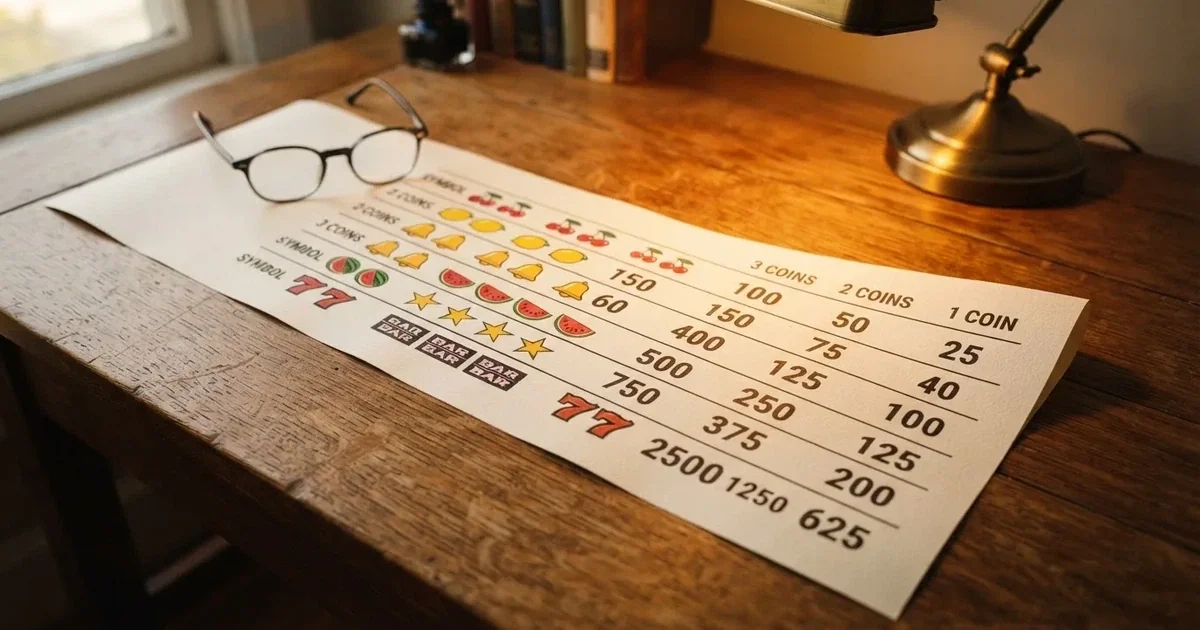
Table of Contents
- Responsible gambling: where to turn before chasing any of this
- Payments, payout speed and the money side
- Bonuses, free spins and what the marketing actually costs
- Mobile play, apps and what “best mobile 1spin4win casino” usually means
- Specific games, providers and how a 1spin4win paytable actually reads
- The Australian picture: how many sites the regulator has acted against
- The fundamentals: what 1spin4win play would look like in Australia if it were legal
- Legality, the IGA, and the 2026 reform that is law with a start date
- Frequently asked questions
Responsible gambling: where to turn before chasing any of this
A page that names offshore casinos owes the reader the help line before the marketing words. The first shelf to close is the one a reader reaches only after the rest has done its job — and it does not take much. A handful of sessions that feel routine while they are happening can tilt into something else in a week. The Australian help network is free, confidential and open around the clock.
The National Gambling Helpline runs on 1800 858 858, free from any Australian phone, day or night. The same service is reachable online through Gambling Help Online, where live chat and email are answered by the same counsellors who staff the phone line. Both routes are set up for the person who is not sure they have a problem yet — the standard opening line from the service is “call us whether you think it is serious or not.” That framing exists because the most expensive calls are the ones a person puts off while they convince themselves the next session will sort it out.

BetStop, the National Self-Exclusion Register, has been live since August 2023 and binds every Australian-licensed online and phone wagering service to honour a self-exclusion request once it is made. It does not bind an offshore casino, which is the entire category this page is about — and that is the part of this that needs saying plainly. A self-exclusion through BetStop is a real firewall against any site that holds an Australian wagering licence. It is not a firewall against the brands named lower on this page, none of which holds one. The offshore side of the market operates outside the register’s reach, which is the reason the register exists in the form it does and the reason it is not the whole answer.
Counselling is paid for by the Commonwealth and the states, not by the casino industry, and the conversation is not shared with any operator. That separation matters because the offshore market this page describes sits entirely outside the complaints bodies a player would otherwise turn to. There is nowhere offshore to lodge a complaint a regulator will act on, no Australian Small Claims pathway that touches a Curaçao-licenced operator, and no ombudsman to write to if a withdrawal stalls. The help line is one of the few pieces of Australian infrastructure that follows the reader wherever the play happens.
A section later on this page describes what offshore play costs in practical terms — no Australian consumer protection, balances stranded when a site is blocked, no recourse if a payout is refused. None of that is theoretical. The pace at which the ACMA has added sites to its blocking list over the past two years has been measured in dozens per quarter, and a balance sitting on a domain the regulator has just asked Australian ISPs to switch off is money the player cannot withdraw through Australian rails. The help line exists in part because the rest of the system is not built for this market.
Payments, payout speed and the money side
For a player sitting in Australia, the payment side of “best 1spin4win online casinos” is not really a payment side. It is a list of methods that work at offshore sites and a list of methods that have been banned at the licensed ones since 11 June 2024. The two lists do not overlap much, and that gap is the story.
At an Australian-licensed wagering service — Sportsbet, Bet365, Ladbrokes and the rest, all of them licensed in the Northern Territory for tax reasons and regulated by the NTRWC — credit cards, credit-related products and digital currency have been prohibited as a means of payment since 11 June 2024. The penalty for an Australian-licensed operator that takes a credit card deposit is up to A$247,500. What is left is debit card, bank transfer, PayID through Osko and BPAY. These are the rails the Australian regime is willing to vouch for, and they are the rails a player can complain about through Australian channels if anything goes wrong.
At an offshore site, the menu reads the other way. Crypto deposits — Bitcoin, Ethereum, USDT on a handful of chains — are usually the headline option and often the only option that settles the same day. Debit cards may go through a payment processor that charges a conversion fee, may be declined by the issuing bank, or may be flagged by the bank’s fraud screen as a cross-border gambling transaction. Bank transfers take longer, sometimes days, and sometimes do not arrive at all because the receiving bank has decided the destination is an unlicensed gambling business. None of these difficulties is a bug. They are how a payment system that has decided not to touch offshore gambling looks from the operator’s end.
The payout side, where the marketing always concentrates, has a similar shape. The fastest advertised payout is almost always crypto, and “almost always” is doing real work — a Bitcoin withdrawal that the operator releases inside an hour can still take a day to confirm on the blockchain, and the confirmation count the operator requires before crediting the balance varies between one and six. A debit card payout runs through the card scheme’s standard settlement window, which the operator cannot shorten and rarely controls; the bank’s own anti-fraud review can add another business day on top. Bank transfers are the slowest end of the spectrum and the one most likely to attract a request for source-of-funds documentation that takes days to clear.
What is missing from every advertised payout window is the part where the site itself decides not to pay. The T&Cs at the offshore end of this market reserve the right to demand identity verification after a win in a way the deposit side never does, to segment withdrawal methods by country, to hold balances during “additional review”, and to limit how much can be taken out per week. None of this is enforced by an Australian regulator because none of these operators holds an Australian licence. The complaints body a player would write to does not exist. The Australian Small Claims Tribunal will not accept a filing against a Curaçao company for a gambling dispute, and the Curaçao regulator the operator displays on its footer will not investigate a complaint from a player who joined the site from a country the operator was never licensed to serve.
That is why the licensed side of the market, narrow as it is, looks the way it does on payments. It is not a richer product range. It is a payment system that has decided to vouch for the rails, attached a regulator to the operator, and given the player a complaints route if the rail or the operator lets them down. Offshore sites offer a wider menu of crypto, a faster advertised payout window, and none of the three things that make the licensed side usable when something goes wrong.
A reader weighing the two needs to keep the gap in view: a faster payout is only faster if the operator actually releases the funds, and the only speed the licensed side ever advertises is the speed of the regulated rail rather than the generosity of the operator.
Bonuses, free spins and what the marketing actually costs
Bonus offers at the offshore end of the 1spin4win market are pitched the way bonus offers everywhere in iGaming are pitched: large headline numbers, small qualifying type, and a set of conditions that converts the headline into a different shape once the maths is done. The maths is the part a reader has to do for themselves, because the marketing never does it.
A typical welcome package at an offshore casino looks like a deposit match plus a bundle of free spins, and the headline reads “100% up to A$500 plus 200 free spins”. The deposit match number is the easy part: deposit A$500, the operator credits another A$500, the playable balance becomes A$1,000. The conditions are where the headline stops being the offer. A wagering requirement of 40x the bonus — meaning the bonus amount has to be turned over forty times before any of it can be withdrawn — turns A$500 of bonus money into A$20,000 of required play, and that is before the deposit is counted. Free-spin winnings usually carry their own wagering requirement, sometimes higher than the cash bonus. Game weighting, where slots count 100% toward turnover but table games count 10% or less, is what makes the headline figure achievable on slots and unreachable on anything else.
The arithmetic the page is built around comes from this material. The required turnover for a A$500 bonus at 40x is A$20,000. Spread across a slot spin of A$1 — a typical stake for a low-volatility title — that is 20,000 spins. At five seconds per spin, which is a steady pace once a player knows the game, it works out to about 27.8 hours of continuous play, before any of the bonus money can be withdrawn. A player who sits down expecting to clear the offer in a long evening is looking at four or five such evenings, and the math assumes nothing goes wrong — no max-bet rule violated during the wagering window, no restricted game list breached, no withdrawal cap hit when the playthrough is finally complete. Any of those ends the exercise before the bonus is fully converted.
The expected cost of running that turnover through a slot is the part the marketing never prints. The expected loss is the turnover multiplied by one minus the return to player: A$20,000 multiplied by (1 − 96%) is A$800, which is the house edge expressed as a number a player can act on. It is the average loss a player should expect across the full playthrough, not a worst case and not a guarantee. The bonus was worth A$500 in credit. The expected loss while clearing it is A$800. Net: the player is roughly A$300 down on average before a single hand-paid win is counted. The “free” in “free bonus” is doing very heavy lifting by the time the wagering is finished.
A max-cashout cap on free-spin winnings is the second mechanism that flattens the marketing. A “200 free spins” bundle that pays A$0.10 per spin and converts to bonus money with a 40x requirement looks generous until the cap is read. A A$100 cap on free-spin-derived winnings, which is the band most offshore sites sit in, means that even a lucky run that would normally pay out several hundred dollars ends up as a A$100 credit subject to the same playthrough. The marketing language does not change, but the offer does.
The list of conditions worth reading before claiming any of these offers is the same on every site: the wagering multiplier, the game weighting, the max-bet rule during wagering (a stake ceiling that voids the bonus if exceeded, usually set low), the list of excluded games, the cap on winnings from free spins, the expiry window on the bonus, and the country list on which the offer is even available. A player who joins an offshore site from Australia is in most cases joining a site that has not been authorised to take Australian players at all, which is the reason the offer is structured this way in the first place — it is the offer the operator decided to make to a market it never asked permission to enter.
A reader comparing two offshore welcome packages is comparing the same shape of offer under two different multiplier numbers, and the multiplier is the figure that decides how much play the bonus costs in time and in expected loss. A 30x bonus is cheaper to clear than a 50x bonus at every stake size, and the difference compounds — a 50x bonus on a A$500 deposit match is A$25,000 of turnover, 25,000 spins, about 34.7 hours at five seconds per spin, and an expected loss of A$1,000 against a A$500 credit.
Mobile play, apps and what “best mobile 1spin4win casino” usually means
The “1spin4win casino app” search and the “best mobile 1spin4win casino” search land on a category of product that does not exist for Australian players in the licensed sense, and that exists in the offshore sense in a form the marketing copy describes in roughly the same words everywhere. The descriptions are worth reading because the pattern is what a reader is being asked to evaluate.
Most offshore casinos that carry 1spin4win titles are built on HTML5 and are responsive rather than native — the site adapts to a phone browser rather than running as a downloadable app. The advantage is that nothing has to be installed, no app store policy gets in the way, and updates happen on the server. The disadvantage is that the browser session lives inside the phone’s privacy and security settings, the operator gets full browser storage by default, and there is no app-store middleman between the player and the support inbox when something goes wrong. The “mobile casino” the marketing describes is, in most cases, the desktop site shrunk to a phone screen.
A genuine native app, the kind a reader might expect from the phrase “1spin4win casino app”, is rarer. Where it exists, it is usually a wrapper around a mobile website with a small set of features bolted on — biometric login, push notifications for promotions, sometimes a download-to-phone shortcut. It does not change the underlying product, the underlying licence, or the underlying payment options. An app on a phone is a presentation layer over the same offshore operator that the ACMA has warned for serving Australians. Whether the presentation is a browser tab or a home-screen icon does not change the legal position the page sets out further down.
For a player in Australia, the mobile question is shaped by another constraint entirely. The licensed Australian wagering market — the only market the regulator recognises as licensed — runs almost entirely inside apps, and those apps are tied to BetStop. Sportsbet, Bet365, Ladbrokes, the big three, all of them ship a mobile app and all of them run their self-exclusion register on the app’s account. None of them carries 1spin4win titles because online casino games and online pokies are not licensable in Australia. The “best mobile” framing that works for licensed Australian wagering does not have a counterpart for 1spin4win slots, because the product the search describes is not on the licensed side of the market.
What mobile play at an offshore site does to a player’s data is worth pausing on. The mobile browser version of an offshore casino runs scripts the operator controls on the player’s device, sets cookies the operator reads, and stores session data in a sandbox the operator can read on return. None of this is enforced by an Australian privacy regulator for the offshore case, and the operator’s privacy policy is the only document that governs what is collected. The data flows from the operator back to its own servers, and the player has whatever rights the operator’s terms grant. A reader who values the privacy of a session is, in this market, choosing between the Australian-licensed product with its narrow product range and BetStop-integrated self-exclusion on one side, and the offshore product with its wider game list and no equivalent protection on the other.
The session that turns the question is the one that happens when a phone is shared, when a notification fires during a meeting, when a balance reminder arrives in a moment the player would rather not have it. The licensed apps are designed to make those moments manageable — a BetStop exclusion cuts every licensed app’s access at once. The offshore equivalents are not designed to handle that case, because they were not built to know it exists.
Specific games, providers and how a 1spin4win paytable actually reads
1spin4win is a slot provider founded in 2021 by a group of professionals with about fifteen years of iGaming experience, headquartered at Scharlooweg 39 in Willemstad, Curaçao, and operating under a Curaçao gaming licence. The studio builds its games in HTML5 for low-bandwidth connections, runs a portfolio of more than 190 online slots, and reports more than 1,000 partnerships with online casinos and aggregators. Its total bet sum grew 46% in the first half of 2025 compared with the first half of 2024, by the studio’s own figures. None of those facts changes the Australian legal position the next section sets out, but they are the picture of the studio a player is searching for.
A 1spin4win paytable is shaped the way a paytable in any modern video slot is shaped, and the differences from other studios’ games are mostly a matter of style rather than structure. A typical 1spin4win slot runs on five reels with three rows and a fixed number of paylines — often 20 or 25 — and pays from left to right on adjacent reels starting at the leftmost reel. The high-paying symbols are theme-specific, the low-paying symbols are usually royals (A, K, Q, J, 10, 9) styled to fit the theme, and a scatter symbol — often a stylized version of the game’s logo or a thematic key item — triggers the bonus feature when three or more land anywhere on the reels. A wild symbol substitutes for all paying symbols except the scatter, and the bonus feature is almost always a free-spins round with a multiplier attached. The math model is built around a base-game hit rate that produces small, frequent returns and a bonus round that produces larger, rarer returns.
The figures that distinguish one 1spin4win title from another sit in three places: the published return to player, the volatility band the operator displays, and the hit rate. The return to player is the long-run percentage of stakes the game returns to players as winnings; a 96% RTP means a 4% house edge, on average, over a very large number of spins. Volatility describes how that return is distributed — a “high” volatility slot returns less frequently and in larger lumps, while a “low” volatility slot returns more frequently and in smaller lumps. Hit rate is the percentage of spins that produce any return at all. A 15.59% hit rate, the figure Betsoft publishes for one of its own slots, means roughly one in seven spins lands a paying combination; a 8.17% hit rate on a different slot means roughly one in twelve. The combination of RTP, volatility and hit rate is what makes one slot feel different from another even when the paytable structure looks identical.
The other studios a 1spin4win player is likely to encounter at the same offshore sites operate on similar principles but with their own catalogues and house styles. Aristocrat Leisure Limited — the largest gambling-machine manufacturer in Australia and the second-largest slot-machine manufacturer worldwide, headquartered in North Ryde and listed on the ASX since 1996 under the ticker ALL — runs its online real-money-gambling business through Aristocrat Interactive, formed in April 2024 by combining the Anaxi unit with the newly acquired NeoGames group. Aristocrat reported 2025 revenue of A$6.30 billion and a normalised net profit after tax and amortisation of A$1.55 billion across 7,400 employees, with a series of large US acquisitions over the past decade — Video Gaming Technologies in 2014, Plarium and Big Fish Games in 2017, NeoGames in 2024 — that built the company’s online footprint outside Australia. Betsoft, founded in 2006, runs a catalogue of more than 200 RNG games and operates under licences from Italy’s ADM and others, with RNG certification from Quinel and Gaming Labs International. BGaming, the brand behind more than 250 certified games and proprietary mechanics such as TRUEWAYS, holds a Malta Gaming Authority Critical Gaming Supply Licence issued in March 2021. Booming Games operates from Malta under an MGA B2B licence and a UK Gambling Commission account, with further licences from Sweden, Ontario and several European regulators.
The reason those studios are in the picture is that an offshore casino carrying 1spin4win titles almost always carries titles from several other providers at the same time. A player joining an offshore site does not get a 1spin4win-only lobby; they get a multi-provider lobby in which 1spin4win is one shelf among others. The published RTPs and volatility bands differ from title to title and from provider to provider, and the only way to know what a specific game returns is to read the game’s information panel before staking on it. The marketing language about “the best paying 1spin4win slots” usually points to whichever games the operator has decided to feature, and the operator’s choice is shaped as much by the commercial deal with the studio as by the math of the game.
For an Australian player, the comparison between providers is a comparison between products that are not on the licensed side of the market at all. Aristocrat’s online real-money business operates in regulated markets outside Australia; Betsoft, BGaming and Booming Games operate in regulated European markets; 1spin4win operates from Curaçao. The Australian player joining an offshore site to play 1spin4win titles is joining a single product that brings all those providers together but operates outside any of the regulatory regimes those providers usually serve. That is the structural shape of the market the rest of this page describes.
The Australian picture: how many sites the regulator has acted against
The table below is not a ranking of operators a reader should join. It is a list of the brands the ACMA has named in formal warnings for offering prohibited services to Australians, in the order the regulator published them. Each brand below is a brand the regulator has decided is offering online casino games or online pokies to Australians in breach of the Interactive Gambling Act 2001, and the page describes what the regulator has said about it. No brand here is presented as a place to play.
The ACMA’s enforcement record over the past four years provides a clear picture of the scale of the market. The starting figure is the total the regulator reported as of June 2026: 1,751 illegal gambling and affiliate marketing websites blocked since the first blocking request in November 2019, and more than 230 unlicensed gambling services that left the Australian market after enforcement was strengthened in 2017. The latest blocking round, reported on 26 June 2026, asked Australian ISPs to block twelve more websites in one round: 7Signs, ChromaBet, Donbet, Duospin, Freshbet, Slots Gem, Jacks Club, Lucky Start, Pointsbetz, Spinrise, Vinyl Casino and Wildsino.
The blocking rate, calculated against the seven years between November 2019 and June 2026, is a band rather than a single figure. The headline 1,751 sites includes affiliate marketing sites that the regulator treated as part of the illegal-gambling landscape, and the affiliate share of that total is not separately published. The blocking rate over the full period runs at about 250 websites per year on the headline figure, and at roughly 180 per year if the affiliate marketing share is closer to a third of the total. Either reading produces a pace that has not slowed: the ACMA added twelve sites in a single round in mid-2026, and the rounds have been running monthly and sometimes weekly over the past two years. The pace has not declined since the early enforcement years and has, if anything, accelerated, because the offshore market has not retreated and the regulator has continued to add names.
H2 Gambling Capital’s 2025 estimate puts Australians’ annual losses to illegal gambling sites at about A$3.9 billion, with the share of gambling going through legal channels falling from 74% in 2021 to 64% in 2024. The two figures together — the regulator’s blocking pace and the volume of spending it is failing to redirect into the licensed channel — describe the market this page is about. The spending flows to the same offshore brands the formal warnings target, and the blocking list names a fraction of those brands rather than the whole universe. A reader using this page to understand the size of the offshore market is reading the regulator’s own ledger, which lists the brands the regulator has decided to act against rather than the brands a reader might find through a search engine.
The compliance and licensing picture for these operators is uniform in one respect and varied in another. The uniformity is that none of them holds an Australian licence, because no Australian licence is available for online casino games or online pokies, and that uniformity is what each formal warning is asserting. The variation is in the offshore licences they display: Dama N.V., the operator named in several of the warnings, has held a Curaçao master licence across multiple brands; Hollycorn N.V. holds a Curaçao licence for the Sky Crown and Blue Leo services; Bamboo Media, Consolutetish S.R.L. and other operators named in 2025 and 2026 warnings hold similar offshore credentials. None of those licences converts into an Australian entitlement to serve Australian customers, and the ACMA’s position is that no offshore licence does.
The following table lays out the eleven brands the ACMA has acted against most recently, the operator the regulator has named, the date of the formal warning, the brand’s claim to 1spin4win support where the listings carry one, and the operator-company relationship the regulator has identified. Each row is a brand the regulator has decided is offering prohibited services to Australians; the page describes what the regulator has said and what the listings carry, and does not recommend any brand as a place to play.
| Brand | ACMA action and date | Operator named by the ACMA | Subject support |
|---|---|---|---|
| RocketPlay | Formal warning, March 2026 (Pulsup Ltd); earlier Dama N.V., May 2022 | Pulsup Ltd | — |
| Level Up Casino | Formal warning, May 2022 | Dama N.V. | listings report a Wazdan partnership |
| Woo Casino | Formal warning, March 2025 | Dama N.V. | — |
| Spirit Casino | Formal warning, May 2025 | Dama N.V. | — |
| National Casino | Formal warning, July 2025 | Consolutetish S.R.L. | listings report Betsoft and Pragmatic Play partnerships |
| Bizzo Casino | Formal warning, July 2025; earlier TechSolutions, 2022 | Consolutetish S.R.L. | — |
| Ignition Casino | Formal warning, July 2025 | Bamboo Media | — |
| Instant Casino | Formal warning, February 2025 | EOD Code SRL | — |
| Jackbit | Formal warning, April 2026 | Ryker B.V. | — |
| Casino Intense | Formal warning, April 2025 | Sterplay Holding Ltd | listings report a 1spin4win partnership |
| Sky Crown | Formal warning (publication: September 2022) | Hollycorn N.V. | — |
What the table shows is the operator-company relationship the regulator has identified at the time of the formal warning. Several brands sit under the same operating company: Woo Casino, Spirit Casino and the earlier Rocketplay entry all sit under Dama N.V.; National Casino and Bizzo Casino share Consolutetish S.R.L. A formal warning against an operator company is the regulator’s signal that the relationship between brand and operator is the unit of action, and a warning against one brand under a multi-brand operator is read by the regulator as covering the operator’s other brands as well. The subject-support column records only what third-party listings carry as partnerships, and a row with an em dash carries no listing the page could cite.
What the regulator’s action actually means for a player
A formal warning under the Interactive Gambling Act 2001 is the ACMA’s first formal step against a provider offering prohibited services to Australians. The warning is published on the ACMA’s website, names the operator company the regulator has identified and the brand the warning concerns, and sets out the regulator’s view that the service is a prohibited interactive gambling service under the Act. A warning is not a court order and is not a civil penalty in itself; it is the regulator telling the operator that it considers the service prohibited and that further action — including referral to the Australian Federal Police, civil penalty proceedings under the Act, or a blocking request to Australian ISPs — may follow if the service continues.
The blocking request that often follows a warning is the more consequential step. Once the ACMA asks Australian ISPs to block a domain, the domain is unreachable from a typical Australian residential internet connection within hours, and the operator’s customer balances are stranded at the address the regulator has just switched off. The blocking list is the same list the 1,751 sites count refers to, and the latest round’s twelve additions show the regulator still adding sites at the same pace as in earlier years. For a player who has deposited at a domain the regulator is about to block, the time between the regulator’s decision and the ISP’s switch-off is too short to withdraw a balance through the operator’s own channels in most cases.
The Australian player’s recourse against an offshore operator is the part that closes the picture. There is no Australian complaints body that will investigate an offshore operator on a player’s behalf, no Australian tribunal with jurisdiction over a Curaçao company for a gambling dispute, and no Australian regulator that can compel an offshore operator to pay a disputed withdrawal. The operator’s own complaints process is the only one a player can use, and the operator’s incentive to honour a complaint is the operator’s own. The T&Cs of the offshore market reserve broad discretion on the operator’s side and limited recourse on the player’s side, and the absence of an Australian entitlement to complain is what makes the formal warnings the regulator publishes the only published signal of a brand’s standing a player can read.
The fundamentals: what 1spin4win play would look like in Australia if it were legal
If a reader is reading this page in 2026, the picture is the same as it has been for the past several years: online casino games and online pokies are prohibited under the Interactive Gambling Act 2001, no state or territory issues a licence for them, and the only licensed Australian online gambling product is pre-event wagering on races and sport, lotteries and keno. The Northern Territory Racing and Wethering Commission regulates 52 online bookmakers — Sportsbet, Bet365 and Ladbrokes among them — licensed in the Territory for tax reasons; the commission has no full-time staff and meets once a month in Darwin. What is licensed is narrow, and 1spin4win titles are not on the licensed side.

The offshore side, where 1spin4win titles actually sit, is a different product in two respects. The first is the absence of an Australian entitlement to play on it, which is what the IGA makes a prohibited interactive gambling service. The second is the absence of Australian consumer protection once a player has joined. A player who signs up to an offshore site from Australia has none of the Australian-licensed player’s safety nets: no BetStop self-exclusion binding the site, no Australian regulator to escalate a complaint to, no Australian Small Claims jurisdiction over the operator, no guarantee that a balance can be withdrawn at any moment the operator decides not to release it. The marketing language about “best 1spin4win online casinos Australia” describes a category that does not exist inside the Australian regulatory frame, and the search the reader typed lands in the offshore frame by default.
The Australian player’s decision, when set out plainly, is whether to play on the offshore side of the market at all, given the IGA, the ACMA’s blocking record, and the absence of consumer protection that follows. A reader who decides the offshore side is acceptable despite those constraints is then choosing between operators on criteria that matter inside the offshore frame: the published payout speed by payment method, the bonus terms (which the previous section sets out), the licence the operator displays, the game providers the operator carries, and the operator’s track record across other regulators. None of those criteria is sufficient on its own, and none of them substitutes for the licensed-side protections a player gives up by playing offshore. The page’s role is to make those criteria legible, not to push the reader toward a decision.
The studio side is the part that does not move. 1spin4win continues to release titles, continues to grow its partner count, continues to ship games in HTML5 for low-bandwidth connections, and continues to hold a Curaçao licence. The Australian player searching for “1spin4win casinos” is searching for a studio’s titles in a market where those titles cannot be hosted under an Australian licence. The fundamentals of 1spin4win as a studio are stable; the fundamentals of 1spin4win play in Australia are not, and have not been for years. A reader reading the studio’s “About” section and the regulator’s blocking record side by side has the full picture the search results usually hide.
Legality, the IGA, and the 2026 reform that is law with a start date
The Interactive Gambling Act 2001, strengthened by the Interactive Gambling Amendment Act 2017, makes it an offence to provide online casino games, online pokies or in-play betting to a person in Australia. The Act targets the provider, not the individual player; an Australian player joining an offshore casino is not personally prosecuted, but the site they join is offering a prohibited service and the ACMA’s blocking, warning and civil-penalty powers are aimed at the operator. No state or territory issues a licence for online casino games or online pokies, and the only Australian-licensed online gambling product is pre-event wagering on races and sport, lotteries and keno, in practice licensed by the Northern Territory for tax reasons.
The Interactive Gambling Amendment (Gambling Reform) Bill 2026 passed Parliament on 19 August 2026. Its advertising and inducement measures commence on 1 January 2027, which makes the Act a piece of law with a start date rather than a piece of law already in force on a page written in 2026. The reform tightens the regime around inducements — bonus offers, “free” credits, loyalty rewards designed to draw players in — at Australian-licensed operators and at the offshore operators that target Australian players through Australian-facing marketing. A page written between August 2026 and the January 2027 commencement is describing a regime that is partly in force and partly scheduled; the reader reading the page in 2026 is reading the regime as it stands on the day the page is published, and the date the reform’s advertising measures commence is the date the inducement side of the regime changes shape.
The age limit is 18 across all Australian gambling products. The payment ban — credit cards, credit-related products and digital currency as a means of payment for licensed online wagering — commenced on 11 June 2024 and is policed by the regulator with penalties up to A$247,500 for an Australian-licensed operator that breaches it. Legal deposit routes for licensed wagering are debit card, bank transfer, PayID through Osko and BPAY. An offshore site asking an Australian player for a credit card or a crypto deposit is operating outside the Australian rules on payments, and a player using those methods is moving money through rails that the Australian regulator has decided not to vouch for.
Tax is the last piece of the legal frame. Gambling winnings of a recreational player are not assessable income under section 6-5 of the ITAA 1997, and gambling losses are not deductible, unless the person carries on a business of gambling. The model answer is “check with the ATO” — the Australian Taxation Office is the body that decides whether a particular pattern of gambling income counts as a business, and the threshold is a matter of fact and degree that a registered tax agent can advise on. A player reading this page is reading it for the casino side of the picture, and the tax side is a separate question the ATO answers case by case.
The reform picture in mid-2026 is the picture the page sits inside. The IGA has been the law since 2001 and was tightened in 2017; the ACMA’s blocking record since November 2019 is the regulator’s track record on enforcement; the 2026 reform sits on the books awaiting its commencement date. A page written in 2026 is a snapshot of that frame, and the regulator’s blocking list, the formal warnings register, and the Australian Taxation Office’s published guidance are the documents the snapshot is cross-checked against.
Frequently asked questions
Is 1spin4win itself an operator, or just a game studio that supplies content to sites?
1spin4win is a slot provider, not an operator. Founded in 2021 and headquartered at Scharlooweg 39, Willemstad, Curaçao, the studio builds HTML5 slots, runs a portfolio of more than 190 titles, and reports more than 1,000 partnerships with online casinos and aggregators. It supplies games to operators that run their own casinos; it does not run a casino of its own.
Can 1spin4win titles be played for real money at any licensed Australian casino?
No. Online casino games and online pokies cannot be licensed anywhere in Australia under the Interactive Gambling Act 2001. The only Australian-licensed online gambling products are pre-event wagering on races and sport, lotteries and keno. 1spin4win slots are not on that list.
How does a 1spin4win slot typically differ from other studios’ games in its paytable?
A typical 1spin4win slot runs on five reels and three rows with a fixed number of paylines — usually 20 or 25 — paying left to right. The paytable lists the high-paying theme symbols at the top, the low-paying royals below, a scatter that triggers the free-spins feature on three or more, and a wild that substitutes for paying symbols. The differences from other studios are mostly stylistic: the math model and the bonus feature structure are built to the same conventions the rest of the industry uses.
Does 1spin4win operate its own casino, or license its games to other operators?
1spin4win licenses its games to other operators. The studio reports more than 1,000 partnerships with online casinos and aggregators, and the total bet sum across its games grew 46% in the first half of 2025 compared with the first half of 2024. Operators run the casino; the studio supplies the titles.
Why do offshore casinos highlight 1spin4win as a selling point to Australian visitors?
Offshore casinos use provider names to signal variety and credibility to players who recognise the studios. 1spin4win’s published figures on portfolio size, partnership count and bet-sum growth are the marketing material the offshore market uses to position itself. The highlighting is a sales tactic; it does not change the IGA position that no offshore casino is licensed to serve Australian players.
Is it legal for a site to offer 1spin4win games for real money to people in Australia?
No. Under the Interactive Gambling Act 2001, as strengthened by the Interactive Gambling Amendment Act 2017, it is an offence to provide online casino games — including 1spin4win slots — to a person in Australia. The ACMA’s enforcement actions over the past several years have been aimed at exactly this category of offering, and the blocking list continues to add domains at a pace of roughly 250 per year on the headline figure.
Created by the ”Instant bank transfer casino Australia” editorial team.