
NDB casino offers in Australia, 2026: what sits behind the inducement tile
The phrase “NDB casino” reads like a product. It is not. It is the marketing label an offshore operator puts on a small credit handed to a new account, and in Australia the service delivering it is itself the offence. No state or territory licenses an online casino, no offshore licence changes that, and no payment rail makes the offer legal to accept. The rest of this page is the work that label hides: what NDB means when a site uses it, what the credit actually buys, why Australian banks and the ACMA treat the brands running these offers the way they do, and what reading past the offer costs a punter who tries one.
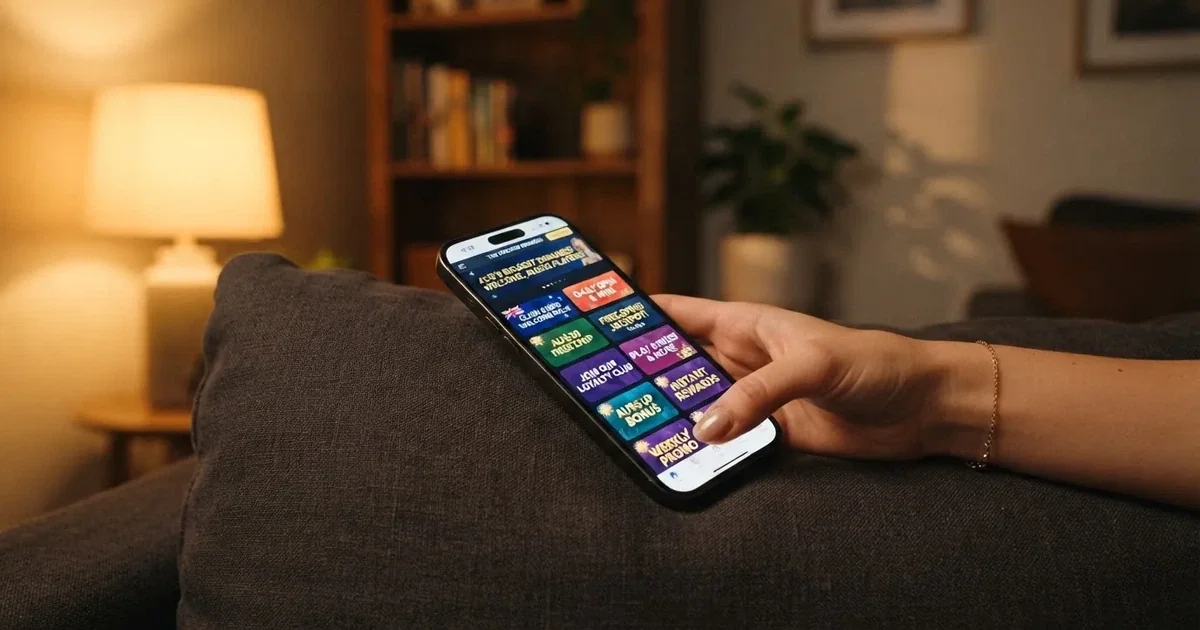
A snapshot of what follows, current as of 16 October 2026, checked against the ACMA’s formal-warning register and the Reserve Bank of Australia’s published material on card and instant payments.
Table of Contents
- Responsible play before anything else
- Crypto and the no-deposit offer
- What NDB actually means when an offer uses it
- Where this sits under Australian law
- The blocking rate, 2026
- The brands named by the ACMA, 2026
- The brands in plain language
- H2 Gambling Capital’s estimate of the cost
- What an Australian player actually controls
- AUSTRAC, thresholds and the cash rule
- What the inducement tile is doing
- Frequently asked questions
Responsible play before anything else
The first thing to put on the page is the one that comes last in a marketing email. Offshore NDB casinos are not connected to BetStop, the National Self-Exclusion Register that has been live since August 2023 and binds every Australian-licensed wagering service. Self-excluding through BetStop cannot block an offshore site. Gambling Help Online runs a 24/7 chat, and the National Gambling Helpline (1800 858 858) is free from anywhere in Australia. Both are run by people who do not sell bonuses and do not need a deposit.

That is the order: if a reader scans no further than the lead, this is what the scan should leave behind. Everything below describes a product Australian consumer law does not reach; the supports above do.
A second, more practical lever sits one step removed from the support lines. Commonwealth Bank, ANZ and Westpac each let customers apply a gambling block to eligible cards through their own apps. ANZ’s block extends to transactions routed through Apple Pay on an eligible card, and turning the block off again requires a 48-hour waiting period, with the bank warning that some non-gambling transactions may be caught in error. Westpac’s block works at the merchant-category-code level: it refuses authorisation on transactions tagged “Betting/Casino Gambling” rather than on the merchant’s name. CommBank’s own lock works through the CommBank app and carries the same caveat that no card-level block catches every gambling transaction. None of these blocks reach a crypto deposit or a bank transfer to an unknown recipient; what they catch is the card leg. For a punter trying to keep the option closed, the card block plus BetStop plus the helpline is the practical triangle, not any one of them alone.
Crypto and the no-deposit offer
Paying for an NDB offer with bitcoin does not change what the offer is. It changes the rail, and that is the entire change. The credit is still a marketing inducement from an unlicensed offshore operator; the loss, if any, is still unrecoverable under Australian consumer law; and the ACMA still treats the brand the same way it treats the brand paid for with a Visa card. What crypto does do is remove two of the friction points an Australian bank would otherwise put in the way: the merchant-category-code block on the card and the chargeback option on a disputed transaction. It does not remove the underlying illegality of the supply.
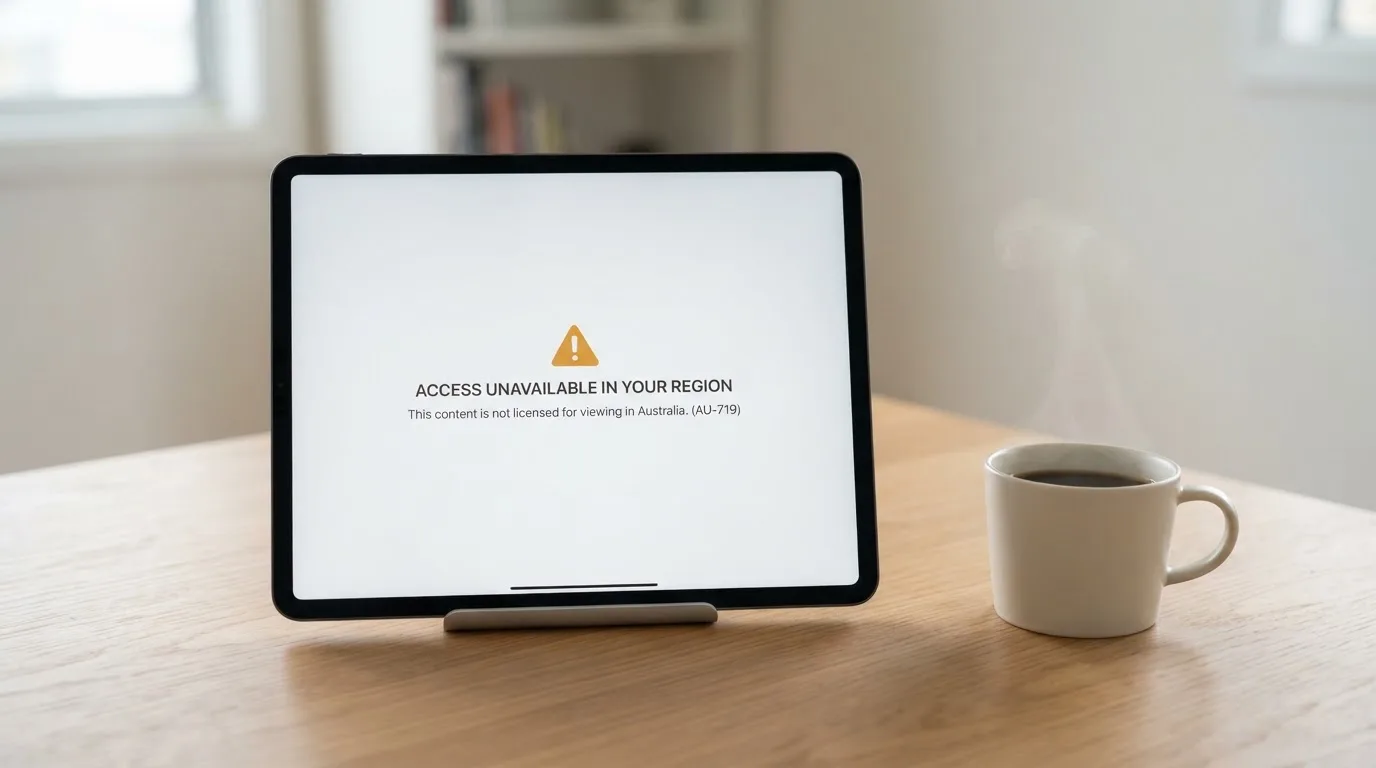
The “ndb bitcoin casino” search sits on a real question wrapped in marketing language. The question underneath it is whether using a permissionless rail changes who is on the hook when the offer goes wrong. It does not. A crypto transfer is not reversible in the way a card chargeback is, and the absence of an intermediary is the absence of the only body that might have helped. The crypto path is therefore not a workaround; it is a faster track to the same destination, with fewer handrails on the way.
The same framing applies to “no KYC” claims. An NDB site that markets itself as anonymous is marketing the absence of an Australian-licensed operator’s identity checks. The site has none of the obligations those checks exist to satisfy: no AUSTRAC reporting, no AML/CTF programme that an Australian reporting entity would run, no path to a complaint. Anonymity sold as a feature is anonymity from the regulator and the dispute body alike. The reader who wants that is choosing, in writing, to be outside the system the offer pretends to sit inside.
What NDB actually means when an offer uses it
NDB stands for no-deposit bonus. The credit is paid to a new account before the player has transferred any money in. In practice the offer is small — a few dollars in bonus cash or a handful of free spins on a single named pokie — and the conditions attached to it are large. The bonus itself is rarely withdrawable; what can be withdrawn is winnings earned from it, after those winnings have been turned over a stated number of times, on games the operator permits, often with a maximum cashout ceiling that caps the eventual withdrawal well below what the credit could have produced at face value.
This is the structure that gives the offer its punchline. The credit is free to take and expensive to clear. A small bonus with a 40x or 50x wagering requirement on a restricted game list, with a $100 maximum cashout, costs the player many sessions of play for the chance of a withdrawal that would, on a straightforward spin-count basis, sit at a small fraction of the headline figure. The expected loss across those sessions is what the bonus really costs, and that figure is positive even before any max-cashout rule cuts the top off.
A few terms recur in the small print and repay a moment’s attention. The “wagering requirement” or “playthrough” is the multiple of the bonus (or sometimes of bonus plus deposit) that must be staked before a withdrawal unlocks. “Maximum cashout” is the ceiling on what can be withdrawn from bonus-derived winnings, and it is where most of the marketing math dies. “Eligible games” is the list the operator accepts turnover on; pokies typically count 100%, table games often count 10% or nothing, and “excluded games” sit outside the contribution table entirely. “Sticky” versus “non-sticky” distinguishes whether the bonus amount itself returns to the house when the player withdraws, or only the winnings above it. None of these terms is friendly to a player reading them for the first time, and the offshore operators writing them are under no obligation to make them so.
Where this sits under Australian law
The Interactive Gambling Act 2001, as tightened by the Interactive Gambling Amendment Act 2017, makes it an offence to supply online casino games, online pokies or in-play betting to a person physically in Australia. No state or territory licenses online casino games; the only online wagering services that Australian law permits are pre-event bets on sport and racing, lotteries and keno. The Northern Territory Racing and Wagering Commission regulates fifty-two online bookmakers — Sportsbet, Bet365 and Ladbrokes among them — for tax reasons, meeting once a month in Darwin with no full-time staff of its own. The Commission’s reach is the wagering sector, not the casino sector, which is why an NDB offer sits outside it regardless of the licence the offshore site displays in its footer.
The ACMA is the body that enforces. It investigates complaints, issues formal warnings, and asks Australian ISPs to block illegal services. A formal warning is a published public record naming the operator behind a brand; it is not a private letter and it is not a one-off. The same operator showing up in a second warning has been told once and continued, which is why the ACMA’s register reads as a list of repeat offenders alongside first-time ones. As of the round reported on 26 June 2026, 1,751 illegal gambling and affiliate-marketing websites had been blocked since the first blocking request in November 2019, with the latest round alone adding 7Signs, ChromaBet, Donbet, Duospin, Freshbet, Slots Gem, Jacks Club, Lucky Start, PointsBetz, Spinrise, Vinyl Casino and Wildsino to the blocked list. More than 230 unlicensed services had left the Australian market since enforcement was tightened in 2017, which is the figure to keep in mind when an offshore brand markets itself as established.
The individual player is not the target of the IGA. The Act names the provider. What the Act does not do is give the player the protections an Australian consumer would otherwise have: there is no Australian dispute resolution body to approach, no AFCA route, no local regulator to complain to. A withdrawal refused by an offshore operator sits with the operator. A balance left on a site that gets blocked by an ISP sits with the player. These are the practical consequences of the legal prohibition, and they are the part an “NDB casino” landing page has no incentive to describe.
Two further pieces sit alongside the prohibition. First, credit cards and credit-related products cannot be used to fund licensed online wagering in Australia; the ban took effect on 11 June 2024 and carries operator penalties up to $247,500. A site asking for a credit card or a credit-funded wallet is operating outside the Australian rules regardless of what it accepts from elsewhere. Second, the Interactive Gambling Amendment (Gambling Reform) Bill 2026 passed Parliament on 19 August 2026; its advertising and inducement measures commence 1 January 2027. The law exists with a start date, and on a 2026 page it is not yet in force.
The blocking rate, 2026
The ACMA’s first blocking request went out in November 2019. By 26 June 2026, 1,751 illegal sites and affiliate pages had been blocked across the intervening years, with more than 230 unlicensed services having left the Australian market since 2017. The arithmetic belongs to the reader as a band, not a single figure.
Working from the start of blocking in November 2019 to the round reported in late June 2026 gives a window of roughly six and a half years. Across that window, the blocking rate on illegal sites alone runs in a band of roughly 200 to 270 sites blocked per year, with the year-by-year count varying as enforcement rounds come in batches rather than as a steady drip. The same period saw an outflow of unlicensed services averaging in a band of roughly 25 to 30 per year. The two numbers measure different things — a block is a technical action against a site, an exit is a market decision by an operator — and they move together only loosely. What the band shows is the shape of enforcement as it has actually run: not a single decisive strike but a continuing pace at which the list of reachable brands shrinks and the operators behind them choose, or are forced, to leave.
The condition on the band is the condition on every ACMA figure: it counts what the ACMA has acted against, not the full population of illegal services, which is unknown and which grows as new brands register. The pace reads as steady against the list it acts on, and as an undercount against the list it does not.
The brands named by the ACMA, 2026
The table below carries the eleven brands the ACMA has issued formal warnings over for offering prohibited services to Australians. Each entry pairs the brand with the operator behind it, the warning date as published, and the payment method or service the subject support token in §6 of the underlying brief names — or marks as having no data. It is not a ranking and not a recommendation. The only source for bonus terms on these brands was affiliate marketing pages, and the brief instructed that no bonus terms be carried here.
| Brand | ACMA action and date | Operator named by the ACMA | Subject support |
|---|---|---|---|
| RocketPlay | Formal warning, March 2026 (Pulsup Ltd); earlier Dama N.V., May 2022 | Pulsup Ltd; earlier Dama N.V. | listings-only |
| Level Up Casino | Formal warning, May 2022 | Dama N.V. | listings-only |
| Woo Casino | Formal warning, March 2025 | Dama N.V. | no data |
| Spirit Casino | Formal warning, May 2025 | Dama N.V. | no data |
| National Casino | Formal warning, July 2025 | Consolutetish S.R.L. | listings-only |
| Bizzo Casino | Formal warning, July 2025 (Consolutetish S.R.L.); earlier TechSolutions, 2022 | Consolutetish S.R.L.; earlier TechSolutions | listings-only |
| Ignition Casino | Formal warning, July 2025 | Bamboo Media | no data |
| Instant Casino | Formal warning, February 2025 | EOD Code SRL | listings-only |
| Jackbit | Formal warning, April 2026 | Ryker B.V. | no data |
| Casino Intense | Formal warning, April 2025 | Sterplay Holding Ltd | listings-only |
| Sky Crown | Formal warning, September 2022 | Hollycorn N.V. | no data |
The shape of the table is the shape of the ACMA’s own register. Dama N.V. appears three times across separate brands and three separate years — May 2022, March 2025, May 2025 — which is the operator the ACMA has had to warn the most often in this set. TechSolutions appears twice across Bizzo Casino (2022) and the rest of the TechSolutions family. The repetition is the point: a warning is published, the operator continues under a related brand, and the ACMA names the new brand. The list grows sideways through the same corporate names.
What “listings-only” carries is the payment-method or service the brand’s marketing pages mention by name, not the offer terms. The brief’s note is explicit: where the subject support token is listings-only, the page treats the brand only as what the listings report, and never as the operator’s own fact. “No data” entries do not name a payment method here because none of the consulted listings named one in a way the brief cleared for inclusion.
Two further warnings sit outside the table because they are about affiliate marketing pages rather than operator brands: those are the warnings the ACMA has issued against pages hosting or promoting illegal services, which the blocking count of 1,751 captures in passing. The table above covers operator brands only.
RocketPlay
The brand has been warned twice and by two different operators. The first warning named Dama N.V. in May 2022; the second, in March 2026, named Pulsup Ltd over RocketPlay specifically. Both are formal warnings under the IGA for offering prohibited interactive gambling services to Australians. The brand therefore carries two operators across four years of enforcement, with no change in the underlying legal status of what it offers. Affiliate listings mention the brand by name; no operator-published Australian licence exists.
Level Up Casino
A Dama N.V. brand warned in May 2022 as part of the six-brand batch that included Bambet, Dazard, Level Up, Rocketplay, Wild Tornado and Cobra Casinos. The brand has not been re-warned under a different operator name in the register the ACMA publishes, which is a quieter history than some of the others on the list and is the only thing it has going for it. The legal status of the supply has not changed.
Woo Casino
Dama N.V., formal warning March 2025. The brand is one of three Dama N.V. brands on this list, and the second of the three to be warned after the original 2022 batch. No listings-only support token appears in the brief; the row sits without a payment-method column because no consulted listing cleared that field for inclusion.
Spirit Casino
Dama N.V., formal warning May 2025. The third of the three Dama N.V. brands here, and the most recent of the operator’s appearances on the ACMA register. Same pattern: a brand carrying a small inducement offer, an operator named in the warning, no change in the underlying legal status of what the brand supplies.
National Casino
Consolutetish S.R.L., formal warning July 2025. The brand sits alongside Bizzo Casino in the same Consolutetish S.R.L. warning, which is the way the ACMA’s July 2025 round grouped them: one operator, two brands, one warning publication. The brief’s listings-only support token covers the Australian regulators’ own registers rather than the operator’s terms.
Bizzo Casino
Two warnings across two operators. The earlier warning, in 2022, named TechSolutions (CY) Group Limited and TechSolutions Group N.V.; the 2025 warning named Consolutetish S.R.L. alongside National Casino. The operator behind the brand has changed on paper without the legal status of the supply changing at all. AUSTRAC and BetStop are the Australian bodies whose registers the listings-only token reflects.
Ignition Casino
Bamboo Media, formal warning July 2025. The brand is the only one named against Bamboo Media in this set, which makes the warning the operator’s first published appearance on the register as far as the ACMA’s published records show. The legal status of what the brand offers is unchanged.
Instant Casino
EOD Code SRL, formal warning February 2025. The listings-only token names payment-method pages the brand’s marketing touches on, which is the most that the consulted sources allow. The brand is one of the smaller presences in this set by warning count.
Jackbit
Ryker B.V., formal warning April 2026. The most recent of the April 2026 warnings and the freshest brand on this list. No listings-only support token in the brief; the row sits without a payment-method column because no consulted listing cleared that field for inclusion.
Casino Intense
Sterplay Holding Ltd, formal warning April 2025. AUSTRAC, BetStop and the gambling-insider listings cover the Australian-facing surface the brand presents; the operator behind the brand is a single name in the warning, and the warning is the only enforcement action on the register against this operator.
Sky Crown
Hollycorn N.V., formal warning September 2022. The brand is named alongside Blue Leo in the same warning publication; both share the operator and the same legal status of supply. No listings-only support token in the brief; the row sits without a payment-method column because no consulted listing cleared that field for inclusion.
The brands in plain language
A formal warning under the Interactive Gambling Act 2001 is the ACMA’s published record that it has told a specific operator that a specific brand is offering a prohibited interactive gambling service to Australians. The warning is a public document; it does not require a court finding to carry weight; and it is the ACMA’s intermediate step before asking ISPs to block a site. Once a brand is on the blocking list, Australian customers cannot reach it through the main retail ISPs at all. The eleven brands above are the ones the ACMA has named; the blocking list runs longer and includes affiliate marketing pages and smaller skins the regulator has not named by brand.
The same operator appearing under more than one brand is the through-line. Dama N.V. has three brands on this list, two of them named in 2025 warnings after the original 2022 batch — which is what an enforcement pattern looks like when it has not deterred the operator. TechSolutions has two. Hollycorn N.V. has two in the same warning publication. Consolutetish S.R.L. has two in the same July 2025 warning. The variety of brand names is the variety of skins; the operators are fewer and recur.
For the punter reading this, the practical reading is short. A brand on the ACMA’s warning register is a brand the regulator has published a finding against, and the underlying supply — online casino games and online pokies to Australians — has no Australian licence in any state or territory. The “licence” the brand displays in its footer is a licence in another jurisdiction that does not authorise supply to Australians; it has never done so and it cannot.
H2 Gambling Capital’s estimate of the cost
H2 Gambling Capital’s 2025 report puts annual Australian losses to illegal gambling sites at about A$3.9 billion, with the share of gambling going through legal channels falling from 74% in 2021 to 64% across the same window. The A$3.9 billion is the consumer loss, not the operator revenue, and the falling legal share is the part of the market the legal channels have been losing to offshore supply. The estimate is from a commercial gambling analytics firm cited in industry reporting and is the only modelled figure for illegal-market losses in the brief; it should be read as a model output rather than an audited number, but it is the figure consistently carried by the reporting on the ACMA’s enforcement round.
The implication for an NDB discussion is direct. The inducement tile exists because the illegal market is a market, and the operator offering an NDB credit is bidding for a share of the A$3.9 billion the model estimates. A small credit to a new account is the cost of acquiring the customer; the expected lifetime revenue from that customer is the calculation that pays for the credit and then some. The arithmetic the operator runs is the same arithmetic the inducement hides from the player: the credit is cheap, the player is the product, and the legal channels the player is being drawn away from are the ones that hold the regulator, the dispute body and the responsible-gambling infrastructure the offshore site does not.
What an Australian player actually controls
Three controls sit in an Australian player’s hands, and they have unequal reach.
The first is the card block. Westpac’s gambling block refuses authorisation at the merchant-category-code level; ANZ’s block, once activated, also blocks Apple Pay transactions on the eligible card and adds a 48-hour cool-off before the block can be turned off again; Commonwealth Bank’s lock works through the CommBank app with the same caveat that no block catches everything. Apple Pay itself does not charge the consumer a fee and does not set the transaction limits — those come from the card issuer or merchant — but a card-level block extends to the wallet where the bank’s terms say so. By the end of 2025, Apple Pay, Google Pay and Samsung Pay together accounted for around 45% of all card payments in Australia by number, which is the share of card spend a block on the card itself can reach when the wallet is configured to use it. None of these blocks reach a crypto deposit, a direct bank transfer, or a BPAY payment, and none reaches a brand the operator runs under a name the ACMA has not yet published.
The second is BetStop. The National Self-Exclusion Register has been live since August 2023 and binds Australian-licensed online and phone wagering services. An offshore NDB casino is not connected to BetStop, so a self-exclusion through BetStop does not close an offshore account. What BetStop does is close the legal-channel accounts the player might otherwise use to work around a problem, which is most of the practical value it has for someone who has already moved to offshore supply.
The third is the bank’s payment routing. PayID shows the name of the account holder before the transfer is sent, and the operator of the system warns that being asked to transfer money to a PayID on an illegal gambling site almost certainly means a scam site. PayID-based instant transfers are available at over 100 Australian financial institutions, with more than 25 million PayID identifiers registered on the New Payments Platform as of April 2025. With Osko, a transfer between participating banks arrives in under a minute, 24/7 including weekends — the speed the inducement relies on to feel frictionless. That same speed is the speed at which a transfer to an unknown account holder leaves an Australian account. BPAY, the older bill-payment service, has been available since 1997 across more than 140 banks and financial institutions, and runs through the same parent group, Australian Payments Plus, that runs PayID and Osko. None of these rails stops a willing player from sending money; what they do is put the recipient’s name in front of the sender first, and the recipient’s name is the cue a player needs to recognise an illegal brand.
AUSTRAC, thresholds and the cash rule
AUSTRAC’s threshold-transaction-report rule requires reporting of transfers of A$10,000 or more. The rule applies only to physical cash. Ordinary electronic bank transfers are not subject to that per-transaction reporting requirement, regardless of the amount sent. The rule that often gets quoted as a “you must report any transfer over $10,000” rule is the cash rule; for an electronic bank transfer the reporting regime is different and runs on the reporting entity, not the customer.
The relevance for the NDB discussion is the framing. The Australian reporting regime for electronic payments does not sit on the customer per transaction. The reporting sits on the bank, the digital currency exchange and other reporting entities, and it is the reason an Australian bank knows enough about a customer’s gambling transactions to offer a gambling block in the first place. The customer’s control is upstream of that regime — at the card, at the BetStop registration, at the decision to send the transfer — not at the reporting line. A punter reading the threshold rule as “I have to report my own transfers” is reading the wrong rule; AUSTRAC’s threshold rule is not that rule.
What the inducement tile is doing
Read the marketing email again with the above in mind. The tile is small. The credit is free. The eligible-games list is short. The wagering requirement is large. The maximum cashout is a ceiling the credit could not have reached in any case. The expected cost to the player, modelled as turnover times (one minus RTP), is positive on average and is paid in time as much as in money. The operator’s win from the tile is the player who keeps depositing after the credit is cleared, which is what the inducement was always buying.
The legal status of the supply does not change because the credit is small. The offshore licence in the footer does not authorise supply to Australians. The dispute body does not exist on the Australian side. The blocking list grows. The list of operators the ACMA has named is shorter than the list of skins those operators run, which is the gap the warnings are written into. A player who reads the tile first and the ACMA register second has read them in the wrong order, and the page exists to put the second reading first.
Frequently asked questions
What does “NDB” mean when an offshore casino advertises an NDB pokies bonus?
NDB is the operator’s shorthand for no-deposit bonus: a small credit paid to a new account before the player has transferred any money in. The credit is rarely withdrawable on its own; what can be withdrawn is winnings earned from it, after a wagering requirement has been met, on eligible games, often under a maximum cashout ceiling. In Australia the service delivering the bonus is itself prohibited under the Interactive Gambling Act 2001, whatever the size of the credit.
Is a no-deposit bitcoin casino offer any different from an ordinary NDB casino offer in Australia?
The credit is the same kind of inducement and the legal status is the same. The difference is the rail: bitcoin removes the merchant-category-code block a bank would otherwise put on the card leg, and removes the chargeback option that an Australian consumer might otherwise rely on. Neither change makes the supply legal or the operator licensed to supply to Australians.
Why do offshore NDB casino sites keep advertising to Australian search terms if online casino play is banned here?
Because the supply is profitable at the market level. H2 Gambling Capital’s 2025 report puts Australian losses to illegal gambling sites at about A$3.9 billion a year, with the legal channel share having fallen from 74% in 2021 to 64%. The ACMA has blocked 1,751 illegal sites and affiliate pages since November 2019 and more than 230 unlicensed services have left the Australian market since 2017, but enforcement runs against a growing list of new skins.
How fast does a PayID or Osko transfer move compared with the crypto rails an NDB crypto casino relies on?
With Osko, a transfer between participating Australian banks arrives in under a minute, 24/7 including weekends, addressed either to a BSB and account number or to a PayID. PayID-based instant transfers are available at over 100 Australian financial institutions, and more than 25 million PayID identifiers were registered on the New Payments Platform as of April 2025. The crypto rail does not move faster than Osko at its best; what it removes is the intermediary and the dispute route.
What should someone check before trusting a site’s claimed NDB casino terms?
Check whether the brand is on the ACMA’s formal-warning register, which is published at acma.gov.au. Check the operator named in the warning, because the same operator often runs more than one brand. Check the eligible-games list, the wagering multiple, and the maximum cashout before any credit is taken. Check the payment rail the site asks for — a credit card or a credit-funded wallet is operating outside Australian rules regardless of the brand. Check that the recipient of any PayID transfer shows a name the player recognises before the transfer is sent.
NDB casino offers in Australia, 2026 — More on this topic at casino banking.
See also What the newest offshore no-deposit casinos actually cost an Australian….