$1 minimum deposit pokies australia: the search, the law, and the licensed version that does exist
 Available in US
The first thing to clear up is the one the marketing never bothers to clear up. Searching for “$1 minimum deposit pokies australia” returns a wall of offshore sites promising a dollar deposit, a fast payout, and a hundred free spins. None of them are licensed in Australia. The Interactive Gambling Act 2001 prohibits the supply of online casino games and online pokies to anyone in Australia, and no state or territory issues a licence for them. The page below is written from that starting line: what the law actually says, what the regulator is actually doing about it, what a $1 deposit into an offshore casino actually buys a player, and where the same dollar spent on a real poker machine fits in. The angle throughout is the cost to the reader — what the offer is worth once the marketing is stripped away.

Current as of 23 September 2026 · Verified against the Australian Communications and Media Authority’s register of formal warnings and blocking actions.
Table of Contents
- Where to turn when the spinning stops feeling like a choice
- What a $1 deposit actually buys at an offshore pokies site
- The legal frame: what Australia does and does not license
- What the ACMA has been doing, in numbers
- Formal warnings the ACMA has issued over $1-deposit-style casino brands
- RocketPlay — a brand the ACMA warned twice
- Level Up Casino — Dama N.V. again
- Woo Casino — the ACMA wrote again in 2025
- Spirit Casino — Dama N.V., May 2025
- National Casino — Consolutetish S.R.L., July 2025
- Bizzo Casino — two operators, two warnings
- Ignition Casino — Bamboo Media, July 2025
- Instant Casino — EOD Code SRL, February 2025
- Jackbit — Ryker B.V., April 2026
- Casino Intense — Sterplay Holding Ltd, April 2025
- Sky Crown — Hollycorn N.V., September 2022
- The picture across the eleven brands
- The real, legal version of the search: the pokies in front of you
- The house edge on the games the offshore sites lean on
- Payments, payout speed, and what a $1 deposit actually does in Australian banking terms
- The fair comparison the market does not run
- What changes from 1 January 2027
- Frequently asked questions
Where to turn when the spinning stops feeling like a choice
Help is free, confidential, and around the clock. Gambling Help Online runs a 24/7 chat and the National Gambling Helpline on 1800 858 858 takes calls any time of day or night. BetStop, the National Self-Exclusion Register, has been live since August 2023 and stops a person from opening new accounts with every Australian-licensed online and phone wagering operator at once; the catch, given the subject of this page, is that BetStop binds Australian-licensed services, and an offshore casino is not on it. If the urge to chase a loss or feed a smaller and smaller deposit into a spinning screen has started to feel compulsory, the helpline is the right next step before any other step. Reaching out early costs nothing and changes the shape of the next month more than any deposit bonus ever will.
What a $1 deposit actually buys at an offshore pokies site
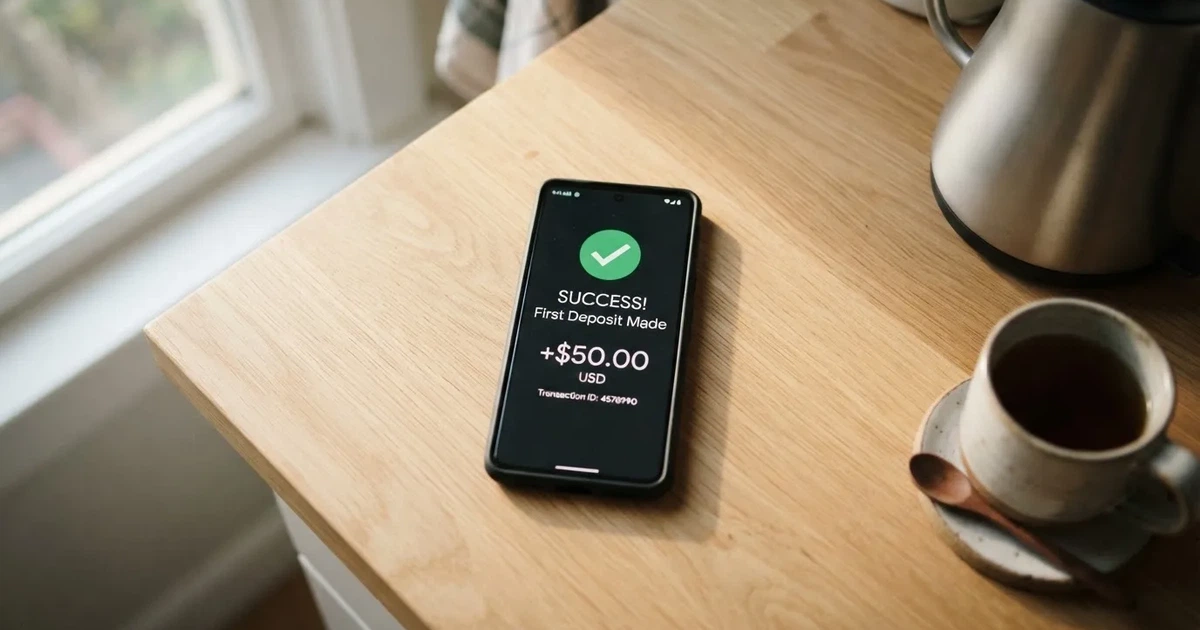
A $1 deposit has the ring of a free try — almost nothing lost if it does not work out. The real cost is not the dollar; it is the sequence the dollar unlocks.

A typical offshore welcome package pays a small cash bonus on top of the $1, then attaches a wagering multiple of around 35x to 45x the bonus, plus a maximum cash-out cap on anything won while the bonus is active. At a 40x multiple on a dollar-fifty bonus, the player is being asked to generate roughly $60 of turnover before any withdrawal is permitted. The dollar is the front door; the requirement behind it is the room. Most of those dollars come out of further deposits, because the $1 has long since been spun away before the wagering clears. Offshore sites that take Australian dollars also accept payment methods that an Australian-licensed wagering operator is forbidden to take: credit cards, credit-related products, and crypto. From 11 June 2024 the credit-card ban has carried penalties of up to $247,500 per breach for licensed operators; an offshore site is outside that regime entirely, and so is the protection that goes with it.
The deeper cost sits below the wagering. An Australian-licensed operator offers dispute resolution, complaint channels, and a regulator to escalate to; an offshore operator offers whatever its own terms say, and whatever the licence it displays on its footer says. The licence will be a Curaçao or Anjouan number, both of which sit well outside the reach of the ACMA. If a withdrawal stalls, a bonus is voided for a “irregular play” rule the player never read, or the site simply closes the account, the Australian player has no local body to complain to and no court that can compel a payout at low cost. The dollar got in. Getting more than a sliver of it back out is the actual product, and that product is patchy at best.
The legal frame: what Australia does and does not license
The Interactive Gambling Act 2001, tightened by the Interactive Gambling Amendment Act 2017, makes it an offence to provide online casino games, online pokies, or in-play betting to a person physically in Australia. State and territory regulators do not license the activity. What they do license is wagering on races and sporting events placed before the event, lotteries, and keno. In practice, the licensing work for online wagering is done by the Northern Territory Racing and Wagering Commission, which regulates 52 of Australia’s online bookmakers — Sportsbet, Bet365, Ladbrokes among them — and runs out of Darwin with no full-time staff, meeting once a month. The age floor for any licensed wagering service is 18. The law targets the provider, not the individual player, but the consequence for a player using an offshore site is real and is the absence of every consumer protection a licensed venue or operator is required to offer.

The Interactive Gambling Amendment (Gambling Reform) Bill 2026 passed Parliament on 19 August 2026, and its advertising and inducement measures commence on 1 January 2027. The reforms do not change what is and is not legal to supply; they change how it can be marketed. On a page being read in 2026 those measures are law with a start date, not law in force, and the conduct they target — bonus offers, “free spins” with deposits, the inducements that anchor pages like this one — becomes a stricter proposition from the new year.
The tax picture for the player is plain. Recreational gambling winnings are not assessable income under section 6-5 of the ITAA 1997 and losses are not deductible, unless the ATO treats the gambling as the carrying on of a business — the model only, and worth a check with a tax agent for anyone whose activity has crossed the line from occasional to habitual.
What the ACMA has been doing, in numbers
The Australian Communications and Media Authority holds three enforcement levers for offshore sites: formal warnings to operators, blocking requests to Australian ISPs, and the maintenance of BetStop for self-exclusion. Two figures set the scale of the work. According to the ACMA as reported in June 2026, a cumulative total of 1,751 illegal gambling and affiliate marketing websites had been blocked since the first blocking request in November 2019 — almost seven years of enforcement, with the blocking list growing every month. More than 230 unlicensed gambling services had left the Australian market entirely since enforcement was strengthened in 2017, which suggests the warnings and the blocks bite hard enough that some operators decide it is easier to stop accepting Australians than to keep them. H2 Gambling Capital’s 2025 report estimated that Australians still lose about A$3.9 billion a year to illegal gambling sites, and that the share of gambling going through legal channels fell from 74% in 2021 to 64% — the legal channels still hold the majority, but the illegal share has crept up by ten percentage points in five years.
A single blocking round reported on 26 June 2026 asked Australian ISPs to block 12 more illegal gambling websites in one pass: 7Signs, ChromaBet, Donbet, Duospin, Freshbet, Slots Gem, Jacks Club, Lucky Start, Pointsbetz, Spinrise, Vinyl Casino and Wildsino. The pace is steady, the list is long, and the names that get added in any given month are largely unknown to the public, which is partly why the search results keep coming. New domains replace old ones; the marketing shifts to a fresh URL and the cycle starts again.
A worked picture of the blocking rate, using only what the ACMA reports directly:
- First blocking request: November 2019.
- Cumulative total at June 2026: 1,751 websites blocked across roughly 80 months of enforcement.
That gives a long-run average of around 21 to 22 sites blocked per month across the full period, with the monthly rate in active periods running well above that average and quieter months sitting below it. The right way to read the number is not as a precise monthly figure but as a band: somewhere between one and two dozen illegal or affiliate sites removed from Australian reach each month over the life of the scheme, accelerating in active rounds and slowing in between.
Formal warnings the ACMA has issued over $1-deposit-style casino brands
The ACMA does more than ask ISPs to block. It writes directly to the operators behind named sites, putting them on notice that they are providing prohibited interactive gambling services to Australians. A formal warning is not a fine; it is a published statement that the named company has been told, in writing, that what it is doing is illegal under the Interactive Gambling Act 2001. The operators the ACMA has named in formal warnings in the last two years include the brands that occupy the rest of this page. Each carries a date and the legal entity the ACMA named as responsible; no other source for the warning exists beyond the regulator’s own publication.
A snapshot of the formal-warning landscape the ACMA itself publishes:
| Brand | ACMA action and date | Operator named by the ACMA | Subject support |
|---|---|---|---|
| RocketPlay | Formal warning, March 2026; earlier Dama N.V., May 2022 | Pulsup Ltd | — |
| Level Up Casino | Formal warning, May 2022 | Dama N.V. | listings-only (BGaming) |
| Woo Casino | Formal warning, March 2025 | Dama N.V. | — |
| Spirit Casino | Formal warning, May 2025 | Dama N.V. | — |
| National Casino | Formal warning, July 2025 | Consolutetish S.R.L. | listings-only (en.wikipedia.org) |
| Bizzo Casino | Formal warning, July 2025; earlier TechSolutions, 2022 | Consolutetish S.R.L. | — |
| Ignition Casino | Formal warning, July 2025 | Bamboo Media | — |
| Instant Casino | Formal warning, February 2025 | EOD Code SRL | — |
| Jackbit | Formal warning, April 2026 | Ryker B.V. | — |
| Casino Intense | Formal warning, April 2025 | Sterplay Holding Ltd | listings-only (ABC, ACMA, Crown Melbourne) |
| Sky Crown | Formal warning, September 2022 | Hollycorn N.V. | — |
Each row is a brand that surfaced during a search for $1 deposit pokies in Australia; each one the ACMA has named in a formal warning over the supply of prohibited interactive gambling services. None of them is a recommendation; each is named because the regulator has acted against it. The “Subject support” column records what third-party listings (game directories, encyclopedic entries, news reports) say the brand offers in terms of payment methods, supported coins, or game providers — where research did not surface that information, the cell carries an em dash rather than a guess. Two of the eleven appear in encyclopedic listings that name them at all, and the rest return no third-party profile beyond the regulator’s own publication.
The shape of the table is the point. Eleven brands, none of them Australian-licensed, all of them warned about the same conduct in roughly the same legal terms. A reader arriving from a $1-deposit search is not choosing between eleven options; they are looking at eleven instances of the same prohibited offering.
RocketPlay — a brand the ACMA warned twice
RocketPlay is unusual in this set because the ACMA has warned the people behind it twice, under two different corporate names. The first warning was issued in May 2022 to Dama N.V., covering six casino brands of which RocketPlay was one. The second, issued in March 2026, named Pulsup Ltd as the operator of RocketPlay specifically. Two warnings, four years apart, on the same conduct: supplying prohibited online casino games and online pokies to Australians. The site accepts the payment methods that Australian-licensed wagering is barred from taking, including crypto, and operates outside any Australian complaints body. Research found no third-party profile for this site, so it remains undefined here. For a player who has been using the site already, the 2026 warning is the moment to take stock: the conduct the regulator has now named twice is the same conduct the player has been paying for, and the protection the player thought the licence in the footer offered is not Australian.
Level Up Casino — Dama N.V. again
Level Up was one of six brands named in the May 2022 warning to Dama N.V., and the brand name appears in third-party listings of games supplied by BGaming — a single-line profile rather than a substantive one. No further information about its payment methods, withdrawal times, or current operating status is carried by the research. The same operator warning covers the same conduct, and the same absence of Australian consumer protection follows from it.
Woo Casino — the ACMA wrote again in 2025
Dama N.V. received the May 2022 warning, then in March 2025 the ACMA issued a separate formal warning to the same company specifically over Woo Casino. Two rounds, four years apart, the second one naming a single brand rather than six. The pattern matters: a warning issued under one brand does not stop the operator opening the same product under another, and the regulator has been naming each new surface as it surfaces. Research does not carry a profile of Woo Casino’s payment methods or game providers, so the only confirmed fact about it is the warning.
Spirit Casino — Dama N.V., May 2025
Spirit Casino is the second of the Dama N.V. brands the ACMA returned to in 2025, with its own formal warning issued in May 2025. The conduct on the regulator’s side is the same as for the other Dama N.V. brands; the difference is that the ACMA is willing to issue a fresh warning for each new brand rather than treat the 2022 letter as covering all future activity. No independent profile of Spirit Casino’s payment or game supply was available to the research, and none is offered here.
National Casino — Consolutetish S.R.L., July 2025
National Casino appears in third-party encyclopedic listings as a brand name, but the research uncovered no independent data on its operations. The ACMA’s July 2025 warning named Consolutetish S.R.L. as the operator. The conduct is the same — prohibited supply to Australians — and the absence of a third-party profile is itself information: the brand is on the regulator’s list and on the encyclopedic fringe, not in any Australian reviewer’s catalogue.
Bizzo Casino — two operators, two warnings
Bizzo is the brand with the most layered history on this list. The ACMA issued a formal warning over Bizzo Casino to TechSolutions (CY) Group Limited and TechSolutions Group N.V. in 2022, then in July 2025 issued a fresh formal warning to Consolutetish S.R.L. over the same brand. Two operators, two warnings, one brand name. The lesson is mechanical: a domain is not the same as an operator, and the brand on the homepage can change hands without the homepage changing. Research did not surface an independent profile of Bizzo Casino’s payment methods or game providers.
Ignition Casino — Bamboo Media, July 2025
Ignition Casino was named in the same July 2025 warning as National Casino and Bizzo Casino, but as a separate brand with its own operating entity: Bamboo Media. The research did not return an independent profile for this operator. The conduct is the same; the entity the ACMA wrote to is a different one.
Instant Casino — EOD Code SRL, February 2025
The ACMA issued a formal warning to EOD Code SRL over Instant Casino in February 2025. The conduct is the supply of prohibited interactive gambling services to Australians. No third-party profile of its payment methods or game providers was available to the research. The brand sits in the same row as every other entry here: named by the regulator, not licensed in Australia, and outside the BetStop self-exclusion register.
Jackbit — Ryker B.V., April 2026
Jackbit was named in a formal warning to Ryker B.V. in April 2026, alongside CasinOK, with the same conduct cited. Crypto-first offshore sites are a familiar pattern in this corner of the market — they take Bitcoin and other coins specifically because those payment rails are outside the credit-card ban that has applied to Australian-licensed wagering since 11 June 2024. The research uncovered no independent profile of this operator’s methods, but the crypto angle is implicit in the kind of product the ACMA was writing to.
Casino Intense — Sterplay Holding Ltd, April 2025
Casino Intense received a formal warning from the ACMA in April 2025, with Sterplay Holding Ltd named as the operator. It is the only brand in this set with a third-party profile that reaches into Australian news and regulatory sources, which still means it is named in passing rather than reviewed. The conduct is the same; the regulator’s letter is the only document of substance about it.
Sky Crown — Hollycorn N.V., September 2022
The ACMA’s formal warning to Hollycorn N.V., issued in September 2022, covered Sky Crown and Blue Leo as two services run by the same operator. Sky Crown is the brand that anchors this page’s research; the ACMA’s letter is the most recent formal action that names it. The research yielded no independent profile for this site.
The picture across the eleven brands
Eleven brands, two distinct Dama N.V. rounds, a TechSolutions-then-Consolutetish relayer for Bizzo, and a fresh set of operators in 2025 and 2026. None of them is licensed in Australia. None of them is on BetStop. None of them gives a player the recourse that an Australian-licensed venue is required to give. The “$1 minimum deposit” pitch is the same on every one: a small entry number, a marketing-led bonus, a wagering requirement, and a payment method that an Australian operator cannot legally accept. The ACMA has written to the operators, has asked ISPs to block the domains, and has accumulated 1,751 blocking actions since November 2019. The site that surfaces today under a new name is, statistically, one of a long line of replacements.
The real, legal version of the search: the pokies in front of you
The licensed, regulated version of a poker machine exists in every Australian state and territory, in clubs, hotels and casinos. Electronic gaming machines — “pokies” is the native term for them — were first operated legally in 1956, by registered clubs in New South Wales. Each jurisdiction regulates the design, the return-to-player floor, the number of machines per venue, and the closing time separately. The numbers set the scale. In 2020-21 Australians bet almost A$150 billion through gaming machines and lost A$12.18 billion on them. Australia has about 3% of the world’s pub and club poker machines with 0.3% of the global population — a per-capita density that no other country matches.
NSW held 87,298 gaming machines outside casinos across 2,195 venues in June 2023, with player losses of A$8.18 billion in 2022-23. Queensland had 21,122 gaming machines in 351 venues as of October 2023; Victoria had 26,380 outside Crown Casino in 488 venues in 2021-22, sitting under a statewide cap of 30,000. Western Australia banned poker machines in pubs and clubs entirely when Crown Perth opened in 1985; Crown Perth’s machine count has since grown from roughly 200 in 1985 to about 2,500, all approved by the state’s Gaming and Wagering Commission. Tasmania gave the Federal Group a monopoly over its poker machines from 1968; legislation passed in November 2021 ended that monopoly, moving oversight to the Tasmanian Liquor and Gaming Commission, and Tasmania’s planned mandatory pre-commitment cards were pushed back to late 2025.
The legal minimum return-to-player on a poker machine varies by jurisdiction: 85% in NSW, the Northern Territory, Queensland and (generally) Victoria, with Crown Melbourne set at 87%; 87% in the ACT and Tasmania; 87.5% in South Australia; and 90% in Western Australia. A $1 spin at an 85% RTP has a house edge of 15 cents on the dollar; a $1 spin at a 90% RTP has a house edge of 10 cents. The percentages look close, but across thousands of spins the difference between an 85% floor and a 90% floor is roughly a third of the expected loss.
The legal product has features the offshore product rarely does. A real poker machine pays out in cash at the venue, on the spot, with no withdrawal queue. Self-exclusion at the venue is meaningful. Pre-commitment, where it has been rolled out, gives the player a hard cap that the machine enforces. Tasmania’s pre-commitment card is the most ambitious version in the country; the other states are moving more slowly. The offshore pokies site offers none of that, which is part of why the legal product, for all its weight, has a consumer frame around it that the offshore version does not.
The house edge on the games the offshore sites lean on
Baccarat and blackjack are the two table games offshore casinos put at the top of their lobbies alongside the pokies, and their house edges are the cleanest reference points for what a $1 deposit is buying in real terms.
Baccarat’s house edge is 1.06% on the Banker bet, 1.24% on the Player bet, and 14.36% on the Tie. The game is dealt from a six- or eight-deck shoe in its most common variant, punto banco; cards 2-9 count at face value, 10/J/Q/K count as zero, aces count as one, and hand totals are taken modulo 10. Punto banco was developed in Havana in the 1940s and the casino banks the game at all times, playing out both hands by fixed drawing rules; chemin de fer, the two-player French variant the game grew out of, lets the players take the bank. Crown Melbourne offers three baccarat variants as approved table games regulated by the Victorian Gambling and Casino Control Commission, which replaced the VCGLR as Victoria’s casino regulator on 1 July 2022.
Blackjack’s house edge is roughly 0.28% under liberal Las Vegas Strip rules (dealer stands on soft 17, double on any two, double after split, resplit aces, late surrender) and about 0.43% under Atlantic City rules. The game grew out of the French vingt-un and the Spanish veintiuno, which Miguel de Cervantes described in Rinconete y Cortadillo around 1601-1602, and was renamed “blackjack” around 1899 during the Klondike Gold Rush. Variants licensed in Australian venues include Spanish 21 (no 10s, liberal player rules), Double Exposure (both dealer cards face up), Blackjack Switch (swap cards between two hands) and Super Fun 21 (up to four splits). Under section 66 of the NSW Casino Control Act 1992, an NSW casino operator must not offer a game like baccarat or blackjack without the regulator’s approval, and must make the approved rules available on request — a discipline the offshore product does not replicate.
A 1.06% house edge on Banker and a 0.28% house edge on a liberal-rules blackjack table are real numbers, but they only describe the edge per dollar wagered, not the dollars wagered. A $1 deposit on a poker machine at a venue with an 85% RTP loses, on average, 15 cents per dollar turned over. A $1 deposit bonus at an offshore site carries a wagering requirement on top of the game edge, and the bonus is rarely cashable in full until the requirement clears. The arithmetic is the same direction in both cases: the house edge compounds with volume, and the volume is what the wagering requirement forces.
Payments, payout speed, and what a $1 deposit actually does in Australian banking terms
A licensed Australian wagering operator takes debit cards, bank transfer, PayID via Osko, and BPAY. Credit cards and credit-related products have been banned as payment for licensed online wagering since 11 June 2024; crypto is on the same side of that line. An offshore pokies site that accepts Visa, Mastercard, and a handful of cryptocurrencies is using rails that the Australian-licensed side cannot use, and that fact alone is a marker that the site is operating outside Australian rules.
The settlement timing for the legal rails is fast and predictable: PayID via Osko settles in under a minute, BPAY settles on the next business day, debit-card deposits are usually instant, and withdrawals back to a debit card or a bank account take one to three business days once the operator’s internal approval is done. An offshore pokies site that accepts an Australian dollar deposit will usually credit the deposit within minutes, then take somewhere between 24 hours and five business days on the withdrawal — the range is wide because every operator sets its own processing window and the player’s account is governed by whatever terms the operator posted that day. Crypto deposits credit after the next network confirmation, which on Bitcoin is typically 10 to 60 minutes, and crypto withdrawals sit at the same end of the range with a network fee deducted.
The fast deposit is the easy half of the transaction. The hard half is the withdrawal, which is where unlicensed operators earn the complaints the ACMA’s blocking list is built from. A blocked site can still hold a balance; a closed account can still have winnings the player thought were theirs. None of those problems is unique to offshore sites, but the consumer protection that catches them at an Australian-licensed operator — internal dispute resolution, escalation to the state or territory regulator, the BetStop self-exclusion register — does not exist on the offshore side.
The fair comparison the market does not run
A genuine ranking of $1 minimum-deposit pokies sites would weigh four things: the licence and its regulator, the payment methods and their fees, the games on offer and their return-to-player, and the dispute process if a withdrawal stalls. The Australian market does not run that comparison, because none of the sites that surface for the search pass the first test. Every brand in this set fails the licence check, because online casino games and online pokies are prohibited interactive gambling services under the Interactive Gambling Act 2001 and no Australian licence is available to issue.
A comparison of the offshore sites against each other would weigh Curaçao versus Anjouan versus Kahnawake licences, would compare crypto withdrawal times, would list which providers each one stocks, and would record which ones still pay out at all. The research carried for this page did not gather that comparison, because the foundational question — is any of them legal for an Australian to use — answers itself before the comparison gets going.
What changes from 1 January 2027
The Interactive Gambling Amendment (Gambling Reform) Bill 2026, passed on 19 August 2026, brings new advertising and inducement rules online from 1 January 2027. The provisions target the marketing the offshore sites use to reach Australians: bonus offers that arrive in inboxes, “free spins” tied to deposits, the affiliate pages that surface for $1-deposit searches. The law does not retroactively legitimise any site that was prohibited before; it adds a sharper edge to the inducement side of the existing prohibition. Pages like this one read slightly differently from the new year, because the marketing that drives the search will be operating under a stricter regime at the same time the underlying prohibition continues to apply.
Frequently asked questions
Can I legally play $1 deposit online pokies from Australia?
No. The Interactive Gambling Act 2001 makes it an offence to supply online casino games and online pokies to a person in Australia; no state or territory issues a licence for them. Sites offering a $1 deposit are operating offshore, outside Australian law, and the ACMA has been writing to operators and asking ISPs to block the domains since 2019.
What happens to a $1 deposit sent to an offshore online pokies site?
The deposit is likely to credit quickly, but the offshore operator is not bound by any Australian consumer protection law and the ACMA’s blocking powers can take the domain offline with any balance left on the account. If a withdrawal stalls or is voided for an “irregular play” rule, the Australian player has no local complaints body and no easy court remedy.
How is a $1 online pokies deposit different from feeding $1 into a pub poker machine?
The licensed pub or club machine pays out in cash on the spot, sits under a state-set minimum return-to-player (85% in NSW, 90% in Western Australia), is subject to the venue’s self-exclusion scheme, and is regulated by a state or territory body. The offshore $1 deposit offers none of those protections, accepts payment methods Australian-licensed wagering is barred from taking, and gives the player no recourse if a withdrawal stalls.
Why do $1 deposit pokies ads keep appearing if online pokies are banned here?
The marketing reaches Australian inboxes and search results through affiliate networks and crypto-friendly ad routes that sit outside the Australian-licensed framework. The ACMA has issued formal warnings to eleven operators in the past two years and has blocked 1,751 sites since November 2019, but new domains replace old ones and the cycle repeats.
Is there a licensed Australian app for $1 deposit online pokies?
No. The activity is prohibited for supply in Australia and no licensed app exists. The licensed Australian wagering apps cover sports and racing before the event, lotteries and keno, not online casino games or online pokies.
Are online pokies treated the same as other online casino games under Australian law?
Yes. The Interactive Gambling Act 2001 prohibits the supply of online casino games and online pokies as a single category of prohibited interactive gambling service; the same rules apply to blackjack, roulette, baccarat and the pokies. Land-based pokies in clubs, hotels and casinos are licensed and regulated state by state, separately from the online prohibition.
Prepared by the Instant bank transfer casino Australia editorial staff.