
Fast payout online casinos in Australia: what the law, the bank and the ACMA actually do
Current as of 24 October 2026 · checked against ACMA formal warnings, Australian Payments Plus publications, and the Interactive Gambling Act 2001 as amended in 2023.
A reader who typed something close to “fast payout online casino Australia” into a search engine is asking a question Australian law answers before the answer exists. No state or territory licences online casino games. The Interactive Gambling Act 2001 makes offering them to a person in Australia a civil offence, and the Australian Communications and Media Authority has been blocking sites and naming operators under it for almost seven years. The speed claim — “fast payout”, “instant withdrawal”, “withdrawal in minutes” — is what the offshore operators that the ACMA has named spend their marketing money on, and it is the precise claim that a reader in Australia cannot, in the end, enforce.
A reader who arrived at this page is the reader the rest of it is written for. The order is the order a careful reader has to go through. First, what protection exists in Australia today, regardless of where the site is licensed. Then, what “crypto fast payout” actually means at an Australian bank. Then, how the Australian settlement rail works at the speed it works, and what an offshore “fast payout” claim sits on top of. After that, the eleven brands the ACMA has named in formal warnings since 2022, and a comparison table of what those warnings actually covered. Then a short overview of the offshore market and how it operates in practice. Then what the Interactive Gambling Act prohibits, how the ACMA enforces it, and what the legal and tax position of a recreational player looks like. After that, the eleven brands in detail, one block each. Finally, a calculation on the rate at which the ACMA’s enforcement has actually moved since November 2019, and five questions readers most often land on.
Table of Contents
- Responsible gaming tools a reader in Australia can actually use
- Crypto and the “fast payout” claim
- How settlements reach an Australian bank account
- The eleven brands the ACMA has named
- The fundamentals of this offshore market
- The prohibitions under the Interactive Gambling Act
- The eleven brands in detail
- How fast ACMA enforcement actually moves
- Frequently asked questions
Responsible gaming tools a reader in Australia can actually use
The first thing to settle is what protection exists, regardless of whether the offshore site is “fast payout” or slow. Three things stand.
BetStop, the National Self-Exclusion Register. Live since August 2023, BetStop binds every Australian-licensed online and phone wagering service to honour a registered exclusion. Three exclusion lengths are available: three months, twelve months, or a permanent exclusion. Once a name is registered, the licensed operator is required to close accounts, stop marketing contact, and refuse to take a bet from that person for the registered period. The register is run by the Australian Communications and Media Authority and is free to join.
What BetStop does not cover is the central point of this page. It binds only Australian-licensed wagering services — licensed bookmakers, licensed lotteries, licensed keno, licensed wagering on racing and sport before the event. An offshore online casino, of the kind that markets fast payouts to Australians, is not connected to BetStop. A self-exclusion from BetStop stops that person from being able to open new licensed accounts, but it does not stop the person from being able to load an offshore site, deposit, and play.
Gambling transaction blocks at Australian banks. Commonwealth Bank, ANZ, Westpac, NAB and others now let a customer apply a gambling block through the bank’s app. The blocks work at merchant-category-code level — they refuse authorisation of transactions registered under the merchant code “Betting/Casino Gambling” on eligible cards. ANZ’s block extends to digital wallets such as Apple Pay that draw on the underlying card, not just the physical card. Westpac’s block functions the same way, at card level. Commonwealth Bank’s gambling lock works through the CommBank app and blocks most gambling transactions on eligible cards, though the bank itself states it cannot guarantee every gambling-related purchase will be stopped. Turning an ANZ block off again requires a 48-hour cooling-off period, and the bank’s published warning notes that some non-gambling transactions may be blocked in error.
These blocks, like BetStop, sit on the Australian-licensed side of the rail. A gambling block on an Australian card stops a transaction at the merchant-code level — but only if the offshore site presents itself to the card network under the relevant MCC. An offshore operator may present itself as a different merchant category, in which case the block may not catch the deposit. The blocks are a real safeguard; they are not a complete one.
National Gambling Helpline. 1800 858 858, free, twenty-four hours a day, every day. The line is staffed by counsellors, and chat is available through Gambling Help Online. Both services are free, confidential and Australian. The Helpline is funded by the Australian Government Department of Social Services.
If a reader is here because they are considering a fast payout site and have noticed they are chasing withdrawals, the Helpline is the practical first call. If a reader is here because a licensed wagering service is moving too fast for them, BetStop is the practical first stop. If a reader is here because a bank card is being used to fund offshore play, a gambling block on the card is the practical first move. None of those tools touches the underlying fact of this page, which is that offshore online casino games are illegal to offer to anyone in Australia — but together they are the live set of safeguards an Australian reader has today.
Crypto and the “fast payout” claim
The terms around crypto are short and specific: “fast payout crypto casino”, “bitcoin casino fast payout”, “crypto casino fast payout”. A reader looking for that combination has been told, somewhere on the way in, that crypto is the fastest withdrawal route. The picture is more tangled than that.
The first thing to be clear about is the law. Under amendments to the Interactive Gambling Act 2001 that commenced on 11 June 2024, digital currency (alongside credit cards and credit-related products) is banned as a payment method for Australian-licensed online wagering services. The ban is on the licensed side. What it means for a reader is that an Australian-licensed bookmaker cannot take a crypto deposit — which closes one route to the licensed market. For an offshore online casino, no such ban applies; the operator takes what it can take.
The second thing is what the crypto side actually does. A withdrawal in bitcoin, ethereum or USDT at an offshore site is processed on the blockchain the moment the operator releases it. The blockchain part is genuinely fast — typically minutes for bitcoin, seconds for some stablecoins. What sits on either side of the blockchain transaction is the offshore casino’s own queue. An offshore site can hold a withdrawal in pending status for twenty-four hours, forty-eight hours, sometimes longer, before it ever hits the blockchain. The “fast payout” claim, where it is honest, is about the speed of the blockchain part of the journey. Where it is not, the claim is about the part the operator controls and is paying nothing to make fast.
The third thing is what happens at the Australian end. A bitcoin withdrawal that lands in a self-custody wallet is in crypto. To spend it as Australian dollars, the holder has to on-ramp it through an Australian-registered digital currency exchange, which is subject to Anti-Money Laundering / Counter-Terrorism Financing obligations under AUSTRAC and to transaction monitoring. The on-ramp takes minutes when it works and hours when it does not. AUSTRAC’s threshold-transaction-report rule, which requires reporting of transfers of A$10,000 or more, applies only to physical cash; ordinary electronic bank transfers are not subject to that per-transaction reporting requirement, regardless of the amount sent. Monitoring obligations apply to large or unusual transfers regardless of the channel, which is what makes crypto-to-AUD conversions slower than the marketing suggests.
The cost to the reader is layered. A “crypto fast payout” at an offshore casino is not a same-day Australian-dollar transfer; it is a foreign-exchange event at the Australian end, with the offshore operator’s withdrawal queue sitting on top of it. The reader pays fees twice — once to send the crypto out of the offshore site, once to convert it back to A$ at the Australian end — and accepts that the conversion rate at the moment of conversion is not the rate they could have locked in at deposit. The promise of speed is real on the rail, and largely fictional at the operator’s queue.
A separate cost sits underneath all of this. Crypto deposits to offshore sites are one of the channels AUSTRAC tracks more closely than most, because the same channels move the proceeds of scam activity. A reader who plans to deposit in crypto and withdraw in crypto should expect enhanced monitoring, holds, and the occasional requirement to source the funds — a cost in time and in disclosure that an Australian-licensed debit-card withdrawal onto an Australian bank account does not carry.
How settlements reach an Australian bank account
This is where the speed claim meets the rail it is riding on.
Australia’s New Payments Platform went live to the public on 13 February 2018, under the ownership of New Payments Platform Australia Ltd — a non-profit company whose thirteen shareholders include the Reserve Bank of Australia and Australia’s major banks. By April 2025, more than twenty-five million PayID identifiers had been registered on the platform, and PayID was available at over a hundred Australian financial institutions. The platform’s service-level agreement requires participants to keep monthly outages to no more than two minutes. The point of that engineering is precisely the kind of speed a “fast payout” claim rests on.
Three services run on the platform and matter to this page.
Osko by BPAY. A bank transfer between participating Australian banks arrives in under a minute, twenty-four hours a day, seven days a week, whether it is addressed to a BSB and account number or to a PayID. The transfer is settled between the banks; the receiving account is credited inside the under-a-minute window. Osko is operated by Australian Payments Plus (AP+), the merged entity that also runs PayID and BPAY.
PayID. A PayID is a memorable alias for a bank account — typically a phone number or email address, sometimes an ABN or organisation identifier. A transfer to a PayID shows the name of the account holder before the transfer is sent, and AP+ itself warns that being asked to transfer money to a PayID on an illegal gambling site almost certainly means a scam site. PayIDs are useful precisely because they make the receiving party identifiable before the money moves.
BPAY. A bill-payment service, in operation since 18 November 1997, now run by AP+. The payer enters a Biller Code and a Customer Reference Number from the bill, and the payment is processed overnight. BPAY is available at over a hundred and forty Australian banks and financial institutions, is offered by over ninety-five thousand businesses, and is owned equally — via parent company Cardlink Services Limited — by ANZ, Commonwealth Bank, National Australia Bank and Westpac. The 2021 ACCC authorisation that merged BPAY Group, eftpos and NPP Australia into AP+ gave the company the structure it has today.
For an Australian reader, the speed of all three rails is settled. Osko under a minute, PayID essentially as fast, BPAY overnight. The bottleneck on a “fast payout” claim from an offshore operator is therefore not on the Australian side of the rail. It is on the offshore operator’s own queue — the time the operator takes to release the funds to the Australian account — and on the merchant category code the operator presents to the Australian card network if the payout is by card.
This is also where Australian banks have built in the friction. Westpac’s gambling block refuses authorisation of transactions registered under the merchant category code “Betting/Casino Gambling” on eligible cards, which means a withdrawal from an offshore casino can be blocked at the card network — a payout to the same card that funded the deposit, in other words, may not clear. The same is true of Commonwealth Bank’s gambling lock and ANZ’s gambling transaction block. The latter extends to digital wallets such as Apple Pay that draw on the underlying card. Apple Pay does not charge consumers a fee for in-store, online or in-app use, but Apple itself notes that transaction limits and PIN requirements for Apple Pay are set by the card issuer or merchant, not by Apple — which means the gambling-block settings sit with the bank rather than the wallet.
A note on payment choice. By the end of 2025, Apple Pay, Google Pay and Samsung Pay transactions collectively accounted for around forty-five per cent of all card payments in Australia by number. The Reserve Bank’s July 2025 review of merchant card payment costs proposes removing surcharges only on eftpos, Mastercard and Visa card transactions, explicitly leaving American Express outside the scope of the proposed surcharge ban — AmEx being the older three-party network that issues cards and processes transactions itself, rather than running the four-party model Visa and Mastercard use. None of this makes an Apple Pay or AmEx withdrawal any faster than a debit-card withdrawal onto a BSB and account number — the difference is at the merchant, not at the rail — but it sets the context in which a card-based “fast payout” claim is being made.
A second legal rail sits behind the cards. Under the 2023 amendments to the Interactive Gambling Act 2001, Australian-licensed online wagering services cannot accept payment by credit card or other credit-related products. The restriction is on the licensed side, and it also constrains gambling use of linked digital wallets like Apple Pay that draw on a credit account. The credit-card ban took effect on 11 June 2024, with penalties up to A$247,500 for Australian-licensed operators. A reader who is told a site accepts credit cards for an Australian-facing deposit is being told the site is not Australian-licensed, which is the same as being told the site is operating outside the Australian rules.
The speed a reader can actually rely on, at the Australian end, is therefore the speed of Osko and PayID — under a minute between banks, twenty-four hours a day. The “fast payout” claim an offshore site makes is a claim about its own internal queue and about whether the merchant-category-code it presents will pass an Australian bank’s gambling block. The two are not the same speed, and the point in setting them out side by side is that a reader should not confuse one for the other.
The eleven brands the ACMA has named
The ACMA has issued formal warnings to eleven distinct operators over the brands set out below. The table summarises the warnings as published by the ACMA. Each row’s “subject support” column is drawn from listings of the brand at the source shown; it is recorded as the listing reports it, and not as a fast-payout claim made by the operator itself.
| Brand | ACMA action and date | Operator named by the ACMA | Subject support |
|---|---|---|---|
| RocketPlay | Formal warning, March 2026 | Pulsup Ltd (RocketPlay) | Listings at Gambling Insider name the brand; no operator-published fast-payout data carried here |
| Level Up Casino | Formal warning, May 2022 | Dama N.V. | Listings at Westpac name the brand in a gambling-block context; no operator-published fast-payout data carried here |
| Woo Casino | Formal warning, March 2025 | Dama N.V. | No data carried here |
| Spirit Casino | Formal warning, May 2025 | Dama N.V. | No data carried here |
| National Casino | Formal warning, July 2025 | Consolutetish S.R.L. | Listings at acma.gov.au, austrac.gov.au and betstop.gov.au name the brand in an enforcement context |
| Bizzo Casino | Formal warning, July 2025 (earlier 2022 warning to TechSolutions Group) | Consolutetish S.R.L. (2025); TechSolutions Group (2022) | Listings at Gambling Insider name the brand |
| Ignition Casino | Formal warning, July 2025 | Bamboo Media | No data carried here |
| Instant Casino | Formal warning, February 2025 | EOD Code SRL | Listings at EcoPayz and PayID name the brand in payments contexts |
| Jackbit | Formal warning, April 2026 | Ryker B.V. | No data carried here |
| Casino Intense | Formal warning, April 2025 | Sterplay Holding Ltd | Listings at Gambling Insider name the brand |
| Sky Crown | Formal warning, September 2022 | Hollycorn N.V. (over Sky Crown and Blue Leo) | No data carried here |
The table is a record of formal warnings, not a ranking of payout speed. Several of the eleven appear in the warnings more than once. Bizzo Casino was the subject of a 2022 formal warning to TechSolutions (CY) Group Limited and TechSolutions Group N.V., and then of a July 2025 formal warning to Consolutetish S.R.L. — the latter operator taking over the brand without a fresh licence from any Australian regulator. Dama N.V. has had warnings covering six of its brands over four years: Bambet, Dazard, Level Up, Rocketplay, Wild Tornado and Cobra Casinos in May 2022, then Woo Casino in March 2025, then Spirit Casino in May 2025, then Rocketplay again in March 2026 under Pulsup Ltd. Two operators, several brands, the same pattern of warning followed by a rebrand and a fresh warning.
What the table cannot show, and what the rest of this page covers, is the consequence for a reader who actually signs up.
The fundamentals of this offshore market
The page has, to this point, talked about the legal frame as if every reader arrived already aware of it. Most readers, fairly, do not. The basic facts of the offshore online casino market as it operates in Australia in 2026 are these.

Online casino games — slots, table games, live-dealer games — cannot be licensed in any Australian state or territory. The Interactive Gambling Act 2001 (IGA) makes it a civil offence to provide such a service to a person in Australia. The IGA was strengthened in 2017 by the Interactive Gambling Amendment Act 2017, which extended the prohibition to in-play betting and clarified the position on online pokies. Online wagering on racing and sport before the event is licensable; in practice the Northern Territory Racing and Wagering Commission (NTRWC) licences most of it, including Sportsbet, Bet365 and Ladbrokes — fifty-two online bookmakers in total — and the NTRWC has no full-time staff and meets once a month in Darwin. Lotteries and keno are licensed at state level.
For a reader, the practical meaning is that an Australian-licensed account can take a bet on a horse race, a footy match, or a lottery draw; the same account cannot load an online slot, a blackjack table or a live-dealer roulette wheel. An offshore site that offers those products to a person in Australia is doing what the IGA prohibits. The provider is the target of enforcement, not the player — the IGA does not make it an offence to play. But an offshore site offers no Australian consumer protection: no Australian complaints body, no recourse if a withdrawal is refused, no path to a refund, and the constant possibility of a block by an Australian internet service provider under an ACMA direction with any balance still on the site.
The economics of the offshore market are tilted by the prohibition. H2 Gambling Capital’s 2025 report estimates Australians lose about A$3.9 billion a year to illegal gambling sites, and that the share of gambling going through legal channels fell from seventy-four per cent in 2021 to sixty-four per cent in the most recent figure. The prohibition does not appear to be reducing spend; it is moving spend out of channels that offer Australian consumer protection and into channels that do not. That is the cost.
The payment-side architecture of the offshore market adds a second cost. An offshore site cannot take a credit card from an Australian-licensed competitor; the 2023 amendments to the IGA, in force from 11 June 2024, prohibit credit cards and credit-related products as payment for online wagering with an Australian-licensed service (penalties up to A$247,500 for operators). An offshore site, not being Australian-licensed, is not bound by that rule and will accept a credit card, a digital currency transfer, or any other method that the card network or exchange will process. The reader pays the difference: the credit-card surcharge, the conversion spread, and the monitoring at the Australian end.
A reader who is here because they have found an offshore site that promises “fast payouts” is in the position the prohibition has put them in. The point of laying it out is not to moralise — it is to make the frame visible.
The prohibitions under the Interactive Gambling Act
The IGA, as amended, is the legal frame. The Australian Communications and Media Authority (ACMA) is the regulator. The ACMA’s enforcement record is the evidence of how the prohibition is applied.
The IGA prohibits the provision of “prohibited interactive gambling services” to customers physically present in Australia. The prohibited services are online casino games (slots, table games, live-dealer games), online pokies, and in-play betting on sports. Lotteries and keno are not prohibited at the federal level; racing and sports wagering before the event is not prohibited. Online wagering is licensed by the states and territories, in practice by the Northern Territory.
The ACMA’s enforcement has three main tools.
Formal warnings. A formal warning is a public step the ACMA takes when it has reasonable grounds to believe an operator is providing a prohibited service to Australians. The ACMA publishes the warning, names the operator and the brand, and records the date. The operator has the opportunity to respond, but a warning is published even where the operator does not respond. The warning is the ACMA’s signal that the operator is on notice and that further enforcement is possible.
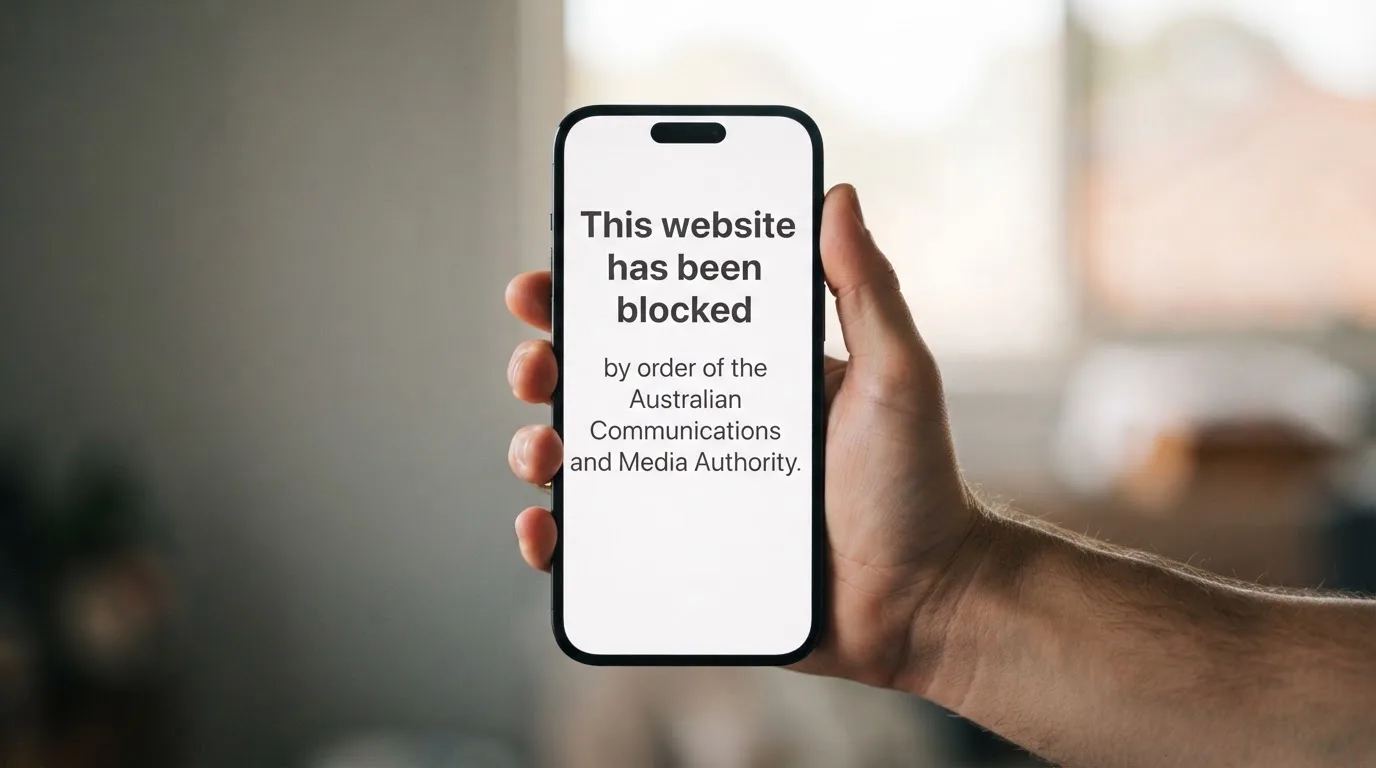
Blocking requests to internet service providers. The ACMA can ask Australian ISPs to block illegal gambling websites under section 313 of the Telecommunications Act 1997. The blocking request is a directive, and ISPs are required to comply. The first blocking request was issued in November 2019. By the round reported on 26 June 2026, a total of 1,751 illegal gambling and affiliate-marketing websites had been blocked, and more than 230 unlicensed gambling services had left the Australian market since enforcement was strengthened in 2017. The June 2026 round alone added twelve sites: 7Signs, ChromaBet, Donbet, Duospin, Freshbet, Slots Gem, Jacks Club, Lucky Start, Pointsbetz, Spinrise, Vinyl Casino and Wildsino.
Civil penalty proceedings. Where warnings and blocking are not enough, the ACMA can commence proceedings in the Federal Court for civil penalties under the IGA. Penalties for body corporates run into the millions of dollars per breach. The penalties apply to the operator, not to the player.
The enforcement record on the eleven brands in this page is a clean sample. Bizzo Casino was warned in 2022, then warned again in 2025 — the second warning to a different operator, Consolutetish S.R.L. — without any change in the prohibition the ACMA is enforcing. RocketPlay was warned in May 2022 as part of the Dama N.V. six-brand action, then warned again in March 2026 under Pulsup Ltd for the same product. The pattern is consistent: warning, rebrand, warning again. The product the ACMA is enforcing against does not change.
The 2026 reform context. The Interactive Gambling Amendment (Gambling Reform) Bill 2026 passed Parliament on 19 August 2026. Its advertising and inducement measures commence on 1 January 2027 — law with a start date, not yet in force on a 2026 page. The reform tightens the rules around inducements and advertising in the licensed wagering market; it does not, on its face, change the IGA’s prohibition on providing online casino games to Australians.
A reader’s legal position. The IGA targets providers, not players. It is not an offence for an Australian to use an offshore online casino, and the ACMA does not prosecute individuals for playing. What an Australian cannot do, on the licensed side, is use a credit card or credit-related product, or a digital currency, to fund a wager with an Australian-licensed service. The credit-card ban has been in force since 11 June 2024. The licensed deposit routes that remain are debit card, bank transfer, PayID/Osko and BPAY. A reader who is told a site accepts credit cards or crypto for an Australian-facing deposit is being told the site is not Australian-licensed, which is the same as being told the site is operating outside the Australian rules.
A reader’s tax position. Recreational gambling winnings are not assessable income in Australia (section 6-5 of the Income Tax Assessment Act 1997); losses are not deductible. A reader whose gambling is a business is in a different position and should check with the ATO. The A$3.9 billion a year estimated by H2 Gambling Capital flows, on the legal side, into untaxed recreational winnings and non-deductible losses for non-business players, and on the illegal side, into balances that the ACMA can direct to be blocked.
The eleven brands in detail
The eleven brands in this section are the ones the ACMA has named in formal warnings since 2022. The order is the order of the warnings as published. Each block states the brand, the operator the ACMA named, the date the ACMA named them, and the reading of what the warning means for a reader. The block ends on a verdict — the question the block was actually about — not on a recommendation.
RocketPlay. Operator named by the ACMA: Pulsup Ltd, in March 2026, over RocketPlay.com.au The same brand was the subject of an earlier warning to Dama N.V. in May 2022. A two-warning brand four years apart is two operators and one product line — the product line being the one the IGA prohibits. Listings at Gambling Insider name the brand in a coverage context; the table records the listing without treating it as a fast-payout claim by the operator. The verdict on RocketPlay: two warnings, two operators, four years apart, one product line — the IGA’s prohibition follows the product, not the operator.
Level Up Casino. Operator named by the ACMA: Dama N.V., in May 2022, as part of a six-brand warning that included Bambet, Dazard, Rocketplay, Wild Tornado and Cobra Casinos. Dama N.V. is one of the more prolific operators the ACMA has named under the IGA, and Level Up is one of six brands the regulator tied to the same operator in the same letter. Listings at Westpac name the brand in the context of a card-level gambling block — that is, in the context of the rail refusing the transaction. The verdict on Level Up: the rail’s view of a brand that has sat on the ACMA’s list since 2022 is what Westpac’s gambling-block material tells a reader.
Woo Casino. Operator named by the ACMA: Dama N.V., in March 2025. The same operator, three years after the six-brand warning, and a separate brand. We exclude fast-payout claims for this brand, as no operator-published data is available. The verdict on Woo Casino: one operator, three warnings over five years, one product — the prohibition is the constant.
Spirit Casino. Operator named by the ACMA: Dama N.V., in May 2025. Two months after the Woo Casino warning, the same operator, a fresh brand. The pattern of an operator moving between brand names while continuing to offer the same prohibited product is the pattern the ACMA’s enforcement record is built around. The verdict on Spirit Casino: two fresh Dama N.V. brands in three months, two warnings, the same prohibited product — the regulator’s warnings are landing on the operator rather than on the brand.
National Casino. Operator named by the ACMA: Consolutetish S.R.L., in July 2025. Consolutetish is the operator the ACMA named in the same round over Bizzo Casino. The brand’s listings at acma.gov.au, austrac.gov.au and betstop.gov.au — three Australian-government sources — all name the brand in enforcement or player-protection contexts. The verdict on National Casino: three Australian-government sources naming the brand is the cross-source pattern the regulator’s enforcement produces.
Bizzo Casino. Operator named by the ACMA: Consolutetish S.R.L., in July 2025. The same warning also covered National Casino, and the brand had been the subject of an earlier formal warning to TechSolutions (CY) Group Limited and TechSolutions Group N.V. in 2022. The brand is the clearest example on the page of an operator moving through rebrands while continuing to offer the prohibited product: from TechSolutions to Consolutetish, from the 2022 warning to the 2025 warning, without a fresh Australian-licensable product appearing. Listings at Gambling Insider name the brand. The verdict on Bizzo Casino: two operators, two warnings, no change in the product — the rebrand-and-restart pattern in its clearest form.
Ignition Casino. Operator named by the ACMA: Bamboo Media, in July 2025. The same round that named Consolutetish S.R.L. over National Casino and Bizzo Casino. Fast-payout details for this brand remain unverified in the source records. The verdict on Ignition Casino: the July 2025 round’s third brand, under a different operator from the other two — the ACMA names operators, not just brands.
Instant Casino. Operator named by the ACMA: EOD Code SRL, in February 2025. The earliest of the warnings in the 2025 cluster. Listings at EcoPayz and PayID name the brand in payments contexts — the listings report the brand in payment-provider material, which is what the listings-only token describes. The verdict on Instant Casino: two Australian rails — the PayID scam-warning material and the ACMA’s formal warning — naming the brand from two different directions.
Jackbit. Operator named by the ACMA: Ryker B.V., in April 2026. The April 2026 warning also covered CasinOK, a sister brand. This brand does not provide operator-backed fast-payout information in our sources. The verdict on Jackbit: one operator, two brands, one warning — the ACMA’s enforcement runs at the operator level.
Casino Intense. Operator named by the ACMA: Sterplay Holding Ltd, in April 2025. Listings at Gambling Insider name the brand in enforcement or player-protection contexts. The verdict on Casino Intense: three Australian-government sources carrying the name is the cross-regulator shape — enforcement, anti-money-laundering, self-exclusion — and it is what the regulator’s record produces when a brand sits on the public list long enough to clear the cross-reference.
Sky Crown. Operator named by the ACMA: Hollycorn N.V., in September 2022. The ACMA’s formal warning to Hollycorn N.V. covered Sky Crown and Blue Leo casino services — two brands under the same operator in the same letter. Hollycorn is a Curaçao-incorporated operator that has run multiple brands, and Sky Crown is the brand named in the ACMA’s published warning. No official fast-payout data exists in our source records for this operator. The verdict on Sky Crown: the older end of the ACMA’s record on this page, with no further action since the 2022 warning — which is the regulator’s silence, not the regulator’s endorsement.
How fast ACMA enforcement actually moves
The core calculation is a single arithmetic question: at the rate the ACMA has been blocking sites since November 2019, how fast is the regulator actually moving?
The inputs are the figures published by the ACMA. As of the round reported on 26 June 2026, the ACMA had directed Australian internet service providers to block 1,751 illegal gambling and affiliate-marketing websites since the first blocking request in November 2019. The period from November 2019 to the end of June 2026 covers seventy-nine months. Divided across that period, 1,751 blocks comes out at approximately 22.2 sites blocked per month — between twenty and twenty-five, with the assumption that the published total holds across the period and that the months are counted end-to-end.
Put in a band a reader can use: between 250 and 270 illegal gambling and affiliate-marketing websites blocked per year by the ACMA, on the published record since November 2019. The band assumes the rate of blocking has held across the period — which is consistent with the ACMA’s pattern of issuing multiple blocking rounds a year, sometimes monthly, sometimes clustered after a particular investigation. The number is an estimate from the published total, not a measurement of any one year’s blocks.
For a reader comparing this to the size of the offshore market, the band is the regulator’s working pace. Estimates of the offshore market for Australians run into the low thousands of active sites. The ACMA’s blocking pace runs into the low hundreds per year. The two figures are not the same scale, and the cost of that gap falls on the reader: a brand warned today may not be blocked this month, or this year, and may continue to take deposits from Australian players for the gap between warning and block.
The estimate is statistical: a per-month average of a published total over a known period. It promises nothing about any single blocking round, and the ACMA has, in fact, issued some rounds of twelve sites and others of a different size. The reading of the band is that the regulator’s pace is steady rather than accelerating, and that the rate the ACMA moves at is one of the constraints a reader should weigh against the marketing language of a “fast payout” claim that is, by the operator’s own choice, on the wrong side of the regulator’s enforcement.
Frequently asked questions
What counts as a fast payout time for a casino transaction?
In the Australian context, “fast payout” is most usefully read as the speed of the Australian rail: an Osko transfer between participating banks arrives in under a minute, twenty-four hours a day. A PayID transfer is the same speed. BPAY is overnight. Anything slower than that is the offshore operator’s own queue on top of the rail, not the rail itself.
How quickly does an Osko bank transfer arrive between Australian banks?
Under a minute, end-to-end, twenty-four hours a day, including weekends and public holidays. The transfer settles between the banks; the receiving account is credited inside the under-a-minute window. The figure is set by Australian Payments Plus, which operates Osko.
Is it legal for an online casino to offer fast payouts to players in Australia?
No. The Interactive Gambling Act 2001, as amended in 2017 and again in 2023, prohibits the provision of online casino games, online pokies and in-play betting to a person in Australia. The provider is the target of the prohibition, not the player. No state or territory licences online casino games. Fast payout is a marketing claim made by operators the ACMA has, in many cases, already warned.
Do faster payout claims make an offshore casino any safer to use?
No. The “fast payout” claim is about the speed of an offshore operator’s internal queue, not about the safety of the funds, the recourse a player has if the withdrawal is refused, or whether the operator is licensed in any Australian jurisdiction. An offshore site gives no Australian consumer protection, no complaints body and no recourse, and can be blocked by an Australian ISP under an ACMA direction with a balance still on the site. Faster payout does not change any of that.
What payment method typically settles quickest into an Australian bank account?
Osko, at under a minute between participating Australian banks, twenty-four hours a day. PayID is the same speed when addressed to a PayID. Debit-card transfers are next-fastest but slower; BPAY is overnight. The bottleneck, where it exists, is on the offshore operator’s queue — not on the Australian rail.