
Best paying online pokies Australia 2026: the percentage the marketing copy leaves out
The phrase “best paying online pokies Australia” carries two ideas at once: that there is a meaningful payout percentage to compare, and that an Australian can sit down and shop between pokies sites the way they might shop between online bookmakers. The first idea is real. The second is largely an illusion, and the gap between them is what this page is about. Return-to-player figures on licensed Australian gaming machines are published, audited and bounded by statute. Offshore “online pokies” sites that target Australian players publish whatever they like, sit outside any Australian regulator’s reach, and have been the subject of an escalating series of formal warnings from the Australian Communications and Media Authority for years.

What follows is not a recommendation of where to play. No offshore online casino is licensed in Australia to offer pokies, and describing one is not the same as sending a reader there. The job here is to read the claim on its merits — what does a high RTP actually mean, where does an Australian check one, and what does it cost the player who chases the number?
Currency and licence figures are current as of 24 October 2026 against the Australian Communications and Media Authority register of formal warnings and blocking requests.
Table of Contents
- Where a pokies “payout percentage” actually comes from
- The legal frame around an Australian player
- Responsible play, where the Australian player can turn
- How fast an offshore site pays — and what “fast” really costs
- How any shortlist of pokies is actually assembled
- The operator landscape by ACMA formal warning
- What the licence being held in the Northern Territory actually means
- The 2026 reform on advertising and inducements
- Tax and what a “win” actually pays
- The arithmetic of “best paying”, in plain prose
- The honest short version
- Frequently asked questions
Where a pokies “payout percentage” actually comes from
A return-to-player figure is a long-run statistical average, expressed as the share of every dollar wagered that the machine returns to players over millions of spins. It is not a guarantee for any single session, and it is not a target any one player will hit. The house edge is the complement — a machine advertised at 87% RTP keeps, on average, 13 cents of every dollar wagered across its full operating life.
The machines in Australian pubs, clubs and casinos are governed by per-jurisdiction minimums that have been on the books for decades. New South Wales, the Northern Territory and Queensland set a floor of 85%. The Australian Capital Territory and Tasmania set 87%. South Australia sits fractionally above that at 87.5%. Western Australia, where pub and club pokies have been banned since Crown Perth opened in 1985, holds the highest floor at 90% — applying to the casino’s roughly 2,500 machines, all of which sit under the state’s Gaming and Wagering Commission. Victoria generally follows the 85% line, with Crown Melbourne’s machines held to 87% as a condition of their approval.
Legal Minimum RTP by Jurisdiction
| Jurisdiction | Legal Minimum RTP |
|---|---|
| New South Wales | 85% |
| Northern Territory | 85% |
| Queensland | 85% |
| Victoria | 85% (87% at Crown Melbourne) |
| ACT | 87% |
| Tasmania | 87% |
| South Australia | 87.5% |
| Western Australia | 90% |
Two corollaries follow from those numbers and they are worth holding onto. First, a “high RTP” pokies machine in Australia is one that publishes a figure within a band the regulator already bounds — the legal minimum is the floor, not the ceiling, and the better machines sit a percentage point or two above it. Second, a number sitting well outside that band on a site offshore is not a more generous machine; it is a number with no auditor standing behind it.
Why the published number cannot be verified on an offshore site
The licensed chain runs in a closed loop. Each state regulator approves the machine type, the venue installs it, the venue’s records feed into the regulator’s monitoring, and the published RTP is the average the regulator can see. A punter who wants to check a venue’s RTP can ask the venue, ask the regulator, or read the data the regulator publishes — three independent paths to the same number.
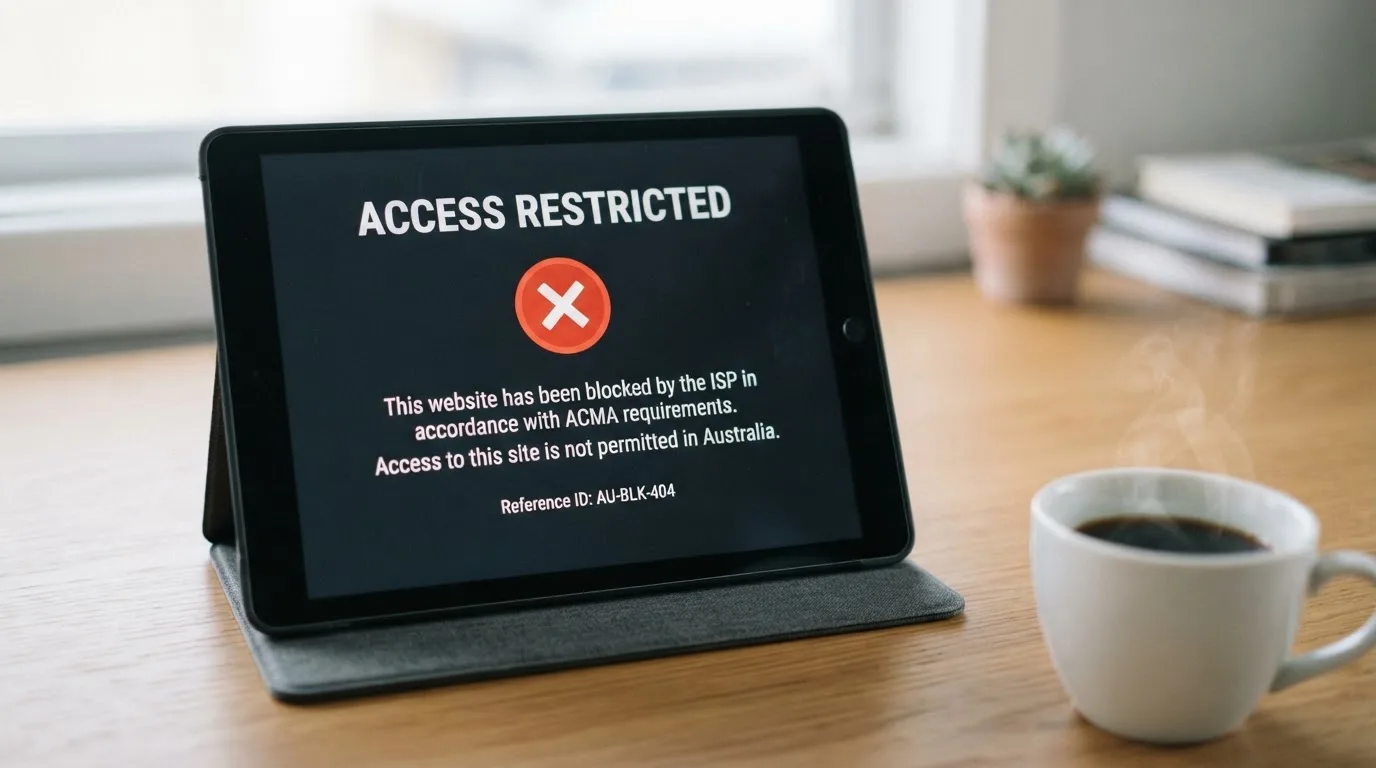
The offshore chain does not close. A site licensed in Curaçao or any other non-Australian jurisdiction answers to that jurisdiction’s regulator, not to the ACMA and not to Liquor & Gaming NSW, the Victorian Gambling and Casino Control Commission, or any of their interstate equivalents. The site may publish an RTP per game, and it may commission a test certificate from a laboratory. The certificate certifies that the software, as supplied to the lab, returns the stated percentage over a simulated run. It does not certify that the production server the Australian punter is connected to is running that software, that the configuration has not been altered, or that the figure survives the live play the punter will experience. Offshore operators have no obligation to keep it accurate, no Australian complaints body to complain to, and no balance-protection regime if a withdrawal is refused.
The legal frame around an Australian player
The Interactive Gambling Act 2001, tightened by the Interactive Gambling Amendment Act 2017, makes it an offence to provide online casino games, online pokies or in-play betting to a person physically in Australia. The offence sits with the provider, not the individual player, which is why an Australian punter will not be prosecuted for clicking through to an offshore site. The trade is that the same offshore site is operating outside every protection the IGA builds — no Australian dispute resolution, no BetStop registration that reaches the site, no Australian intervention if a balance is held.
What the IGA does licence is wagering on races and sporting events placed before the event, lotteries and keno. In practice most online bookmakers serving Australians — Sportsbet, Bet365, Ladbrokes — are licensed in the Northern Territory through the Northern Territory Racing and Wagering Commission, which regulates 52 of them. The commission runs without full-time staff and meets monthly in Darwin, a structure the ABC has reported is now the subject of reform legislation in 2026.
The minimum age for any form of gambling in Australia is 18.
What enforcement has looked like in 2026
The ACMA’s blocking programme began in November 2019 with the first formal request to Australian internet service providers. By the round reported on 26 June 2026, the running total stood at 1,751 illegal gambling and affiliate marketing websites blocked, with more than 230 unlicensed gambling services having left the Australian market since enforcement was strengthened in 2017. The most recent blocking round cited by the regulator asked ISPs to block twelve further names: 7Signs, ChromaBet, Donbet, Duospin, Freshbet, Slots Gem, Jacks Club, Lucky Start, Pointsbetz, Spinrise, Vinyl Casino and Wildsino.
That is the steady backdrop against which any individual brand sits. The “best paying” claim does not have to outperform a competitor’s RTP figure; it has to survive the fact that the operator is, by the ACMA’s own action, providing a prohibited service to Australians.
Payment rails offshore sites cannot legally use
A licensed Australian wagering service cannot accept credit cards, credit-related products or digital currency for deposits — the prohibition took effect on 11 June 2024, with penalties of up to A$247,500 for operators that breach it. The legal deposit channels are debit card, bank transfer, PayID/Osko and BPAY. An Australian player who lands on a pokies site asking for a credit card or a crypto deposit is being asked to use a payment rail that an Australian-licensed operator is forbidden to offer, and the offer of it is itself a marker that the site sits outside the Australian framework.
Responsible play, where the Australian player can turn
Responsible-gambling support in Australia is built around three points of contact, each free, each accessible without an offshore site being involved.
Gambling Help Online runs the National Gambling Helpline on 1800 858 858, free and open 24 hours a day, with web chat at the Gambling Help Online site. State-level services feed into it. BetStop, the National Self-Exclusion Register, has been live since August 2023 and lets a person exclude themselves from every Australian-licensed online and phone wagering service with a single registration — its reach is bounded to those services, and an offshore casino is not connected to it. Tasmania’s mandatory pre-commitment cards, planned as the nation’s first universal player-card system for poker machines, were delayed by the state government until late 2025; the cards are designed to set a hard pre-committed loss limit before play can begin.
The fact worth noting is that none of these instruments can follow a player onto an offshore site. A BetStop registration closes the Australian account it covers; it does not reach a Curaçao-licensed operator. A pre-commitment card set up for a venue in Tasmania does not carry over to a laptop the same person opens in their kitchen. The protection is real; its boundary is the licence.
How fast an offshore site pays — and what “fast” really costs
A search for best-paying online pokies in Australia pulls in payment speed as a near-universal subtext, and the offshore sites that dominate the search results all promise fast withdrawals. The promise is real on the part the site controls; the part it does not is the verification step. An Australian player at an offshore casino will typically face a Know Your Customer check the first time they withdraw — passport, proof of address, sometimes a source-of-funds document. The check is run by the offshore operator against its own rules, with no Australian regulator to escalate a complaint to if the document review stalls.
The settle-me number, the one an offshore marketing page will quote, sits somewhere between “instant” and “24 hours” once the verification step is complete. The cost is that any withdrawal can sit in the verification queue for days, and any disputed withdrawal has nowhere to appeal beyond the operator itself. A licensed Australian wagering service runs identity verification once, against Australian-issued documents, with a domestic complaints path; the speed comparison is not even.
The arithmetic that actually matters is not the time between request and credit, but the probability that a request will be paid at all. On a licensed Australian wagering service that probability is effectively 100% — there is a regulator to answer to. On an offshore site it depends on the operator’s own terms, and the ACMA’s published list is the empirical record of how often the operator has been warned for the offer itself.
How any shortlist of pokies is actually assembled
A page that ranks offshore pokies sites by payout percentage is doing something that cannot be done honestly. The RTP figures the site publishes cannot be checked against any Australian register, and the licence the site displays is not authority to offer the product to Australians. The “best paying” label in that context is a marketing word applied to an unverified number on an unverified product.
A shortlist built inside the licensed Australian framework is a different exercise. Within New South Wales, Queensland, Victoria, Western Australia, the Australian Capital Territory, South Australia, Tasmania and the Northern Territory, pokies RTPs are bounded below by statute, audited by the reg’s monitoring, and reportable on request. The interesting question inside that frame is not which site pays out the highest percentage — there is no site, only licensed venues — but which state sets the highest floor, and which venue group runs the tightest spread above it. Western Australia at 90%, applying only to Crown Perth, sits at the top of the legal floor; Tasmania and the ACT at 87% sit below it; the larger jurisdictions — NSW, Victoria, Queensland — cluster around 85%. Above the floor, the spread is narrow enough that venue-level comparison rarely changes the player’s expected loss by more than a fraction of a percentage point.
The marketed high-RTP pokies machine is more often than not the machine running at, or fractionally above, the legal minimum in its jurisdiction. The “best paying” label in the licensed market is a description of the audit regime, not a marketing edge.
The operator landscape by ACMA formal warning
The brands below are not a recommended shortlist. They are the operators the ACMA itself has named, by date and corporate entity, in formal warnings issued under the Interactive Gambling Act 2001 for offering prohibited interactive gambling services to people in Australia. They appear here because the ACMA’s record is the public, dated evidence of which brands have been warned, in what month, for what product. The point of the table is not to compare them; the point is that all of them sit on the same side of the law.
The columns the table sets out are: the brand as marketed; the formal warning the ACMA has published; the date and corporate entity named in the warning; and whether the brand carries any other relevant record on the subject of pokies payouts.
| Brand | ACMA action and date | Operator named by the ACMA | Subject support |
|---|---|---|---|
| RocketPlay | Formal warning, March 2026; earlier Dama N.V. warning, May 2022 | Pulsup Ltd; earlier Dama N.V. | — |
| Level Up Casino | Formal warning, May 2022 | Dama N.V. | BGaming listings |
| Woo Casino | Formal warning, March 2025 | Dama N.V. | — |
| Spirit Casino | Formal warning, May 2025 | Dama N.V. | — |
| National Casino | Formal warning, July 2025 | Consolutetish S.R.L. | Wikipedia listing |
| Bizzo Casino | Formal warning, July 2025; earlier TechSolutions warning, 2022 | Consolutetish S.R.L.; earlier TechSolutions (CY) Group Ltd and TechSolutions Group N.V. | — |
| Ignition Casino | Formal warning, July 2025 | Bamboo Media | — |
| Instant Casino | Formal warning, February 2025 | EOD Code SRL | — |
| Jackbit | Formal warning, April 2026 | Ryker B.V. | — |
| Casino Intense | Formal warning, April 2025 | Sterplay Holding Ltd | ABC, ACMA, Crown Melbourne listings |
| Sky Crown | Formal warning, September 2022 | Hollycorn N.V. | — |
The table’s third column carries the named operator entity the ACMA published at the time of the warning. The fourth column carries the small number of subject references that exist outside the ACMA’s own register — most of them on listing pages, none of them on a regulator’s audit file. A dash means there is no separate record to point at; the ACMA action is the record.
The pattern the table shows is not a ranking. It is a list of dates in reverse chronological order, with each brand tied to a specific corporate entity that has been formally warned. Some entities — Dama N.V., Consolutetish S.R.L. — recur across multiple brands, which is itself useful information: the operator behind the brand is the entity the ACMA named, and the same operator can carry several brands under one licence jurisdiction while being warned under each name in turn.
The blocking rate, as a working figure
Between November 2019 and the round reported on 26 June 2026, the ACMA directed Australian internet service providers to block 1,751 illegal gambling and affiliate marketing websites. Set against the elapsed time, the blocking rate comes out to a band of roughly 24 to 30 sites per week across the full period, with the rate skewed upward in active enforcement rounds and downward between them. That is the empirical pace at which the regulator has been clearing the offshore offer from Australian reach.
The figure is a band rather than a single number because the ACMA does not publish a steady cadence. Blocking rounds are issued in clusters — sometimes a dozen or more sites at once, sometimes months between rounds. The total is published; the per-week rate is a derived figure, and the right way to present it is as a range that reflects the gap between rounds. The headline number — 1,751 sites blocked since November 2019 — is the figure to hold onto, and the rate is the working scale behind it.
The corollary is that the same window has seen more than 230 unlicensed gambling services leave the Australian market entirely since 2017. The blocking programme and the voluntary-exit programme are two sides of the same enforcement posture, and both point to the same conclusion: the ACMA is treating the offer of online pokies to Australians as an ongoing removal job, not a one-time action.
RocketPlay
RocketPlay sits at the top of the ACMA record for this page because it carries the most recent formal warning. The ACMA’s publication names Pulsup Ltd as the operator and dates the warning to March 2026; an earlier warning over the brand, dated May 2022, named Dama N.V. as the operator at that point. Two operators, the same brand name, separate warnings — the kind of inheritance pattern that recurs on this list.
A reader who lands on RocketPlay today is looking at a site that has been formally warned twice in four years, each time by a different corporate entity, for offering prohibited online casino services to people in Australia. Whatever payout percentage the site advertises, the site itself is on the ACMA’s record as a prohibited offer. The page’s verdict on RocketPlay is that the brand has changed hands under warning; the marketing copy has not changed; the reader’s exposure has.
Level Up Casino
Level Up Casino was named in the May 2022 Dama N.V. warning alongside five other brands — Bambet, Dazard, Rocketplay, Wild Tornado and Cobra Casino. The ACMA action is dated to 2022 and the operator is named as Dama N.V., which by 2026 had been warned again over separate brands including Woo Casino and Spirit Casino. Level Up’s payout claims are listed on BGaming’s own site as one of the venues carrying that provider’s games, which is a publisher-of-games statement rather than a payout audit, and it carries the same weight as any other distributor’s catalogue page.
The verdict on Level Up is that it shares an operator — and a warning history — with five other brands named on the same ACMA letter; the BGaming listing does not change the legal status of the offer.
Woo Casino
Woo Casino sits on the ACMA’s record with a formal warning to Dama N.V. dated March 2025. It is the first of the two Dama N.V. warnings from 2025 — Spirit Casino, the second, follows in May. The two warnings, four months apart, point to an operator the ACMA has had to address more than once across consecutive brands.
A reader who lands on Woo Casino and reads its marketing is reading copy from a brand whose current operator has been warned, by the ACMA, within the last two years. The verdict on Woo Casino is that the brand carries a current regulator action over its offer; the payout figure the site advertises is unverified against any Australian register and is not material to the legal position.
Spirit Casino
Spirit Casino is the second of the 2025 Dama N.V. warnings, dated May 2025. It carries the same operator record as Woo Casino and the broader Dama N.V. group, with the ACMA’s action defining what the brand is offering to Australians. A site’s recent Dama N.V. warning is a current data point, not a historic one, and the brand sits on the ACMA’s record as a prohibited offer as at the date of publication.
National Casino
National Casino was named in the ACMA’s July 2025 warning to Consolutetish S.R.L., the same enforcement letter that named Bizzo Casino. Consolutetish is also the operator behind several other brands, and the ACMA’s July 2025 action is one of the larger recent enforcement rounds of its type. The brand carries an entry on Wikipedia’s listing for offshore gambling operators, which is what the operator-of-record entry amounts to — a directory reference, not an audit.
The verdict on National Casino is the same shape as for the other Consolutetish brands: a current ACMA action against the operator, with no separate audit data on the brand’s payout claims.
Bizzo Casino
Bizzo Casino is the brand on this list with the longest ACMA history. The July 2025 Consolutetish S.R.L. warning is the second ACMA action over the brand — the first, dated 2022, named TechSolutions (CY) Group Limited and TechSolutions Group N.V. as the operator. Two operators, four years apart, separate warnings — the same pattern RocketPlay carries, with two different operator entities in sequence.
The verdict on Bizzo Casino is that the brand has changed hands twice under warning and the marketing copy has tracked those changes; the payout claims the site publishes carry the same weight they always have, which is none an Australian register can back up.
Ignition Casino
Ignition Casino was named in the ACMA’s July 2025 warning alongside National Casino and Bizzo Casino, but under a different operator: Bamboo Media. Three brands, one ACMA letter, two operator entities — the pattern of the July 2025 round is one warning covering several brands under one or more operator names.
Bamboo Media’s appearance here is the operator’s first ACMA formal warning; the brand itself does not have a separate published payout audit. The verdict on Ignition Casino is that it carries a current regulator action against the operator; the published payout figure is the operator’s own claim.
Instant Casino
Instant Casino sits on the ACMA’s record under EOD Code SRL, with a formal warning dated February 2025. The operator named here is not the same entity as Dama N.V. or Consolutetish S.R.L.; the brand is one of the standalone operator names on the warning list.
A reader looking at Instant Casino’s payout claims is reading a number published by an operator the ACMA has warned under the IGA within the last two years. The verdict on Instant Casino is the same as for the other current warnings on the list: the offer is a prohibited interactive gambling service, the published percentage is the operator’s own claim, and BetStop does not reach the site.
Jackbit
Jackbit sits on the ACMA’s record with the most recent warning on the list, dated April 2026 and naming Ryker B.V. as the operator. Ryker B.V. is also the operator named in the same warning for CasinOK, and the two brands share an enforcement letter.
The verdict on Jackbit is that the brand is the subject of the latest ACMA action covered by the research for this page; the marketing copy the site publishes is unverified, and the offer is a prohibited service to Australians.
Casino Intense
Casino Intense was named in the ACMA’s April 2025 warning to Sterplay Holding Ltd. Sterplay is the operator behind the brand; the warning is dated within the last two years. Casino Intense carries separate listings on ABC, ACMA and Crown Melbourne pages, none of which constitutes an independent payout audit — they are references in published material rather than verification of the brand’s published RTP.
The verdict on Casino Intense is the same as for the other standalone warnings on the list: current ACMA action, no Australian audit data.
Sky Crown
Sky Crown is the longest-standing entry on this list. The ACMA’s formal warning over the brand names Hollycorn N.V. as the operator and is dated September 2022. The same enforcement letter also named Blue Leo, a sister brand from the same operator. Hollycorn has not been the subject of a fresh ACMA warning over Sky Crown in the period covered here; the warning on the record is the 2022 one.
Sky Crown sits at the bottom of the ACMA record by date, and the brand carries no other data point on the subject of payout claims. The verdict on Sky Crown is that the brand’s record is the ACMA’s 2022 action, and the offer to Australians remains a prohibited service under the IGA.
What the licence being held in the Northern Territory actually means
The NTRWC regulates 52 of Australia’s online bookmakers — Sportsbet, Bet365 and Ladbrokes among them — and the structure is unusual. The commission has no full-time staff, meets monthly in Darwin, and licences operators that are physically based elsewhere in the country. The reason is tax: the Northern Territory collects wagering tax at a rate that draws operators from the larger states, and the commission’s role is to hold the licence rather than to supervise the operation day-to-day. State regulators — Liquor & Gaming NSW, the Victorian Gambling and Casino Control Commission, the Queensland Office of Liquor and Gaming Regulation — do the supervising.
The relevance to pokies is narrow but worth setting out. NTRWC licences cover wagering on races and sport before the event, lotteries and keno. They do not cover online casino games, online pokies or in-play betting. A site displaying an NTRWC licence is licensed to take a pre-event sports bet from an Australian, not to deal a hand of baccarat or spin a virtual reel. The marketing copy on a site displaying the NTRWC mark may include casino products, in which case those products are outside the licence they have been marketed alongside.
The reform legislation reported on 7 April 2026 by the ABC is the current response to that structure, and is not yet law on this page.
The 2026 reform on advertising and inducements
The Interactive Gambling Amendment (Gambling Reform) Bill 2026 passed Parliament on 19 August 2026 and its advertising and inducement measures commence on 1 January 2027. The Bill is law with a future start date; on a 2026 page it is not yet in force. What it does is constrain the kind of marketing that has been the search result behind this page — bonus offers, “best paying” claims, free-spin promotions — when those offers are made to Australians on a prohibited product. The line “best paying online pokies” is exactly the kind of marketing language the reform will reach when its advertising measures commence.
The reform does not change the underlying prohibition on offering online casino games and online pokies to Australians. It changes what an offer of those products can be dressed up as.
Tax and what a “win” actually pays
Gambling winnings of a recreational Australian player are not assessable income under section 6-5 of the Income Tax Assessment Act 1997, and losses are not deductible, unless the person carries on a business of gambling. The rule is a model answer rather than personalised advice; the Australian Taxation Office’s published guidance is the place to confirm the position for any individual circumstance. The point worth holding is that “best paying” is not a tax concept — a high-RTP machine reduces expected loss, not taxable income, and a recreational punter does not need to declare the winnings.
The arithmetic of “best paying”, in plain prose
A 90% return-to-player machine, the Western Australian floor at Crown Perth, returns 90 cents for every dollar wagered across its full operating life. The other 10 cents is the house edge, and it is the figure to anchor on. On a 85% floor machine — the NSW, NT, Queensland and (generally) Victorian minimum — the house keeps 15 cents on the dollar. The difference between the two floors, 5 percentage points, is the size of the spread that a player can move by choosing the highest-floor jurisdiction in the country.
Set against a session. A punter at a 90% machine wagering A$100 across a session has an expected loss of A$10. The same A$100 at an 85% machine has an expected loss of A$15. The arithmetic is straightforward: expected loss = turnover × (1 − RTP). It is the same formula at any stake, and the result is a long-run statistical estimate, not a guaranteed outcome for the session.
Set against an offshore “high RTP” claim of, say, 96% — the kind of number an offshore pokies site advertises — the expected loss on a A$100 turnover is A$4. The number looks attractive next to a 90% machine, but the calculation assumes the 96% figure is the RTP the player actually experiences, and that assumption has no independent verification on an offshore site. The 96% number is the operator’s own claim; the 90% number is Crown Perth’s regulator-bounded floor. The expected loss on the offshore machine is a calculated guess; on the regulated one it is a function of the published floor and the actual turnover.
The page’s verdict on the arithmetic is that the most useful RTP figure for an Australian player is the legal minimum of the jurisdiction they are in, and the marginal benefit of any higher figure published by an offshore site is offset by the absence of verification, the absence of a complaints body, and the ACMA’s own position that the offer of the product is prohibited.
The honest short version
The best-paying pokies an Australian can play is the one with the highest legal minimum in the jurisdiction they can reach, played within the responsible-gambling instruments — Gambling Help Online, BetStop, and any state-level pre-commitment card — that reach the venue they are playing in. The audited RTP is the regulator’s number, and the regulator’s number is bounded below by statute and bounded above by what the venue publishes.
Every offshore “online pokies” site that markets itself to Australians with a payout percentage is offering a product that is prohibited under the Interactive Gambling Act 2001, has been the subject of formal ACMA warnings under the brands and operator entities named in the table above, and is outside the reach of BetStop and the Australian complaints system. The published percentage is the operator’s claim. The legal minimum is the regulator’s number. They are not the same kind of figure, and the gap between them is where this page has spent its time.
Frequently asked questions
What does return-to-player actually measure on a pokies machine?
A return-to-player figure is the share of every dollar wagered on the machine that is returned to players as winnings, calculated as a long-run statistical average across millions of spins. It is not a guarantee for any single session or player. The figure sits between zero and one hundred percent; the house edge is the difference between the RTP and 100%. The legal minimum in any Australian jurisdiction is the floor the regulator sets; a venue may run a machine above that floor, but cannot run one below it.
Where can an Australian check the published payout percentage of a licensed pokies machine?
A licensed venue is required to make the approved rules and the published RTP available on request. The state regulator — Liquor & Gaming NSW, the Victorian Gambling and Casino Control Commission, the Queensland Office of Liquor and Gaming Regulation, or the equivalent in the player’s state or territory — is the independent point of contact. The regulator’s monitoring data is the published audit trail behind the venue’s number. An offshore pokies site has no equivalent path; the figure it advertises is its own statement.
Do higher-denomination pokies machines really pay out more often?
Denomination — the size of the credit the machine accepts per spin — does not in itself change the RTP. The published return-to-player figure is set on the machine type and approved by the regulator; it does not step up with the stake. What changes with denomination is the volatility of the session — a higher denomination means larger swings per spin, but the long-run average return does not move with the credit size. A high-RTP machine at one cent denomination returns the same percentage as the same machine at one dollar; the stake and the variance are different, the long-run return is not.
Why can’t an offshore online pokies site be verified the same way a licensed Australian venue can?
The licensed chain runs through a state regulator that approves the machine type, monitors its operation, and publishes the audit data. The offshore chain runs through a non-Australian regulator with no obligation to an Australian punter and no monitoring visible to an Australian authority. The ACMA does not audit offshore sites, and offshore sites do not file with the ACMA. An offshore operator may commission a test certificate from a laboratory; that certificate applies to the software as supplied, not to the production server the Australian punter is connected to. The verification gap is structural, not procedural, and a certificate does not close it.
Are payout percentages the same on every machine within one venue?
Within a single licensed Australian venue, payout percentages differ by machine type and by denomination, within the bounds the regulator sets. A venue running three machine types across its floor will typically carry three different published RTPs, each above the jurisdictional minimum. The minimum is the floor, not a uniform setting; what is uniform is that every machine on the floor sits at or above it. On an offshore site the published number can vary by game and by operator, with no floor at all.
What state regulator oversees payout auditing for pokies machines in Australia?
Each state and territory regulates its own gaming machines, and the audit regime is set by the local regulator. Liquor & Gaming NSW covers New South Wales, which has 87,298 gaming machines outside casinos across 2,195 venues as of June 2023 and player losses of A$8.18 billion in 2022–23. The Victorian Gambling and Casino Control Commission, in place since 1 July 2022, regulates Crown Melbourne and the broader Victorian market; Victoria runs 26,380 machines outside Crown Casino across 488 venues, under a 30,000-machine statewide cap. The Queensland Office of Liquor and Gaming Regulation covers the state’s 21,122 machines across 351 venues. Western Australia’s Gaming and Wagering Commission oversees the roughly 2,500 machines at Crown Perth — the only pub-and-club-style poker machines in the state. Tasmania’s Liquor and Gaming Commission took over from Federal Group’s monopoly in November 2021 and is rolling out mandatory pre-commitment cards by late 2025.