Online craps for Australian readers: the law, the ACMA record, and the licensed alternatives
 Available in US
A reader looking for the best casinos for online craps in Australia will not find one, and the reason is not editorial caution. The Interactive Gambling Act 2001 makes it an offence to provide online casino-style games, and craps sits squarely inside that prohibition. No Australian state or territory licenses it. The page below sets out what is actually lawful, what the regulator has done about the offshore brands offering the product anyway, and where an Australian player who wants to play craps can legally take the dice.
Currency data current as of 23 September 2026, verified against the Australian Communications and Media Authority’s published list of formal warnings and blocking requests.
Table of Contents
- A reader in Australia cannot be sold online craps, by anyone
- The mechanics of craps, briefly, before the regulatory record
- The Australian regulator’s enforcement record against offshore brands offering online craps
- What a craps bonus actually costs, and why the marketing is doing the talking
- Where an Australian reader can actually play craps, and where to set the limits
- Bonuses and inducements under the 2026 reform
- Tax, winnings and the Australian reader
- The reader this page is for
- A short, honest summary
- Frequently asked questions
A reader in Australia cannot be sold online craps, by anyone
The shape of Australian online gambling law is unusually clean for a topic that is usually a thicket. The federal Interactive Gambling Act 2001 (the IGA) prohibits the supply of online casino games to anyone in Australia, and the 2017 amendments gave the regulator teeth. Online craps falls inside the prohibition because craps is a “casino-style game” within the meaning of the Act, and what the IGA covers is what any reader would recognise as a casino game: dice, cards, roulette, baccarat, blackjack, sic bo. The provider faces penalties of up to A$1.1 million a day for a corporation and A$220,000 a day for an individual.

The other side of that clean shape matters as much as the first. The Act targets the provider, not the player. A punter sitting in Sydney clicking through to an offshore site is not personally breaking the law. What the player is doing is sending money to an operator that the Australian regulator has already decided should not be offering the product, and that is the part of the page worth reading twice.
A handful of offshore sites display a “Curacao licence” or similar badge and treat that as an answer to the question “is this legal?”. It is not. The IGA looks at where the customer is, not at where the licence is pinned. A Curacao or Curaçao licence, or an Anjouan licence, is a permission issued by the licence holder’s own regulator to that licence holder. It does not, and cannot, legalise the supply of a prohibited service into Australia. The same is true of the older claim that a site “accepts Australian players” — what matters is what the law in this country allows, not what an offshore cashier page permits.
The mechanics of craps, briefly, before the regulatory record
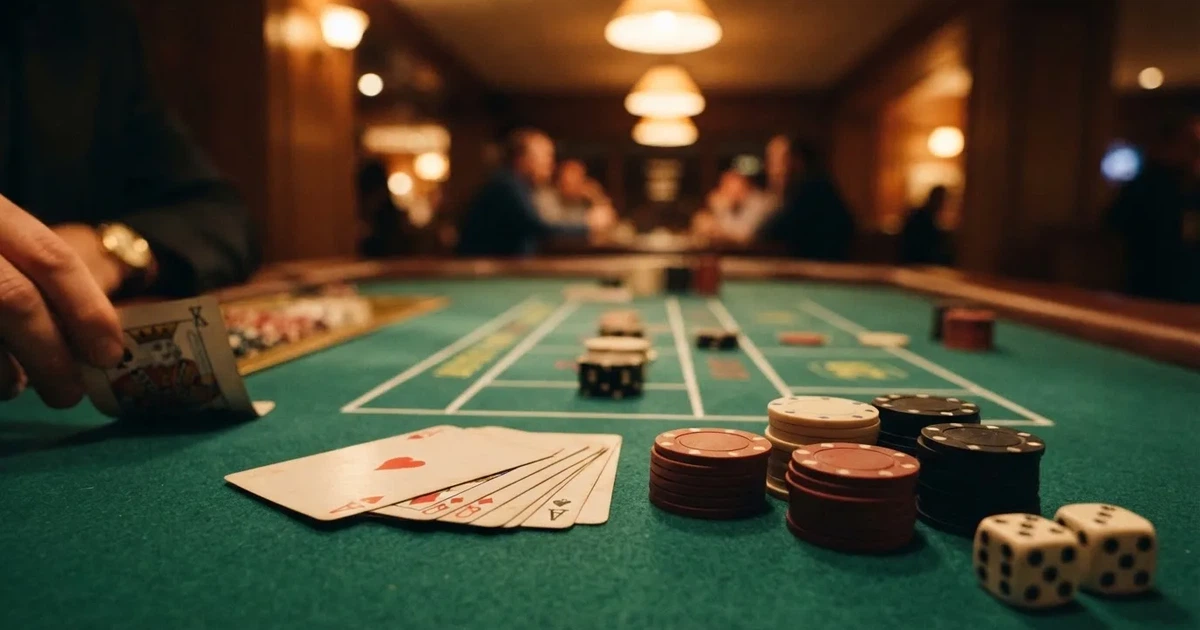
A reader who has not sat at a craps table will want the bones of the game before reading on. Craps is played with two dice against a marked layout, and the central contract is the Pass Line bet. On the first roll, called the come-out roll, a 7 or 11 wins immediately, a 2, 3 or 12 loses immediately, and any other number — 4, 5, 6, 8, 9 or 10 — becomes the point. The shooter keeps rolling until either the point comes up again, in which case Pass Line bets win, or a 7 comes up first, in which case Pass Line bets lose. That sequence is the entire game in one paragraph; the rest of the table is built out of side bets, hard-way bets and the proposition bets clustered in the centre of the layout.
The numbers worth carrying forward are the house edges. Pass and Come sit at 1.41%, Don’t Pass and Don’t Come at 1.36%, and the Any Craps proposition at 11.11%. By way of context, the Banker bet in baccarat is 1.06%, the Player bet 1.24%, and the Tie bet 14.36%. The Field bet on craps is 5.56%, and the Any 7 is one of the worst wagers a casino offers in any game at 16.67%. For comparison, basic-strategy blackjack under liberal Las Vegas Strip rules runs about 0.28% and Atlantic City rules about 0.43%. The shape of craps, then, is a friendly game at the main contract and a punishing one in the centre of the layout, where the proposition bets are.
One more figure matters and is easy to miss. The free odds bet taken behind a Pass or Don’t Pass bet — paid at true odds, with no house edge — is the only wager on a casino table anywhere that the casino takes no cut on. That single exception is the reason a serious craps player backs the Pass Line with as much in free odds as the table allows, and treats everything else on the layout as scenery.
The game has a long pre-history in this form. Modern craps is a simplification of an older English dice game called Hazard, brought to New Orleans around 1805 by Bernard Xavier Philippe de Marigny de Mandeville, where the simplified version picked up the name “craps” from the French word for “pass”. Around 1907 the Philadelphia dice maker John H. Winn introduced the Don’t Pass bar layout that is still used today, and it is that layout — Pass Line on one side, Don’t Pass bar on the other, free odds behind both — that defines a modern craps table.
The Australian regulator’s enforcement record against offshore brands offering online craps
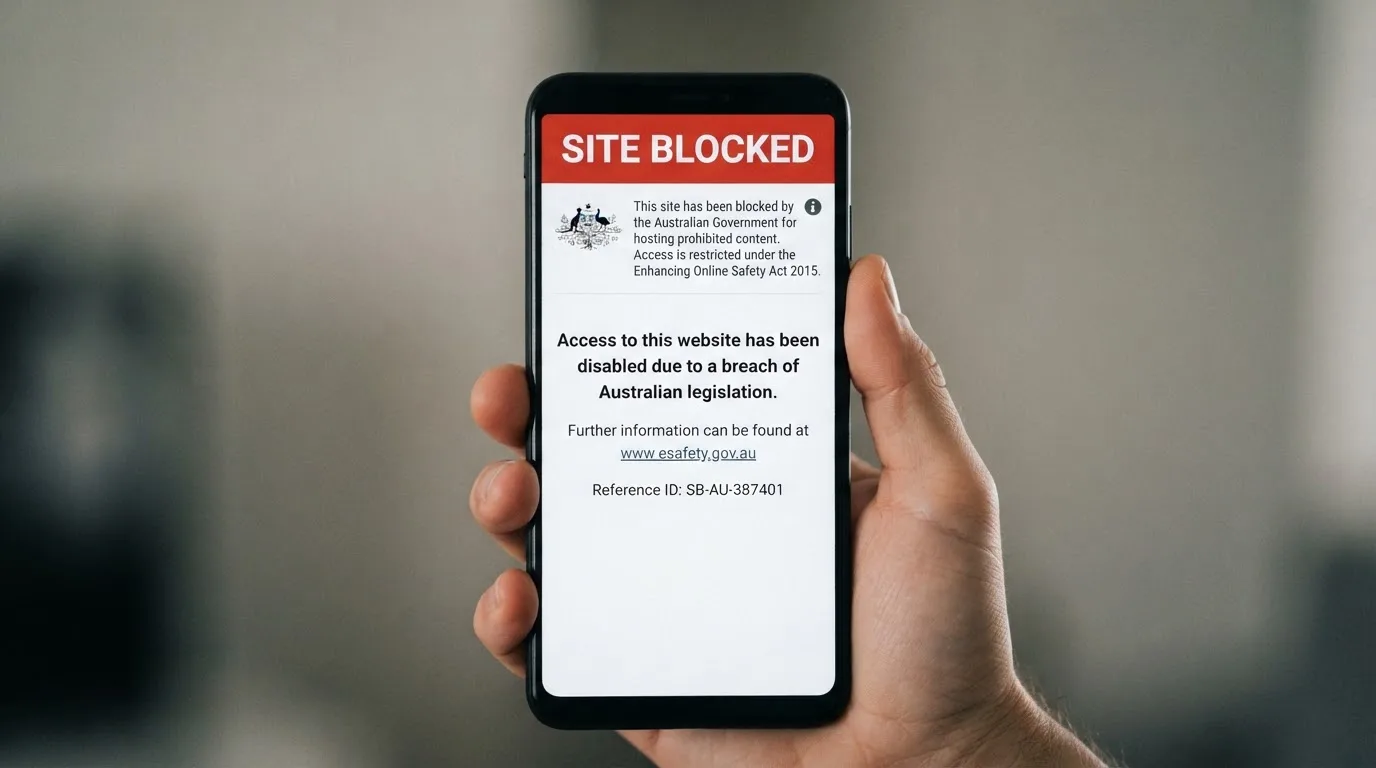
The IGA does not enforce itself. That job sits with the Australian Communications and Media Authority, the ACMA, which has three tools: it can investigate a service, it can issue a formal warning naming the operator, and it can ask Australian internet service providers to block the domain. The first tool sits behind the scenes; the second and third are published. The published record is the part a reader can read.
The ACMA’s blocking programme began in November 2019. As of the round reported on 26 June 2026, the authority had asked Australian ISPs to block 1,751 illegal gambling and affiliate marketing websites since that first request, and more than 230 unlicensed gambling services had left the Australian market since enforcement was strengthened in 2017. The round of 26 June 2026 alone added twelve more: 7Signs, ChromaBet, Donbet, Duospin, Freshbet, Slots Gem, Jacks Club, Lucky Start, Pointsbetz.com, Spinrise, Vinyl Casino and Wildsino. Each of those is the kind of offshore casino that the IGA was written against, and each now fails to load over a standard Australian connection without a workaround.
The formal warning side of the ledger is the part that names operators, and the names below are the ones a reader searching for online craps is most likely to meet.
In March 2026 the ACMA issued a formal warning to Pulsup Ltd over Rocketplay.com.au, which had previously been warned in May 2022 when the operator behind it was Dama N.V. In March 2025 the same Dama N.V. was warned again over Woo Casino, and in May 2025 over Spirit Casino. In July 2025 the warnings continued: Bamboo Media was warned over Ignition Casino, and Consolutetish S.R.L. was warned over both National Casino and Bizzo Casino — the latter having already been the subject of a 2022 formal warning to TechSolutions Group. February 2025 brought a warning to EOD Code SRL over Instant Casino, April 2025 to Sterplay Holding Ltd over Casino Intense, and April 2026 to Ryker B.V. over Jackbit and CasinOK. Hollycorn N.V. was warned over its Sky Crown and Blue Leo services in a formal warning published in September 2022.
Reading those in the order they happened, the reader is looking at a continuous record, not a one-off crackdown. The ACMA has been moving against the same handful of offshore operators for the better part of four years now, and the operators are sometimes the same shell re-skinned with new domain names.
What blocking rate looks like across that record
The pace of blocking is worth setting out with care. Between November 2019, when the first blocking request was issued, and the round reported on 26 June 2026, the ACMA directed Australian ISPs to block 1,751 illegal gambling and affiliate marketing websites. The first request was issued in November 2019; the snapshot was taken in June 2026. That gives a window of roughly 79 months from the first request to the June 2026 figure, or about 6 years and 7 months of published blocking. Spread evenly across the period, that works out to about 22 blocked sites per month, or roughly one site blocked every 33 hours. The rate is not a single figure — it accelerates sharply when a single round targets a network of related domains, and it slows in months with no published round. As a band, the realistic read is somewhere between 15 and 30 blocked sites per month, with the long-run average sitting just above the middle of that band. That is the pace at which the offshore side of this market is being pushed off Australian connections: not in one decisive sweep, but at a quiet, persistent rate.
The figure is a count, not a count of brands. Several of the sites in a single round share an operator, so the number of distinct operators being removed per month is smaller than the number of sites, and the same operator can reappear under a new domain once the old one is blocked. A reader who has been seeing the same five or six logos on casino comparison pages for two years is not imagining it.
The brands named by the ACMA over the period
Eleven brands in particular recur across the formal warnings, and they are the brands an Australian reader searching for online craps is most likely to encounter. They are listed below as the ACMA’s own record of them, not as a recommendation; the IGA prohibits offering the product to anyone in Australia, and every brand below has been warned for doing exactly that.
| Brand | ACMA action and date | Operator named by the ACMA | Subject support |
|---|---|---|---|
| RocketPlay | Formal warning March 2026 (Pulsup Ltd); earlier warning May 2022 (Dama N.V.) | Pulsup Ltd / Dama N.V. | — |
| Level Up Casino | Formal warning May 2022 | Dama N.V. | Bgaming listings |
| Woo Casino | Formal warning March 2025 | Dama N.V. | — |
| Spirit Casino | Formal warning May 2025 | Dama N.V. | — |
| National Casino | Formal warning July 2025 | Consolutetish S.R.L. | Wikipedia listings |
| Bizzo Casino | Formal warning July 2025 (Consolutetish S.R.L.); earlier warning 2022 (TechSolutions Group) | Consolutetish S.R.L. / TechSolutions Group | — |
| Ignition Casino | Formal warning July 2025 | Bamboo Media | — |
| Instant Casino | Formal warning February 2025 | EOD Code SRL | — |
| Jackbit | Formal warning April 2026 | Ryker B.V. | — |
| Casino Intense | Formal warning April 2025 | Sterplay Holding Ltd | ABC, ACMA, Crown Melbourne listings |
| Sky Crown | Formal warning published September 2022 | Hollycorn N.V. | — |
The “Subject support” column is empty for most rows by design. The research pool has craps or live-craps listings for some operators and not others, and where a row is empty the reader should read it as “the research has nothing on this one,” not as a denial. For the rows that do carry a listings note, the support comes from secondary directories rather than from a live craps table the research could verify, which is a smaller claim than it looks.
The table is worth pausing on. Eleven brands, four operators behind most of them, and the earliest warning on the list is from 2022. This is not a market the ACMA is still feeling out; it is a market the regulator has named, named again, and blocked at the network level. The same four or five operator shells account for nearly every row.
How much Australians actually lose to the offshore side
The H2 Gambling Capital report for 2025, cited in the industry press, estimates that Australians lose about A$3.9 billion a year to illegal gambling sites, and that the share of gambling that goes through legal Australian channels fell from 74% in 2021 to 64%. The second figure is the one that bites. It says the regulated market is shrinking as a share of the total, not because Australians are gambling less overall but because more of that gambling is happening offshore, out of reach of BetStop, out of reach of the Australian Consumer Law, and out of reach of any complaints body. The legal channels are the licensed bookmakers, the licensed pokies venues and the land-based casinos, and what the regulator has to do is to make sure the legal side is where the volume is.
What a craps bonus actually costs, and why the marketing is doing the talking
The craps-specific bonus shelf, in this market, runs straight into the prohibition above. An Australian-facing craps bonus is, by definition, attached to an offer of a prohibited product, which means the offer itself is something the regulator has already decided should not be on the menu. That does not make the question academic — the search phrases exist, the affiliate pages rank for them, and a reader who has clicked through to an offshore site is going to see a bonus headline before they see anything else. The shape of that headline, and what it actually costs, is the part of the shelf worth closing.
A typical online craps bonus, as it appears on offshore sites, has the form: deposit AY, with a wagering requirement of Z times the bonus. The wagering requirement is the part the marketing copy does not dwell on. At a 30-times multiple on a matched bonus of A$200, the player must generate A$6,000 of wagering turnover before any of the bonus balance can be withdrawn, and that turnover happens against a house edge that is doing its quiet work the whole time. At a Pass Line bet’s 1.41% house edge, the expected loss across A$6,000 of turnover is about A$85. The bonus itself, on a Pass Line grind, is worth roughly A$200 minus A$85, or about A$115. That is before any maximum-cashout cap, before any restriction on which bets count toward wagering, and before the time limit the terms page quietly attaches. Add a maximum cashout of, say, 10x the bonus, and the ceiling on what the bonus can ever be worth to the player comes down sharply.
The deeper point is that the craps bonus is not a free stake. It is a loan with a turnover attached, priced against a house edge that the casino built into the table. On a Pass Line grind the loan is roughly A$0.60 on the dollar; on an Any 7 or Any Craps grind the loan is closer to A$0.83 on the dollar, because the house edge is doing the heavy lifting against the player. A reader who takes a craps bonus and plays the centre of the layout is paying for the privilege of doing so, and the marketing copy is not going to mention that.
There is no Australian-licensed equivalent. There is no craps bonus shelf in the Australian regulated market because there is no Australian-licensed online craps to attach one to, and that is the reason the shelf reads thin above: not because the subject is unimportant but because the regulatory frame has already done the work.
Where an Australian reader can actually play craps, and where to set the limits
The lawful alternatives come in three flavours, and they are the answer to “where do I play if not online?”.
The first is a land-based casino. Crown Melbourne, The Star Sydney, The Star Gold Coast, Treasury Brisbane, Adelaide Casino and Casino Canberra all run table games, and baccarat variants are openly listed at Crown Melbourne (Traditional Baccarat, Crown Baccarat and 2 to 1 Baccarat) under rules approved by the Victorian Gambling and Casino Control Commission. Craps specifically is a smaller piece of the Australian land-based menu than it is in the United States, but the same major casinos have run craps tables in their high-roller rooms and will lay the table on request at the right stake level. The reader who wants the table on felt, with a stickman calling the dice and chips racked on the Pass Line, can have that experience lawfully, on Australian soil, under a state regulator.
The second is a licensed pokies venue or club. Pokies are the legal everyday form of electronic gambling in Australia and the subject is separate from craps, but the regulatory frame is the same: licensed venues, state oversight, harm-minimisation measures at the door. A reader who is looking for electronic gaming and finds themselves on an offshore site is, by definition, on the wrong side of that frame.
The third is licensed wagering — Sportsbet, Bet365, Ladbrokes and the rest of the Northern Territory’s 52 licensed online bookmakers, regulated by the Northern Territory Racing and Wagering Commission. Craps is not a wagering product and is not on those sites’ menus. What those sites carry is pre-event sports and race betting, which is the licensable side of the Australian online market. The legal deposit routes on those sites — debit card, bank transfer, PayID, Osko and BPAY — are the routes the credit-card and digital-currency ban of 11 June 2024 cleared the field for. An Australian-facing casino asking for a credit card or a crypto deposit is, again, on the wrong side of the rules.
The protective frame around all three is the part that matters once play is already underway. BetStop, the National Self-Exclusion Register, has been live since August 2023 and binds every Australian-licensed online and phone wagering service. An offshore casino is not connected to BetStop and a self-exclusion through BetStop does not extend to it. The National Gambling Helpline on 1800 858 858 is free and runs 24/7; Gambling Help Online carries the chat service. For a reader who is chasing losses, the right step is not a different casino — it is the helpline, and a block on the offshore side via the ACMA’s reporting channel.
Bonuses and inducements under the 2026 reform
The Interactive Gambling Amendment (Gambling Reform) Bill 2026 passed Parliament on 19 August 2026 and its advertising and inducement measures commence on 1 January 2027. As of 2026 the bill is law with a future start date, not in force on the page being read. The measures tighten the rules around how licensed wagering providers can advertise bonuses and inducements to Australians; they do not, on their own, open online casino or online craps to licensing. The lawful side of the market stays as it was, with the inducement rules sharpened once 2027 begins.
What that means for a reader comparing offers in 2026 is that the inducement rules are about to get tighter, not looser. The licensed bookmakers’ bonus menus will be the first to feel the change; the offshore casinos that ignore the rules entirely are unaffected by it.
Tax, winnings and the Australian reader
The tax treatment is short and stable. Gambling winnings of a recreational player in Australia are not assessable income, under section 6-5 of the Income Tax Assessment Act 1997, and losses are not deductible. The exception is a person who carries on a business of gambling, and that is a different fact pattern from anything on this page. A recreational player who wins AY at an offshore site pays no tax on the loss and gets no deduction for it. The Australian Taxation Office’s published guidance treats the matter consistently with that frame, and the practical advice for the reader is to check with the ATO or a registered tax agent for any situation that looks like a business of gambling rather than a hobby.
The reader this page is for
Three readers come to a page on best casinos for online craps in Australia. The first is an Australian reader who has been searching for the product and is about to click through to an offshore site. For that reader, the page is an intervention: the IGA, the ACMA record, and the absence of an Australian-licensed option are the three facts that matter, and they are all on the page above.
The second is a reader who is not in Australia and has been served the page by a search engine or a comparison site. For that reader, the lawful frame is different and the offshore brands listed above are simply offshore brands; the comparison table is the working part of the page, and the ACMA column is a piece of background rather than a prohibition. The reader should treat the comparison table as the comparison table.
The third is a reader who is in Australia and is looking at the ACMA’s record because they want to know which offshore brands are most likely to be blocked, restricted or quietly renamed in the next year. For that reader the table is the point, and the arithmetic above it is the working number. Eleven brands, four operators, and a regulator that has been issuing formal warnings since 2022 and blocking domains since 2019. The pace is roughly 22 blocked sites a month, with the realistic band sitting between 15 and 30.
A short, honest summary
Online craps is not on the menu in Australia, by force of the Interactive Gambling Act 2001 and the ACMA’s enforcement against the brands that offer it anyway. The 11 brands the ACMA has warned over online craps and online casino games since 2022 — RocketPlay, Level Up Casino, Woo Casino, Spirit Casino, National Casino, Bizzo Casino, Ignition Casino, Instant Casino, Jackbit, Casino Intense and Sky Crown — are not a shortlist and not a recommendation. They are a record, and the record says the regulator has been moving against the same handful of operators for the better part of four years. A reader who wants to play craps lawfully in Australia does so at a land-based casino under a state regulator; a reader who wants to stay in the regulated online market does so through one of the 52 Northern Territory–licensed online bookmakers, on sports and racing only; a reader who needs help with chasing losses calls 1800 858 858 or registers with BetStop. The product asked for at the top of this page does not exist in licensed Australian form, and that is the answer the search was actually after.
Frequently asked questions
What house edge does the Pass/Come bet carry in craps?
The Pass/Come bet carries a house edge of 1.41% in standard craps. The Don’t Pass and Don’t Come lines are marginally lower at 1.36%, and the free odds bet taken behind either line is 0% — the only wager on a casino table anywhere with no house edge. By way of comparison, Banker in baccarat is 1.06%, Player is 1.24%, and Tie is 14.36%.
What is the difference between a Pass Line and a Don’t Pass bet in craps?
A Pass Line bet wins on a come-out roll of 7 or 11 and loses on 2, 3 or 12; any other number becomes the point, and the bet wins if the shooter repeats the point before rolling a 7. A Don’t Pass bet reverses that: it loses on 7 or 11, wins on 2 or 3, ties on 12, and wins if the shooter sevens out before repeating the point. The two bets effectively oppose each other, and Don’t Pass carries a slightly lower house edge at 1.36% versus 1.41%.
Is it legal for an online casino to offer craps to players in Australia?
No. Under the Interactive Gambling Act 2001 it is an offence to provide online casino games, including craps, to a customer physically in Australia, with penalties up to A$1.1 million a day for a corporation and A$220,000 a day for an individual. No state or territory issues a licence for the product. Offshore licences — Curacao, Anjouan — do not change the position, because the Act looks at where the customer is, not at where the licence is pinned.
Why is the Any Craps bet considered a poor-value wager?
The Any Craps proposition — a one-roll bet that wins on 2, 3 or 12 — carries a house edge of 11.11%, against 1.41% on the Pass Line and 1.36% on the Don’t Pass. By way of contrast, the Any 7 bet sits at 16.67% and the Field bet at 5.56%. None of the proposition bets in the centre of the craps layout approaches the value of the main contract, and Any Craps is among the worst of them.
Can craps be played at a licensed Australian land-based casino?
Yes, at the major Australian land-based casinos — Crown Melbourne, The Star Sydney, The Star Gold Coast, Treasury Brisbane, Adelaide Casino and Casino Canberra — under state casino regulators such as the Victorian Gambling and Casino Control Commission. Craps is a smaller piece of the Australian land-based table menu than baccarat or blackjack, and high-roller rooms are where it is most often found, but the table is available on request at the right stake level. Online, the product is not licensed in Australia.
Created by the ”Instant bank transfer casino Australia” editorial team.