
Best live dealer casino online australia 2026: the prohibition, the providers, and the price
Live dealer casino games stream a real croupier from a studio or a land-based casino floor onto a player’s screen, converting the dealer’s physical actions into data through optical camera recognition. That technology is sound. The question for an Australian reader is whether there is a lawful place to use it from inside Australia. There is not. Offering online casino games — including live-dealer blackjack, roulette and baccarat — to anyone physically in Australia is a prohibited interactive gambling service under the Interactive Gambling Act 2001, and no state or territory issues a licence for it. The page below is built around that gap: what the prohibition looks like in practice, what offshore sites that ignore it cost a player, and what an Australian reader can lawfully use instead.
Currency stamp: data current as of 24 October 2026, verified against the ACMA’s register of formal warnings and the public blocking record.
Table of Contents
- Why this page exists, and what it is not
- Responsible gambling: the tools that actually bind an Australian
- Crypto deposits and the anonymity question
- Bonuses and what a welcome offer really costs the player
- Live dealer games, providers and the studio picture
- The shortlist the search asked for — and what an honest one looks like
- The fundamentals underneath — what a live dealer casino actually is
- Legality, regulation and what the ACMA has done
- Reviewed brands: what the ACMA record shows for each
- What an Australian can lawfully use
- Frequently asked questions
Why this page exists, and what it is not
A search for “best live dealer casino” turns up dozens of offshore comparison pages ranking operators that take Australian sign-ups. Almost every one of them treats the prohibition as an inconvenience to route around. The Interactive Gambling Act 2001 makes it something else: an offence by the provider, a blockable site for ISPs, and a balance the player has no Australian body to recover if the operator refuses a withdrawal. H2 Gambling Capital’s 2025 report puts Australians’ losses to illegal gambling sites at roughly A$3.9 billion a year, with the legal-channel share of gambling slipping from 74% in 2021 to 64% in 2025. That is the size of the gap between the offshore shortlist a reader came looking for and the lawful alternatives that actually sit behind a BetStop exclusion.
The eleven brands reviewed further down are not reviewed as recommendations. Each one appears because the ACMA has issued a formal warning over it for offering prohibited services to Australians. Several have been warned more than once, under more than one operating company. Naming them is part of describing the prohibition, not of suggesting where to play.
Responsible gambling: the tools that actually bind an Australian
BetStop and what it does — and does not — cover
BetStop, the National Self-Exclusion Register, has been live since August 2023 and binds every Australian-licensed online and phone wagering service. A punter who registers is excluded from opening new accounts, depositing, or receiving marketing from any connected operator for the period they choose — three months, six months, or up to five years. For online sports betting and pre-event race wagering with the licensed bookmakers, BetStop is the strongest single safeguard an Australian has.
It does not bind an offshore casino. Sites operating from Curaçao, Cyprus, Costa Rica or any other jurisdiction outside Australia have no connection to the register, no obligation to honour an exclusion, and no obligation to refuse deposits from a person who has registered with BetStop. A punter registering with BetStop and then opening an offshore casino account sets up exactly the failure mode the register exists to prevent.
Help that is reachable, free and 24/7
The National Gambling Helpline on 1800 858 858 is free, confidential and staffed around the clock. Chat is available through Gambling Help Online. Both services are independent of any operator and refer on to face-to-face counselling where it is needed. Counselling, financial advice and self-exclusion are the routes that work whether or not the site is Australian-licensed; the offshore label is not, on its own, the cause of harm, but it removes every Australian complaint channel that would otherwise be available when a site refuses a withdrawal or closes an account.
Limits a player can apply themselves
Deposit caps, loss limits, session time-outs and reality checks are standard on licensed Australian wagering sites. On an offshore casino they are a marketing decision the operator can switch off at any time. The protection a player has on an Australian-licensed wagering service is statutory; the protection a player has on an offshore casino is whatever the site decides to keep turned on.
Crypto deposits and the anonymity question
Why an Australian punter cannot use crypto on a licensed site
Since 11 June 2024, credit cards, credit-related products and digital currency have been banned as payment for licensed online wagering in Australia. Penalties for an operator accepting them run to A$247,500. The lawful deposit routes are debit card, bank transfer, PayID/Osko and BPAY. A site that accepts Bitcoin, Ethereum, USDT or any other cryptocurrency from an Australian customer is by definition not operating under an Australian wagering licence. There is no licensed live dealer site that takes Australian players and also takes crypto, because no such site exists.
What “crypto” actually buys on an offshore site
A crypto deposit on an offshore casino is faster than a card deposit and harder for an Australian bank to flag. It is also irreversible. A chargeback on a debit card is at least theoretically available; a Bitcoin transaction that has confirmed on-chain is gone. Combined with the offshore operator’s status outside the ACMA’s blocking and complaints regime, the anonymity crypto offers is anonymity from every safeguard the Australian system provides. The player’s identity is private from the bank. It is also private from the operator when the operator disputes a withdrawal, which is when a player most needs to be known to a body that can help.
Bitcoin live dealer sites and the enforcement pattern
Every Bitcoin-accepting live dealer casino that targets Australians sits on the offshore side of the ACMA’s enforcement line. The agency’s blocking record — described in more detail under the legality shelf below — is built almost entirely out of sites that take cryptocurrency deposits and stream live dealer games from outside Australia. The combination is the canonical profile of a blockable site.
Bonuses and what a welcome offer really costs the player
How live casino bonuses are structured
A live dealer casino welcome bonus typically matches a first deposit by a fixed percentage up to a stated ceiling, and attaches a wagering requirement — the multiple of the bonus (and sometimes the deposit) that must be turned over before any winnings can be withdrawn. Live-dealer games usually contribute less than slots toward clearing that turnover, often 10% or 0%, and several sites exclude live tables entirely from bonus play. A 100% match up to A$500 with a 40x bonus wagering requirement looks like A$500 in value. On live tables contributing 10%, clearing it requires A$20,000 of live-dealer turnover, which is a different number entirely.
The arithmetic a marketing line hides
Assume a A$500 bonus at a 40x wagering requirement. Required turnover is A$20,000. Live-dealer blackjack at an optimal-strategy house edge of around 0.28% costs, on average, A$20,000 × 0.0028 = A$56 over the clearing period. Roulette’s single-zero house edge of about 2.7% on most live tables turns the same turnover into A$540. The marketing line promises A$500. The expected cost of clearing the bonus on roulette is comparable to the bonus itself. On blackjack it is lower, because the edge is lower; the trade-off is a longer table time to clear the same turnover. Either way the player is paying for the bonus, just through different routes.
Conditions that change the picture
Game weighting, maximum bet while a bonus is active, time limits, country exclusions and maximum cashout caps all sit in the bonus terms. An Australian player on an offshore site has no Australian complaints body to approach if a clause is applied retrospectively. The bonus is the smallest part of the offer; the terms attached to it are where the real cost sits, and they are written by the operator.
Live dealer games, providers and the studio picture
What “live dealer” means on the screen
A live dealer casino streams a real table from a studio or a casino floor. Cameras read the cards, the wheel, the dice, the dealer’s hands; optical character recognition converts the action into data sent to the player’s screen; the player bets through a software interface overlaid on the video. The result is a game run by a human dealer at human speed, with bets placed by mouse or thumb rather than by chips. The technology is the same regardless of which studio licence sits in the footer: the difference is who runs the studio, what games they stream, and how many tables they operate.
The dominant supplier and its scale
Evolution, founded in 2006 by Jens von Bahr and Fredrik Österberg, is the dominant supplier of live casino games to online operators. By 2013 the company operated 100 live tables from its Riga studios, then the largest single-site casino operation in Europe. It opened a Malta studio in 2014 and completed the acquisition of NetEnt on 1 December 2020. The Evolution Group now owns the NetEnt, Red Tiger, Big Time Gaming, Nolimit City and Ezugi game-studio brands as well, and Evolution states that more than 700 gambling platforms worldwide offer its live casino games, streamed around the clock from its studios. That scale matters to an Australian reader in one specific way: it explains why offshore sites that target Australians overwhelmingly stream the same catalogue, in the same studios, under the same logos.
The games that dominate the catalogue
Baccarat, blackjack and roulette are the most common live dealer games offered by online casinos. Baccarat’s house edge is 1.06% on the Banker bet, 1.24% on the Player bet and 14.36% on the Tie — the Tie is where the operator earns its real money. With optimal strategy, blackjack’s house edge is about 0.28% under liberal Las Vegas Strip rules and 0.43% under Atlantic City rules. Craps, where it is offered live, runs 1.41% on the Pass/Come bet and 1.36% on Don’t Pass/Don’t Come. Every one of those edges is the operator’s pre-set margin; the question is whether the player sees it.
What an Australian player sees on a legal table
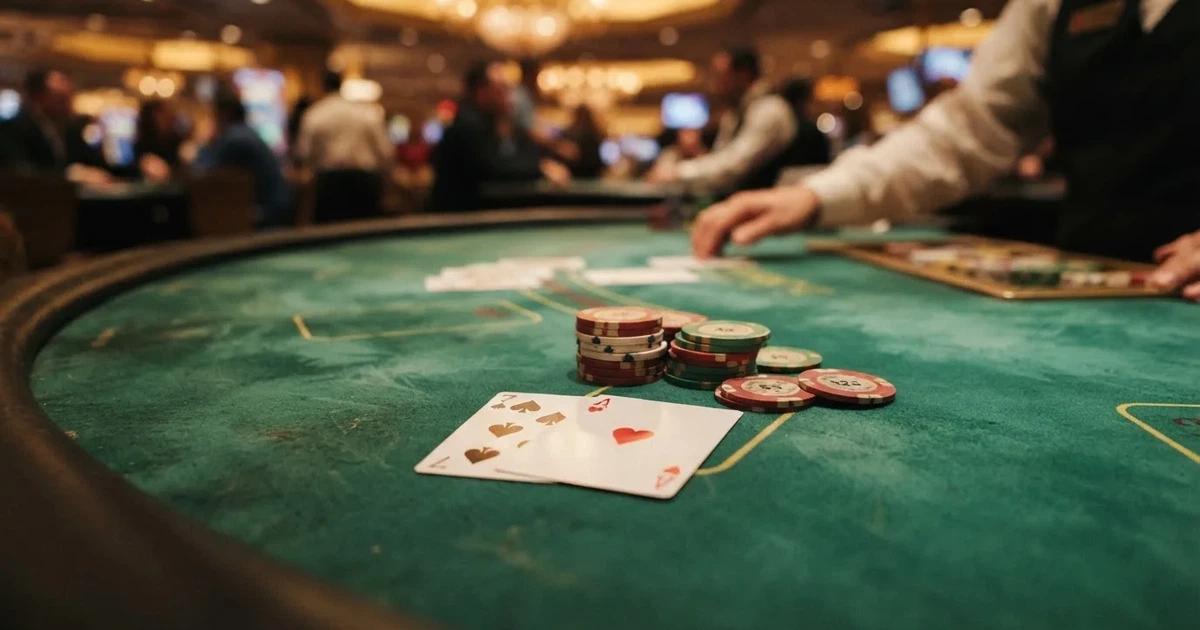
The lawful Australian counterpart is a land-based casino table. Crown Melbourne offers three baccarat variants — Traditional Baccarat, Crown Baccarat and 2 to 1 Baccarat — as approved table games regulated by the Victorian Gambling and Casino Control Commission, which replaced the VCGLR as Victoria’s casino regulator on 1 July 2022. NSW’s Casino Control Act 1992 requires that any game such as baccarat played in a NSW casino be approved by the regulator, with the approved rules available to patrons on request. The Victorian regulator maintains a public log of approved changes to Crown Melbourne’s blackjack variants: the “Perfect Pairs” side bet was renamed to “Crown Pairs” on 23 December 2024, and a “Free Bet” option with a new “Pot of Gold” side bet was introduced on 25 March 2024. A punter who wants the live-dealer experience inside the law takes a taxi, not a browser tab.
Background on the games behind the camera
Baccarat’s origins are disputed; some accounts place it in 19th-century France, others trace it to Italy in the late 15th century during the reign of King Charles VIII. The variant most played today, punto banco, was developed in Havana during the 1940s — the casino banks the game at all times and plays out both hands by fixed drawing rules. Chemin de fer, French for “railway”, is a two-player variant that emerged from baccarat banque in the late 19th century and is named for being quicker to play than the original. Cards 2-9 count at face value, 10/J/Q/K count as zero and aces count as one, with hand totals taken modulo 10; punto banco is dealt from a shoe of six or eight decks.
Blackjack’s immediate predecessor was the English game vingt-un; a related game called veintiuno appeared in Miguel de Cervantes’ Rinconete y Cortadillo around 1601-1602, and formal rules for the game were published in Britain in 1800. The card historian Thierry Depaulis dates the name “blackjack” to around 1899, with prospectors during the Klondike Gold Rush of 1896-99 credited with the modern title. Number cards count as their number, face cards as 10 and aces as 1 or 11; a starting two-card total of 21 is the strongest hand. Established variants include Spanish 21 (no 10s but liberal player-favourable rules), Double Exposure (both dealer cards face-up), Blackjack Switch (swap cards between two hands) and Super Fun 21 (up to four splits).
In craps, the come-out roll wins on 7 or 11, loses on 2, 3 or 12, and any other number becomes the point, which the shooter must roll again before rolling a 7 to win the Pass Line bet.
The shortlist the search asked for — and what an honest one looks like
What an Australian reader cannot lawfully get
A working shortlist of online live dealer casinos licensed to take Australians does not exist. No state or territory issues such a licence. The Interactive Gambling Act 2001 makes providing one an offence; the ACMA’s enforcement record shows how the prohibition is applied. Anything styled as a “top 10 live dealer casinos for Australians” on a comparison site is, on the evidence below, a list of offshore brands the ACMA has acted against.
The pattern in the names a comparison site would list
The brands listed in the table below have all received ACMA formal warnings under the Interactive Gambling Act 2001. Some have been warned more than once, under more than one operating company. The reason they appear together is that the ACMA itself named them as providing prohibited services to Australians — a tighter filter than any affiliate comparison page applies.
The eleven brands and what the ACMA named
| Brand | ACMA action and date | Operator named by the ACMA | Live-dealer exposure on the operator’s own materials |
|---|---|---|---|
| RocketPlay | Formal warning, March 2026 (Pulsup Ltd); earlier warning to Dama N.V., May 2022 | Pulsup Ltd; Dama N.V. | — |
| Level Up Casino | Formal warning, May 2022 | Dama N.V. | Listed by BGaming as a partner operator |
| Woo Casino | Formal warning, March 2025 | Dama N.V. | — |
| Spirit Casino | Formal warning, May 2025 | Dama N.V. | — |
| National Casino | Formal warning, July 2025 | Consolutetish S.R.L. | Listed by Wikipedia as an online gambling brand |
| Bizzo Casino | Formal warning, July 2025 (Consolutetish S.R.L.); earlier 2022 warning to TechSolutions | Consolutetish S.R.L.; TechSolutions (CY) Group Limited and TechSolutions Group N.V. | — |
| Ignition Casino | Formal warning, July 2025 | Bamboo Media | — |
| Instant Casino | Formal warning, February 2025 | EOD Code SRL | — |
| Jackbit | Formal warning, April 2026 | Ryker B.V. | — |
| Casino Intense | Formal warning, April 2025 | Sterplay Holding Ltd | Referenced in reporting on the ACMA’s enforcement record and on Crown Melbourne’s live table offerings |
| Sky Crown | Formal warning (date as published by the ACMA) | Hollycorn N.V. | — |
The ACMA issued further formal warnings in March 2025 over Woo Casino and in May 2025 over Spirit Casino, both operated by Dama N.V. In July 2025 the ACMA warned Bamboo Media over Ignition Casino and Consolutetish S.R.L. over National Casino and Bizzo Casino, the latter first warned back in 2022. In February 2025 the ACMA issued a formal warning to EOD Code SRL over Instant Casino.
What the table does not show
The table is a list of warnings, not a ranking. Several brands share an operating company — Dama N.V. alone accounts for five entries across the set — which means a single enforcement decision on the parent can move several brands at once. A warning is the lowest level of formal ACMA action before an ISP blocking request; the same operator has often received multiple warnings across multiple brands before the blocking stage is reached. None of the brands listed is licensed in Australia, whatever licence the site displays in its footer. The licence shown is, by definition, not an Australian one.
How the blockade translates into a blocking rate
The arithmetic behind the ACMA’s record: 1,751 illegal gambling and affiliate marketing websites blocked since the first blocking request in November 2019, with the most recent twelve-name round reported on 26 June 2026 (7Signs, ChromaBet, Donbet, Duospin, Freshbet, Slots Gem, Jacks Club, Lucky Start, Pointsbetz.com, Spinrise, Vinyl Casino and Wildsino). That works out to a long-run blocking rate of roughly 20 to 25 sites per month, or around 260 to 275 per year — a band, not a single figure, because the pace has not been uniform. Earlier years ran slower as the ACMA built the machinery for ISP blocking; the most recent rounds run faster as the playbook is reused. What is steady is the cumulative count: it does not go backwards, and every block is one more site that no longer resolves cleanly for an Australian residential ISP.
The fundamentals underneath — what a live dealer casino actually is
The technology
A live dealer studio runs real tables. Multiple cameras cover the table from different angles; optical camera recognition reads the cards, the wheel, the dice and the results; the data is sent to the player’s screen in real time alongside the video feed. The dealer is a person in a studio or, for some studios, in a land-based casino. The player bets through a software overlay. The game runs at the dealer’s pace, not the player’s, which is why a 50-hand session takes a similar wall-clock time on a live table and on a software table.

The catalogue a player usually sees
Most studios offer baccarat, blackjack and roulette as their core. Game-show-style titles — wheel-of-fortune formats, dice games, lottery-style draws — sit alongside them and have grown into a meaningful share of the live-dealer market. Side bets — pairs in blackjack, banker/player pairs in baccarat, bonus pockets on roulette wheels — exist on every variant and carry the highest house edges. A punter who bets the side bet is paying for the spectacle.
Mobile play and the practical difference
A live dealer stream needs bandwidth. A mobile browser on a 4G connection handles a single-table stream at standard definition without dropping frames; a second table or a higher resolution makes the connection the limiting factor. The catalogue itself is largely the same on mobile as on desktop because the providers run their games through HTML5. The practical difference is that the player is betting with a thumb on a phone in a place the casino floor would not admit them, which is also why the ACMA’s blocking matters: a mobile connection is the one most often used to reach an offshore site from Australia.
Legality, regulation and what the ACMA has done
The statute and what it prohibits
The Interactive Gambling Act 2001 (IGA), strengthened by the Interactive Gambling Amendment Act 2017, makes it an offence to provide an interactive casino-style gambling service — including online blackjack, roulette and other live-casino-style games — to a person in Australia. “Interactive” includes a website that takes bets online; “casino-style” covers the table games a player would recognise from a casino floor. No state or territory licenses such a service. What is licensable is wagering on races and sport placed before the event, lotteries and keno — in practice licensed by the Northern Territory, whose Racing and Wagering Commission regulates 52 of Australia’s online bookmakers (Sportsbet, Bet365 and Ladbrokes among them) and meets once a month in Darwin with no full-time staff. Minimum age is 18.
Enforcement and what it looks like
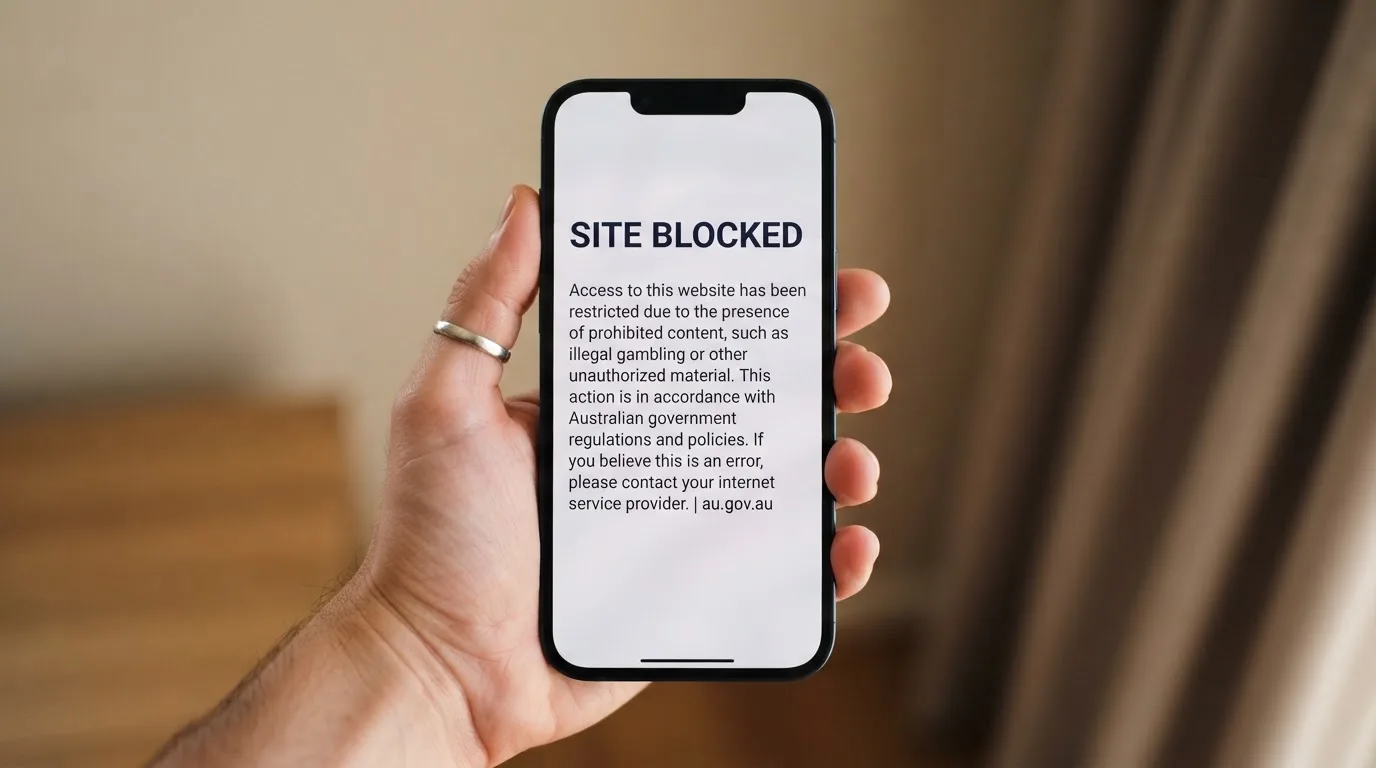
The ACMA — the Australian Communications and Media Authority — investigates complaints, issues formal warnings and directs Australian internet service providers to block illegal sites. The agency has issued formal warnings across several rounds. In March 2026 it warned Pulsup Ltd over Rocketplay.com.au. In May 2022 it warned Dama N.V. over six casino brands: Bambet, Dazard, Level Up, Rocketplay, Wild Tornado and Cobra Casinos. Further warnings to Dama N.V. followed over Woo Casino in March 2025 and Spirit Casino in May 2025. In July 2025 it warned Bamboo Media over Ignition Casino and Consolutetish S.R.L. over National Casino and Bizzo Casino, the latter first warned back in 2022. In February 2025 the ACMA warned EOD Code SRL over Instant Casino; in April 2025, Sterplay Holding Ltd over Casino Intense; in April 2026, Ryker B.V. over Jackbit and CasinOK. Hollycorn N.V. has been warned over Sky Crown and Blue Leo.
The total reported in June 2026 is 1,751 illegal gambling and affiliate marketing websites blocked since the first blocking request in November 2019, and more than 230 unlicensed gambling services have left the Australian market since enforcement was strengthened in 2017. The agency does not prosecute individual players; the offence sits with the provider. The consequence for a player is that an offshore site offers no Australian consumer protection, no Australian complaints body and no recourse if a withdrawal is refused — and it can be blocked with a balance still sitting on it.
Payments: what an Australian can lawfully use
Since 11 June 2024, credit cards, credit-related products and digital currency have been banned as payment for licensed online wagering in Australia. Penalties for an operator accepting them reach A$247,500. The legal deposit routes for licensed wagering are debit card, bank transfer, PayID/Osko and BPAY. A site asking an Australian for a credit card or a crypto deposit is, by that fact alone, not operating under an Australian wagering licence. The same indicator — crypto in, live dealer streamed, no Australian consumer body — describes almost every offshore site a comparison page would put on a shortlist.
The 2026 reform
The Interactive Gambling Amendment (Gambling Reform) Bill 2026 passed Parliament on 19 August 2026. Its advertising and inducement measures commence on 1 January 2027 — law with a start date, not yet in force on a 2026 page. The reform tightens what can be advertised around wagering and around the inducements that pull a punter in; it does not legalise online casino games or live dealer play for Australians.
Tax
Gambling winnings of a recreational player are not assessable income under section 6-5 of the ITAA 1997, and losses are not deductible, unless the person carries on a business of gambling. The model is recreational only; a player whose gambling has crossed into a business activity needs to check with the ATO. For the bulk of readers, the short version is: no tax on winnings, no deduction for losses, no reporting required.
Reviewed brands: what the ACMA record shows for each
Each block below sets out what the ACMA itself has published. The brand appears on this page because the agency named it. Where the operator has been warned more than once, both warnings are stated. None of the brands listed is licensed in Australia, whatever licence the site displays.
RocketPlay — the brand with two warnings on file
The ACMA issued a formal warning to Pulsup Ltd over Rocketplay.com.au in March 2026. An earlier warning over the Rocketplay brand went to Dama N.V. in May 2022, when the same warning covered five other Dama N.V. brands — Bambet, Dazard, Level Up, Wild Tornado and Cobra Casinos. The Rocketplay brand has therefore been the subject of ACMA action under two separate operating companies. The site is not licensed to provide online casino games to anyone in Australia; whatever licence appears in its footer is not an Australian one. For a reader weighing the site on the strength of its licence alone, the record shows the ACMA’s view of the licence on two separate occasions.
Level Up Casino — Dama N.V. brand with a partner listing
The ACMA issued a formal warning to Dama N.V. over Level Up Casino in May 2022, as part of the six-brand warning that also covered Bambet, Dazard, Rocketplay, Wild Tornado and Cobra Casinos. BGaming lists Level Up as a partner operator; the catalogue offered is the standard live-dealer mix supplied through the studios of the major providers. None of that changes the Australian legal position, which is that Level Up is not licensed to provide online casino games to Australians. A reader who reaches Level Up through a partner listing arrives at the same offshore site the ACMA has warned the operator about.
Woo Casino — re-warned in 2025
The ACMA issued a formal warning to Dama N.V. over Woo Casino in March 2025. Woo is one of the brands through which the same Dama N.V. group has re-entered the ACMA’s enforcement record after the 2022 round, alongside Spirit Casino (warned May 2025). The site’s own marketing targets Australian players; the ACMA’s record is the agency’s contrary position. A punter on Woo is betting with an operator that has now been told twice to stop offering those services to Australians.
Spirit Casino — same operator, second 2025 warning
The ACMA issued a formal warning to Dama N.V. over Spirit Casino in May 2025. Spirit sits alongside Woo Casino as a 2025 Dama N.V. brand the agency has acted on, and the warnings taken together describe an operator that has not changed its offer to Australians between rounds. The licence shown on the site is not Australian. The expected cost to a player is the same as any other offshore site offering live-dealer games to Australians — the bonus economics of the offer, plus the absence of any Australian complaints body if a withdrawal is disputed.
National Casino — new operator on a 2025 warning
The ACMA issued a formal warning to Consolutetish S.R.L. over National Casino in July 2025. National Casino is listed by Wikipedia as an online gambling brand; its catalogue and live-dealer studio mix follow the standard offshore pattern. The relevant point for an Australian reader is the same as for the rest of the set: the ACMA has named the operator, and no Australian licence covers the service.
Bizzo Casino — warned twice under two operators
The ACMA issued a formal warning to Consolutetish S.R.L. over Bizzo Casino in July 2025. Bizzo was already the subject of a 2022 formal warning to TechSolutions (CY) Group Limited and TechSolutions Group N.V. Two warnings, two different operating companies, the same brand. The brand has therefore moved between operators in a way that does not interrupt the ACMA’s record of action against it. An Australian reader who comes across the brand today sees one warning; a reader who has followed the ACMA’s record since 2022 sees two.
Ignition Casino — warned under Bamboo Media in 2025
The ACMA issued a formal warning to Bamboo Media over Ignition Casino in July 2025. Ignition has been a recognisable name in the offshore market for several years; the warning is the ACMA’s view that the service is prohibited under the IGA as offered to Australians. The site’s licence, whatever jurisdiction it issues from, is not an Australian one.
Instant Casino — EOD Code SRL formal warning
The ACMA issued a formal warning to EOD Code SRL over Instant Casino in February 2025. The site markets a heavily promoted welcome offer and a live-dealer catalogue run on the major studio suppliers’ streams. The combination is the canonical profile of an offshore site the ACMA is likely to direct ISPs to block in a later round. A player who has deposited at Instant Casino before a block is imposed may find the balance is on a site that no longer resolves on a residential Australian connection.
Jackbit — Ryker B.V. formal warning
The ACMA issued a formal warning to Ryker B.V. over Jackbit in April 2026; the same warning covered a sister brand, CasinOK. Jackbit positions itself around cryptocurrency deposits and live-dealer tables, which is also the position the ACMA’s prohibition is most explicit about: digital currency has been a banned payment method for licensed Australian wagering since 11 June 2024. A punter using crypto on Jackbit is paying in a method Australian law has specifically closed for wagering.
Casino Intense — Sterplay Holding Ltd, April 2025
The ACMA issued a formal warning to Sterplay Holding Ltd over Casino Intense in April 2025. Casino Intense has been named in reporting on the ACMA’s enforcement record and on the Australian licensed live table offerings at Crown Melbourne, where it appears as a comparison point for what the lawful table looks like. The site’s own licence is not Australian.
Sky Crown — Hollycorn N.V. formal warning
The ACMA issued a formal warning to Hollycorn N.V. over its Sky Crown and Blue Leo casino services. Sky Crown is the brand of interest on this page; Blue Leo sits alongside it on the same warning. Hollycorn N.V. is the named operating company. As with the rest of the set, the licence shown on the site is not an Australian one, and the ACMA’s record is the agency’s contrary position on the service offered to Australians.
What an Australian can lawfully use
Land-based casinos
Every Australian state and territory except the Northern Territory and the ACT operates a licensed casino, with Crown Melbourne, Crown Perth, Crown Sydney, The Star Sydney, The Star Gold Coast, The Star Brisbane, Adelaide Casino and Wrest Point in Hobart among the better-known venues. Baccarat, blackjack and roulette are available on the floors of each, with rules approved by the relevant state regulator — the VGCCC in Victoria, Liquor & Gaming NSW in NSW, the Queensland Liquor and Gaming Authority, and so on. The experience is the live-dealer experience the offshore sites are imitating, with a regulator’s approval of the rules and a complaints body that can be approached if the rules are broken.
Licensed wagering
Online sports betting and pre-event race wagering are licensed in Australia — by the Northern Territory Racing and Wagering Commission in practice for the major brands, and by state regulators for the smaller ones. Live dealer casino games are not part of what a licensed wagering operator offers. A punter who wants a licensed Australian online experience is restricted to sports and racing; a punter who wants live dealer tables needs to be at a venue.
BetStop self-exclusion
For a punter who wants to stop, BetStop is the strongest tool available. Registration is free, the exclusion periods run from three months to five years, and every Australian-licensed wagering operator is bound to honour it. The register does not bind offshore casinos; for a punter who wants BetStop to be effective, the offshore path needs to be closed at the same time.
Frequently asked questions
How many live tables did Evolution operate from its Riga studios by 2013?
Evolution operated 100 live tables from its Riga studios by 2013, then the largest single-site casino operation in Europe. The company went on to open a Malta studio in 2014 and completed its acquisition of NetEnt on 1 December 2020.
Does a live dealer casino accept cryptocurrency deposits?
Offshore live dealer casinos frequently accept Bitcoin, Ethereum, USDT and other cryptocurrencies. A site that takes a crypto deposit from an Australian customer is not operating under an Australian wagering licence — digital currency has been a banned payment method for licensed Australian wagering since 11 June 2024.
Is it legal for a live dealer casino to accept Australian players?
No. Under the Interactive Gambling Act 2001, providing an interactive casino-style gambling service — including online blackjack, roulette and other live-casino-style games — to a person in Australia is a prohibited interactive gambling service. The offence sits with the provider; the player is not prosecuted but has no Australian consumer protection if a withdrawal is refused.
What responsible-gambling tools should a live dealer casino site provide?
A live dealer site that wants to meet a reasonable player-protection bar should offer deposit caps, loss limits, session time-outs, reality checks and a working self-exclusion that is honoured across the operator’s brands. BetStop is the Australian licensed equivalent; it binds only Australian-licensed wagering services and does not cover offshore casinos.
What is usually attached to a live dealer casino welcome bonus?
A live dealer welcome bonus usually attaches a wagering requirement — a multiple of the bonus, and sometimes the deposit, that must be turned over before any winnings can be withdrawn. Live-dealer games often contribute 10% or 0% toward clearing that turnover, and many exclude live tables from bonus play altogether. Maximum bet caps, time limits and maximum cashout caps are standard additional conditions.
Can Australians find a shortlist of licensed live table games anywhere other than online?
Yes. Baccarat, blackjack and roulette are offered at every Australian licensed casino — Crown Melbourne, Crown Perth, Crown Sydney, The Star Sydney, The Star Gold Coast, The Star Brisbane, Adelaide Casino and Wrest Point among them. Rules are approved by the relevant state regulator, and the games can be played in person on the casino floor.