Best Online Casino Payment Methods for Aussies in 2026
 Available in US
Any page promising an Australian reader a shortlist of online casino payment methods for 2026 owes them the truth first. Under the Interactive Gambling Act 2001, no company may lawfully offer online casino games or online pokies to a person in Australia, and no state or territory issues a licence for it. The list of “best” methods that other guides hand over is, in this market, a list of ways to fund an offshore site that the Australian Communications and Media Authority has been blocking for years. That leaves two honest jobs for a page like this: explain the law and what it does to payments, and show Australians where their money can lawfully go — to licensed wagering, to land-based venues, or to the self-exclusion tools that BetStop and the major banks provide.
Verified against the ACMA’s published blocking actions and operator notices as of 23 September 2026.
Table of Contents
- Why an Australian reader hits a wall before any deposit goes through
- What an Australian can actually pay with — without leaving the country
- The crypto and e-wallet question, without the marketing
- Self-exclusion and the bank-side block, which is where the protection actually lives
- What an Australian reader pays, when a site is blocked or a withdrawal stalls
- Payment Methods Comparison
- The sites the ACMA has named, and what that naming does
- The blocking rate, measured against the ACMA’s own running total
- The verdict, for an Australian reader weighing where to put the money
- Frequently asked questions
Why an Australian reader hits a wall before any deposit goes through
The Interactive Gambling Act 2001, tightened by the Interactive Gambling Amendment Act 2017, makes it an offence to supply online casino games, online pokies or in-play betting to anyone in Australia. What is licensable is wagering on racing and sporting events placed before the event, lotteries and keno — in practice licensed through the Northern Territory Racing and Wagering Commission, which regulates 52 of Australia’s online bookmakers including Sportsbet, Bet365 and Ladbrokes. The commission itself runs without full-time staff and meets once a month in Darwin, a structural detail that says something about how thin the regulator is on the wagering side alone.

What this means for a payment method is direct: if an operator is offering slots or live casino tables to an Australian IP, the deposit button is the entry point to a prohibited one. The credit card ban on Australian-licensed wagering — in force since 11 June 2024, with penalties up to A$247,500 for operators who breach it — closes off one funding route on the legal side and tells you, by implication, what an offshore site will still accept. Crypto, credit cards, prepaid vouchers and e-wallets all flow toward casinos the ACMA has already investigated.
A site asking an Australian for a credit card or a Bitcoin deposit is operating outside the Australian rules, full stop. The 2026 reform package — the Interactive Gambling Amendment (Gambling Reform) Bill 2026, passed on 19 August 2026 — adds advertising and inducement controls from 1 January 2027, which tightens promotion rather than opening up new payment routes. Nothing in the pipeline legalises the product itself.
What the ACMA has actually been doing
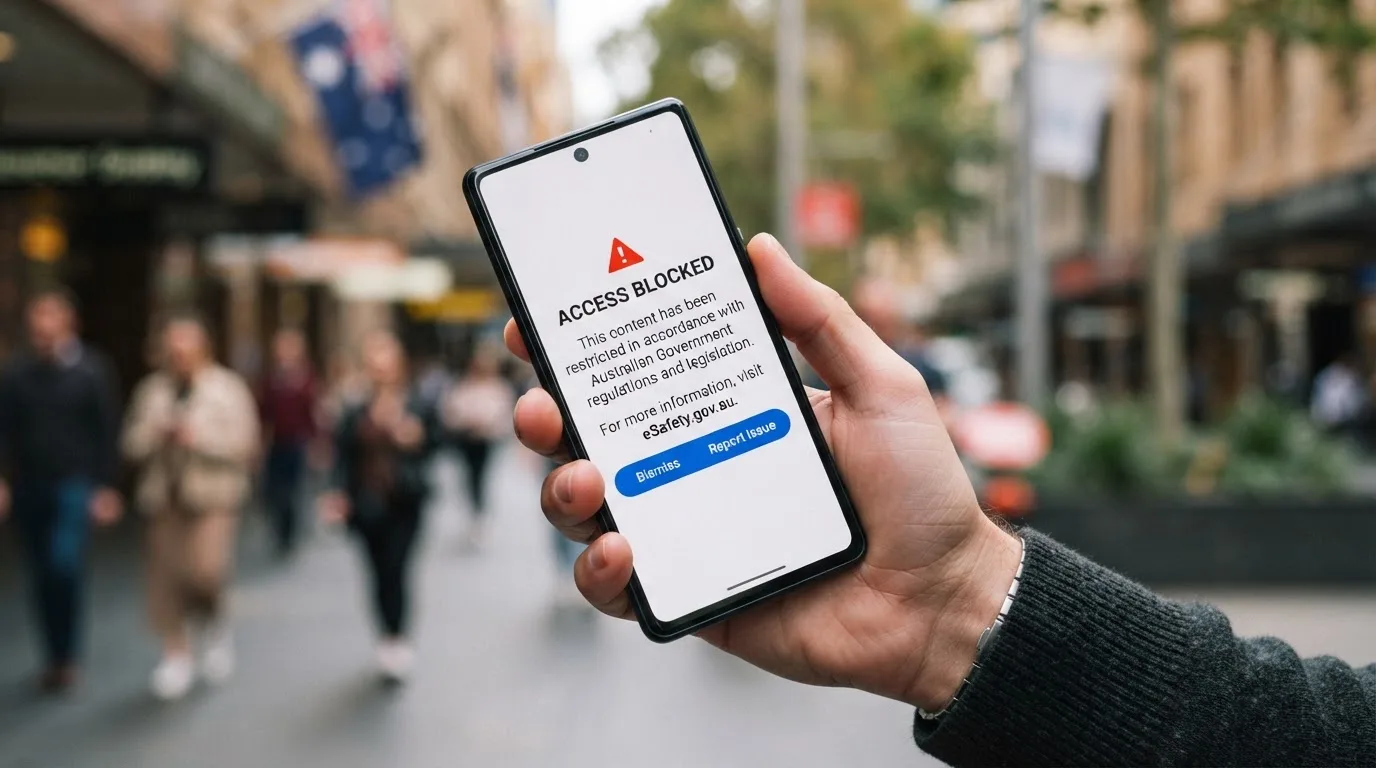
Since the first blocking request in November 2019, the ACMA has asked Australian internet service providers to block 1,751 illegal gambling and affiliate marketing websites, and more than 230 unlicensed services have left the Australian market since enforcement was strengthened in 2017. A round reported on 26 June 2026 alone added twelve more: 7Signs, ChromaBet, Donbet, Duospin, Freshbet, Slots Gem, Jacks Club, Lucky Start, Pointsbetz, Spinrise, Vinyl Casino and Wildsino. Each round is a public statement about which operators have been found offering prohibited services to Australian customers.
The ACMA’s other tool is the formal warning, published with the operator’s name and the offending brand. March 2026 brought a warning over RocketPlay against Pulsup Ltd. April 2026 brought a warning over Jackbit and CasinOK against Ryker B.V. The pattern repeats by year: in 2025, Dama N.V. was warned over Woo Casino in March and Spirit Casino in May; Bamboo Media over Ignition Casino and Consolutetish S.R.L. over National Casino and Bizzo Casino in July; EOD Code SRL over Instant Casino in February; Sterplay Holding Ltd over Casino Intense in April. In 2022, the ACMA warned Dama N.V. over six brands at once — Bambet, Dazard, Level Up, Rocketplay, Wild Tornado and Cobra Casinos — and Hollycorn N.V. over Sky Crown and Blue Leo.
A published formal warning is not a prosecution and the individual player is not the target. What it tells the reader is that the operator on the other side of the deposit has been identified by name, and that the site can be — and frequently is — blocked with the customer’s balance still on it.
What the market loses to illegal sites
H2 Gambling Capital’s 2025 report puts Australian losses to illegal gambling sites at roughly A$3.9 billion a year, with the share of gambling flowing through legal channels slipping from 74% in 2021 to 64%. The reader who lands on this page sits inside that 64-versus-36 split. A dollar that goes offshore is a dollar outside Australian consumer law, outside the complaints process, and outside the BetStop register that Australian-licensed wagering services are bound to honour. That is the cost a payment method carries here, before any fee, exchange rate or hold time enters the picture.
What an Australian can actually pay with — without leaving the country
The legal funding set on the wagering side is small by design, and that smallness is the protection. Debit card, bank transfer, PayID or Osko, and BPAY are the routes a licensed Australian operator will accept. Crypto and credit cards are banned on the legal side, and any site still asking for them is telling you what side of the law it sits on.
PayID and Osko deserve a closer look because they are the routes an Australian reader already has in their banking app. Both run over Australia’s New Payments Platform, which went live on 13 February 2018 and is owned by New Payments Platform Australia Ltd — a non-profit whose thirteen shareholders include the Reserve Bank of Australia and the major banks. In 2021 the ACCC authorised the merger of NPP Australia with BPAY and eftpos into a single company, Australian Payments Plus, which now operates PayID, Osko and BPAY side by side.
PayID and the name on the other side
More than 25 million PayID identifiers had been registered on the platform as of April 2025, and the service is available at over 100 Australian financial institutions. The headline feature for anyone funding a wagering account is the name check: when you pay to a PayID, the name of the account holder shows up before you send the money. Australian Payments Plus warns that being asked to transfer to a PayID on an illegal gambling site almost certainly means a scam site — a useful test, because a legitimate Australian-licensed wagering operator will be a known business with a name that matches the brand on its licence.
Osko and the under-a-minute settlement
Osko is the instant leg of the platform: a bank transfer between participating Australian banks that arrives in under a minute, 24/7 including weekends, whether it is addressed to a BSB and account number or to a PayID. The comparison with a card payment is the comparison Australians make most often. A card purchase goes through the scheme’s authorisation network, is settled into the merchant’s account on the scheme’s timeline — usually next business day, sometimes longer — and carries a processing fee that the merchant may pass on as a surcharge. The Reserve Bank of Australia’s July 2025 review proposes removing surcharges on eftpos, Mastercard and Visa transactions, explicitly leaving American Express outside the scope of the proposed ban. That asymmetry is worth knowing about: Amex is a three-party scheme, the card issuer and processor rolled into one, and that structure has historically carried higher merchant costs than the four-party Visa and Mastercard networks. American Express itself was established in 1850 as a freight-forwarding company and launched its first charge card on 1 October 1958, a long arc that explains why it still prices differently at the till.
Osko has no surcharge because it is a bank transfer between accounts on the same platform. Participants in the platform must keep monthly outages to no more than two minutes, which is the operational ceiling on the speed claim.
BPAY and the bill-payment shape
BPAY is the older of the three, launched on 18 November 1997 and available in the online banking of over 140 Australian banks and financial institutions, with over 95,000 businesses using it as a payment route. The mechanics are bill-payment shaped: the payer enters the Biller Code and a Customer Reference Number printed on the bill, and the money arrives on BPAY’s own timeline, usually next business day. BPAY is owned equally, via its parent Cardlink Services Limited, by ANZ, Commonwealth Bank, National Australia Bank and Westpac — the four majors, which is why it sits in every big-four app without an extra enrolment step.
The legal channels, in plain terms
For an Australian punter who wants to stay on the right side of the Interactive Gambling Act, the deposit menu is short: debit card or bank transfer via PayID or Osko, with BPAY as the slower alternative where a bookmaker accepts it. Apple Pay and the other mobile wallets sit on top of those rails. By the end of 2025, Apple Pay, Google Pay and Samsung Pay collectively accounted for around 45% of all card payments in Australia by number — a share that has changed the way the deposit button feels, but not what the deposit is.
The credit card ban matters here. Under the Interactive Gambling Act 2001 as amended in 2023, Australian-licensed online wagering services cannot accept payment by credit card or other credit-related products, a restriction that constrains gambling use of linked digital wallets as well. The wallet itself is not the issue; the funding card is.
The crypto and e-wallet question, without the marketing
A reader who has spent ten minutes on a comparison site has been told that cryptocurrency, e-wallets and prepaid vouchers are the “best” payment methods for online casinos. Some of that is operator marketing; some of it is copy written by affiliates who get paid per signup. The part that matters for an Australian is whether the route is legal here, and whether it offers anything the card-and-bank set does not.
What an offshore crypto deposit actually does
A Bitcoin or USDT transfer settles on a public blockchain and lands, in most cases, in a wallet operated by an offshore entity that has no Australian licence and no presence the ACMA can contact. The transaction is pseudonymous — addresses are visible, identities behind them are not — which is the property the marketing leans on. The same property means there is no chargeback right, no Australian dispute process, and no way to recover funds if the operator decides not to pay out. PayID’s name check is the inverse of that experience, and it is built into the bank transfer an Australian already has.
There is also the practical question of where the crypto came from. AUSTRAC’s threshold-transaction-report rule, which requires reporting of transfers of A$10,000 or more, applies only to physical cash; ordinary electronic bank transfers are not subject to that per-transaction reporting requirement, regardless of amount. A bank-to-bank transfer to a wagering account is not a reportable transaction, while a bank-to-exchange-to-crypto-to-casino chain is, at minimum, a chain an Australian bank can ask about.
The e-wallet, when it is one
An e-wallet is a holding account funded from a bank or card and used to pay a merchant. On the legal wagering side, the funding card is still the relevant object: a debit card funds an e-wallet that funds a wagering account, and the Interactive Gambling Act’s credit-card ban reaches back through the wallet to the source. On the illegal side, the same wallet is just another rail into the same offshore operator.
Prepaid vouchers and the untraceable pitch
Prepaid vouchers are sold at retail and redeemed by code. The marketing line is “no bank trace”; the practical line is that the voucher has been paid for with cash or a debit card at a retailer, and the redemption code reaches an offshore operator with no Australian footprint. Once again the question is the same: who is on the other side, and what recourse does the holder have when the site stops paying out.
Self-exclusion and the bank-side block, which is where the protection actually lives
The protections an Australian reader can actually use live on the bank side and on BetStop, not on the payment method itself.
BetStop and what it does and does not cover
BetStop — the National Self-Exclusion Register, live since August 2023 — binds Australian-licensed online and phone wagering services. A punter who registers is excluded from every licensed wagering operator, and the operator is required to close marketing, refuse deposits and take active steps to keep the registered person out. What BetStop does not do is touch an offshore casino: those operators are not licensed in Australia, are not connected to the register, and have no obligation to honour an Australian self-exclusion.
For someone funding an offshore casino from an Australian bank account, the bank-side block is the only self-exclusion that actually fires. The National Gambling Helpline — 1800 858 858, free, 24/7, with chat at Gambling Help Online — is the front door for anyone who wants to talk about the steps before they take them.
How the bank-side blocks work, bank by bank
Westpac’s gambling block operates at card level: it refuses authorisation of transactions registered under the merchant category code “Betting/Casino Gambling” on eligible personal credit and debit cards. The mechanism is the merchant category code, which is the four-digit tag every card transaction carries and which the card-issuing bank reads before authorising. ANZ’s gambling transaction block, activated in the ANZ app, blocks gambling transactions made through a digital wallet such as Apple Pay on an eligible card, not just on the physical card itself. Commonwealth Bank lets customers apply a gambling lock to eligible cards via the CommBank app, which automatically blocks most gambling transactions, though the bank states it cannot guarantee all gambling-related purchases will be stopped.
Two warnings the banks themselves attach. ANZ tells customers that removing the block again requires a 48-hour waiting period, and that not all gambling transactions will be blocked and some non-gambling transactions might be blocked in error. CommBank publishes the same caveat, more briefly. The 48-hour cool-off exists because the banks have seen what an instant opt-out does during a loss-chase, and have decided to design against it.
Apple Pay, Google Pay and the limits the issuer sets
By the end of 2025, Apple Pay, Google Pay and Samsung Pay collectively accounted for around 45% of all card payments in Australia by number, which makes the wallet rail the deposit rail most Australians will meet. Apple itself does not charge consumer fees for using Apple Pay in stores, online or in apps; any surcharge comes from the merchant’s own card-processing fees, not from Apple. Apple also states that transaction limits and PIN requirements for Apple Pay purchases are set by the card issuer or merchant, not by Apple — which means the gambling block on the underlying card is the rule that governs the wallet transaction, not anything Apple adds or removes at its end.
The reason this matters for an offshore site is that the merchant category code on a casino deposit still reads “Betting/Casino Gambling” no matter which wallet fronts it, and the bank that issued the underlying plastic still has the block sitting on the MCC. A reader who has switched the block on at the bank is, in practice, protected on the legal side and exposed on the illegal side — because the illegal operator routes through MCCs the block does not always catch, or through bank transfers that bypass the card rail entirely.
What an Australian reader pays, when a site is blocked or a withdrawal stalls
The cost an Australian reader pays when an offshore casino is blocked mid-session is not a fee on a statement. It is the balance left on the site, the time spent arguing with an entity in another jurisdiction, and the absence of any Australian body that can order a payout. The Interactive Gambling Act targets the provider, not the player, which is some relief, but it is relief of a specific kind: the player does not face prosecution, and the player also does not face recourse.
A licensed Australian wagering operator, by contrast, sits inside the Australian complaints system, can be reported to the ACMA, and is bound by BetStop and the credit-card ban. The deposit methods are slower, the menu is shorter, and the bonus offers are smaller — all of which is the price of the protections that come with them.
For a reader weighing the trade, the calculation is not “which payment method is fastest” but “which side of the IGA am I on when I press deposit.” Every other comparison follows from that.
Payment Methods Comparison
| Method | Typical Speed | Surcharge | Availability |
|---|---|---|---|
| Debit Card | Instant | Potential | High |
| Bank Transfer | 1-3 Business Days | None | High |
| PayID/Osko | < 1 Minute | None | High |
| BPAY | Next Business Day | None | High |
The sites the ACMA has named, and what that naming does
The eleven operators below are not a recommended shortlist. Each is named because the ACMA itself has issued a formal warning over it for offering prohibited online casino services to Australians, and the warning is published on the ACMA’s site with the operator’s legal name and the date. The list is in the order the ACMA’s published record gives; the only thing being compared is what each warning tells the reader about the brand on the other side.
RocketPlay
The ACMA’s most recent published action over this brand names Pulsup Ltd, with a formal warning issued in March 2026 over RocketPlay. The brand had already been the subject of an earlier warning to Dama N.V. in May 2022, when Dama N.V. was warned over six brands at once. For an Australian reader, the picture is the same as it has been for four years: an offshore operator with two consecutive published warnings and no Australian licence to fund.
Level Up Casino
Level Up was named in the same May 2022 warning to Dama N.V. as RocketPlay and four other brands. The ACMA has not republished a separate action against the brand since, which does not change the original warning and does not amount to a clearance — only to the absence of a further round.
Woo Casino
The ACMA issued a formal warning to Dama N.V. over Woo Casino in March 2025, separate from the 2022 round. The brand sits inside a portfolio the ACMA has been tracking across multiple years, which is the relevant fact rather than any specific bonus term.
Spirit Casino
Spirit Casino was named in a formal warning to Dama N.V. in May 2025, two months after the Woo Casino warning. The pattern is the same operator being named over different brands on different dates, which is how the ACMA records a group it has been watching over time.
National Casino
In July 2025 the ACMA warned Consolutetish S.R.L. over National Casino in the same round that named Bizzo Casino. The brand had not previously appeared in the ACMA’s published warnings, which makes 2025 the first formal action against the operator.
Bizzo Casino
Bizzo Casino was named in the same July 2025 warning to Consolutetish S.R.L. as National Casino, and had previously been the subject of a 2022 formal warning to TechSolutions (CY) Group Limited and TechSolutions Group N.V. Two warnings over different operators across three years tells a reader that the brand has moved between corporate homes without moving out of the ACMA’s record.
Ignition Casino
In July 2025 the ACMA warned Bamboo Media over Ignition Casino. The brand was not previously named in a published warning, which makes this the first formal action.
Instant Casino
In February 2025 the ACMA issued a formal warning to EOD Code SRL over Instant Casino. The brand has been named only once in the ACMA’s published record, but the action was a formal warning, not an investigation note, and the publication date is the date the ACMA chose to put it on the public register.
Jackbit
In April 2026 the ACMA issued a formal warning to Ryker B.V. over Jackbit, in the same round that named CasinOK. The corporate entity is recent to the ACMA’s published list.
Casino Intense
In April 2025 the ACMA issued a formal warning to Sterplay Holding Ltd over Casino Intense. The brand has not been the subject of a further warning since.
Sky Crown
The ACMA issued a formal warning to Hollycorn N.V. over its Sky Crown and Blue Leo casino services, published in September 2022. Blue Leo was named alongside Sky Crown in the same action, which is the relevant pairing on the public record.
Landsca
The table below gathers the warnings above into one view. The “subject support” column reflects what the ACMA’s own record or the broader public register shows about a brand’s connection to the payment methods on this page; a brand with no entry there is not the subject of any specific published support claim.
| Brand | ACMA action and date | Operator named by the ACMA | Subject support |
|---|---|---|---|
| RocketPlay | Formal warning, March 2026; earlier warning, May 2022 | Pulsup Ltd; earlier Dama N.V. | — |
| Level Up Casino | Formal warning, May 2022 | Dama N.V. | — |
| Woo Casino | Formal warning, March 2025 | Dama N.V. | — |
| Spirit Casino | Formal warning, May 2025 | Dama N.V. | — |
| National Casino | Formal warning, July 2025 | Consolutetish S.R.L. | — |
| Bizzo Casino | Formal warning, July 2025; earlier warning, 2022 | Consolutetish S.R.L.; earlier TechSolutions | — |
| Ignition Casino | Formal warning, July 2025 | Bamboo Media | — |
| Instant Casino | Formal warning, February 2025 | EOD Code SRL | — |
| Jackbit | Formal warning, April 2026 | Ryker B.V. | — |
| Casino Intense | Formal warning, April 2025 | Sterplay Holding Ltd | — |
| Sky Crown | Formal warning, September 2022 | Hollycorn N.V. | — |
What the table actually says, read across the rows, is that the ACMA’s published record groups its targets by operator, not by payment method. Dama N.V. appears four times, in 2022 and 2025, over different brands, which is how the regulator records a corporate family it has watched over several years. Consolutetish S.R.L. appears twice in the same July 2025 round. The brands outside those groups are one-off warnings to one operator. For a reader comparing the warnings, the column that varies is the operator’s name, and that is the column the table is built to put side by side.
The blocking rate, measured against the ACMA’s own running total
Since the first blocking request in November 2019, the ACMA has asked Australian internet service providers to block 1,751 illegal gambling and affiliate marketing websites. Spread across the roughly eighty months between November 2019 and the June 2026 figure, that is a band of roughly 21 to 22 sites blocked per month on average, with the rate concentrated in bursts around enforcement rounds rather than spread evenly. The June 2026 round alone added twelve. A reader looking at the rate as a measure of how fast the ACMA is closing the gap will see a regulator that has been adding sites to the block list at a steady clip since 2019, and has not yet run out of new ones to add.
The figure’s value is not the average but the asymmetry it points at. Every site the ACMA blocks is a site that was, until the block, taking deposits from Australian customers. The 1,751 total is a lower bound on the number of operators who have treated Australia as a customer base since 2019, and the rate of additions is a measure of how often the supply side refreshes after each round.
The verdict, for an Australian reader weighing where to put the money
For a recreational punter who wants to stay inside Australian law, the payment method is not the variable that matters. The variable is whether the operator is licensed in Australia to take the wager in the first place. If it is — racing, sport before the event, lotteries, keno — the deposit routes are debit card, bank transfer, PayID or Osko, and BPAY where the operator offers it. If it is not, the deposit routes are whatever the offshore operator accepts, and the protections an Australian reader assumes they have do not apply.
The bank-side blocks are the protection that actually fires. Westpac’s card-level block on the Betting/Casino Gambling merchant category code, ANZ’s wallet-aware block with its 48-hour cool-off on removal, and Commonwealth Bank’s gambling lock in the CommBank app are the three switches an Australian reader can throw today. BetStop, the National Self-Exclusion Register, is the protection that sits on the legal side and stops working the moment the deposit crosses to an offshore site. The National Gambling Helpline at 1800 858 858 is the front door for anyone who wants to talk before they take any of the steps above.
What the page cannot honestly give is a working shortlist of offshore casinos and the bonus codes attached to them. The product is prohibited, the ACMA has named most of the operators who offer it, and a “best payment method” framed around offshore play is a guide to funding a site that can be blocked with the balance still on it.
Frequently asked questions
What payment methods are commonly advertised by online casinos targeting Australians?
Offshore sites targeting Australians typically advertise debit and credit cards, bank transfers, e-wallets, and cryptocurrency. For a reader in Australia, the relevant fact is that none of these routes changes the site’s legal status under the Interactive Gambling Act 2001: an offshore operator remains prohibited, and the deposit method does not convert it into a licensed wagering service.
How does an Osko transfer compare with a card payment for speed?
Osko settles in under a minute, 24/7, between participating Australian banks, regardless of whether the transfer is addressed to a BSB and account number or to a PayID. A card payment goes through the card scheme’s authorisation and settlement timeline, usually next business day, and may carry a merchant surcharge that Osko does not.
Is it legal for an online casino to process payments from players in Australia?
It is an offence under the Interactive Gambling Act 2001 for a provider to supply online casino games or online pokies to a person in Australia. The IGA targets the provider, not the individual player. Deposits to an offshore casino are not a criminal offence for the player, but the funds have no Australian consumer protection and can be stranded when the site is blocked.
Are cryptocurrency payments harder to trace than a bank transfer?
Crypto transactions settle on a public blockchain under pseudonymous addresses, which is the property the marketing leans on. A bank transfer to an Australian-licensed wagering operator carries the account-holder’s name and is recorded by the paying and receiving banks. The harder-to-trace claim is true at the technical level; it is also true that an offshore crypto route has no Australian complaints process if the operator stops paying out.
What makes a casino payment method secure rather than just fast?
Security in this market comes from the operator being inside the Australian regulatory perimeter: licensed by the Northern Territory Racing and Wagering Commission for wagering, bound by BetStop, prohibited from taking credit cards, and reachable through the ACMA’s complaints process. A fast route to an offshore site is not a secure route, because the protection is the licence, not the rail.
Does PayID offer any extra protection compared with a BSB and account number?
PayID shows the name of the account holder before the transfer is sent, which is the protection BSB-and-account-number transfers do not offer. Australian Payments Plus warns that being asked to transfer to a PayID on an illegal gambling site almost certainly means a scam site — a useful reverse test, because a legitimate Australian-licensed wagering operator will be a known business with a matching name.
Created by the ”Instant bank transfer casino Australia” editorial team.