
Casino sites that accept BPAY in Australia: a biller code is not a licence
Current as of 24 October 2026. Operator status and ACMA actions cross-checked against the ACMA’s register of formal warnings and blocking requests.
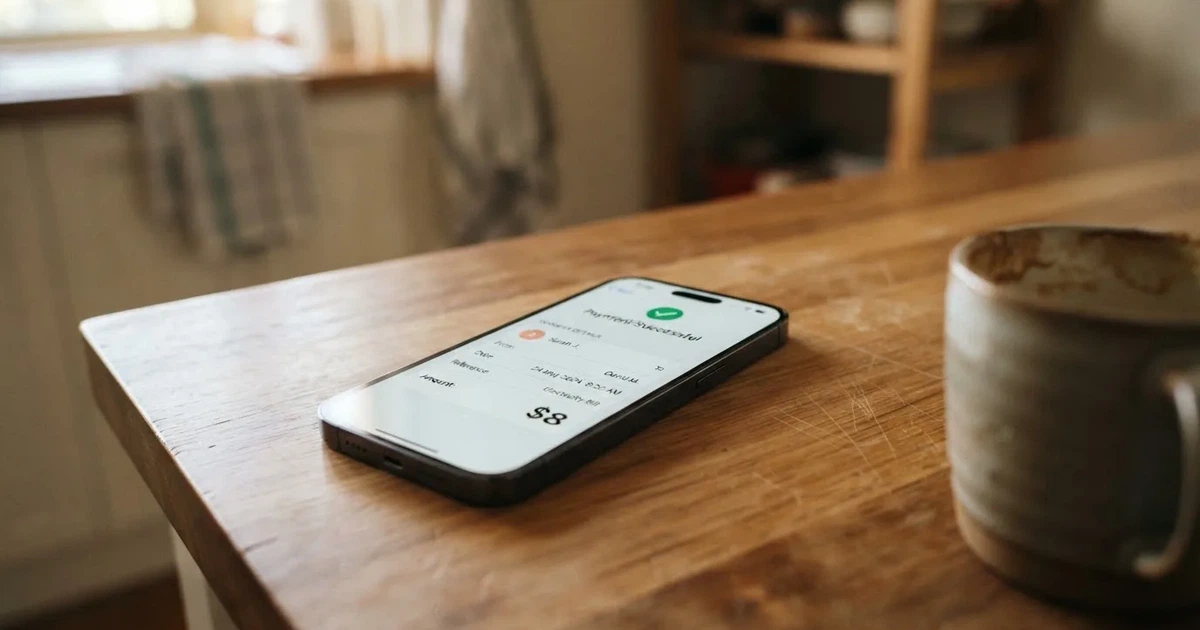
A BPAY biller code on an offshore casino cashier page is one of the more honest pieces of branding in Australian online gambling. It tells you the operator is hoping the reader recognises a familiar Australian payment rail and reads past everything that sits behind it. What sits behind it is the Interactive Gambling Act 2001, the Australian Communications and Media Authority’s register of formal warnings, and an offshore operator with no Australian licence, no Australian dispute body, and a real chance of being added to the next blocking round before a balance is withdrawn. This page is written for a reader weighing BPAY as a deposit rail, not as a recommendation to send money to any brand listed below. Every operator named is on the ACMA’s register for offering prohibited services to Australians. Each carries a verdict grounded in what is on the record.
Table of Contents
- What BPAY actually settles, and what it does not
- The legal frame: prohibited product, licensed rails
- Responsible play on a rail that does not see what it pays for
- The blocking rate, since the first request in November 2019
- The brands on the ACMA’s register, and what the warning records
- How this page was put together, and what it does not do
- The reader-side picture
- The numbers behind the warnings
- Frequently asked questions
What BPAY actually settles, and what it does not
BPAY is a bill-payment service built into the online banking of more than 140 Australian banks and credit unions. The payer enters a Biller Code and a Customer Reference Number printed on the bill, and the bank moves the money to the biller’s account, typically settling the next business day. BPAY Group launched the service on 18 November 1997; it is now owned equally, through parent company Cardlink Services Limited, by ANZ, Commonwealth Bank, National Australia Bank and Westpac, and runs under Australian Payments Plus alongside PayID and Osko. Over 95,000 businesses issue BPAY bills in Australia, and the rail handles rent, utilities, council rates, school fees, insurance and a long tail of recurring charges.

What it does not do is verify what the biller is selling. The bank moves money to a Biller Code that has been registered with BPAY; it does not adjudicate whether the underlying product is lawful in the payer’s state or territory. That distinction is the whole reason a reader searching for casino sites that accept BPAY in Australia needs to look past the cashier page.
A casino cashier is not a council rate notice. The merchant on the other side is an offshore company, and the product — online casino games, online pokies, in-play betting — is a prohibited interactive gambling service under the Interactive Gambling Act 2001 as amended in 2017. The IGA targets the provider, not the individual player, but the player’s protection disappears with the Australian connection: no Australian complaints body, no BetStop coverage, no Australian Financial Complaints Authority avenue if the balance goes missing. Paying a casino via BPAY moves money into that gap with the same ease as paying a power bill, and that ease is what makes the rail worth understanding.
Settlement, in plain language
BPAY is a next-business-day settlement rail for most billers. The cut-off is usually late evening on a business day; payments lodged after the cut-off are treated as made the next business day, and weekends and public holidays do not count as business days. For an Australian player funding a casino account on a Friday evening, that typically means the deposit is visible to the casino on the Monday. The 24/7 instant transfer experience Australians are used to from Osko and PayID is not what BPAY delivers — BPAY is built for bills, not for live balance top-ups.
Limits on BPAY payments are set by the issuing bank and the biller, not by BPAY itself. ANZ publishes a daily BPAY limit of A$5,000; St.George allows a cumulative daily limit of A$100,000 with a A$15,000 maximum for certain billers. Commonwealth Bank, NAB and Westpac each set their own thresholds through the card or account the customer is paying from. The right number for a reader is the one printed in their own bank’s terms, not the one implied by a casino’s “deposit limits” page.
Why banks treat gambling BPAY payments differently
The big four Australian banks now let customers switch off most card-based gambling transactions at the card level. Commonwealth Bank’s gambling lock runs inside the CommBank app and blocks most gambling transactions on eligible cards, with the bank stating it cannot guarantee every gambling-related purchase will be stopped. Westpac’s block refuses authorisation on transactions carrying the merchant category code ‘Betting/Casino Gambling’ on eligible personal credit and debit cards. ANZ’s gambling transaction block extends to Apple Pay and Google Pay purchases made through an eligible card, and turning it off again requires a 48-hour waiting period.
BPAY sits one step removed from those card-level controls. A BPAY payment runs through direct debit and the biller code, not through the card network’s merchant category code, so a gambling block on a Visa or Mastercard will not necessarily intercept it. Some banks treat recurring bill payments to gambling-related biller codes as a separate stream and apply their own rules; readers who want a hard stop on casino deposits need to confirm with their bank whether BPAY payments to the relevant biller are covered by the same controls as card transactions.
The legal frame: prohibited product, licensed rails
Online casino games and online pokies cannot be licensed anywhere in Australia. The Interactive Gambling Act 2001, strengthened by the Interactive Gambling Amendment Act 2017, makes it an offence to provide those products to a person physically in Australia. What is licensable is wagering on racing and sporting events placed before the event, lotteries, and keno — in practice licensed by the Northern Territory Racing and Wagering Commission. The NTRWC regulates 52 of Australia’s online bookmakers, including Sportsbet, Bet365 and Ladbrokes, which hold Northern Territory licences for tax reasons; the commission itself has no full-time staff and meets once a month in Darwin. Bookmakers are licensed; casino games are not.
The ACMA enforces the prohibition on the supply side. It investigates complaints, issues formal warnings, and directs Australian internet service providers to block illegal sites. According to a June 2026 ACMA update reported by industry trade press, 1,751 illegal gambling and affiliate marketing websites had been blocked since the first blocking request in November 2019, and more than 230 unlicensed gambling services had left the Australian market since enforcement was strengthened in 2017. In a single round reported on 26 June 2026, the ACMA asked ISPs to block 12 more sites: 7Signs, ChromaBet, Donbet, Duospin, Freshbet, Slots Gem, Jacks Club, Lucky Start, Pointsbetz, Spinrise, Vinyl Casino and Wildsino.
The legal deposit rails for Australian-licensed wagering are debit card, bank transfer, PayID/Osko and BPAY. Credit cards, credit-related products and digital currency were banned as payment for licensed online wagering from 11 June 2024, with penalties of up to A$247,500 for operators that breach the rule. A site asking an Australian customer for a credit card or a crypto deposit is not playing by Australian rules. The presence of BPAY on a cashier page does not pull an offshore site inside those rules; it only means the operator has registered a biller code with BPAY, which is a payments question, not a gambling-licence question.
The Interactive Gambling Amendment (Gambling Reform) Bill 2026 passed Parliament on 19 August 2026; its advertising and inducement measures commence on 1 January 2027. On a page read in 2026, that reform is law with a future start date, not yet in force.
What protection does not follow the player offshore
BetStop, the National Self-Exclusion Register, has been live since August 2023. It binds Australian-licensed online and phone wagering services — Sportsbet, Ladbrokes, the NT-licensed bookmakers — and stops a self-excluded customer from opening new accounts or depositing with the operators it covers. An offshore casino is not connected to BetStop. A self-excluded Australian can still register, deposit and play at the brands named on the ACMA register, because those brands are not participants in the Australian scheme.
The National Gambling Helpline — 1800 858 858 — is free, 24/7 and runs alongside web chat at Gambling Help Online. It is the right first call for any Australian whose gambling has crossed a line they did not intend to cross, and it works whether or not the gambling took place at a licensed or offshore venue.
Gambling winnings of a recreational player are not assessable income under section 6-5 of the ITAA 1997, and losses are not deductible, unless the person carries on a business of gambling. The ATO treats professional gambling as a business; everything else is a private recreational win or loss.
Responsible play on a rail that does not see what it pays for
A bank can block a card transaction it identifies as gambling. A gambling lock on the CommBank app, Westpac’s card-level block and ANZ’s card-and-wallet block all sit at the card network layer, where the merchant category code is what the bank reads. BPAY sits outside that layer. A BPAY payment is initiated by the customer inside their own banking session, addressed to a registered biller code, and authorised against the customer’s own daily BPAY limit. The bank can refuse it, delay it, or flag it for review, but the decision is the bank’s own, applied to a stream of payments that does not carry a “this is gambling” label the way a card transaction does.
That is why bank-level gambling blocks vary in how they treat BPAY, and why a reader who wants the protection of a block needs to ask the bank specifically about BPAY payments to gambling-related billers. The honest answer from the banks above is that they cannot guarantee every gambling-related BPAY payment will be stopped, the same way they cannot guarantee every card transaction will be caught. A lock is a setting, not a wall.
The most useful responsible-play settings for a reader using BPAY are the same ones that apply to any Australian gambling account: a written deposit ceiling, a calendar reminder before any reload, and a hard look at Gambling Help Online before the next session rather than after it. The 1800 858 858 helpline is the number to keep beside the banking app, not the casino one.
What the ACMA register actually records
The ACMA publishes formal warnings under the Interactive Gambling Act 2001 on its website. A formal warning is the ACMA’s recorded view that an operator has been offering prohibited interactive gambling services to Australians. It is not a conviction and not a block; it is a public step on the enforcement ladder that can precede an ISP-level block. The warnings page is searchable, dated, and named after both the brand and the corporate entity behind it, which is why the warnings below carry both: the brand the player sees on the casino site, and the company the ACMA has written to.
The brands below are listed in the order the research brief gave them, not as a recommendation and not as a ranking. Each is on the ACMA register. None is an Australian-licensed casino, because no such licence exists.
The blocking rate, since the first request in November 2019
The arithmetic behind the ACMA’s enforcement is short enough to carry in one band. As of June 2026, the ACMA had asked Australian internet service providers to block 1,751 illegal gambling and affiliate marketing websites since the first blocking request in November 2019. That is the cumulative total at the snapshot date; the live counter moves whenever the next round is reported.
Worked as a band rather than a single figure: between November 2019 and June 2026 is roughly 79 months. Spread over that window, 1,751 sites works out to an average of around 22 sites blocked per month, or about 264 per year. The single round reported on 26 June 2026 alone added 12, so the monthly cadence is uneven — quiet months, then a published tranche — but the long-run average holds the shape of the enforcement curve.
The honest way to read that rate is conditional. It is the rate at which the ACMA’s existing investigative and warning pipeline produces blocks, at a level of resourcing and inter-agency cooperation that has held since 2017, against an offshore industry that registers new domains faster than any regulator can name them. A reader who treats the number as a guarantee that any specific brand will be blocked before their next deposit is reading past what the figure supports. A reader who reads it as evidence that the ACMA’s enforcement pipeline runs faster than the marketing pages suggest is reading it the way it sits on the page.
The estimate is a long-run average. It does not predict the next round, the next warning, or whether any particular operator below will be named in it. It is what the published total gives back when the months are counted.
The brands on the ACMA’s register, and what the warning records
The brands below are the operators the ACMA has issued formal warnings over for offering prohibited interactive gambling services to Australians. Each row pairs the brand with the corporate entity named in the warning, the date the warning was published, and a verdict on what the record actually shows. The table reflects the ACMA register as published; nothing here infers further action that has not been recorded.
How to read the table
The table below lists the brands in the order the research brief gave them, with the ACMA’s named operator and the date the formal warning was published. The final column captures what public sources say about whether the brand accepts BPAY, with a no-data marker where no listing could be checked. The presence of a row in the table is the ACMA’s record, not the writer’s recommendation.
| Brand | ACMA action and date | Operator named by the ACMA | Subject support |
|---|---|---|---|
| RocketPlay | Formal warning, March 2026 (Pulsup Ltd); earlier warning to Dama N.V., May 2022 | Pulsup Ltd RocketPlay | — |
| Level Up Casino | Formal warning, May 2022 | Dama N.V. | Westpac listing reference |
| Woo Casino | Formal warning, March 2025 | Dama N.V. | — |
| Spirit Casino | Formal warning, May 2025 | Dama N.V. | — |
| National Casino | Formal warning, July 2025 | Consolutetish S.R.L. | AUSTRAC and Wikipedia listing references |
| Bizzo Casino | Formal warning, July 2025; earlier warning to TechSolutions, 2022 | Consolutetish S.R.L. | — |
| Ignition Casino | Formal warning, July 2025 | Bamboo Media | — |
| Instant Casino | Formal warning, February 2025 | EOD Code SRL | ecoPayz and PayID listing references |
| Jackbit | Formal warning, April 2026 | Ryker B.V. | — |
| Casino Intense | Formal warning, April 2025 | Sterplay Holding Ltd | AUSTRAC, ITnews and NAB listing references |
| Sky Crown | Formal warning, September 2022 | Hollycorn N.V. | — |
The pattern in the final column is itself part of the picture. Where public listings reference a brand by name, they do so as a payments-industry entry or a media mention — not as an Australian licence and not as an endorsement of the operator’s status under the IGA. AUSTRAC registration, where it appears, is an anti-money-laundering and counter-terrorism-financing obligation, not a gambling-product licence. Listing references in Westpac, NAB and PayID material are usually examples of how a payment method is used or how a transaction might be flagged, not statements that the brand is licensed to take Australian bets.
RocketPlay
The ACMA’s most recent formal warning over RocketPlay is dated March 2026 and names Pulsup Ltd as the operator of the RocketPlay website. An earlier warning over the same brand was issued in May 2022 to Dama N.V., covering six brands including RocketPlay itself. The brand has moved between two named corporate entities in four years, which is the kind of paper trail that follows an offshore operator working a market it is not licensed in. No public listing reference for BPAY support could be confirmed against the brand. The verdict here is short: a brand on the ACMA register twice in four years, under two different operators, with no Australian licence available to it in any case. The reader gets the biller code, not the protection.
Level Up Casino
Level Up Casino sits on the May 2022 Dama N.V. warning, alongside five other brands the ACMA wrote to at the same time. Public listings reference the brand in a Westpac context, which is a payments-industry appearance, not a gambling-licence one. The verdict: a brand on the ACMA’s first published Dama N.V. round, named in the same warning letter that named RocketPlay, with the same offshore-licence posture and the same gap behind the cashier page.
Woo Casino
Woo Casino attracted a fresh formal warning to Dama N.V. in March 2025, three years after the May 2022 round that covered other Dama brands. The pattern of repeated warnings to the same operator, on a 24-to-36-month cycle, is the ACMA’s published way of saying the corporate entity is continuing to offer prohibited services. Public listing data for BPAY support is not available for Woo Casino. The verdict: a repeat-warning brand under the same Dama N.V. umbrella as Level Up and Spirit, with no Australian licence available.
Spirit Casino
Spirit Casino shares the Dama N.V. operator line and sits on the May 2025 warning. It is the third Dama N.V. brand in this table — Level Up on the 2022 letter, Woo on the March 2025 letter, Spirit on the May 2025 letter — and the only one of the three to be the subject of its own dedicated warning round. No BPAY listing could be confirmed. The verdict: a brand whose ACMA history is recent enough that any Australian player should treat the cashier page as a target for the next blocking tranche rather than a long-term relationship.
National Casino
National Casino carries a July 2025 formal warning to Consolutetish S.R.L. Public listings reference the brand in AUSTRAC and Wikipedia material, both of which are informational entries rather than licences. The verdict: a brand under a relatively recent ACMA warning, with a corporate name that does not appear in any Australian gambling register, and no Australian-licensed counterpart it can be confused with.
Bizzo Casino
Bizzo Casino sits on the same July 2025 Consolutetish S.R.L. warning as National Casino, and carries an earlier 2022 formal warning to TechSolutions (CY) Group Limited and TechSolutions Group N.V. Two warnings to two different operators over the same brand is a strong signal that the brand has been moved between corporate entities the way the ACMA records other Dama-style operations being moved. No BPAY listing could be confirmed. The verdict: the same brand name under two operators, both on the ACMA register, neither with an Australian licence to lose.
Ignition Casino
Ignition Casino carries a July 2025 formal warning to Bamboo Media. The brand is well known in the offshore market but has no Australian licence and no presence on any Australian gambling register. No official information confirms BPAY support for Ignition Casino. The verdict: a brand that surfaces in offshore search results and on the ACMA register, with no Australian connection beyond the warning itself.
Instant Casino
Instant Casino carries a February 2025 formal warning to EOD Code SRL. Public listings reference the brand in ecoPayz and PayID material, which are payments-industry examples rather than gambling-licence statements. The verdict: a brand with a recent ACMA warning and a payments-industry footprint that is exactly the kind of footprint an offshore operator uses to look familiar to an Australian player without being licensed in Australia.
Jackbit
Jackbit carries an April 2026 formal warning to Ryker B.V., which makes it one of the most recent entries on the register at the time of writing. The same April 2026 warning also named CasinOK, which is the second brand under Ryker B.V. on the ACMA’s published list. There is no information to confirm that Jackbit supports BPAY. The verdict: a fresh warning, a corporate entity the ACMA had not previously named in this table, and no Australian licence on either side of the warning.
Casino Intense
Casino Intense carries an April 2025 formal warning to Sterplay Holding Ltd. Public listings reference the brand in AUSTRAC, ITnews and NAB material. As with the other entries in this column, those references are payments-industry or media mentions, not gambling-licence endorsements. The verdict: a relatively recent warning, a named operator, and the same absence of an Australian licence that runs through every other row of this table.
Sky Crown
Sky Crown sits on the September 2022 formal warning to Hollycorn N.V., alongside Blue Leo, both named in the same ACMA publication. BPAY support for Sky Crown remains unconfirmed. The verdict: an older warning that has not been followed by an Australian licence in the years since, and a brand whose Hollycorn N.V. parent has been on the ACMA’s record long enough that the warning’s date is no longer the freshest piece of information about it.
How this page was put together, and what it does not do
The brands above are listed because the ACMA itself has written to the named operator about offering prohibited services to Australians. They are not ranked. They are not endorsed. The list exists so a reader searching for casino sites that accept BPAY in Australia can see, in one place, what the ACMA’s register shows about each operator that markets itself to that search.
What this page does not do is print bonus offers, deposit codes or affiliate links. The only sources for those would be affiliate marketing pages, and the research brief records that none were consulted for that reason. The page also does not claim any operator above is “safe” or “unsafe” beyond what the ACMA register records. The register is what the ACMA has published; the rest is the reader’s call, made with the protections and limits their own bank applies.
Criteria this page uses to tell the operators apart
The differences between the brands above are mostly in the ACMA record and in the corporate trail, not in the cashier page. A reader comparing them should look first at the warning date and the corporate entity: a fresh warning under a new operator is a different signal from an older warning to a long-known entity, and a brand that has moved between two operators is a different signal from one that has stayed with the same parent. Beyond that, the listing references in the table are payments-industry appearances, not endorsements, and the absence of a listing reference is the absence of a payments-industry appearance, not the absence of a brand.
A reader who needs a hard answer to “which of these is the safest to deposit with” already has the answer in the column headings. None of them is licensed in Australia; the ACMA register is the published record of that fact; and the protections Australians rely on at a licensed bookmaker — BetStop, AFCA, the ACMA itself — do not follow the deposit offshore.
What this page does not compare
This page does not compare payout speed, game libraries, software providers, bonus amounts or wagering multiples, because none of those figures could be sourced from the inputs that matter. The bonus pages of the brands above are affiliate marketing pages, and the research brief is explicit that they were not consulted for this reason. A reader who wants to compare those figures is on a different page from this one, and the differences a comparison of bonuses would surface would be the differences between affiliate offers, not the differences between the operators’ Australian legal status.
The reader-side picture
A reader who has reached this page has almost certainly seen a BPAY biller code on a casino cashier page and wants to know what the rail actually does in an Australian context. The honest summary is short.
BPAY is a bill-payment rail owned by the four major Australian banks and run by Australian Payments Plus. It settles next business day, with bank- and biller-set daily limits. A bank- or wallet-level gambling block on a Visa, Mastercard, Apple Pay or Google Pay transaction does not necessarily intercept a BPAY payment, and the banks state plainly that they cannot guarantee every gambling-related BPAY payment will be stopped. The legal product a bank-level block protects is the licensed Australian bookmaker — Sportsbet, Bet365, Ladbrokes and the other 49 NTRWC-licensed operators — for which BPAY is a lawful deposit rail. The legal product a casino cashier page offers an Australian is a prohibited interactive gambling service, and the ACMA’s published register is the public record of which offshore operators have been written to about offering it.
H2 Gambling Capital’s 2025 report estimates that Australians lose about A$3.9 billion a year to illegal gambling sites, and that the share of gambling going through legal channels fell from 74% in 2021 to 64%. Those numbers are the size of what an ACMA warning is trying to shrink, and they are the size of what a BPAY biller code on an offshore cashier page is helping to grow.
The numbers behind the warnings
For a reader who wants the scale of the enforcement curve in one place: 1,751 sites blocked since November 2019, 12 added in the round reported on 26 June 2026, an average of roughly 22 per month across the lifetime of the blocking regime, and more than 230 unlicensed services that left the Australian market after 2017. None of those numbers is a forecast for any single operator above. All of them describe the environment a BPAY deposit sits inside.
For a reader who wants the scale of the legal market in one place: 52 online bookmakers licensed by the NTRWC, all of them wagering-only, none of them licensed to take casino games or pokies online, and all of them connected to BetStop, the National Gambling Helpline and the ACMA’s complaints process in ways the brands above are not.
For a reader who wants the scale of the offshore market in one place: the A$3.9 billion-a-year estimate from H2 Gambling Capital, the 64% share of gambling going through legal channels in 2025, and the warning list above, which is the public record of which operators the ACMA has named in trying to bring that share back up.
What changes for the reader in 2026
The Interactive Gambling Amendment (Gambling Reform) Bill 2026 passed Parliament on 19 August 2026, with advertising and inducement measures commencing on 1 January 2027. On a page read in 2026, that reform is law with a future start date. It does not change the status of any brand above today, and it does not change the BPAY rail. It does change what an Australian reader will see in marketing material from 1 January 2027, and it is the reform that should be watched when it commences.
Until then, the ACMA register, the blocking rate, the bank-level gambling blocks and the National Self-Exclusion Register are the published Australian frame around a casino cashier page that carries a BPAY biller code. The frame is what it is. The reader’s call is what it has always been.
Frequently asked questions
Is it legal for an offshore casino site to accept BPAY from an Australian visitor?
No. Online casino games and online pokies cannot be licensed anywhere in Australia under the Interactive Gambling Act 2001 as amended in 2017. BPAY is a legal deposit rail for Australian-licensed wagering — sports and racing bookmakers — but its presence on an offshore casino cashier page does not make the underlying product lawful. The operator is offering a prohibited interactive gambling service, and the ACMA’s register of formal warnings is the public record of which operators have been written to about doing so.
How quickly does a BPAY transaction typically settle?
BPAY is a next-business-day settlement rail. Payments lodged after the biller’s cut-off on a business day, or on a weekend or public holiday, are treated as made the next business day. A deposit to an Australian bank account from BPAY is not the same as an Osko or PayID instant transfer, which arrives in under a minute, 24/7. The casino’s balance will not be credited on the same business evening the payment is made.
Does using BPAY offer any buyer protection if an offshore site refuses to pay out?
No. BPAY is a bill-payment rail, not a chargeback mechanism. It does not carry the protections of a credit card chargeback or a Section 18AA-style ePayments code, and the Australian Financial Complaints Authority has no jurisdiction over an offshore operator that is not a member. An Australian player whose withdrawal is refused at an offshore casino has no Australian dispute body to escalate to. BetStop and the National Gambling Helpline are supports for the player, not complaint channels for the operator.
Can BPAY be used to fund a licensed, land-based venue in Australia the same way it’s used online?
BPAY is a standard payment rail for many Australian bills, but licensed Australian gambling products are online and phone wagering on racing and sport, lotteries and keno, plus the electronic gaming machines in pubs and clubs. A pub or club gaming machine is paid for with cash or a card at the venue, not with a BPAY biller code. The licensed venue for online wagering is a Northern Territory-licensed bookmaker — Sportsbet, Bet365, Ladbrokes and the other 49 NTRWC-regulated brands — where BPAY is one of the lawful deposit rails. Casino-style products on those venues do not exist, because they cannot be licensed.
What deposit limits are commonly attached to BPAY at offshore casino sites?
BPAY limits are set by the issuing bank and the biller, not by BPAY itself. ANZ publishes a daily BPAY limit of A$5,000; St.George allows a cumulative daily limit of A$100,000 with a A$15,000 maximum for certain billers; Commonwealth Bank, NAB and Westpac each set their own thresholds. The casino’s advertised deposit range sits inside the bank’s ceiling, not the other way around. A reader’s actual deposit limit is the lower of the two, and the relevant bank term is the one printed in the reader’s own banking app.
Why might a bank block a BPAY transaction flagged as gambling-related?
Australian banks apply gambling blocks at the card and digital wallet level rather than at the BPAY biller level, because BPAY payments are addressed to a registered biller code rather than carried through a card network’s merchant category code. A gambling block on a Visa or Mastercard, or on Apple Pay or Google Pay through an eligible card, will not necessarily intercept a BPAY payment to a casino biller code. The bank can refuse or review a BPAY payment on its own rules, but the protection is incomplete in a way the card-level block is not. Readers who want a hard stop on casino deposits need to confirm with their bank whether BPAY payments to gambling-related billers are covered.