
Neosurf casinos in Australia: where the prepaid voucher meets the Interactive Gambling Act
A player looking for a casino that takes Neosurf in Australia is, almost without knowing it, looking past a fact the market keeps out of its marketing: no online casino may lawfully serve a person in Australia, however the deposit is made. The prepaid voucher arrives at the cashier like any other payment method, but the licence that would normally sit behind the cashier does not exist for online casino games in this country. What changes between operator and operator is not legality. It is the regulatory record the ACMA has built up around each one — and that record, more than any bonus headline, is the cleanest signal a reader can work with.
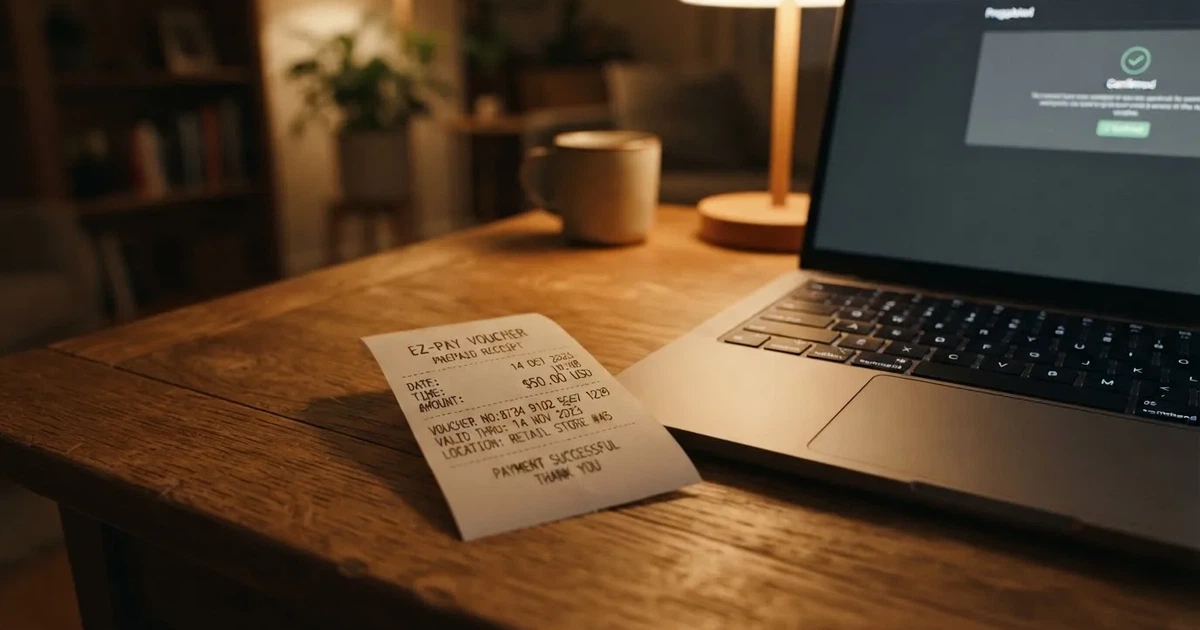
Data current as of 29 October 2026 and verified against the ACMA’s published list of formal warnings and blocking actions.
Table of Contents
- Responsible gaming: the ACMA record an Australian player should read first
- Payments and payout speed: how a Neosurf transaction actually works at these sites
- Top 11: the brands the ACMA has formally warned for serving Australians
- How a Neosurf deposit or withdrawal actually runs at an offshore casino
- Legality: the Interactive Gambling Act 2001 and the cashless route that does not change it
- Frequently asked questions
Responsible gaming: the ACMA record an Australian player should read first
The first shelf a reader of this page needs is not payments. It is the public register of the regulator, because every brand a player might consider here has crossed it.

The Australian Communications and Media Authority investigates offshore operators that offer prohibited interactive gambling services to Australians and, where a service cannot be brought into line, asks Australian internet service providers to block it. By June 2026, a cumulative 1,751 illegal gambling and affiliate marketing websites had been blocked since the first blocking request in November 2019, and more than 230 unlicensed gambling services had withdrawn from the Australian market since the regulator’s enforcement powers were widened in 2017. The June 2026 round alone added 12 names to the block list — 7Signs, ChromaBet, Donbet, Duospin, Freshbet, Slots Gem, Jacks Club, Lucky Start, Pointsbetz.com, Spinrise, Vinyl Casino and Wildsino — in a single directive.
That is the population the prepaid-voucher operator pages live inside. A Neosurf-friendly cashier on an offshore site is a single integration; the regulatory position around it is set by statute.
The Interactive Gambling Act 2001 — the IGA — makes it an offence for a provider to supply online casino games, online pokies or in-play betting to a person physically in Australia. The 2017 amendment tightened the regime and gave the ACMA the powers it has been exercising since. What the IGA licences is wagering on races and sport before the event, lotteries and keno; online casino games and online pokies are not licensable in any state or territory. A licence the offshore site shows a player is a licence from somewhere else — Curaçao, Anjouan, Costa Rica — and confers no standing under Australian consumer law.
A formal warning from the ACMA is a public step. It is published on the regulator’s own site, names the operating company and the brand, and is dated. The 11 brands reviewed on this page are exactly the operators the ACMA has formally warned over the past four years — not the largest offshore operators, not the best-known, but the ones the regulator itself has put on the public record as targeting Australian customers with prohibited services.
For the player, the consequence of an ACMA formal warning is not prosecution. The IGA targets the provider, not the customer. The cost shows up elsewhere: an offshore operator gives no Australian complaints body, no recourse if a withdrawal is refused, and the site can be blocked while a balance still sits on it.
What player protection actually extends to in Australia
BetStop, the National Self-Exclusion Register, has been live since August 2023 and binds every Australian-licensed online and phone wagering service. An offshore casino is not connected to it, so a self-exclusion set up through BetStop does not stop that person opening an account with an offshore brand. The register works as designed for licensed wagering; it does not cover the population this page is about.
The National Gambling Helpline is 1800 858 858, free and available 24 hours a day, with web chat through Gambling Help Online. The helpline is not offshore-aware in the sense of chasing balances across jurisdictions — it is a counselling and referral service, and for someone who has been playing at unregulated sites it is the appropriate first call.
Bank-level gambling blocks are a separate lever. NAB, Commonwealth Bank and Westpac let cardholders self-activate a transaction block through their banking app, usually applied immediately. ANZ’s block works at card level too — including transactions routed through Apple Pay or Google Pay on an eligible ANZ card — and once it is on, removing it carries a 48-hour waiting period. ANZ’s own warning on the product page is worth reading: not every gambling transaction is blocked, and some non-gambling transactions may be blocked in error. Westpac’s block refuses authorisation on the merchant category code for betting and casino gambling on eligible personal credit and debit cards.
The April 2025 blocking power sits separately. From that date, Australian-licensed online wagering service providers have been banned by law from accepting credit cards, credit-linked digital wallets or digital currencies as payment, with penalties of up to A$247,500 for non-compliance. The ban constrains licensed wagering; it is one more reason an offshore operator asking for a credit-card deposit is operating outside Australian rules.
Payments and payout speed: how a Neosurf transaction actually works at these sites
Neosurf is a prepaid voucher. A buyer asks for one at a partner point of sale, pays cash or by other means at the counter, and receives a 16-character code. The code is typed into the casino cashier and the deposit is credited. There is no card number, no bank account and no name on the voucher itself. The platform is operated by SAFE VOUCHER CH AG.
A myNeosurf account can be opened in minutes with no documents at sign-up, and the platform itself asks for verification before a first deposit to a Neosurf account — verification that the voucher has not been reused and that the funds are real. The platform charges a 5% fee on refunds and withdrawals sent back to a bank account, and full KYC identity verification is systematically required for any refund. Vouchers are sold in denominations typically equivalent to between €10 and €150, with availability varying by country.
A Neosurf deposit is one-way by default. The voucher code spends. To withdraw, the player almost always needs a second method — a bank transfer, an e-wallet, sometimes a crypto wallet — because most offshore operators do not push winnings back to a Neosurf voucher. The operator’s own manual checks then run: KYC documents reviewed, source-of-funds checks where the withdrawal is large, and anti-money-laundering screening against the operator’s own thresholds.
What the casino’s side adds on top
The deposit fee Neosurf charges at its own end is small — it is the refund/withdrawal fee that matters for a player, and that fee only bites if the player has pulled money back to a bank account. The casino can layer its own conditions on top, and what research does and does not show is the obvious test of the offer: minimum deposit, any fee on the deposit side, time to settle on the way in, time to settle on the way out. Most of the operators on this page do not publish these figures cleanly enough to transcribe them, which is itself information.
A bank-transfer withdrawal to an Australian account typically runs through PayID or Osko once the operator releases it. Osko transfers between participating Australian banks arrive in under a minute, 24 hours a day and seven days a week, addressed to a BSB and account number or to a PayID. The platform went live to the public on 13 February 2018, is owned by New Payments Platform Australia Ltd, and now counts over 100 participating Australian financial institutions and more than 25 million registered PayID identifiers as of April 2025. AUSTRAC’s threshold-transaction-report rule applies only to physical cash, not to ordinary electronic bank transfers, so there is no automatic A$10,000 reporting event triggered by a casino payout on its own. AP+ warns, separately, that being asked to transfer money to a PayID on what looks like an illegal gambling site almost certainly means a scam site.
The settlement speed a player actually sees is the operator’s processing time plus the network’s clearing time. A released PayID transfer lands in under a minute. The release itself is what stops a payout — most player complaints at offshore operators sit in the gap between the operator’s “approved” status and the money moving.
What the blocking rate says about the market the cashier sits in
The blocking-rate calculation this page runs is straightforward. The ACMA’s running total of blocked sites reached 1,751 by June 2026, and the first blocking request went out in November 2019. That is roughly 80 months between the first request and the June 2026 snapshot. Dividing one by the other gives a working figure of about 22 blocked sites per month over the period, or — stated more honestly as a band — somewhere between 18 and 25 sites a month depending on which sub-period you take. The band is the honest answer, because enforcement did not run at a constant rate: early rounds were smaller, recent rounds have been larger, and a single monthly figure hides both.
The reader’s reading of it is sharper than the arithmetic. A market where the regulator is blocking roughly twenty new illegal sites a month is not a market the regulator is losing. It is a market the regulator is actively working through, one round at a time, and the operator sitting on the cashier page is unlikely to be the last name on the list.
Top 11: the brands the ACMA has formally warned for serving Australians
Each brand below is one the ACMA has formally warned under the Interactive Gambling Act 2001 for offering prohibited interactive gambling services to Australians. The list is not a recommendation to play at any of them. The ACMA’s own publication of the warning is the only reason the brand appears.
A note on what this comparison shows. Every brand is doing the same thing the IGA prohibits; the differences between them are not legal differences. They are differences in the operating company behind the brand, the year the warning was published, and the small handful of payment-related listings research could verify.
| Brand | ACMA action and date | Operator named by the ACMA | Subject support |
|---|---|---|---|
| RocketPlay | Formal warning, March 2026 | Pulsup Ltd (Rocketplay.com.au); earlier Dama N.V., May 2022 | — |
| Level Up Casino | Formal warning, May 2022 | Dama N.V. | Westpac listing |
| Woo Casino | Formal warning, March 2025 | Dama N.V. | — |
| Spirit Casino | Formal warning, May 2025 | Dama N.V. | — |
| National Casino | Formal warning, July 2025 | Consolutetish S.R.L. | AUSTRAC listing, Wikipedia entry |
| Bizzo Casino | Formal warning, July 2025 | Consolutetish S.R.L.; earlier TechSolutions, 2022 | — |
| Ignition Casino | Formal warning, July 2025 | Bamboo Media | — |
| Instant Casino | Formal warning, February 2025 | EOD Code SRL | EcoPayz listing, PayID listing |
| Jackbit | Formal warning, April 2026 | Ryker B.V. | — |
| Casino Intense | Formal warning, April 2025 | Sterplay Holding Ltd | AUSTRAC listing, Itnews.com.au, NAB listing |
| Sky Crown | Formal warning (Hollycorn N.V.) | Hollycorn N.V. | — |
RocketPlay
The ACMA published a formal warning against Pulsup Ltd over Rocketplay.com.au in March 2026. The same brand sits on an older warning from May 2022, when it was one of six Dama N.V. properties named at the time — Bambet, Dazard, Level Up, Rocketplay, Wild Tornado and Cobra Casinos. The change of operating company since the original warning is a change of name on the ACMA’s own page, not a change in what the site does. Online casino games cannot be licensed anywhere in Australia, whatever licence the operator displays in its footer. The cashier terms on the site do not clearly list Neosurf as a supported deposit method.
Level Up Casino
Level Up sits inside the May 2022 Dama N.V. warning alongside the brands listed above, with no follow-up action the ACMA has since published. A Westpac page lists Level Up in the context of card-level gambling blocks, which is the only verifiable payment-related data point the research carries. The brand’s offering and its licence claims read the same as every other entry here.
Woo Casino
Dama N.V. picked up a second formal warning in March 2025, this time over Woo Casino — three years after the original six-brand action. The ACMA does not publish a notice when a brand comes back into compliance, only when it acts. The published record here is the original 2022 warning plus the 2025 follow-up over a different brand within the same operating company.
Spirit Casino
A third Dama N.V. formal warning, published in May 2025, covers Spirit Casino. Dama N.V. is the operating company that recurs across three of the eleven brands on this page — Rocketplay, Woo Casino, Spirit Casino — and the regulator’s record against it is correspondingly longer. The brand itself is the youngest of the three Dama names on this list.
National Casino
National Casino sits inside the July 2025 Consolutetish S.R.L. formal warning, alongside Bizzo Casino. AUSTRAC’s published threshold-transaction-report guidance and Wikipedia’s entry on the New Payments Platform each name National Casino in a payments-related listing — the second column of the comparison shows what verifiable payment data exists, and the brand has slightly more of it than most of its peers.
Bizzo Casino
The same July 2025 Consolutetish S.R.L. warning covers Bizzo Casino — and the ACMA had been here before. A 2022 formal warning named TechSolutions (CY) Group Limited and TechSolutions Group N.V. over Bizzo Casino, so the brand has now crossed the regulator twice, under two different operating companies. The repeat appearance is itself a signal: the ACMA’s enforcement against a brand does not always end the brand’s Australian-facing activity.
Ignition Casino
Bamboo Media received a July 2025 formal warning over Ignition Casino. The brand’s own marketing positions it as a poker-and-casino hybrid; under the IGA, offering online casino games to a person in Australia is the prohibited service regardless of how the lobby is packaged. Independent verification of Neosurf support at the cashier remains unavailable.
Instant Casino
EOD Code SRL drew a formal warning over Instant Casino in February 2025. EcoPayz’s published partner list and PayID’s site both reference Instant Casino, which is the most concrete payment-side listing any brand on this page carries — though it does not change the IGA position the operator sits under.
Jackbit
Ryker B.V. drew a formal warning over Jackbit in April 2026, alongside another brand — CasinOK — under the same notice. The April 2026 warning is among the most recent on the ACMA’s list. Neosurf support is not verified as a deposit channel for this site.
Casino Intense
Sterplay Holding Ltd drew a formal warning over Casino Intense in April 2025. AUSTRAC’s published threshold-transaction-report guidance, Itnews.com.au and NAB each name the brand in payments-related listings — three independent listings is the strongest payment-side data set on this page after Instant Casino’s pair.
Sky Crown
Hollycorn N.V. drew a formal warning over Sky Crown and Blue Leo, the only ACMA notice on this page that names two brands in a single action. There is no separately verifiable evidence of Neosurf support at the cashier.
How a Neosurf deposit or withdrawal actually runs at an offshore casino
The mechanism is small enough to describe precisely.
The buyer walks into a Neosurf point of sale — a convenience store, a tobacconist, a newsagent, depending on country — asks for a voucher, pays for it, and receives a printed or screen-displayed 16-character code. The buyer opens the offshore casino cashier, selects Neosurf as the deposit method, types the code in, and the deposit is credited. The voucher is spent. The casino treats the deposit as a closed-loop balance — it sits on the account, can be wagered, can grow, can shrink.
The way back is not on the voucher. The player picks a withdrawal method from whatever else the operator offers — typically a bank transfer, an e-wallet, occasionally a crypto wallet — and the casino then runs its own checks. KYC documents, source-of-funds review where the withdrawal is large, anti-money-laundering screening. A PayID withdrawal, once released, lands in under a minute; an international bank transfer can run several business days; a crypto withdrawal sits between the two. The 5% Neosurf refund fee applies only if the player moves money back out through Neosurf itself, which is the minority route.
A “manual checks completed” status on the withdrawal page is the moment the operator releases the funds. That is where the bulk of player complaints at these sites live — not in the network clearing time, which is fast, but in the operator’s own decision to release.
Where the cost actually lands
Three lines of cost sit on top of the deposit. First, the price of the voucher itself at the point of sale, which is whatever the seller charges for cash conversion. Second, the operator’s own minimum deposit, which research does not pin to a figure consistently enough to transcribe across all eleven brands. Third, the cost of getting winnings back out — Neosurf’s 5% on a refund to a bank account, the operator’s own withdrawal fees where it charges them, and the FX cost of converting euros to Australian dollars.
The minimum deposit the title of this page focuses on — the A$10 Neosurf deposit — is real for a subset of operators and not real for others. Where the minimum is set at €15 or €20 the cost is small, but a $10 deposit is not a feature every offshore brand extends to the Neosurf channel. A reader chasing the smallest possible first deposit needs to read the cashier terms, not the homepage.
What blocks the deposit from appearing
Three failure modes recur. The voucher code is mistyped. The voucher has been used before — Neosurf treats each code as one-shot, and a partially-spent voucher is not reusable. The operator’s cashier has a minimum or maximum that the voucher amount does not meet. None of these is a Neosurf platform fault; all three are routine and resolve on the player’s next attempt.
A player with a deposit that does not appear in their account should check the voucher balance on the Neosurf site, the cashier’s confirmation message, and the casino’s pending-transactions tab, before contacting support. The voucher is one-shot; the support team can confirm whether the code was redeemed and, if it was not, the player can try the cashier again with a fresh code.
Legality: the Interactive Gambling Act 2001 and the cashless route that does not change it
The Interactive Gambling Act 2001 is the central statute. It prohibits the supply of online casino games, online pokies and in-play betting to a person physically in Australia. The 2017 amendment widened the ACMA’s enforcement toolkit and made the regulator’s intervention routine. What the IGA permits is wagering on races and sport placed before the event, lotteries and keno — wagering services that are licensed, in practice, by the Northern Territory Racing and Wagering Commission. The NTRWC regulates 52 of Australia’s online bookmakers, including Sportsbet, Bet365 and Ladbrokes; it has no full-time staff and meets once a month in Darwin.
A Neosurf deposit at an offshore casino does not change any of that. The cashless, anonymous shape of the voucher makes the deposit look different from a card payment, but the IGA prohibits the service, not the payment method. The Australian-licensed bookmakers that the NTRWC regulates do not offer online casino games, and the offshore casino sites the ACMA has been warning against do. The two populations do not overlap.
What the 2026 reform adds
The Interactive Gambling Amendment (Gambling Reform) Bill 2026 passed Parliament on 19 August 2026. Its advertising and inducement measures commence on 1 January 2027. The reform is law with a start date; on a 2026 page it is not yet in force. The reading it gives a reader is forward-looking — the regulatory frame in 2027 will look different from the regulatory frame in 2026 — and that is information worth carrying forward to the year the changes bite.
Tax and the recreational player
Gambling winnings of a recreational player are not assessable income under section 6-5 of the ITAA 1997, and losses are not deductible, unless the person carries on a business of gambling. For most readers of this page the tax line is straightforward: winnings are tax-free, losses are out-of-pocket, and the ATO is not in the picture for the recreational case. A player whose activity looks closer to a business — regular, large-stake, systematic — should check with the ATO directly.
What is left after the prohibition
The reader is, by this point, in a position to weigh what the page set out to weigh. The prepaid-voucher cashier exists at offshore operators, and the ACMA’s own publication of warnings is the cleanest signal of which operators have crossed the regulator. The IGA’s prohibition does not bend to the payment method. The reader’s real choice is whether to play at all under the offshore route — what the IGA prohibits is the service, not the deposit — and the answer to that question is one the regulator, the helpline and the bank-level blocks together put within reach without ever needing the cashier page.
Frequently asked questions
Is it legal for an online casino to accept Neosurf from a player in Australia?
No. The Interactive Gambling Act 2001 prohibits the supply of online casino games and online pokies to a person physically in Australia, regardless of the deposit method. Neosurf, a bank transfer, a card or a crypto deposit do not change the prohibition; they sit on top of it. The 11 operators reviewed on this page are exactly the brands the ACMA has formally warned under that Act for offering prohibited services.
What is the smallest deposit a Neosurf casino site usually asks for?
Neosurf vouchers themselves are sold in denominations typically equivalent to €10 to €150, but the casino cashier sets its own minimum on top. A A$10 deposit is offered by some offshore operators and not by others; the minimum is the cashier’s call, not Neosurf’s. Where the minimum sits higher, the difference is usually a single voucher denomination and not a significant amount.
Does a Neosurf withdrawal clear any faster than a card withdrawal at these sites?
A Neosurf withdrawal is unusual: most offshore casinos do not push winnings back to a Neosurf voucher and the player uses a second channel — a bank transfer, an e-wallet or a crypto wallet. Once the operator releases the funds, an Australian bank transfer via PayID or Osko arrives in under a minute. The bottleneck is the operator’s own manual checks, not the network: a “pending” status on the cashier page is what delays a payout.
Can Neosurf be used at every offshore pokies-style site, or only some of them?
Only some. Neosurf is one of several payment integrations an offshore operator can switch on, and the operators reviewed here do not all carry it. The ACMA’s published warnings do not name Neosurf — they name the operator — and verifiable evidence of Neosurf support at the cashier is patchy across the eleven brands. The cashier terms page is the only place that settles the question for any single operator.
Does depositing with Neosurf add an extra fee at these casino sites?
Neosurf does not charge the buyer a fee at the point of sale; the buyer’s only cost is the voucher’s price. The 5% Neosurf fee applies only on refunds and withdrawals sent back to a bank account, which is the minority route. The operator may add its own minimum-deposit rule and its own fees on deposits or withdrawals; the cashier page lists them. Where research does not carry a figure, the cashier’s own terms are the source.