
Casinos that accept Visa in Australia: what an Australian player is actually depositing into
31 October 2026 · Licensing claims verified against the ACMA register.

A Visa card works at most offshore casino sites that bother to display a payments page to an Australian visitor. That is the short answer this page opens with, because the longer answer takes a few thousand words and the reader is entitled to the plain version first. The plain version is also a thin one: it tells a reader the card will be accepted at the checkout and stops before telling them whether the operator on the other side has any Australian standing at all. That second part matters more than the first, and it is the part this page is built around.
Every site on the comparison block below accepts Visa deposits. Every site on that block has also been the subject of a formal warning from the Australian Communications and Media Authority for offering a prohibited interactive gambling service to people in Australia. The Interactive Gambling Act 2001 makes it an offence to provide online casino games — pokies, table games, live dealer rooms — to anyone physically in Australia, and no state or territory issues a licence for them. The wagering licences held by 52 online bookmakers in the Northern Territory cover pre-event sports and racing, not casino games. So the choice in front of an Australian reader is not between licensed and unlicensed Visa-accepting casinos; it is between unlicensed offshore operators, most of which the regulator has already named in writing.
The cost of that choice is what this page is about. The cost is paid in three currencies: in money the player stands to lose at the house edge, in the absence of any Australian complaints body if a withdrawal stalls, and in the very real chance that the player’s own bank has a gambling block on the card and will refuse the authorisation before any of it starts. Each of those three currencies is unpacked below, in that order. The comparison of operators sits in the middle because the question most readers type is “which one of these is better” — and the answer is “none of them is licensed here, and here is what each one’s record with the regulator looks like”.
Table of Contents
- The bank-side block: the cheapest way this never starts
- What a Visa deposit actually does at an offshore casino
- What the regulator has actually said about these operators
- Blocking progress: how the ACMA is closing the door
- H2 Gambling Capital’s 2025 picture: what Australian players are losing offshore
- The eleven operators, one by one
- Visa withdrawal speed versus the bank’s processing pipeline
- What is licensed in Australia, and what is not
- The tax picture, briefly
- Choosing not to play: the practical version
- Frequently asked questions
The bank-side block: the cheapest way this never starts
A reader in Australia who holds a Visa debit or credit card from one of the four major banks — Westpac, ANZ, NAB, and Commonwealth — can usually turn on a card-level gambling block before they ever reach a casino’s deposit page. The block sits on the card, not on the casino. Once activated, it refuses authorisation of any transaction tagged under the merchant category code “Betting/Casino Gambling”, which is the MCC a casino’s payment gateway registers against whether the customer pays by Visa or Mastercard. The bank pays the cost in the form of an authorisation refusal; the customer pays nothing; the casino never sees the attempt.
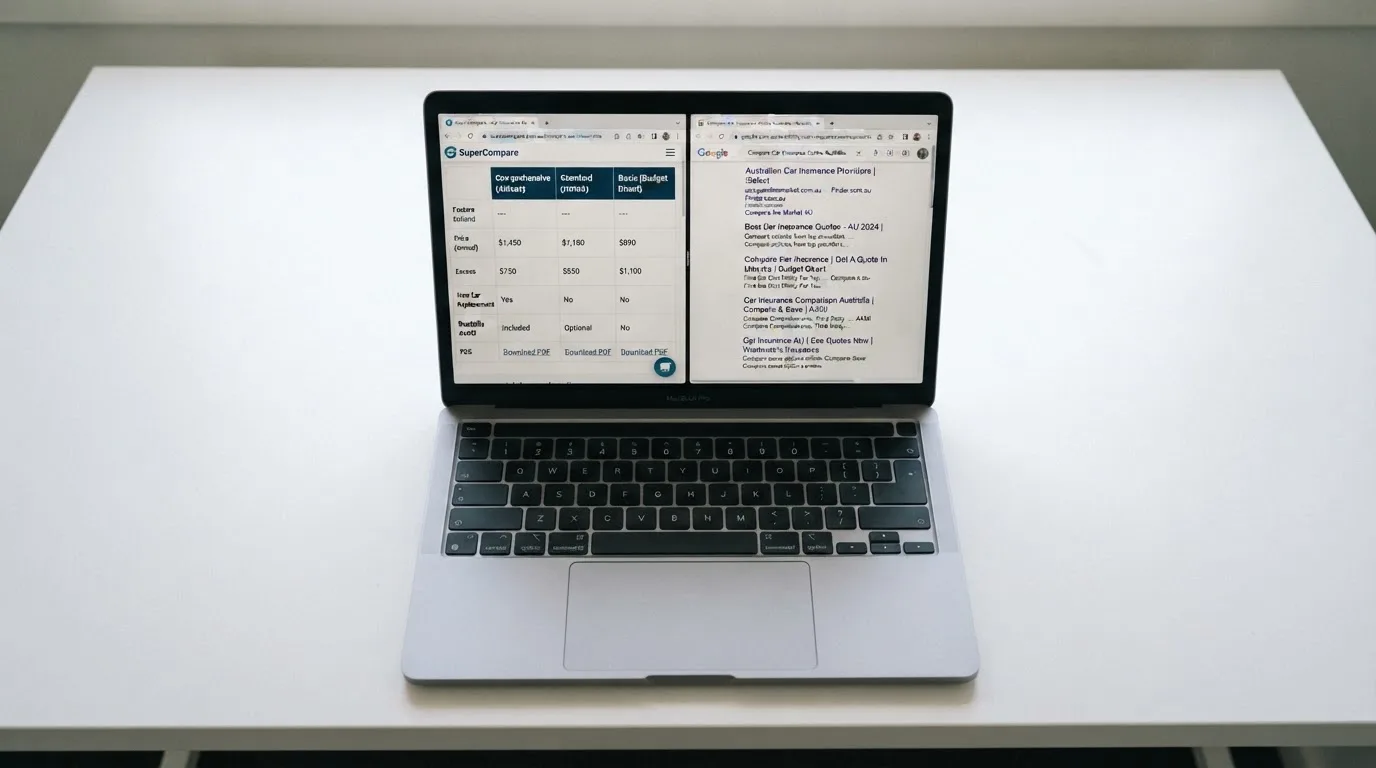
Westpac’s gambling block can be switched on in Online Banking under Card Services or by calling 132 032 between 8am and 8pm Sydney time, seven days a week. The block applies to eligible personal credit and debit cards. NAB lets primary cardholders, additional cardholders, and people holding a power of attorney request a block through the NAB app. ANZ takes the same request through its app, and importantly ANZ’s block covers gambling transactions made through a digital wallet such as Apple Pay on an eligible card, not just the physical card swipe. The point of mentioning this in an article about Visa specifically is that Apple Pay on a Visa card still routes through the issuing bank, so ANZ’s block sees it the same way it sees a raw card transaction.
There is a wrinkle on the ANZ block that the bank’s own page states plainly: removing the block requires a 48-hour waiting period. That delay is a designed-in cooling-off and it cuts in both directions — a player who switches the block on in a moment of clarity and then changes their mind the next day still has two days where the block sits. ANZ also warns that not every gambling transaction will be caught (some merchants code their payments under a different MCC) and that some non-gambling transactions can be blocked in error. The honest read is that a card-level gambling block is a strong default and a leaky filter. A player who wants to be sure is combining the block with BetStop registration (the National Self-Exclusion Register) and with a conversation with Gambling Help Online on 1800 858 858, free and 24/7.
The four-bank picture is not complete. Smaller Australian issuers, neobanks, and credit unions handle gambling MCCs differently, and an offshore casino’s payment gateway can sometimes re-tag a Visa transaction as a generic retail purchase to dodge the MCC check entirely. The block is the cheapest of the three costs to impose on oneself — it costs nothing, it takes a few minutes to turn on, and it stops the deposit before any money has left the account. That is why this page starts with it.
What a Visa deposit actually does at an offshore casino
Once a card is past the bank’s block, the deposit itself is ordinary card-not-present processing. The customer enters the card number, expiry and CVV into the casino’s cashier; the casino’s payment gateway submits the transaction to its acquiring bank; the acquiring bank sends it through VisaNet; VisaNet routes it to the customer’s issuing bank; the issuing bank approves or declines. Settlement is the same Visa processing pipeline that handles any other online retail purchase. According to Visa’s own figures, VisaNet handled 257.5 billion transactions worth US$14.2 trillion in 2025, and the gambling slice of that volume is small enough that Visa does not break it out separately.
Two consequences follow. The first is that the deposit appears on the customer’s statement as a charge from whatever name the casino’s acquiring bank has registered — sometimes the casino’s brand name, sometimes a payment-processor name the customer does not recognise, sometimes a generic retail descriptor. A customer who set up transaction alerts will see a real-time notification; a customer who relies on monthly statements may not notice a single A$10 charge buried among hundreds of other card purchases. The second is that chargebacks are technically available: a customer can ask the issuing bank to reverse a transaction, and the bank can in principle claw the money back from the acquiring bank. In practice, chargebacks against offshore casinos are slow, often refused once the casino produces signed terms-of-service acceptance, and rarely the right tool for a player who knowingly deposited. They are the right tool for a player who was never asked to verify age or identity and who later discovers the operator is unlicensed at home.
Visa itself does not set consumer rates and fees; it provides the network and lets issuing banks set the terms. The Reserve Bank of Australia’s July 2025 review of card payment costs proposes removing surcharges on eftpos, Mastercard and Visa entirely, and lowering the cap on interchange fees, with estimated savings of roughly $1.2 billion a year for businesses and consumers combined. The consultation closed on 26 August 2025; final conclusions were expected by the end of 2025. American Express sits outside that proposed ban — the review leaves Amex surcharges in place because Amex runs as a three-party scheme rather than Visa and Mastercard’s four-party structure. For a Visa customer paying at an Australian-domestic merchant that matters; for an offshore casino deposit it does not, because the casino is the merchant, and the merchant’s own surcharging policy is what applies.
Apple Pay on a Visa card sits one layer up. Apple does not charge consumers anything to use Apple Pay in stores, online, or in apps, and any surcharge comes from the merchant’s own processing fees rather than from Apple. Transaction limits and PIN requirements are set by the card issuer or the merchant, not by Apple itself. By the end of 2025, Apple Pay, Google Pay and Samsung Pay together accounted for around 45% of all card payments in Australia by number. The point of carrying that number into a Visa casino article is that an Australian reader who pays by Apple Pay at an offshore casino is still paying through a Visa card, and any card-level gambling block they have turned on will still fire.
What the regulator has actually said about these operators
The Australian Communications and Media Authority maintains a running list of formal warnings. A formal warning is the regulator’s middle step — softer than a civil penalty proceeding and harder than a quiet letter. It names an operator, the brand, the date, and the section of the Interactive Gambling Act 2001 the operator is alleged to have breached, and it puts the operator on notice that further action will follow if the offending service does not stop targeting Australians. The eleven operators below all carry that warning on the public record.
| Brand | ACMA action and date | Operator named by the ACMA | Payment-method support |
|---|---|---|---|
| RocketPlay | March 2026; earlier Dama N.V. warning May 2022 | Pulsup Ltd (RocketPlay) | — |
| Level Up Casino | May 2022 | Dama N.V. | Westpac listings only |
| Woo Casino | March 2025 | Dama N.V. | — |
| Spirit Casino | May 2025 | Dama N.V. | — |
| National Casino | July 2025 | Consolutetish S.R.L. | AUSTRAC and Wikipedia listings only |
| Bizzo Casino | July 2025; earlier TechSolutions warning 2022 | Consolutetish S.R.L. | — |
| Ignition Casino | July 2025 | Bamboo Media | — |
| Instant Casino | February 2025 | EOD Code SRL | ecoPayz and PayID listings only |
| Jackbit | April 2026 | Ryker B.V. | — |
| Casino Intense | April 2025 | Sterplay Holding Ltd | AUSTRAC, ITnews, NAB listings only |
| Sky Crown | September 2022 | Hollycorn N.V. | — |
The table is built to make one thing visible at a glance: the ACMA has acted against every brand listed, and the actions stretch across four years and a long list of different parent companies. Dama N.V. alone has attracted four separate warnings — for Bambet, Dazard, Level Up, Rocketplay, Wild Tornado and Cobra Casinos in May 2022, for Woo Casino in March 2025, for Spirit Casino in May 2025, and for RocketPlay’s successor at Pulsup Ltd in March 2026. When the same parent company recurs across this many brand names, it is worth saying so plainly: Dama N.V. treats Australian-facing casino sites as a portfolio it rotates through, each carrying its own checkout and its own welcome page but its compliance posture with the regulator unchanged.
The payment-method column is sparse on purpose. Only three brands have any documented presence in third-party listings — Level Up Casino appears in Westpac’s merchant category coding documentation, National Casino shows up in AUSTRAC and Wikipedia entries, Instant Casino is listed by ecoPayz and PayID, and Casino Intense appears in AUSTRAC, ITnews, and NAB material. The other seven brands carry no independent listing evidence of Visa support in the source set the research drew on; whether their cashier pages accept a Visa deposit at the moment a reader tries is something only the reader can test. Em dashes in that column are an honest “not in our source set” rather than a denial.
Blocking progress: how the ACMA is closing the door
The ACMA’s enforcement tool of last resort is the blocking request. Under section 313 of the Telecommunications Act 1997, the ACMA can ask Australian internet service providers to block access to specific domains, and ISPs are required to comply. The numbers have grown steadily. According to the ACMA as reported in June 2026, a total of 1,751 illegal gambling and affiliate marketing websites had been blocked since the first blocking request in November 2019. More than 230 unlicensed gambling services had left the Australian market since enforcement was strengthened in 2017.
The latest round reported on 26 June 2026 added twelve more names to the block list: 7Signs, ChromaBet, Donbet, Duospin, Freshbet, Slots Gem, Jacks Club, Lucky Start, Pointsbetz, Spinrise, Vinyl Casino and Wildsino. None of those twelve appear in the eleven-operator table above, which means the ACMA’s blocking list and its warning list are not the same list — a brand can be on one without being on the other, and a reader who sees an operator’s URL still resolving on their home network has not been told that the regulator has no concerns about it.
A reader looking for a worked figure here can run the calculation themselves: from November 2019 to June 2026 is roughly 79 months. Dividing 1,751 blocked sites by 79 months gives an average of about 22 blocked sites per month, with month-to-month variation. The stated conditions matter: this is the running total reported in June 2026, not a monthly figure, and the rate is not constant — early rounds moved slowly as the ACMA built the legal scaffolding, recent rounds have moved faster. As a band rather than a single number, the regulator’s blocking rate has been somewhere between one and four dozen sites per month across the period, depending on which months you anchor against. That is faster than the comparable pace in most European Union markets, where blocking requires a court order on a per-site basis.
A separate rate worth naming is the withdrawal rate. The same June 2026 reporting says that more than 230 unlicensed gambling services had left the Australian market since 2017. Whether a service has “left” because it blocked Australians, was blocked by ISPs, rebranded under a new parent company, or simply stopped marketing in Australian-facing channels is not broken out in the public figures, and the ACMA does not appear to publish a per-cause split. The honest statement is that the regulator’s tools work, that they do not work uniformly across the operator set, and that an Australian reader who picks one of the eleven brands in the table above has picked a brand that is still standing despite the warning.
H2 Gambling Capital’s 2025 picture: what Australian players are losing offshore
The third-party estimate worth quoting comes from H2 Gambling Capital’s 2025 report, as carried by industry trade press. Australians lose about A$3.9 billion a year to illegal gambling sites. That figure covers all forms of illegal offshore gambling — sports books that take Australian bets in breach of local licensing, casino sites like the eleven above, and the smaller affiliate-driven poker and lottery skins. The share of gambling going through legal channels fell from 74% in 2021 to 64% by the time of the 2025 estimate. The slide from three-quarters to roughly two-thirds over four years is a structural shift, not a one-year wobble.
What the figure does not say is how much of the A$3.9 billion went through Visa specifically. The H2 Gambling Capital methodology aggregates by channel — illegal versus legal — and within illegal it captures total wagering and total loss, not payment-method mix. The honest inference is that Visa is one of several payment rails available to an Australian customer of an offshore casino, alongside Mastercard, various e-wallets, and a still-significant crypto route. The credit-card ban under the Interactive Gambling Act 2001 as amended in 2023 — which makes it an offence for an Australian-licensed wagering service to accept credit card or credit-related products, and which came into force on 11 June 2024 with operator penalties up to A$247,500 — applies to licensed operators only. An offshore casino is not licensed, and the credit-card ban is therefore not the wall an Australian reader might assume it to be. The card-level gambling blocks the four major banks offer are the wall.
The eleven operators, one by one
RocketPlay
RocketPlay is the brand that has been in front of the ACMA most recently. The regulator’s March 2026 formal warning was issued to Pulsup Ltd over RocketPlay, and it sits on top of an earlier May 2022 warning issued to Dama N.V. over the same brand. Two warnings across four years from two different parent companies is the rare case where the ACMA’s history is even thicker than for most of the eleven. A reader who tries the site today is looking at a checkout that has been in the regulator’s line of fire continuously since the 2022 round, and where the latest operator has not been in business long enough to have a payment-method history that the public sources document. The reality remains: a Visa deposit will probably clear, but the operator has no Australian standing and any balance is one ISP blocking round away from being stranded.
Level Up Casino
Level Up Casino is one of the six Dama N.V. brands caught in the May 2022 warning round, alongside Bambet, Dazard, Rocketplay, Wild Tornado and Cobra Casinos. Of the six, Level Up is the one that surfaces in Westpac’s merchant category coding documentation — that is the listings-only entry in the table, and it means Westpac’s gambling block has been seen to fire on Level Up transactions, which is a small piece of evidence that the MCC tagging is consistent enough for the block to work. The Dama N.V. parent company has not been the subject of a fresh Level Up-specific warning since 2022, but it has picked up warnings on Woo Casino (March 2025) and Spirit Casino (May 2025), which means the operator behind the same cashier is still rotating brands through the regulator’s line of fire. A reader who chose Level Up because it was the “established” name in the Dama N.V. portfolio would be choosing on age rather than on standing.
Woo Casino
Woo Casino was the subject of the ACMA’s March 2025 warning to Dama N.V., the second of the post-2022 escalations against the same parent. The brand is not documented in third-party payment-method listings, and a reader who cannot find an independent merchant record for Woo should not be surprised: the ACMA’s own publication of the warning is the most public document carrying the name. The deposit experience at Woo is the same one any other Dama N.V. casino delivers, because the cashier layer is shared across the portfolio; the only thing that changes between Woo, Level Up, Spirit Casino, and the earlier Cobra Casinos is the brand on the homepage and the welcome page.
Spirit Casino
Spirit Casino was the subject of the May 2025 warning, the third in the Dama N.V. sequence. The two-month gap between the Woo Casino warning (March 2025) and the Spirit Casino warning (May 2025) is short enough that the ACMA’s investigators were clearly working the same parent company through a series of front brands rather than responding to a single complaint. Spirit has no documented third-party listing, and the public record of the brand is the warning itself. It is a derivative of the wider portfolio.
National Casino
National Casino sits under Consolutetish S.R.L. and was warned by the ACMA in July 2025. The brand has more third-party footprint than most of the table — AUSTRAC and Wikipedia entries both carry the name, which is enough to confirm that the brand has been in operation long enough and at sufficient scale to be picked up by the financial intelligence and encyclopaedic record. AUSTRAC’s appearance in particular is worth noting: AUSTRAC is the Australian Transaction Reports and Analysis Centre, and its appearance in a brand’s footprint usually means a regulated Australian entity has reported a transaction involving the brand, which is a stronger piece of evidence than a regulator’s warning alone.
Bizzo Casino
Bizzo Casino is the brand in the table with the longest ACMA history. The July 2025 warning to Consolutetish S.R.L. was the second formal warning over Bizzo specifically; the first was issued in 2022 to TechSolutions (CY) Group Limited and TechSolutions Group N.V. The four-year gap between warnings, with a change of operator entity in the middle, is a textbook example of the brand-recycling pattern that runs through this whole market: the brand persists, the operator name changes, and the regulator’s enforcement catches up in a new round. A reader who treats the 2022 warning as ancient history should treat the 2025 warning as current and should read the brand-recycling pattern as the underlying signal.
Ignition Casino
Ignition Casino sits under Bamboo Media and was warned in July 2025. The brand has no documented payment-method listing in the source set, and the public record is dominated by the ACMA warning and the broader international footprint of the Bamboo Media portfolio. The brand is the second of the two Consolutetish-adjacent warnings in that month, but it sits under a different parent company, so it is not part of the Dama N.V. portfolio pattern.
Instant Casino
Instant Casino sits under EOD Code SRL and was warned by the ACMA in February 2025. It is one of the four brands in the table that has any third-party payment-method listing at all: the ecoPayz listing and the PayID listing both carry the brand. That is the cleanest piece of evidence in the table that Instant Casino’s cashier page accepts Visa via at least one e-wallet route, with PayID covering the bank-transfer end if the cashier offers it. A reader who values PayID as a payment rail because the New Payments Platform shows them the recipient’s name before they authorise the transfer should read the PayID reference here as a positive on the brand’s payment-method diversity and a neutral on the licensing picture.
Jackbit
Jackbit sits under Ryker B.V. and was warned by the ACMA in April 2026. It is the most recent warning in the table alongside RocketPlay’s March 2026 action. Jackbit has no documented third-party payment-method listing, and the public record is the ACMA warning and the operator’s own marketing material. This is an example of an operator that has focused on the crypto-facing market segment.
Casino Intense
Casino Intense sits under Sterplay Holding Ltd and was warned in April 2025. It is one of the four brands with third-party listings: AUSTRAC, ITnews, and NAB all carry the brand in their respective coverage. NAB’s appearance is the most relevant for a Visa reader — NAB is one of the four major Australian banks with a card-level gambling block, and its coverage of Casino Intense is most likely in the context of the bank’s own block-enforcement work or a related customer advisory. A reader who chooses Casino Intense over the other brands because of the NAB listing is choosing on the basis that one of the four major banks has had reason to put the brand into a published document, not on the basis of any positive endorsement.
Sky Crown
Sky Crown sits under Hollycorn N.V. and was the subject of a formal warning published in September 2022. It is the oldest warning in the table by a clear margin. The Hollycorn N.V. warning is a single document that also covers the related Blue Leo brand, and the PDF is the public record. Sky Crown has no documented third-party payment-method listing, and the ACMA warning is the only anchor in the source set. The September 2022 date is also worth reading as the brand that has gone longest without a fresh warning — which is not the same as a clean record, only as a quieter one.
Visa withdrawal speed versus the bank’s processing pipeline
A Visa deposit clears in seconds because the deposit leg is a card-not-present authorisation against available funds. A Visa withdrawal is a different transaction. The casino’s cashier has to push a refund back to the same card, which is a settlement instruction that goes through the casino’s acquiring bank, into VisaNet, and back to the customer’s issuing bank. The casino also has its own internal checks: identity verification on the first withdrawal, anti-money-laundering review, and a manual approval queue that runs on the casino’s own staffing hours rather than on Visa’s. A typical offshore casino states a withdrawal window of 24 to 72 hours for the internal approval stage, with the Visa settlement leg adding another one to three business days on top. The total time from a customer’s “withdraw” click to funds landing back in the Australian bank account is usually three to five business days for a clean account, longer if the casino’s manual check flags anything.
The cleanest comparison is against PayID. With Osko, a bank transfer between participating Australian banks arrives in under a minute, 24/7 including weekends, whether addressed to a BSB and account number or to a PayID. PayID is available at over 100 Australian financial institutions. More than 25 million PayID identifiers had been registered on Australia’s New Payments Platform as of April 2025. The New Payments Platform itself went live on 13 February 2018 and is owned by New Payments Platform Australia Ltd, whose 13 shareholders include the Reserve Bank of Australia and the country’s major banks. Participants in the platform must keep monthly outages to no more than two minutes, and in 2021 the ACCC authorised the merger of NPP Australia with BPAY and eftpos into a single company, Australian Payments Plus.
PayID’s speed advantage is real, but it is conditional on the casino offering PayID as a withdrawal method. Most of the eleven brands in the table above do not, on the documented evidence. The PayID presence on Instant Casino is the standout. The practical implication for a Visa reader is that a Visa withdrawal will almost certainly take longer than a PayID withdrawal at the same brand, and that the difference is dominated by the casino’s internal approval queue rather than by the rails themselves.
The PayID recipient-name check is worth pausing on for a second. PayID-based instant transfers show the name of the account holder before the transfer is sent. Australian Payments Plus warns that being asked to transfer money to a PayID on an illegal gambling site almost certainly means a scam site. The warning is strong, but the condition it names is narrower than the broader illegal-gambling market: a PayID on an illegal site is a scam, and a Visa deposit on an illegal site is the broader pattern this whole article is about. The two are not the same risk; they overlap.
What is licensed in Australia, and what is not
Australia’s gambling licensing frame draws a sharp line between what is permitted online and what is not. The Interactive Gambling Act 2001, as strengthened by the Interactive Gambling Amendment Act 2017, makes it an offence to provide online casino games, online pokies, and in-play betting to a person in Australia. No state or territory issues a licence for those products. What is licensable online is wagering on races and sport placed before the event, lotteries and keno. In practice the online bookmaker market — 52 operators — is licensed by the Northern Territory Racing and Wagering Commission, which regulates Sportsbet, Bet365, Ladbrokes, and the rest of the field for tax reasons rather than because the Territory is the natural regulator. The NTRWC has no full-time staff and meets once a month in Darwin, which is a piece of context that helps a reader calibrate how much active supervision any one of those 52 bookmakers receives.
The minimum age for any licensed gambling product in Australia is 18. The individual player is not prosecuted under the IGA — the Act targets the provider — but an Australian player using an offshore casino gives up every consumer protection that a licensed Australian operator is required to provide. There is no Australian complaints body with jurisdiction over an offshore site. There is no Australian recourse if a withdrawal is refused. There is no Australian fund that returns a player’s money if the operator goes under. And the site can be added to the ACMA’s blocking list with a balance still sitting on it, in which case the player’s funds are held by an entity that has just had its domain blocked by every major Australian ISP.
BetStop, the National Self-Exclusion Register, has been live since August 2023. It binds Australian-licensed online and phone wagering services, which means a registered user is excluded from the 52 NT-licensed bookmakers and from any state-licensed wagering operator. It does not bind an offshore casino, because the offshore casino is not registered with BetStop, does not check BetStop, and is not part of the Australian self-exclusion frame. A player who has registered with BetStop and then deposits at an offshore casino has taken the strongest Australian self-exclusion tool available and walked around it.
The credit-card ban for licensed wagering came into force on 11 June 2024. Australian-licensed online wagering services cannot accept payment by credit card or other credit-related products, and the same restriction constrains linked digital wallets like Apple Pay. Operator penalties reach A$247,500. Legal deposit routes for licensed wagering are debit card, bank transfer, PayID and Osko, and BPAY. A site asking an Australian customer for a credit card deposit or a crypto deposit is operating outside the Australian rules. The fact that offshore casinos routinely do both is not an oversight; it is the gap the IGA was drafted to close, and the closing has been partial.
The reform that sits ahead is the Interactive Gambling Amendment (Gambling Reform) Bill 2026, which passed Parliament on 19 August 2026. Its advertising and inducement measures commence on 1 January 2027. For a reader using this page in 2026, that is law with a future start date, not yet in force. What it will change in practice is the visibility of offshore casino marketing to Australians, the inducements those sites can offer, and the platform liability for hosting their ads. None of it changes the underlying illegality of the service they are offering, which has been the case since 2017.
The tax picture, briefly
Gambling winnings of a recreational player are not assessable income in Australia. Section 6-5 of the Income Tax Assessment Act 1997 makes that plain. Losses are not deductible either, unless the person carries on a business of gambling, which is a very narrow category and not the situation of an ordinary player using an offshore casino. The model wording is to check with the ATO if a reader is unsure about their own position. The practical implication for a Visa reader at one of the eleven brands above is that the deposit is the player’s money, the winnings (if any) are not taxable, the losses are not deductible, and the operator is not reporting to the ATO because the operator is not within the Australian tax frame.
Choosing not to play: the practical version
This page is built around the cost of the choice, and the cost is real enough that the cheapest path for many readers is to not start. The four practical steps a reader who has decided to play anyway can take are: switch on a card-level gambling block with their bank before making a first deposit; register with BetStop if the gambling has gone beyond a one-off; keep PayID as the preferred withdrawal method at any site that supports it because the recipient-name check catches the obvious scams; and call the National Gambling Helpline on 1800 858 858, free and 24/7, before the first deposit rather than after the hundredth. The order matters because the cheapest of the four is the one the bank enforces for free, and the most expensive is the one that arrives after the gambling has already cost something.
Frequently asked questions
Is it legal for an online casino to accept Visa from a player in Australia?
No. Under the Interactive Gambling Act 2001 as amended in 2017, it is an offence for an operator to provide online casino games — pokies, table games, live dealer rooms — to anyone physically in Australia. No state or territory licences those products. The eleven brands listed on this page have all received formal ACMA warnings for offering prohibited services. The Visa acceptance happens at the payment-gateway level, not at the legal level, and the two are independent.
What is the smallest deposit a Visa casino site usually asks for?
The minimum deposit at offshore casino sites typically sits between A$10 and A$30 for Visa, with A$10 being the common floor for sites that market to budget players. The minimum is set by the casino’s cashier, not by Visa’s network. The four major Australian banks’ card-level gambling blocks will still fire on a A$10 deposit, because the block is keyed to the merchant category code, not to the transaction size.
Does a Visa withdrawal clear faster than a card withdrawal at these sites?
A Visa deposit is fast because it is a card-not-present authorisation. A Visa withdrawal is slower because it has to pass the casino’s own internal checks — identity verification, anti-money-laundering review, manual approval — before the settlement instruction goes back through VisaNet. A clean withdrawal usually takes three to five business days end-to-end. PayID and Osko transfers between Australian banks settle in under a minute, but only at casinos that offer PayID as a withdrawal method, which most of the eleven brands in the table above do not.
Can Visa be used at every offshore pokies-style site, or only some of them?
Most offshore pokies-style sites accept Visa at the cashier, because Visa is the default international card network. Acceptance at the cashier is not the same as documented support in third-party listings, and only four of the eleven brands in the table above have any independent listing evidence of payment-method support — Level Up Casino, National Casino, Instant Casino, and Casino Intense. The other seven have no documented payment-method listing in the source set, and whether their cashier pages accept Visa at the moment a reader tries is something only the reader can test.
Does depositing with Visa add an extra fee at these casino sites?
The casino’s own cashier sets the deposit fee policy. Most offshore casino sites do not charge a deposit fee on Visa, and instead absorb the cost in the house edge. Where a fee is charged, it is typically a percentage of the deposit. The Reserve Bank of Australia’s July 2025 review proposes removing surcharges on eftpos, Mastercard and Visa entirely for domestic merchants, but the proposal does not bind offshore casinos. The most reliable signal is the casino’s own payments page; a player who cannot find the fee policy should treat that absence as a reason to ask support before depositing, not after.