
Online Pokies with E-Wallets in Australia: What the Marketing Doesn’t Say
Every offshore pokies site that takes Skrill, Neteller or MiFinity is built for a customer who can already legally play there. Australians cannot. The Interactive Gambling Act 2001 makes it an offence for an offshore operator to provide online casino games or online pokies to a person in Australia, and no state or territory licences them. The e-wallet sits on top of that prohibition; it does not change what the prohibition is.
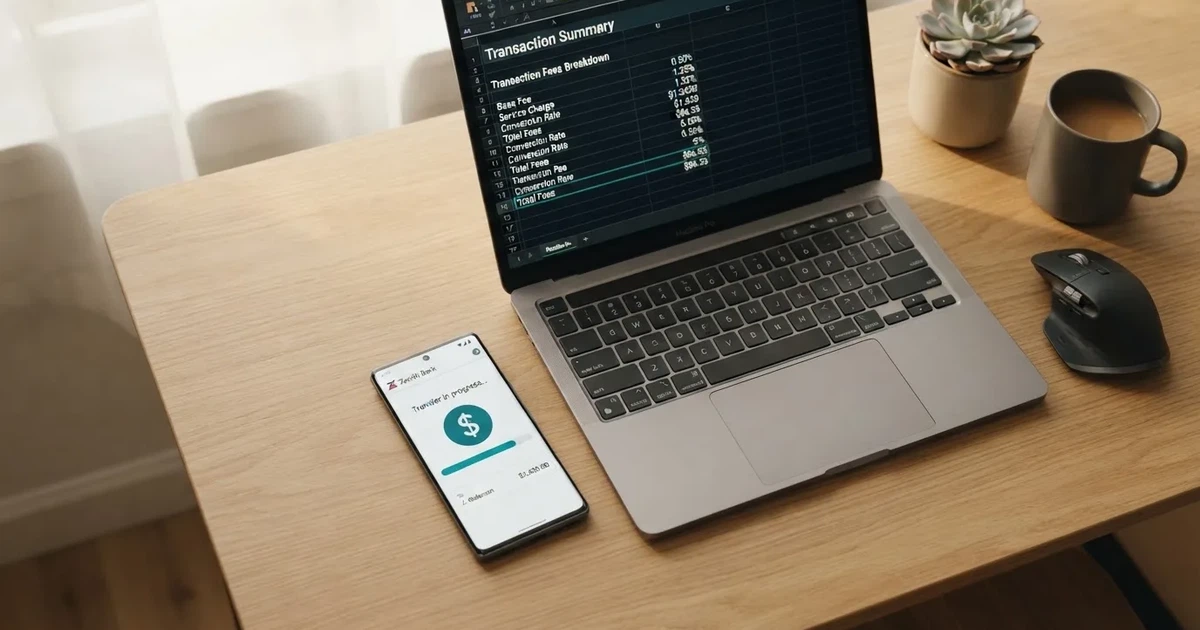
So this page reads the e-wallet question the other way round. The question is not which wallet works best. The question is what the wallet adds to the picture — the fee on a withdrawal, the identity check the e-wallet insists on anyway, the bank’s gambling block catching the top-up on the underlying card, the ACMA’s blocking request that can cut a player off from a site with money still on it. That is what an Australian reader is weighing, whether or not the marketing page said so. The rest of this article sets out what research actually found, and what it costs.
Data current as of 31 October 2026 and checked against the ACMA’s published warning notices, AUSTRAC’s remittance provider register and the e-wallet operators’ own Australian fee pages.
Table of Contents
- How Australians Reach E-Wallet Casinos — And Why the Path Closes So Often
- Where the E-Wallet Money Actually Goes — and Where It Stops
- The Settlement Speed Story — and What It Omits
- How Many Sites the ACMA Has Acted Against — And What the Rate Tells Us
- The Brands the ACMA Has Formally Warned — And What an E-Wallet Changes for Each
- Where Australian Punters Are Protected — And Where They Are Not
- What an E-Wallet Does, and What It Does Not, Change
- Frequently Asked Questions
How Australians Reach E-Wallet Casinos — And Why the Path Closes So Often
An Australian who types “online pokies e wallet australia” into a search engine is not looking for a legal product, because none exists. They are looking for a way around the law, and the search results they meet have been shaped to offer one. Offshore pokies sites accept Skrill, Neteller, MiFinity, ecoPayz, MuchBetter, AstroPay and several others, with Visa, Mastercard and a handful of cryptocurrencies listed as backups. The wallet is positioned as the convenient option — instant deposits, no card data shared with the casino, withdrawals that clear in hours rather than days.

The convenience is real. The Australian frame around it is not.
The frame is a stack of things that happen outside the casino site. The ACMA blocks the site itself by directing Australian internet service providers to do so. By the end of June 2026 the agency had asked ISPs to block 1,751 illegal gambling and affiliate marketing websites since the first blocking request in November 2019, and more than 230 unlicensed services had left the Australian market since enforcement was strengthened in 2017. The wallet does not insulate the player from that. A blocked site does not refund a balance.
The bank runs a second stack on the other side of the deposit. Westpac, ANZ, NAB and the Commonwealth Bank each let customers switch on a gambling block through their app or online banking, and the block works at card level by refusing transactions classified under the merchant code “Betting/Casino Gambling”. ANZ’s block also catches transactions routed through Apple Pay on an eligible card, not just the physical card. Westpac’s block refuses authorisation of the underlying card transaction regardless of which wallet fronts it. A punter who sets the block on cannot fund an e-wallet from that card at the casino’s merchant category; a punter who has not set it can still fund the wallet but is paying the casino with a card the bank would have stopped had the block been on.
AUSTRAC runs a third stack. The agency requires businesses that transfer money or provide remittance-style services, a category that can include e-wallet money-transfer functions, to register as a remittance service provider before operating in Australia; providing the service unregistered is against the law. Skrill and Neteller are registered. Smaller e-wallets that appear on a casino’s cashier page may or may not be.
Three regulators, three sets of rules, one offshore product. The e-wallet does not sit above the law. It sits in the middle of it.
Where the E-Wallet Money Actually Goes — and Where It Stops
What an E-Wallet Adds to the Deposit
The wallet sits between an Australian bank account and the casino’s cashier. The casino sees a deposit from Skrill or Neteller; it never sees the player’s card number or bank account. That separation is the value proposition — it is also why the casino’s own marketing leans on it. The card data never crosses the casino’s servers, which sounds like privacy but is also a way of routing around the bank’s gambling block, because the merchant code the bank sees is Skrill’s, not the casino’s.
That trick does not always hold. Skrill and Neteller each apply their own merchant category code at the point the wallet authorises a card top-up, and Australian banks have begun flagging e-wallet top-ups to known gambling merchants in the same way they flag the casino itself. Westpac’s gambling block refuses card authorisations to merchants under the betting/casino code; an e-wallet top-up that carries the same code at the moment of authorisation will be refused the same way. Whether the bank can see through the wallet depends on the bank, the wallet and the merchant category the wallet passes through. It is not a guarantee either way.
The wallet also costs the punter. Skrill’s Australian fee schedule charges 2.00% to 3.00% (minimum EUR 3.50) to withdraw to a local method and 4.49% on currency conversion. An e-wallet adds its own costs on top of the casino’s terms. Neteller’s Australian pricing is similar in shape — a fee on currency conversion, a fee on withdrawal to a local bank, plus an inactivity fee that bites accounts that go quiet. These fees are charged by the wallet operator, not the casino, and they appear on the wallet’s own statement after the casino’s withdrawal has already cleared.
What AUD Settlement Actually Means
A wallet that lets a player hold AUD removes the currency-conversion line from the statement. A wallet that does not, charges it. The difference is the 4.49% Skrill adds on every conversion, plus whatever the punter’s own bank charges on a foreign-currency receipt. Most e-wallets offer both options — an AUD balance or a multi-currency balance — and which one the punter picks determines whether the 4.49% applies.
PayPal’s rules are tighter. PayPal permits gambling payments only where operator and customers are located exclusively in jurisdictions where the activity is legal. An Australian customer funding an offshore casino from a PayPal balance is not in a jurisdiction where the activity is legal. The cashier page on a casino site that lists PayPal is therefore not a path an Australian punter can use as the page describes it; PayPal’s acceptable-use policy is the constraint, not the casino’s.
Why an E-Wallet Does Not Remove Identity Checks
The pitch that the wallet is “anonymous” is wrong on the facts. MiFinity asks for verification documents before raising a user’s spending limits, so an e-wallet does not remove identity checks. Skrill and Neteller each run their own KYC programme that requires photo ID, proof of address and source-of-funds checks at thresholds that vary by jurisdiction. The wallet is a layer between the casino and the bank, not a layer that erases either of them. A punter who wanted to keep their bank statement clean of casino entries can use a wallet for that; a punter who wanted to keep their identity off the casino’s records cannot.
The Settlement Speed Story — and What It Omits
The marketing says “instant deposits, withdrawals in hours”. The marketing is half right.
Deposits are instant on every major wallet. The casino’s cashier credits the player’s balance the moment the wallet’s authorisation returns success, and the funds are drawn from the wallet’s balance rather than from the bank card at the moment of deposit. From the punter’s side, the deposit looks free of friction; from the wallet’s side, the wallet has just taken on the credit risk for the period until the punter’s bank settles with the wallet.
Withdrawals are slower. The casino’s stated e-wallet withdrawal time is usually between zero and forty-eight hours once the casino’s own finance team has approved the withdrawal. The actual time has three stages the casino’s marketing collapses into one. The casino’s approval can take twenty-four hours on a first withdrawal, when the casino’s own KYC kicks in, and additional time on withdrawals above the casino’s threshold for enhanced due diligence. The wallet’s settlement on top of the approval takes seconds to minutes. The punter’s bank receiving the wallet’s payout depends on the receiving bank’s rails. With Osko, a bank transfer between participating Australian banks arrives in under a minute, twenty-four hours a day, seven days a week, including weekends, whether the transfer is addressed to a BSB and account number or to a PayID. That is the fastest path from wallet to Australian bank account.
The Osko figure is the real ceiling on how fast an e-wallet withdrawal can clear in Australia. Anything faster is a marketing claim; anything slower than Osko’s near-instant settlement means the bottleneck is the wallet’s own processing or the casino’s own approval queue, not the bank transfer.
The same settlement speed applies in reverse on the way in. Paying to a PayID shows the name of the account holder before the transfer is sent; AP+ warns that being asked to transfer money to a PayID on an illegal gambling site almost certainly means a scam site. A punter who has confirmed the PayID belongs to the casino before sending is the punter who has read AP+’s warning.
The Payment Rails an Australian Punter Can Compare Against
The e-wallet is one route; the rails an Australian punter already has are others.
| Brand | Operator named by the ACMA | ACMA action and date |
|---|---|---|
| RocketPlay | Pulsup Ltd (Rocketplay.com.au) | Formal warning, March 2026 (earlier Dama N.V., May 2022) |
| Level Up Casino | Dama N.V. | Formal warning, May 2022 |
| Woo Casino | Dama N.V. | Formal warning, March 2025 |
| Spirit Casino | Dama N.V. | Formal warning, May 2025 |
| National Casino | Consolutetish S.R.L. | Formal warning, July 2025 |
| Bizzo Casino | Consolutetish S.R.L. (earlier TechSolutions, 2022) | Formal warning, July 2025 |
| Ignition Casino | Bamboo Media | Formal warning, July 2025 |
| Instant Casino | EOD Code SRL | Formal warning, February 2025 |
| Jackbit | Ryker B.V. | Formal warning, April 2026 |
| Casino Intense | Sterplay Holding Ltd | Formal warning, April 2025 |
| Sky Crown | Hollycorn N.V. | Formal warning, September 2022 |
BPAY is the first. The payer enters the Biller Code and the Customer Reference Number printed on the bill, which is not how an offshore casino’s cashier works. An offshore casino does not publish a BPAY biller code because it is not an Australian biller. BPAY is a route on licensed Australian services, not on offshore ones.
The PayID-based instant transfers are the second. PayID-based instant transfers are available at over 100 Australian financial institutions, and more than 25 million PayID identifiers had been registered on Australia’s New Payments Platform as of April 2025. Participants in Australia’s New Payments Platform must keep the platform’s monthly outages to no more than two minutes. The network is built for Australian-licensed services. An offshore casino’s cashier is not a PayID recipient.
AUSTRAC’s threshold-transaction-report rule, which requires reporting of transfers of A$10,000 or more, applies only to physical cash; ordinary electronic bank transfers are not subject to that per-transaction reporting requirement, regardless of the amount sent. A punter sending A$9,500 from their Australian bank to an e-wallet, then from the wallet to the casino, has sent the money through two reports-friendly institutions without triggering any per-transaction report. The reports framework is not a guardrail on this transaction.
The Mobile Wallet Layer Above the Card
By the end of 2025, Apple Pay, Google Pay and Samsung Pay transactions collectively accounted for around 45% of all card payments in Australia by number. Apple does not charge fees to consumers for using Apple Pay in stores, online or in apps; any surcharge comes from the merchant’s own card-processing fees, not from Apple. Apple states that transaction limits and PIN requirements for Apple Pay purchases are set by the card issuer or merchant, not by Apple itself. From the punter’s side, Apple Pay is a card; from the bank’s side, Apple Pay is also a card, and the bank’s gambling block catches it.
Under the Interactive Gambling Act 2001 as amended in 2023, Australian-licensed online wagering services cannot accept payment by credit card or other credit-related products, a restriction that also constrains gambling use of linked digital wallets like Apple Pay. The 2023 amendment writes the credit-card ban into the law the licensed operators are governed by; the mobile wallet is not exempt from the underlying prohibition.
How Many Sites the ACMA Has Acted Against — And What the Rate Tells Us
The blocking total is the page’s clearest numerical evidence of how the market has moved. By the ACMA’s own figure as reported in June 2026, 1,751 illegal gambling and affiliate marketing websites had been blocked since the first blocking request in November 2019. That is a running total across roughly six and a half years of enforcement, an average of around 270 new blocking requests per year, or just over five per week.
The rate is not constant. The round reported on 26 June 2026 alone asked ISPs to block twelve more sites: 7Signs, ChromaBet, Donbet, Duospin, Freshbet, Slots Gem, Jacks Club, Lucky Start, Pointsbetz.com, Spinrise, Vinyl Casino and Wildsino. A single week’s enforcement has been heavier than several earlier years put together, because the ACMA’s enforcement mechanism lets the agency add new sites as soon as it identifies them and as soon as the ISP is ready to apply a block. A punter looking at a site this week that has not yet been blocked is looking at a site that is on the list of sites the ACMA is still adding to.
H2 Gambling Capital’s 2025 report estimates that Australians lose about A$3.9 billion a year to illegal gambling sites, and that the share of gambling going through legal channels fell from 74% in 2021 to 64%. The legal share falling while the illegal total grows tells a story the blocking list does not: the offshore sites that did not get blocked have grown faster than the sites the ACMA did get around to blocking. The enforcement is real; the leak is real too.
The Calculation Behind the Blocking Rate
The arithmetic the page is here to do is simple: divide the running total of blocked sites by the time the enforcement regime has been active. By the ACMA’s own figure as reported in June 2026, 1,751 illegal gambling and affiliate marketing websites had been blocked since the first blocking request in November 2019. The first blocking request was in November 2019, so by June 2026 the regime has been active for around six years and seven months, or roughly seventy-nine months. That gives an average of around twenty-two blocking requests per month, or roughly five per week, across the full period — a band that holds whether you measure it from the first blocking request forward or take any twelve-month slice inside it.
The rate is not the right number to plan on, because the ACMA does not block at a constant rate. The pace picks up when the agency identifies a cluster of sites run by the same operator, and drops back when an enforcement round closes and the next one is being prepared. The honest reading is a band rather than a point: somewhere between five and fifteen blocking requests per week is what a punter looking at an offshore site this week should expect from the ACMA’s pace, with the heavier end of that band driven by the multi-site rounds the agency has run since 2024.
What the Rate Implies for a Single Site
The punter-facing version of the rate is simpler. Any given site on the offshore list has been on the list for some length of time before it gets blocked; the ACMA’s formal warning publications, which give the operator name and date for each brand, are dated from February 2025, April 2025, July 2025, March 2025, May 2025, March 2026 and April 2026, with the May 2022 and September 2022 warnings carrying the older operators. The gap between a formal warning and a blocking request is the gap the punter is sitting in.
The Brands the ACMA Has Formally Warned — And What an E-Wallet Changes for Each
The brand-by-brand table is not a ranking. Each brand is here because the ACMA itself issued a formal warning over it for offering prohibited services to Australians. The same warnings apply regardless of which wallet is used to fund the deposit. None of these brands is licensable in Australia, whatever foreign licence the site displays.
RocketPlay
Pulsup Ltd is the operator the ACMA named in March 2026 for Rocketplay.com.au; an earlier formal warning had already gone to Dama N.V. covering Rocketplay alongside five other brands in May 2022. The brand has cycled operators and kept the same customer-facing name across the cycle. An e-wallet deposit at the cashier does not change which regulator’s list the site is on.
Level Up Casino
The ACMA named Dama N.V. in May 2022, as part of the same six-brand round that covered Bambet, Dazard, Rocketplay, Wild Tornado and Cobra Casinos. That round was one of the earliest multi-brand warnings the ACMA has published, and it is the basis on which Level Up has been on the agency’s record ever since. The wallet layer the site now presents does not appear on Westpac’s published merchant list, which is the only published check of its type.
Woo Casino
The ACMA issued a further formal warning to Dama N.V. over Woo Casino in March 2025, a second-round warning after the May 2022 round. The same operator’s six-brand list from 2022 did not include Woo; the March 2025 warning is the one that puts Woo on the agency’s separate record. Independent research has not confirmed which e-wallets the site supports.
Spirit Casino
The ACMA issued a further formal warning to Dama N.V. over Spirit Casino in May 2025, again a second-round warning from the same operator. Spirit did not appear in the May 2022 round; it appears in the May 2025 warning. Whether or not the site supports specific e-wallets remains unverified by independent investigation.
National Casino
The ACMA issued a formal warning to Consolutetish S.R.L. over National Casino in July 2025. National Casino sits alongside Bizzo Casino on the same operator’s record, and on the earlier 2022 record to TechSolutions (CY) Group Limited and TechSolutions Group N.V. for the same brand. Whether the casino supports e-wallets remains an open question for independent observers, as official documentation is largely unavailable.
Bizzo Casino
The ACMA issued a formal warning to Consolutetish S.R.L. over Bizzo Casino in July 2025; Bizzo had already been the subject of a 2022 formal warning to TechSolutions (CY) Group Limited and TechSolutions Group N.V. The brand has crossed two operators and one regulator warning each; researchers have found no specific e-wallet disclosures from the site itself.
Ignition Casino
The ACMA issued a formal warning to Bamboo Media over Ignition Casino in July 2025. Ignition is the only brand on this list whose operator is Bamboo Media; the rest of the 2025 Consolutetish S.R.L. round is National Casino and Bizzo. Information on e-wallet support is largely absent from independent research.
Instant Casino
In February 2025 the ACMA issued a formal warning to EOD Code SRL over Instant Casino. Publicly available info regarding e-wallet payment methods at this site has not been validated by authoritative regulatory bodies.
Jackbit
In April 2026 the ACMA issued a formal warning to Ryker B.V. over Jackbit (and CasinOK). Jackbit is the most recent brand on this list as of the research period; the warning is dated within the same month the research was finalised. Specific details on e-wallet functionality remain undocumented by independent reviewers.
Casino Intense
In April 2025 the ACMA issued a formal warning to Sterplay Holding Ltd over Casino Intense. No confirmation of the site’s e-wallet compatibility has been provided by any recognised industry watchdog or consumer group.
Sky Crown
The ACMA issued a formal warning to Hollycorn N.V. over its Sky Crown and Blue Leo casino services, with the formal warning publication dated September 2022. Sky Crown is the oldest formal warning on this list; it has been on the agency’s record for the longest of any brand here. The site’s e-wallet coverage remains largely speculative and is not verified by current research.
Where Australian Punters Are Protected — And Where They Are Not
The Licensed Wagering Market, in Brief
What is licensable in Australia is wagering on races and sport placed before the event, lotteries and keno — in practice licensed by the Northern Territory. The Northern Territory Racing and Wagering Commission (NTRWC) regulates 52 of Australia’s online bookmakers, including Sportsbet, Bet365 and Ladbrokes, which are licensed in the Territory for tax reasons. The commission has no full-time staff and meets once a month in Darwin. That is the regulatory backbone of every licensed Australian wagering site a punter can name; an offshore casino is not part of it.
The Player-Protection Layer That Offshore Sites Are Not On
BetStop, the National Self-Exclusion Register, has been live since August 2023. It binds only Australian-licensed online and phone wagering services; an offshore casino is not connected to it. A punter who has registered with BetStop has closed themselves out of the licensed market; the offshore market is still open. The National Gambling Helpline 1800 858 858 is free, twenty-four hours a day, with chat at Gambling Help Online.
The bank gambling block is a different layer. Westpac, ANZ, NAB and Commonwealth Bank each let customers self-apply a gambling block on their debit or credit cards through the bank’s app or online banking, restricting or stopping gambling-related transactions including card top-ups of e-wallets. Once a customer turns on ANZ’s gambling block, removing it again requires a 48-hour waiting period, and the bank warns that not all gambling transactions will be blocked and some non-gambling transactions might be blocked in error. The block is a card-level control that catches the underlying transaction regardless of the wallet on top.
The 2024 Payment Ban
Credit cards, credit-related products and digital currency are banned as payment for licensed online wagering since 11 June 2024, with penalties of up to $247,500 for operators. Legal deposit routes for licensed wagering are debit card, bank transfer, PayID/Osko and BPAY. A site asking an Australian for a credit card or a crypto deposit is operating outside the Australian rules.
The RBA’s July 2025 review proposes removing surcharges only on eftpos, Mastercard and Visa card transactions, explicitly leaving American Express outside the scope of the proposed surcharge ban. Amex was established in 1850 as a freight-forwarding company and later became a card issuer, launching its first charge card on 1 October 1958; unlike Visa or Mastercard’s four-party network, Amex traditionally issues cards and processes transactions itself as a three-party scheme. The relevance for an Australian punter is that the surcharge ban the RBA proposes does not reach Amex, so an Amex charge on an offshore casino’s cashier does not benefit from the proposed ban.
What an E-Wallet Does, and What It Does Not, Change
The marketing says the e-wallet is faster, more private and more flexible than a card. The Australian frame says the e-wallet does not put the casino on the licensable side of the law, does not put the punter on the consumer-protection side of the regulator’s register, and does not put the deposit past the bank’s gambling block if the punter has the block on.
What It Does
It separates the casino’s merchant record from the punter’s bank statement. It lets the punter hold a balance in a wallet without tying the casino’s name to the card on that balance. It speeds up the deposit to seconds and the withdrawal to whatever the wallet and the receiving bank can jointly achieve. With Osko, a bank transfer between participating Australian banks arrives in under a minute, twenty-four hours a day, seven days a week; the e-wallet on top of Osko is the same Osko speed, with the wallet’s own fees layered over.
What It Does Not
It does not put the casino on the Australian licence register. It does not connect the casino to BetStop. It does not give the punter access to the Australian Banking Code of Practice’s complaint and hardship processes for any dispute with the casino. It does not keep the casino accessible if the ACMA asks ISPs to block it. It does not guarantee the punter’s balance survives a block. It does not exempt the deposit from the bank’s gambling block on the underlying card.
Frequently Asked Questions
Which e-wallets do offshore pokies sites most commonly claim to accept?
The wallets most often named on offshore casino cashier pages are Skrill, Neteller, MiFinity, ecoPayz, MuchBetter, AstroPay and PayPal, with Visa, Mastercard and a small number of cryptocurrencies listed as backups. Skrill and Neteller run their own Australian operations with published AUD fee schedules; MiFinity applies verification before raising spending limits, so it does not remove identity checks; PayPal’s acceptable-use policy restricts gambling payments to jurisdictions where the activity is legal. An Australian player funding an offshore casino from any of these wallets is funding a site the ACMA has warned or blocked, regardless of which wallet fronts the deposit.
Does an e-wallet deposit change how quickly a pokies withdrawal actually settles compared with a bank transfer?
On the Australian side, the receiving rail is Osko, which settles in under a minute between participating banks twenty-four hours a day. On the wallet’s side, the wallet’s own payout settles seconds to minutes after the casino releases the funds. The bottleneck is the casino’s own finance approval, which can run twenty-four hours on a first withdrawal when the casino’s KYC kicks in. The e-wallet is faster than a SWIFT bank transfer because it does not route through a correspondent bank, but the speed the punter sees at the cashier is mostly the speed of the casino’s release queue, not the speed of the wallet.
Is using an e-wallet to fund an offshore pokies account something an Australian resident is permitted to do?
The Interactive Gambling Act 2001 makes it an offence for an offshore operator to provide online casino games or online pokies to a person in Australia. The Act targets the provider, not the individual player. AUSTRAC requires e-wallet money-transfer functions to be registered as remittance service providers before operating in Australia; the registered wallets are operating lawfully on the wallet side, regardless of what the wallet is funding. The punter is not prosecuted for using a wallet at an offshore casino, but the punter has no Australian consumer protection, no complaints body and no recourse if a withdrawal is refused, and the site can be blocked with a balance still on it.
What fees does an e-wallet typically charge on top of whatever the pokies site itself charges?
Skrill’s Australian fee schedule charges 2.00% to 3.00% (minimum EUR 3.50) to withdraw to a local method and 4.49% on currency conversion. Neteller’s Australian pricing carries a similar shape: a fee on currency conversion, a fee on withdrawal to a local bank, plus an inactivity fee that bites accounts that go quiet. Wallets that hold a multi-currency balance apply the conversion fee every time the punter moves from AUD into the casino’s settlement currency; wallets that hold an AUD balance only apply the fee if the punter opts out of the AUD balance. The casino’s own fees sit on top of the wallet’s fees; the punter pays both.
How does an AUD e-wallet pokies claim differ from one that only settles in a foreign currency?
An AUD wallet removes the currency-conversion line from the statement. A non-AUD wallet applies it: Skrill charges 4.49% on currency conversion, Neteller charges a comparable fee on its multi-currency balance, and the punter’s own bank may apply a foreign-currency receipt fee on top. The 4.49% is the wallet’s fee alone, before the bank’s fee. The punter’s net deposit is the wallet’s gross deposit less both fees, plus the casino’s own settlement haircut if the casino converts on its side. A claim that an AUD wallet is “free” is the wallet’s marketing; the bank’s foreign-currency receipt fee is not the wallet’s responsibility to disclose.
Why would a pokies site list several e-wallet options instead of just one?
Casinos list several wallets because each wallet covers a different geographic corridor. Skrill and Neteller cover most of Europe and the UK; MiFinity covers a similar set with stronger LATAM coverage; ecoPayz covers a slightly different set again; MuchBetter and AstroPay fill in markets the bigger wallets underserve. An Australian punter looking at a cashier page with eight wallets is looking at a cashier built for the eight corridors the casino serves, of which the Australian corridor is one. The punter’s options are the punter’s; the casino’s wallet list is the casino’s. A wallet listed on the page is not a wallet the casino has certified for an Australian customer — it is a wallet the casino has integrated into its cashier.