
Real money online pokies in Australia in 2026: what is actually allowed, and what isn’t
Anyone searching for “real money online pokies” in Australia is looking for a shortlist they can deposit at tonight. There is no such shortlist to hand over. The Interactive Gambling Act 2001 prohibits offering online casino games — including online pokies — to anyone in Australia, and no state or territory issues a licence for it. Offshore brands fill that search space regardless, which is precisely the layer this page exists to make legible: what the law says, what the Australian Communications and Media Authority has done about it, what to do instead, and what the surrounding machinery (PayID, BetStop, the credit-card ban) actually means for someone sitting in Australia trying to place a spin. The angle throughout is cost — what an offer truly takes, and what an unlawful one can leave on the table when it is blocked.

Currency and licence data current as of 30 October 2026, cross-checked against the ACMA’s published enforcement register.
Table of Contents
- Responsible play: the tools that actually exist for Australians
- Paying for a real money pokie: PayID and the credit-card ban
- The phone-screen experience: what a “real money pokies app” actually is
- What an offshore pokie site actually offers, and what it costs
- Operator landscape: brands the ACMA has acted against
- Real money online pokies: how they work, and what the house keeps
- The legal frame: what the IGA 2001 actually says
- Regulatory and enforcement benchmarks
- What a person in Australia does instead
- Closing the comparison
- Frequently asked questions
Responsible play: the tools that actually exist for Australians
Real money gambling in any form carries an edge for the house. Before any discussion of mechanics, payment routes or offshore sites, the safeguards available to a person in Australia are worth setting out plainly, because they are the only consumer protection that applies irrespective of which site a punter ends up on.
BetStop, the National Self-Exclusion Register, has been live since August 2023. A person registers once and is excluded from every Australian-licensed online and phone wagering service for a period they choose — from three months up to a permanent exclusion. The mechanic works because it is binding on the licensed wagering sector. It does not, and cannot, bind an offshore casino operating outside the Interactive Gambling Act 2001. That distinction matters: registering with BetStop does not stop a Curaçao-registered site from accepting a deposit, and it does not put a balance back if such a site is later blocked by an Australian internet service provider.

For day-to-day harm minimisation, every Australian jurisdiction with poker machines sets a minimum return-to-player that effectively caps the house edge at the floor: 85% in New South Wales, the Northern Territory, Queensland and generally Victoria (87% at Crown Melbourne), 87% in the Australian Capital Territory and Tasmania, 87.5% in South Australia, and 90% in Western Australia — though WA only allows the machines inside the one casino at Crown Perth. Tasmania was moving towards mandatory pre-commitment cards as a nation-leading reform, but implementation was delayed until late 2025.
When a person is already feeling the pull, the National Gambling Helpline on 1800 858 858 is free, 24/7 and offers online chat through Gambling Help Online. These are the channels that operate regardless of which brand is on screen.
The rest of this page assumes the reader is informed of those tools, because the surrounding topic — what is and is not lawful in Australia — only matters if the reader still has a way to step away from it.
Paying for a real money pokie: PayID and the credit-card ban
A “real money” transaction is the friction that gets the page read. Two facts govern how money moves for an Australian punter in 2026 and they are easier to follow together than separately.
The first is what is and is not legal to deposit with. Since 11 June 2024, credit cards, credit-related products and digital currency have been banned as a means of payment for any licensed online wagering service in Australia. Penalties for operators that breach the ban run up to A$247,500. The deposit routes that remain legal for an Australian-licensed wagering account are debit card, bank transfer, PayID/Osko and BPAY. A site asking for a credit card or a crypto wallet deposit is operating outside the Australian rules, and that should be read as a signal about every other claim it makes.
The second is the speed question, because PayID is what an Australian punter is most often sold. PayID is the near-instant settlement layer on top of the New Payments Platform — Osko is the same plumbing. A transfer between two Australian bank accounts using PayID typically settles in under a minute, and that is the legitimate use: deposits into and withdrawals from a licensed wagering account, both directions. What PayID does not do is legitimise the receiver. Sending a PayID transfer to a Curaçao-registered operator to fund a prohibited online pokie is fast, but it is not legal, and the speed that makes PayID attractive for legitimate wagering is the same speed that moves money out of an Australian bank account into a jurisdiction the ACMA has no power over. The refund pathway on a closed or blocked site is not a PayID feature; it is a function of whether the operator chooses to return the balance, and that choice is governed by the laws of wherever the operator is incorporated, not the laws of Australia.
What PayID gives a punter on the licensed side is a withdrawal that lands in an Australian bank account in the same minute the operator releases it, which is meaningfully faster than the old BPAY-or-bank-transfer routes. The cost is the daily and per-transaction limits each bank sets on outbound PayID, which vary widely and which no offshore casino can override. The bank’s daily limit is the real ceiling on what can leave the account, not anything on the casino’s side.
A practical consequence: a punter who wants fast Australian-dollar settlement should restrict their play to licensed wagering services — sports and racing bookmakers licensed by the Northern Territory Racing and Wagering Commission, for instance — and accept that the same speed is unavailable for online pokies because the pokies themselves are not lawfully available in the first place.
The phone-screen experience: what a “real money pokies app” actually is
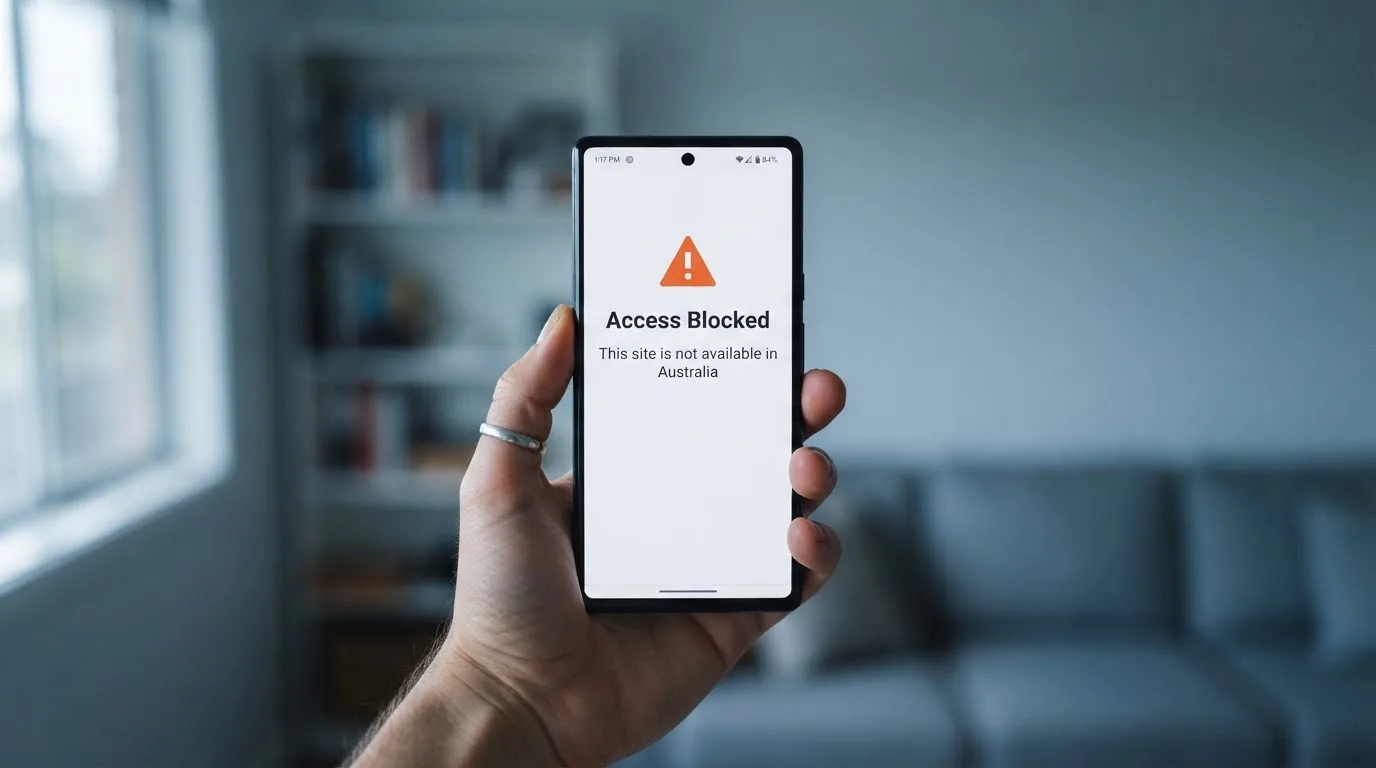
Searches for a “real money pokies app” in Australia run into the same legal wall as the desktop version. The Apple App Store and Google Play prohibit apps that offer real money casino games to Australian users, and any app that appears to offer them is either a social casino (no real money wagering), a licensed wagering app masquerading under a pokie label, or an app installed outside the official stores via an APK or a configuration profile. None of those routes make the underlying activity lawful.
What is available on a phone in Australia is the licensed wagering apps operated by the same bookmakers licensed in the Northern Territory — Sportsbet, Bet365, Ladbrokes among 52 wagering service providers the NTRWC regulates. These apps take bets on racing and sport, process PayID deposits and withdrawals, and are the only real-money gambling products a person in Australia can install and use without breaking the law. They are not pokie apps; they will not display a “spin” button on a five-reel game.
The other layer worth naming is mobile-browser play on offshore sites. It works, in the sense that a phone can load the page and a deposit can clear, but the legal status of the activity is unchanged from the desktop version. The phone does not legalise what the desktop would not. Where it changes the picture for the worse is in the social signals: notifications, biometric login, a one-tap deposit through Apple Pay or Google Pay. Those are friction-reducers for an activity that is itself prohibited, and friction reduction on an unlawful activity is not a benefit to the user.
A punter who wants a phone-screen experience for actual gambling should treat the licensed wagering apps as the only lawful option, and treat any pokie-shaped app surfaced through an Australian app store as a social casino at best or a misleading listing at worst.
What an offshore pokie site actually offers, and what it costs
A reader who has read this far already knows what the law says. The question that follows is what the offshore alternative looks like in practice, because the absence of a licensed product does not remove the offer from the screen.
The offshore catalogue is built around online slots — “pokies” in the marketing — with a few live-dealer tables bolted on. The games themselves come from a small set of studios, and an operator’s “support” of a particular game or provider is what is on its lobby page rather than any statement from the studio. Two of the brands in the ACMA register (“Operator landscape” section) list BGaming (Level Up) and the broader Wikipedia catalogue of online casino games (National Casino) as appearing on their platforms, which is a listing claim, not a confirmation by BGaming or any other studio that the brand is an authorised partner. The distinction is small in marketing copy and large in any dispute, because an unauthorised integration is the kind of thing a studio will disclaim the moment a withdrawal goes wrong.
The cost side is where the offer sits or falls. Slots return between roughly 90% and 98% to the player over the long run, depending on the title and the configuration the operator ships. That is the mathematical floor; a “free spins” promotion at an offshore site typically carries a wagering multiple on anything the spins produce — a 35x or 40x turnover requirement is ordinary for this market — and a maximum cashout cap on what the wagered winnings convert into withdrawable cash. The marketing word is “free.” The arithmetic behind it is a required turnover on the winnings, a time limit to complete it, and a ceiling on what survives. None of those numbers are visible from the search-result snippet that brought a punter to the site in the first place.
That is the part an Australian punter cannot check before depositing and cannot easily enforce after: an offshore site gives no Australian consumer protection, no complaints body the ACMA recognises, and no recourse if a withdrawal is refused. The site’s own terms apply, interpreted under the law of whatever jurisdiction the operator is incorporated in. The Interactive Gambling Act 2001 targets the provider, not the player — an individual Australian is not prosecuted for playing — but the operator has no obligation to return a balance to a customer who has just been blocked from the site at the ACMA’s request.
Operator landscape: brands the ACMA has acted against
The brands below are not ranked and not recommended. They are listed because the ACMA itself issued a formal warning over each of them for offering prohibited interactive gambling services to Australians. The order is the order of the ACMA register, which is itself the only “comparison” that applies: every brand on this list shares the same legal status, and the differences between them are the dates and the operating companies the ACMA named.
| Brand | ACMA action and date | Operator named by the ACMA | Subject support |
|---|---|---|---|
| RocketPlay | Formal warning, March 2026 (Pulsup Ltd); earlier Dama N.V., May 2022 | Pulsup Ltd (Rocketplay.com.au); Dama N.V. | — |
| Level Up Casino | Formal warning, May 2022 | Dama N.V. | BGaming appears in listings |
| Woo Casino | Formal warning, March 2025 | Dama N.V. | — |
| Spirit Casino | Formal warning, May 2025 | Dama N.V. | — |
| National Casino | Formal warning, July 2025 | Consolutetish S.R.L. | Online casino games appear in listings |
| Bizzo Casino | Formal warning, July 2025; earlier 2022 | Consolutetish S.R.L.; TechSolutions (CY) Group Ltd / TechSolutions Group N.V. | — |
| Ignition Casino | Formal warning, July 2025 | Bamboo Media | — |
| Instant Casino | Formal warning, February 2025 | EOD Code SRL | — |
| Jackbit | Formal warning, April 2026 | Ryker B.V. (Jackbit, CasinOK) | — |
| Casino Intense | Formal warning, April 2025 | Sterplay Holding Ltd | Listed in Australian media coverage of offshore brands |
| Sky Crown | Formal warning, September 2022 | Hollycorn N.V. (Sky Crown, Blue Leo) | — |
Several patterns are visible in that table without further commentary. Dama N.V. alone accounts for four of the eleven brands, and the ACMA has had to repeat itself across two of them. Consolutetish S.R.L. was warned twice in the same month (July 2025) over two separate brands. Two operators have been warned more than once under different company names for what is, on the ACMA’s reading, the same activity. None of the brands has an Australian licence for online casino games, because none can — no Australian jurisdiction issues one.
The “subject support” column shows how thin the verifiable connection is between most of these brands and the games or providers their lobbies display. Two entries report listings from third-party sources rather than statements from the studios themselves, and the remaining nine carry no verifiable relationship at all. The marketing page on the brand’s own site is not a source here: an unauthorised integration looks identical to an authorised one on a lobby page, and the studios that build the games tend to stay silent until a dispute forces a clarification.
The lawful alternative is short. A person in Australia who wants to play a pokie plays it in a licensed venue — a pub, a club or a casino — under the state or territory rules that govern that venue. New South Wales alone had 87,298 gaming machines outside casinos across 2,195 venues as of June 2023, with player losses of A$8.18 billion in 2022–23; Queensland had 21,122 machines in 351 venues in October 2023; Victoria had 26,380 outside Crown Casino in 488 venues under a 30,000-machine statewide cap. Crown Perth holds the only machines in Western Australia, where pubs and clubs were banned from hosting them in 1985. Each of those machines runs under the regulator of its jurisdiction, which is what the offshore product cannot offer.
Real money online pokies: how they work, and what the house keeps
A “pokie” is the Australian name for a slot machine — a video terminal that takes a stake, spins a set of reels and pays out according to a paytable. The online version is the same mechanic shipped through a browser or an app: stake, spin, paytable, repeat. The casino’s edge is built into the return-to-player, the percentage of all wagered money the machine is configured to return to players over the long run. A 96% RTP is a 4% house edge, paid out unevenly across millions of spins. A single session can return almost anything; over enough spins the machine converges on the configured figure.
Three terms recur in real money pokie offers, and each one costs the punter in a way the marketing page tends to bury.
A “free spins” promotion gives the player a number of spins at a fixed stake, typically on a single named title. The “free” part covers the spin cost; the winnings produced by the spins are bonus funds, which carry their own wagering requirement — a multiple, usually between 30x and 50x, that must be turned over before any of it can be withdrawn. A “40x” wagering requirement on A$20 of bonus winnings means A$800 of qualifying turnover before the withdrawal unlocks.
A “no deposit” bonus gives a small cash or spin credit for registering an account, on the same turnover conditions. The credit is real but small, and the ceiling on what it can convert to — a max-cashout cap — is where most of these offers stop being interesting.
A “deposit match” multiplies the punter’s first deposit by a percentage, up to a cap. The bonus is added to the cash balance, but the same turnover rules apply to the bonus portion, and the maximum stake per spin during the wagering period is usually capped as well. A punter who exceeds the stake cap voids the bonus and any winnings from it, which is the rule the marketing page is least likely to surface.
The arithmetic behind a “free” offer is what an honest read looks like. Take a spins promotion awarding 50 spins at A$0.20 with a 40x wagering requirement on the winnings and a 96% RTP. If the spins produce, on average, 50 × A$0.20 × 0.96 = A$9.60 of bonus funds, the punter owes A$9.60 × 40 = A$384 of qualifying turnover to clear it. At A$0.20 per spin that is 1,920 spins. At five seconds per spin the playthrough is roughly 2.7 hours of continuous play. The expected loss on the playthrough is A$384 × 0.04 = A$15.36 — which is the offer’s real cost, regardless of how the marketing copy frames it.
A punter who plays in a licensed Australian venue sees the same math, with two differences. The venue’s regulator sets a minimum RTP and publishes it; the house edge on a venue machine is bounded above. And if the machine malfunctions or refuses a payout, the regulator has a complaints path the venue has to answer to. Neither of those holds for the offshore alternative.
The legal frame: what the IGA 2001 actually says
The Interactive Gambling Act 2001, tightened by the Interactive Gambling Amendment Act 2017, makes it an offence to provide a “prohibited interactive gambling service” to a person physically in Australia. The prohibited category covers online casino games, online pokies and in-play betting. What is permitted is wagering on races and sporting events placed before the event begins, lotteries and keno. In practice, the racing and sports wagering market is licensed through the Northern Territory Racing and Wagering Commission, which regulates 52 online bookmakers — Sportsbet, Bet365 and Ladbrokes among them. The NTRWC operates with no full-time staff and meets once a month in Darwin, a governance arrangement that has been the subject of reform proposals throughout 2026.
The enforcer is the Australian Communications and Media Authority. The ACMA investigates, issues formal warnings and asks Australian internet service providers to block offending sites. According to the ACMA as reported in June 2026, a total of 1,751 illegal gambling and affiliate marketing websites had been blocked since the first blocking request in November 2019, and more than 230 unlicensed gambling services had left the Australian market since enforcement was strengthened in 2017. The most recent round reported on 26 June 2026 asked ISPs to block a further twelve names: 7Signs, ChromaBet, Donbet, Duospin, Freshbet, Slots Gem, Jacks Club, Lucky Start, Pointsbetz.com, Spinrise, Vinyl Casino and Wildsino.
The most recent formal warnings recorded in the ACMA register name Ryker B.V. over Jackbit and CasinOK (April 2026) and Pulsup Ltd over Rocketplay.com.au (March 2026). Earlier 2026 and 2025 entries cover EOD Code SRL over Instant Casino (February 2025), Sterplay Holding Ltd over Casino Intense (April 2025), Dama N.V. over Woo Casino (March 2025) and Spirit Casino (May 2025), Consolutetish S.R.L. over National Casino and Bizzo Casino (July 2025), and Bamboo Media over Ignition Casino (July 2025). Two earlier formal warnings remain on the register: Hollycorn N.V. over Sky Crown and Blue Leo (September 2022) and Dama N.V. over a six-brand group that included Bambet, Dazard, Level Up, Rocketplay, Wild Tornado and Cobra Casinos (May 2022).
The 2026 reform sitting on top of all this is the Interactive Gambling Amendment (Gambling Reform) Bill 2026, which passed Parliament on 19 August 2026. Its advertising and inducement measures commence on 1 January 2027, so the law is in place but not yet in force on a 2026 page. The practical effect on the marketing a punter sees today is small; the effect on the marketing that will run in 2026+1 is the point of the bill.
A consequence the page should name: the IGA targets the provider, not the player. An individual Australian is not prosecuted for placing a bet or spinning a reel through an offshore site. The cost of that fact is that the offshore site has no obligation to act fairly toward an Australian customer, and the ACMA’s enforcement does not put a balance back into a customer’s bank account after a block.
Regulatory and enforcement benchmarks
| Metric | Detail |
|---|---|
| First block date | November 2019 |
| Total blocked | 1,751 sites |
| Average block rate | ~22 sites / month |
| Enforcement start | 2017 |
The same arithmetic is why the ACMA’s formal-warning list, not its block list, is what matters for the table above. A formal warning is a precondition to a blocking request, and a brand that has been warned once and continues to accept Australian customers is a brand that has chosen to ignore the warning. Several of the brands in the table have been warned more than once under different company names for what the ACMA treats as the same conduct. The pattern is the data point.
A punter reading the table should treat every brand as “blocked, in progress.” The offshore operator has no Australian licence to lose and no Australian regulator to answer to. What it does have is a willingness to keep accepting deposits up to the moment the ACMA’s blocking request reaches its ISP, and a balance policy that is its own to set on the day that happens.
What a person in Australia does instead
The lawful surface is narrow but it is real. A punter who wants to play a pokie plays one at a licensed venue — a pub, a club or a casino — under the rules of the state or territory that issued the licence. The minimum RTP in every jurisdiction is published, the regulator has a complaints process, and a malfunctioning machine is the venue’s problem rather than the customer’s. For racing and sport, the licensed wagering services take bets before the event, process PayID deposits and withdrawals, and are bound by the credit-card ban and the BetStop register.
For a punter who wants the offshore product specifically, no honest version of that choice exists in Australia. The activity is prohibited for the provider, the brand is one blocking request away from being inaccessible, and the balance on the day of the block is governed by the operator’s own terms rather than by Australian consumer law. The arithmetic on the offer is unchanged — the wagering requirements, the max-cashout caps and the stake limits still apply — but the protection around the arithmetic is gone.
For a punter who feels the pull, BetStop is the lever. It binds licensed wagering services for the duration of the exclusion, and Gambling Help Online (1800 858 858) is staffed around the clock. The register does not reach an offshore site, and the punter who wants to step away from offshore play has to do that work themselves, but the tools for the lawful side are real.
Closing the comparison
The best online pokie in Australia is the one a punter can play at a licensed venue without losing the consumer protection that comes with the regulator. The best online pokie available on a phone in Australia is the licensed wagering app, which is not a pokie at all. The best “real money” pokie an offshore site advertises is the one the ACMA has not yet blocked, which is a moving target on a roughly 22-sites-per-month schedule, and which carries no Australian protection on the day the block arrives.
The arithmetic on the page — 1,751 blocked sites since November 2019, an average of around 22 added every month, a single offshore balance subject to a single operator’s terms — is what an honest comparison in 2026 looks like. The rest of the catalogue is marketing copy on sites the ACMA has either warned or is about to.
Frequently asked questions
What is the difference between a free-play pokie and a real money one?
A free-play pokie runs on demo credits with no cash at stake and no withdrawable winnings; a real money pokie requires a cash deposit, stakes that deposit against a published paytable, and any winnings are withdrawable subject to the operator’s terms. The game mechanic — reels, paylines, return-to-player — is usually identical between the two modes, and most providers ship a demo build alongside the cash build for exactly this reason.
Can real money online pokies be played using PayID in Australia?
PayID is the instant settlement layer on the New Payments Platform and is legal to use for deposits and withdrawals with Australian-licensed wagering services. Sending a PayID transfer to an offshore casino to fund an online pokie is fast but is not legal, because the activity the transfer funds is prohibited under the Interactive Gambling Act 2001. The payment route does not change the legal status of what it pays for.
Is it legal for an online casino to offer real money pokies to Australians?
No. The Interactive Gambling Act 2001, as tightened by the Interactive Gambling Amendment Act 2017, prohibits offering online casino games — including online pokies — to anyone in Australia, and no Australian state or territory issues a licence for the activity. The IGA targets the provider rather than the individual player, but an offshore operator has no Australian consumer protection, no complaints body, and no obligation to return a balance when the site is blocked.
Is there a dedicated real money pokies app for Australian players?
Not a lawful one. The Apple App Store and Google Play do not list real money casino apps for Australian users, and the only real-money gambling apps a person in Australia can install from an official store are the licensed wagering apps operated by Northern Territory-licensed bookmakers. Those apps take bets on racing and sport, not on pokies. Any app surfaced as a “real money pokie app” through unofficial channels is either a social casino or an offshore product installed outside the official stores.
How much did Australians wager on gaming machines in 2020–21?
Australians bet almost A$150 billion through gaming machines in 2020–21 and lost A$12.18 billion on them, according to published figures. Australia holds roughly 3% of the world’s pub and club poker machines with about 0.3% of the global population. The total covers the licensed venue market only and does not include play on offshore sites, which the H2 Gambling Capital 2025 report estimates at around A$3.9 billion a year in losses.