
Best RTP Pokies Australia 2026: What the High-RTP Figure Doesn’t Say
A high return-to-player figure on a pokies paytable reads like a guarantee. It is not one. The figure states what an average of millions of spins pays back, not what any one spin does, and the actual cost of those millions of spins sits in the fine print the headline leaves out — the offshore operator, the unregulated paytable, the rules no Australian regulator enforces. The licensed machines Australians can actually play, the offshore brands the ACMA has named in formal warnings, and the price of treating the high-RTP headline as the whole answer are what the sections below sort through.
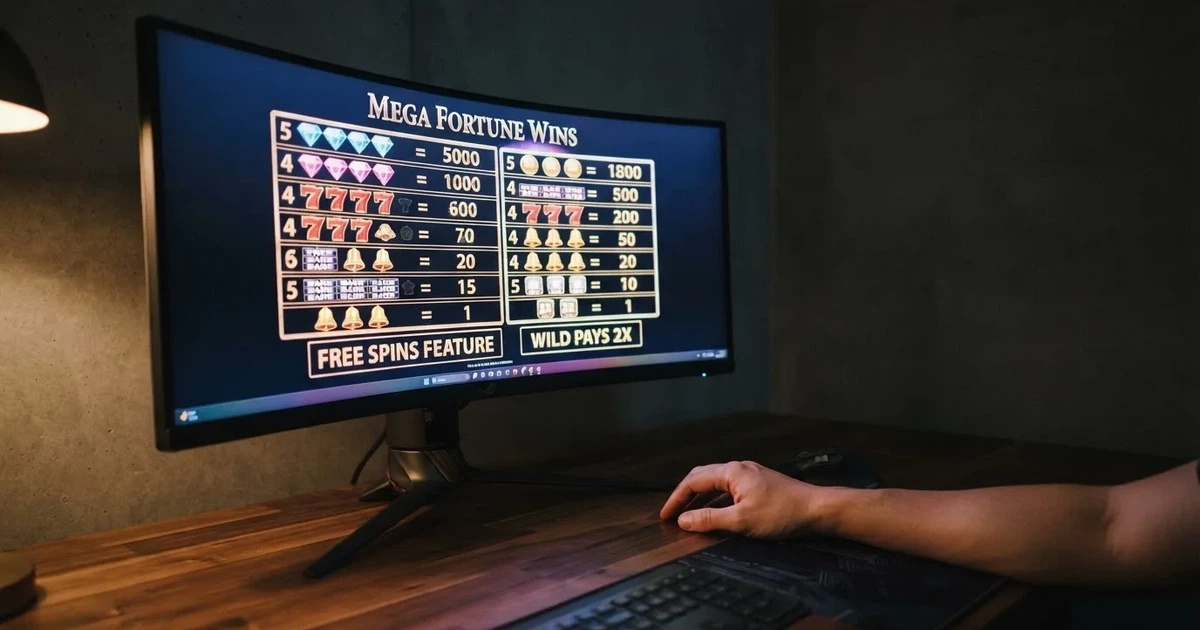
Data current as of 30 October 2026, checked against the ACMA formal-warning register and state gaming-machine statistics.
Table of Contents
- Self-Exclusion, Helplines, and What Offshore Sites Don’t Honour
- Paytable Mechanics: What the Paytable Actually Says
- The Fundamental Criteria Behind Any Pokies Shortlist
- What ‘High RTP’ Actually Means in Australian Pokies
- Prohibition and the ACMA Enforcement Record
- Eleven Brands the ACMA Has Warned About
- Frequently Asked Questions
Self-Exclusion, Helplines, and What Offshore Sites Don’t Honour
The responsible-gambling framework in Australia is built on three layers: a national self-exclusion register, state-based exclusion schemes, and a 24-hour helpline. Each layer assumes the operator is Australian-licensed. An offshore casino is bound by none of them, and a player reading the support pages of a brand the ACMA has named needs to know that before they read anything else.
BetStop and what it doesn’t reach
BetStop, the National Self-Exclusion Register, has been live since August 2023. A person who registers excludes themselves from every Australian-licensed online and phone wagering service at once, with the exclusion running for a minimum period the person chooses (three months, six months, or up to five years). The list BetStop draws on is the same one the Northern Territory Racing and Wagering Commission regulates for wagering licences — 52 online bookmakers, including Sportsbet, Bet365 and Ladbrokes, all headquartered in Darwin for tax reasons, where the commission has no full-time staff and meets once a month.
Offshore casinos and the offshore brands the ACMA has warned against are not on that list. They are not connected to BetStop, and registering with BetStop does not exclude a person from them. The exclusion’s reach stops at the Australian licensing border, and the offshore sector sits well beyond it. A reader looking for a way to be excluded from the brands in the table below needs the offshore operator’s own self-exclusion tool — and a brand the ACMA has named is not necessarily a brand that operates one.
State exclusions and the WA gap
State-based exclusion schemes cover the rest of the onshore estate. Each state and territory runs its own exclusion covering its own pubs, clubs and casino floors. New South Wales runs its exclusion through Liquor & Gaming NSW, with venue-level barring orders and club-level self-exclusion. Victoria runs its own scheme under the Victorian Gambling and Casino Control Commission (the body that replaced the VCGLR on 1 July 2022), with multi-venue barring available. Tasmania — once a closed market where Federal Group held a monopoly over all of the state’s poker machines from 1968 — has moved to mandatory pre-commitment cards, with implementation delayed until late 2025 after legislation in November 2021 ended the monopoly.
Western Australia is the outlier. The state banned poker machines outside Crown Perth in 1985, leaving the venue gap closed and the exclusion machinery simpler. The casino itself has grown from about 200 machines in 1985 to roughly 2,500 today, all approved by the state’s Gaming and Wagering Commission. WA’s licensed estate is concentrated in one venue; every other state and territory runs on a floor of hundreds.
The 1800 number, the chat line, the offshore gap
The national helpline (1800 858 858) is free, 24/7 and reachable by chat at Gambling Help Online. Both routes assume an onshore machine and an onshore operator. Neither has reach into an offshore casino. A person using one of these supports while playing on a brand the ACMA has warned against is being supported, but is not being protected in any contractual sense — the offshore site is outside the regulatory perimeter, no dispute resolution body has jurisdiction, and a withdrawal refused by the operator cannot be forced.
The same gap applies to self-exclusion. State registers cannot exclude a person from a brand with no Australian presence. The offshore brands in the table below offer their own exclusion tools where they offer them at all; the ACMA does not enforce them, and the operator’s own terms decide what the exclusion does. The reader’s protection in each case is whatever the offshore operator’s marketing claims, and not whatever the Australian regulatory framework guarantees.
Paytable Mechanics: What the Paytable Actually Says
The return-to-player figure on a licensed Australian pokies paytable is a long-run average. Read it as what the machine keeps out of every dollar across millions of spins — not what any one spin returns, not what the next session looks like, not what the player in front of the machine at 11pm on a Tuesday is likely to see. A machine set to 90% keeps ten cents of every dollar on average across its operating life. A machine set to 95% keeps five cents. The figure is a property of the design; the individual session is a property of variance around that design.
The long-run average, not the next spin
Volatility is the second figure, and the marketing almost never states it. Volatility measures the shape of the distribution around the long-run average: how wide the swings are between sessions, how often the machine pays out anything at all, how concentrated the payouts are when they come. A low-volatility machine at 95% pays out often, in small amounts, with a quiet loss over a session. A high-volatility machine at 95% pays out rarely, in larger amounts, with a longer string of nothing followed by one feature payout. Both sit at the same RTP figure; both keep five cents of every dollar on average over millions of spins. Neither figure tells you which kind of session you are buying.
Hit frequency sits behind both — the rate at which the machine produces any return at all, however small. A machine with a high hit frequency produces small returns often; a machine with a low hit frequency produces them rarely. The combination of RTP, volatility and hit frequency is what describes a machine’s actual behaviour across a session, and the marketing only publishes the first of those three.
State floors and where WA sits
The legal minimum return is set by state and territory. New South Wales, the Northern Territory, Queensland and (most of) Victoria set the floor at 85%, with Crown Melbourne sitting one notch higher at 87%. The Australian Capital Territory and Tasmania set their floor at 87%. South Australia at 87.5%. Western Australia at 90% — and outside Crown Perth, where the state bans poker machines in pubs and clubs entirely, there are no other machines at all. These are floors; the licensed machines on a venue floor sit above them, often by several percentage points. The published paytable on a licensed venue machine is the figure that matters; the floor is the regulator’s backstop below which no licensed machine falls.
The licensed estate in Australia is dominated by these bands. NSW had 87,298 gaming machines outside casinos across 2,195 venues in June 2023, with player losses of A$8.18 billion in 2022-23. Queensland had 21,122 machines across 351 venues in October 2023. Victoria had 26,380 outside Crown Casino across 488 venues, under a 30,000 statewide cap. The licensed machines cluster within a narrow range of RTPs across hundreds of thousands of units, and the meaningful comparison between them is not the headline figure — it is the volatility rating, the venue category, the rules on max bet, and the specific machine model.
The card-room comparison: baccarat and blackjack
Table games produce much tighter house edges by comparison. Baccarat sits at 1.06% on the Banker bet, 1.24% on the Player bet and 14.36% on the Tie. Blackjack sits around 0.28% under liberal Las Vegas Strip rules (dealer stands on soft 17, double on any two cards, double after split, resplit aces, late surrender) and around 0.43% under Atlantic City rules, with the dealer required to keep drawing until reaching 17 or higher.
These edges are not paytables — they are mathematical consequences of the rules. They are the same shape of claim and a useful comparison for what high RTP actually buys. A baccarat player at 1.06% edge has roughly the house advantage of a high-end pokies machine running at 99% RTP, which is why the card rooms at Crown Melbourne run baccarat and blackjack at much thinner margins than the slots floor. The house edge on a casino game is the RTP inverted; both numbers describe the same long-run asymmetry.
Variants move those numbers further. Punto banco — the baccarat variant most played today, developed in Havana in the 1940s, dealt from a shoe of 6 or 8 decks, with the casino banking both hands under fixed drawing rules — keeps the same edges. Chemin de fer, French for “railway,” is a two-player variant named for being quicker to play than the original game, with different rules and a different house take. Blackjack’s variants include Spanish 21 (no 10s but liberal player-favourable rules), Double Exposure (both dealer cards face-up, with rules adjusted to compensate), Blackjack Switch (the player can swap cards between two hands) and Super Fun 21 (up to four splits). Each variant changes the arithmetic and therefore the cost — moving from baccarat’s 1.06% Banker edge to the Tie bet’s 14.36% is the kind of decision the house is built to encourage, and reading the rules is what stops it.
The provenance of those games is older than the machines themselves. Blackjack’s predecessor was the English game vingt-un; a related game called veintiuno was described in Cervantes’ Rinconete y Cortadillo around 1601-1602. The modern name “blackjack” dates to around 1899, with Klondike prospectors during the 1896-99 Gold Rush credited. Baccarat’s origins are disputed: 19th-century France in some accounts, Italy at the end of the 15th century during the reign of King Charles VIII in others, with David Parlett tracing the game Macao as its immediate precursor. What the games cost the reader depends on what gets read; the rules around them are the price tag.
The Fundamental Criteria Behind Any Pokies Shortlist
A shortlist of “best RTP pokies” rests on three pieces of evidence: the licensed paytable figure published with the machine, the jurisdiction’s minimum return (anything published below the floor is non-compliant on its face), and the venue category — pub, club, or casino — since each carries different operating rules and different machine densities. A reader who works through those three filters ends up with a list of licensed machines in their state. A reader who skips them ends up with a marketing list of brands that have been warned by the ACMA, which is the opposite of a shortlist.

What a real shortlist rests on
The research on Australian high-RTP pokies is unusually thin because the onshore floor makes most comparison short. The licensed machines in NSW, Queensland and Victoria cluster within a few percentage points of each other in RTP terms, and the differences between specific machines within that band are small compared with the difference between a licensed machine and an offshore site that simply publishes a figure. Picking the “best” among them is picking within a narrow band; the meaningful decisions are which venue category, which state, and which machine model a player can actually find.
The volatility rating matters more than the headline percentage for any reader who plans to play more than one session. A high-RTP low-volatility machine is a different experience from a high-RTP high-volatility machine at the same licensed venue, and the same player can prefer one over the other based on bankroll, time, and what they want from a session. The published paytable gives the headline; the volatility rating and the help screen give the rest. The shortlist that uses only the headline is a shortlist the marketing department could have written.
The licensed estate’s actual range
The licensed estate in Australia is large by global standards. Australia has about 3% of the world’s pub and club poker machines with 0.3% of the global population. In 2020-21 Australians bet almost A$150 billion through gaming machines and lost A$12.18 billion on them — figures that place Australia among the world’s heaviest gaming-machine users per capita. The licensed machine count runs into the hundreds of thousands across NSW (87,298), Queensland (21,122), Victoria (26,380 outside Crown Casino), Western Australia (roughly 2,500 at Crown Perth, the only venue outside WA’s pubs and clubs) and smaller numbers across the ACT, Tasmania, South Australia and the Northern Territory.
The range of RTPs on these licensed machines is the second figure that matters. The state floors sit between 85% and 90%; the licensed machines on venue floors sit above those floors, with the top end of the published onshore range in the high 90s. The exact distribution within that range is published by state regulators — Liquor & Gaming NSW, the Victorian Gambling and Casino Control Commission, the Office of Liquor and Gaming Regulation in Queensland, the Tasmanian Liquor and Gaming Commission, and so on. A reader who wants the actual high-RTP machines in their state should look at the relevant regulator’s register.
Why the comparison is thin
The comparison below lists eleven brands. None are Australian-licensed online operators, because no Australian licence exists for online casino games. Each is named because the ACMA issued a formal warning about it for offering prohibited services to Australians. The table is not a recommendation; it is a record.
| Brand | ACMA enforcement action | Operator of record | Subject support |
|---|---|---|---|
| RocketPlay | Formal warning, March 2026 (earlier May 2022) | Pulsup Ltd (earlier Dama N.V.) | — |
| Level Up Casino | Formal warning, May 2022 | Dama N.V. | Listed on Bgaming’s third-party catalogue |
| Woo Casino | Formal warning, March 2025 | Dama N.V. | — |
| Spirit Casino | Formal warning, May 2025 | Dama N.V. | — |
| National Casino | Formal warning, July 2025 | Consolutetish S.R.L. | Has a Wikipedia entry |
| Bizzo Casino | Formal warning, July 2025 (earlier 2022) | Consolutetish S.R.L. (earlier TechSolutions) | — |
| Ignition Casino | Formal warning, July 2025 | Bamboo Media | — |
| Instant Casino | Formal warning, February 2025 | EOD Code SRL | — |
| Jackbit | Formal warning, April 2026 | Ryker B.V. | — |
| Casino Intense | Formal warning, April 2025 | Sterplay Holding Ltd | — |
| Sky Crown | Formal warning, September 2022 | Hollycorn N.V. | — |
The “Subject support” column is mostly empty by design. Research’s only sources for those brands were affiliate marketing pages and cross-references in the ACMA’s own warnings; an affiliate’s claim that a brand carries high-RTP pokies is not a regulator-validated RTP figure. The two non-empty cells describe what third-party catalogues say, not what a regulator has validated. The relevant comparison lives in the ACMA enforcement column, where every entry states the same thing in slightly different language: this brand was named for offering prohibited services to people in Australia. The table’s structure makes the point — it is a table of warnings, not a table of products.
What a real shortlist of Australian high-RTP pokies looks like is a list of physical machines in venue land. NSW publishes its register through Liquor & Gaming NSW; Victoria through the Victorian Gambling and Casino Control Commission; Queensland through the Office of Liquor and Gaming Regulation. The machines themselves sit at regulated RTPs above the state’s floor, with volatility ratings published on the help screen, and a player who wants the actual list starts at the state regulator.
What ‘High RTP’ Actually Means in Australian Pokies
A high RTP figure on a licensed Australian machine is a published statistical claim with a regulator behind it. The machines operate under state-by-state design rules, with each state setting its own floor (the lowest legal minimum return), its own venue categories, its own machine density limits, and its own approval process for new game designs. The licensed estate is onshore: pubs, clubs, and the two casino floors (Crown Melbourne and Crown Perth), with a smaller footprint in the ACT and Tasmania. Outside the licensed estate there is no comparable regulatory framework; offshore sites have no Australian licence to begin with.
Where the licensed machines live
The onshore estate’s first legal pokies date to 1956, when registered clubs in New South Wales began operating them. The licensed machine population has grown for seven decades since, accelerating in NSW, Queensland and Victoria in the 1990s, plateauing under state machine caps (Victoria’s at 30,000), and contracting in WA where the only machine floor is Crown Perth’s. The country has 3% of the world’s pub and club poker machines with 0.3% of the global population, a ratio that places Australia among the world’s heaviest users of gaming machines per capita.
The estate has not been a single regulated market at any point. NSW alone had 87,298 gaming machines outside casinos across 2,195 venues in June 2023; Queensland had 21,122 machines across 351 venues in October 2023; Victoria had 26,380 outside Crown Casino across 488 venues. Western Australia’s ban on poker machines outside Crown Perth makes it the only state with a single venue. The smaller jurisdictions (ACT, Tasmania, SA, NT) sit alongside, each with their own regulator and their own register.
The A$ numbers behind the headlines
The numbers are large. NSW players lost A$8.18 billion on the state’s gaming machines in 2022-23. In 2020-21 Australians bet almost A$150 billion through gaming machines and lost A$12.18 billion on them. The onshore estate runs on hundreds of thousands of machines and tens of billions in annual losses, and the per-capita spend places Australia at the top of the international table.
H2 Gambling Capital’s 2025 estimate put Australians’ losses to illegal gambling sites at about A$3.9 billion a year, with the share of gambling going through legal channels falling from 74% in 2021 to 64%. The offshore sector sits at roughly a quarter of Australian gambling spend by 2025 estimates, and the legal share has been shrinking for at least four years. The growth in the offshore sector outpaces the ACMA’s blocking record: even as the regulator’s block list lengthens, the share moving to the blocked sites grows.
The first legal pokies, and the gap that opened
The first legal pokies date to 1956, in NSW registered clubs. The licensed estate has grown for seven decades since; the offshore estate the ACMA acts against has grown for the same period, against a different rule. The onshore floor sits between 85% and 90% RTP depending on the state; the offshore sector publishes whatever figure the marketing wants, with no Australian regulator behind it. A reader looking for “the best RTP pokies in Australia” is choosing between two very different things: a licensed machine in venue land whose figure is regulator-validated, and an offshore brand whose figure is a marketing claim.
The state-by-state comparison is a fair comparison — both floors, both licensed estates, both machine counts sit in published registers. The offshore comparison is not a fair comparison — no offshore site publishes the same kind of regulator-validated figure, and the ACMA’s register names them for offering prohibited services to Australians in the first place. A shortlist that mixes the two categories compares the regulated with the unregulated and asks them to settle the question together. The answer that comes back is that the question itself is malformed.
Prohibition and the ACMA Enforcement Record
Online casino games — including online pokies — are prohibited to people in Australia under the Interactive Gambling Act 2001, as strengthened by the Interactive Gambling Amendment Act 2017. The prohibition targets the provider, not the player. What is licensable in Australia is wagering on races and sport placed before the event, lotteries and keno — licensed in practice by the Northern Territory, where the Racing and Wagering Commission regulates 52 online bookmakers for tax reasons, with no full-time staff and a single monthly meeting in Darwin. The minimum age for any of this is 18.
Prohibition: the IGA framework and what’s licensable
A reader looking for an Australian-licensed online pokies site is looking for something the licensing framework does not provide. The Interactive Gambling Act 2001 makes it an offence to provide online casino games, online pokies or in-play betting to a person in Australia; no state or territory licenses them. The land-based machines are licensed and regulated state by state. The offshore sites are not. The individual player is not prosecuted — the IGA targets the provider — but an offshore site gives no Australian consumer protection, no complaints body and no recourse if a withdrawal is refused, and it can be blocked with a balance still on it.
What is licensable shapes where Australians can place a bet online. The NTRWC’s 52 bookmakers take wagers on races and sport before the event; lotteries and keno sit under separate state-licensing frameworks. The “online casino” category — table games, slots, live dealer games of the kind Crown Melbourne runs on its physical floor — sits outside the licensable set entirely. The offshore brands the ACMA has named operate in that outside.
Prohibition enforced: the ACMA’s blocking-rate band, six and a half years on
The ACMA investigates, issues formal warnings, and directs Australian ISPs to block illegal sites. As of June 2026, the ACMA had asked ISPs to block a total of 1,751 illegal gambling and affiliate marketing websites since the first blocking request in November 2019, and more than 230 unlicensed gambling services had left the Australian market since enforcement was strengthened in 2017. The 79-month window from November 2019 to June 2026 gives a blocking-rate band of around 22 blocking requests per month on average — somewhere between 20 and 25 per month depending on how the endpoints are counted, and around 265 per year. The June 2026 round alone asked ISPs to block 12 more: 7Signs, ChromaBet, Donbet, Duospin, Freshbet, Slots Gem, Jacks Club, Lucky Start, Pointsbetz, Spinrise, Vinyl Casino and Wildsino.
The rate has not been steady. The first years of enforcement saw the largest growth in the block list, with operators being added at a higher monthly rate as the ACMA caught up with the long tail of offshore brands targeting Australians; the later years have seen a slower rate as the existing pool of targets thinned. H2 Gambling Capital’s 2025 estimate put Australians’ losses to illegal gambling sites at about A$3.9 billion a year, with the legal share falling from 74% in 2021 to 64%. The legal share has shrunk even as the ACMA’s enforcement footprint has expanded — the offshore sector has grown faster than the regulator’s block-list has caught up.
The formal-warning register, by operator and date
The ACMA’s formal-warning register carries the same shape. Dama N.V. was warned in May 2022 over six brands (Bambet, Dazard, Level Up, Rocketplay, Wild Tornado and Cobra Casinos), then again in March 2025 over Woo Casino, then again in May 2025 over Spirit Casino. Pulsup Ltd was warned in March 2026 over RocketPlay — the same RocketPlay brand under a different operator of record. Consolutetish S.R.L. was warned in July 2025 over National Casino and Bizzo Casino, with Bizzo already warned in 2022 under TechSolutions (CY) Group Limited and TechSolutions Group N.V. Bamboo Media was warned in July 2025 over Ignition Casino. EOD Code SRL was warned in February 2025 over Instant Casino. Ryker B.V. was warned in April 2026 over Jackbit and CasinOK. Sterplay Holding Ltd was warned in April 2025 over Casino Intense. Hollycorn N.V. was warned over its Sky Crown and Blue Leo services in September 2022.
Each warning is an individual enforcement act. A brand warned in 2022 that is still operating under the same or a different parent is a brand that has been warned twice, not once and barred. The ACMA’s register names the operator and the date of each warning; it does not record what happens between warnings, and the same brand can move parent companies between rounds while continuing to offer the same product to Australians. The pattern is what the register actually says, and the register is the document a player checking one of these brands against the regulator would actually consult.
Payments, age, and the 2026 reform
Credit cards, credit-related products and digital currency are banned as payment for licensed online wagering since 11 June 2024, with penalties up to A$247,500 for operators. Legal deposit routes for licensed wagering are debit card, bank transfer, PayID/Osko and BPAY. A site asking an Australian for a credit card or a crypto deposit is operating outside the Australian rules — and the offshore brands in the table below are not subject to the rule.
The Interactive Gambling Amendment (Gambling Reform) Bill 2026 passed Parliament on 19 August 2026, with its advertising and inducement measures commencing 1 January 2027. The reform is law with a start date, not yet in force on a page dated to 2026. The bill’s reach covers inducements — sign-up bonuses, “free” bets and the like — that licensed operators cannot currently advertise to Australians. A reader looking at an offshore brand in 2026 is reading terms that have not yet been brought under the new inducement rules; the rules land on 1 January 2027.
What the prohibition costs the reader is straightforward: any winnings on an offshore brand are recovered with no Australian complaints body to approach, no ACMA dispute resolution, and the site blocked with a balance still on it. The BetStop register cannot exclude a person from these brands. The 1800 number can support a person who plays them, but cannot protect a balance that sits on one. The offshore sector operates on its own house rules, and a reader treating its high-RTP headline as a guarantee has already paid the first cost the article warns against.
Eleven Brands the ACMA Has Warned About
The brands below are listed because the ACMA issued formal warnings about them for offering prohibited services to people in Australia. None are Australian-licensed online operators — no such licence exists. Each is named by the regulator with the operator behind it and the date. The subject of “high-RTP pokies” is at best tangential to most of them; the ACMA’s register names them, and the section closes the shelf by recording that.
RocketPlay — Named Under Two Operators, Four Years Apart
The ACMA issued a formal warning in March 2026 to Pulsup Ltd over RocketPlay. The same brand — RocketPlay — was already named in May 2022, when the ACMA warned Dama N.V. over six casino brands including Rocketplay. The brand has been named in two separate enforcement rounds, four years apart, under two different operators of record. The offshore cost is unchanged across the parent changes: a balance on a blocked site, no Australian recourse, no Australian complaints body.
The site’s own marketing carries the usual offshore framing. The “high-RTP pokies” claim on an affiliate’s listing is not a regulator-validated figure; the ACMA’s register names the operator and the date, not the published RTP. This is not a shortlist item for anyone seeking actual high-RTP pokies; it is an entry in the regulator’s enforcement history.
Level Up Casino — One of Six Brands in the May 2022 Dama N.V. Warning
Level Up Casino was named in May 2022 as one of six Dama N.V. brands under the same ACMA formal warning, alongside Bambet, Dazard, Rocketplay, Wild Tornado and Cobra Casinos. The brand carries listings on third-party sites describing its pokies catalogue — those listings are marketing descriptions, not regulator disclosures. The Bgaming.com listing is the closest thing to a third-party catalogue reference research found, and it is the catalogue’s claim, not the operator’s own disclosure.
As with every other brand in this section, no Australian licence exists for the product Level Up offers, and no RTP figure on the site is enforced by any Australian body. The offshore cost applies and not one cent less: a balance at risk if the site is blocked, no Australian complaints body, and no enforceable withdrawal guarantee.
Woo Casino — Dama N.V.’s First 2025 Follow-up Warning
Dama N.V. received a further formal warning in March 2025 specifically over Woo Casino — a separate enforcement action from the 2022 round, named on the ACMA’s register with the date and the operator of record. The brand’s own marketing carries the usual offshore framing, with affiliate sites describing the brand’s pokies catalogue. Nothing on the site is subject to an Australian regulator.
For a player who finds the brand, the same offshore costs apply: balance at risk if the site is blocked, no Australian complaints body, no enforceable withdrawal guarantee. The 2025 warning date — three years after the 2022 round against the same operator — is what the ACMA’s register records, and what the marketing leaves out.
Spirit Casino — Dama N.V.’s Second 2025 Follow-up, Two Months Later
Spirit Casino was the subject of a third Dama N.V. warning, in May 2025, two months after the Woo Casino warning. The brand joins a list where the same operator has been warned multiple times for the same conduct under different brand names — a pattern the ACMA’s register makes plain. Dama N.V. has been warned in 2022 (six brands), 2025 (Woo Casino), and 2025 (Spirit Casino) — three rounds, three separate formal warnings, the same operator.
The cost question is the same as for Woo Casino and Level Up: a balance on a site that may be blocked, with no Australian recourse. The pattern of repeated warnings against the same operator is the angle the ACMA’s own register gives a reader; the marketing gives them something else.
National Casino — One of Two Brands in the Consolutetish Warning
National Casino was named in July 2025 under a formal warning to Consolutetish S.R.L., alongside Bizzo Casino. The same warning covered both brands. Third-party sites describe National Casino’s game catalogue; those descriptions are marketing, not disclosure. The Wikipedia entry on the brand carries similar third-party framing.
An Australian player who deposits at National Casino has no Australian protection. The brand has been the subject of ACMA enforcement, with the operator of record named. The cost is the standard offshore cost, and not one cent less.
Bizzo Casino — Warned Twice Under Different Parent Companies
Bizzo Casino was named in July 2025 under a formal warning to Consolutetish S.R.L., and had already been the subject of a 2022 formal warning to TechSolutions (CY) Group Limited and TechSolutions Group N.V. Two warnings, three years apart, against the same brand under different parent companies — the same pattern the ACMA’s register shows with Dama N.V. The brand’s marketing is unchanged across the parent changes; the offshore cost is unchanged with it.
The pattern matters because it shows what the offshore sector does when one parent company is warned: it moves the brand to another parent company and continues. The ACMA’s register tracks the warning; the operator moves the brand; the player sees the same marketing under a different corporate name.
Ignition Casino — The July 2025 Bamboo Media Brand
The ACMA issued a formal warning in July 2025 to Bamboo Media over Ignition Casino. The brand operates offshore with no Australian licence. Third-party sites describe its pokies catalogue; those descriptions are not regulator-validated.
The cost is the offshore cost and nothing else. The brand has been named by the ACMA, with the operator of record recorded. These marketing claims lack validation against any Australian regulatory standard, and the brand’s warning status from the ACMA remains the primary documented fact.
Instant Casino — The February 2025 EOD Code SRL Brand
In February 2025 the ACMA issued a formal warning to EOD Code SRL over Instant Casino. The brand offers an offshore casino product to Australians; the ACMA has named it; the offshore cost applies. There is no Australian protection on the balance and no Australian regulator that can compel a withdrawal.
The EOD Code SRL parent company has been named in a single formal warning, in 2025, for Instant Casino. A reader who finds the brand on an affiliate site is reading a marketing claim that has not been regulator-validated, and reading it outside the Australian consumer protection framework. The marketing gives a number; the regulator gives the warning; the cost is what the warning says it is.
Jackbit — One of Two Brands in the April 2026 Ryker Warning
Ryker B.V. was the subject of an ACMA formal warning in April 2026 covering Jackbit and CasinOK. Jackbit is the first of those two brands in this section, with CasinOK named alongside. The brand is offshore; the offer is prohibited; the ACMA has named the operator of record and the date.
For a player who finds Jackbit, the offshore cost applies. The Ryker B.V. warning is the most recent in the ACMA’s register among those covered here, dated April 2026, and the brand sits at the recent end of the enforcement timeline — recent enough that marketing promises here operate against a backdrop of active regulator attention.
Casino Intense — The April 2025 Sterplay Holding Brand
The ACMA issued a formal warning in April 2025 to Sterplay Holding Ltd over Casino Intense. The brand operates offshore with no Australian licence. Third-party sites describe its pokies catalogue; those descriptions carry no regulator weight.
The brand sits in the middle of the ACMA’s enforcement timeline among those covered here. A reader who finds Casino Intense on an affiliate site is reading marketing that has not been validated against any Australian regulatory standard, and the warning is the regulator’s response to the offer itself rather than to any specific RTP claim.
Sky Crown — One of Two Brands in the September 2022 Hollycorn Warning
The ACMA issued a formal warning to Hollycorn N.V. over its Sky Crown and Blue Leo casino services, dated September 2022. Sky Crown is one of two brands named in that warning, with Blue Leo alongside. The brand is offshore; no Australian licence exists for the product; the offshore cost is what the reader pays.
Sky Crown sits at the older end of the ACMA’s enforcement timeline among the brands in this section. A 2022 warning against a brand still operating in 2026 is a brand that has been operating under enforcement attention for years; a reader looking at the brand’s marketing is reading claims against the same backdrop. The pattern that runs through this section — the same brand under a different parent, the same offer after a new warning — applies.
Frequently Asked Questions
What does a ‘high’ return-to-player figure actually mean on a pokies machine in Australia?
The legal floor varies by state: 85% in NSW, the NT, Queensland and most of Victoria (87% at Crown Melbourne), 87% in the ACT and Tasmania, 87.5% in SA, and 90% in WA. A “high” figure sits above these floors, with the top end of the licensed onshore range in the high 90s.
Is RTP the same as the chance of winning on the next spin?
No. RTP is a long-run average across millions of spins. A 95% machine keeps five cents of every dollar on average across its operating life; the distribution around that average is what volatility measures, and neither figure predicts the next spin.
Where is a pokies machine’s RTP figure disclosed on an Australian venue?
On a licensed venue machine, the RTP is part of the game design approved by the state regulator (Liquor & Gaming NSW, the VGCCC, the Office of Liquor and Gaming Regulation in Queensland) and is on the help screen. Casino rules fall under section 66 of the NSW Casino Control Act 1992. Offshore brands have no equivalent requirement.
Can the venue change the machine’s RTP after installation?
A licensed venue cannot change a machine’s RTP setting unilaterally; the setting is part of the game design approved by the state regulator, and any change requires re-approval. Offshore sites are not subject to the same rule, and the figures they publish are not constrained by any Australian authority.
Does a high RTP figure mean smaller or larger individual wins?
Neither. RTP and volatility are independent properties of a machine’s design. Two pokies at 96% can pay out at completely different rhythms: one may produce many small returns and a quiet loss, the other long strings of nothing followed by a feature payout. The volatility rating on the help screen is what tells you which.