
GameBeat online casinos in Australia: the gap the search results fill with warnings
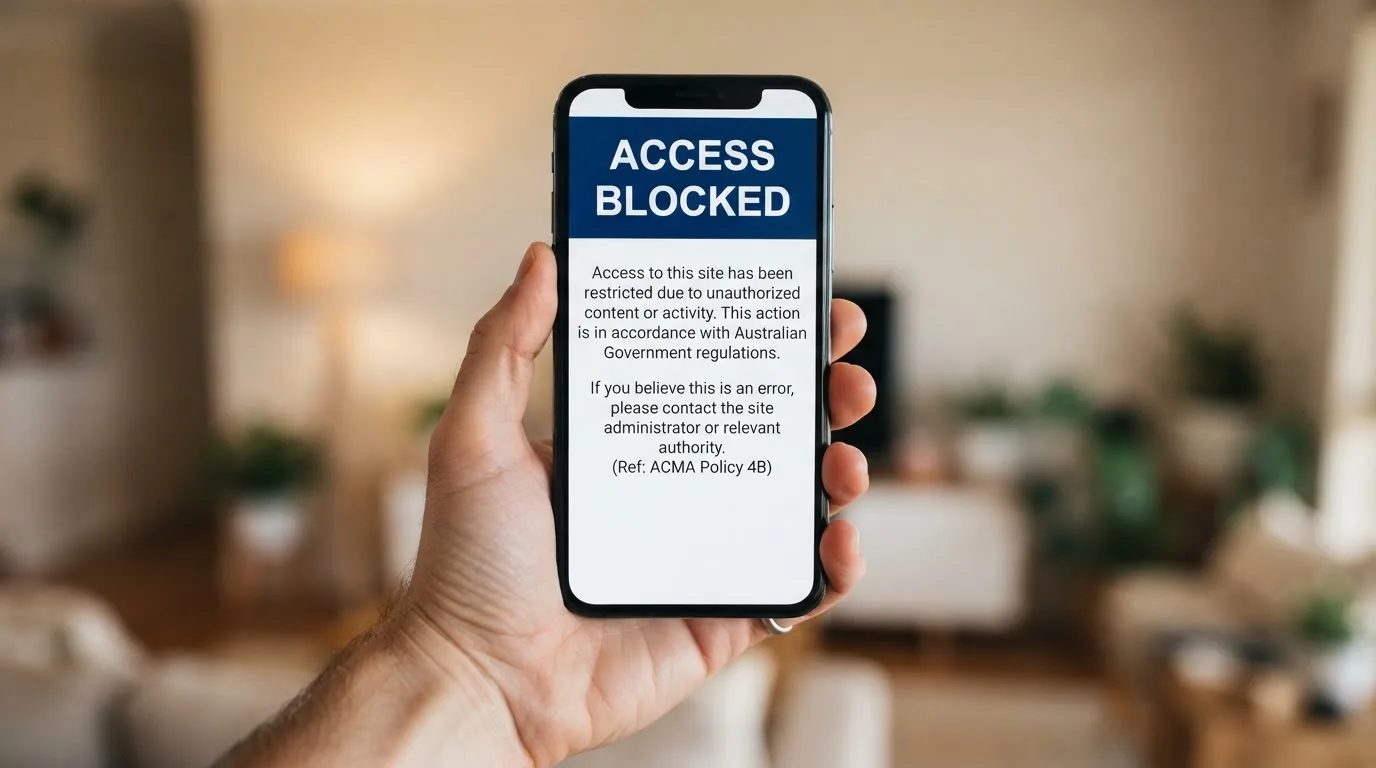
The phrase “GameBeat casino Australia” returns dozens of affiliate pages. Each one promises a shortlist, a welcome bonus and a “top pick.” None of them can deliver what they promise. GameBeat is a business-to-business slot studio, not a casino, and every online casino offering its games to Australians sits on the wrong side of the Interactive Gambling Act 2001 — the same law that has put more than 1,750 illegal gambling and affiliate marketing sites on the ACMA’s blocking list since November 2019. A page that hands over a ranked list anyway is not neutral; it is dishonest about the market it claims to map.
Current as of 7 November 2026 against the Australian Communications and Media Authority’s published register of formal warnings and blocking requests.
Table of Contents
- How much the Australian prohibition actually costs a player
- ACMA enforcement: the record behind the block button
- What the operator’s licence actually covers
- Player protection tools that actually work in Australia
- Payments: the route that should not be offered
- Bonuses and free spins: what the marketing word “free” leaves out
- The mobile experience: browser, app, and the gap between them
- What is actually on the GameBeat catalogue
- What is actually licensed in Australia: pokies venues, land-based casinos and BetStop
- Comparing the brands the ACMA has warned
- Closing assessment
- What the Interactive Gambling Amendment (Gambling Reform) Bill 2026 changes
- Tax and money: the part the marketing never prints
- Frequently asked questions
How much the Australian prohibition actually costs a player
A punter who searches for a GameBeat casino rarely knows what the prohibition costs them in concrete terms. The legal ceiling sits one click above the games themselves: credit cards and cryptocurrency were banned as deposit routes for licensed Australian wagering from 11 June 2024, with penalties of up to A$247,500 for any operator that takes them. An offshore site, by contrast, accepts both. The trade looks generous until the balance stops moving — offshore sites give no Australian consumer protection, no local complaints body and no recourse when a withdrawal is refused, and the site itself can be blocked overnight with whatever funds sit on it.
H2 Gambling Capital’s 2025 estimate puts annual losses to illegal Australian gambling sites at about A$3.9 billion, and records the share of gambling going through legal channels falling from 74% in 2021 to 64%. The market has not collapsed; it has been redirected, mostly onto sites that carry no licence from any Australian jurisdiction and that ACMA enforcement has spent the last seven years trying to block.
The house edge on GameBeat slots does not stop applying because the casino is illegal. The RTP figures the studio publishes — typically 95% to 97% — are averages across many spins, not promises for any single session, and the calculation behind them has nothing to do with the licence the operator displays at the bottom of its homepage. What the licence does affect is what happens when the player wants the money back.
ACMA enforcement: the record behind the block button
The Australian Communications and Media Authority has asked Australian ISPs to block 1,751 illegal gambling and affiliate marketing websites since the first blocking request in November 2019, and more than 230 unlicensed gambling services have left the Australian market since enforcement was strengthened in 2017. A round reported on 26 June 2026 alone added twelve sites: 7Signs, ChromaBet, Donbet, Duospin, Freshbet, Slots Gem, Jacks Club, Lucky Start, Pointsbetz, Spinrise, Vinyl Casino and Wildsino.

The pace is not slowing. Between February 2025 and April 2026 the ACMA published formal warnings against Dama N.V. (over Woo Casino in March 2025 and Spirit Casino in May 2025), EOD Code SRL over Instant Casino (February 2025), Sterplay Holding Ltd over Casino Intense (April 2025), Bamboo Media over Ignition Casino and Consolutetish S.R.L. over National Casino and Bizzo Casino (July 2025), Pulsup Ltd over Rocketplay (March 2026) and Ryker B.V. over Jackbit and CasinOK (April 2026). Hollycorn N.V. received an earlier formal warning over Sky Crown and Blue Leo in September 2022. Every brand in the comparison table below appears in this record.
The blocking rate that matters is the long-run average. From the first blocking request in November 2019 to the June 2026 round, 1,751 sites were added across roughly 79 months — an average of roughly 22 sites per month, with the rate climbing as the ACMA’s enforcement tools matured. The arithmetic is not a guarantee of any single site being blocked tomorrow, but it is the closest thing to a forecast a player can build: at this pace, several hundred more offshore domains will be referred for blocking in the year ahead, and any site a player opens an account with this week is a candidate.
What the operator’s licence actually covers
Most of the brands below display a Curaçao eGaming licence number in their footer. The licence is real and the regulator is real, but its scope is offshore: Curaçao oversight does not authorise a casino to take deposits from Australian residents for online casino games. The Interactive Gambling Act 2001, strengthened by the Interactive Gambling Amendment Act 2017, makes offering online casino games to anyone in Australia an offence regardless of where the operator is incorporated. No state or territory issues such a licence, and the regulator that oversees most Australian-licensed wagering — the Northern Territory Racing and Wagering Commission — handles 52 online bookmakers, including Sportsbet, Bet365 and Ladbrokes, all licensed for racing and sport rather than casino games.
The same prohibition covers in-play online betting. What remains licensable for an Australian customer is wagering on races and sport placed before the event, lotteries and keno. Minimum age is 18, and the law targets the provider — not the player, who is not prosecuted for gambling — but a blocked site gives no path to recover funds.
Player protection tools that actually work in Australia
The single Australian-licensed tool that reaches every legal wagering account is BetStop, the National Self-Exclusion Register, live since August 2023. A punter registers once and every Australian-licensed online and phone wagering service is required to refuse to open new accounts for them, close existing ones and stop sending marketing. The register binds Australian-licensed operators only. An offshore casino is not connected to it in either direction: registering with BetStop will not exclude a player from a Curaçao-licensed site, and an offshore casino cannot volunteer to honour the exclusion either.
For anyone whose gambling has become difficult to control, the National Gambling Helpline on 1800 858 858 is free and operates 24/7, with chat available through Gambling Help Online. The helpline is funded outside the casino industry and gives information about counselling, financial advice and self-exclusion without asking the caller to register anywhere first.
BetStop and the helpline are the two pieces of the Australian safety net that have legal teeth. Setting a deposit limit on a Curaçao-licensed casino depends entirely on that operator honouring the limit voluntarily, because no Australian regulator enforces it.
Payments: the route that should not be offered
Since 11 June 2024, licensed Australian wagering operators have been prohibited from accepting credit cards, credit-related products and digital currency as payment. Penalties for operators that breach the rule reach A$247,500. Legal deposit routes are debit card, bank transfer, PayID/Osko and BPAY. The same rules are not enforced on offshore sites; an operator that advertises “Bitcoin accepted” to an Australian customer is, by definition, not licensed under the Australian regime.
The arithmetic of a payout tells the rest of the story. A licensed Australian bookmaker settles back to the same PayID or BPAY the deposit came from, typically within one to three banking days. An offshore casino may take a PayID or a card deposit, but the withdrawal route usually runs through a bank wire, an e-wallet or, increasingly, a stablecoin — each layer adding fees, conversion spreads and a delay measured in days rather than hours. None of this is illegal on its own; it is just the price of operating outside the system that compresses those costs.
Bonuses and free spins: what the marketing word “free” leaves out
A GameBeat casino welcome package — deposit match plus free spins on a featured slot — looks free in the headline and rarely is. The cost sits in the wagering requirement that comes attached: a bonus credited as withdrawable cash only after the player has wagered a multiple of the bonus amount, often 35× to 50×, on eligible games. Free-spin winnings are usually capped and credited as bonus funds subject to the same requirement.
The cost of clearing such a bonus is the wagering multiple applied to the bonus amount. A$1,000 bonus at 40× means A$40,000 must be staked before any of the bonus balance becomes withdrawable. At a typical slot stake of A$1 per spin, that is 40,000 spins. At roughly five seconds per spin that is about 55 hours of play, on a single bonus, before any of it unlocks. The expected loss over those 40,000 spins at a 96% RTP is A$1,600 — more than the bonus itself. The “free” money comes with a price the affiliate page does not print.
A no-deposit bonus — A$10 to A$50 in credit, or a handful of free spins, granted without a deposit — looks cheaper but carries the same architecture. The wagering multiple still applies, and the maximum cashout from a no-deposit bonus is almost always capped, often at five to ten times the bonus value, on a withdrawal that is only released after the full requirement is met. The cap is what the marketing copy never quotes.
These mechanics are not unique to GameBeat, and they are not invented by the operators that run them. They are the standard architecture of the offshore bonus. What changes from one site to another is the multiplier, the cap and the list of games that count at 100% toward the requirement — a list that typically excludes the highest-RTP slots, on the logic that the house edge should not be eaten alive by a player who knows the maths.
The mobile experience: browser, app, and the gap between them
No casino app offers GameBeat games to Australian customers through a legitimate channel. The App Store and Google Play policies in Australia mirror the Interactive Gambling Act: real-money casino apps cannot be listed for Australian accounts. The offshore workaround is the mobile browser — a responsive site that loads in Safari or Chrome and runs HTML5 slot builds without a download. GameBeat, like most modern slot studios, builds its games in HTML5, which is exactly the format the mobile browser expects.
The experience is close to native. A modern phone renders the slot animation, the reel spin and the sound effects without an app, and the cashier, the live chat and the responsible-gaming tools all sit one tap away. The legal status of the site does not change because the access method does. A player using a mobile browser to load a Curaçao-licensed casino is, for the purposes of the IGA, on an offshore site, and the same blocking and withdrawal caveats apply.
What is actually on the GameBeat catalogue
GameBeat is a slot game studio that describes itself as a business-to-business software developer and technology provider, set up in 2021, supplying games only to licensed operators and commercial partners rather than to players directly. Its catalogue, distributed through aggregator partners, sits inside the lobbies of dozens of offshore casinos — alongside the output of studios with similar profiles.
Betsoft, founded in 2006, lists more than 200 RNG games spanning slots, table games, video poker and specialty titles. Good Girl Bad Girl 2 publishes an RTP of 96.22%, “Very High” volatility and a 15.59% hit rate on five reels and twenty paylines. The Slotfather, live since 13 December 2012, carries an RTP of 95.69%, “Medium” volatility and an 8.17% hit rate on five reels and thirty paylines. BGaming, whose team has worked on games since 2012 and which launched the BGaming brand in 2018, lists more than 250 certified titles and runs proprietary mechanics such as TRUEWAYS, which offers up to 262,144 ways to win. Booming Games holds a Malta Gaming Authority B2B licence (MGA/B2B/459/2018) and a UK Gambling Commission account (#57254); 1spin4win, founded in 2021, reports more than 190 slots in HTML5 for low-bandwidth connections and more than 1,000 operator and aggregator partnerships, with total bet sum up 46% in the first half of 2025 against the first half of 2024.
These are the studios whose output fills the lobbies of the brands listed below. The point of naming them is not to draw distinctions between offshore offerings — the RTPs are published, the volatility classes are published, the licence details are published — but to show that what an Australian player is offered at any offshore GameBeat casino is structurally similar to what players in regulated markets see. The structure does not change the legal status.
What is actually licensed in Australia: pokies venues, land-based casinos and BetStop
The Australian alternative for anyone who wants to play casino-style games within the law is narrower than the offshore market and older than the internet. Licensed clubs and hotels operate pokies — gaming machines — under state and territory regulation, with the machines themselves manufactured by companies such as Aristocrat Leisure, founded in 1953, listed on the ASX in 1996 and described as the largest gambling-machine manufacturer in Australia and the second-largest slot-machine manufacturer worldwide. The machines are physical, in venues, subject to state-level harm-minimisation measures including mandatory pre-commitment in some jurisdictions, and the money flows through regulated banking.
The Crown resorts in Melbourne, Perth and Sydney operate table games under casino licences issued by the relevant state regulators, with the same minimum-age and responsible-gambling requirements that apply to the pokies venues. Online wagering on racing and sport, placed before the event, is licensed through the Northern Territory Racing and Wagering Commission or equivalent state arrangements and connected to BetStop. That is the full set of legal options for an Australian resident.
Comparing the brands the ACMA has warned
The table below lists every brand this page covers. Each entry is a brand the ACMA itself has formally warned under the Interactive Gambling Act 2001, and each appears because the regulator has acted against it for offering prohibited online casino games to Australians. This is not a recommendation; the column “ACMA action and date” is the page’s reason for naming the brand at all. A site marked “no data” in the subject-support column has no public listing that names GameBeat as a partner; a “listings-only” entry names the studio and the brand on a third-party aggregator or developer page, which is not the same as an integration the player can rely on.
| Brand | ACMA action and date | Operator named by the ACMA | Subject support |
|---|---|---|---|
| RocketPlay | March 2026; earlier May 2022 | Pulsup Ltd; earlier Dama N.V. | — |
| Level Up Casino | May 2022 | Dama N.V. | listings-only (Wazdan) |
| Woo Casino | March 2025 | Dama N.V. | — |
| Spirit Casino | May 2025 | Dama N.V. | — |
| National Casino | July 2025 | Consolutetish S.R.L. | listings-only (Betsoft, Pragmatic Play) |
| Bizzo Casino | July 2025; earlier 2022 | Consolutetish S.R.L.; earlier TechSolutions | — |
| Ignition Casino | July 2025 | Bamboo Media | — |
| Instant Casino | February 2025 | EOD Code SRL | — |
| Jackbit | April 2026 | Ryker B.V. | — |
| Casino Intense | April 2025 | Sterplay Holding Ltd | listings-only (1spin4win and others) |
| Sky Crown | September 2022 | Hollycorn N.V. | — |
RocketPlay
Pulsup Ltd received a formal ACMA warning in March 2026 over Rocketplay; the brand had earlier been caught up in the May 2022 warning to Dama N.V. over six casino names. The site is no safer for an Australian player now than it was when the first warning was issued — the same operator name in the regulator’s publication, four years later, is the regulatory record of a brand that has not exited the market. A search returning RocketPlay at the top of a “best GameBeat casino” list is a search returning a brand the ACMA has twice now asked ISPs to take action against.
Level Up Casino
The ACMA’s May 2022 warning to Dama N.V. covered six brands, Level Up among them. The brand surfaces on third-party listings tied to other studios, including Wazdan. Dama N.V. is one of the most-warned operators in the ACMA’s published record — Woo Casino, Spirit Casino and several of the brands listed here all sit under the same corporate name — which means a player picking “Level Up” off an affiliate list is, structurally, picking one of the more frequently-named operators in the regulator’s archive.
Woo Casino
A formal warning to Dama N.V. in March 2025 named Woo Casino specifically. The site carries the same offshore architecture as the rest of the Dama N.V. group: a Curaçao licence displayed at the footer, no connection to BetStop, no Australian consumer protection and a published welcome package that runs through the standard wagering multiple described above.
Spirit Casino
A May 2025 formal warning to Dama N.V. added Spirit Casino to the regulator’s record. No public listing pairs Spirit Casino with GameBeat specifically; the subject-support entry sits at “no data” and the brand appears here because the ACMA has named it.
National Casino
A July 2025 warning to Consolutetish S.R.L. named National Casino. The brand’s third-party listings show it carrying content from Betsoft and Pragmatic Play, among others. The list is what the aggregator pages state, not what National Casino confirms in its own marketing; a player looking for GameBeat titles here will find them in the lobby where the aggregator lists them, with the same offshore caveats.
Bizzo Casino
Consolutetish S.R.L. was warned in July 2025 over National Casino and Bizzo Casino; Bizzo had already been the subject of an earlier 2022 warning to TechSolutions (CY) Group Limited and TechSolutions Group N.V. A brand with two formal ACMA warnings across two different corporate owners is a brand that has changed its corporate wrapping without changing its offer to Australian customers.
Ignition Casino
A July 2025 formal warning to Bamboo Media named Ignition Casino. Ignition is one of the more recognisable brand names in the offshore market, and the warning is one of the more recent. No public listing ties Ignition to GameBeat; the brand appears here because the ACMA has acted, not because the studio integration is documented.
Instant Casino
A February 2025 formal warning to EOD Code SRL named Instant Casino. The early-2025 timing means the brand is close to the front of the ACMA’s recent enforcement activity and therefore close to the front of any blocking request that follows the next round of complaints.
Jackbit
A formal warning in April 2026 to Ryker B.V. named Jackbit and CasinOK together. Two brands under one warning is two brands that share the same operator-side answer to any Australian player trying to recover funds. No public listing ties Jackbit to GameBeat specifically.
Casino Intense
A formal warning to Sterplay Holding Ltd in April 2025 named Casino Intense. Third-party listings pair the brand with 1spin4win among other studios; the entry here is “listings-only” because that is what those pages report, not what Casino Intense confirms on its own.
Sky Crown
A September 2022 formal warning to Hollycorn N.V. named Sky Crown and Blue Leo together. Hollycorn is one of the older entries on the regulator’s published list; the brand has not been re-warned since 2022, which is a comment on the regulator’s focus, not on the brand’s status. The IGA prohibition has not been repealed, and Sky Crown’s offer to Australian customers is unchanged.
Closing assessment
Eleven brands, four operators behind them (Dama N.V., Consolutetish S.R.L., Hollycorn N.V., and three standalone corporate owners), eleven ACMA formal warnings — and not one Australian-licensed GameBeat casino to put against them. The arithmetic is the answer. The page cannot recommend a GameBeat casino to an Australian reader, because there is no such thing; it can describe the regulatory record of the brands that the search results return, and it can point the reader at the alternatives the law does allow: licensed pokies venues, the Crown resorts, pre-event wagering through a Northern Territory-licensed bookmaker, and the BetStop register for anyone whose gambling needs to stop. Each of those has a regulator behind it. The offshore sites do not.
What the Interactive Gambling Amendment (Gambling Reform) Bill 2026 changes
The Interactive Gambling Amendment (Gambling Reform) Bill 2026 passed Parliament on 19 August 2026, adding advertising and inducement restrictions that commence on 1 January 2027. The bill is law with a start date, not a regulation in force on a 2026 page. Once the inducement measures commence, the offshore sites that target Australian customers with welcome bonuses, free-spin offers and affiliate promotions will be operating in breach of an Australian statute even when the casino itself sits offshore. The enforcement tools — the same ACMA blocking powers already used against 1,751 sites — will reach the marketing as well as the casino. Until 1 January 2027 the prohibitions in force are the Interactive Gambling Act 2001 as amended in 2017 and the 11 June 2024 credit and crypto ban.
Tax and money: the part the marketing never prints
Gambling winnings received by a recreational player in Australia are not assessable income under section 6-5 of the Income Tax Assessment Act 1997. Losses are not deductible. The position changes if the ATO treats the gambling as a business — a standard that requires more than the activity of a typical player and is worth checking with a tax adviser for anyone whose gambling income looks like a livelihood. The point for the average reader: the A$3.9 billion flowing offshore each year is not taxed on the way in by the Australian government and not taxed on the way out at the player’s marginal rate. None of that money is recoverable through the Australian Taxation Office if the offshore casino disappears with it.
Frequently asked questions
What kind of games does GameBeat make?
GameBeat describes itself as a business-to-business slot studio set up in 2021, supplying HTML5 slot games to licensed operators and commercial partners. It does not run a casino, and its games reach players only through the offshore brands that license its catalogue.
Is GameBeat used by any casino licensed to operate in Australia?
No. Online casino games cannot be licensed in Australia under the Interactive Gambling Act 2001, so a GameBeat-powered casino licensed by an Australian regulator does not exist. The brands that distribute GameBeat slots are licensed in Curaçao or Malta, not in Australia.
Can Australians legally play GameBeat slots at an online casino?
No. Offering online casino games to a person in Australia is an offence under the Interactive Gambling Act 2001. The individual player is not prosecuted, but the offshore site can be blocked at any time, accepts credit cards and cryptocurrency that licensed Australian wagering operators are banned from taking since 11 June 2024, and offers no Australian consumer protection if a withdrawal is refused.
Are GameBeat games available at land-based Australian casinos?
Not directly. GameBeat distributes online slot software. Land-based Australian venues run gaming machines built by Aristocrat and other physical-machine manufacturers, with table games at the Crown resorts in Melbourne, Perth and Sydney operating under separate state casino licences.
What should someone checking a site that claims to offer GameBeat games look for first?
A licence from an Australian state or territory — which the site will not have, because no such licence is issued. After that, the test is whether the site is on the ACMA’s published register of formal warnings and blocking requests. Every brand in the comparison table above passes that test on the warning side.