
Platipus online casinos in Australia: 2026 reality check
Latest update: 7 November 2026, verified against the Australian Communications and Media Authority’s formal warning register and its June 2026 blocking round.
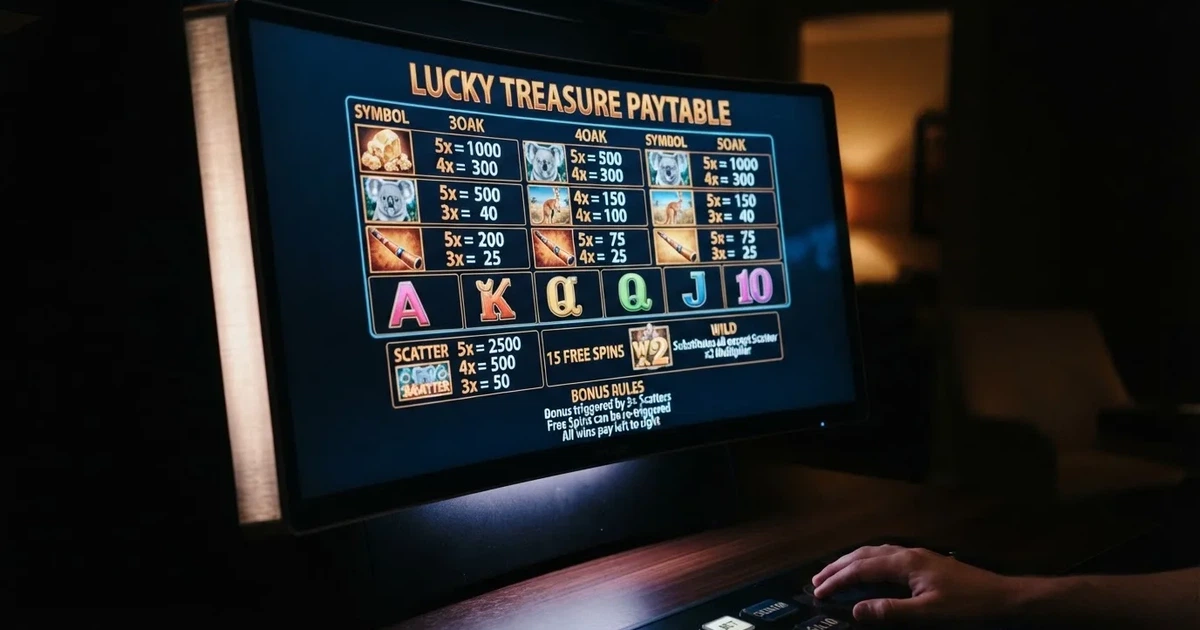
The honest answer to the search “best Platipus online casinos Australia” is that the framing is wrong before the comparison starts. Platipus is a software studio, not a casino, and Australia does not license online casino games at all. Any site offering Platipus slots to a person physically in Australia is offering an unlawful product under the Interactive Gambling Act 2001. The eleven names that dominate the search results are not a ranking of where to play; they are a list of brands the ACMA has formally warned over the provision of prohibited interactive gambling services.
This page works through what that means in practice: what the ACMA has done, who it has warned, and what the price of the search term looks like once the marketing language is stripped out.
Table of Contents
- Responsible-gaming supports the shortlist ignores
- Payments, payout speed and what “fast withdrawal” means offshore
- Bonuses, free spins and the arithmetic of the offer
- Mobile play, browser and the load-time question
- Specific games, providers and what the Platipus catalogue looks like
- The shortlist — what the ACMA has done, and what each entry has in common
- Overview — what Platipus is, and what it is not
- Legality — the Interactive Gambling Act 2001 and what it actually prohibits
- How to read what an offshore brand offers an Australian
- What the rest of 2026 looks like for the shortlist
- Operator write-ups
- Frequently asked questions
Responsible-gaming supports the shortlist ignores
Australia’s responsible-gambling infrastructure exists for a reason, and offshore casinos do not connect to it. The main numbers and registers a player in Australia should have on file before they ever consider any online wagering are these.

- Gambling Help Online and the National Gambling Helpline on 1800 858 858 — free, 24/7, with webchat. Run by a state- and territory-funded consortium, not by any operator.
- BetStop, the National Self-Exclusion Register, live since August 2023. It binds Australian-licensed online and phone wagering services. An offshore casino sits outside the register, so a self-exclusion placed there does not stop a person opening a new account at an ACMA-warned site under a different email.
- State and territory self-exclusion schemes for land-based pokies and casinos, which cover the venues that actually are licensed in Australia.
The mismatch matters. A player who has gone to the trouble of self-excluding has done the responsible thing — the system, however, only catches the Australian-licensed half of the market. Offshore brands, including every one on the shortlist below, are not in scope. Anyone who has hit that wall should treat it as a signal to step back from the offshore market entirely, not as a prompt to find a brand the register has not heard of.
The same logic applies to complaints. An offshore operator carries no Australian consumer-protection obligation, no independent disputes body and no recourse if a withdrawal is refused or a balance is closed out. The site displaying a Curaçao or Anjouan licence number is licensed in that jurisdiction for the purposes of that jurisdiction’s regulator; it is not licensed to take Australian players. Where the lawfulness of the offer is the first problem, the complaints path is the second.
Gambling Help Online is the right first call if the search for a Platipus casino has come from somewhere other than curiosity.
Payments, payout speed and what “fast withdrawal” means offshore
A player who has filtered the offshore market down to a handful of brands will often be steered toward the payment section next. The shape of that section tells them where they are.
Licensed Australian wagering runs on debit card, bank transfer, PayID/Osko and BPAY. Credit cards, credit-related products and digital currency have been banned as a funding route for licensed online wagering since 11 June 2024. The maximum penalty for an operator who takes a prohibited payment is A$247,500.
Offshore brands targeting Australians behave the opposite way. Their deposit pages typically lead with Visa or Mastercard (often processed through an intermediary merchant to evade the credit-card ban), e-wallets like Skrill and Neteller, and a crypto option — Bitcoin, Ethereum, Tether, sometimes a site-specific token. Withdrawal pages list bank transfer and the same e-wallets, with crypto on the payout side for the brands that pitch themselves as “crypto casinos”.
The “payout speed” pitch on those sites is a marketing line rather than a published SLA. The fastest real times come from crypto payouts once the casino’s internal approval has cleared — the on-chain leg is measured in minutes; the approval queue is what the player is actually waiting on. E-wallets settle faster than bank transfer inside the same brand, because the transfer does not depend on correspondent-bank cutoffs.
What the offshore brands do not publish is the conditions under which the payout is approved at all. The bonus terms, where they are public at all, usually require a turnover multiple — the bonus amount wagered a set number of times before any withdrawal can be requested — and often a maximum cashout cap on winnings earned from a no-deposit offer. A player who has hit a withdrawal screen is at the end of a process that was set up to extract the deposit and the bonus playthrough, not to pay out.
The price of using crypto on the way in and the way out is also the player’s. Crypto deposits and withdrawals are not protected by chargeback or by the e-money protections that apply to card and bank transfers in licensed markets. Once the on-chain transaction is signed, it cannot be reversed by the sender’s bank, and there is no ombudsman to write to.
The brief, then: the offshore payment page is faster on paper and offers nothing when it goes wrong.
Bonuses, free spins and the arithmetic of the offer
The bonus shelf is where the offshore marketing spends its budget, and it is also where the real cost of the offer becomes visible if the player reads the small print.
The standard welcome package at an ACMA-warned brand runs in two layers. A first-deposit match — 100% is the modal offer, sometimes stretched to 200% with a lower cap — paid in bonus funds that cannot be withdrawn directly. Free spins bundled in or as a standalone promo on a named slot, often one of the studio’s flagship titles. A separate no-deposit free-spin offer is sometimes used to onboard a player with no money committed, which is the most heavily conditioned of the bunch.
The conditions attached to all of these are what determines what the offer is worth. Three numbers matter:
- The wagering multiple. The bonus amount (and on some sites the deposit plus the bonus) must be wagered a stated number of times before the bonus balance becomes withdrawable. A 40x bonus-only multiple on a A$500 bonus means A$20,000 of qualifying wagers before the A$500 is unlocked. A 50x deposit-plus-bonus multiple on the same deposit pushes the figure above A$50,000.
- The game contribution table. Slots almost always contribute 100% of each wager to the multiple; table games and live casino typically contribute 10% or 0%. A player trying to clear a multiple at the blackjack table is doing twenty times the work, or getting nowhere.
- The maximum cashout cap. Common on no-deposit offers and on free-spin bundles — a ceiling, often between A$100 and A$500, on what can be withdrawn from bonus-derived winnings. Anything over the cap is voided on withdrawal.
The wagering multiple is where the offer’s price lives, and it is also the number marketing pages bury. The arithmetic works as follows. A player who claims a A$500 bonus with a 40x bonus-only wagering requirement and clears it on a slot at a A$1 stake per spin needs 20,000 spins to clear the bonus. At five seconds per spin, that is roughly 27.8 hours of continuous play, more than a full waking day at the keyboard. A player doing the same playthrough at a A$0.20 stake needs 100,000 spins and about 138.9 hours of play — nearly six straight days at the keyboard before the bonus balance is theoretically withdrawable.
Neither figure is a guarantee of a payout. The expected loss over the playthrough is the more honest measure, and it is computed by multiplying the required turnover by one minus the slot’s RTP. A 96% RTP slot cleared at A$1 per spin over A$20,000 of wagering gives an expected loss of A$800 — more than the bonus itself. The bonus is, in plain terms, a marketing cost the player pays for the privilege of unlocking it.
Free-spin offers compress the same arithmetic into a smaller box. A bundle of 200 free spins at A$0.20 each with the same 40x wagering on the resulting winnings, capped at A$200 cashout, is offering up to A$40 in bonus-derived stake. The expected loss on the spin bundle alone at 96% RTP is about A$1.60, but the wagering multiple on the winnings is what takes the time. The cashout cap is what decides whether any of it can leave the site at all.
The promo code, the welcome bonus and the free-spin bundle are all variants of the same instrument: a stake-and-turnover machine dressed in different shapes. Reading the wagering multiple and the cashout cap before claiming is the only step that decides whether the offer is worth the hours it consumes.
Mobile play, browser and the load-time question
The mobile shelf is, for the most part, a browser story. The studios whose games appear in the shortlist — Platipus included — build in HTML5, which means the same game runs in Safari, Chrome or any modern mobile browser without a download. A dedicated casino app is usually available for Android (an APK direct from the site) and sometimes for iOS, but on iOS the App Store rules keep most offshore casino apps off the platform.
Load times depend on three things the player can influence and one they cannot. The connection, the device and the browser are the player’s side; the size of the game client and the casino’s own front-end weight are the operator’s side. A modern Platipus HTML5 release is small enough to load over a 4G connection in a few seconds; older titles and operator skins wrapped around them are noticeably heavier.
What the mobile page does not change is the legal position. A phone in Australia running a browser into an offshore casino is still an Australian person accessing a prohibited interactive gambling service, regardless of the screen size.
Specific games, providers and what the Platipus catalogue looks like
Platipus Gaming is an EU-based slot provider founded in 2014. The studio describes a catalogue of more than 174 HTML5 slots and table games, with content shipped in 20 languages and supported in both fiat and crypto. RNG certification comes from iTech Labs for regulated markets including the UK, Italy, the AGCC, Denmark, the Isle of Man, Malta, Gibraltar, Sweden and Romania. The studio reports more than 500 operator customers and eleven years of industry experience, with 24/7 technical support.
Two points stand out for an Australian reader. The certification list does not include any Australian jurisdiction, because there is no online casino certification regime in Australia to include. And the studio’s own description of recent development emphasises Asian-oriented games — a market positioning that tells a reader where the studio’s commercial focus is, and where it is not.
The studios whose names come up beside Platipus on affiliate pages are a mixed set. 1spin4win, founded in 2021, describes a catalogue of more than 190 online slots, all HTML5-built for low-bandwidth connections, headquartered in Curaçao under a Curaçao gaming licence, with reported partnerships at more than 1,000 online casinos and aggregators. BGaming’s team has worked on games since 2012, with the BGaming brand itself debuting in 2018, now offering more than 250 certified games across slots, video poker, lottery, card, scratch, crash and casual titles. Betsoft, founded in 2006, runs a catalogue of more than 200 RNG games; its slot Good Girl Bad Girl 2 carries a published 96.22% RTP at “Very High” volatility with a 15.59% hit rate across 5 reels and 20 paylines, and its older The Slotfather (live since 13 December 2012) carries a 95.69% RTP at “Medium” volatility with an 8.17% hit rate across 5 reels and 30 paylines. Aristocrat Leisure, an Australian company founded in 1953 and ASX-listed since 1996 under the ticker ALL, is the largest gambling-machine manufacturer in Australia and the second-largest slot-machine manufacturer worldwide behind International Game Technology; its 2025 revenue was A$6.30 billion, normalised net profit after tax and amortisation of A$1.55 billion, with 7,400 employees. Aristocrat Interactive, the group’s regulated online real-money-gambling business, was formed in April 2024 by combining Aristocrat’s Anaxi unit with the acquired NeoGames group — Aspire Global, BtoBet and Pariplay — and operates in markets where online casino is licensed, which does not include Australia.
Two of the eleven shortlist brands carry listings on provider sites that name game studios present in their lobbies. Level Up Casino lists Wazdan content. National Casino lists Betsoft and Pragmatic Play content. Casino Intense lists 1spin4win content and others. The remaining eight shortlist brands carry no provider-side listing on the studio pages consulted for this page, which is itself information: an operator with no presence on a provider’s customer page is either too small to list, too new to list, or running the studio’s games through an aggregator that does not surface the brand publicly.
The shortlist — what the ACMA has done, and what each entry has in common
The eleven brands below appear because the ACMA itself has issued a formal warning over each of them. They are not a recommendation, and the order is the order of the ACMA’s published action, with the operator named in the warning kept beside the brand name and the date the warning was issued.
| Brand | ACMA action and date | Operator named by the ACMA | Provider-side listing |
|---|---|---|---|
| RocketPlay | Formal warning, March 2026 | Pulsup Ltd | — |
| Level Up Casino | Formal warning, May 2022 | Dama N.V. | Wazdan listed |
| Woo Casino | Formal warning, March 2025 | Dama N.V. | — |
| Spirit Casino | Formal warning, May 2025 | Dama N.V. | — |
| National Casino | Formal warning, July 2025 | Consolutetish S.R.L. | Betsoft, Pragmatic Play listed |
| Bizzo Casino | Formal warning, July 2025 | Consolutetish S.R.L. (earlier TechSolutions, 2022) | — |
| Ignition Casino | Formal warning, July 2025 | Bamboo Media | — |
| Instant Casino | Formal warning, February 2025 | EOD Code SRL | — |
| Jackbit | Formal warning, April 2026 | Ryker B.V. | — |
| Casino Intense | Formal warning, April 2025 | Sterplay Holding Ltd | 1spin4win listed |
| Sky Crown | Formal warning, as published by the ACMA | Hollycorn N.V. | — |
The table’s right-hand column warrants note. A “—” signifies that the brand is not publicly named in the customer lists of studios researched here. Note that studio pages are not the sole distribution channel (aggregators like SoftSwiss and Hub88 facilitate most game delivery), so a missing listing simply reflects a lack of public customer disclosure by the studios themselves.
What every row in the table has in common is more important than what divides them. Each is a brand the ACMA has formally warned for offering prohibited interactive gambling services to Australians. Each is therefore operating outside the Australian regulatory frame at the time of writing, regardless of the offshore licence it displays. None of them is connected to BetStop, to the National Gambling Helpline, or to any Australian dispute-resolution scheme. None of them accepts PayID, Osko or BPAY, because licensed Australian payment rails are not available to offshore operators. None of them is a place where an Australian player has a working complaints path.
A “best of” ranking inside this set would mean ranking the brands that have been warned most recently, or warned for the most brands, or both — a contest with no winner a reader should want to enter.
Overview — what Platipus is, and what it is not
Platipus is a slot studio. It designs and certifies HTML5 slots and a smaller range of table games; it licenses that catalogue to operators; the operators are the ones who deal with players. The studio’s own pages describe more than 174 games, 20 languages, both fiat and crypto support, RNG certification by iTech Labs for nine named European and international jurisdictions, more than 500 operator customers, and a development focus that has shifted toward Asian-oriented games.
None of that makes Platipus an Australian casino, and none of it makes a Platipus slot a product that can lawfully be offered to a person in Australia. The studio’s certification list covers regulated markets where online casino is licensed. Australia is not one of them. A brand running Platipus content for Australian players is running an unlicensed product in an unlicensed jurisdiction, and the ACMA has warned eleven of them by name.
The phrase “best Platipus online casino Australia” reads as a search for a recommendation. The actual product it asks after does not exist as a licensed thing.
Legality — the Interactive Gambling Act 2001 and what it actually prohibits
The Interactive Gambling Act 2001, strengthened by the Interactive Gambling Amendment Act 2017, makes it an offence to provide online casino games, online pokies and in-play betting to a person physically in Australia. No state or territory licenses online casino games. What is licensed is wagering on races and sport placed before the event, lotteries and keno — in practice licensed by the Northern Territory through the NTRWC, which regulates 52 of Australia’s online bookmakers including Sportsbet, Bet365 and Ladbrokes for tax reasons. The commission has no full-time staff and meets once a month in Darwin.
The ACMA is the enforcement body. It investigates complaints, issues formal warnings, and directs Australian internet service providers to block illegal sites. By June 2026 the ACMA had asked ISPs to block 1,751 illegal gambling and affiliate marketing websites since the first blocking request in November 2019, and more than 230 unlicensed gambling services had left the Australian market since enforcement was strengthened in 2017. The most recent round reported on 26 June 2026 added 12 more sites to the block list: 7Signs, ChromaBet, Donbet, Duospin, Freshbet, Slots Gem, Jacks Club, Lucky Start, Pointsbetz.com, Spinrise, Vinyl Casino and Wildsino.
The blocking-rate arithmetic on those numbers runs as follows. From the first blocking request in November 2019 to the end of June 2026 is roughly 79 months. Dividing 1,751 blocked sites into that window gives a band of about 22 blocked sites per month on the long-run average, with the pace running faster in the most recent rounds — the June 2026 round alone added 12, the working equivalent of more than half a month’s average added in one announcement. The headline number is the cumulative total; the rate is the more useful figure, because it tells a reader how quickly the ACMA is moving against the current crop of brands.
The individual player is not the target of the IGA — the Act targets the provider. The player pays in lost deposits, in unpaid winnings, in the absence of any Australian complaints path, and in the possibility that the site is blocked mid-session with a balance still on it. H2 Gambling Capital’s 2025 estimate puts annual Australian losses to illegal gambling sites at about A$3.9 billion, with the share of gambling going through legal channels falling from 74% in 2021 to 64%.
A separate reform is in train. The Interactive Gambling Amendment (Gambling Reform) Bill 2026 passed Parliament on 19 August 2026, with its advertising and inducement measures commencing on 1 January 2027. Law with a start date, not yet in force on a page dated 2026.
The minimum age for any form of Australian wagering is 18.
How to read what an offshore brand offers an Australian
The marketing page and the legal page are not the same document.
The marketing page leads with a welcome bonus and a payout-speed promise. The legal page, buried further down, names the offshore jurisdiction that issued the licence (Curaçao, Anjouan, the Philippines, occasionally Malta) and reproduces terms-of-service language to the effect that the brand does not solicit customers in jurisdictions where its product is unlawful. The brand’s own terms are typically the source of the player-protection clause the marketing page omits.
Three checks separate what the site says from what the page actually offers.
- The payment page. Credit card, e-wallet and crypto are the standard menu at an offshore brand. PayID, Osko and BPAY are absent because they are Australian-licensed rails. A crypto-only or credit-card-friendly deposit page is the clearest single signal that the brand is operating outside the Australian rules.
- The responsible-gambling page. A link to BetStop, to the National Gambling Helpline or to Gambling Help Online is a positive signal at a licensed Australian operator. An offshore brand typically links to a problem-gambling site of its own choosing, often run by a treatment provider in the licensing jurisdiction. The difference is the binding effect — BetStop binds the operator; an offshore brand’s treatment-provider link does not.
- The withdrawal process. The fastest advertised time is meaningless without a stated approval window. A “same-day payout” promise attached to a brand that takes 48 hours to approve a withdrawal is describing the on-chain leg, not the player’s experience.
The arithmetic of the offer, finally, is the same whether the brand displays a Curaçao or an Anjouan licence number. The wagering multiple, the game contribution table and the maximum cashout cap decide what the bonus is worth, and the expected loss over the playthrough is the more honest number than the bonus headline.
What the rest of 2026 looks like for the shortlist
The blocking rate and the warning register are both moving targets. Between the first blocking request in November 2019 and the end of June 2026, the ACMA added 1,751 sites to the block list — a rate of roughly 22 per month on the long-run average, with the recent rounds adding a higher number per announcement. The June 2026 round alone added 12. New brands appear, get warned, get blocked and resurface under new names; the brands on the shortlist above are the ones the ACMA has named in published actions, not the entirety of the market.
The reform timeline is also part of the picture. The Interactive Gambling Amendment (Gambling Reform) Bill 2026 passed Parliament on 19 August 2026, with its advertising and inducement measures commencing on 1 January 2027. The affiliate pages that currently pitch welcome bonuses and free spins to Australians will, from that date, be advertising an inducement to use a prohibited service — a separate offence with its own civil penalty regime.
None of that changes the position of an Australian player in the second half of 2026. The brands above remain prohibited products. The BetStop register remains the only exclusion that covers Australian-licensed operators. The Helpline remains the right first call if the search has moved past curiosity.
Operator write-ups
The block below is not a recommendation. Each brand is included because the ACMA has issued a formal warning over it for offering prohibited interactive gambling services to people in Australia. The verdict at the end of each block is the page’s own reading of what the brand is, given that warning — not an invitation to play there.
RocketPlay — warned again in March 2026 after an earlier 2022 action
The ACMA issued a formal warning to Pulsup Ltd over Rocketplay.com.au in March 2026. An earlier warning in May 2022 covered Dama N.V. and six associated brands, including RocketPlay. Two formal warnings over four years on the same brand is a significant regulatory track record. The site uses standard offshore deposit methods—intermediary-processed cards, e-wallets and crypto—and runs a typical welcome package. It is not mentioned in public customer lists of major studios. We consider a repeated regulatory warning over four years to be an indicator that should not be overlooked.
Level Up Casino — among the six Dama N.V. brands warned in May 2022
The ACMA’s May 2022 warning to Dama N.V. covered six casino brands operating out of Australia, of which Level Up was one. The provider-side listing on Wazdan’s pages names Level Up, which is the clearest single signal on the table that the brand has carried Platipus-adjacent studio content at some point — Wazdan and Platipus share several aggregator channels and many of the same operator customers. The page does not assert that Wazdan content on a provider page means Platipus content on the operator site; it notes that the operator has, at minimum, had its name on a studio’s public customer page. The verdict is that the May 2022 warning is now more than four years old, but the product the warning covered is still prohibited.
Woo Casino — Dama N.V. brand warned in March 2025
The ACMA issued a formal warning to Dama N.V. over Woo Casino in March 2025, as part of a second round of action against an operator group already warned in 2022. Dama N.V. operates several shortlist brands, and has now been warned twice by the ACMA in three years. It is absent from major studio customer lists. A second warning for the same operator regarding a different brand underscores the pattern of these regulatory notices.
Spirit Casino — Dama N.V. brand warned in May 2025
The ACMA issued a formal warning to Dama N.V. over Spirit Casino in May 2025, the third Dama N.V. brand on the shortlist and a second 2025 action against this operator. Like others from the same group, it operates offshore and is not found in major studios’ public customer lists. In regulatory terms, it is indistinguishable from the other Dama N.V. brands: same operator, similar warning history and same prohibited product category.
National Casino — warned in July 2025 with two named studio listings
The ACMA issued a formal warning to Consolutetish S.R.L. over National Casino in July 2025. National Casino is one of two shortlist brands named in that action. Provider-side listings on Betsoft and Pragmatic Play pages name the brand, which is a significant studio-side footprint. While this indicates it has hosted mainstream studio content, it does not imply regulatory licensing — both providers certify their RNG output for licensed markets, which Australia is not. Our assessment is that the listing confirms scale, but the regulatory reality remains unchanged.
Bizzo Casino — warned in July 2025 after a 2022 warning to its earlier operator
The ACMA issued a formal warning to Consolutetish S.R.L. over Bizzo Casino in July 2025. Bizzo Casino was previously subject to a 2022 formal warning to TechSolutions (CY) Group Limited and TechSolutions Group N.V. — representing two warnings across two different operator entities for the same brand. It does not appear in major studio customer lists. A brand warned twice under separate operators shows how licensing paperwork is often cycled while the core product remains.
Ignition Casino — warned in July 2025 under Bamboo Media
The ACMA issued a formal warning to Bamboo Media over Ignition Casino in July 2025. This brand shares a name with a US-facing poker and casino operator, but the Australian-facing site is under Bamboo Media, and the ACMA’s action targets the provision of prohibited interactive gambling services. The brand does not appear in public customer listings of major studios. Our take: the warning is current, and the operator name does not alter the product’s status.
Instant Casino — warned in February 2025
The ACMA issued a formal warning to EOD Code SRL over Instant Casino in February 2025. This brand emphasizes speed—instant deposits, withdrawals and play—as its primary marketing hook, with payments split between cards, e-wallets and crypto. It is not mentioned in public customer lists of major studios. The branding “Instant” relates to deposit speed, not regulatory standing; the 2025 warning confirms the product is prohibited.
Jackbit — warned in April 2026
The ACMA issued a formal warning to Ryker B.V. over Jackbit in April 2026. This brand positions itself as a crypto casino, relying on Bitcoin, Ethereum and Tether for transactions. It is not mentioned in major studios’ customer lists. The warning is recent, and the entire payment stack operates outside Australian rails.
Casino Intense — warned in April 2025
The ACMA issued a formal warning to Sterplay Holding Ltd over Casino Intense in April 2025. Casino Intense is among the few shortlist brands featuring a studio-side listing on a provider page, specifically referencing 1spin4win. Such listings are typical for operators running mixed catalogues through various aggregators. The warning dates from 2025 and the operator remains on the ACMA’s register.
Sky Crown — Hollycorn N.V. brand, date as published
The ACMA issued a formal warning to Hollycorn N.V. over its Sky Crown and Blue Leo casino services. This brand is not featured in public customer lists of major studios. It sits on the same regulatory footing as others on this list — a brand named by the ACMA for offering prohibited interactive gambling services to Australians.
Frequently asked questions
Is Platipus legally available to players in Australia?
No. Platipus is a slot studio, not a casino, and Australia does not license online casino games. The Interactive Gambling Act 2001 makes it an offence to provide online casino games, online pokies and in-play betting to a person in Australia. Every brand on the shortlist is on the ACMA’s formal warning register for offering prohibited interactive gambling services to Australians, regardless of any offshore licence it displays.
What kinds of games does Platipus make?
Platipus Gaming is an EU-based studio founded in 2014. The studio’s own pages describe more than 174 HTML5 slots and table games, shipped in 20 languages and supported in both fiat and crypto. The catalogue is RNG-certified by iTech Labs for regulated markets including the UK, Italy, the AGCC, Denmark, the Isle of Man, Malta, Gibraltar, Sweden and Romania. The studio reports more than 500 operator customers and recent development focused on Asian-oriented games.
Are Platipus games offered at land-based venues in Australia?
Not by Platipus itself. Land-based pokies in Australia are manufactured by studios that hold state and territory approvals — Aristocrat Leisure being the largest Australian gambling-machine manufacturer and the second-largest slot-machine manufacturer worldwide behind International Game Technology. A land-based Aristocrat machine and an online Platipus slot are different products on different regulatory tracks, and a player who has played Aristocrat pokies in a pub or club has not played a Platipus game.
How can Australians check whether a Platipus title is fair before ever considering play?
The most reliable way is to not play it. Platipus titles are RNG-certified by iTech Labs for nine named European and international jurisdictions, none of which is Australia. A player in Australia has no way to verify the RNG output of an offshore casino, no Australian complaints body to escalate a dispute to, and no recourse if a withdrawal is refused. The Australian regulatory alternative for online wagering is licensed wagering on races and sport placed before the event, lotteries and keno — none of which carries Platipus content.
Why do offshore sites keep advertising Platipus games to Australian visitors?
Because the ACMA’s enforcement is provider-targeted and offshore providers sit outside Australian jurisdiction. The IGA prohibits the provision of prohibited interactive gambling services to Australians; the individual player is not the target. Offshore brands accept that a percentage of their marketing spend will be wasted on Australian visitors who cannot deposit, and a further percentage will be lost when an ISP block lands mid-session — both costs are priced into the same offer. The June 2026 round added 12 sites to the block list in one announcement; 1,751 sites have been blocked since November 2019; more than 230 unlicensed services have left the Australian market since 2017. The flow of new brands has not stopped.
What should an Australian do if they see a Platipus game promoted by an unlicensed site?
The first step is to not deposit. The next step depends on what the search has turned into. A player who is curious can read the ACMA’s published formal warning register and its blocking announcements to confirm that the brand is on the regulator’s list. A player who has already deposited and wants the balance back should understand that the offshore brand’s complaints process is the only available process, and that an Australian consumer-protection path does not exist for the product. A player who has moved past curiosity should call the National Gambling Helpline on 1800 858 858 or use the webchat at Gambling Help Online — both free, both 24/7. BetStop, the National Self-Exclusion Register, binds Australian-licensed online and phone wagering services and is the right next step for a player who wants the exclusion to bite on the licensed half of the market.