
Playing Playtech Online in Australia — The Offers, the ACMA Block List, and What 2026 Adds Up To
Current as of 7 November 2026 — figures cross-checked against the ACMA’s formal-warning register and blocking requests.
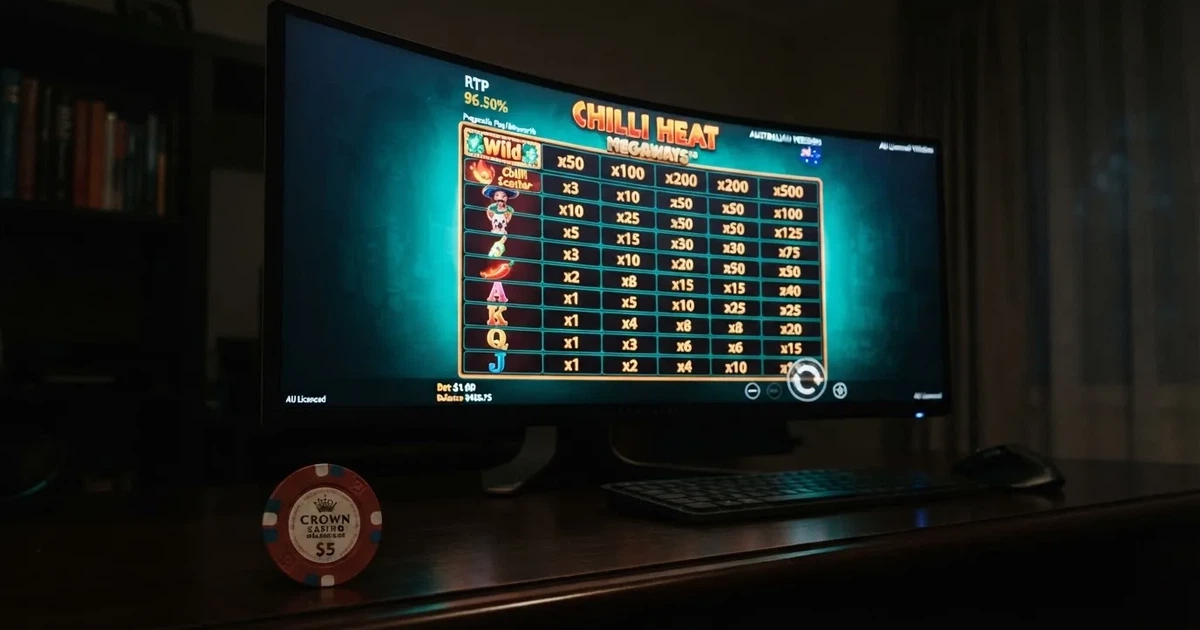
A player typing “best Playtech online casinos” into a search bar in 2026 is going to be offered a list. None of the entries on it are legal in Australia. That gap between what is advertised and what is allowed is the subject of this page. Playtech plc is a real, FTSE 250-listed software supplier that has been building games, poker networks and live-dealer studios since 1999, but the company’s licensing status overseas does not extend to offering its casino products to a person physically in Australia. The Interactive Gambling Act 2001 makes the offer unlawful. What follows is the picture that gap produces — who the regulator has acted against, what the offers actually cost a player, and where the help sits if any of it has already touched your week.
Table of Contents
- Responsible gambling in Australia — where the help actually sits
- How Playtech casino products handle deposits and withdrawals
- Bonuses, free spins and what they actually cost
- Mobile and app play on Playtech-branded sites
- Paytables, mechanics and what Playtech titles are
- How this comparison was built
- Fundamentals of Playtech and the Australian market
- The prohibition: how the IGA and ACMA enforcement work
- The ACMA formal-warning register, side by side
- RocketPlay: the most recent Dama-linked ACMA formal warning
- Level Up Casino: the original 2022 Dama warning with a still-running listings-only supplier line
- Woo Casino: the Dama warning of March 2025
- Spirit Casino: a Dama warning two months after Woo
- National Casino: a Consolutetish warning over a brand on three supplier listings
- Bizzo Casino: the brand with the longest ACMA paper trail in the set
- Ignition Casino: a Bamboo Media warning, July 2025
- Instant Casino: an EOD Code SRL warning, February 2025
- Jackbit: an April 2026 Ryker B.V. warning, paired with CasinOK
- Casino Intense: a Sterplay Holding warning with three sources naming Playtech-adjacent content
- Sky Crown: a Hollycorn N.V. warning, the oldest paper in the set
- Frequently asked questions about Playtech online casinos in Australia
Responsible gambling in Australia — where the help actually sits
Anyone researching Playtech casinos in Australia has either already had a stake in one of these sites, or knows someone who has. Either way, the question of how to step away comes before any further reading. The Australian system has three pieces worth knowing about, and each one has a clear limit on what it covers.
BetStop is the National Self-Exclusion Register. It went live in August 2023. Registration is free, can be done online, and excludes you from every Australian-licensed online and phone wagering service for a period of your choosing — three months, one year, or permanently. The word that matters there is licensed. An offshore casino offering Playtech titles is not connected to BetStop, and BetStop does not block your access to it. The exclusion covers the Australian wagering market, no more.
Gambling Help Online runs the National Gambling Helpline on 1800 858 858. The line is free, available 24/7, and offers chat through its website as well as callback counselling. It is staffed by professional counsellors, not volunteers, and it is the route that reaches financial counsellors and gambling-treatment programs in your state. There is no charge for any of it.
The state and territory support services are the third piece. Each state runs its own problem-gambling program — Gambler’s Help in Victoria, GambleAware in New South Wales, the Office of Problem Gambling in Western Australia, Gambling Help in South Australia, and equivalent services in Queensland, Tasmania, the Northern Territory and the Australian Capital Territory. They provide face-to-face counselling, peer support, group programs, and referrals to financial counselling. For anyone whose offshore play has left a balance behind, these are the people who can help untangle the next month.
The minimum age for any gambling in Australia is 18. The ACMA does not prosecute individual players — the Interactive Gambling Act targets the provider. But the offshore sites that have advertised Playtech games to Australians do not offer this country’s consumer-protection framework. There is no local complaints body, no local recourse for a refused withdrawal, and no automatic block on your account if you ask for one. That is the cost the reader pays for engaging an offshore brand, and it is paid in advance.
The single piece of advice every responsible-gambling service in Australia will give a player who has been on one of these sites is the same: stop funding the account, write down what has been spent, and call 1800 858 858. The rest — the dispute over a withdrawal, the complaint to a regulator that is not yours, the tax question — comes after the spending has stopped, not before.
How Playtech casino products handle deposits and withdrawals
The marketing page of any Playtech-branded casino product makes the deposit half look easy. Card, e-wallet, sometimes a crypto option. The withdrawal half is where the friction lives, and offshore sites that the ACMA has acted against have a particular pattern: deposit goes through in minutes, withdrawal gets a verification step that no one mentioned at sign-up.
Australian-licensed wagering has clear payment rules since the 2024 amendments to the Interactive Gambling Act took effect on 11 June 2024. Credit cards, credit-related products, and digital currency cannot be used to fund an account. The penalty for an Australian-licensed operator accepting those is up to A$247,500. The four legal routes for a licensed wagering account are debit card, bank transfer, PayID/Osko and BPAY. None of this reaches the offshore Playtech sites — they run on their own house rules, and the offer of a credit-card deposit or a Bitcoin transfer is the clearest single marker that the site is not part of the Australian system.
What an Australian player typically meets at the withdrawal stage of an offshore site: a document check the brand calls KYC — passport, utility bill, sometimes the front and back of the card used to deposit — triggered when a withdrawal is first requested rather than at sign-up. There is a pending period of 24 to 96 hours during which the request sits. The brand calls this “processing”. The player calls it four days without access to the money. There is a payout method chosen from what the brand supports, which is rarely the same as the deposit method — a card deposit often cannot be withdrawn back to the card. There is a minimum, often A$20 to A$50, and a maximum, sometimes per day, sometimes per week. And there is a bonus-cleared condition — until the wagering requirement on any active bonus is satisfied, the balance is locked.
This is the cost the marketing page does not show. The deposit is instant; the withdrawal is a small project. And on an offshore site, the project has no Australian complaints body behind it if it stalls.
A licensed Australian bookmaker — and only wagering on races and sport is licensable here — has none of these withdrawal quirks. PayID deposits land in seconds, withdrawals clear on the same business day, and a refused payout has a complaints route through the operator’s internal dispute resolution and, if that fails, the relevant state tribunal. The difference is not in speed alone; it is in the existence of a referee.
The credit angle matters as well. A deposit on an Australian-licensed account cannot run on a credit card, so the credit-card interest bill that an Australian saver might otherwise incur does not arise. An offshore deposit on a credit card runs at the card’s standard purchase rate from the moment the deposit clears. Over a heavy month, the credit interest alone can match the loss on a bad streak of bets. That is one cost the marketing page never quotes.
Bonuses, free spins and what they actually cost
The “free” in a free-spin offer is doing more work than any other word on a Playtech-branded casino landing page. The marketing page treats the offer as a gift; the small print treats it as a loan. The arithmetic between the two is the cost the reader pays for accepting it, and it is worth being precise about.
A typical welcome package at one of these sites looks like this: a 100% match on the first deposit up to some headline figure, plus a number of free spins on a named slot. The headline figure is the gross bonus. The match itself is added to the balance but is not withdrawable until the wagering requirement is met. That requirement is a multiple — 35x, 40x, sometimes 50x — applied either to the bonus alone, to the deposit plus bonus, or to deposit, bonus and any winnings earned during play. The three structures are not equivalent. A 35x on bonus alone is the lightest; a 40x on deposit plus bonus is roughly twice as heavy; a 50x on deposit, bonus and winnings can be the difference between the offer being a real opportunity and being a trap.
Free spins are not free in the withdrawal sense either. The winnings from a 50-spin package at A$0.20 each go onto the bonus balance, and they take the same wagering treatment as the matched-deposit bonus. The total wagering requirement that has to be cleared before any of it is withdrawable is calculated on the bonus number the marketing page did not print.
There is a third line in the small print that does more damage than either of those. It is the maximum cashout on bonus-derived winnings. Some brands cap what can be withdrawn from a free-spin or no-deposit package at A$100, sometimes A$50. The remaining balance — sometimes most of it — is removed at the withdrawal step. The marketing call this a “fairness rule”; the arithmetic calls it a cap on what the player can actually win from the offer.
The fourth thing is the game weighting. Not every game counts 100% toward wagering. Slots usually do. Table games and live dealer sometimes count 5% to 20%, sometimes 0%. A player who clears the wagering on roulette has done roughly a twentieth of the work a slot player has done in the same number of spins. That is by design, and the marketing page does not mention it.
The headline bonus is the smallest number on the offer. The wagering multiple, the game weighting, the max-cashout cap and the expiry on the bonus window are the larger numbers, and they are the ones that determine what the offer costs the reader. The “free” in free spins, and the “match” in matched deposit, sit on top of all four.
The arithmetic, in plain prose: a 100% match to A$500 with a 40x wagering requirement on the bonus alone produces A$20,000 of required turnover before the bonus is cleared. At a slot stake of A$1 per spin, that is 20,000 spins. At five seconds per spin, that is 28 hours of continuous play. The free spins are layered on top, with their own small-print cap. The expected loss against a 96% RTP on those 20,000 spins is A$800. The bonus was A$500. The arithmetic is the cost.
Mobile and app play on Playtech-branded sites
Playtech games run in HTML5. That has been the format since the late 2010s, and it is the reason a Playtech slot on an offshore casino site will load in the browser of a phone without a download. The performance on a mid-range Android handset from the last five years is normally fine; on a six-year-old iPhone the same slot will stutter on the bonus-rounds because the heavier animations are GPU-bound rather than CPU-bound.
Browser play is the default. The reason is licensing: an offshore casino that distributes a native app through the Australian Apple App Store or Google Play Store cannot, because Apple’s and Google’s policies require the publisher to hold a local gambling licence. The workaround is a web app — a bookmarked site that loads in full-screen mode and behaves like an app from the player’s side. The marketing calls it a “Playtech casino app”. The technical description is a bookmark.
The honest comparison is between the experience of an HTML5 slot in a phone browser and the same slot on a desktop browser. On desktop, the screen real estate matters: the paytable, the bet selector, the autoplay controls and the balance are visible at once. On mobile, the slot occupies a smaller window and the controls sit under a menu, which means the player spends more time tapping through menus than reading the paytable. That is a small cost, and it is one the player pays every session.
Live dealer games on Playtech’s platform — the company operates a live-dealer studio network — work in the browser on mobile, but at a lower resolution than on desktop and with a tighter interface. The card sizes are smaller, the chat overlay takes up more of the screen, and the betting grid is harder to read. Players with smaller bankrolls typically do not notice; players who adjust bet size in play will.
The download option that older Playtech sites offered — a desktop client in the 2000s and early 2010s — no longer exists. The HTML5 library replaced it. The only “app” a player will find today is a web shortcut, and the only thing that affects performance on mobile is the device itself.
A point the marketing does not make: the offline experience on a phone is the same game as the online experience on a phone. The library runs from a server, the RNG sits at the supplier end, and what the phone sees is the streaming version of the same game. The hand-shake between phone and server is what determines the perceived speed. A weak signal turns the bonus round into a slideshow. That is the cost of “play anywhere”, paid in load time.
Paytables, mechanics and what Playtech titles are
Playtech plc is not a casino. It is a software supplier that builds games for online casinos, runs the iPoker network, operates the Virtue Fusion bingo platform, supplies sports-betting software through Playtech BGT Sports, and runs a live-dealer studio network. It was founded in 1999, is headquartered in Douglas on the Isle of Man, and is listed on the London Stock Exchange as a constituent of the FTSE 250. Its subsidiary brand catalogue has grown through a series of acquisitions: PokerStrategy in 2013 for US$49.2 million, the Swedish studio Quickspin in 2016 for an initial €24 million plus a €26 million earn-out, the rival operator Best Gaming Technology in July 2016 for €138 million, and a 70.6% stake in the Italian betting-and-gaming firm Snaitech in April 2018 for €291 million. Each of those brought a different piece — poker community, slot catalogue, retail-betting terminal network, Italian regulated market entry — under one corporate roof.
The slot catalogue is the part an Australian reader will meet on an offshore site. Playtech has produced licensed slot games based on DC Comics films — Batman v Superman: Dawn of Justice, The Dark Knight Trilogy, Suicide Squad, Justice League — and that licensing is part of what makes a Playtech-branded slot recognisable on a marketing page. The mechanics are standard five-reel video-slot construction with multiple paylines, free-spin rounds, gamble features and progressive jackpots tied across the network. Individual titles vary in volatility, hit rate and bonus structure; what does not vary is the overall shape of the game.
The Australian equivalent in a regulated sense is Aristocrat Leisure Limited. Aristocrat develops electronic gambling machines for land-based venues, casino management systems and the social-casino games run through its subsidiary Product Madness. Its 2025 revenue was A$6.30 billion, normalised net profit after tax and amortisation A$1.55 billion, with 7,400 employees. The company’s online real-money-gambling arm — Aristocrat Interactive — was formed in April 2024 by combining its Anaxi unit with the newly acquired NeoGames group, which includes Aspire Global, BtoBet and Pariplay. Aristocrat is not a casino either. It is a supplier that sells to operators.
Aristocrat’s path through acquisitions is its own record: Video Gaming Technologies in 2014 for about US$1.3 billion, Plarium in 2017 for US$500 million, Big Fish Games in 2017 for US$990 million, and the NeoGames acquisition in April 2024 for roughly US$1 billion. The US$3.7 billion bid to acquire Playtech itself was rejected by Playtech shareholders in 2021. Aristocrat is described as the largest gambling-machine manufacturer in Australia and the second-largest slot-machine manufacturer worldwide, behind International Game Technology.
A third name a reader will see on the operator pages of offshore Playtech-branded sites is Betsoft, founded in 2006. Betsoft describes a catalogue of more than 200 RNG games spanning slots, table games, video poker and specialty titles. One of them — Good Girl Bad Girl 2 — has a published RTP of 96.22%, a “Very High” volatility classification, a 15.59% hit rate, played on 5 reels and 20 paylines. Betsoft states RNG certification from Quinel and Gaming Labs International, and Italy’s ADM (Customs and Monopolies Agency) as one of its licensing authorities. Smaller suppliers fill out the catalogue: 1spin4win, founded in 2021 by a team with 15 years’ iGaming experience, reports more than 190 online slots, more than 1,000 partnerships, a Curaçao gaming licence, and 46% growth in total bet sum in the first half of 2025 versus the same period in 2024. The games themselves are built in HTML5 for low-bandwidth connections.
The point of naming these suppliers is the one a Playtech-branded casino site’s marketing page does not make. Playtech, Aristocrat, Betsoft, 1spin4win — all of them are software companies. None of them is a casino. The casino is the operator that licenses their software, takes the deposit, sets the bonus terms, and decides whether to pay a withdrawal. The supplier is upstream of the decision that affects the reader.
A paytable on a Playtech slot is the same shape as a paytable on a Betsoft slot, a 1spin4win slot, or any other five-reel video slot: a grid of symbols, a list of combinations that pay, a free-spin trigger, and a feature-buy option on some titles. The numbers inside the paytable — the symbol values, the bonus multipliers, the jackpot seed — differ. The structure does not. A reader who learns to read one paytable can read all of them.
How this comparison was built
Built around a specific feature of the Australian market, not a feature of the offshore brands. The Interactive Gambling Act 2001 prohibits online casino games from being offered to people in Australia. The regulator that enforces it — the ACMA — publishes a running record of formal warnings and blocking requests. The eleven brands covered below are not ranked; they are listed because the ACMA itself has issued a formal warning over each of them for offering prohibited services to Australians.
A reader can draw from these records the shape of enforcement. Each entry can name the operator behind the brand — the corporate entity the ACMA named in its warning letter, and the date the warning was published. Each entry can identify, where supplier listings claim it, whether a brand’s marketing page names Playtech or one of the studios that now sits inside Playtech’s acquisition history. Each entry can note where the same operator has come back for a second warning under a different brand. None of them can tell a reader which site pays out fastest, because the ACMA register does not carry that, and bonus terms are not reproduced here because the only sources for them are affiliate marketing pages that earn commission on sign-up.
Eleven brands sit in this list; none of them is ranked in the promotional sense. They are ordered by recency of the most recent ACMA formal warning, with the most recent first. Read them in that order for two reasons: the most recent warning gives the most accurate picture of what the ACMA is acting on now, and the oldest warning in the set (May 2022) shows the persistence of the issue — the operator named in it is still active, still listed, and still on a Playtech-branded offshore site.
The criterion that separates one entry from the next is the corporate trail. Where the ACMA named one operator and a different one a year later, both go in the entry. Where two brands share an operator and the same operator had a 2022 warning that was renewed in 2025, that renewal is the point. Where a brand’s marketing page names a Playtech title or a studio now inside Playtech’s corporate structure, that is the only subject-support line that goes in the entry. Where it does not, the subject line stays empty — the brand is not attached to a Playtech claim either way.
A single table below pulls the eleven entries together. The columns are the matters that distinguish them; the cells are what research carries, and the gaps are what research does not. The gaps are the point.
Fundamentals of Playtech and the Australian market
A player typing a search for Playtech casinos in Australia is operating at the seam between two different systems. On one side is Playtech plc and its peer suppliers — Aristocrat, Betsoft, the smaller studios — that have built the games, the networks and the live-dealer studios that an offshore casino wraps around its brand. On the other side is the Australian regulatory system, which has decided that offering online casino games to a person in Australia is a prohibited interactive gambling service, and which has built an enforcement arm around that prohibition.

The seam is the marketing page of an offshore casino. That page claims Playtech titles, runs an “Australian” URL, takes a deposit in Australian dollars, and lists Australian payment methods alongside the international ones. None of those facts changes the legal status. The site is not licensed in Australia, the games it offers cannot be licensed in Australia, and the offer itself is the breach.
What the seam costs the reader: the absence of Australian consumer protection. There is no local complaints body, no local recourse for a refused withdrawal, no automatic block on the account, no link to BetStop. The credit-card ban that took effect on 11 June 2024 for licensed operators does not reach these sites, and the credit-related products they accept for deposits carry the standard credit-card interest the moment the deposit is processed. The age verification is whatever the offshore site decides is enough, not the 18-year minimum that Australian law requires of licensed operators. The dispute over a refused payout goes to the brand’s internal process and stops there.
What the seam does offer the reader: a wider catalogue of titles than the Australian licensed market does. A licensed Australian wagering service offers betting on races and sport. The licensed Australian land-based venues — pubs, clubs, casinos — offer electronic gambling machines with Aristocrat and other suppliers’ software, and table games on their casino floors. They do not offer an offshore Playtech slot. The catalogue difference is the only thing the offshore marketing page can claim honestly.
The fundamentals, then, are two. The first is that Playtech is a supplier, not a casino, and its licensing status overseas does not extend to offering its products in Australia. The second is that the offshore casino marketing a Playtech slot to an Australian visitor is offering something that cannot be lawfully supplied, and the cost of taking up that offer is the Australian consumer-protection framework that comes with a local licence. That is what is being traded across the seam.
A final point that bears repeating: Aristocrat’s failed US$3.7 billion bid for Playtech in 2021 was a corporate event, not a regulatory one. The Australian Competition and Consumer Commission was not the body that rejected the deal; Playtech shareholders were. The point of naming it is to underline that the supplier the reader is searching for, and the supplier that supplies the Australian land-based market, are different corporate entities at different ends of the global market. Aristocrat is the supplier Australians actually meet. Playtech is the supplier the marketing pages tell them to meet.
The prohibition: how the IGA and ACMA enforcement work
The Interactive Gambling Act 2001 is the centre of the Australian framework. Strengthened by the Interactive Gambling Amendment Act 2017, the Act makes it an offence to provide online casino games, online pokies or in-play betting to a person in Australia. No state or territory licenses these products. What is licensable is wagering on races and sport placed before the event, lotteries and keno — and the practical regulator for the wagering side is the Northern Territory Racing and Wagering Commission (NTRWC), which oversees 52 of Australia’s online bookmakers including Sportsbet, Bet365 and Ladbrokes. The commission has no full-time staff and meets once a month in Darwin. The reader should not infer from the size of that office that the wagering side is unregulated; it is regulated, and the regulation is small but functioning.
The ACMA — the Australian Communications and Media Authority — is the body that investigates breaches of the IGA, issues formal warnings, and directs Australian internet service providers to block illegal sites. The ACMA does not prosecute individual players. The IGA targets the provider. What the ACMA does is document breaches, name the operators that have breached, and ask ISPs to block access to the relevant URLs.
The blocking record is the clearest measure of enforcement. The ACMA reported in June 2026 that a total of 1,751 illegal gambling and affiliate marketing websites had been blocked since the first blocking request in November 2019. More than 230 unlicensed gambling services had left the Australian market since enforcement was strengthened in 2017. The June 2026 round alone asked Australian ISPs to block 12 more websites: 7Signs, ChromaBet, Donbet, Duospin, Freshbet, Slots Gem, Jacks Club, Lucky Start, Pointsbetz, Spinrise, Vinyl Casino and Wildsino.
A blocking rate, calculated across that run: from November 2019 to the June 2026 figure is roughly 79 months. The 1,751 blocked sites spread across that window give an average of around 22 blocked sites per month, with the actual monthly figure varying from a handful to several dozen depending on the round. The rate is not steady; it accelerates when a round is published, then slows. As a band, the ACMA blocks roughly 18 to 28 sites per month across the run, and roughly 220 to 330 per year — the upper end reflecting the heavier rounds of 2024 and 2025.
The H2 Gambling Capital 2025 report estimates that Australians lose about A$3.9 billion a year to illegal gambling sites, and that the share of gambling going through legal channels fell from 74% in 2021 to 64%. The 10-point fall is the cost of the prohibition not yet doing its job.
The 2024 payment amendments matter at the payment-method level. Since 11 June 2024, credit cards, credit-related products and digital currency cannot be used to fund a licensed wagering account; the penalty for an Australian-licensed operator accepting those is up to A$247,500. Legal deposit routes for licensed wagering are debit card, bank transfer, PayID/Osko and BPAY. An offshore Playtech-branded site is not bound by any of this, and the offer of a credit-card deposit or a Bitcoin transfer at sign-up is the clearest single marker that the site is operating outside the Australian system.
On the player-protection side, BetStop, the National Self-Exclusion Register covered earlier in this page, has been live since August 2023. Registration excludes the person from every Australian-licensed online and phone wagering service for three months, one year, or permanently. BetStop does not bind offshore sites. The National Gambling Helpline on 1800 858 858 is free, 24/7, with chat at Gambling Help Online. State services run their own counselling programs; the names differ by state but the function is the same.
The 2026 reform — the Interactive Gambling Amendment (Gambling Reform) Bill 2026 — passed Parliament on 19 August 2026. Its advertising and inducement measures commence on 1 January 2027. That is law with a start date, not yet in force on a 2026 page. The reading of any “best Playtech online casinos” page that exists in the early months of 2027 will look slightly different for it.
On tax: gambling winnings of a recreational player are not assessable income (section 6-5 ITAA 1997), and losses are not deductible, unless the person carries on a business of gambling. That is a model only — “check with the ATO” is the honest answer for any specific case.
The ACMA formal-warning register, side by side
A single table of the eleven brands that follow: the operator the ACMA named in its warning, the date the warning was published, the listings-only subject-support where it exists, and whether the same operator appears more than once across the set. Cells carry what research holds. The gaps are what research does not.
| Brand | ACMA action date | Operator named by the ACMA | Subject support (Playtech) | Operator recurrence in the set |
|---|---|---|---|---|
| RocketPlay | March 2026 | Pulsup Ltd (RocketPlay); earlier Dama N.V., May 2022 | — | Dama N.V. warned May 2022 over six brands |
| Level Up Casino | May 2022 | Dama N.V. | listings-only (Wazdan) | — |
| Woo Casino | March 2025 | Dama N.V. | — | Dama N.V. warned May 2022 and again March 2025 |
| Spirit Casino | May 2025 | Dama N.V. | — | Dama N.V. warned May 2022, March 2025, May 2025 |
| National Casino | July 2025 | Consolutetish S.R.L. | listings-only (Betsoft, en.wikipedia.org, Pragmatic Play) | National Casino and Bizzo Casino warned together |
| Bizzo Casino | July 2025 (earlier 2022) | Consolutetish S.R.L. (July 2025); earlier TechSolutions, 2022 | — | National Casino in same warning; TechSolutions in 2022 |
| Ignition Casino | July 2025 | Bamboo Media | — | — |
| Instant Casino | February 2025 | EOD Code SRL | — | — |
| Jackbit | April 2026 | Ryker B.V. | — | CasinOK in same warning |
| Casino Intense | April 2025 | Sterplay Holding Ltd | listings-only (1spin4win, en.wikipedia.org, gamblingcommission.gov.uk) | — |
| Sky Crown | September 2022 | Hollycorn N.V. | — | Blue Leo in same warning |
Three operators in the set have come back for a second warning under a different brand or under the same brand through a different corporate entity — Dama N.V., Consolutetish S.R.L. and TechSolutions. The reader who treats each row as a separate event is reading past the recurrence.
Bonus terms, payout times, and customer-service reputation do not appear in the table or the entries. Those are not carried by research for these brands, and the affiliate pages that publish them earn commission on sign-up. The honest comparison is the one the ACMA register makes possible.
RocketPlay: the most recent Dama-linked ACMA formal warning
The ACMA issued a formal warning to Pulsup Ltd over Rocketplay.com.au in March 2026. That is the most recent formal warning in this list. The earlier trail behind the brand matters more than the date: an earlier warning had been issued to Dama N.V. in May 2022, naming RocketPlay among six brands — Bambet, Dazard, Level Up, Rocketplay, Wild Tornado and Cobra Casinos. The March 2026 warning is to a different operator entity, suggesting a rebrand or a corporate reshuffle around the same brand. Australian players do not see either name in the marketing page. They see Rocketplay, the A$ currency, and the offshore payment options. Both names sit behind the URL.
The formal warning under the Interactive Gambling Act 2001 makes the offer of prohibited interactive gambling services the legal issue, not the operator name. Research has nothing on Playtech at the brand. The brand is named for the ACMA action, not for any supplier relationship.
RocketPlay is the entry that shows what recency in this list means. The 2022 warning did not stop the brand from reappearing under a different operator entity in 2026. The ACMA is acting on the new entity; the marketing continues. The cost the reader pays for treating the second appearance as a fresh brand is the same cost the first appearance carried — the same brand, the same operator, three years apart.
Level Up Casino: the original 2022 Dama warning with a still-running listings-only supplier line
Level Up sits on the May 2022 warning the ACMA issued to Dama N.V. — the same warning that named RocketPlay and four other brands. The brand has not been re-warned since. There is no formal warning under a different operator entity in the ACMA register. The marketing page is still live; the brand is still advertised in affiliate pages.
The subject-support line for this entry is the rare listings-only entry in the set: supplier listings on Wazdan.com name Level Up as a partner. Wazdan is not a Playtech studio — it is a separate slot supplier — but it sits inside the same catalogue of supplier names that a Playtech-branded offshore casino typically carries. The line reads “listings-only” because no source confirms a Playtech catalogue at Level Up specifically; what the listing confirms is that supplier presence is how these casinos are stocked.
The cost the reader pays for reading the May 2022 warning as a settled matter is the brand’s continued availability. The 2022 letter was a warning, not a block. The brand remained accessible. It still is, and the ACMA has not formally returned to it. The reader who picks Level Up because the warning feels old is making the same choice the player in 2022 made.
Woo Casino: the Dama warning of March 2025
Dama N.V. picked up another warning from the ACMA in March 2025, this time over Woo Casino. The operator is the same as the 2022 round, but the brand is new to the register. The gap between May 2022 and March 2025 is the working pace of the ACMA — a formal warning is a serious step, and the regulator does not publish them monthly for the same operator; the interval reflects the operator’s continued conduct, not the regulator’s delay.
No supplier listing names a Playtech catalogue at the brand specifically. The marketing page names games; the listing source is silent. The reader should treat the brand as a Dama-brand, not as a fresh operator.
The pattern across the Dama N.V. set is the cost the reader pays for treating each brand as a separate operator. They are not. The same corporate entity has been the subject of multiple ACMA warnings across multiple brands in this set alone, and the second warning is the regulator’s signal that the first one was not taken seriously. The reader who reads a brand as a fresh start is reading past the operator, and the operator is the entity the ACMA acts on.
Spirit Casino: a Dama warning two months after Woo
Dama N.V. received a further warning from the ACMA in May 2025, this time over Spirit Casino. Two months after the Woo Casino warning, on the same operator. The back-to-back timing is what the ACMA publishes when a previous warning has not produced a change of conduct; it is the regulator’s escalation, and it is what makes the brand-by-brand reading misleading.
No listing confirms or denies a Playtech catalogue at the brand specifically. The reader should treat Spirit Casino the same way Woo Casino should be treated — as a Dama-brand, not as a fresh operator. The marketing may use a different logo, a different theme, a different welcome package; the operator behind the page is the entity the ACMA has now warned twice within the same year, on different brands.
The cost of taking the second appearance as a different brand is the ACMA paper trail showing the opposite. The two warnings sit two months apart. The reader who reads them as separate events is reading past the operator, and the operator is the only entity the ACMA acts on. The brand is the surface; the operator is the substance.
National Casino: a Consolutetish warning over a brand on three supplier listings
In July 2025 the ACMA issued a formal warning to Consolutetish S.R.L. over National Casino. This is one of two brands the same warning named; the other is Bizzo Casino, which sits later in this list. The subject-support line for National Casino is the rare listings-only entry on a Playtech-adjacent basis: supplier listings on Betsoft.com, en.wikipedia.org and Pragmaticplay.com each name National Casino as a partner. Betsoft is a separate slot supplier, not a Playtech studio; Pragmatic Play is also separate. The Playtech presence here is what those listings do not say directly — neither confirms nor denies a Playtech catalogue at the brand. The subject support stays listings-only, and the reader should read it that way.
The corporate pattern in this entry is the second occurrence of one operator carrying two brands through a single warning. National Casino and Bizzo Casino share Consolutetish S.R.L., and the ACMA published them together. The reader who reads one brand as a fresh start is reading past the operator, and the cost of that reading is the same set of conduct the regulator acted on in a single letter.
Bizzo Casino: the brand with the longest ACMA paper trail in the set
Bizzo Casino sits on the July 2025 warning the ACMA issued to Consolutetish S.R.L. — the same warning that named National Casino. That is the more recent trail. The longer one goes back to 2022, when the ACMA issued a formal warning to TechSolutions (CY) Group Limited and TechSolutions Group N.V. over Bizzo Casino. Two operators, two warnings, the same brand. The 2022 letter and the 2025 letter are the ACMA’s escalation over a brand that has been in its sights for at least three years.
Playtech presence is not recorded at the brand. The brand is named for the ACMA action, and the trail across two operators is the point — the ACMA paper on Bizzo is one of the longest in the Australian register.
The reader who picks Bizzo because it looks like a single brand is reading past the operators the ACMA has actually named, and the paper trail is the place where that reading gets corrected. Two operators, two rounds, three years.
Ignition Casino: a Bamboo Media warning, July 2025
The ACMA issued a formal warning to Bamboo Media over Ignition Casino in July 2025. Bamboo Media is not one of the operators that recurs across this set — there is no 2022 letter to Bamboo Media, no second warning under a different name. The brand and operator stand alone in the list.
No supplier listing confirms a Playtech catalogue at the brand. Read this entry as a single ACMA action on a single operator, and the question of whether Bamboo Media appears under another brand in the future is one the register will answer in due course.
Ignition’s appearance in the formal-warning register puts it in the named-and-published category, which is the more visible kind of enforcement. The ACMA does not publish warnings for every brand it has acted against; some appear only in the blocking register. A formal-warning entry carries the operator name in the regulator’s public records.
Instant Casino: an EOD Code SRL warning, February 2025
The ACMA issued a formal warning to EOD Code SRL over Instant Casino in February 2025. This is the earliest formal warning in the second half of this set — earlier than the Woo Casino warning by a month, earlier than Spirit Casino by three months. The brand and operator are not recurring entries; there is no second warning on EOD Code SRL under another brand in the ACMA register as it is currently published.
No listing confirms a Playtech presence at the brand. The marketing page runs a wide catalogue; the listing source is silent on Playtech presence, and the reader should read it that way — as an absence of confirmation, not as an absence of supply.
The warning is the ACMA’s named action, with the operator entity behind it named in the same letter. The absence of a Playtech listing is not a denial of one, but it is also not the kind of confirmation a reader can build a decision on. The brand sits between the two — an offshore casino with a published ACMA warning, no supplier claim the reader can verify either way, and the standard set of consumer-protection gaps that come with an offshore licence.
Jackbit: an April 2026 Ryker B.V. warning, paired with CasinOK
The ACMA issued a formal warning to Ryker B.V. in April 2026 over two brands in one letter: Jackbit and CasinOK. This is the most recent of the back-to-back warnings on one operator in the register — a single letter naming two brands. The pattern is the same as the National/Bizzo pair under Consolutetish S.R.L., and the reader should read it as one operator acting on two surfaces, not two operators.
No Playtech catalogue is named at the brand. The marketing page runs a wide catalogue; the listing source is silent on Playtech presence.
A single ACMA warning, one operator, two brands, two marketing surfaces. The reader who picks one of them is reading past the operator, and the operator is the entity the ACMA has named. The April 2026 date is the most recent in this list; the brand that surfaces under Ryker B.V. next is the question that matters.
Casino Intense: a Sterplay Holding warning with three sources naming Playtech-adjacent content
The ACMA issued a formal warning to Sterplay Holding Ltd over Casino Intense in April 2025. Sterplay Holding is not a recurring operator in this set — there is no second warning on the same operator under another brand in the ACMA register as it is currently published.
The subject-support line for Casino Intense is the listings-only entry with the longest source list in this list. Supplier listings on 1spin4win, en.wikipedia.org and gamblingcommission.gov.uk each name Casino Intense as a partner. 1spin4win is a separate Curaçao-licensed slot supplier; the Wikipedia entry and the UK Gambling Commission entry name Casino Intense as an operator partner in the broader sense. The Playtech presence here is what those listings do not say directly — neither confirms nor denies a Playtech catalogue at the brand. The subject support stays listings-only, and the reader should read it that way.
Three sources name Casino Intense as a partner of separate suppliers; none names Playtech directly. The reader is left with the ACMA action and a partner-by-partner reading that takes time to assemble. The marketing page does the assembly in one image; the reader is doing it in pieces.
Sky Crown: a Hollycorn N.V. warning, the oldest paper in the set
The ACMA issued a formal warning to Hollycorn N.V. over its Sky Crown and Blue Leo casino services. The publication sits in the ACMA’s formal warning archive from September 2022. This is the oldest ACMA paper in this list; the brand has been in the register since the early days of the post-2017 enforcement round, and the operator has not been re-warned in this set.
Playtech is not recorded at the brand. The action names Sky Crown alongside Blue Leo — a pair of brands on one warning. The reader should read both names in the same light.
The September 2022 warning did not close the file. Three years on, Sky Crown is still live, still in offshore marketing, and still without a local Australian licence. The ACMA has not formally returned to Hollycorn N.V. in this list; whether it will is a question for a future round. What the entry tells a reader now is the date the ACMA first named the brand — and that the brand has run another three years since.
Frequently asked questions about Playtech online casinos in Australia
Is Playtech legally available to players in Australia?
No. Online casino games cannot be licensed for offer to a person in Australia; the Interactive Gambling Act 2001 makes the offer a prohibited interactive gambling service. Playtech is a legitimate software supplier licensed overseas, but that licensing does not extend to supplying its casino products to Australians. Land-based venues run equivalent games under state and territory licences.
What kinds of games does Playtech make?
Playtech supplies software for online casinos, online poker through its iPoker network, bingo on Virtue Fusion, sports betting via Playtech BGT Sports, and live-dealer studio games. The slot catalogue includes DC Comics-licensed titles and a wider set of branded five-reel video slots. Acquisitions have brought Quickspin and Best Gaming Technology under the same corporate roof.
Are Playtech games offered at land-based venues in Australia?
Playtech itself does not supply to Australian venues. The Australian equivalent in supplier terms is Aristocrat Leisure, which builds electronic gambling machines for pubs, clubs and casino floors. Titles an Australian punter sees in a pub or club are Aristocrat and other local suppliers’ work, not Playtech’s.
How can Australians check whether a Playtech title is fair?
Independent testing labs — Quinel and Gaming Labs International (GLI) — certify the random-number generator on a slot title. That is the closest a player can get to a fairness check before play, but it does not change the legal position of the offer in Australia. The IGA targets the provider; the certification sits with the supplier. The two are not interchangeable.
What should an Australian do if they see a Playtech game promoted by an unlicensed site?
Report the URL to the ACMA. Do not click through, do not sign up, do not deposit. The ACMA can add the URL to a future blocking request. The National Gambling Helpline on 1800 858 858 is the free, 24/7 line for anyone whose engagement with one of these sites has already cost more than planned.