Best aussie online casino 2026: the offshore landscape and what an ACMA warning actually costs
 Available in US
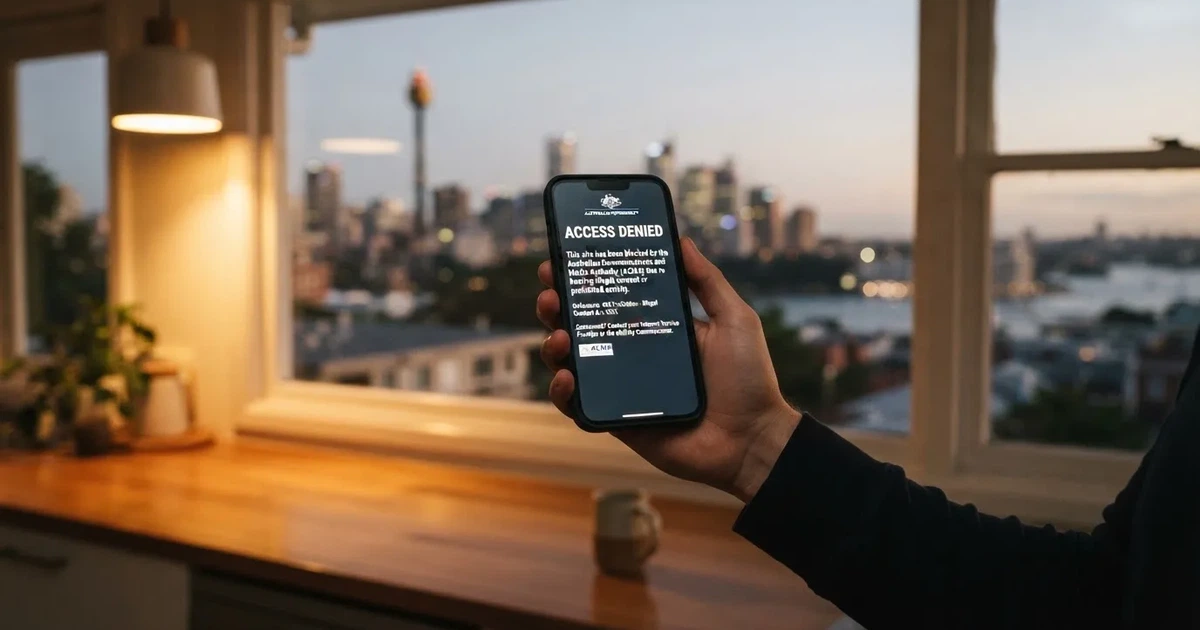
No online casino is licensed to operate in Australia in 2026. The Interactive Gambling Act 2001 prohibits online casino games and online pokies for anyone physically in the country, and no state or territory issues the licence a “licensed Aussie casino” would imply. Anything marketed under that label is an offshore site operating outside Australian law, and the Australian Communications and Media Authority has spent the last several years issuing formal warnings and ordering internet service providers to block them.

That is the working material of this page. The ranking below is not a recommendation — the audit clause stands: there is no locally licensed product to rank, and the brands named here are not places to sign up. They are listed because the ACMA itself warned against each of them. The angle this page takes is cost: what the offshore route actually costs the player, in money, in recourse and in protections that simply do not exist once the site sits outside Australian jurisdiction.
Data current as of 23 September 2026 and cross-checked against the ACMA’s published formal warnings register.
Table of Contents
- Responsible gambling: the protections offshore sites do not give you
- Payments and payout speed: how money actually moves in and out
- Bonuses and free spins: what the marketing word actually buys
- Mobile and apps: what “mobile casino” actually means offshore
- New casinos: “new” is a marketing word, not a licence
- The 11 offshore brands the ACMA has acted against
- The fundamentals: what offshore casino play actually costs an Australian
- Legality and regulation: how the Australian perimeter is drawn
- The verdict on each of the eleven
- What an Australian player actually has
- Frequently asked questions about Aussie online casinos
Responsible gambling: the protections offshore sites do not give you
Free, confidential help runs around the clock through Gambling Help Online, with chat and callback options alongside the National Gambling Helpline on 1800 858 858. BetStop, the National Self-Exclusion Register, has been live since August 2023 and binds every Australian-licensed online and phone wagering service to honour an exclusion. An offshore casino is not connected to it: a self-exclusion lodged with BetStop will not stop an offshore site from accepting a deposit, and offshore operators are under no obligation to advertise or respect it. That gap is the cost most punters do not price in.

The same asymmetry runs through complaints. A licensed Australian wagering service answers to an Australian regulator and operates inside Australian consumer law; an offshore operator answers to whichever jurisdiction issued its displayed licence — Curaçao, Anjouan, the Philippines — none of which an Australian resident can realistically access for a payout dispute. When a withdrawal is refused or a balance disappears, the practical answer is the local police report, and that is where the matter ends.
Major Australian banks have built their own blocks against this flow. Westpac’s gambling block operates at card level and refuses authorisation on transactions tagged with the betting and casino merchant category code. ANZ’s equivalent runs from inside the app and extends to digital-wallet payments through Apple Pay on the linked card, with a 48-hour cooling-off period before the block can be removed once set. Commonwealth Bank’s gambling lock works through the CommBank app and automatically blocks most gambling transactions, with the same caveat the others carry: not every gambling merchant is tagged correctly, and some legitimate transactions get blocked in error. All three banks state plainly that the block is a guardrail, not a guarantee.
The point worth sitting with: even with bank-level blocks in place, an Australian wanting to reach an offshore casino can usually find a route. The block does the work of friction, not enforcement. A punter who finds themselves working around their own bank’s block is the population the National Gambling Helpline is staffed for.
Payments and payout speed: how money actually moves in and out
For an Australian player, the question of how a casino handles deposits and withdrawals is partly academic, because none of the deposit routes used by licensed Australian wagering apply cleanly to an offshore casino. The banking system still has to function, however, and a few mechanics are worth understanding for what they reveal about the offshore route.
PayID sits on Australia’s New Payments Platform, which went live in February 2018 and now carries more than 25 million registered identifiers across over a hundred Australian financial institutions. With Osko, a transfer addressed to a PayID arrives in under a minute, twenty-four hours a day, including weekends — faster than any credit-card authorisation. Paying to a PayID shows the name on the receiving account before the transfer is sent, and Australian Payments Plus is blunt about the corollary: if a gambling site asks an Australian to transfer money to a PayID, the site is almost certainly illegal, because no licensed Australian wagering or lottery operator receives money that way. From the other direction, an offshore casino asking for a PayID deposit is telling you, by its own payment page, that it is not licensed in Australia.
BPAY runs through Australian Payments Plus alongside PayID and Osko, has been live since November 1997 and is offered through the online banking of more than 140 Australian institutions. The familiar bill-payment mechanics — Biller Code, Customer Reference Number — apply. As with PayID, no legitimate Australian wagering operator processes deposits through BPAY to a casino; BPAY is for registered Australian billers, not for offshore sites.
The credit-card ban is the rule most directly aimed at the offshore flow. Under the Interactive Gambling Act 2001 as amended in 2023, Australian-licensed online wagering services cannot accept payment by credit card or other credit-related products, a restriction that also constrains gambling use of linked digital wallets like Apple Pay. Penalties for licensed operators who breach it reach A$247,500. An offshore site asking for a credit card or a crypto deposit is operating outside those rules entirely, and it is the player’s only signal that the operator has decided the Australian regulatory perimeter does not apply to it.
For a payout, an offshore casino will most often route a withdrawal back to the same method used for deposit — Visa or Mastercard where credit was accepted, a bank transfer, occasionally a crypto wallet. Where the operator refuses a withdrawal, the dispute mechanism sits in the licence jurisdiction, not in Australia. That is the structural cost of the offshore route: same-day deposits, weeks-long payouts, and no Australian complaint body to escalate to if the money does not arrive.
Bonuses and free spins: what the marketing word actually buys
A welcome bonus, in the language the marketing uses, sounds like free money. The mechanics that turn it back into ordinary marketing spend are short enough to lay out, and they are the same on every offshore site that displays one. A deposit-match bonus credits a percentage of the player’s deposit as bonus funds, with a wagering multiple — typically thirty to fifty times the bonus — attached before any of it can be withdrawn. Free spins attach a similar multiple to the spin value. Maximum-cashout caps, game-restriction lists, and expiry windows add the rest. None of this is unique to one operator; it is the standard structure of the offshore welcome offer.
The figure that matters is the wagering multiple, because it is the multiplier applied to the bonus before a withdrawal unlocks. A A$500 bonus with a 40x requirement means A$20,000 must be wagered through eligible games before the bonus balance converts to withdrawable cash. At an average slot house edge of around four per cent, that volume of wagering returns, on average, A$800 of that A$20,000 back to the house before the bonus is even considered cleared. The marketing word and the arithmetic disagree by a factor most players do not price in.
For an Australian player specifically, the calculus has a second layer. Because no offshore casino is licensed in Australia, the wagering requirement is also the only protection the player has against the operator refusing a payout. The bonus terms are not policed by an Australian regulator; they are policed by the operator, in whatever jurisdiction its licence sits, after the player has done the wagering. Reading the terms carefully is the difference between a frustrating withdrawal and an impossible one.
Mobile and apps: what “mobile casino” actually means offshore
A “mobile Aussie casino” is a responsive website or a downloadable app produced by an offshore operator and reachable from a phone. There is no Australian app store listing for a casino licensed in Australia, because no such licence exists. Apps that market themselves as Australian mobile casinos are produced by offshore operators, distributed through the operator’s site or through arrangements outside the Google Play and Apple App Store terms of service that govern Australian users. A punter who installs one has stepped outside the protections the phone’s app ecosystem would otherwise offer, including the platform’s complaint and refund mechanisms.
The mechanics are otherwise ordinary. A mobile casino mirrors the desktop product: a HTML5 client that loads in the mobile browser, an interface tuned to touch, the same wallet and the same game catalogue. Payment processing routes through the mobile browser’s payment sheet or through the operator’s own cashier. Geolocation is loosely applied — an Australian IP will not, on its own, produce an Australian-licensed product, because the licence does not exist for offshore operators to hold.
For a player thinking about installing an app offered by an offshore casino, the only useful question is what protections are forfeited when the install happens. The platform’s complaint mechanism is one. The phone’s permission model — which would normally flag what data an app can read — is another. A mobile browser session has neither of those vulnerabilities, and is the closer approximation to a controlled environment.
New casinos: “new” is a marketing word, not a licence
A “new Aussie casino” in 2026 is not a freshly licensed Australian operator. The licence does not exist for the regulator to issue. A new casino is an offshore site launched in the last twelve to twenty-four months, usually under a Curaçao or Anjouan licence, marketed with a launch bonus and a fresh look, and sitting from day one outside the Interactive Gambling Act. The newness is a marketing angle, not a regulatory event.
A few mechanics are worth flagging. A new operator has no track record with the Australian complaints the older offshore sites have accumulated. Withdrawal patterns are unproven. The licence jurisdiction is the only recourse a player has, and the licence is usually brand new too — issued to an entity whose only history is the casino itself. A player evaluating a new casino is, in practice, evaluating the licensing entity’s willingness to police itself, with very little evidence on either side.
The Australian regulator’s view is unambiguous: the regulator does not differentiate between new and established offshore casinos, because it does not license either. A formal warning is just as likely to be issued to a site launched six months ago as to one running for six years. The seven offshore operators named in this page’s main comparison table include sites the ACMA has warned about as recently as March and April 2026, and others first warned about in 2022 and 2025. Newness is not a protection.
The 11 offshore brands the ACMA has acted against
What follows is not a ranking. It is a list of offshore brands the ACMA itself has issued formal warnings about, in the order the research register records them. Each entry names the operator, the date of the warning, and what an Australian punter actually faces when reaching the site.
| Brand | ACMA action and date | Operator named by the ACMA | Subject support |
|---|---|---|---|
| RocketPlay | Formal warning March 2026 | Pulsup Ltd (RocketPlay) | listings-only |
| Level Up Casino | Formal warning May 2022 | Dama N.V. | listings-only |
| Woo Casino | Formal warning March 2025 | Dama N.V. | no-data |
| Spirit Casino | Formal warning May 2025 | Dama N.V. | no-data |
| National Casino | Formal warning July 2025 | Consolutetish S.R.L. | listings-only |
| Bizzo Casino | Formal warning July 2025; earlier 2022 | Consolutetish S.R.L. (2025); TechSolutions (2022) | listings-only |
| Ignition Casino | Formal warning July 2025 | Bamboo Media | no-data |
| Instant Casino | Formal warning February 2025 | EOD Code SRL | listings-only |
| Jackbit | Formal warning April 2026 | Ryker B.V. | no-data |
| Casino Intense | Formal warning April 2025 | Sterplay Holding Ltd | listings-only |
| Sky Crown | Formal warning (2022 register) | Hollycorn N.V. | no-data |
The table is descriptive, not comparative: every row records the same regulatory fact, and what changes between them is the operator name on the ACMA’s register and the date each warning was issued. The figures that would let a row be ranked — payout times, bonus terms, RTP figures by title — are not in the public record for any of these brands, because the operators have not made them verifiable. Affiliate listings that publish such numbers do so on their own bottom line, not on audit.
What the table does show is the spread of operators the ACMA has had to chase. Dama N.V. appears three times across the register, on three separate dates, under three brand names. Consolutetish S.R.L. takes two of the 2025 warnings. The pattern is the structural cost of the offshore model: an operator’s licence and corporate identity sit in one jurisdiction, while its brands can be re-marketed, re-launched and re-warned without the underlying licence moving.
How the ACMA’s blocking rate has built up
Since the first blocking request in November 2019, the ACMA has asked Australian internet service providers to block a running total of 1,751 illegal gambling and affiliate marketing websites as of June 2026 — a figure that includes the twelve sites ordered blocked in the round reported on 26 June 2026: 7Signs, ChromaBet, Donbet, Duospin, Freshbet, Slots Gem, Jacks Club, Lucky Start, Pointsbetz, Spinrise, Vinyl Casino and Wildsino. Across the same period, more than 230 unlicensed gambling services have left the Australian market since enforcement was strengthened in 2017.
The rate works out to roughly 250 to 280 sites blocked per year on average over the seven years since November 2019, accelerating in the most recent reporting rounds. The ACMA’s blocking activity is not a one-off sweep but a continuous pipeline, with new sites ordered blocked in every reporting round of 2026 and the most recent sitting in June. From the player’s side, the implication is that the list of unreachable sites is always a snapshot, not a permanent wall — the offshore supply refreshes faster than the blocking list does.
H2 Gambling Capital’s 2025 estimate puts Australian losses to illegal gambling sites at around A$3.9 billion a year, with the share of gambling going through legal channels falling from 74 per cent in 2021 to 64 per cent in 2025. The blocked-site total and the loss figure describe the same phenomenon from two angles: enforcement catches the supply, but demand is the variable the regulator cannot reach.
The fundamentals: what offshore casino play actually costs an Australian
The arithmetic below is descriptive, not predictive: it shows what an offshore bonus actually requires of a player at standard wagering multiples, so the cost of clearing it can be set against the headline number the marketing uses.

A typical welcome bonus for an Australian-facing offshore casino might offer a A$500 deposit match with a 40x wagering requirement. To clear the bonus, the player must wager A$500 × 40 = A$20,000 through eligible games. At an average slot wager of A$1 per spin, that is 20,000 individual spins. At an average spin length of around five seconds, that is 100,000 seconds of play, or roughly 27.8 hours of continuous slot play to clear the bonus alone.
The expected cost of that volume, at an average slot return-to-player of 96 per cent, is A$20,000 × (1 − 0.96) = A$800. That is the house’s expected take from the wagering volume required to convert the A$500 bonus into withdrawable cash. The bonus arrives looking like a A$500 credit; the wagering converts it into roughly A$500 of expected value against A$800 of expected house take, and the player pays the difference.
What that arithmetic makes visible is the gap between the marketing number and the actual cost. The headline says A$500 in bonus funds. The mathematics of the wagering requirement says the player must put A$20,000 through eligible games to access them. The expected house take from that volume is larger than the bonus itself. For an Australian player using an offshore site, the wagering requirement also doubles as the only structural protection against a refused payout, because the Australian regulator cannot enforce the operator’s terms.
A few corollaries follow. First, a maximum-cashout cap — typical on free-spins offers at around A$100 — converts a “win” into a fixed sum regardless of how the spins land, and the cap is policed by the operator alone. Second, game-restriction lists exclude the higher-RTP table games from wagering calculation, which forces the wagering volume through the lower-RTP slots and lifts the house’s expected take on the same turnover. Third, expiry windows — typically seven to thirty days from bonus credit — turn the wagering requirement into a time pressure that the player, not the operator, has to absorb.
The marketing word for these mechanics is “bonus”. The arithmetic for them is “house edge on the wagering volume, with the operator holding the only enforcement lever”. They are not the same thing.
Legality and regulation: how the Australian perimeter is drawn
The Interactive Gambling Act 2001, strengthened by the Interactive Gambling Amendment Act 2017, makes it an offence to provide online casino games, online pokies or in-play betting to a person in Australia. No state or territory issues a licence for online casino play. The licensable activities are wagering on races and sporting events placed before the event, lotteries and keno — in practice licensed by the Northern Territory Racing and Wagering Commission, which regulates 52 of Australia’s online bookmakers including Sportsbet, Bet365 and Ladbrokes, and which has no full-time staff of its own, meeting once a month in Darwin.
The 2026 reform context is the Interactive Gambling Amendment (Gambling Reform) Bill 2026, which passed Parliament on 19 August 2026 and whose advertising and inducement measures commence on 1 January 2027. The law exists, with a start date that has not yet arrived on a 2026 page. From a player’s perspective the practical perimeter has not moved yet: the prohibited services remain prohibited, and the offshore supply has not been granted a transitional window.
Enforcement rests with the ACMA. The regulator investigates complaints, issues formal warnings to operators, and directs Australian internet service providers to block specific sites. The individual player is not prosecuted; the IGA targets the provider. What that means in practice is that an Australian who plays at an offshore casino is not breaking the law, but is also without the consumer protection a licensed Australian wagering service would offer — no Australian regulator to escalate a complaint to, no Australian consumer law to fall back on, and no guarantee that a balance on a blocked site will be returned.
The payment rules are the cleanest tell. Since 11 June 2024, licensed Australian online wagering services cannot accept payment by credit card or credit-related product, or by digital currency. Legal deposit routes for licensed wagering are debit card, bank transfer, PayID and Osko, and BPAY. A site asking an Australian player for a credit-card deposit or a crypto payment is telling you, by its own deposit page, that it is not operating inside the Australian regulatory perimeter. The licensed wagering market has already lost the credit-card flow; the offshore casino market is where it goes.
The offshore no-local-protection caveat, stated once
An offshore casino, by definition, gives no Australian consumer protection. There is no Australian regulator to escalate a complaint to; no Australian consumer law applies; no Australian dispute resolution body will hear a payout refusal. If a withdrawal is held, the player’s recourse is the licence jurisdiction’s own regulator — Curaçao, Anjouan, or whichever entity issued the displayed licence — and Australian residents have no practical route to that body. When a blocked site still holds a player balance, the money is typically unrecoverable.
That is the structural cost of the offshore route, and the reason every other section of this page comes back to it. The bonuses are bigger because the protections are smaller. The payout times are shorter at deposit and longer at withdrawal because the operator is unregulated. The “best” of an offshore comparison is the best of a category whose floor is the absence of the protections a reader is comparing it to.
The verdict on each of the eleven
Each entry below covers one of the eleven offshore brands the ACMA has acted against. They are not endorsements. They are descriptions of what the warning register records and what an Australian punter actually faces.
RocketPlay. The ACMA issued a formal warning to Pulsup Ltd over RocketPlay in March 2026 — the most recent of the eleven, and a reminder that the regulator is still naming new sites this year. The brand sits inside the Dama N.V. cluster by virtue of an earlier 2022 warning to the same operator under a different name. From a player’s perspective, RocketPlay illustrates the churn problem: a brand can be re-marketed, re-launched and re-warned without the underlying operator changing. The structural problem is not the brand; it is the operator’s habit of producing new ones.
Level Up Casino. Dama N.V., May 2022. One of the older warnings on the register, and one of three Dama N.V. brands the ACMA has chased across 2022 and 2025. The brand’s listings presence in Australia-facing directories is the only signal of an active marketing footprint; the regulator’s warning is the only signal of an enforcement one.
Woo Casino. Dama N.V., March 2025. Second Dama N.V. brand on the list, fourteen months after the 2022 warning cluster. The verification status is sparse enough that no individual marketing claim about Woo Casino can be checked against the ACMA register — the only verifiable fact is the warning itself.
Spirit Casino. Dama N.V., May 2025. Third Dama N.V. brand, two months after Woo Casino, completing a pattern rather than constituting an outlier. The cluster of three Dama N.V. brands across 2022 and 2025 is the strongest single-operator pattern in the ACMA’s recent warnings.
National Casino. Consolutetish S.R.L., July 2025. The ACMA issued its formal warning over National Casino and Bizzo Casino in the same round, naming the same operator for two brands at once. National Casino’s listings footprint in Australian-facing directories is the largest of any of the eleven, which is the kind of fact that does not narrow the choice but does describe its scale.
Bizzo Casino. Consolutetish S.R.L., July 2025, with an earlier 2022 warning to TechSolutions (CY) Group Limited and TechSolutions Group N.V. Two operators across two different years, with the brand surviving the operator change. That is the offshore model in one line.
Ignition Casino. Bamboo Media, July 2025. The brand is otherwise a thin presence in the Australian-facing register, but the warning itself is in the ACMA’s published list, and that is what the comparison turns on.
Instant Casino. EOD Code SRL, February 2025. The earliest of the 2025 warnings on the register. The brand’s listings footprint includes payment-method pages that an Australian player might recognise, which is the kind of recognition that does no work in an enforcement sense.
Jackbit. Ryker B.V., April 2026. The most recent of the 2026 warnings and a reminder that the ACMA’s pipeline is still active in the current year. The brand sits with no listings presence in the Australian-facing register that the research turned up.
Casino Intense. Sterplay Holding Ltd, April 2025. One of the older 2025 warnings and one with the broadest listings footprint in the register. A player reaching Casino Intense has the most independent signposts to weigh — and none of those signposts changes the ACMA warning.
Sky Crown. Hollycorn N.V., with the formal warning recorded in the ACMA’s September 2022 register. The oldest warning in the table and the only one where the warning document itself is dated rather than the page that publishes it. The brand has survived across the intervening years without a further ACMA action — which is not a clearance, because the ACMA does not issue clearances, only warnings and blocks.
What an Australian player actually has
For an Australian player who wants a casino-style experience inside Australian law, the legal offering is narrow by design. Licensed Australian wagering services offer sports and racing betting before the event, lotteries and keno. They do not offer online casino games, online pokies or in-play betting. A “casino night” inside Australian law is a physical venue — a casino in a state or territory that licenses them, with the gaming floor in person.
The minimum age for any legal gambling activity in Australia is 18. Gambling winnings of a recreational player are not assessable income under section 6-5 of the ITAA 1997, and losses are not deductible, unless the person is carrying on a business of gambling. Responsible gambling help is free through Gambling Help Online and the National Gambling Helpline on 1800 858 858, twenty-four hours a day.
BetStop, the National Self-Exclusion Register, has been live since August 2023. It binds Australian-licensed online and phone wagering services to honour an exclusion, and it sits alongside the bank-level gambling blocks offered by Westpac, ANZ and Commonwealth Bank. None of these protections reach an offshore casino.
Frequently asked questions about Aussie online casinos
Is there a licensed online casino based in Australia that Australians can legally join?
No. The Interactive Gambling Act 2001 prohibits online casino games and online pokies from being offered to anyone in Australia, and no state or territory issues a licence for them. Any site calling itself an Australian online casino is an offshore operator running outside Australian law, regardless of how Australian the branding looks. The licensable activities inside Australia are wagering on sport and racing before the event, lotteries and keno — products that share some mechanics with casino play but are not the same offering.
What does “best” mean when every option being compared is an offshore, unlicensed site?
It can mean only the least-bad of a category whose floor is the absence of Australian consumer protection. The variables that distinguish one offshore casino from another — payout times, bonus terms, game catalogue — sit inside an enforcement perimeter the player cannot reach. A real-money complaint about a refused withdrawal has no Australian body to escalate to, and the licence jurisdiction is the only available recourse. The honest comparison is the comparison that names that floor, rather than pretending the offshore options can be ranked as if they were licensed Australian products.
How does the ACMA decide which offshore casino sites to warn about or block?
The ACMA investigates complaints, identifies services that appear to be offering prohibited interactive gambling services to Australians, and either issues a formal warning to the operator or requests that Australian internet service providers block the site at the network level. As of June 2026, the ACMA has asked ISPs to block 1,751 illegal gambling and affiliate marketing websites since the first blocking request in November 2019, and has issued formal warnings to over 220 operators. The pipeline is continuous — twelve new sites were ordered blocked in the round reported on 26 June 2026 alone.
Can an offshore casino site legally register an Australian-style web address and call itself Aussie?
The domain registration and the marketing language are not policed by the ACMA in the way the offering of prohibited services is. An offshore operator can register a .com.au style address if the registry rules allow, and can call itself Aussie in its branding, without that having any bearing on whether the offering is legal under the Interactive Gambling Act. The legal test is what the site offers to Australians, not what it calls itself. A site offering online casino games to a person in Australia is offering a prohibited interactive gambling service regardless of how Australian the domain looks.
What legal, licensed alternative exists for someone wanting a casino night in Australia?
A casino night inside Australian law means a licensed physical venue. Every Australian state and territory that licenses casinos has at least one, with Crown Melbourne, The Star Sydney, The Star Gold Coast, Crown Perth, SkyCity Adelaide and the Country Club Tasmania among the larger operations. These are the only places to play casino games under Australian licence. For the online wagering market, the legal products are sports and racing bets placed before the event, lotteries and keno — all licensed in Australia and policed by the ACMA and the state and territory regulators.
Published by the Instant bank transfer casino Australia team.