
International casinos for Australian players: the legal shape of the search
 Available in US
Data current as of 23 September 2026 and checked against the Australian Communications and Media Authority register of blocking actions and formal warnings.
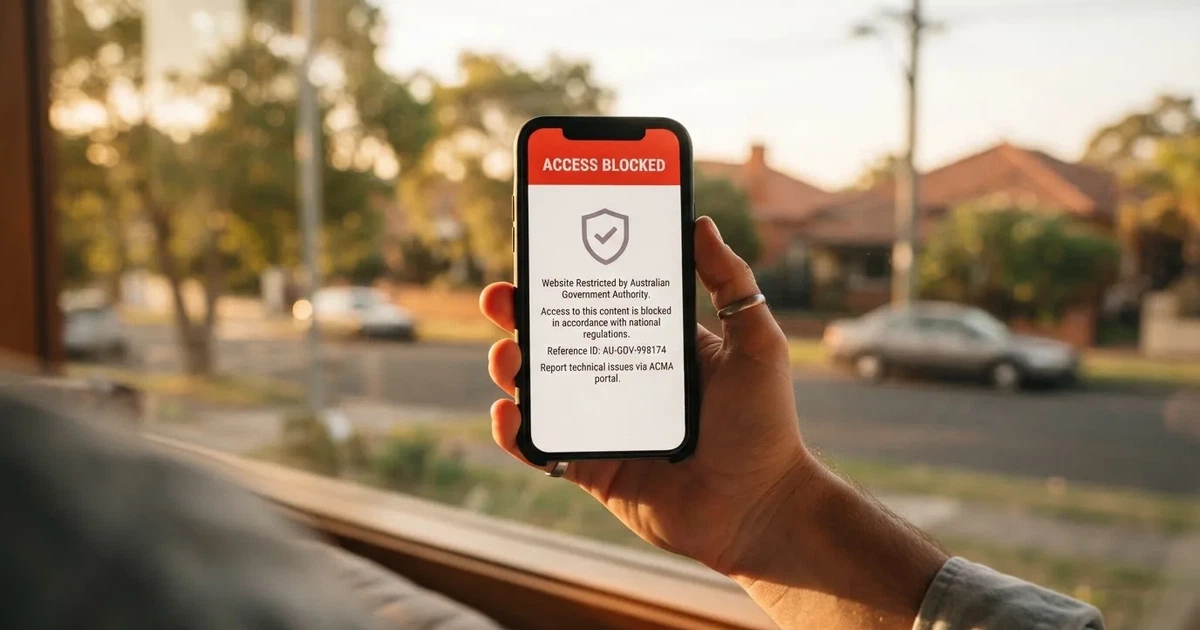
The phrase “international casinos for Australian players” sounds like a shopping question. It is not. Under the Interactive Gambling Act 2001, offering online casino games — pokies, roulette, blackjack, baccarat, live dealer tables — to anyone physically in Australia is a criminal offence that the ACMA enforces against the provider, not the punter. No state or territory issues a licence for it, and the offshore brands that accept Australian traffic are doing so in deliberate breach of Australian law. This page sets out the gap between the search and the law, walks through the regulator’s enforcement record, names eleven offshore operators the ACMA has acted against, and points to what is actually lawful for someone sitting in Australia: licensed wagering, land-based casinos and pokies venues, and the National Self-Exclusion Register.
Table of Contents
- What the law actually says
- How the ACMA enforces it
- The pattern in the warnings
- Responsible play: what genuinely works from Australia
- Landscape
- What the operator pages on those brands typically look like
- A walk through eleven warnings
- What a reader in Australia can lawfully do
- What offshore sites cannot do for an Australian player
- Frequently asked questions
What the law actually says
The Interactive Gambling Act 2001 was tightened in 2017 to make the position explicit. A “prohibited interactive gambling service” — the technical phrase the statute uses — covers any online casino game, online pokie, or in-play sports bet offered to a person in Australia. The criminal liability sits with the operator, which is why the ACMA chases providers and ISPs rather than individual players. What is left as a lawful product is wagering on racing and sporting events placed before the event starts, lotteries and keno. In practice the racing and sports bookmakers you see advertising in Australia — Sportsbet, Bet365, Ladbrokes and the rest — are licensed in the Northern Territory, where the Northern Territory Racing and Wagering Commission regulates fifty-two of them despite running without any full-time staff and meeting once a month in Darwin.

A few consequences follow from that carve-out, and they shape every payment and promotion decision a licensed operator makes. Credit cards and credit-related products were banned as a payment method for licensed online wagering from 11 June 2024, with penalties of up to A$247,500 for operators that breach the rule. Digital currency is in the same bracket. The lawful deposit rails for an Australian-licensed bookmaker are debit cards, direct bank transfer, PayID or Osko instant transfers, and BPAY. An offshore casino asking an Australian for a credit card or a Bitcoin deposit is, on that fact alone, operating outside the Australian regime, and the consumer protections that come with a local licence do not travel with the transaction.
The same logic applies to advertising. The Interactive Gambling Amendment (Gambling Reform) Bill 2026 passed Parliament on 19 August 2026 and tightens the rules around inducements and advertising; those measures commence on 1 January 2027, so they are law with a future start date rather than current rules on this page. The headline consequence for an offshore operator is that any inducement to open an account from Australia, whether a bonus, free spins, or a cashback offer, sits inside the prohibition already in force.
How the ACMA enforces it
The ACMA has three working tools: formal warnings to named operators, blocking requests to Australian internet service providers, and the standing record that comes from publishing both. The blocking regime began with the first request in November 2019 and has run steadily since. By June 2026 the ACMA had asked ISPs to block 1,751 illegal gambling and affiliate marketing websites, and more than 230 unlicensed gambling services had withdrawn from the Australian market since enforcement was strengthened in 2017. The June 2026 round alone added twelve sites: 7Signs, ChromaBet, Donbet, Duospin, Freshbet, Slots Gem, Jacks Club, Lucky Start, Pointsbetz, Spinrise, Vinyl Casino and Wildsino. A block is not a soft signal — once an ISP receives a request, the domain stops resolving for Australian connections, and any balance a player had on the site becomes effectively unreachable.
Formal warnings are the slower, more public side of the same enforcement. They name the operator behind a brand, the brand itself, and the date the warning was issued, and they stay on the ACMA’s register. A warning is a precondition to civil penalty proceedings, so a brand that has received one and continues to accept Australian traffic is choosing to escalate its own exposure. The eleven brands reviewed further down this page are exactly the brands the ACMA has warned — they are not a shortlist of options, they are a record of what the regulator has acted against.
H2 Gambling Capital’s 2025 estimates put the annual flow of Australian losses to illegal gambling sites at around A$3.9 billion, and the share of gambling going through legal channels has dropped from 74% in 2021 to 64%. The market is moving the wrong way, and the gap is filled by brands the ACMA is actively warning and blocking.
The pattern in the warnings
The formal-warning record has a shape worth naming. Many of the same operators reappear under different brand names, which is how an enforcement regime has to track a sector that runs on shell companies and fresh front-ends. Dama N.V. is the most-cited operator on the register. The ACMA warned Dama N.V. in May 2022 covering six brands — Bambet, Dazard, Level Up, Rocketplay, Wild Tornado and Cobra Casinos — and then issued further formal warnings over Woo Casino in March 2025 and Spirit Casino in May 2025, with two of those brands appearing in this page’s reviewed set. A warning over a Dama brand does not transfer to other Dama brands under the statute, but the recurrence is the kind of pattern a reader weighing any one of them should know about before depositing.
A second pattern sits behind the operator names: the licence the offshore site displays is invariably a Curaçao or Anjouan licence, neither of which carries weight for an Australian player. The site will show a logo at the bottom of the page; the licence number it points to is a permission to operate in the country that issued it, and an Australian punter sitting outside that regime has no Australian complaints body, no Australian ombudsman, and no enforceable right to a withdrawal. A licence elsewhere is not a licence here, and the ACMA’s position is unambiguous about that.
The third pattern is the operating-company churn. Hollycorn N.V., TechSolutions Group, EOD Code SRL, Bamboo Media, Consolutetish S.R.L., Sterplay Holding Ltd, Ryker B.V., Pulsup Ltd — the parade of company names is the shape offshore casino groups take to outrun enforcement. A warning over Consolutetish S.R.L. in July 2025 covered National Casino and Bizzo Casino, and Bizzo had already been the subject of a 2022 warning to TechSolutions Group, which is two distinct legal entities over a single brand in three years.
Responsible play: what genuinely works from Australia
The offshore operator’s own responsible-gambling page is not the safeguard it looks like. The deposit limits, time-outs and self-exclusion it advertises are policed by the operator, on the operator’s terms, against an account the operator can close. None of it is binding in Australia. The Australian-registered alternative is BetStop, the National Self-Exclusion Register, which has been live since August 2023. BetStop is run by the ACMA and binds every Australian-licensed online and phone wagering service, which is to say every licensed bookmaker in the country. An offshore casino is not connected to BetStop, which is why a BetStop registration closes off licensed wagering but does nothing about an account on an offshore site. Anyone registering on BetStop and reading this page from Australia has reached the limit of what the Australian regime offers as a self-exclusion tool — and that limit is precisely why offshore sites sit in a regulatory void.
Two further pieces of Australian infrastructure are worth knowing by name. The National Gambling Helpline on 1800 858 858 is free and runs 24/7, and Gambling Help Online extends that service to web chat and email. Both are confidential and both are funded to deal with the specific problem a person sitting in Australia has when an offshore casino holds a balance it will not release: they cannot make the operator pay, but they can work with the bank to stop further deposits and, in some cases, initiate a chargeback through the card issuer.
Bank-level gambling blocks are an Australian-specific line of defence that an offshore site cannot route around, because the block sits on the card or the account, not on the merchant. Westpac’s gambling block refuses authorisation of any transaction registered under the merchant category code “Betting/Casino Gambling” on eligible personal credit and debit cards. ANZ’s gambling block, set up inside the ANZ app, extends to gambling transactions routed through Apple Pay or Google Pay on an eligible card. Commonwealth Bank offers a gambling lock via the CommBank app on eligible cards. Each bank publishes the same caveat: it cannot guarantee every gambling transaction is blocked, and a small number of non-gambling transactions may be blocked in error. The bank block is the closest thing to a hard perimeter between an Australian bank account and an offshore casino, and it is the option that does not depend on the offshore operator behaving well.
Two further payment-side facts shape what an offshore site can ask for, and both sit in Australian infrastructure rather than the casino’s. Apple Pay, Google Pay and Samsung Pay together accounted for around 45% of all card payments in Australia by number at the end of 2025, which means a person trying to stop gambling through wallet-level controls is trying to stop a substantial share of the card network at the same time. The Reserve Bank of Australia’s July 2025 review proposes removing surcharges on eftpos, Mastercard and Visa transactions and explicitly leaves American Express outside the proposed ban, so the surcharge picture on Amex is unchanged.
Landscape
The brands below are not a ranking and not a recommendation. They are the offshore casino brands the ACMA has named in formal warnings for offering prohibited interactive gambling services to Australians. Each has been treated on the same footing under the IGA: the warning is on the public record, the licence the site displays is not an Australian one, and an Australian player using the site has no local consumer protection. Where the same operator appears under multiple brands, the pattern is noted rather than the brand treated as independent. The column headings that follow are: the brand name as it appears on the ACMA register; the date and operator named in the formal warning; the operator behind the warning as the ACMA recorded it; and any subject the page itself attaches, used only where the research lists the source for it.
| Brand | ACMA action and date | Operator named by the ACMA | Subject support |
|---|---|---|---|
| RocketPlay | March 2026 | Pulsup Ltd (RocketPlay); earlier Dama N.V., May 2022 | listings-only (Gambling Insider) |
| Level Up Casino | May 2022 | Dama N.V. | listings-only (Westpac) |
| Woo Casino | March 2025 | Dama N.V. | — |
| Spirit Casino | May 2025 | Dama N.V. | — |
| National Casino | July 2025 | Consolutetish S.R.L. | listings-only (acma.gov.au, austrac.gov.au, betstop.gov.au) |
| Bizzo Casino | July 2025 | Consolutetish S.R.L.; earlier TechSolutions, 2022 | listings-only (Gambling Insider) |
| Ignition Casino | July 2025 | Bamboo Media | — |
| Instant Casino | February 2025 | EOD Code SRL | listings-only (ecoPayz, PayID) |
| Jackbit | April 2026 | Ryker B.V. | — |
| Casino Intense | April 2025 | Sterplay Holding Ltd | listings-only (austrac.gov.au, betstop.gov.au, Gambling Insider) |
| Sky Crown | — | Hollycorn N.V. (formal warning publication, September 2022) | — |
Lawful Payment Methods
| Method | Type | Availability |
|---|---|---|
| Debit card | Card | Licensed wagering |
| Bank transfer | Electronic | Licensed wagering |
| PayID | Instant | Licensed wagering |
| Osko | Instant | Licensed wagering |
| BPAY | Bill payment | Licensed wagering |
Three points the table carries on its own. First, the dates cluster on either side of the 2024 credit-card ban and the 2026 reform bill, with five warnings in 2025 alone, which is the busiest year on the record. Second, Dama N.V. accounts for four of the eleven — Woo, Spirit, Level Up and RocketPlay’s earlier warning — and the ACMA is not the only regulator to have acted against the operator. Third, three of the eleven brands carry no subject support at all: Woo, Spirit, Ignition, Jackbit and Sky Crown. The page cannot connect them to any independent subject reference, which is itself information for a reader.
The blocking rate is the headline number this page can produce from the public record. The first blocking request went out in November 2019; by June 2026 the cumulative total on the ACMA’s register is 1,751 blocked illegal gambling and affiliate marketing websites. That is roughly 1,751 sites over seventy-nine months, or close to twenty-two blocked domains a month averaged across the whole window, with the rate visibly accelerating through 2025 and into 2026 as the June round alone added twelve more. The honest way to state this is as a band, because the monthly run rate is uneven and the ACMA publishes the cumulative count rather than a monthly series. The low end of the band sits around twenty per month across the full window; the high end sits closer to thirty when the most recent twelve months are taken on their own. The single site that just had its domain blocked joins a queue that grows every quarter, and the position any new brand occupies in that queue is decided by the ACMA’s enforcement priorities rather than by anything the brand itself can do.
What the operator pages on those brands typically look like
The eleven brands above share enough structural features that the shape of their pitch is worth sketching once. The home page leads with a welcome package, framed as a matched deposit and a tranche of free spins. Behind that headline figure sits a wagering requirement, which is the multiplier the bonus must be turned over before any of it can be withdrawn; thirty-five to fifty times the bonus amount is the typical range on the marketing pages that promote these brands. The games library is built around online pokies with a handful of live dealer tables, the licence logo at the bottom of the page is Curaçao or Anjouan, and the responsible-gambling link in the footer leads to a page hosted by the same operator. None of that architecture is unlawful in itself; the breach is in offering the product to a person in Australia at all.
A player trying to deposit from Australia on one of these sites will be steered towards methods the ACMA’s payment rules do not cover. Cryptocurrency is the most-pushed option, with USDT, Bitcoin and Ethereum all common on the cashier page. E-wallets like ecoPayz and Neteller are the second rail, and bank transfer or card deposit is offered where the card is a debit card or where the merchant category code has not yet been blocked by the bank. Apple Pay and Google Pay do not appear on these cashier pages because the merchant category code flagging sits on the card, not on the wallet, and the wallet inherits the block. The PayID-based instant payment system that runs through the New Payments Platform does not appear either, because a PayID transfer shows the account name before the money is sent, and an Australian Payments Plus warning makes the point directly: being asked to transfer money to a PayID on an illegal gambling site almost certainly means a scam site.
What the operator pages do not contain is the most useful thing to read there. The withdrawal terms usually cap daily or weekly cashouts at a figure that will surprise a player used to a licensed Australian bookmaker, and the maximum cashout from a bonus is often a multiple of the deposit rather than of the winnings. None of those terms is on the ACMA’s register, because the ACMA’s interest is the offer to Australians, not the small print behind it. The register is the only thing that publishes the operator’s name beside the brand, and the register has the eleven rows above.
A walk through eleven warnings
RocketPlay — Dama and Pulsup, March 2026
RocketPlay is the most recently warned of the eleven. The ACMA issued a formal warning to Pulsup Ltd in March 2026 over RocketPlay, and the operator had already appeared on the register in May 2022 as part of the Dama N.V. warning that covered six brands at once. A reader weighing RocketPlay is weighing a brand the regulator has warned twice, under two distinct operating companies, in four years. The site’s licence is not Australian, the marketing is the standard offshore package, and the operator behind it has the busiest record on the ACMA’s list. The pattern here is the pattern on the table: a brand moves between operating companies because the original company was warned, and the warning follows the brand.
Level Up Casino — Dama, May 2022
Level Up was one of six brands caught in the May 2022 warning to Dama N.V., alongside Bambet, Dazard, Rocketplay, Wild Tornado and Cobra Casinos. No further ACMA action against Level Up specifically appears on the public record, which does not mean the brand has stopped accepting Australian traffic — it means the ACMA has not named it in a subsequent warning. A site that was named once in 2022 and not again since may simply not have surfaced to the regulator’s current priority list. The Westpac merchant category code still applies to every transaction routed to a card, which is a constraint the brand itself cannot override.
Woo Casino — Dama, March 2025
Woo Casino sits inside the same Dama N.V. cluster as Level Up, but the warning came more recently — March 2025, in the same wave of activity that produced Spirit Casino’s warning two months later. The page attaches no independent subject reference to Woo because the available listings do not give one, which is itself information. A reader comparing Woo with another brand on the table is comparing two brands with the same operator and a year of warnings between them, and the year closes in the operator’s favour only if the ACMA does not return.
Spirit Casino — Dama, May 2025
Spirit Casino was warned in May 2025, two months after Woo and from the same operator. The two warnings being so close together is the regulator signalling that Dama N.V. is on its active list, and that the brand-level warnings are following the operator rather than being raised by individual complaints. The page cannot attach a subject to Spirit either, so the comparison with Woo is the comparison that matters: same operator, similar timing, no further specifics on either.
National Casino — Consolutetish, July 2025
National Casino was warned in July 2025 as part of a pair with Bizzo Casino, both under Consolutetish S.R.L. The page attaches three listings references to National — the ACMA register itself, AUSTRAC’s threshold-transaction reporting rules, and BetStop — which makes National one of the better-evidenced brands on the table. The point of attaching AUSTRAC and BetStop is not that National is connected to either; the ACMA register is. The point is that the same brand sits inside the Australian regulator’s enforcement record and is named in listings that describe the Australian payment and self-exclusion systems the brand does not use.
Bizzo Casino — Consolutetish and TechSolutions, July 2025 and 2022
Bizzo is the only brand on the table to carry two formal warnings from two distinct operating companies. The ACMA first warned TechSolutions Group N.V. and TechSolutions (CY) Group Limited over Bizzo Casino in 2022, then warned Consolutetish S.R.L. over Bizzo Casino in July 2025. The brand outlived its operating company. That is the structural pattern offshore enforcement has to live with, and it is the clearest single illustration on the page of why the brand name and the operating company are not the same thing.
Ignition Casino — Bamboo Media, July 2025
Ignition Casino is the third brand caught in the July 2025 round, alongside National and Bizzo, but under a different operator — Bamboo Media, the third operator on the table that month. The page attaches no subject support to Ignition, which is again the signal that the public record around the brand is thin. A reader weighing Ignition is weighing a brand the ACMA named once, under an operator that does not appear elsewhere on this table.
Instant Casino — EOD Code SRL, February 2025
Instant Casino was the first of the eleven to be warned in 2025, with a formal warning to EOD Code SRL in February. The page attaches two listings references — ecoPayz and PayID — which is unusual: most brands on the table have no independent subject references at all. The PayID reference is the most pointed, because PayID is the Australian instant-payments system that explicitly warns against being used to fund illegal gambling sites. A brand that appears on a PayID-source listing is a brand the Australian payments infrastructure knows about by name.
Jackbit — Ryker B.V., April 2026
Jackbit was warned in April 2026, the same month as CasinOK, both under Ryker B.V. — which makes Ryker the only operator on the table with two brands warned in the same month. The warning is the most recent on the table aside from RocketPlay, and the page attaches no subject support to Jackbit. A reader comparing Jackbit with Casino Intense is comparing the most recent operator on the table with the longest-running warning under an operator that appears once.
Casino Intense — Sterplay Holding, April 2025
Casino Intense was warned in April 2025 under Sterplay Holding Ltd. The page attaches three listings references — AUSTRAC, BetStop and Gambling Insider — which makes Casino Intense the best-evidenced brand on the table in terms of independent subject material. The AUSTRAC reference is the most significant, because the AUSTRAC rules around cash transactions do not apply to electronic bank transfers regardless of the amount sent, which means a player funding Casino Intense by PayID is not crossing the AUSTRAC threshold-reporting line that applies to cash. The casino is still on the ACMA register, but the deposit route is outside AUSTRAC’s per-transaction reporting rule.
Sky Crown — Hollycorn N.V., September 2022
Sky Crown and its sibling Blue Leo were the subject of a formal warning to Hollycorn N.V. published in September 2022. The page attaches no subject support to either. Hollycorn is one of the larger Curaçao-licensed operator groups, and the 2022 warning makes Sky Crown one of the longer-standing entries on the table. The Hollycorn name has not reappeared on the ACMA register in 2025 or 2026, which is the kind of absence that reads either as the operator having retreated from the Australian market or as the ACMA having moved to other priorities.
What a reader in Australia can lawfully do
The set of options the law actually leaves open for someone sitting in Australia is narrower than the offshore marketing pages suggest, and each one has a defined shape.
Licensed online wagering is the dominant lawful product, and it covers racing and sports betting placed before the event starts. The bookmakers are licensed in the Northern Territory under the NTRWC, the deposit rails are debit card, bank transfer, PayID or Osko, and BPAY, and credit cards and digital currency have been banned as payment methods for licensed wagering since 11 June 2024. A bookmaker displaying an Australian-licensed logo is bound by Australian consumer law, by BetStop, and by the ACMA’s complaint-handling arrangements.
Land-based casinos operate in every Australian state and territory under state-level licences. Crown Melbourne, Crown Perth, Crown Sydney, The Star Sydney, The Star Gold Coast, Treasury Brisbane, Adelaide Casino and the SkyCity complex in Darwin are the major operators, and each is regulated by its state gaming authority. Pokies venues — clubs, pubs and hotels — operate under their own state regimes, with New South Wales operating the largest cohort and the strictest set of state-level harm-minimisation measures, including the pre-commitment requirements and reduced load-up limits that have been the subject of rolling reform over the last several years.
Lotteries are licensed in every state and territory, and keno is offered in clubs and pubs under state-level rules. Neither product is an online casino game under the IGA, and both fall inside the licensable carve-out.
BetStop is the responsible-gambling tool that works at the Australian level. Registration excludes the user from every Australian-licensed online and phone wagering service, with exclusion periods from three months to a lifetime. BetStop does not cover offshore casinos, and it does not cover land-based venues — the latter are governed by state-level self-exclusion schemes, which vary by jurisdiction. Anyone registering on BetStop and finding themselves reading this page from a casino site should treat the casino’s own self-exclusion tool as a courtesy rather than a binding exclusion, and the bank’s gambling block as the binding layer that follows.
The tax treatment of gambling winnings for a recreational player is settled in principle and worth stating once. Recreational gambling winnings are not assessable income under section 6-5 of the Income Tax Assessment Act 1997, and losses are not deductible. The exception is a person who carries on a business of gambling, which is a factual question for the Australian Taxation Office rather than a category a punter can self-elect into. The standard advice to check with the ATO holds, but for the vast majority of readers the tax treatment is what the ATO has stated for decades.
What offshore sites cannot do for an Australian player
The single most useful thing to say about an offshore casino from an Australian consumer-protection angle is that it cannot do the things a reader expects a regulated operator to do. A complaint about a refused withdrawal goes to the Curaçao or Anjouan licensing authority, not to the ACMA, and the licensing authority’s interest is in the operator’s licence fee, not in the player’s claim. A self-exclusion set inside the offshore casino is enforced by the casino and stops working the moment the casino decides it does. A responsible-gambling deposit limit is policed by the casino. A game that fails to pay out correctly cannot be tested by an Australian regulator, because the operator is not under Australian jurisdiction. A bonus whose terms are unclear cannot be appealed to an Australian ombudsman, because there is no Australian ombudsman for offshore operators.
The bank-level gambling block is the only line of defence that operates on the Australian side of the transaction, which is why the major banks publish their block tools as responsible-gambling features rather than as payment features. A Westpac card with the gambling block on will refuse an authorisation request to a merchant coded as “Betting/Casino Gambling”, and the refusal happens before the money leaves the account. ANZ’s block extends the refusal to Apple Pay and Google Pay transactions on the eligible card. Commonwealth Bank’s gambling lock works inside the CommBank app on eligible cards. Each bank publishes the same caveat — it cannot guarantee every gambling transaction is blocked, and some non-gambling transactions may be blocked in error — and each block can be turned off, with ANZ imposing a 48-hour waiting period once the request to remove the block is made.
Frequently asked questions
What does “international casino” mean as distinct from an Australian-licensed one?
An “international casino” is an offshore operator licensed somewhere outside Australia — most commonly Curaçao or Anjouan — offering online casino games, pokies and live dealer tables. An Australian-licensed operator is licensed in a state or territory or, for online wagering, in the Northern Territory. The crucial difference is that no Australian jurisdiction issues a licence for online casino games, so an “international casino” is the only way that product is offered, and offering it to a person in Australia is the breach of the Interactive Gambling Act 2001.
Can an international online casino legally accept players located in Australia?
No. The Interactive Gambling Act 2001 makes it an offence to provide a prohibited interactive gambling service — online casino games, online pokies, in-play betting — to a person in Australia. The criminal liability sits with the operator; an individual player is not prosecuted, but the operator is the one the ACMA targets with formal warnings and blocking requests, and the offer itself is unlawful regardless of what licence the offshore site displays.
Does an overseas gambling licence carry any weight for an Australian player?
The licence the site displays is permission to operate in the country that issued it — Curaçao, Anjouan, Malta, the Isle of Man and similar jurisdictions. It does not extend to Australia, where no licence for online casino games is issued, and it does not give an Australian player any consumer protection under Australian law. A complaint about a refused withdrawal is made to the overseas licensing authority, not to the ACMA, and the remedy on offer is whatever that authority is prepared to enforce against its own licensee.
What protections apply to an Australian using an international casino site?
Effectively none under Australian law. The site is outside Australian jurisdiction, the licence the site displays is overseas, the offshore self-exclusion tools are enforced by the operator itself, and there is no Australian complaints body. The protections that do apply sit on the Australian side of the transaction: bank-level gambling blocks at Westpac, ANZ and Commonwealth Bank; the BetStop self-exclusion register for licensed wagering; the National Gambling Helpline on 1800 858 858; and Gambling Help Online for chat and email support.
Are international land-based casino resorts different from the international online sites people search for?
Yes. Land-based casino resorts outside Australia operate under the gambling laws of the country they sit in, and an Australian visiting one is subject to that country’s regime rather than the IGA. The IGA targets interactive gambling services — online casino games and in-play betting offered to a person in Australia — not visits to a physical casino overseas. The brands on the ACMA register are all interactive gambling services.
Who can an Australian contact if an international casino site will not pay out?
Start with the bank that funded the deposit. A chargeback through the card issuer is sometimes possible for credit or debit card deposits, and a bank-level gambling block on the account will stop further deposits while the dispute runs. The National Gambling Helpline on 1800 858 858 is free and 24/7, and Gambling Help Online offers chat and email. The ACMA can be notified of the operator, which feeds into the formal-warning register but does not produce a withdrawal for an individual player. The overseas licensing authority is the long-stop, and the practical chances of recovery through it are limited.
Written by the editors at Instant bank transfer casino Australia.