
Offshore casinos for Australian players in 2026: what is, and isn’t, on offer
There is no Australian-licensed online casino. The Interactive Gambling Act 2001 makes it an offence to provide online casino games, online pokies and in-play betting to anyone physically in Australia, and no state or territory has ever issued a licence for any of it. What gets called an “offshore casino” is a site licensed somewhere outside Australia — Curaçao, Cyprus, the Comoros, an autonomous Caribbean territory — accepting Australian customers the local regulator is not empowered to stop. The Australian Communications and Media Authority can. Since November 2019 it has asked Australian internet providers to block 1,751 illegal gambling and affiliate marketing websites, and more than 230 unlicensed services have withdrawn from the Australian market since enforcement was strengthened in 2017.
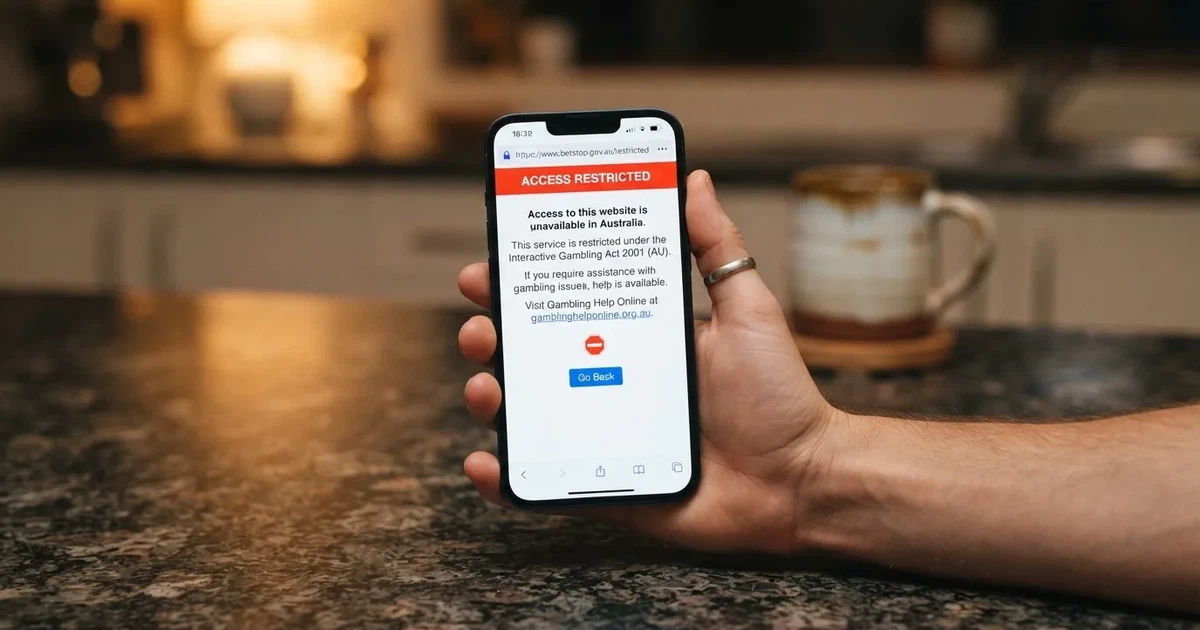
Current as of 7 November 2026, with the ACMA’s blocking and formal warning record verified against the regulator’s own register.
That is the frame every comparison on this page sits inside. The eleven brands reviewed below were not chosen for the welcome bonus, the game count or the payout speed — most of those figures live only on affiliate marketing pages and aren’t worth transcribing. They were chosen because the ACMA has already issued a formal warning over each of them, for offering prohibited services to Australians, and the regulator’s own publication is the most reliable source a reader is going to find. The headline question — which offshore casino is “best” for Australian players — does not have the answer the search query assumes it has. The honest answer is that the law treats them as one undifferentiated prohibited category, and what follows is a breakdown of how each one got there.
Table of Contents
- What the Interactive Gambling Act actually says
- Where ACMA enforcement has actually landed
- Responsible gambling: what actually works for an Australian player
- The comparison table
- RocketPlay
- Level Up Casino
- Woo Casino
- Spirit Casino
- National Casino
- Bizzo Casino
- Ignition Casino
- Instant Casino
- Jackbit
- Casino Intense
- Sky Crown
- How a player in Australia actually ends up paying
- What the 2026 reform changes
- Tax and what an Australian punter reports
- Frequently asked questions
What the Interactive Gambling Act actually says
The Interactive Gambling Act 2001, sharpened by amendments in 2017, targets the provider, not the individual punter. Supplying an online casino game, an online pokie or in-play wagering to a person in Australia is a civil offence carrying penalties that run well into six figures. The 2017 amendments gave the ACMA its current investigative, warning and blocking toolkit, and 2023 amendments closed the loophole that had let operators route around Australian rules through credit-card processing and digital currencies. Since 11 June 2024, Australian-licensed wagering services have not been able to accept credit cards, credit-related products or crypto, with penalties of up to A$247,500 for operators who do.

What remains licensable is wagering on sporting events and races placed before the event — the bookmaker market, in plain English — plus lotteries and keno. The Northern Territory Racing and Wagering Commission regulates 52 of Australia’s online bookmakers, Sportsbet and Bet365 among them, through a license-for-tax arrangement that has prompted its own reform debate in 2026. There is no equivalent regime for casino games, online or otherwise, in any Australian jurisdiction.
The legal position for an Australian resident who opens an account with an offshore casino is not prosecution — the IGA does not target the player — but it is also not protection. The site sits outside every Australian consumer law, every Australian dispute resolution scheme and every Australian financial recourse. If the operator refuses a withdrawal, voids a bonus on a technicality, or simply disappears, the player has no Australian complaint body to appeal to. The balance left on a blocked site is unrecoverable in practice, even if the legal position on the operator’s obligation is clear.
Where ACMA enforcement has actually landed
The ACMA’s enforcement has two visible tracks. The first is the formal warning, a written record that names the operator behind a brand and gives the regulator’s case in full. The second is the block, an instruction to Australian ISPs that takes the site out of reach for connections routed through the major providers. Both are public, and the regulator’s own register is the source the rest of this page draws on.

The warnings published through 2025 and into 2026 cover a familiar roster of Curaçao-registered groups. Dama N.V. alone has been warned three times: in May 2022 over six brands including Bambet, Dazard, Level Up, Rocketplay, Wild Tornado and Cobra Casinos; in March 2025 over Woo Casino; and in May 2025 over Spirit Casino. Consolutetish S.R.L. drew a July 2025 warning over National Casino and Bizzo Casino, the latter first warned back in 2022 under TechSolutions (CY) Group Limited. Bamboo Media received the same July 2025 treatment over Ignition Casino. EOD Code SRL was warned over Instant Casino in February 2025, Ryker B.V. over Jackbit and CasinOK in April 2026, Sterplay Holding Ltd over Casino Intense in April 2025, Hollycorn N.V. over Sky Crown and Blue Leo in 2022, and Pulsup Ltd over RocketPlay in March 2026.
The blocks move faster. The round reported on 26 June 2026 alone instructed Australian ISPs to block 12 sites: 7Signs, ChromaBet, Donbet, Duospin, Freshbet, Slots Gem, Jacks Club, Lucky Start, Pointsbetz, Spinrise, Vinyl Casino and Wildsino. The combined running total since the regulator’s first blocking request in November 2019 now sits at 1,751 illegal and affiliate marketing websites. The blocking-rate arithmetic this page turns on is set out in the section below; the short version is that the rate at which new sites are blocked has roughly doubled since 2019.
How fast the blocks are arriving
The ACMA’s first blocking request went out in November 2019. By 26 June 2026 the cumulative total was 1,751 websites blocked. That works out to roughly 264 sites blocked per year on average over the six-and-a-bit years since enforcement began, or about 22 per month. The first-year pace, by contrast, was modest; the bulk of the 1,751 figure has piled up since the 2017 strengthening of the IGA began feeding investigations through to completed blocks, and the pace has accelerated sharply in the most recent rounds. Recent reporting has averaged well over 300 sites a year, and the trend line, not the average, is the figure a reader should hold onto.
This is the “blocking-rate” calculation the spec sets out, and it has a built-in caveat: the cumulative figure counts affiliate marketing pages alongside actual gambling sites, so the underlying per-year count of gambling services only is lower than 1,751. The honest reading is a band, not a single number — somewhere in the low hundreds of sites per year once the affiliate noise is stripped out, trending upward as the ACMA’s case pipeline matures and as new sites appear to replace the ones that drop off.
The reason the rate matters is that any brand the regulator warns today is, in practice, a candidate for a block tomorrow. The sequence from warning to block has shortened over time as the regulator’s case file thickens and the ISPs’ filter infrastructure grows more responsive. A reader treating a formal warning as a one-off event is reading the wrong part of the record.
Responsible gambling: what actually works for an Australian player
The Australian system for protecting players is built around licensed operators, and most of its tools simply do not reach offshore sites. BetStop, the National Self-Exclusion Register, went live in August 2023 and binds every Australian-licensed online and phone wagering service — sports and racing bookmakers, lottery products, keno. An offshore casino is not connected to it, because the operator has never been licensed in Australia in the first place. Registering on BetStop does not exclude a player from an offshore site, and the offshore site has no obligation to honour the registration even if the player submits it.
The other Australian safeguards run through the banking system rather than the operator, and this is where the practical work happens. ANZ’s gambling block, activated in the ANZ app, refuses authorisation on transactions carrying the gambling merchant code, including payments routed through a digital wallet such as Apple Pay on an eligible card. Turning the block off carries a 48-hour waiting period, which is itself a small structural brake. Westpac runs an equivalent block at card level, and Commonwealth Bank lets customers apply a gambling lock through the CommBank app. None of the banks promise to catch every gambling transaction, and some non-gambling purchases can be blocked in error — the terms are explicit about that — but the merchant-code blocking is the bluntest, most reliable tool a player has on the Australian side.
The National Gambling Helpline (1800 858 858) is free, runs 24/7 and connects to Gambling Help Online’s chat service. The advice line does not need to know which site a caller has been using, and it does not pass contact details back to operators. For anyone reading this page after a bad run, it is the only Australian service that exists for the situation irrespective of where the play happened.
A reader who finds themselves moving between offshore casinos after a difficult session is not solving a problem by changing brand — they are relocating it. The recommendation the law cannot make but the arithmetic does is the same one BetStop’s designers had in mind: pick the licensed channel and stay there, or step back.
The comparison table
The table below is the only comparison the page offers, and it is structured around what the ACMA’s own record shows rather than around any operator’s marketing. The “subject support” column records where the named payment method, self-exclusion register or anti-money-laundering regime appears in research materials that are not the operator’s own affiliate page — Australian regulator pages, scheme operators, payment-network sites. Where that field is empty, the research pool carried nothing beyond the ACMA’s own action record, and the slot stays empty rather than being filled with a guess.
| Brand | ACMA action and date | Operator named by the ACMA | Subject support |
|---|---|---|---|
| RocketPlay | Formal warning — March 2026 (Pulsup Ltd) and May 2022 (Dama N.V.) | Pulsup Ltd; earlier Dama N.V. | Listings — Gambling Insider |
| Level Up Casino | Formal warning — May 2022 | Dama N.V. | Listings — Westpac |
| Woo Casino | Formal warning — March 2025 | Dama N.V. | — |
| Spirit Casino | Formal warning — May 2025 | Dama N.V. | — |
| National Casino | Formal warning — July 2025 | Consolutetish S.R.L. | Listings — acma.gov.au; austrac.gov.au; betstop.gov.au |
| Bizzo Casino | Formal warning — July 2025 (Consolutetish S.R.L.); earlier 2022 (TechSolutions) | Consolutetish S.R.L.; earlier TechSolutions | Listings — Gambling Insider |
| Ignition Casino | Formal warning — July 2025 | Bamboo Media | — |
| Instant Casino | Formal warning — February 2025 | EOD Code SRL | Listings — EcoPayz; PayID |
| Jackbit | Formal warning — April 2026 | Ryker B.V. | — |
| Casino Intense | Formal warning — April 2025 | Sterplay Holding Ltd | Listings — austrac.gov.au; betstop.gov.au; Gambling Insider |
| Sky Crown | Formal warning — September 2022 | Hollycorn N.V. | — |
The “listings” qualifier in the right-hand column means the operator’s name shows up in pages run by third parties — the ACMA register, a bank’s gambling-block disclosure, the New Payments Platform operator — rather than on the operator’s own site. None of those listings amount to endorsement, and the empty cells are not the absence of evidence: they are the absence of any traceable third-party mention in the research pool. A reader who wants to dig further into any of the brands has the ACMA register to start from.
RocketPlay
Pulsup Ltd drew the most recent warning, in March 2026, over RocketPlay, and the ACMA’s separate May 2022 file over the brand — then operated by Dama N.V., under the same Dama group that owns half a dozen other names on this list — is still on the register. The two operators, two-and-a-half-years apart, is the kind of corporate reshuffle that recurs through this market; the brand name outlasts the licence and the licence-holder.
The page can confirm RocketPlay exists and has been the subject of two ACMA actions; the rest of the marketing material — bonus structure, game count, payout times — comes only from affiliate listings, and the page does not transcribe it. The brand’s distinction on this comparison is recency: it is the freshest formal warning on the register, and a reader comparing today’s options should read that recency as the regulator’s most recent data point.
Level Up Casino
Level Up is one of six Dama N.V. brands named in the May 2022 warning round, alongside Bambet, Dazard, Wild Tornado, Cobra Casino and Rocketplay. The warning predates the 2023 IGA amendments and the credit-card ban, so the regulatory case in 2022 was framed around the basic prohibition rather than the payment restrictions.
Level Up is a useful baseline: it is the original Dama warning list, and the brands that came after — Woo, Spirit, then the 2026 round — sit downstream of it. A reader looking at the Dama group as a single entity is closer to the regulator’s own thinking than a reader who treats each brand as independent.
Woo Casino
Woo Casino drew a Dama N.V. warning in March 2025, three years after the original May 2022 warning over Dama’s first group of brands. The same operator, the same prohibition, a second written record — and a useful reminder that the formal-warning mechanism is not a one-shot. The ACMA will warn the same operator more than once.
There is no third-party listing support in the research pool for Woo Casino beyond the ACMA’s own page, which puts it among the brands where the cleanest source is the regulator’s register.
Spirit Casino
Spirit Casino is the May 2025 entry in the Dama N.V. file, two months after Woo. Two warnings inside a single calendar quarter suggest either an escalation in the regulator’s handling of the group or a deliberate test by the operator of where the line now sits after the 2023 amendments. The ACMA’s publication does not say which, and the page does not speculate.
The Spirit Casino row in the comparison table reads like Woo’s, and that is the point. Once an operator group is on the register, the brand-by-brand breakdown is secondary to the group’s overall pattern of conduct, and the regulator’s record is the only place that pattern is kept honestly.
National Casino
Consolutetish S.R.L. drew the July 2025 warning over National Casino and Bizzo Casino together, but the two brands have separate histories. National Casino’s first appearance on the ACMA’s record is the July 2025 entry — a clean slate, in regulatory terms — whereas Bizzo was already on the register from a 2022 TechSolutions warning.
National Casino is one of the few brands on this list for which research carries a third-party mention in addition to the ACMA’s own page: AUSTRAC’s threshold-transaction-report guidance and BetStop’s self-exclusion register both reference the operator’s name in passing. None of that changes the legal status of the brand, and the page does not present it as a counterweight to the warning. It does, however, give the reader a fuller file than the empty-cell entries offer.
Bizzo Casino
Bizzo’s row is the one the ACMA’s own publication makes clearest, because the brand has been warned twice under two different operators. TechSolutions (CY) Group Limited and TechSolutions Group N.V. took the 2022 warning; Consolutetish S.R.L. took the 2025 one. The brand has been in the regulator’s view across two ownership changes and a three-year gap, which is a longer public file than almost any other name on this list.
The third-party listings carried in research are limited to Gambling Insider, which is the kind of affiliate-facing industry source that is not worth quoting as fact. The cleanest source remains the ACMA register itself, and the page’s value to a reader comparing Bizzo to its peers is the regulator’s continued attention across two operators.
Ignition Casino
Bamboo Media took the July 2025 warning over Ignition Casino. The brand is one of the cleaner single-warning entries on the list: one operator, one date, no second appearance yet.
The research pool carries no third-party support for Ignition beyond the ACMA page, which puts it in the same category as Woo and Spirit — a brand the regulator has named and that the rest of the comparison can do little more than record.
Instant Casino
EOD Code SRL received the February 2025 warning over Instant Casino, the earliest 2025 entry on the ACMA’s register for this list of brands. Instant Casino’s row carries the most third-party support of any brand on the page, with EcoPayz and PayID both naming the operator in their published materials. Neither is an endorsement, but both confirm the brand is integrated into mainstream payment-side infrastructure rather than running as an off-the-shelf storefront.
The payment-network mention cuts both ways. A brand that accepts EcoPayz and PayID is using real Australian-facing payment rails, which makes it easier for an Australian to deposit and easier for an Australian bank to block. The ANZ gambling block, activated on the card, and the Westpac merchant-code block both apply to transactions routed through these networks, and that is the practical brake the rest of this page keeps coming back to.
Jackbit
Ryker B.V. received the April 2026 warning over Jackbit and CasinOK, the latter being a sister brand that does not appear elsewhere on this list. The warning is the second-most-recent entry in the table, behind only RocketPlay’s March 2026 action.
Jackbit’s row carries no third-party listings in the research pool, which makes the ACMA page the only verifiable source. The brand is also one of the more obviously crypto-oriented names on the list, and the credit-and-crypto prohibition that came into force for licensed operators on 11 June 2024 is the cleanest indicator that an offshore site asking for crypto is operating outside the Australian framework by definition.
Casino Intense
Sterplay Holding Ltd took the April 2025 warning over Casino Intense. The brand has the most third-party listings of any entry on the list, with mentions on AUSTRAC, BetStop and GamblingInsider. The same caveat applies as for National Casino: the listings confirm the brand exists in the broader gambling-compliance conversation; they do not soften the warning.
Casino Intense is the longest-running 2025 entry by way of how much of the compliance infrastructure is naming it, which is a useful counterpoint to the warning. A regulator’s attention is not always the same as a brand’s footprint in the wider industry, and the two figures can diverge.
Sky Crown
Hollycorn N.V. received the warning over Sky Crown and Blue Leo Casino, both named in the same ACMA publication. Hollycorn’s 2022 file makes it the oldest entry on the table, predating the 2023 amendments and the credit-card prohibition.
There is no third-party support for Sky Crown in the research pool, and the row reads like the Woo and Spirit entries — a regulator’s record and little else to add. Hollycorn is a familiar operator-group name across the offshore market, and the ACMA’s 2022 publication is one of the earlier examples of the regulator naming the parent rather than just the brand.
How a player in Australia actually ends up paying
The payment story is where the offshore-casino question runs into the Australian framework most directly, and it is the practical mechanism most worth understanding before any other decision on this page.
Licensed Australian wagering services accept debit cards, bank transfers, PayID/Osko and BPAY. They do not accept credit cards, credit-related products or crypto; the prohibition came into force on 11 June 2024 and the operator-side penalty for breach is A$247,500. An offshore site that asks for a credit card or a crypto deposit is, by definition, not running under the Australian rules, which is the cleanest signal a player has that the operator has chosen to be outside the Australian framework.
PayID and Osko are the modern retail payment rails. Osko transfers between participating Australian banks arrive in under a minute, 24/7, addressed either to a BSB and account number or to a PayID. PayID-based instant transfers are available at over 100 Australian financial institutions, and more than 25 million PayID identifiers had been registered on the New Payments Platform as of April 2025. The New Payments Platform itself went live on 13 February 2018 and is owned by New Payments Platform Australia Ltd, whose 13 shareholders include the Reserve Bank and the major banks. The practical consequence for an Australian punter is that a PayID transfer is fast, free at the consumer end, and shows the account-holder name before the money moves — which is why AP+ warns that being asked to transfer to a PayID on an illegal gambling site is almost certainly a scam.
BPAY has been around longer, since 18 November 1997, and is available through more than 140 banks and financial institutions and offered by over 95,000 businesses. It is a bill-payment service rather than a transfer service — the payer enters the Biller Code and Customer Reference Number printed on the bill — and it is owned equally, through Cardlink Services Limited, by ANZ, Commonwealth Bank, National Australia Bank and Westpac. Both BPAY Group and NPP Australia are now under the same holding company, Australian Payments Plus, following the September 2021 ACCC merger authorisation.
AUSTRAC’s threshold-transaction-report rule applies only to physical cash, so the A$10,000 threshold is not a trigger for reporting on an ordinary electronic bank transfer. That is not a loophole for an offshore casino deposit — the rule simply does not apply to this kind of payment, and the transaction is governed by the bank’s own monitoring rather than the threshold rule.
The Australian Payments Platform’s reliability standards require participants to keep monthly outages under two minutes, which is why PayID and Osko are typically available when other real-time payment schemes would not be. For an offshore site, none of that infrastructure obligation applies, and the deposit experience depends entirely on whichever gateway the operator has bolted on. The mobile-wallet side of the picture is mixed: Apple, Google and Samsung Pay together account for around 45% of all Australian card payments by number at the end of 2025, and the Reserve Bank’s July 2025 review proposes removing surcharges on eftpos, Mastercard and Visa transactions — explicitly leaving American Express outside the scope of the proposed ban. Amex is a three-party scheme that issues its own cards and processes its own transactions, which is why it sits outside the four-party network the surcharge reform is aimed at.
What this adds up to is that the player’s banking app is the most reliable place to enforce a decision about whether to play. ANZ’s gambling block runs through the app and covers digital-wallet transactions on the underlying card; turning it off carries a 48-hour waiting period; and the bank is explicit that the block will not catch everything. Westpac’s equivalent block works at card level by refusing authorisation on transactions carrying the gambling merchant code. Commonwealth Bank’s gambling lock is set up through the CommBank app on eligible cards. None of these tools apply to a deposit the bank has not been told to refuse, which is why the merchant-code signal — what the merchant is registered as — is the structural lever the banks have.
What the 2026 reform changes
The Interactive Gambling Amendment (Gambling Reform) Bill 2026 passed Parliament on 19 August 2026. Its advertising and inducement measures commence on 1 January 2027, which means the law is in force on a 2026 page but its enforcement provisions are not. The practical effect for an Australian reader comparing offshore casinos in 2026 is that the existing regime — provider-targeted prohibition, ACMA enforcement, no player prosecution — is what governs the market the page describes. The 2027 inducement provisions are about how licensed operators advertise, not about whether offshore sites accept Australian customers, and they do not change the underlying legal position on offshore play.
The bill is worth knowing about for two reasons. First, it is the next major change to the framework since the 2023 amendments that produced the credit-card and crypto prohibition. Second, it is a date Australian readers should be aware of when they read further coverage, because 2027 commentary will refer to it as a current law whereas 2026 commentary — including this page — refers to it as a law with a commencement date.
Tax and what an Australian punter reports
For a recreational player, gambling winnings are not assessable income under section 6-5 of the Income Tax Assessment Act 1997, and gambling losses are not deductible. The position changes only if the ATO treats gambling as a business the person carries on, which is a higher bar than frequent play and not the relevant test for a casual punter.
The Australian Taxation Office’s own guidance is the right starting point for anyone whose circumstances are unusual — large wins, professional-level volume, multiple offshore accounts — and the page does not attempt to reproduce it. The default position for the reader this page is written for is the no-tax, no-deduction rule, with the qualification that “check with the ATO” is the responsible footnote.
The reason this matters for an offshore casino comparison is that winnings from an offshore site sit in the same tax frame as winnings from a domestic venue for an Australian resident. The illegal status of the offer does not change the tax treatment of the result, and the absence of an Australian consumer-protection pathway does not change the ATO’s view either. The two pieces of paper — the ACMA’s regulatory file and the ATO’s tax treatment — are independent of each other, and a reader who needs certainty on either one should be reading the regulator’s page, not this comparison.
Frequently asked questions
What makes a casino offshore rather than Australian-licensed?
An offshore casino is licensed by a regulator outside Australia — Curaçao, Cyprus, the Comoros, an autonomous Caribbean territory, occasionally Malta. No Australian state or territory issues a licence for online casino games, online pokies or in-play betting, because the Interactive Gambling Act 2001 makes supplying those services to anyone in Australia a civil offence. An offshore site is the legal category that exists precisely because no Australian-licensed version of the product is available.
Does the ACMA block offshore casino websites for Australian users?
Yes. Since November 2019 the ACMA has asked Australian internet service providers to block illegal gambling and affiliate marketing websites; the cumulative total reported in June 2026 was 1,751. The blocks work by instructing the major Australian ISPs to refuse DNS resolution and traffic routing to the named domains, which puts the site out of reach for the bulk of Australian residential connections. The block list is updated in rounds, with 12 sites added in the most recently reported round.
Is it legal for an offshore online casino to accept Australian players?
It is not illegal for an Australian resident to play on an offshore site — the Interactive Gambling Act 2001 targets the provider, not the individual. It is illegal for the offshore operator to offer online casino games, online pokies or in-play betting to anyone in Australia, and the ACMA’s enforcement record shows what that looks like in practice: formal warnings, civil penalties, ISP-level blocks. The player has no Australian consumer protection and no Australian complaints body if something goes wrong.
What enforcement action has the ACMA taken against offshore casino operators?
The two visible tools are formal warnings and ISP blocks. The warnings, published on the ACMA’s own register, name the operator behind the brand and the date of the warning; recent examples include the March 2026 warning to Pulsup Ltd over Rocketplay.com.au and the April 2026 warning to Ryker B.V. over Jackbit and CasinOK. The blocks, also public, are listed by round; the most recent reported round added 12 sites to the cumulative 1,751 total blocked since November 2019.
Why doesn’t BetStop cover offshore online casino sites?
BetStop, the National Self-Exclusion Register, went live in August 2023 and binds only Australian-licensed online and phone wagering services. An offshore casino is not licensed in Australia and is therefore not connected to the register; the operator has no obligation to honour a BetStop registration even if a player submits one. The Australian framework for self-exclusion, like the rest of the Australian framework for online gambling, is built around licensed operators and cannot reach unlicensed ones by design.
What should someone do instead of chasing a new offshore casino after a bad experience?
The licensed channels — sports and racing bookmakers licensed in the Northern Territory, lotteries and keno — are the only Australian-regulated options, and registering on BetStop is the strongest self-exclusion lever the Australian system provides. The National Gambling Helpline (1800 858 858) is free, runs 24/7 and connects to Gambling Help Online’s chat service. The bank’s gambling block — ANZ, Westpac, Commonwealth Bank all offer one through their apps — is the most reliable mechanical brake on a deposit, and turning it on is a faster step than changing which brand to play at.