
What a high-roller casino with a bonus actually looks like for an Australian reader
The phrase “high roller casino with bonus” lands on an Australian reader as a search for a working shortlist: somewhere to deposit four figures, clear a wagering requirement, withdraw to a local bank account, and do it again. The honest answer is that no such shortlist exists under Australian law. The Interactive Gambling Act 2001 prohibits offering online casino games and online pokies to anyone physically in Australia, and no state or territory issues a licence for that product. Whatever a search page lists for “best high roller casino Australia” sits in the space that the ACMA has spent the last several years actively closing.

This page sets out that gap plainly, names the brands the ACMA itself has acted against, and points to what a high-spending player can actually do lawfully in Australia. The angle is cost: what each offer really takes from the player who claims it, and what an offshore site does not protect when a withdrawal stalls.
Data current as of 28 September 2026, checked against the Australian Communications and Media Authority’s published list of formal warnings and blocking orders.
Table of Contents
- Player wellbeing sits ahead of every bonus claim
- How money moves, and where it gets held up
- What a high-roller bonus actually costs the player
- The phone-screen experience and what it changes
- What a high-roller game catalogue looks like
- What the ACMA has actually done about offshore high-roller brands
- What is actually lawful for an Australian high-spending player
- The legal frame behind every warning above
- Operator-by-operator: the brands the ACMA has named
- Frequently asked questions
Player wellbeing sits ahead of every bonus claim
Anyone shopping for a high-roller bonus is, by definition, about to move a few thousand dollars at a time. The wellbeing tools available to an Australian player sit on two tracks: the official, federally run ones, and the bank-level blocks that several Australian lenders have shipped in the last two years. Both are worth understanding before any deposit is attempted, because an offshore casino is not connected to either.

BetStop, the National Self-Exclusion Register, went live in August 2023 and binds every Australian-licensed online and phone wagering service. Registration is free, the minimum exclusion period is three months, and it can be extended up to a lifetime ban. The catch, for the subject of this page, is precise: BetStop is a register of licensed wagering providers. An offshore casino is not in the register, so registration does not stop an offshore site from accepting a deposit.
The bank-level gambling blocks are the more practical tool for this audience. Westpac, ANZ and Commonwealth Bank each ship a toggle that refuses authorisation of transactions coded under the merchant category “Betting/Casino Gambling” on eligible cards, and ANZ’s block follows the card into a digital wallet, so Apple Pay or Google Pay funded from an ANZ card is caught at the same step. ANZ adds a 48-hour cooling-off period before it can be turned off again. None of the three banks promises a perfect filter: each warns that some gambling transactions may slip through and some non-gambling ones may be blocked in error.
For anyone whose spending has moved beyond comfortable, the National Gambling Helpline at 1800 858 858 is free, operates 24/7, and has a chat channel through Gambling Help Online. These are the supports an Australian reader can rely on regardless of where they choose to play.
The bank blocks are an important side of the picture because a high-roller deposit is, by definition, a high-roller withdrawal later. Setting up the card-level block at the bank before the first deposit is what stops a difficult day from becoming an unaffordable one. Each of the three banks mentioned above offers the toggle inside its mobile app; turning it on takes a few minutes and removing it again, in ANZ’s case, deliberately takes longer.
How money moves, and where it gets held up
The deposit side of a high-roller casino account looks ordinary enough at first glance: a card deposit clears in seconds, a bank transfer clears in minutes, and from there the site’s own clock takes over. The cost the reader is paying is rarely the deposit fee — it is the withdrawal fee, the currency-conversion margin, and the time the balance sits in an account the reader cannot get back to quickly.
Debit card versus credit card versus digital wallet
Under the 2023 amendments to the Interactive Gambling Act 2001, Australian-licensed online wagering services cannot accept payment by credit card or any credit-related product, a rule that also constrains the use of digital wallets such as Apple Pay when they are funded from a credit card. That rule applies to the licensed wagering market. An offshore casino will still accept the credit card, which is one of the ways it stays outside the Australian consumer-protection perimeter in the first place.
For someone funding from an Australian bank account, the practical channels are a debit card, a PayID/Osko transfer, or BPAY. The Reserve Bank of Australia’s July 2025 review proposed removing surcharges on eftpos, Mastercard and Visa transactions, while explicitly leaving American Express outside that scope; surcharging on Amex has been the norm, and the surcharge is paid by the consumer at the point of sale, not by the merchant quietly. Apple does not charge consumers to use Apple Pay at all — any surcharge on a card-funded wallet transaction is the merchant’s card-processing cost passing through, not a wallet fee.
PayID, Osko and the New Payments Platform
PayID and Osko run on Australia’s New Payments Platform, which went live on 13 February 2018 and is owned by a non-profit whose shareholders include the Reserve Bank of Australia and the major banks. By April 2025, more than 25 million PayID identifiers had been registered, and over 100 Australian financial institutions offer PayID-based instant transfers. The transaction’s defining property is the name display: a payer about to send to a PayID sees the name of the account holder before confirming, and the operator of the platform warns that being asked to PayID into a site that has no Australian presence almost certainly means a scam.
Osko transfers clear in under a minute, 24/7 including weekends, whether addressed to a BSB and account number or to a PayID. Australian Payments Plus, which runs Osko, also runs BPAY and PayID. The platform’s monthly outages are capped at two minutes by the operators’ own service-level commitment. For the high-roller reader, the takeaway is plain: if an offshore casino asks for an Australian bank transfer via PayID or Osko, the credit-debit check above is exactly what tells the reader they are being routed into a domestic faster-payment channel from a site with no domestic presence.
BPAY
BPAY is the older bill-payment scheme, owned equally by ANZ, Commonwealth Bank, National Australia Bank and Westpac through Cardlink Services, and operated since 1997. It works on a Biller Code and a Customer Reference Number printed on the bill. Over 140 Australian banks and financial institutions expose BPAY in their online banking, and over 95,000 businesses accept it. For gambling purposes, the relevant fact is that BPAY is the slowest of the three: it is a same-day or next-business-day scheme, not an instant one, and the credit usually lands the day after the payer initiates it. A high-roller deposit made through BPAY on a Friday evening will not be playable until the following Monday.
What an offshore casino does to a deposit
Every offshore deposit carries three costs that the marketing page does not mention. The first is the FX margin: an Australian dollar converted into euros for a Curaçao-licensed operator comes back converted again, and the spread sits with the operator or its processor. The second is the fee the operator charges on the withdrawal, often a flat fee or a percentage that quietly erases a chunk of any big payout. The third, and most expensive, is the absence of an Australian dispute-resolution body: there is nowhere an Australian player can complain to about a refused withdrawal, a voided bonus, or a closed account. The site holds the player’s money in its own jurisdiction, under its own rules.
AUSTRAC’s threshold-transaction report rule, which requires reports on transfers of A$10,000 or more, applies only to physical cash. An ordinary electronic bank transfer of any size is not subject to that per-transaction reporting obligation. So a high-roller deposit does not trigger a filing by the player’s own bank; the visibility of the transaction to the tax office comes only from the records the player keeps.
Card surcharges and the Amex carve-out
American Express is a three-party scheme rather than the four-party model Visa and Mastercard use: Amex traditionally issues its own cards and runs its own network, which is part of why merchants have historically passed surcharging through. The Reserve Bank’s July 2025 review proposed removing surcharges on eftpos, Mastercard and Visa, leaving American Express explicitly outside the proposed ban. Amex surcharging therefore remains legal, and a high-roller depositing on an Amex-funded card should expect it where the operator charges one at all.
What a high-roller bonus actually costs the player
The marketing word on a high-roller bonus page is “VIP” or “exclusive” or “tailored”, and the arithmetic on the page’s terms-and-conditions page is a wagering multiplier. The two are not the same number. The multiplier is what a bonus actually costs the player; the marketing word is what it costs the operator to type.
The shape of the offer
A high-roller deposit bonus is typically sized as a percentage match with a higher entry deposit than the standard sign-up offer — often A$1,000 or more to qualify — and a wagering multiplier that sits in a wide band across the market. The qualifying deposit is the gate; the wagering multiplier is the cost.
The structure works like this: the operator credits bonus funds equal to some percentage of the deposit; the player must wager the combined total a set number of times before the bonus balance becomes withdrawable; game weighting varies, with slots often contributing 100% and table games much less; there is usually a maximum cashout cap, a maximum bet per spin during the wagering period, and a time limit. The page a reader sees at signup omits most of these; the page the reader meets at withdrawal time applies them all.
The cost in turnover
A reader who deposits A$1,000 and accepts a 100% match with a 40x wagering multiplier on bonus plus deposit has, in front of them, A$2,000 to wager through forty times: A$80,000 of turnover, before any of it is withdrawable. A reader who deposits A$5,000 under the same terms is looking at A$400,000 of turnover.
This is the cost the marketing page does not name. The bonus amount is the headline number, and the headline number is small compared to the wagering obligation it carries. The wagering multiplier is the actual price; the bonus amount is the bait that the multiplier sits on top of.
Game weighting, max bet and max cashout
Three terms quietly shrink the value of any high-roller bonus. Game weighting means a roulette spin or a blackjack hand contributes a fraction of its stake to the wagering requirement, often 10% or less, so the same A$80,000 of turnover takes far longer to clear on a live-dealer table than on a slot. The maximum bet per spin clause stops a player from racing through the requirement with one A$100 spin per hand; breaches usually void the bonus and any winnings from it. The maximum cashout cap, common on no-deposit bonuses and present on some deposit bonuses, places a ceiling on what the player can withdraw from bonus-derived winnings, regardless of how much they actually win.
For a high-roller reader, the cap is the term most likely to bite. A bonus that promises A$5,000 in matched funds with a max cashout of A$2,000 will return A$2,000, no matter what the player wins inside the wagering window.
The clearing time
A full slot spin takes roughly five seconds from stake to result. A$80,000 of turnover at A$1 a spin is 80,000 spins, which is about 111 hours of continuous play. A$400,000 at the same stake is 555 hours. These are the realistic clearing times before any of the bonus is withdrawable, assuming the player is prepared to play for that long and does not breach a max-bet or game-weighting clause along the way.
What the offer actually promises
No offer promises a payout. The expected return over the wagering window is governed by the return-to-player ratio of the games played, and the house edge on most slots sits in the 2–8% range. A player clearing A$80,000 of wagering on a slot with a 96% RTP gives back, on average, A$76,800, leaving A$3,200 of the bonus-funded bankroll consumed by the house edge before the bonus is even withdrawable.
A high-roller bonus is therefore a chance to play a large amount of money for the house’s RTP, with the operator’s matched funds covering the first slice of the loss. It is not a profit opportunity. It is a discounted session. Read that way, the value is in the size of the discount, not in the size of the headline number.
The phone-screen experience and what it changes
The high-roller casino app is, in most cases, a mobile browser wrapped in the operator’s own shell, sometimes available through the Google Play or Apple App Store, sometimes only as a direct download. The product is similar to the desktop version, with the live-dealer games occasionally trimmed to lower table limits for screen size. The relevant detail for a high-roller reader is the deposit and withdrawal flow on a small screen: confirmation screens are easier to tap through without reading, biometric authorisation on Apple Pay and similar flows makes a large deposit one-tap, and bank-level gambling blocks set up in the bank’s app still apply on the phone, regardless of how the deposit is funded.
Two practical effects follow. The first is that the deposit friction a desktop session imposes is largely absent on a phone, which makes it easier to top up a balance that should arguably have been left alone. The second is that the operator’s “responsible gaming” tools, where they exist, are often buried in a settings menu on the mobile app rather than surfaced on the deposit screen. A high-roller reader who intends to play on a phone should set the deposit limit and the session reminder at the desktop first, because doing it after the first big deposit on a phone tends not to happen.
By the end of 2025, Apple Pay, Google Pay and Samsung Pay transactions together accounted for around 45% of all card payments in Australia by number. For a high-roller reader, the implication is that a large share of the deposits at an Australian merchant today are wallet-funded, and a bank-level block that follows the card into the wallet — the way ANZ’s block does — catches the wallet transaction too. Apple Pay transaction limits and PIN requirements are set by the card issuer or merchant, not by Apple itself.
What a high-roller game catalogue looks like
The “high roller pokies” and “high roller slots” shelves are about bet sizing, RTP, and volatility. The high-roller relevant attributes are not the theme or the bonus round; they are the maximum bet per spin, the volatility band, and the size of the top jackpot. A high-volatility slot pays less often and in larger chunks when it does; a low-volatility slot pays more often and in smaller chunks.
For a player moving four-figure sums per session, volatility matters more than RTP. A 96% RTP slot with high volatility can run through a session bankroll without paying out at all; a 96% RTP slot with low volatility will grind it down at roughly the same long-run rate but with more frequent small wins and a more stable balance curve. The house edge is the same in both cases; the experience is not.
Live-dealer tables are the high-roller home for the player who wants to bet larger amounts per hand. The minimum bets on a live-dealer table climb with the operator’s VIP program; the maximum bets are set per table and per game, with the highest-limit tables reserved for the highest-tier players. The game-weighting clause on most bonuses, however, counts live-dealer play at a fraction of slot play, which is why bonus-clearing is faster on slots than on live tables even though the player would rather play the tables.
The catalogue at a high-roller tier typically adds nothing exotic; it adds the same games at higher limits. A player who wants a particular game at a particular stake will find it at most large offshore operators; the question is whether the operator is licensed in any jurisdiction that protects the player at all, which the section below addresses directly.
What the ACMA has actually done about offshore high-roller brands
The Australian Communications and Media Authority’s enforcement record is the only authoritative list of which offshore casino brands have been formally warned for offering prohibited services to Australians. Every brand in this section is on that list. The table below is not a ranking of the best high-roller casinos; it is a list of the operators the regulator has named.
| Brand | ACMA action and date | Operator named by the ACMA | Subject support |
|---|---|---|---|
| RocketPlay | Formal warning March 2026 (Pulsup Ltd); earlier Dama N.V. warning May 2022 | Pulsup Ltd | Gamblinginsider.com listings only |
| Level Up Casino | Formal warning May 2022 | Dama N.V. | Westpac.com.au listings only |
| Woo Casino | Formal warning March 2025 | Dama N.V. | — |
| Spirit Casino | Formal warning May 2025 | Dama N.V. | — |
| National Casino | Formal warning July 2025 | Consolutetish S.R.L. | acma.gov.au, austrac.gov.au, betstop.gov.au listings only |
| Bizzo Casino | Formal warning July 2025; earlier TechSolutions warning 2022 | Consolutetish S.R.L. | Gamblinginsider.com listings only |
| Ignition Casino | Formal warning July 2025 | Bamboo Media | — |
| Instant Casino | Formal warning February 2025 | EOD Code SRL | Ecopayz.com, Payid.com.au listings only |
| Jackbit | Formal warning April 2026 | Ryker B.V. | — |
| Casino Intense | Formal warning April 2025 | Sterplay Holding Ltd | austrac.gov.au, betstop.gov.au, Gamblinginsider.com listings only |
| Sky Crown | Formal warning, ACMA publication (September 2022) | Hollycorn N.V. | — |
The brands above are presented as the regulator has named them. Several operators appear more than once across the table because the same holding company has rebranded or repackaged its product over time, and the ACMA has issued new warnings each time. Dama N.V. alone accounts for four entries here, with earlier warnings dated May 2022 covering Bambet, Dazard, Level Up, Rocketplay, Wild Tornado and Cobra Casinos, and later warnings covering Woo Casino in March 2025 and Spirit Casino in May 2025.
The “subject support” column reflects what the consulted listings actually carry about a brand’s relevance to the subject of high-roller play, not a claim that the brand is suited to the Australian reader. Where a brand has no relevant listing presence, the cell carries the no-data marker.
What the ACMA’s blocking rate looks like
The ACMA’s published enforcement record gives two numbers worth holding together. As reported in June 2026, a cumulative total of 1,751 illegal gambling and affiliate marketing websites had been blocked since the first blocking request in November 2019. In the same round, the ACMA asked Australian internet service providers to block 12 more sites: 7Signs, ChromaBet, Donbet, Duospin, Freshbet, Slots Gem, Jacks Club, Lucky Start, Pointsbetz.com, Spinrise, Vinyl Casino and Wildsino.
That is the basis for the page’s calculation. The first blocking request was made in November 2019, and the cumulative count of blocked sites stood at 1,751 by the time of the June 2026 round. The elapsed time from November 2019 to June 2026 is about 79 months, which gives a blocking rate of roughly 22 sites per month on the long-run average. The June 2026 round itself, however, blocked 12 sites in one cycle, and earlier single rounds have blocked comparable or larger numbers in single cycles, so the long-run average is closer to a floor than a ceiling. The truthful reading is a band of roughly 20 to 25 sites per month over the program’s life, with a high variance from month to month — a single enforcement cycle can clear a month’s worth of sites, and several quiet months can pass between.
The number matters to a high-roller reader because it is the visible face of how often the operator a player has just deposited with becomes unreachable. A site blocked by the ACMA is not a site the player can withdraw from. Any balance on it at the moment of blocking is, in practice, lost; there is no Australian complaints body to recover it from.
What is actually lawful for an Australian high-spending player
The lawful alternatives for someone who wants to play at a high-stakes level sit in three places: licensed land-based casinos, licensed pokies venues, and the licensed online wagering market. Each has a different product.
Licensed land-based casinos
Every Australian state and territory licenses at least one land-based casino, with Crown Melbourne, Crown Perth, The Star Sydney, The Star Gold Coast, Crown Resorts’ properties, and SkyCity Adelaide as the largest venues. High-roller tables at these venues run by invitation, with minimum bets well above the public-floor tables, dedicated hosts, and comp arrangements on accommodation and dining. Membership in the venue’s loyalty program is the typical entry point to the high-roller floor.
These venues operate under state-level casino licences and under state-level responsible-gaming rules. Self-exclusion at a state-licensed casino is registered with the venue and binds the venue. Complaints are handled by the state regulator — for example, the Victorian Casino and Gaming Authority for Crown Melbourne — and the consumer-protection framework is the state’s, not the operator’s.
Licensed pokies venues
Pokies, or poker machines, are the slot machines operated under state-level gaming-machine licences in clubs, hotels and casinos. Each state and territory caps the maximum bet per spin and the maximum prize per spin on a pub or club poker machine. As of the current regime, New South Wales allows a maximum bet of A$10 per spin on pub-style machines, with similar caps in other states; the precise figure varies by jurisdiction. There is no A$1,000-a-spin poker machine in an Australian pub.
High-roller pokies play in Australia means, at the venue level, the high-limit room at a licensed casino. The public-floor cap is set in the regulations of the state where the venue operates, and an Australian player who wants larger stakes than the public floor offers moves up to the high-limit room, where the venue’s internal rules apply.
Licensed online wagering
The licensed online wagering market in Australia covers betting on races and sport, lotteries, and keno. Online casino games and online pokies are not part of this market. The Northern Territory Racing and Wagering Commission regulates the majority of Australia’s online bookmakers — 52 of them, including Sportsbet, Bet365 and Ladbrokes — through a once-a-month meeting in Darwin, with no full-time staff. The Territory licences these operators for tax reasons, not because the Territory is the home of the operators.
For a player searching for a “high roller casino Australia” experience, the licensed online wagering market offers sports and race betting with high limits and VIP hosts at the larger operators. It does not offer online casino games. The two products are different, and no wagering licence covers casino play.
What changes in 2026
The Interactive Gambling Amendment (Gambling Reform) Bill 2026 passed Parliament on 19 August 2026. Its advertising and inducement measures commence on 1 January 2027. As of the page’s data snapshot, the new law is on the books but the inducement rules are not yet in force. The reform package is the federal government’s response to the harms catalogued in the H2 Gambling Capital 2025 report, which estimates that Australians lose about A$3.9 billion a year to illegal gambling sites and that the share of gambling going through legal channels fell from 74% in 2021 to 64%.
The 2026 reform does not open online casino to Australian players. It tightens the inducement rules around the licensed wagering market. A player searching for a high-roller online casino in Australia in 2026 will meet the same answer in 2027 that they meet now.
The legal frame behind every warning above
The Interactive Gambling Act 2001, as strengthened by the Interactive Gambling Amendment Act 2017, prohibits the supply of online casino games, online pokies and in-play betting to anyone physically in Australia. The IGA targets the provider, not the individual player. An Australian who plays at an offshore casino does not commit an offence; the operator that accepts the deposit does. The practical effect for the player is that the offshore site has no obligation to honour a withdrawal, no Australian complaints body, and no local court to appeal to if the operator refuses to pay.
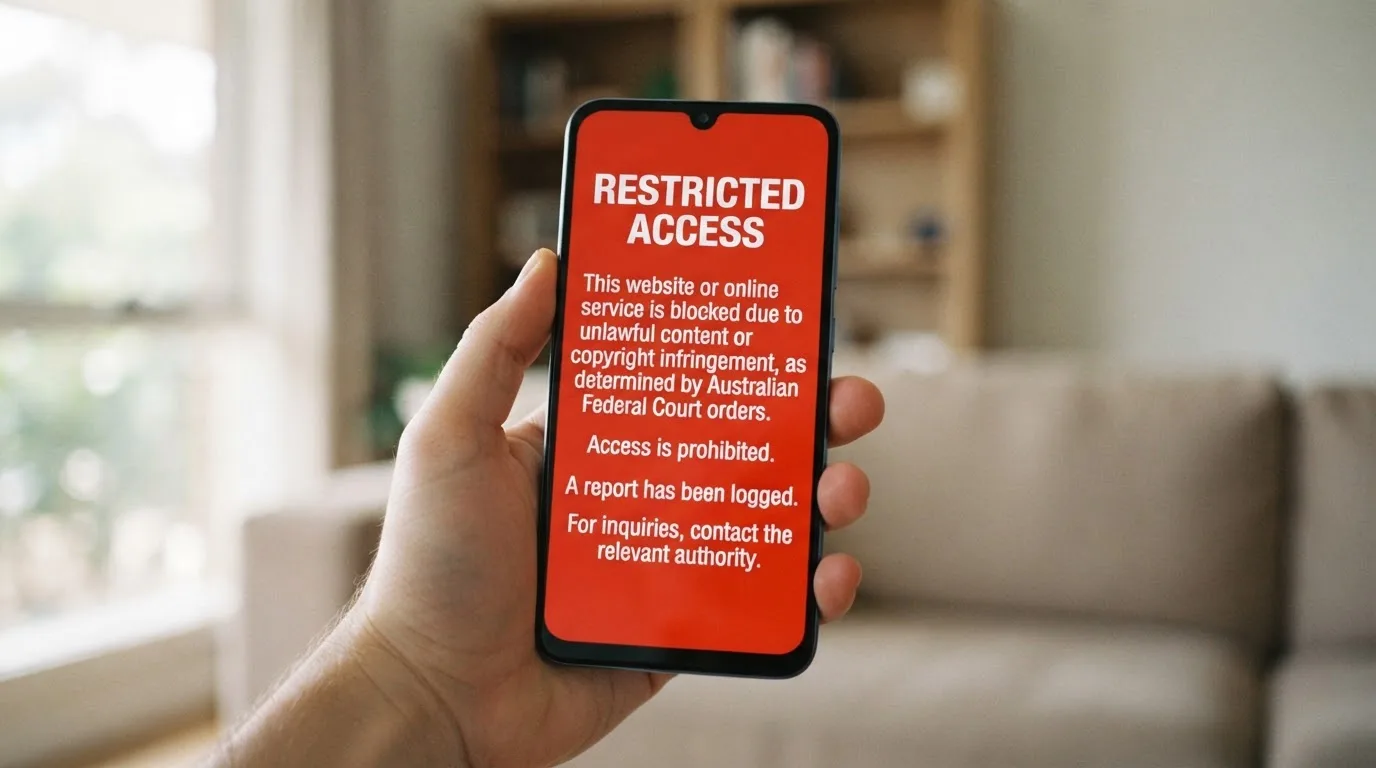
The ACMA’s enforcement toolkit has three layers. The first is a formal warning to the operator, published on the ACMA’s website, naming the operator, the brand and the date. The second is a direction to Australian internet service providers to block the offending site at the DNS level, which is the layer that produces the 1,751-site count above. The third is referral to the Australian Federal Police or the Department of Home Affairs for the most serious cases. More than 230 unlicensed gambling services have left the Australian market since enforcement was strengthened in 2017, which is the cumulative effect of all three layers combined.
A high-roller reader looking at the table in the section above should read it as the regulator’s view of which offshore brands have been warned. The warning is the first step in the enforcement sequence; it is not the last. The second step is the block, and a block at the wrong moment leaves a balance in limbo.
The 2026 reform in context
The Interactive Gambling Amendment (Gambling Reform) Bill 2026 passed Parliament on 19 August 2026 with advertising and inducement measures that commence on 1 January 2027. The reform package is the federal government’s legislative response to the shift the H2 Gambling Capital 2025 report identifies: A$3.9 billion a year to illegal sites, with the legal-channel share dropping from 74% in 2021 to 64%. The reform does not legalise online casino; it tightens the inducement rules around the licensed wagering market. Bonuses and ads aimed at inducing Australians to bet more — or to keep betting once they have decided to stop — fall inside the new rules from 1 January 2027.
For a player who reads this page after 1 January 2027, the bonus landscape on the licensed side will look different. For a player who reads it before that date, the inducement rules have not yet commenced, and the licensed operators continue to use the inducements they have been using.
Tax and the recreational player
Gambling winnings of a recreational Australian player are not assessable income under section 6-5 of the Income Tax Assessment Act 1997, and losses are not deductible. The exception is a player who carries on a business of gambling, which is the model the ATO treats as a professional punter rather than a recreational one. A high-roller player moving four-figure sums per session is, in the ATO’s ordinary treatment, a recreational player, and the winnings are not taxable. The ATO’s own pages are the right place to check the boundary, because the boundary is the part that matters.
Operator-by-operator: the brands the ACMA has named
The block below is presented in the regulator’s order of action. Each entry names the ACMA’s formal warning, the operator the ACMA identified, and the only practical guidance that the consulted listings support. None of these brands is licensed in any Australian jurisdiction, and the ACMA’s warning itself is the regulator’s view that the brand is offering a prohibited service to Australians.
RocketPlay
The ACMA issued a formal warning in March 2026 naming Pulsup Ltd over Rocketplay.com.au. The same brand had already been named in an earlier Dama N.V. warning in May 2022. Two operators running the same brand across four years is the standard pattern for this market: the brand gets rebranded or repackaged into a new corporate vehicle and the same product reappears under a new corporate name. The Australian reader is left to assess whether the operator behind the current brand has any track record in handling withdrawals.
Level Up Casino
The ACMA’s May 2022 warning to Dama N.V. named six brands in one notice, including Level Up. The single warning covers multiple brands because the operator is the legal entity the ACMA is addressing, and the brands are the product lines that operator runs. The practical implication for the player is that a “new” brand from a known operator carries the same dispute history as the operator’s earlier brands.
Woo Casino
The ACMA issued a formal warning to Dama N.V. over Woo Casino in March 2025. Woo is one of the more heavily marketed offshore casino brands, and the ACMA warning is the regulator’s view that the marketing has reached Australian consumers in breach of the IGA. No dedicated consumer data for Woo exists in the industry sources reviewed.
Spirit Casino
The ACMA issued a formal warning to Dama N.V. over Spirit Casino in May 2025, two months after the Woo warning. The same operator, two months apart, two different brand names. The pattern is the one a reader should be looking for: a single corporate entity running multiple brands simultaneously, each warning a separate public marker that the operator has continued to accept Australian players across all of them.
National Casino
The ACMA issued a formal warning to Consolutetish S.R.L. over National Casino in July 2025. The consulted listings include National Casino in pages maintained by acma.gov.au, austrac.gov.au and betstop.gov.au, which is the regulator-side material and not consumer marketing.
Bizzo Casino
The ACMA’s July 2025 warning to Consolutetish S.R.L. also covered Bizzo Casino. Bizzo had already been the subject of an earlier ACMA warning in 2022, addressed to TechSolutions (CY) Group Limited and TechSolutions Group N.V. Two operators, one brand, two warnings in three years. The consulted listings carry Bizzo in Gamblinginsider.com, which is an industry-side listing rather than consumer marketing.
Ignition Casino
The ACMA issued a formal warning to Bamboo Media over Ignition Casino in July 2025. Ignition is one of the older offshore casino brands and is marketed heavily through affiliate pages; the consulted listings carry no specific subject support for Ignition, which is itself the answer to a reader question about how visible the brand is on the regulator’s radar.
Instant Casino
The ACMA issued a formal warning to EOD Code SRL over Instant Casino in February 2025. The consulted listings carry Instant Casino in pages maintained by Ecopayz.com and Payid.com.au, both of which are payment-services pages. The Instant Casino product is one of the more widely marketed high-deposit bonus products in the offshore market, and the ACMA’s warning is the regulator’s view that the marketing has reached Australians.
Jackbit
The ACMA issued a formal warning to Ryker B.V. over Jackbit in April 2026. Jackbit is one of the more recent brands on this list. Industry listings provide no relevant data on Jackbit’s high-roller appeal.
Casino Intense
The ACMA issued a formal warning to Sterplay Holding Ltd over Casino Intense in April 2025. The consulted listings carry Casino Intense in pages maintained by austrac.gov.au, betstop.gov.au and Gamblinginsider.com. The presence on a regulator-side page is itself a marker that the regulator is paying attention.
Sky Crown
The ACMA’s formal warning to Hollycorn N.V. over Sky Crown was published in September 2022. The consulted listings carry no specific subject support for Sky Crown.
Frequently asked questions
What deposit level typically qualifies a player as a high roller at a casino?
There is no industry-standard threshold. Most offshore casinos mark VIP or high-roller status somewhere between A$1,000 and A$5,000 in qualifying deposits, with the upper tiers requiring sustained monthly volume rather than a single deposit. The threshold is set by the operator and varies by brand.
Do high-roller bonuses usually come with higher wagering requirements?
Often yes, though the multiplier itself is not always higher. The wagering volume scales with the deposit size, so a 40x multiplier on a A$5,000 bonus produces A$200,000 of required turnover, against A$40,000 on a A$1,000 bonus. The cost in time and house edge is what rises with the deposit, even when the multiplier stays flat.
Is it legal for an online casino to offer high-roller bonuses to Australians?
No. The Interactive Gambling Act 2001 prohibits offering online casino games and online pokies to anyone in Australia, regardless of deposit size. The prohibition applies to the operator, not the player, but it means no online casino accepting Australian players is licensed in Australia and no Australian regulator covers withdrawals, disputes or voided bonuses.
Can high-roller status be reached through a PayID deposit?
Yes, at the operator’s discretion. PayID is a payment rail, not a status qualifier; the operator decides whether the deposit counts toward VIP progression. For an Australian reader, the more relevant question is what a PayID transfer to an offshore operator actually does: it routes Australian dollars into a foreign payment processor, and the name display on a PayID transfer is the warning the operator’s own platform gives about exactly that situation.
Are high-roller tables or limits offered at licensed Australian land-based casinos?
Yes. Crown Melbourne, Crown Perth, The Star Sydney, The Star Gold Coast and SkyCity Adelaide all run high-roller floors with table limits well above the public floor, by invitation and through the venue’s loyalty program. Membership in the venue’s loyalty program is the typical path to the high-limit room.
What should a high-spending player check before trusting a casino site?
The right first checks are the regulator’s: is the site licensed anywhere reputable, is the licence current, and is the operator named in any published enforcement action in the player’s home jurisdiction. For an Australian reader, the relevant regulator is the ACMA, and the ACMA’s formal-warning list is the right place to look. The second checks are the payments side: does the site accept credit cards (a sign it is outside the Australian credit-card ban that applies to licensed wagering), and does the deposit route through a domestic faster-payment channel into a domestic account (a sign the operator has no real Australian presence). The third check is the bonus terms: the wagering multiplier, the game-weighting table, the max-bet clause, and the max-cashout cap.