
Bitcoin Cash casinos in Australia: a cost-led look at offshore BCH sites
A Bitcoin Cash casino is, for an Australian resident, an offshore operation that happens to take a coin whose public ledger anyone can read. The Interactive Gambling Act 2001 has nothing to say about the coin — it bans the activity, which is offering online casino games and online pokies to a person in Australia. Every payment rail, from a Visa debit card to a BCH wallet, lands on the same prohibition. The question this side of the page answers is not whether the coin is anonymous, fast or cheap, because it is all three; it is what that coin is worth once it sits inside a brand the ACMA has already named in a formal warning.
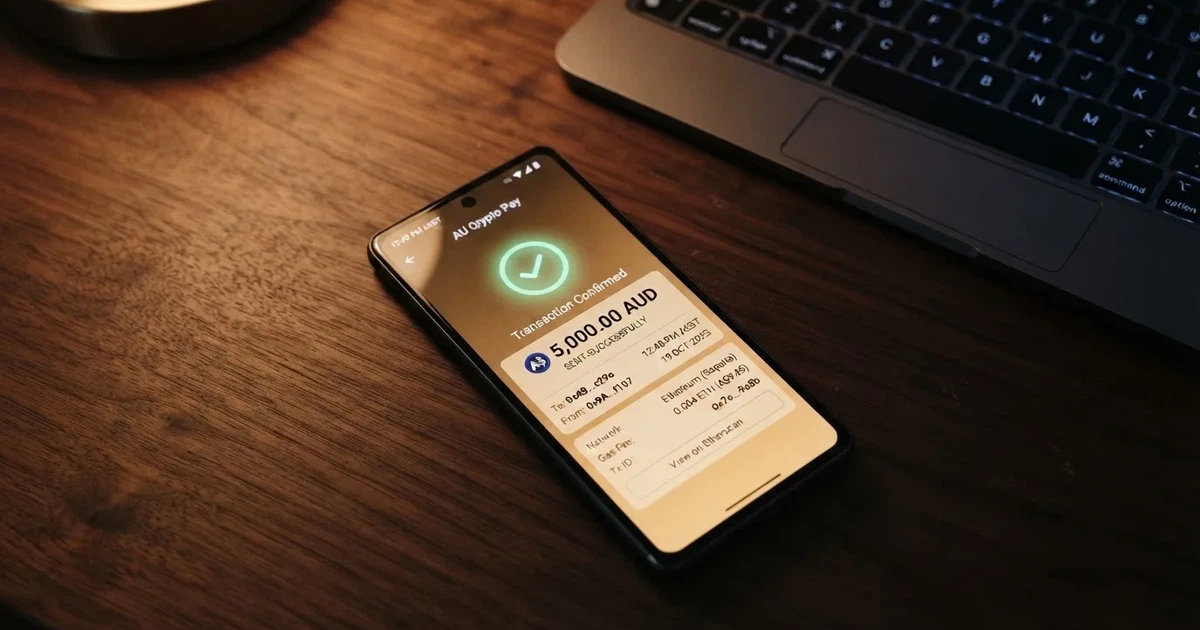
Data current as of 24 October 2026; cross-checked against the ACMA’s published formal warning register and the AUSTRAC digital currency exchange register.
Table of Contents
- Responsible play before any BCH leaves a wallet
- What a “Bitcoin Cash casino” actually is
- Legality, the ACMA’s reach and what blocks actually cost
- The blocking rate, and what it tells a player about the market
- Comparing the operators the ACMA has named
- How the brand sits in the wider Dama N.V. file
- What a BCH deposit costs that a card deposit does not
- Tax and reporting on BCH winnings
- Choosing to play anyway: the practical decision tree
- AUSTRAC and the digital currency exchange layer
- Frequently asked questions
Responsible play before any BCH leaves a wallet
Crypto deposits do not come with the protections that bank rails carry. A card payment can be disputed and a chargeback opened; a BPAY transfer takes an account number a bank can freeze. Bitcoin Cash, once broadcast, is irreversible, and the only address that matters is the one the casino’s cashier hands over. That changes what “responsible play” means here, because the spend ceiling has to sit inside the player, not the payment system.
BetStop, the National Self-Exclusion Register run by the ACMA since August 2023, binds only Australian-licensed wagering services. An offshore casino is not connected to it. Signing up excludes a player from licensed bookmakers; it does not stop a BCH deposit reaching a Curacao-operated brand whose cashier never asks. The National Gambling Helpline — 1800 858 858 — is free, 24/7, with chat at Gambling Help Online. Both services are there for the offshore punter as much as for the licensed one, and both treat a self-exclusion request as a real step, not an administrative form.
Tracking spend on a crypto-funded account is harder than it looks. The BCH wallet shows what was sent; the casino’s cashier shows what it credited in AUD at its chosen rate. The two rarely agree to the cent, and the gap is the player’s, because nobody is writing the receipt. A daily cap written on paper before the deposit, and an honest record of every cashier confirmation, is the cheapest defence a player can build. The arithmetic of clearing a bonus is not the deciding factor; whether the player still trusts the wallet balance on the way out is.
What a “Bitcoin Cash casino” actually is
A Bitcoin Cash casino is an online casino that lists BCH among its deposit and withdrawal methods, alongside Bitcoin, Ethereum, Litecoin and Tether. None of these brands are licensed in Australia. A licence displayed in the footer — Curacao eGaming, the Malta Gaming Authority — covers the operator’s home jurisdiction and says nothing about the right to take an Australian deposit. The Interactive Gambling Act 2001 makes that offer a prohibited interactive gambling service, and the ACMA’s formal warnings are how it tells operators to stop.
Bitcoin Cash itself launched on 1 August 2017 as a hard fork of Bitcoin at block height 478,558, the result of a long-running argument inside the Bitcoin community about block size. BCH kept Bitcoin’s SHA-256 proof-of-work and the 10-minute average block interval, then raised its block size limit from 8 megabytes at launch to 32 megabytes in 2018. The protocol still caps total supply at 21 million coins, the same ceiling Bitcoin carries, and the issuance halving schedule mirrors Bitcoin’s. The Bitcoin Cash project’s own page describes transaction fees as “under a penny” and confirmations as taking minutes — both true for a normal day on the network, both irrelevant to whether an Australian is allowed to play the games on the other end.
What the coin is not is anonymous. Bitcoin Cash runs on its own public blockchain, separate from Bitcoin’s, with every transaction visible to anyone who looks up the address. “Anonymity” in a casino context usually means unattributed — the wallet does not carry a name — and not untraceable, because the chain does. AUSTRAC’s registration regime for digital currency exchange providers makes this formal: any business exchanging BCH for Australian dollars on behalf of customers is a DCE and must register, and from 31 March 2026 that registration expanded to cover crypto-to-crypto exchange and digital asset custody as well.
Legality, the ACMA’s reach and what blocks actually cost
The Interactive Gambling Act 2001 is the act, and the 2017 amendment is the muscle. The 2017 amendments gave the ACMA the power to issue formal warnings and, when warnings are ignored, to ask Australian internet service providers to block offending sites at the network edge. The targets are providers, not players; no Australian has been prosecuted for placing a bet with an offshore site. That fact is comforting, and it is also the limit of the comfort, because an offshore operator owes the player nothing under Australian consumer law.
Enforcement works in two passes. A formal warning goes to the operator first, naming the brand and the Australian-facing URL. If the operator ignores it, the ACMA moves to a blocking request, and Australian ISPs are obliged to comply. The headline figures from the June 2026 round: 1,751 illegal gambling and affiliate marketing websites blocked since the first blocking request in November 2019, and more than 230 unlicensed services that left the Australian market after the 2017 strengthening. A round reported on 26 June 2026 added twelve names to the block list — 7Signs, ChromaBet, Donbet, Duospin, Freshbet, Slots Gem, Jacks Club, Lucky Start, Pointsbetz, Spinrise, Vinyl Casino and Wildsino. Each one of those is a brand that was still serving Australian deposits in the weeks before the block.
The cost the player pays for this is mechanical and easy to underweight. A site can be blocked with a balance still on it. The ACMA does not run a refund scheme, and the offshore operator has no obligation to one. A player who reads the block list once a month — the ACMA publishes each round on its website — is the player who does not wake up to a dead URL and a stranded balance.
Payment restrictions tighten the legal frame further. Since 11 June 2024, credit cards, credit-related products and digital currency have been banned as a means of payment for licensed online wagering in Australia, with penalties up to A$247,500 for operators that break the rule. A casino asking an Australian for a BCH deposit is, by definition, not the licensed wagering that the credit-ban protects. The licensed alternatives — debit card, bank transfer, PayID/Osko and BPAY — are the channels the ban applies to. An offshore BCH casino sits outside that protection on purpose, because sitting outside it is how it accepts the deposit in the first place.
Reform is in flight. The Interactive Gambling Amendment (Gambling Reform) Bill 2026 passed Parliament on 19 August 2026; its advertising and inducement measures commence on 1 January 2027. That is a 2027 law, not a 2026 one, and it does not change the position of the operator block on this page — the activity is already prohibited. What it will change, from January, is the inducement landscape: the bonus emails, the affiliate ads, the “free spins” headlines that offshore brands run to attract Australian sign-ups.
The blocking rate, and what it tells a player about the market
Between the ACMA’s first blocking request in November 2019 and the June 2026 round, 1,751 illegal gambling and affiliate websites have been added to the block list. The simplest way to read that figure is as a rate. Dividing 1,751 by the 80 months from November 2019 to June 2026 gives roughly 22 blocked sites a month across the whole enforcement window. The figure is a band rather than a single number, because the ACMA publishes in rounds: a single round can clear a dozen names in a week, then nothing for two months, then another burst. What the average hides is that the rounds themselves are becoming more frequent. The June 2026 round was one of several in 2026 alone, and H2 Gambling Capital’s 2025 report estimates that Australians lose about A$3.9 billion a year to illegal gambling sites. The legal share of gambling spend fell from 74% in 2021 to 64%, according to the same report — a ten-point slide that the ACMA’s blocking tool is trying, and visibly failing, to reverse.
What a player takes from those numbers is the velocity. The market the offshore BCH casino lives in is one where the URL in the cashier can stop resolving inside the quarter. A brand the ACMA has not yet warned may still be warned; a brand the ACMA has warned may already be in the next blocking round. The “trusted” descriptor that BCH affiliate pages hand out freely is, in this light, a forecast, not a description — and the forecast belongs to the regulator, not the affiliate.
Comparing the operators the ACMA has named
The table below lists every brand the ACMA has formally warned for offering prohibited interactive gambling services to Australians, and that this page reviews. It is not a ranking, because ranking presumes a recommendation, and no offshore casino is recommended on this page. It is the ACMA’s own list, in the order the regulator named them, with a column for whether the operator page anywhere acknowledges Bitcoin Cash as a payment rail. Most do not, and that absence is itself the answer to part of the question that sent a reader here.
| Brand | ACMA action and date | Operator named by the ACMA | Bitcoin Cash support |
|---|---|---|---|
| RocketPlay | Formal warning, March 2026 | Pulsup Ltd | — |
| Level Up Casino | Formal warning, May 2022 | Dama N.V. | — |
| Woo Casino | Formal warning, March 2025 | Dama N.V. | Listings report it |
| Spirit Casino | Formal warning, May 2025 | Dama N.V. | — |
| National Casino | Formal warning, July 2025 | Consolutetish S.R.L. | Listings report it |
| Bizzo Casino | Formal warning, July 2025 (earlier 2022 to TechSolutions) | Consolutetish S.R.L. | — |
| Ignition Casino | Formal warning, July 2025 | Bamboo Media | — |
| Instant Casino | Formal warning, February 2025 | EOD Code SRL | — |
| Jackbit | Formal warning, April 2026 | Ryker B.V. | — |
| Casino Intense | Formal warning, April 2025 | Sterplay Holding Ltd | — |
| Sky Crown | Formal warning, September 2022 | Hollycorn N.V. | — |
The dashes are the point. Across the eleven brands the ACMA has warned, only two — Woo Casino and National Casino — show up in third-party listings that mention Bitcoin Cash at all, and both listings are aggregator pages, not the operators’ own cashier pages. For the remaining nine, the absence of a confirmed cashier figure is what the table records. A reader who arrives at one of these brands’ deposit screens looking for a BCH button should not assume it is there simply because an affiliate blog promised it was; the cashier is the only source that counts, and the cashier is the thing the regulator has already told to stop serving Australians.
RocketPlay
RocketPlay’s ACMA history runs in two layers. In May 2022, the regulator issued a formal warning to Dama N.V. covering six casino brands, of which Rocketplay was one. In March 2026, the warning was reissued, this time naming Pulsup Ltd as the operator behind Rocketplay. The intervening years did not move Rocketplay off the regulator’s list; they changed which corporate entity the regulator named in the warning. Bitcoin Cash does not appear in Rocketplay’s own cashier as a confirmed payment rail, and the aggregator pages that once listed it have stopped mentioning it in 2026. A player reaching this brand is paying for an offshore operator that the Australian regulator has now flagged twice.
Level Up Casino
Level Up was one of the original six Dama N.V. brands named in the May 2022 warning, and there is no public record of the warning being lifted. The Dama group runs a wide portfolio of offshore casinos, and the regulator has cycled through several of them — Woo Casino in March 2025, Spirit Casino in May 2025 — without ever returning to Level Up to say the earlier concerns are resolved. The implication for a player is that “no new warning” is not the same as “warning withdrawn”; it is the regulator not spending a second action on a brand the first one already named. Bitcoin Cash support is not confirmed at the cashier, and the brand sits in the same Curacao-eGaming wrapper the rest of the Dama portfolio sits in.
Woo Casino
Woo Casino is one of the two brands in the comparison where third-party listings do mention Bitcoin Cash as a deposit method, alongside a dozen other cryptocurrencies. The listing claim is what it is — a listing claim — and the brand’s own cashier is the only place where the BCH button can be confirmed, the minimum deposit read off, and the confirmation count specified. Woo’s ACMA warning arrived in March 2025, naming Dama N.V., and Dama’s pattern across the group is to keep operating under new URLs after each round. A player weighing Woo is weighing an aggregator-suggested BCH option against an open regulator file and a corporate parent with multiple Australian-facing warnings to its name.
Spirit Casino
Spirit Casino picked up its Dama N.V. warning in May 2025, two months after Woo’s, and the same Curacao wrapper covers both. The brand is newer than Woo and Rocketplay, which is part of why it appears less often on listings pages that still mention BCH as a payment rail. That is not a recommendation; it is a recency effect. Newer brands carry fewer stale listings, and a “no Bitcoin Cash listing” finding here may simply mean the affiliate sites have not caught up. The ACMA file is the harder fact, and it sits open.
National Casino
National Casino is the second of the two brands with a listing-level BCH reference. Its ACMA warning arrived in July 2025, alongside Bizzo Casino, with Consolutetish S.R.L. named as the operator. National Casino has been a long-running brand in the Dama-adjacent segment of the offshore market, and the listings that mention BCH predate the 2025 warning by several years. The aggregator pages are slow to remove what they once published; the regulator is not. As with Woo, the cashier is the only place the BCH option can be confirmed, and the brand’s standing with the ACMA is the only place the consumer’s position can be read.
Bizzo Casino
Bizzo Casino carries a doubled ACMA record: a 2022 formal warning to TechSolutions (CY) Group Limited and TechSolutions Group N.V., and a July 2025 warning to Consolutetish S.R.L. The same brand, two different operator names, four years apart. The doubled warning is unusual even within this set, and it tells a player that the corporate structure behind the cashier changed in a way the regulator tracked. Bitcoin Cash is not confirmed at the cashier; an aggregator listing that once mentioned it has not been refreshed since the 2025 warning. A brand with two warnings to two different operators is the brand where the offline answer is hardest to verify.
Ignition Casino
Ignition Casino was named in a July 2025 ACMA warning to Bamboo Media, a smaller operator name than the Dama or Consolutetish groups. Ignition has historically been pitched at the Australian and US market simultaneously, and the cashier reflects that — a poker- and casino-led product with a fiat-friendly deposit page that does not foreground crypto. Bitcoin Cash support is not confirmed here, and the brand’s position is the harder one to argue from a “best BCH casino” angle precisely because the cashier was never built for the coin.
Instant Casino
Instant Casino was the subject of a February 2025 ACMA warning to EOD Code SRL. The brand’s name suggests instant play, instant withdrawals, and the marketing pushes that line hard. The cashier lists a range of cryptocurrencies, and third-party pages have occasionally included Bitcoin Cash in a long list — but the cashier’s own page, which is the only source a player can rely on, is the place where the BCH option either shows up or does not. The 2025 ACMA warning is the most recent action in the operator’s file, and the brand has not, in the public record, replied to it.
Jackbit
Jackbit is a sportsbook-and-casino hybrid, and its April 2026 ACMA warning named Ryker B.V. as the operator. Jackbit’s product leans hard on crypto rails and was one of the earlier offshore brands to take Bitcoin Cash deposits as a matter of routine. The ACMA warning does not change the cashier — it changes the player’s position. A player who values the BCH rail above the regulatory status is making a deliberate choice, and the choice has a price, which is the absence of any Australian consumer protection if the cashier stops paying out. Jackbit’s standing in the warning register is current as of April 2026; that recency matters more than age.
Casino Intense
Casino Intense’s April 2025 warning to Sterplay Holding Ltd sits in the middle of this set by date. The brand is smaller than the Dama or Consolutetish portfolios, and its cashier is correspondingly leaner. Bitcoin Cash is not confirmed at the cashier, and the brand’s niche positioning — a tight game library rather than a wide one — does not promise the kind of crypto variety that the larger operators maintain. A player who arrives here for BCH support is reading an older listing that the cashier no longer reflects.
Sky Crown
Sky Crown is the oldest warning in the comparison, a formal warning to Hollycorn N.V. published in September 2022. Hollycorn also ran Blue Leo Casino, and the regulator named both in the same action. Three years is a long time in the offshore market, and Sky Crown’s cashier today may not be the cashier the warning referred to. That is part of the problem with offshore brands: the brand persists while the operator behind it shifts, and the player has no easy way to know whether the entity they are depositing with is the entity the regulator named. Bitcoin Cash is not confirmed at the cashier, and the brand’s position is best read as an unresolved 2022 action against a name that has continued to operate.
How the brand sits in the wider Dama N.V. file
Dama N.V. is the operator that recurs across this comparison. The ACMA named Dama in May 2022 (six brands, including Rocketplay and Level Up), again in March 2025 (Woo Casino), and again in May 2025 (Spirit Casino). Three warnings to the same operator, four years apart, across brands that share a cashier template and a Curacao wrapper. The regulator’s pattern — re-warning rather than pursuing civil penalties — is itself a fact about how offshore enforcement works in practice: the ACMA’s blocking tool is sharper than its fine schedule, and a brand that ignores one warning can usually count on a second before a block request follows.
The practical read for a player is that the Dama brands are a portfolio, not a list of independents. A bonus advertised at one is, in cash and carry terms, broadly available at the others; a cashier policy at one is broadly enforced at the others. The ACMA treats the portfolio as one operator’s problem, and a player who values the BCH rail above the regulatory status is choosing the operator, not just the brand.
What a BCH deposit costs that a card deposit does not
The visible cost of a Bitcoin Cash deposit is the network fee — “under a penny”, per the project’s own page — and the exchange spread between the BCH spot rate and the AUD figure the cashier credits. The invisible cost is the absence of recourse. A Visa debit card chargeback is a real mechanism, with rules, with a bank on the other end, and with a defined window. A BCH transaction, once confirmed on-chain, is not a transaction the network can take back. The cashier credits the AUD equivalent at the rate it chooses, and the player has agreed to that rate by sending the coins.
That asymmetry compounds at withdrawal. A casino that promises a BCH withdrawal in “minutes” is referring to the network confirmation time, not the operator’s processing time. The processing time is what the cashier’s terms page sets, and it is usually the same as for any other method — a manual review, a hold period, a daily batch. The “instant” claim is a marketing word applied to the part of the journey the operator does not control, while the part it does control runs on a slower clock. A player who reads only the headline reads the wrong half of the timeline.
The tax position adds a third layer. The ATO treats crypto assets, including BCH, as property for Capital Gains Tax purposes; gains are taxed at marginal rates, and assets held over 12 months qualify for a 50% CGT discount until 30 June 2027, after which the discount is replaced by CPI indexation of the cost base and a 30% minimum tax rate on net capital gains. Most disposals — selling for AUD, swapping for another crypto, or spending BCH at a casino cashier — are CGT events. The casino’s marketing rarely mentions this, because the casino is not the taxpayer’s adviser, and the ATO does. Recording the AUD value of every BCH deposit and the AUD value of every withdrawal is the only way the CGT position can be reconstructed at tax time.
Tax and reporting on BCH winnings
For a recreational player, gambling winnings are not assessable income in Australia, and losses are not deductible, unless the player is carrying on a business of gambling — a much narrower category than “plays often”. The ATO’s position on the BCH side, however, does not depend on whether the player is recreational. Every time BCH leaves a wallet and reaches a casino cashier, that disposal is a CGT event. Every time BCH comes back from a withdrawal, that acquisition is the start of a new CGT asset. The profit between the two — measured in AUD at the ATO’s published methodology — is the capital gain.
The 50% CGT discount is the most-misread piece of this. It applies only to assets held longer than 12 months; assets sold within 12 months of acquisition are taxed at the full marginal rate. From 1 July 2027 the discount disappears, replaced by CPI indexation of the cost base plus a 30% minimum tax rate on net capital gains. A player who treats the cashier’s “BCH accepted” badge as a tax-free zone is treating it as something it is not. Recording the AUD cost base at deposit and the AUD value at withdrawal, in a spreadsheet, is the cheapest defence.
The personal-use exemption does not rescue the offshore punter. The ATO disregards capital gains and losses on personal-use crypto assets, but only if the asset cost A$10,000 or less to acquire. A player depositing and withdrawing at an offshore casino is not holding BCH as a personal-use asset; they are holding it as an investment that happens to be deployed at a cashier. The exemption is for the occasional small purchase, not for a gambling float.
Choosing to play anyway: the practical decision tree
The decision to fund an offshore casino with Bitcoin Cash is not a decision the ACMA, the ATO or the comparison table above can make for the player. What it can do is frame the costs that the marketing page does not. The frame, in the order a player is likely to meet it:
The brand may already be on the ACMA’s warning list. Eleven of the brands most often listed as “Bitcoin Cash casinos” are. A player who has not checked the register against the cashier’s URL is paying for a service whose existence in Australia is contested by the regulator whose job is to police it.
The block may come mid-session. A blocking round can drop the URL inside the quarter. The balance on the cashier at that moment is the player’s problem, and there is no Australian complaints body that will help recover it.
The cashier’s BCH option is the only confirmation that counts. An aggregator listing that mentions BCH is a listing, not a guarantee. The cashier page is the page that decides whether the deposit is possible and at what rate.
The CGT position is the player’s, not the casino’s. Every deposit and every withdrawal is a CGT event. Recording the AUD values in a spreadsheet is the cheapest defence.
The self-exclusion tools cover the licensed market. BetStop does not bind an offshore casino. The 1800 858 858 helpline and Gambling Help Online do, and both treat an offshore player with the same seriousness they treat a licensed one.
A player who reads the frame and still proceeds is not a player the page can away. The page’s job is to make sure the costs are visible before the BCH is sent, not after.
AUSTRAC and the digital currency exchange layer
AUSTRAC’s registration regime for digital currency exchange providers is the legal frame around any business that turns BCH into AUD on behalf of a customer. From 31 March 2026 the registration expanded beyond crypto-to-fiat exchange to also cover crypto-to-crypto exchange, digital asset transferors, digital asset custody providers, and stablecoin issuers and distributors. Operating unregistered is a criminal offence. The expansion matters because the casino’s cashier is, in functional terms, a crypto-to-fiat exchange at the point where BCH becomes a credit in AUD, and the regulatory layer that covers a standalone exchange now covers the equivalent step inside the cashier.
What the AUSTRAC regime does not do is license the casino. The casino is the operator offering prohibited interactive gambling services to Australians; AUSTRAC is the financial intelligence body tracking the money. The two regulators address different parts of the transaction. A player who treats the casino’s AUSTRAC registration as evidence of legality is conflating the financial layer with the gambling layer, and the conflation is what the ACMA’s warnings are there to correct.
Frequently asked questions
Is it legal for a casino site to accept Bitcoin Cash from an Australian player?
No. The Interactive Gambling Act 2001, as strengthened in 2017, prohibits offering online casino games and online pokies to a person in Australia regardless of the payment rail. Bitcoin Cash is not the issue; the activity is. The ACMA enforces this by issuing formal warnings and directing Australian ISPs to block non-compliant sites — 1,751 sites blocked since November 2019.
How is Bitcoin Cash different from Bitcoin for a casino deposit?
Functionally, BCH offers lower fees and faster confirmation on a 32-megabyte block, but it is a separate public blockchain from Bitcoin’s. Both chains are pseudonymous, not anonymous — every transaction is visible to anyone who looks up the address. Neither chain gives an Australian player legal cover; the IGA bans the activity, not the rail.
Does a Bitcoin Cash withdrawal require the same identity checks as a card withdrawal?
Usually yes, at the casino’s level. AUSTRAC requires any business exchanging BCH for fiat to register as a Digital Currency Exchange provider and apply AML/CTF controls, so the casino’s cashier will collect ID before the first withdrawal regardless of the rail. The on-chain movement is fast; the operator’s review is not.
Is there a limit on how much Bitcoin Cash can be deposited at once?
It depends on the cashier. The IGA does not impose a per-deposit cap on Bitcoin Cash, because the IGA does not address BCH at all — it bans the underlying activity. The cashier’s own minimum and maximum set the practical limit, and those limits vary by brand and by player verification level.
What confirms a Bitcoin Cash deposit before the casino credits the account?
The casino waits for a set number of network confirmations — typically one to three on BCH, which under the protocol’s 10-minute average block interval means minutes to half an hour. The cashier’s confirmation page is the only place a player can read the operator’s exact threshold, and the player should read it before sending funds.
Can a Bitcoin Cash payment to a casino be reversed after it is sent?
No. Bitcoin Cash transactions are irreversible once confirmed on-chain; there is no chargeback mechanism equivalent to a card network’s. This is the single largest difference between a BCH deposit and a card deposit, and it is the reason a player should treat the cashier’s confirmation page as a binding contract rather than a holding screen.