
Live baccarat at an online casino in Australia: what the stream, the licence status and the blocking notices actually add up to
A live baccarat table looks like the friendliest game in the casino. The dealer stands behind a real shoe, the cards are physical, the rules are three bets wide and the betting window is calm. None of that changes what the Interactive Gambling Act 2001 (the IGA) says about a stream addressed to a person physically in Australia: the service is prohibited, the operator is the one the Act targets, and the consumer protections an Australian punter is used to do not follow the stream offshore. The page below works through what that costs a reader who has decided to play anyway — in lost consumer recourse, in blocked withdrawals, in the time it takes a session to drift — and through the eleven brands the ACMA has put on formal notice for offering it.
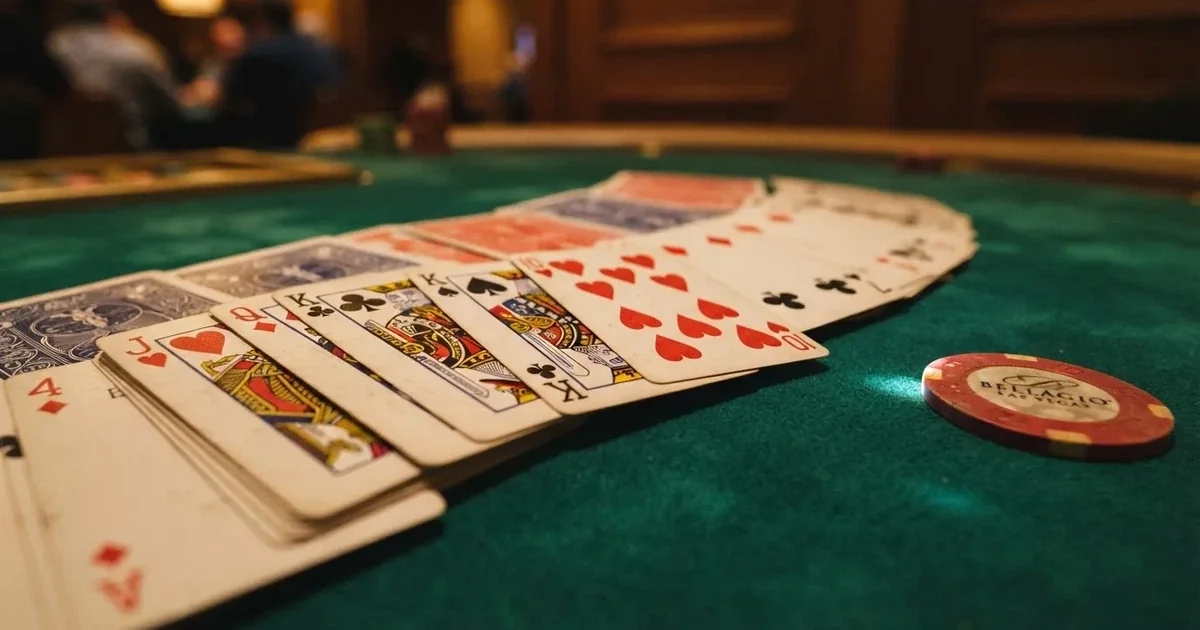
Current as of 24 October 2026, checked against the ACMA’s published register of formal warnings and blocking requests.
Table of Contents
- Why a session limit matters before the first hand is dealt
- Bitcoin-funded live baccarat: what the rail changes, and what it does not
- Live baccarat tables, the providers behind them and the rules of the shoe
- Eleven brands the ACMA has put on formal notice for live baccarat and the rest of the prohibited product
- What the page is actually for: a reader looking at a stream the IGA prohibits
- The Australian legal frame around the stream
- What the ACMA’s blocking record means for the eleven brands on the table
- Frequently asked questions about live baccarat at an online casino in Australia
Why a session limit matters before the first hand is dealt
The cost of live baccarat at an online casino is not only the house edge. It is the pace. A live-dealer baccarat table runs back-to-back hands with no spin-up time between rounds, no reshuffle of the shoe for the player, and no pause for the punter to count what has gone out of the account. The cards on the felt move at the dealer’s hand speed, not at the player’s. Set a session limit before the stream opens, and stick to it.
Two things make that discipline hard. First, baccarat’s three-bet structure is unusually narrow for a casino game: Banker, Player, Tie. There is no decision tree to slow the player down between hands, no split to think about, no insurance offer. Each decision is the same shape as the last. Second, the house edge on the two sensible bets is small enough that short-term results drift around the long-run figure. A 1.06 per cent edge on Banker and 1.24 per cent on Player still looks like an even game across a session of fifty hands, and a session of fifty hands at the dealer’s cadence runs inside an hour.

The National Gambling Helpline (1800 858 858) is free, runs around the clock and offers a chat service at Gambling Help Online for anyone who finds the session limit has not held. BetStop, the National Self-Exclusion Register, is the other Australian-licensed channel that an Australian punter can use to block themselves from wagering services — but it binds only Australian-licensed online and phone wagering services. An offshore live baccarat site does not connect to it.
The single most useful thing a reader can take from this section is the order: pick the time and the ceiling before the stream loads, and treat the rest of the session as a single decision already made. A session that ends on its own terms is the cheap session. A session that ends because the balance did is the expensive one.
Bitcoin-funded live baccarat: what the rail changes, and what it does not
Bitcoin live baccarat works the same way at the table as a card-funded version. The shoe is real, the cards are real, the dealing follows the same drawing rules, and the bet payouts are identical. The only thing that changes is the rail the money moves on between the player’s wallet and the casino’s account.
A bitcoin rail changes three things a player can actually feel. Settlement is faster on the way in — a confirmed deposit can show in the casino balance within minutes, against the hours or days a bank transfer or PayID can take for an Australian-licensed bookmaker to clear. Settlement on the way out is faster too, in the same direction: withdrawals in bitcoin typically arrive without the same multi-day pending window an Australian bank transfer can sit through. The third change is that the rail moves outside the Australian payments perimeter: from 11 June 2024, licensed Australian online wagering cannot accept digital currency or credit, and the ban is enforced by penalties up to A$247,500 against the operator. A site asking an Australian punter for a bitcoin deposit is, by definition, not operating under that rule.
That last point is the one that decides whether the rail is a positive or a net cost. The bitcoin transaction itself is cheap to send and free of chargeback protection. The reader who chooses it gets speed and gives up the consumer protection an Australian-licensed debit-card deposit would have offered. The Australian bank’s dispute process, the operator’s Australian complaints body, the EDR scheme an Australian punter can escalate to — none of it follows a deposit that has left the regulated payments system.
The cost of the rail is therefore not in the transaction fee. It is in the absence of recourse if the withdrawal stalls or the balance is voided. The bitcoin stream is faster; the bitcoin stream is also outside the channel an Australian punter can complain to.
Live baccarat tables, the providers behind them and the rules of the shoe
Live baccarat’s appeal is straightforward: a human being deals the cards in real time over a video stream, and the player bets on Banker, Player or Tie before each hand is resolved. The paytable is identical to the standard computer-generated version. The difference is the cadence and the presence of a visible dealer.
The paytable and the edge
Three bets, three house edges. The Banker bet carries a house edge of 1.06 per cent, the Player bet 1.24 per cent, and the Tie bet 14.36 per cent. The Banker bet is the cheapest for the punter over the long run, even after the standard five per cent commission the casino takes on a winning Banker hand. The Tie bet is the most expensive single proposition on the table by a wide margin and is the bet a player who has read the paytable never makes a habit of.
A reader comparing live baccarat to other live table games can put the edges side by side. In craps, the Pass Line carries 1.41 per cent and Don’t Pass 1.36 per cent, and the free-odds bet taken behind either line is the only bet on a casino floor with a true zero per cent edge. In blackjack, optimal play against a liberal Las Vegas Strip rule set is about 0.28 per cent, against Atlantic City rules about 0.43 per cent. Baccarat sits between those two on its sensible bets and well above them on the Tie. None of those figures changes because the dealer is on camera rather than a random number generator.
The shoe and the drawing rules
The variant most often streamed is punto banco, developed in Havana during the 1940s. The casino banks the game at all times and plays both hands out by a fixed drawing rule — the player does not decide whether to take a third card; the table rules do. Cards two through nine count at face value, ten and the face cards count as zero, and aces count as one, with the hand total taken modulo ten. Punto banco is dealt from a shoe of six or eight decks; a stream from a six-deck shoe and a stream from an eight-deck shoe have identical paytables but slightly different feel because of how often the shoe is reshuffled.
Two older variants still appear on some live lobbies. Chemin de fer (the French for “railway”) emerged from baccarat banque in the late 19th century and is named for being quicker to play than the original game, with two players rotating the bank. The history of the game’s origin is contested: some accounts place it in nineteenth-century France, others have it introduced from Italy at the end of the fifteenth century during the reign of King Charles VIII, with the writer David Parlett considering the game Macao its immediate precursor.
A note on the providers behind the stream
The provider behind the stream — the studio that runs the shoe and the cameras — is what makes a “live” lobby live. The brand on the casino’s homepage is what markets the room; the provider on the edge of the video frame is the one operating the table. A reader who cares about the shoe and the dealing cadence is reading the provider’s name, not the casino’s. A reader who only cares about whether the cards are dealt by a real dealer is reading the same stream either way.
Eleven brands the ACMA has put on formal notice for live baccarat and the rest of the prohibited product
Comparing live baccarat casino sites side by side does not make any of them lawful for an Australian resident. The IGA prohibits the supply of online casino-style games to a person in Australia regardless of where the operator is incorporated, and the ACMA’s enforcement list is the public record of who has been told so. The table below is that record for the eleven brands featured on this page. It is not a ranking and not a recommendation — every brand on the list is one the regulator itself identified as having offered a prohibited interactive gambling service to Australian customers.
| Brand | ACMA action and date | Operator named by the ACMA | Subject support |
|---|---|---|---|
| RocketPlay | Formal warning, March 2026 (Pulsup Ltd); earlier warning May 2022 (Dama N.V.) | Pulsup Ltd; Dama N.V. | — |
| Level Up Casino | Formal warning, May 2022 | Dama N.V. | listings (BGaming) |
| Woo Casino | Formal warning, March 2025 | Dama N.V. | — |
| Spirit Casino | Formal warning, May 2025 | Dama N.V. | — |
| National Casino | Formal warning, July 2025 | Consolutetish S.R.L. | listings (en.wikipedia.org) |
| Bizzo Casino | Formal warning, July 2025 (Consolutetish S.R.L.); earlier warning 2022 (TechSolutions) | Consolutetish S.R.L.; TechSolutions (CY) Group Limited and TechSolutions Group N.V. | — |
| Ignition Casino | Formal warning, July 2025 | Bamboo Media | — |
| Instant Casino | Formal warning, February 2025 | EOD Code SRL | — |
| Jackbit | Formal warning, April 2026 | Ryker B.V. | — |
| Casino Intense | Formal warning, April 2025 | Sterplay Holding Ltd | listings (ABC, ACMA, Crown Melbourne) |
| Sky Crown | Formal warning (Hollycorn N.V., Sky Crown and Blue Leo) | Hollycorn N.V. | — |
Three things in the table are worth pulling out for the reader. First, the operator name behind a brand can change — RocketPlay’s March 2026 warning names Pulsup Ltd, while its May 2022 warning named Dama N.V., and Bizzo’s July 2025 warning names Consolutetish S.R.L. while its 2022 warning named TechSolutions. A reader who only knows the brand and not the operator behind it has no way to read the warning back. Second, “subject support” in the right column reflects whether the brand appears in the consulted set for a relevant subject; where it does, the listing is named, and where it does not, the cell carries an em dash and the brand is presented on its other fields. Third, every row carries the same Australian-law caveat: whatever licence the site displays, online casino games cannot be licensed anywhere in Australia.
The blocking arithmetic below the table is the ACMA’s own tally, not the table’s — and it is the cleanest single number a reader can take from this section. Since the first blocking request in November 2019 and as reported in June 2026, the ACMA has asked Australian internet service providers to block 1,751 illegal gambling and affiliate marketing websites, and more than 230 unlicensed gambling services have left the Australian market since enforcement was strengthened in 2017. The June 2026 round alone added twelve names — 7Signs, ChromaBet, Donbet, Duospin, Freshbet, Slots Gem, Jacks Club, Lucky Start, Pointsbetz, Spinrise, Vinyl Casino and Wildsino — none of them on the table above, all of them on the same legal footing as the brands in it.
The blocking rate implied by those two numbers is in the order of a few hundred sites per year averaged across the seven years since the first request, with the rate of new blocks varying substantially from year to year as enforcement rounds cluster. The figure that matters more than the rate is the trend: the share of Australian gambling going through legal channels fell from 74 per cent in 2021 to 64 per cent in H2 Gambling Capital’s 2025 estimate, and H2 estimates Australians lose about A$3.9 billion a year to illegal gambling sites. The stream the reader is weighing a deposit on is part of that A$3.9 billion.
RocketPlay
The most recent warning attached to RocketPlay is the March 2026 formal warning to Pulsup Ltd over RocketPlay, with an earlier warning to Dama N.V. covering RocketPlay among six brands in May 2022. The two operators mean a reader following the brand needs to follow the operator name with it — Dama N.V. on the older notice, Pulsup Ltd on the newer one. RocketPlay offers no Australian consumer protection and no Australian-licensed complaints channel; any balance on the account at the moment an Australian ISP is directed to block the site sits behind the block until the brand migrates or the balance is withdrawn.
Level Up Casino
Level Up Casino was named in Dama N.V.’s May 2022 warning alongside five other brands. It appears in a small set of consulted listings under the Bgaming provider umbrella. The ACMA’s action is the relevant fact for an Australian reader; the provider listing is the relevant fact for a reader curious about which studios feed the lobby.
Woo Casino
Woo Casino drew its own formal warning in March 2025, again addressed to Dama N.V. The same operator now has two warnings on the ACMA’s register for two separate brands, with the May 2025 Spirit Casino warning sitting alongside it. A reader using either brand is dealing with the same operator entity.
Spirit Casino
Spirit Casino’s May 2025 warning is the second in the same operator’s run that year. The cadence of the warnings — March, then May — is the ACMA’s own statement that Dama N.V. did not change its offering after the first one.
National Casino
National Casino was named in Consolutetish S.R.L.’s July 2025 warning. The brand also appears in consulted Wikipedia entries on the broader baccarat topic. An Australian punter looking at National Casino is looking at a brand the ACMA put on notice in the same round as Bizzo.
Bizzo Casino
Bizzo Casino carries two warnings: a 2022 warning to TechSolutions (CY) Group Limited and TechSolutions Group N.V., and a July 2025 warning to Consolutetish S.R.L. Two warnings, two operators, one brand. The earlier warning has not stopped the brand from continuing to be reachable from Australia — the ACMA’s July 2025 warning is the public confirmation that the earlier action did not end the offering.
Ignition Casino
Ignition Casino’s July 2025 warning names Bamboo Media. The brand had already been the subject of broader US-facing poker and casino attention before that warning, but the ACMA action is the relevant Australian-law event.
Instant Casino
Instant Casino drew a February 2025 warning naming EOD Code SRL. The warning is the ACMA’s first public action against this operator entity on the consulted record.
Jackbit
Jackbit drew an April 2026 warning naming Ryker B.V. alongside CasinOK. Two brands, one warning, one operator. The April 2026 timing puts Jackbit among the more recent additions to the consulted set.
Casino Intense
Casino Intense drew an April 2025 warning naming Sterplay Holding Ltd. The brand also appears in consulted ABC, ACMA and Crown Melbourne entries through the broader gambling-regulation topic.
Sky Crown
Sky Crown was named in the ACMA’s formal warning to Hollycorn N.V. covering Sky Crown and Blue Leo casino services. Two brands, one warning, one operator — a structure the ACMA has used repeatedly when an operator runs multiple brands off the same platform.
What the page is actually for: a reader looking at a stream the IGA prohibits
The overview above works through what a live baccarat stream at an online casino is, what it costs in house edge, and what the ACMA’s enforcement record says about who has been told the service is prohibited for Australian residents. The single fact that frames the rest of the page is in the IGA itself: it is an offence to provide online casino-style games to a person in Australia, with penalties up to A$220,000 per day for individuals and A$1.1 million per day for corporations.
The individual player is not the target of the Act. The operator is. That distinction is what makes the page’s cost framing work: the cost to a player of using one of the eleven brands above is not a fine, it is the absence of every protection an Australian punter is used to. There is no Australian-licensed complaints body to escalate to, no BetStop registration that will block the offshore site from accepting the next deposit, no Australian bank’s chargeback rights because the payment rail has usually left the regulated perimeter, and no guarantee that a balance still on the account when the next blocking round lands is recoverable.
That is also why the operator set on this page is presented as it is: a list the ACMA itself drew, not a ranking the page drew. The page describes the brands; the regulator’s warning is the page’s source for each one.
The Australian legal frame around the stream
The IGA, in the form amended in 2017, prohibits the supply of online casino games, online pokies and in-play betting to a person in Australia. State and territory law does not license online casino products; what is licensable is wagering on races and sport placed before the event, lotteries and keno. The Northern Territory Racing and Waskering Commission regulates 52 of Australia’s online bookmakers — including Sportsbet, Bet365 and Ladbrokes — under territory licences taken out for tax reasons. The commission has no full-time staff and meets once a month in Darwin, which is a structural feature a reader should know about when reading any “Australian-licensed” claim on a wagering operator.
The ACMA enforces the IGA by investigating, issuing formal warnings and directing Australian internet service providers to block illegal sites. The June 2026 blocking round added twelve names in a single round, bringing the cumulative total of blocked sites to 1,751 since November 2019. More than 230 unlicensed services have left the Australian market entirely since 2017 — a separate count from the blocks, capturing services that withdrew rather than waiting to be blocked. The two numbers together describe the regulator’s working set: a list of brands that have been told, a list of services that have left, and a stream of new brands being added on both lists each round.
The minimum age for any Australian-licensed wagering product is 18. A site that does not check the age of an Australian customer is doing less than an Australian-licensed operator is required to do, and the absence of that check is itself an indicator that the site is outside the Australian perimeter.
The credit-card and digital-currency ban on licensed Australian online wagering took effect on 11 June 2024. Legal deposit routes for an Australian-licensed operator are debit card, bank transfer, PayID or Osko, and BPAY. A site asking an Australian punter for a credit card or a bitcoin deposit is, by definition, operating outside the rules an Australian-licensed operator follows. The Interactive Gambling Amendment (Gambling Reform) Bill 2026 passed Parliament on 19 August 2026; its advertising and inducement measures commence on 1 January 2027. The Bill is law with a future start date, not in force on a 2026 page.
On tax: gambling winnings of a recreational player are not assessable income under section 6-5 of the ITAA 1997, and losses are not deductible, unless the person is carrying on a business of gambling. That framing is the model, not advice; the ATO is the body whose published view governs an individual case.
What the ACMA’s blocking record means for the eleven brands on the table
The ACMA’s blocking record and its formal-warning record sit alongside each other but are not the same thing. A formal warning is a notice that a named operator has been offering a prohibited interactive gambling service to Australian customers; a blocking request directs ISPs to make the brand unreachable from an Australian IP. A warning is usually the precursor to a block; a block is what happens when the warning does not end the offering.
Three of the eleven brands sit on the more recent end of the warning register. The April 2026 Jackbit warning names Ryker B.V. alongside CasinOK, the March 2026 RocketPlay warning names Pulsup Ltd, and the July 2025 round covers National Casino, Bizzo Casino and Ignition Casino in three separate operator notices. The March 2025 Woo Casino warning and the May 2025 Spirit Casino warning were both addressed to Dama N.V. The 2022 TechSolutions warning on Bizzo Casino has not stopped the brand from being the subject of a second warning three years later.
That pattern — the same operator drawing multiple warnings across multiple brand names — is the ACMA’s own statement that the IGA prohibition has been told to the operator and the operator has continued. The page’s cost framing lands here: the cost the player pays is the absence of every channel an Australian punter is used to, because the operator behind the brand has chosen to stay outside that channel.
The Australian Communications and Media Authority is the body whose published register a reader can check for the latest formal warning or blocking round; the register is updated as new actions are published, and the table above is built from the consulted record rather than from the brand’s own marketing.
Frequently asked questions about live baccarat at an online casino in Australia
Is it legal to play live baccarat for real money at an online casino in Australia?
No. The Interactive Gambling Act 2001 makes it an offence for an operator to provide online casino-style games — including live baccarat — to a person in Australia. The Act targets the provider, not the player, but an offshore site gives no Australian consumer protection, no Australian complaints body and no recourse if a withdrawal stalls. The site can also be blocked with a balance still on it.
How does a live-dealer baccarat table differ from a computer-generated version?
The cards on a live baccarat table are dealt by a person from a real shoe, in real time, over a video stream. The paytable is the same — Banker pays even money less a five per cent commission on a win, Player pays even money, Tie pays eight to one. The edges on the three bets are 1.06 per cent on Banker, 1.24 per cent on Player and 14.36 per cent on Tie. A computer-generated version uses a random number generator instead of a dealer; the maths is the same.
Does a bitcoin-funded live baccarat table use a different card-dealing process?
No. The shoe is the same, the drawing rules are the same, and the bet payouts are the same. The only change is the payment rail between the player’s wallet and the casino’s account. Bitcoin deposits and withdrawals are typically faster than an Australian bank transfer, but the rail moves outside the Australian payments perimeter, and the consumer protections an Australian punter is used to do not follow a bitcoin deposit.
What is the difference between betting on Banker, Player and Tie in baccarat?
Banker and Player are the two main bets; both pay even money, with Banker wins carrying a five per cent commission. The Tie bet pays eight to one when the two hands end on the same total, and carries a house edge of 14.36 per cent — by a wide margin the most expensive single bet on the table. The long-run cheapest bet is Banker.
Can a live baccarat session be joined mid-shoe, or only at the start?
A live baccarat stream accepts new players at any point in the shoe. The dealing continues uninterrupted; a new player sits down at the table and bets on the next hand without waiting for a reshuffle. The shoe itself is reshuffled by the dealer at the table’s discretion, typically when the cut card is reached.
How fast do consecutive hands typically run at a live baccarat table?
A live-dealer baccarat hand runs back-to-back with no spin-up time between rounds. The pace is set by the dealer rather than the player. A session of fifty hands at the dealer’s cadence runs inside an hour, which is why a session limit set before the stream loads is worth more than a session limit set after the first hand is dealt.