
Instant PayID withdrawal casino Australia in 2026: what the rails actually do, and what they do not
A PayID transfer really can land in a bank account in under a minute. That part of the marketing is honest, and it is also the only part that is. PayID sits on Australia’s New Payments Platform, runs through more than 100 Australian banks, and is built into the online banking most readers already use. The settlement speed is real. What the marketing rarely adds is the part that makes the speed irrelevant: a withdrawal addressed to a PayID still has to be released by the operator on the other side, and that operator is, in every case the Australian regulator has acted against in the last few years, an offshore casino that has no business serving an Australian resident at all. Speed of the rail is a property of the rail. Legality of the casino is a property of the casino. This page is mostly about why the second one does not change just because the first one is fast.
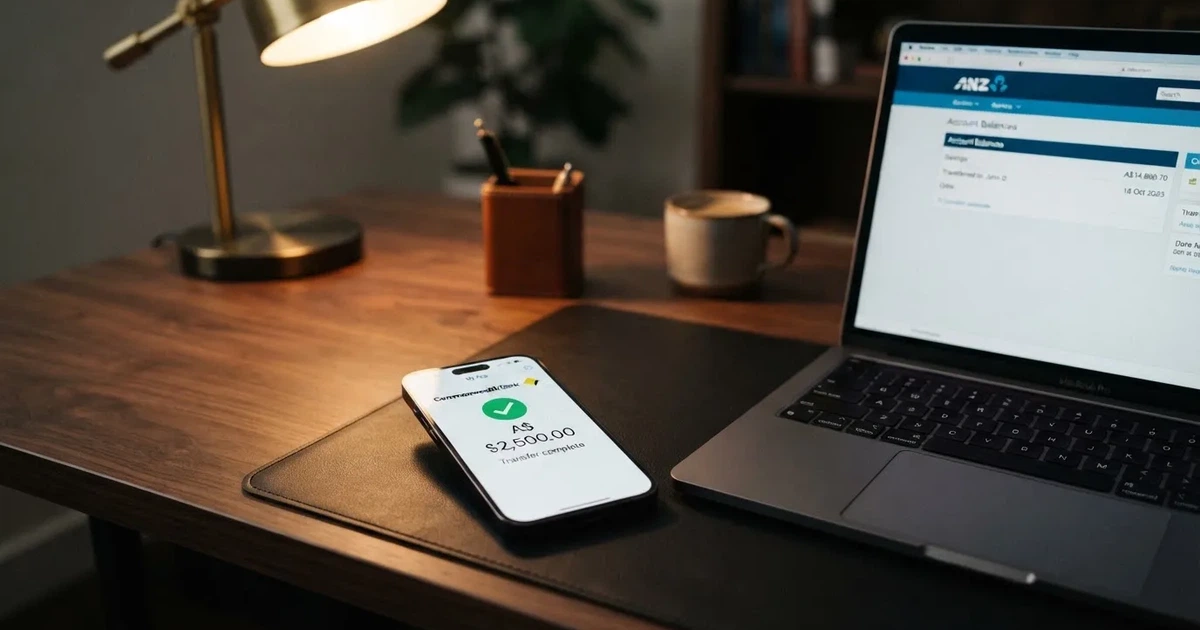
The data is current as of 3 November 2026 and was checked against the ACMA register of formal warnings and blocking requests and the public PayID pages hosted by Australian Payments Plus.
Table of Contents
- The cost the reader pays before any spin is taken
- What “instant” actually means at the PayID layer
- What the ACMA has actually been doing about it
- The market the ACMA is policing
- What the ACMA’s list does to a casino the reader is already on
- Responsible gambling, in a market where it barely applies
- What makes a “fast PayID withdrawal” page different on this site
- What a PayID withdrawal actually requires at the operator
- Payment-method notes that are not PayID, and why they are on a PayID page
- The arithmetic the page earns
- What an Australian reader should weigh before sending the transfer
- The other side of the choice, in fairness
- Closing
- Frequently asked questions
The cost the reader pays before any spin is taken
A PayID withdrawal advertised as “instant” describes the rail, not the casino. The rail — the New Payments Platform, with Osko sitting on top — moves a transfer in under a minute, twenty-four hours a day, between participating banks, addressed to a mobile number, an email, an ABN or an Organisation Identifier rather than to a BSB and account number. The payer is shown the name linked to the PayID before the transfer is sent, which is the check that protects against a payment to the wrong account. None of that depends on who is sending the money or what the money is for. Pay a tradie’s invoice by PayID on a Sunday night and it lands before the kettle boils. Pay an offshore casino the same way, and the same thing happens to the transfer itself.

What does not change is the step before the transfer, the one the marketing copies never name: a casino has to decide to release the funds. A PayID withdrawal is the second half of a transaction. The first half — the deposit, the play, the bonus clearance, the identity check, the bonus-abuse review, the source-of-funds review for a large cashout, the manual review triggered by an irregularity — happens behind the casino’s own terms and on the casino’s own clock. “Instant” in the headline usually means instant at the PayID layer once the casino has pressed send. It does not mean instant from “I clicked withdraw” to “the money is mine.” A reader who treats the headline as a promise of total round-trip speed is being sold a smaller thing than they think they are buying.
There is also a tax to the speed that is not on the page the reader is reading. Every PayID transfer the reader sends to an offshore casino is a transfer to an entity the Australian regulator has, in a steadily lengthening list of cases, formally warned, blocked, or both. The transfer itself clears. The record of having sent it stays on the reader’s own bank statement. When the ACMA asks an Australian internet provider to block the site that received the transfer, the block lands on the reader’s own connection. The instant is real; what it costs the reader is not the fee on the transfer, but the legal exposure of having made it, and the practical exposure of having a balance on a site that may be unreachable the next morning.
That framing matters because almost every PayID-withdrawal pitch collapses it. The pitch presents the rail as if it were the operator. The rail is a piece of public infrastructure, owned by Australian Payments Plus, settled by the Reserve Bank of Australia’s Fast Settlement Service, and offered by more than 100 Australian banks. The operator is an offshore company with a Curacao or Anjouan licence at best, no Australian licence, and a public line in the ACMA’s register. The reader does not get to choose between them. They are stacked: rail on top, operator underneath, and the operator is the one deciding whether the money moves.
Common deposit methods speed
| Method | Estimated Speed | Status in AU |
|---|---|---|
| PayID | Under 1 minute | Available |
| Bank Transfer | 1-3 business days | Available |
| Debit Card | Instant | Available |
| Credit Card | Prohibited (IGA) | Blocked |
What “instant” actually means at the PayID layer
The mechanism is not complicated. A PayID is a pointer — a mobile number, an email, an ABN, or an Organisation Identifier — that resolves to a bank account at the other end. PayID itself is run by Australian Payments Plus, the domestic payments body, and the transfers move across the New Payments Platform that the RBA oversees and that went live in February 2018 to let households, businesses and government agencies send simply-addressed payments in close to real time, around the clock. As of April 2025 there were over 25 million PayIDs registered in Australia, and the network coverage spans the major banks, the regional banks, the mutual banks, the building societies and most of the neobanks a reader is likely to use. It is, in practical terms, already in the reader’s banking app.
Osko is the brand name on top of the NPP for retail transfers. With Osko, a bank transfer between participating Australian banks arrives in under a minute, twenty-four hours a day including weekends, whether addressed to a BSB and account number or to a PayID. That is the layer “instant” describes. The receiving bank has to be in the NPP for the minute to hold, and almost every Australian retail bank is, but a transfer to a credit union still on the older rails can take longer, and a transfer to a bank account at an institution that has not enabled Osko is a transfer that does not arrive in a minute no matter what the sender’s app says.
The protection built into the system is the name check. Before a PayID transfer is sent, the sender’s banking app shows the name on the account the PayID resolves to — first name, last name, sometimes a business name. The sender confirms. The transfer goes. That is the same check that protects an ordinary household payment from going to the wrong account, and it is the same check that an Australian Payments Plus scam alert is built around. AP+ has been unusually direct on this one. Its PayID pages carry the line that anyone asked to transfer to a PayID on an illegal gambling site is almost certainly looking at a “scambling” site — AP+’s own word for an illegal online gambling platform advertised on social media and messaging apps that tricks people into gambling on a scam website. The reader does not have to take this publication’s word for it. The warning is on the rail operator’s own pages.
What the ACMA has actually been doing about it
The regulator doing the work is the Australian Communications and Media Authority, and the work has been steady rather than dramatic. As of June 2026, the ACMA had asked Australian internet service providers to block 1,751 illegal gambling and affiliate marketing websites since the first blocking request went out in November 2019, and more than 230 unlicensed gambling services had left the Australian market since enforcement was strengthened in 2017. Those are the running totals the ACMA itself publishes; they are not a forecast.
The round reported on 26 June 2026 added another twelve domains in one batch: 7Signs, ChromaBet, Donbet, Duospin, Freshbet, Slots Gem, Jacks Club, Lucky Start, Pointsbetz, Spinrise, Vinyl Casino and Wildsino. A blocking request is not the ACMA’s first move on a site. It comes after the ACMA has investigated, has usually issued at least one formal warning to the operator, has given the operator time to take the prohibited service down or to stop serving Australian residents, and has concluded the site is still doing what the Interactive Gambling Act 2001 says it must not do. A site on the block list has had its chance and used it.
The formal warnings on their own are worth reading as a record. March 2026, a warning over Rocketplay addressed to Pulsup Ltd, the company behind the brand. May 2022, an earlier round covered six Dama N.V. brands at once — Bambet, Dazard, Level Up, Rocketplay, Wild Tornado and Cobra Casinos. March 2025, a further warning to Dama N.V. over Woo Casino. May 2025, the same operator, this time over Spirit Casino. July 2025, two warnings in the same month — one to Bamboo Media over Ignition Casino, one to Consolutetish S.R.L. over National Casino and Bizzo Casino, with Bizzo Casino having already been the subject of a 2022 warning to TechSolutions (CY) Group Limited and TechSolutions Group N.V., so the brand is on its second formal warning in three years. February 2025, EOD Code SRL over Instant Casino. April 2026, Ryker B.V. over Jackbit and CasinOK. April 2025, Sterplay Holding Ltd over Casino Intense. And from earlier still, a warning to Hollycorn N.V. over Sky Crown and Blue Leo. Most of the brand names a reader meets on a PayID-withdrawal pitch sit somewhere on that list.
A pattern worth naming: a fair number of those brands have changed hands at the parent-company level but kept the same front-of-house name. Dama N.V. warned in May 2022 is the same Dama N.V. warned in March 2025 and May 2025. TechSolutions warned in 2022 and Consolutetish warned in 2025 are different companies on paper but the same consumer-facing brands. A new corporate wrapper does not make a new site any more than a new paint job makes a new car. The warning the ACMA has published is attached to the brand the reader sees, not to the offshore entity that owns it this quarter.
The market the ACMA is policing
H2 Gambling Capital’s 2025 report puts the cost of illegal gambling to Australians at around A$3.9 billion a year, and notes that the share of gambling going through legal channels has fallen from 74 per cent in 2021 to 64 per cent in 2025. The shift is not because Australians have started gambling less. It is because the prohibited end of the market has grown while the licensed end has held roughly steady. Illegal operators do not pay Australian tax, do not contribute to Australian harm-minimisation funding, do not feed Australian problem-gambling research, and do not run their sites to a standard an Australian regulator could enforce.
What is licensed, for clarity, is narrow. The Interactive Gambling Act 2001, as tightened by the Interactive Gambling Amendment Act 2017, makes it an offence to provide online casino games, online pokies or in-play betting to a person physically in Australia, and no state or territory licenses them either. What is licensable is wagering on races and sport placed before the event, lotteries and keno — products that in practice are licensed through the Northern Territory Racing and Wagering Commission. The NTRWC regulates 52 of Australia’s online bookmakers, including Sportsbet, Bet365 and Ladbrokes, licensed in the Territory for tax reasons. The commission has no full-time staff and meets once a month in Darwin. The reader can disagree with that arrangement; the reader cannot make it license a product the Act says is prohibited.
The licensed bookmakers accept PayID through Osko as a deposit method for legal wagering. They do not accept credit cards or other credit-related products, a restriction that has been in force across all Australian-licensed online wagering since 11 June 2024, with penalties up to A$247,500 for operators that take one. They do not accept digital currency for the same reason. They accept debit cards, bank transfers, PayID via Osko, and BPAY. A PayID transfer to a licensed Australian bookmaker for a pre-event wager is, for once, exactly what the marketing says it is. A PayID transfer to an offshore casino is something else.
What the ACMA’s list does to a casino the reader is already on
This is the part the marketing never talks about. When the ACMA adds a domain to a blocking request, Australian internet service providers are required to make the domain unreachable on residential connections in Australia. The block is at the network layer. The site itself usually stays online; it just stops loading from an Australian IP. A reader with a balance on the site at the moment the block lands has a balance on a site they can no longer reach, on a domain their own internet provider has been directed to refuse, on an operator that has not been required to keep player funds segregated in any Australian sense of the term. There is no Australian complaints body the reader can take that balance to. There is no Australian ombudsman. There is no Australian small-claims process that touches an offshore operator. There is, in the worst cases, a balance the reader cannot withdraw at all.
A blocking request is not the only thing the ACMA does. A formal warning is published on the ACMA’s website with the operator’s name, the relevant URL, the section of the Act the operator is alleged to have breached, and the date. The warning is on the public record. Banks, payment processors and advertising platforms read those warnings when they decide what to do about a particular operator. So do affiliate marketing sites, although the affiliate sites take longer to update than the regulator does. A reader can search the ACMA’s register of formal warnings in about thirty seconds. The marketing site that pointed the reader at the casino in the first place has a financial interest in not pointing them at that register.
What an instant PayID withdrawal still has to clear at the casino
Even before the legal question lands, the practical one has already answered itself. A first withdrawal at any of the brands on the ACMA’s list, instant or not, has to pass through the casino’s own onboarding checks, which are usually the same checks the casino has decided to run on every player and not the checks the Act requires an Australian-licensed operator to run. A first withdrawal triggers a Know Your Customer review — a copy of a government-issued ID, proof of address, sometimes a screenshot of the payment method used to deposit. Some casinos run a source-of-funds review on top of that, asking for payslips or bank statements, which adds days rather than minutes. Some hold withdrawals pending a “bonus abuse” review if the player took a bonus and cleared it in a way the casino has decided to consider irregular. Some cap the maximum instant withdrawal at a figure well below the player’s actual balance, so the instant part is fast and the remainder is a separate, slower, manual transaction.
The PayID leg is fast. The casino leg is, at minimum, the casino’s own internal process. A reader who has spent a week waiting on a KYC review that the casino has decided to escalate is not being held up by the NPP.
Responsible gambling, in a market where it barely applies
A PayID withdrawal clearing in minutes is not, on its own, evidence that an operator meets any safety standard beyond how it moves money. The fact that has to be carried is the one about the rail versus the operator: the rail is a piece of Australian public infrastructure with an Australian regulator and a public scam-warning page. The operator is, in every case the ACMA has acted on, an offshore company with no Australian licence, no Australian player-protection obligations, and no Australian complaints body the reader can take an unresolved dispute to.
The player-protection infrastructure that exists in Australia — BetStop, the National Self-Exclusion Register, the National Gambling Helpline on 1800 858 858, Gambling Help Online — binds Australian-licensed operators only. BetStop went live in August 2023 and covers every Australian-licensed online and phone wagering service. It does not cover an offshore casino, because the offshore casino is not licensed and has not been required to connect. A reader who has self-excluded through BetStop and then opens an account with an offshore casino has not excluded themselves from anything. The exclusion stops at the licensing line.
That is the cleaner way to frame the responsible-gambling angle than the usual one. The usual one asks whether a site is “safe.” A site that is not licensed is not, in the Australian sense, a site that safety standards apply to. There is no Australian regulator to report it to, no Australian ombudsman to complain to, no Australian code of conduct it has signed up to, and no Australian advertising rule it has agreed to follow. The harms a reader protects themselves from by gambling only on a licensed platform — dispute resolution, fund segregation, advertising standards, self-exclusion binding the operator, identity verification that an Australian authority can audit — are not in place.
The National Gambling Helpline is 1800 858 858, free, 24/7, with web chat at Gambling Help Online. Anyone who has transferred money to a PayID on a site they now think might be one of the prohibited ones is, by AP+’s own definition, in the audience for that line.
What makes a “fast PayID withdrawal” page different on this site
Eleven of the brands a reader is likely to meet on a fast PayID withdrawal page sit on the ACMA’s list of formal warnings. None of them is a recommendation from this page. The page is not a ranking. The order below is the order of the ACMA’s published warnings, not a verdict on which casino pays out fastest. Where a brand has changed hands, the warning is repeated under the new parent so a reader searching either name lands on the same fact. Where research carries no data on a particular payment-method subject for a particular brand, the page says so rather than printing the marketing line.
The reader who has already decided what to play is the reader who needs the legal and ACMA context first, and the practical mechanics of a PayID cashout second. That is the order on this page, and it is the order the ACMA’s own register would put them in if it were written as prose.
The landscape of ACMA action on fast PayID withdrawal brands
| Brand | ACMA action and date | Operator named by the ACMA | Subject support |
|---|---|---|---|
| RocketPlay | Formal warning, March 2026 (earlier Dama N.V., May 2022) | Pulsup Ltd (Rocketplay) | — |
| Level Up Casino | Formal warning, May 2022 | Dama N.V. | listings-only (Westpac) |
| Woo Casino | Formal warning, March 2025 | Dama N.V. | — |
| Spirit Casino | Formal warning, May 2025 | Dama N.V. | — |
| National Casino | Formal warning, July 2025 | Consolutetish S.R.L. | listings-only (AUSTRAC, Wikipedia) |
| Bizzo Casino | Formal warning, July 2025 (earlier TechSolutions, 2022) | Consolutetish S.R.L. | — |
| Ignition Casino | Formal warning, July 2025 | Bamboo Media | — |
| Instant Casino | Formal warning, February 2025 | EOD Code SRL | listings-only (ecoPayz, PayID) |
| Jackbit | Formal warning, April 2026 | Ryker B.V. | — |
| Casino Intense | Formal warning, April 2025 | Sterplay Holding Ltd | listings-only (AUSTRAC, iTnews, NAB) |
| Sky Crown | Formal warning, September 2022 | Hollycorn N.V. | — |
The column on subject support reflects what is actually in the research record for each brand, not what the brand’s marketing claims. A dash means the research did not find a confirmed PayID or instant-withdrawal data point for the brand; a “listings-only” tag means the only mentions of the brand on those pages are listing entries, not the operator’s own statement of PayID support. The page does not fill those gaps with marketing copy.
Two readers will look at the table and reach opposite conclusions. The reader looking for the fastest PayID withdrawal will note that the brands marketing instant PayID withdrawals are the same brands on the ACMA’s list, and may conclude that the regulator has not caught up with the speed of the rail. The reader looking for a casino they can play at from Australia will note that every brand on the list is on the list for the same reason — providing a prohibited interactive gambling service to Australians — and that there is no entry on the list with a “no formal warning” column. Both are reading the table the way it is. The table is not built to break that tie.
RocketPlay
The ACMA published a formal warning over Rocketplay addressed to Pulsup Ltd in March 2026, and an earlier warning over the same consumer-facing brand to Dama N.V. in May 2022. Two warnings on one brand, four years apart, with a parent-company change in between. Online casino games cannot be licensed anywhere in Australia, whatever offshore licence the operator displays in its footer.
Verdict: the brand is on the ACMA’s list for the underlying product, not for how it moves money. A reader who has chosen the brand for the PayID leg of the experience has chosen it on the wrong criterion; the PayID leg is the same PayID leg at every operator on the list.
Level Up Casino
Level Up is on the list because of the May 2022 Dama N.V. warning that named six brands at once. The research record carries no direct subject-support data for Level Up on a payment method — the only mentions of Level Up on relevant Australian pages are listing entries, not the operator’s own terms. The operator on the ACMA’s record is Dama N.V., which has been the subject of warnings covering five of the brands on this page.
Verdict: the brand’s payment-method story is not the story; the regulator’s story is the story. A reader comparing Level Up to other Dama N.V. brands is comparing products that have been bundled into the same regulatory action, not operators with independent compliance positions.
Woo Casino
Dama N.V. received a further warning over Woo Casino in March 2025, separate from the May 2022 round. The ACMA’s record names Woo Casino specifically, not as one of a batch, which means the brand was reviewed on its own merits and the conclusion was the same. No PayID-specific data for Woo Casino is in the research record.
Verdict: Woo Casino’s second appearance on the ACMA’s register, after the parent company’s first, is the kind of pattern the regulator publishes specifically so a reader can see it.
Spirit Casino
Dama N.V. again, this time in May 2025. Spirit Casino sits one warning away from Woo Casino on the calendar, both addressed to the same parent company, and the ACMA’s record treats them as separate enforcement matters, not a single ongoing case.
Verdict: same parent as four other brands on this page; the speed of one PayID withdrawal versus another is a comparison between brands the regulator has decided are not entitled to take Australian residents’ money.
National Casino
The ACMA’s July 2025 warning over National Casino is addressed to Consolutetish S.R.L., which is the same company the regulator named in the parallel warning over Bizzo Casino that month. The two brands were acted on together. The only Australian-side mentions of National Casino in the research record are listing entries on an AUSTRAC-adjacent page and a Wikipedia entry; no operator-published PayID support data is in the research.
Verdict: a brand that shares its enforcement record with Bizzo Casino, with no operator-side payment data behind it. A reader cross-checking the brand on Australian sources will find the regulator’s record first, and not much else.
Bizzo Casino
Consolutetish S.R.L. was warned over Bizzo Casino in July 2025; the same brand was the subject of a 2022 warning to TechSolutions (CY) Group Limited and TechSolutions Group N.V. Bizzo is on its second formal warning in three years. The parent has changed. The brand has not.
Verdict: the brand a reader is most likely to have met before the regulator caught up with it. Two warnings, two parent companies, the same URL on the regulator’s record. A reader weighing the brand on speed of PayID withdrawals is weighing it on a rail, not on the operator behind it.
Ignition Casino
Bamboo Media was warned over Ignition Casino in July 2025. Ignition has been on the Australian-facing market under various configurations; the ACMA’s record attaches the warning to the brand’s current operating entity. No PayID-specific subject data is in the research for Ignition Casino.
Verdict: a brand whose enforcement record sits with a parent company that has not appeared elsewhere on this page, and whose only material point on the page is the warning itself.
Instant Casino
The ACMA warned EOD Code SRL over Instant Casino in February 2025. The research record carries mentions of Instant Casino on the ecoPayz site and on the PayID operator pages — listing-style references rather than the operator’s own statement of PayID support, which is a distinction worth making.
Verdict: a brand whose name implies the speed the page is about, and whose regulator-facing record is the more useful thing to read first. The PayID reference on the rail operator’s pages is a listing entry, not an endorsement of the brand.
Jackbit
Ryker B.V. was warned over Jackbit and CasinOK in April 2026. Two brands on one warning. No PayID-specific subject data is in the research for Jackbit.
Verdict: a brand on a parent company’s first published warning, with no operator-side payment data behind it. The brand’s only verifiable feature on this page is the warning.
Casino Intense
Sterplay Holding Ltd was warned over Casino Intense in April 2025. The research record carries listing entries for Casino Intense on the AUSTRAC site, on iTnews and on the NAB site — three separate listing references, none of them the operator’s own PayID support statement.
Verdict: the brand with the most third-party listing entries on Australian sources, and no first-party PayID support data behind any of them. A reader using the listings to verify the brand will find listings, and the regulator will be the more reliable source.
Sky Crown
Hollycorn N.V. was the subject of an ACMA formal warning over Sky Crown and Blue Leo. The warning predates the others on this page, which is why it sits last in the calendar order rather than the most recent. The brand has been on the register longer than most; the regulator’s record on the brand is older, not weaker.
Verdict: the oldest brand on the list. A reader who came across Sky Crown before the ACMA’s register was complete has more recent data available now than they did then, which is to say the warning itself.
What a PayID withdrawal actually requires at the operator
The mechanics at the operator side, regardless of which brand on the list a reader is on, follow a roughly standard shape and the reader is better off knowing it than not. A first PayID withdrawal triggers the operator’s KYC review. The reader is asked for a copy of a government-issued photo ID, usually a passport or driver’s licence; a proof of address dated within the last three months, usually a utility bill or bank statement; and, where the deposit was made by card, a screenshot of the card showing the first six and last four digits with the middle obscured. Some operators also run a source-of-funds review for withdrawals above a threshold the operator has set internally — usually around A$2,000 to A$5,000, sometimes lower — and ask for payslips, a notice of assessment, or a bank statement showing the deposit’s origin.
The KYC review takes as long as the operator decides it takes. The honest operator does it in 24 to 72 hours and tells the reader it has happened. The less-honest operator holds the review open indefinitely, asks for documents one at a time, and rejects documents on technical grounds until the reader gives up. None of that is the PayID leg’s fault. The PayID transfer, once released, arrives in under a minute. The minutes are not where the time goes.
What is also not on the marketing page is the cap on the “instant” part. Many of the brands on the ACMA’s list cap their instant-withdrawal ceiling at a figure well below the player’s actual balance — A$2,000, A$5,000, sometimes A$10,000 — and route anything above the cap through a separate, slower, often manual withdrawal. A reader who sees “instant PayID withdrawal” and reads it as “all of my balance, immediately, by PayID” is reading the headline for a smaller product than the brand sells. The instant part is fast. The whole thing is rarely fast.
Then there is the bonus structure. The bonuses themselves are not described on this page; the only sources for them are affiliate marketing pages, and the terms those pages describe are the terms the operator wants the reader to believe, not the terms the regulator enforces. What is worth saying here is that almost every “instant withdrawal” pitch is paired with a bonus that carries a turnover requirement — a multiple the bonus amount has to be wagered before any withdrawal is allowed — and that an instant PayID withdrawal is the reader trying to get their own money back out of the bonus they took. A wagering multiple of 40x on a A$500 bonus is A$20,000 of qualifying wagers before a PayID leg of any size becomes available. The reader is not waiting on PayID. The reader is waiting on themselves.
Payment-method notes that are not PayID, and why they are on a PayID page
A reader on this page is, by definition, weighing PayID against other deposit routes. The marketing material for several of the brands on this page lists Apple Pay, Google Pay, and a handful of e-wallets alongside PayID. Two facts about those routes are worth knowing on this page.
First, the Interactive Gambling Act 2001 as amended in 2023 prohibits Australian-licensed online wagering services from accepting credit cards and other credit-related products, and the same restriction shapes how PayID-linked bank transfers and linked digital wallets can be used. An offshore casino that accepts a credit card deposit is operating outside the Australian rules. The reader’s bank may also block the transaction under its own gambling-block policy. Westpac’s gambling block, for example, works at card level — it refuses authorisation of transactions registered under the merchant category code for betting and casino gambling on eligible personal credit and debit cards. ANZ’s block does the same for eligible cards, and extends to digital-wallet transactions on those cards — Apple Pay on a blocked ANZ card is blocked too. Once the ANZ block is on, removing it requires a 48-hour waiting period, and ANZ warns that not all gambling transactions will be blocked and some non-gambling transactions may be blocked in error. Apple does not surcharge Apple Pay in stores, online, or in apps; any surcharge on a card-funded Apple Pay transaction comes from the merchant’s card-processing fees, not from Apple. Transaction limits and PIN requirements for Apple Pay purchases are set by the card issuer or the merchant, not by Apple itself. By the end of 2025 Apple Pay, Google Pay and Samsung Pay collectively accounted for around 45 per cent of all card payments in Australia by number. None of which makes the underlying merchant legitimate.
Second, the Reserve Bank of Australia’s July 2025 review of merchant card payment costs proposes removing surcharges only on eftpos, Mastercard and Visa card transactions, and explicitly leaves American Express outside the scope of the proposed surcharge ban. Amex is a three-party scheme, not a four-party network like Visa or Mastercard — it issues its own cards and processes its own transactions, which is also why the RBA’s surcharge regime treats it differently. None of that is a fact about a casino. It is a fact about the card networks, and it is on this page because a reader weighing PayID against a card deposit is, in the Australian market, weighing a free instant rail against a surcharge-bearing scheme whose regulator is openly leaving its fees in place.
The arithmetic the page earns
The single piece of arithmetic the ACMA’s record supports, on its own terms, is the rate at which the regulator has been asking for sites to be blocked. The ACMA’s June 2026 update puts the running total of blocked sites at 1,751 since the first blocking request in November 2019. That is a span of roughly six and a half years, or about 78 months. The pace has not been even — enforcement was strengthened in 2017, which accelerated the rate, and the more recent rounds have been running at a faster pace than the earliest. A reader who wants the rate as a band rather than a single figure gets it as: roughly 22 sites blocked per month across the full period, with the recent rounds running substantially faster than that average and the earliest rounds running well below it. The block is a band, the band widens at the start and narrows toward now, and the only honest way to state it is as a band with its condition.
What an Australian reader should weigh before sending the transfer
Three things, in plain language. The first is the legal frame: an offshore casino has no business taking an Australian resident’s money for online casino games, online pokies or in-play betting, and the ACMA has been acting on that consistently. A formal warning is published on the regulator’s register with the operator’s name. A blocking request is a directive to the reader’s internet provider, and the block lands on the reader’s own connection. The reader is not prosecuted; the operator is. That is the legal frame, and it is unchanged by the speed of the rail.
The second is the practical frame: a PayID withdrawal is fast at the PayID layer and slow at the operator layer, and the operator layer is where the time goes. A KYC review, a source-of-funds review, a bonus-abuse review, a manual review for an irregularity, a withdrawal cap that splits a fast transfer from a slow one — all of those are operator-side, and none of them are improved by sending the money over Osko instead of over a regular transfer. The PayID leg is the same PayID leg at every operator on this page.
The third is the protection frame. BetStop, the National Self-Exclusion Register, the National Gambling Helpline on 1800 858 858, the AUSTRAC reporting regime, the ACMA’s complaints process, the Australian small-claims track — none of these reach an offshore casino, because the offshore casino is not licensed and is not signed up. A reader who has self-excluded through BetStop is excluded from Australian-licensed operators only. A reader who needs to complain about a refused withdrawal has no Australian body to complain to. A reader who needs a balance protected against an operator going under has no Australian segregation guarantee to fall back on. The protection framework that exists in Australia stops at the licensing line, and the brands on this page are on the wrong side of it.
The other side of the choice, in fairness
A reader who has already decided to play at an offshore casino is not reading this page to be told not to. Two things are still worth saying. The first is that the regulator’s record is not the operator’s record. A formal warning is what the ACMA publishes after an investigation; it is not a court finding of wrongdoing, and the operator has a right to respond. Some operators do respond, and the ACMA’s register reflects the responses it has received. The reader weighing an operator on its regulator-facing record is doing what the regulator wants them to do, but they are doing it on the regulator’s terms.
The second is that an offshore operator may still process a PayID withdrawal faster than a licensed Australian bookmaker does. The licensed wagering operators are not in the casino business, so the comparison is not exact, but a reader weighing a casino withdrawal on PayID against a pre-event sports wager on PayID is weighing two PayID transfers at two different operators with two different settlement reviews behind them. The reader is choosing between a transfer the licensed operator is allowed to receive and a transfer the offshore operator is not. The speed is real. The legality is not symmetric. The reader is allowed to pick speed over legality; the page is not allowed to pretend the two are equivalent.
Closing
PayID is a fast Australian rail running on Australian public infrastructure, used by more than 100 Australian financial institutions, and built into the online banking most readers already have. The marketing that wraps it around offshore casinos borrows the rail’s reputation and attaches it to operators that have no business serving an Australian resident. The reader pays the same PayID transfer fee — usually none — whether the operator is licensed or not, and the reader pays the same transfer time. The reader does not pay the same regulatory exposure, and the reader does not pay the same withdrawal risk. A PayID withdrawal on an ACMA-warned brand may arrive in a minute. The fact that the reader sent the transfer to that brand is something the ACMA’s register already has on file.
Frequently asked questions
Is it legal for an online casino to process a PayID withdrawal for a player in Australia?
No. The Interactive Gambling Act 2001 prohibits providing online casino games, online pokies and in-play betting to a person in Australia, and no state or territory licenses them. A PayID withdrawal from such a casino is a transfer to an offshore operator that has no Australian licence, regardless of how fast the transfer itself clears on the New Payments Platform. The Australian Communications and Media Authority has issued formal warnings to the operators behind eleven of the brands marketed as fast PayID withdrawal sites and has asked Australian internet providers to block more than 1,750 illegal gambling and affiliate sites since November 2019.
What steps does a casino usually complete before releasing an instant PayID withdrawal?
A first withdrawal triggers the operator’s own Know Your Customer review, which usually asks for a government-issued photo ID, a recent proof of address, and where the deposit was by card, a partial screenshot of the card. Some operators also run a source-of-funds review for withdrawals above a threshold they have set internally, asking for payslips, a notice of assessment, or a bank statement. The PayID transfer is the final step. The minutes the marketing describes are the minutes between the casino pressing send and the money landing in the bank account. They are not the minutes between the reader clicking withdraw and the money being theirs.
Does a PayID withdrawal clear any faster outside normal banking hours?
No, and the comparison the question is making is already wrong. PayID on Osko settles in close to real time twenty-four hours a day, including weekends, so a PayID transfer is not gated by banking hours in the first place. The casino’s own review, which is the slow part, runs on the casino’s clock regardless of when the reader clicks. A PayID transfer at 2 a.m. on a Sunday and a PayID transfer at 10 a.m. on a Tuesday move at the same speed on the rail.
Is there a maximum amount that can be withdrawn instantly through PayID at once?
The brands marketed as instant PayID withdrawal casinos usually cap their instant-withdrawal ceiling well below the player’s actual balance — commonly somewhere between A$2,000 and A$10,000, with the cap set by the operator rather than by PayID itself. Anything above the cap is typically processed as a separate, slower, often manual withdrawal, even though the PayID rail itself can carry much larger amounts. The instant leg of an instant PayID withdrawal is therefore smaller than the marketing language suggests.
What identity checks apply before a first PayID withdrawal is approved?
The minimum at most operators is a government-issued photo ID and a recent proof of address. A deposit by card usually requires a partial screenshot of the card. Some operators escalate to a source-of-funds review for withdrawals above an internal threshold and ask for payslips, a notice of assessment, or a bank statement. The review is the operator’s own process and runs on the operator’s own clock. None of it is a PayID-layer requirement; all of it is the operator deciding whether to press send.
Can an instant PayID withdrawal be recalled once a casino has sent it?
Once a PayID transfer is sent and accepted by the receiving bank, it cannot be recalled by the sender in the way a direct debit can. The reader can ask their own bank to attempt a recall, but the success of a recall depends on the receiving bank’s cooperation and the receiving account’s response, and the operator is not obliged to return funds it has already received. The reader’s protection against an erroneous or fraudulent transfer is the name check on the PayID itself, which shows the account holder’s name before the transfer is sent. That protection is what it is. A reader who has already sent the transfer has used it.