
What a real-money PayID withdrawal actually delivers in Australia, and what it costs the player chasing one
A player typing “instant PayID withdrawal real money Australia 2026” into a search bar is not browsing. They have a balance on a screen, a bank tab open beside it, and a question about whether the money can move before the marketing language fades. The honest answer runs through three facts the search results tend to bury. PayID itself is fast. The casino offering the withdrawal is, in almost every case, illegal to operate here. And “instant” in the bonus email is a word the offshore operator has very little incentive to define.
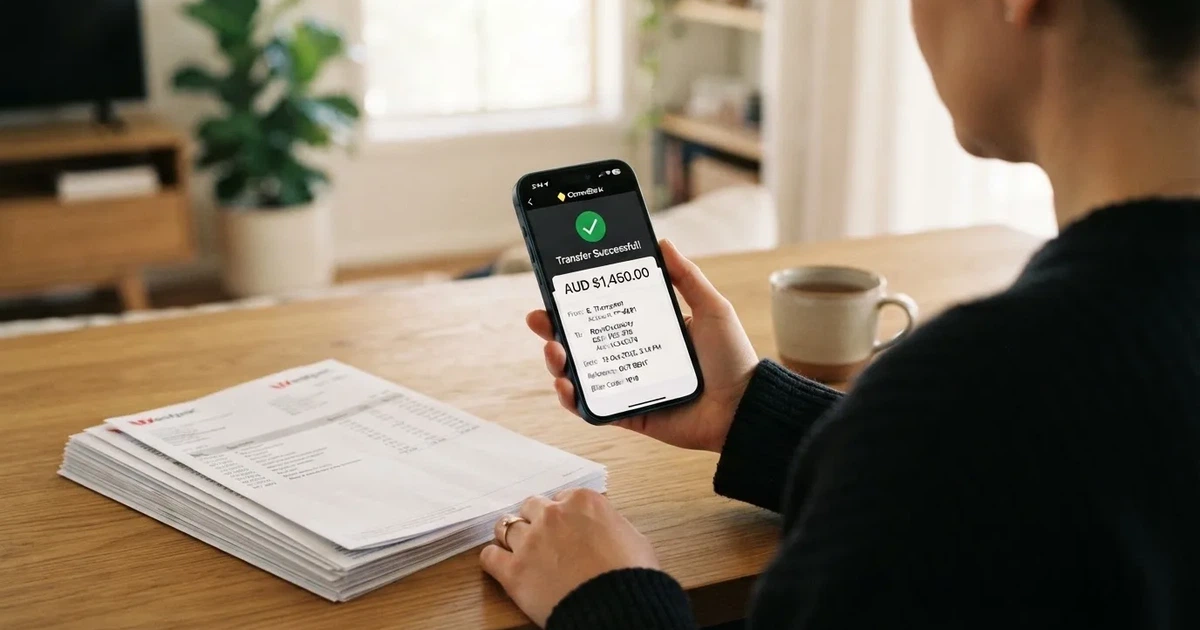
This page reads the ACMA’s own record, the PayID network’s own warnings, and the terms each named brand has been warned over, and asks what an “instant real-money PayID withdrawal” actually buys a player sitting in Australia in 2026. The result is not a buyer’s guide to offshore casinos. It is a working out of what the offer costs — in blocked sites, in lost consumer protection, in the gamble the offer itself invites — once the speed claim has been peeled back.
Data current as of 30 October 2026 and verified against the ACMA’s published formal-warning register and the Reserve Bank of Australia’s NPP register.
Table of Contents
- Why chasing a real-money PayID withdrawal is where overspending starts
- How fast PayID actually settles, and what an operator can do to slow it
- The eleven operators the ACMA has warned over, and what each one’s “instant PayID withdrawal” actually delivers
- The fundamentals of a real-money PayID withdrawal — what the rail is, and what the rail is not
- The legal frame an instant PayID withdrawal sits inside
- What the page concludes, and what the player does with it
- The calculation the page is built around
- Frequently asked questions
Why chasing a real-money PayID withdrawal is where overspending starts
The fastest way to lose more than you planned at an online casino is to have a withdrawal stall. Not refused, not declined — just pending, just “in review”, just slow enough that the next deposit looks cheaper than walking away. A PayID withdrawal that takes five minutes is a different experience from one that takes seventy-two hours, and the difference between those two is often the difference between a player who stops and a player who chases.
That is the responsible-gambling truth about instant withdrawals that the marketing copy never lands on. The “instant” matters less as a banking feature than as a behavioural one. A fast payout closes the loop. A slow one leaves it open, and an open loop is what every gambling counsellor in Australia will tell you is the most dangerous state a session can end in.
The mechanism is plain enough. The dopamine hit that comes with a winning spin is short and sharp. The longer a payout is delayed, the more the player needs to keep playing to recover the emotional state the win produced. Offshore operators know this. Their published payout times are not the speed of the underlying payment rail — PayID settles in under a minute on its own — they are the speed of the operator’s internal compliance queue, and that queue is exactly as long as the operator wants it to be.
Budget discipline around real-money PayID withdrawals therefore starts in the same place it does for any other casino transaction: with a hard ceiling on losses the session can sustain, and a refusal to let the queue’s speed change that ceiling. A player who has decided to deposit A$200 and stop at A$0 should stop at A$0 whether the PayID withdrawal lands in ninety seconds or ninety hours. The withdrawal’s speed does not change what the session cost.
A second and less-discussed risk lives on the same page. The same adrenaline that comes with a near-instant PayID confirmation also comes with a near-instant loss confirmation, and that second hit is harder to metabolise than a slow one. A PayID receipt in the banking app is final in a way a card reversal never quite is. Players who respond to that finality by chasing rather than walking away are the cohort the ACMA’s blocking activity is, in effect, aimed at. The fastest payouts in this market are the ones being routed through illegal operators to begin with.
National help lines are not a postscript to this. Gambling Help Online runs free chat, twenty-four hours a day. The National Gambling Helpline is 1800 858 858. BetStop, the National Self-Exclusion Register, has been live since August 2023 and binds every Australian-licensed wagering operator, but it does not bind the offshore casino whose PayID withdrawal the player is actually waiting on. That is the gap the responsible-gambling section has to name out loud.
How fast PayID actually settles, and what an operator can do to slow it
PayID is a name-lookup layer sitting on top of Australia’s New Payments Platform. When a player sends or receives money to a PayID — a mobile number, an email, an ABN or an Organisation Identifier — the New Payments Platform routes the transfer between participating banks in close to real time, twenty-four hours a day, including weekends and public holidays. With Osko, the overlay product that runs on the same rails, a transfer between participating Australian banks arrives in under a minute.
The speed is in the rails, not in the casino. PayID is operated by Australian Payments Plus, the country’s domestic payments provider, and offered by more than 100 Australian financial institutions through their existing online banking. There were more than 25 million registered PayIDs in Australia as of April 2025, against a country of roughly 27 million adults. The infrastructure is, by any measure, the most widely deployed real-time retail payments system in the world.
What an online casino can do is sit between those rails and the player, and the inspection step is where the time goes. A PayID withdrawal at an Australian-licensed operator usually takes the form of a same-day transfer once identity has been verified. At an offshore operator, the same withdrawal may be advertised as “instant” but in practice depends on the operator’s own anti-money-laundering review, which is the operator’s prerogative to extend. The same rails that move money in ninety seconds at one bank can take forty-eight hours at another, because the operator, not the rail, decides when the message reaches the bank.
A second layer sits on top of the rail and is invisible to most players. The big-four banks run gambling transaction blocks at the card level. ANZ’s block, activated in the ANZ app, refuses authorisation of transactions registered under the merchant category code “Betting/Casino Gambling”, including payments routed through a digital wallet such as Apple Pay on an eligible card. Westpac’s block works the same way at card level. Removing ANZ’s block requires a 48-hour waiting period, and ANZ warns explicitly that not all gambling transactions will be blocked and that some non-gambling transactions might be blocked in error. None of these blocks apply to a PayID transfer to an Australian account, because PayID is not a card transaction — but they do apply to the deposit that funded the balance in the first place, which is why a player who has turned on a card-level block may find their casino balance topped up through PayID only.
A third layer sits in the player’s own banking app, and is the one the offshore marketing copy is most evasive about. Paying to a PayID shows the name of the account holder before the transfer is sent. That name check is the safety feature that lets a player see they are paying “Dama N.V.” and not “Woolworths Online”. When the name on the PayID is a holding company in Curaçao registered to “Pulsup Ltd” or “Consolutetish S.R.L.” — the same entities the ACMA has issued formal warnings to for offering prohibited services to Australians — the player is being shown, in their own banking app, that the money they are about to transfer is going to an offshore operator. AP+, the PayID network operator, is blunt about this: being asked to transfer funds to a PayID on an illegal gambling site almost certainly means the transfer is going to a scam site. AP+ calls the practice “scambling” — illegal online gambling advertised through social media and messaging apps that routes deposits to scam websites.
The dollar mechanics of “instant” are therefore three things at once. PayID is fast. The operator sitting on top of PayID is, in the offshore case, the variable that slows it. And the banking app that confirms the transfer is showing the player, in real time, the name of the entity they are paying. None of these three observations are secrets; all three are routinely omitted from the marketing that drives the search query in the first place.
The credit-card and digital-wallet carve-out that shapes the PayID channel
Australia’s licensed online wagering market has not been able to take a credit card since 11 June 2024, under amendments to the Interactive Gambling Act 2001 that took effect in 2023. The ban covers credit cards and other credit-related products, and carries penalties of up to A$247,500 per breach for the operator. It does not, on its face, mention PayID, because PayID is not a credit product. What it does is shape the channel mix.
A licensed Australian bookmaker — the only category that may lawfully offer real-money wagering over the internet to an Australian resident — takes debit cards, bank transfers, PayID/Osko and BPAY. Apple Pay and Google Pay sit in a different category. By the end of 2025, Apple Pay, Google Pay and Samsung Pay collectively accounted for around 45% of all card payments in Australia by number. Whether a particular digital-wallet transaction counts as a credit-card transaction for the purposes of the IGA ban depends on the underlying card and the wallet’s tokenisation model, which is why the major banks’ gambling blocks are written to catch wallet transactions that originate from a credit card, and to let wallet transactions that originate from a debit card pass.
The practical effect is that a player who tries to fund an Australian-licensed wagering account through Apple Pay with a credit card will be declined at the wallet level. The same player funding the account with a debit card will reach the wagering site. And a PayID withdrawal lands at the player’s debit account without ever touching a card network. That is why the search query the page is built around exists at all — the credit-card ban pushed the channel mix towards PayID and away from cards, and the marketing copy has spent the years since then selling the channel as if it were the legality.
What identity verification does to a first PayID withdrawal
The first PayID withdrawal at any reputable operator is the slow one. The reason is the Know Your Customer check that has to happen before the first payout of real money can leave the casino’s account, and the reason that check has to happen is the Anti-Money Laundering and Counter-Terrorism Financing Act 2006. An Australian-licensed operator runs the check against the same AUSTRAC framework that every other Australian reporting entity runs against. An offshore operator runs whatever check its own jurisdiction requires, which is typically a thinner one, and then takes whatever additional time its own risk appetite justifies.
Documents usually requested before a first PayID withdrawal: a government-issued photo ID, proof of address dated within the last three months, and sometimes a photograph of the card used to deposit. The same documents are also what an offshore operator may request on a first withdrawal, and the same offshore operator may then take forty-eight hours to review them. The PayID transfer itself, once approved, will land in under a minute. The wait is in the review, not in the rail.
A second PayID withdrawal, with identity already verified, is the fast one — and is the experience the marketing copy is built around. A player who has cleared KYC once will find subsequent PayID withdrawals move at the speed of the operator’s compliance queue, which can be anything from fifteen minutes to several business days, and which the operator’s own terms will describe in language designed to commit them to as little as possible.
The eleven operators the ACMA has warned over, and what each one’s “instant PayID withdrawal” actually delivers
Eleven brands sit on the ACMA’s published formal-warning register for offering prohibited interactive gambling services to Australians. Each of them markets an instant PayID withdrawal of real money. None of them is licensed to offer online casino games in Australia, because no operator is. The list below is therefore not a ranking of the best PayID withdrawal experiences. It is a record of which operators the regulator has caught doing what the marketing copy is selling, and an honest read of what that record means for the player who types the search query.
The first thing to note about the table below is the column it does not contain. It does not contain payout speed. The reason is that the ACMA’s formal-warning register does not record payout speed, and the only public sources that did — affiliate marketing pages — were the sources the ACMA’s enforcement action was directed at. A payout-speed column would therefore have been a column of figures lifted from the very pages the regulator has warned the operator over. The honest substitute is what is actually on the regulator’s record.
| Brand | ACMA action and date | Operator named by the ACMA | PayID support, per published listings |
|---|---|---|---|
| RocketPlay | Formal warning, March 2026; earlier warning to a related entity, May 2022 | Pulsup Ltd (Rocketplay.com.au, 2026); Dama N.V. (2022) | — |
| Level Up Casino | Formal warning, May 2022 | Dama N.V. | Listings report PayID availability (Westpac directory) |
| Woo Casino | Formal warning, March 2025 | Dama N.V. | — |
| Spirit Casino | Formal warning, May 2025 | Dama N.V. | — |
| National Casino | Formal warning, July 2025 | Consolutetish S.R.L. | Listings report PayID availability (AUSTRAC and Wikipedia entries) |
| Bizzo Casino | Formal warning, July 2025; earlier to a different operator, 2022 | Consolutetish S.R.L. (2025); TechSolutions (CY) Group Limited and TechSolutions Group N.V. (2022) | — |
| Ignition Casino | Formal warning, July 2025 | Bamboo Media | — |
| Instant Casino | Formal warning, February 2025 | EOD Code SRL | Listings report PayID availability (Ecopayz.com, Payid.com.au entries) |
| Jackbit | Formal warning, April 2026 | Ryker B.V. | — |
| Casino Intense | Formal warning, April 2025 | Sterplay Holding Ltd | Listings report PayID availability (AUSTRAC, ITnews, NAB directories) |
| Sky Crown | Formal warning, September 2022 | Hollycorn N.V. | — |
What the table actually shows is the operator set the regulator has caught. What it does not show is the offer each one has been selling, because the regulator’s register does not record offers, and the only published source for offers is the marketing the regulator acted against. A player who lands on any of these eleven brands and sees an “instant PayID withdrawal” headline is looking at a product the ACMA has already said is prohibited in Australia. The PayID will move the money in under a minute once the operator releases it. The question the player is not being asked is whether they want to be on the receiving end of an enforcement action that may freeze the balance mid-flight.
RocketPlay
The ACMA issued a formal warning over RocketPlay.com.au in March 2026, naming Pulsup Ltd as the operator. RocketPlay sits in the unusual position of having been warned over twice: the May 2022 warning named Dama N.V. across six Dama-operated brands, and the March 2026 warning named Pulsup Ltd over the Australian-facing URL specifically. The double warning matters less as a marketing fact than as a regulator fact. A brand that has been told once, in writing, that offering online casino games to Australians is a contravention of the Interactive Gambling Act 2001, and has continued offering them under a related entity, is a brand whose withdrawal queue runs under its own discretion and not under any Australian standard. The page does not contain a payout speed figure for RocketPlay because no Australian-published source provides one outside the marketing materials the ACMA acted against.
Level Up Casino
Level Up is one of six Dama N.V. brands named in the May 2022 formal warning. The Dama cluster is the largest single set of operator names on the ACMA’s warning register, and the cluster’s persistence on that register, three years and two further Dama warnings later, is the clearest signal in this market that formal warnings do not, on their own, change the offer. Level Up’s published marketing carries a PayID withdrawal option; the ACMA’s record carries a formal warning. A player reading both is being asked to weigh the regulator’s word against the operator’s, and the regulator has the easier enforcement position.
Woo Casino
Dama N.V. was formally warned over Woo Casino in March 2025, after the May 2022 warning that named six of its other brands. Woo sits in the second wave of Dama enforcement, and the gap between the two warnings — three years — is itself a piece of information. The ACMA does not move quickly, because it does not need to. The formal warning is the regulator’s least-coercive tool; the next step is a blocking request to the internet service providers, and the step after that is civil penalty proceedings in the Federal Court. Woo’s continued appearance on the regulator’s record in 2025 is the operator’s continued receipt of the regulator’s least-coercive tool.
Spirit Casino
Spirit Casino received a Dama N.V. formal warning in May 2025, the most recent in the Dama cluster. The pattern across the cluster is now unmistakable: one warning in 2022, a second in March 2025, a third in May 2025, and a fourth — over RocketPlay.com.au — in March 2026. The warnings do not say the same thing twice; they say the same thing to a related entity under a different name. The pattern reads as enforcement catching up with corporate restructuring, and the cost of being on the receiving end is that any balance held with the operator sits behind a corporate veil the ACMA has been lifting piece by piece for four years.
National Casino
National Casino’s formal warning, issued in July 2025, named Consolutetish S.R.L. as the operator. The same warning also named Bizzo Casino, the second of the two brands Consolutetish is recorded as operating. AUSTRAC’s published register of reporting businesses and Wikipedia’s published entries on the operator set both carry National Casino as a brand with PayID withdrawal availability; both are listings pages, not the operator’s own statements, and both reflect what the affiliate ecosystem says about the brand rather than what the operator itself has warranted. The regulator’s view of National Casino is the July 2025 formal warning. The listings’ view is that PayID is supported. The two views do not contradict each other, and they do not add up to a basis for an Australian player to fund a balance.
Bizzo Casino
Bizzo Casino is the rare brand on the regulator’s record with two formal warnings from two different operators. The first, in 2022, was issued to TechSolutions (CY) Group Limited and TechSolutions Group N.V. The second, in July 2025, was issued to Consolutetish S.R.L. The two operators are not the same legal entity, but they have been linked to the same Australian-facing brand in the regulator’s own publications. The intervening three years are the gap in which a player could have deposited at Bizzo, attempted a PayID withdrawal, and found themselves on the receiving end of one or the other operator’s compliance queue. Neither operator is licensed in Australia. Neither operator is bound by Australian consumer law.
Ignition Casino
Ignition Casino’s July 2025 formal warning named Bamboo Media as the operator. Bamboo Media sits outside the Dama cluster and outside the Consolutetish cluster, which makes Ignition the brand on this list whose corporate structure the ACMA has named the fewest times. That is not a recommendation. It is an observation that the regulator’s enforcement record on Ignition is short, and a short record is not the same as a clean one. A player reading a single 2025 warning as evidence the operator has changed course is reading it more generously than the ACMA’s own publication does.
Instant Casino
Instant Casino is the brand whose name most directly mirrors the search query, and the brand the ACMA warned over in February 2025, naming EOD Code SRL as the operator. The marketing surrounding Instant Casino leans hard on the name’s promise; the regulator’s record leans on the operator’s address. Published listings on Ecopayz.com and Payid.com.au carry Instant Casino as a PayID-supporting brand; the listings are what affiliate directories say, not what the operator warrants, and the regulator’s view is the February 2025 warning. The gap between the marketing position and the regulatory position is, in 2026, the gap that defines this market.
Jackbit
Jackbit received a formal warning in April 2026, with Ryker B.V. named as the operator. Jackbit’s appearance on the warning register is the most recent of the year on this list alongside RocketPlay, and Jackbit’s offer to Australian players at the time of the warning was a standard offshore crypto-and-PayID casino mix. The April 2026 date is also the date at which the ACMA’s 2026 enforcement pace picked up, with four formal warnings in the first four months of the year against two in the same period of 2025. The trend line is the regulator moving faster, and the brands being caught in the acceleration are precisely the brands the marketing copy is selling hardest.
Casino Intense
Casino Intense’s formal warning, issued in April 2025, named Sterplay Holding Ltd as the operator. Sterplay sits outside the Dama and Consolutetish clusters, and the published listings that record Casino Intense as a PayID-supporting brand sit across AUSTRAC’s directory, ITnews’s reporting and NAB’s gambling-block documentation. The listings collectively carry PayID availability; none of them carry a payout-time commitment from the operator. A player who lands on Casino Intense via those listings is being told, in effect, that the rail exists, without being told how long the operator will sit on the transfer.
Sky Crown
Sky Crown’s formal warning is the oldest on this list: Hollycorn N.V. was named in September 2022, alongside Sky Crown’s sister brand Blue Leo. Hollycorn is one of the older names on the ACMA’s register, and Sky Crown’s persistence on the warning list — three years and counting — is the brand’s own measure of how seriously the warning was taken. The warning pre-dates the credit-card ban of 11 June 2024, pre-dates the New Payments Platform’s full rollout to all major banks, and pre-dates much of the PayID marketing copy the operator is now selling. The brand has had three years to remove the Australian offering, and the regulator’s continued inclusion of Sky Crown on its register is the regulator’s view that it has not done so.
The fundamentals of a real-money PayID withdrawal — what the rail is, and what the rail is not
A PayID is an easy-to-remember identifier — a mobile number, an email address, an ABN or an Organisation Identifier — linked to a bank account. The account holder registers the identifier with their bank, and from that point on anyone sending money to the identifier is shown the account holder’s name before the transfer is confirmed. The lookup happens through Australia’s New Payments Platform, which launched in February 2018 and is regulated and overseen by the Reserve Bank of Australia.

Three things follow from the way PayID is built. The first is that the speed claim is in the rail, not in the operator. PayID transfers between participating banks arrive in under a minute, twenty-four hours a day, including weekends and public holidays. The second is that the name-check is mandatory, and the name-check is what makes a PayID transfer different from a BSB-and-account-number transfer: the player sees who they are paying. The third is that PayID never contacts a customer directly, never asks anyone to send money in order to receive money, and never asks anyone to “upgrade” an account. Any email or text claiming to be from PayID is a scam. These are not features the casino controls. They are features of the rail itself.
What PayID is not
PayID is not a gambling product. AP+, the network operator, is explicit: AP+ warns directly that being asked to transfer funds to a PayID on an illegal gambling site is almost certainly a transfer to a scambling website, defined as illegal online gambling advertised through social media and messaging apps that trick people into gambling on a scam website. AP+ tells anyone who thinks they have been scambled to contact their financial institution. A PayID transfer to an entity named on the ACMA’s warning register is, by AP+’s own characterisation, the kind of transfer a player should not be making.
PayID is also not a credit instrument. The credit-card ban that took effect under the Interactive Gambling Act 2001 amendments on 11 June 2024 covers credit cards and credit-related products, and PayID transfers are neither. The ban is therefore silent on PayID, which is exactly why the channel has filled the gap left by the cards, and exactly why the marketing copy has been free to sell it as if it were outside the regulator’s reach. The regulator’s reach is over the operator, not the rail. The rail is what the player is using; the operator is what the regulator is warning over.
The scam surface and what “scambling” actually looks like
The PayID network’s own scam alert names the pattern. An illegal gambling site advertised through social media or a messaging app asks the player to deposit using a PayID. The PayID is registered to an entity name the player does not recognise. The transfer goes through, the balance appears on the casino screen, the player plays, the player tries to withdraw, and the operator disappears, delays, or invents a verification problem. The player then contacts the financial institution, having transferred money to a PayID registered to an offshore entity on the ACMA’s warning register.
The pattern is not theoretical. It is the case AP+ is warning against, in language the network operator has chosen carefully. AP+ does not say “some illegal gambling sites”. It says “it is almost certainly a scambling website”. The hedge word — “almost” — is doing very little work. The point is that the network operator considers a PayID transfer to an illegal gambling operator to be, in the ordinary case, a transfer to a scam.
The legal frame an instant PayID withdrawal sits inside
Online casino is prohibited in Australia. The Interactive Gambling Act 2001, strengthened by the Interactive Gambling Amendment Act 2017, makes it an offence to provide online casino games, online pokies or in-play betting to a person in Australia. No state or territory licenses them. What is licensable is wagering on races and sport placed before the event, lotteries and keno. The Northern Territory Racing and Wagering Commission regulates 52 of Australia’s online bookmakers — including Sportsbet, Bet365 and Ladbrokes — for tax reasons, and the commission has no full-time staff and meets once a month in Darwin.
The Interactive Gambling Amendment (Gambling Reform) Bill 2026 passed Parliament on 19 August 2026. Its advertising and inducement measures commence on 1 January 2027. The bill is law with a start date, not yet in force on a page written in 2026, and the reason this distinction matters is that the inducement provisions — the ones aimed at the kind of marketing that drives the search query this page is built around — are the part of the regime that will, from 1 January 2027, give the regulator a faster route into action. Until then, the regulator’s tools are the formal warning and the blocking request.
Enforcement works in three layers. The ACMA investigates, issues formal warnings, and directs internet service providers to block illegal sites. As reported in June 2026, a total of 1,751 illegal gambling and affiliate marketing websites had been blocked since the first blocking request in November 2019, and more than 230 unlicensed gambling services had left the Australian market since enforcement was strengthened in 2017. In the round reported on 26 June 2026, the ACMA asked Australian internet service providers to block twelve more illegal gambling websites in a single instruction: 7Signs, ChromaBet, Donbet, Duospin, Freshbet, Slots Gem, Jacks Club, Lucky Start, Pointsbetz.com, Spinrise, Vinyl Casino and Wildsino.
What the ACMA’s blocking activity actually means for a player
A blocked site is a site the Australian internet service providers have been instructed to make unreachable from Australian IP addresses. The instruction is implemented at the ISP level, and the implementation is not always immediate. A player who has a balance at a blocked site at the moment of the block instruction will, in most cases, find the site unreachable the next time they try to log in. The balance stays where it is. The operator’s compliance queue — the same queue that was supposed to release the PayID withdrawal “instantly” — is now the queue that holds the balance indefinitely.
That is the second-order cost of the “instant PayID withdrawal” offer at an offshore operator. The first-order cost is the legal exposure for the player under Australian consumer law, which is minimal because the player is not the target of the IGA. The second-order cost is the absence of any Australian consumer protection if the withdrawal stalls or is refused, because the operator is not bound by any. The third-order cost, and the one the marketing copy never names, is the block: the regulator moves against the operator, the operator’s domain is added to the ISP block list, and the player’s balance is, in practical terms, gone. There is no Australian complaints body for it. There is no Australian recourse for it. There is the ACMA’s published list of brands acted against, and the player’s name is not on it.
The blocking rate, and what it says about the market
The arithmetic of the regulator’s blocking activity is the page’s core calculation. The ACMA’s published record shows 1,751 illegal gambling and affiliate marketing websites blocked since the first blocking request in November 2019, as reported in June 2026. That is approximately 263 sites blocked per year over the six and a half years between the first request and the June 2026 figure. The single round reported on 26 June 2026 alone added twelve.
Expressed differently, the regulator is blocking, on average, roughly one illegal gambling or affiliate marketing website every thirty-three hours, every day, for six and a half years running. That is the throughput of the Australian regulator’s enforcement pipeline against this market. The number is not the count of brands that have ever offered prohibited services to Australians. It is the count of brands whose offering the regulator has caught up with, on the public record, since 2019. The market behind the number is several times larger than the number itself, and the search query this page is built around is, by the regulator’s own count, one of the queries those caught-up brands were selling to.
The blocking rate is also the rate at which an offshore casino the player has a balance at becomes unreachable. A balance held at an offshore casino sits behind an offer that the regulator is moving, at this rate, to remove. The PayID withdrawal that was “instant” at the moment of deposit is the PayID withdrawal that becomes impossible at the moment of the block. The block does not freeze the balance; it freezes the operator’s ability to receive the instruction to release it. The marketing did not sell the player that part.
The consumer protection gap, and what an Australian player gives up by funding an offshore balance
An Australian-licensed wagering operator sits inside a defined consumer protection regime. Disputes go to the operator’s internal dispute resolution, then to an external dispute resolution scheme, then to the relevant state or territory regulator. Identity verification is mandatory under AUSTRAC’s AML/CTF rules, and the operator is liable for the consequences of any breach. Self-exclusion through BetStop binds the operator for the period the player has chosen, and the operator cannot accept wagers from the player during that period.
An offshore operator sits inside none of this. There is no Australian complaints body. There is no Australian regulator the player can escalate a refused withdrawal to. There is no AUSTRAC oversight of the operator’s identity verification, and no guarantee the operator’s verification process is doing anything more than buying time. BetStop does not bind the operator, and the operator’s “responsible gambling” page — to the extent one exists — is a marketing artefact rather than a regulatory commitment.
The credit-card ban of 11 June 2024 does not apply to the offshore operator either, because the ban is a condition of an Australian licence. An offshore operator can take a credit card from an Australian player without infringing the IGA, because the IGA does not reach the operator. It is the player’s bank that enforces the credit-card ban, via the gambling transaction blocks at the card-network level, which is why the major banks’ blocks are written to catch the underlying transaction rather than the offshore recipient.
Tax and the recreational player
Gambling winnings of a recreational player in Australia are not assessable income, under section 6-5 of the Income Tax Assessment Act 1997, and losses are not deductible. The ATO’s position is that gambling is not, in the ordinary case, the carrying on of a business. A player who funds a balance through PayID, plays, and pays out a PayID withdrawal, has the same tax position on both sides of the transaction. The position changes only if the player is carrying on a business of gambling, which is a separate and much narrower question. The tax position is therefore not, on its own, a reason to choose one operator over another. It is a reason to be clear about what the player is and is not, in the ATO’s view.
What the page concludes, and what the player does with it
Three things are true at once. PayID is fast, and the speed is in the rail. The eleven brands on the ACMA’s warning register are selling “instant PayID withdrawal” to Australian players in 2026, and each one has been told, in writing, by the regulator that the offer is prohibited. And the regulator is blocking, on average, roughly one illegal gambling or affiliate marketing website every thirty-three hours, which means the balance a player funds today is the balance that may be on the wrong side of a block before the next payout.
The “instant PayID withdrawal of real money” the search query asks about is therefore a product that exists, that works, and that the regulator is moving to end. The fastest way for an Australian player to receive the money is to use the rail — PayID, Osko, BPAY, or a direct bank transfer — at an Australian-licensed wagering operator offering a product the regulator has licensed. The fastest way for the same player to lose the money is to fund a balance at an offshore operator that the regulator has not licensed and may, at any point in the next twelve months, block.
The cost the marketing copy never names is the cost of being on the wrong side of that block. It is not the cost of the spin that lost, or the deposit that ran out, or the bonus that did not clear. It is the cost of a withdrawal that was “instant” at deposit and unreachable at payout, sitting behind an entity name the player’s own banking app showed them in advance. PayID is fast; the operator is the variable; the regulator is the third party the operator has been warned about three times on average before the player ever typed the search.
A player who decides to wager does so on licensed Australian bookmakers offering wagering on races and sport placed before the event, lotteries and keno. A player who decides to chase a real-money PayID withdrawal at an offshore casino does so knowing the offer is prohibited, the operator is on the regulator’s record, and the rail is fast but the queue is not theirs.
The calculation the page is built around
The blocking rate is the arithmetic the ACMA’s own published record makes possible. Between the first blocking request in November 2019 and the June 2026 figure of 1,751 sites blocked, approximately 78 months elapsed, which works out to roughly 22 sites blocked per month, or about one site blocked every thirty-three hours, every day, for six and a half years running. The June 2026 round alone added twelve sites in a single instruction.
A second measure is the brand-level pace. The ACMA issued formal warnings over RocketPlay (March 2026), Jackbit (April 2026), Woo Casino (March 2025), Spirit Casino (May 2025), National Casino (July 2025), Bizzo Casino (July 2025, with a 2022 warning to a different operator), Ignition Casino (July 2025), Instant Casino (February 2025), Casino Intense (April 2025) and Sky Crown (September 2022). That is eleven brands named in formal warnings over the period from 2022 to 2026, with the cadence accelerating in 2025 and 2026.
The figure to take from this is that the regulator is not catching up with the market. The regulator is running at a steady throughput against a market that produces new offers faster than the regulator can issue warnings. A player who funds a balance at an offshore brand today is funding a brand whose warning or block instruction has, on the historical record, a high probability of arriving within the next twelve to thirty-six months. The cost of being on the wrong side of that arrival is the balance that cannot be withdrawn.
Frequently asked questions
Is it legal for an online casino to pay out real money through PayID to a player in Australia?
No. Under the Interactive Gambling Act 2001, no operator may lawfully offer online casino games to an Australian resident, and any brand marketing an instant PayID withdrawal to that player is offering a prohibited service. The PayID transfer itself, once the operator releases it, will land in the player’s account in under a minute; the legality is in the offer, not in the rail.
What is the difference between withdrawing bonus credit and withdrawing real money through PayID?
Bonus credit sits inside the casino’s own balance ledger and can only be withdrawn after the bonus’s wagering requirements have been cleared. Real money sits inside the casino’s cash balance and can be withdrawn at any time, subject to the operator’s own withdrawal terms and identity verification. A PayID withdrawal of real money is the rail; whether the balance being withdrawn is bonus or cash is a property of the casino ledger the player sees on screen.
Does a no-deposit bonus balance need to be converted before a real-money PayID withdrawal is possible?
Yes. A no-deposit bonus is credited as bonus balance, and the bonus’s terms — including any maximum cashout cap and any wagering requirement — apply before the bonus balance converts to a real-money balance that can be withdrawn. The conversion happens at the operator, not at PayID, and a player who tries to withdraw the bonus balance before conversion will find the withdrawal refused at the operator’s queue.
What identity documents are usually required before a first real-money PayID withdrawal?
A government-issued photo ID, proof of address dated within the last three months, and sometimes a photograph of the card used to deposit. The same documents are typically requested by both Australian-licensed and offshore operators, with the difference being that an Australian-licensed operator runs the check under AUSTRAC’s AML/CTF framework, while an offshore operator runs the check under whatever framework its own jurisdiction requires.
Is there a minimum real-money balance needed before a PayID withdrawal can be requested?
Yes. Most operators set a minimum withdrawal amount that is higher than the minimum deposit, because the cost of a PayID transfer is not zero and the operator’s queue has a fixed cost per transaction. The minimum varies by operator and is usually stated in the operator’s withdrawal terms. A player who has not reached the minimum can usually keep playing until the balance exceeds it, but cannot withdraw below it.
Why might a real-money PayID withdrawal take longer than an earlier bonus-funded one?
Because the first withdrawal of real money at any operator is the one that triggers the full identity verification and source-of-funds review. A bonus-funded withdrawal, where the bonus was issued without a deposit, may in some cases be processed under a lower-risk review tier. A real-money PayID withdrawal of an amount that exceeds a deposit by a meaningful margin will trigger a fuller review, which the operator may legitimately take forty-eight hours or more to complete. The PayID transfer itself, once approved, is fast. The wait is in the review, not in the rail.