
Pay by Phone Casinos Australia in 2026: The Cost of Charging a Deposit to Your Phone Bill
A phone is how most Australians reach a casino these days, so it’s no surprise that the marketing around “pay by phone” deposits hits the screen almost as often as the games themselves. The promise is simple: no card, no bank app, no delay, just a confirmation SMS and a balance that updates before the welcome bonus expires. What the marketing does less well is explaining what sits behind that confirmation, who actually processes the payment, and what happens when the Australian regulator already considers the site offering it unlawful.
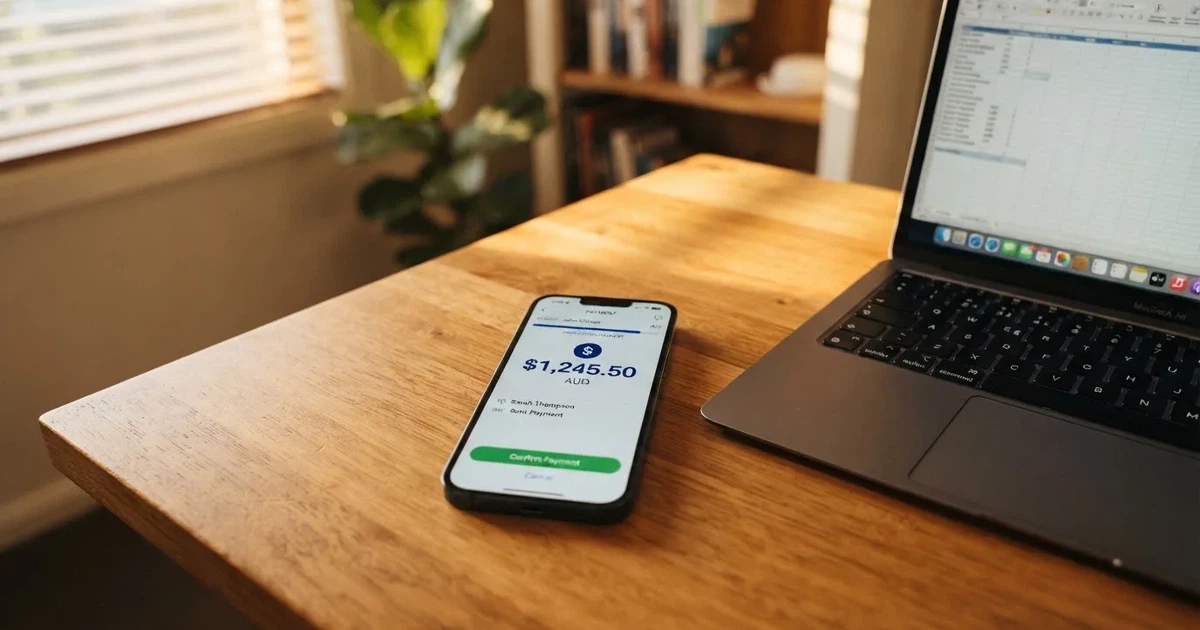
This page works through the mechanics of carrier billing honestly, looks at the offshore casinos that advertise it for Australian accounts, and sets the whole picture against Australian consumer-protection law as it stands in 2026.
Current as of 1 November 2026, verified against the Australian Communications and Media Authority’s register of formal warnings and blocking actions.
Table of Contents
- The Problem With Charging Online Gambling to a Phone Bill
- What a Pay-by-Phone Deposit Actually Costs the Person Paying It
- Responsible Gambling Comes First in This Conversation
- How the Money Moves: Payments, Wallets and the Indirect Constraints
- What Pays by Mobile Looks Like at the Point of Use
- Games and Live Tables: The Casino Side of the Cashier
- Operator Reviews: The Eleven Brands the ACMA Has Acted Against
- The Bigger Picture: ACMA Blocking and the Share Going Offshore
- Where the Law Stands, and Why It Matters Even at the Cashier
- Mobile and App Reality
- Reading the Cashier as a Whole
- What the Page Concludes for the Reader Standing at a Cashier
- Frequently Asked Questions
The Problem With Charging Online Gambling to a Phone Bill
The word that does the work in “pay by phone casinos” is phone. A payment method that ties a gambling deposit to a mobile account looks small — the daily cap, the implied friction, the sense that the carrier is watching — and that is precisely why it has been a marketing fixture for years. It does something. It does not do what people paying it tend to assume it does.

What carrier billing is, mechanically
Carrier billing is a payment rail run by mobile network operators through third-party processors. In the Australian-adjacent market the dominant name is Boku, which describes its own network as combining Direct Carrier Billing with mobile wallets and account-to-account flows, covering more than 200 local payment methods in 90-plus markets and holding payment licences in over 40 countries. Other processors mentioned in the same space include Fonix, Bango, Fortumo and Google Pay. What they all have in common is the same end product: the deposit is added to the mobile account, prepaid or postpaid, rather than to a debit card or a bank balance.
So far, so neutral. Carrier billing is a real product, used for app stores, subscriptions, transit fares and small-ticket digital goods worldwide. The gambling angle arrives when the casino at the other end of that payment is not licensed to take Australian business — which is every online casino that offers pay-by-phone deposits to an Australian, because no such licence exists.
Why Australian players looking at it are being led offshore
The Interactive Gambling Act 2001, as strengthened by the Interactive Gambling Amendment Act 2017, makes it an offence to provide online casino games, online pokies or in-play betting to a person in Australia. No state or territory body issues such licences. What can be licensed is pre-event wagering on racing and sport, lotteries and keno. In practice the Northern Territory Racing and Wagering Commission does most of that licensing, holding 52 online bookmakers including Sportsbet, Bet365 and Ladbrokes, with a small staff that meets roughly monthly.
A casino asking an Australian to “pay by phone” is, by structure, an offshore product. The licence number shown in the page footer may be Curaçao, Anjouan or another foreign regulator — none of which binds the site to Australian consumer-protection law, Australian complaints processes, or the National Self-Exclusion Register. The mechanism of the deposit tells you nothing about the standing of the operator receiving it.
What a Pay-by-Phone Deposit Actually Costs the Person Paying It
Australia’s relationship with carrier billing for gambling comes with constraints most marketing copy skips past. Sizing them matters, because the cost is not just the deposit itself.
The limits that come with the rail
The headline trap is the daily cap. Most carrier-billed gambling deposits are limited to roughly A$10 to A$50 per transaction, with a similar daily ceiling — small by casino standards, which is exactly why the method gets pitched at casual players and slot players. The “small-by-design” frame sounds reassuring until the player remembers that the same ceiling applies per day across every carrier-billed gambling site the same account is used at, not per operator.
There is also the question of reversibility. Bank transfers, debit cards and PayID all carry consumer protections of different weight. A charge on a postpaid mobile account sits much closer to a utility bill than to a card transaction. The operator can push a refund or a chargeback only with the carrier’s cooperation, and the carrier typically sides with the merchant unless fraud is provable. A “small” casino deposit can therefore turn out to be one of the harder transactions in a person’s month to reverse if something goes wrong.
Where the money settles
Once the charge goes through, the casino receives funds via the carrier-billing processor. The casino pays a fee for that convenience — typically well above what a card or bank transfer would cost. The model that pays for that fee is well understood: small, frequent deposits from players who reload often. The cap that looks like a guardrail is also a customer-acquisition tool. The “responsible” framing and the commercial one are not always distinguishable from the player’s side.
The fee structure also has a tendency to make the player pay. The carrier’s cut shows up as part of the mobile bill rather than as an explicit “deposit fee” line in the casino cashier, which is the second-tidiest way to add a margin to a deposit that already costs the player the house edge.
Responsible Gambling Comes First in This Conversation
Because every online casino an Australian can reach via pay-by-phone billing is offshore and therefore outside the local self-exclusion register, the responsibility side of the conversation does not wait until a section deep in the page. It belongs in the first one.
BetStop does not bind the sites you can pay by phone
BetStop, the National Self-Exclusion Register, has been live since August 2023 and lets a person exclude themselves from every Australian-licensed online and phone wagering service in one registration. It is the strongest single player-protection tool the Australian system offers. It is also, by design, a register of Australian-licensed services. An offshore casino has no obligation to check it and no way to be barred from it. A self-excluded Australian who then opens an account at an offshore site that takes carrier billing is not protected by BetStop at that site — the registration binds licensed operators only.
The shadow this casts on pay-by-phone specifically is harsh. A protection system keyed to Australian-licensed services cannot catch a deposit method that points straight at the offshore market by construction. This is not a contradiction in the rules; it is the rules’ own shape.
What help looks like when the rail points offshore
Free, confidential support is available through the National Gambling Helpline on 1800 858 858 — 24 hours a day, every day — and through Gambling Help Online, which offers web chat, email and self-help resources. Financial Counselling Australia (1800 007 007) and Gamblers Anonymous meetings in most capital cities sit alongside. None of these services routes through an offshore casino or requires a person to stop playing the local TAB to make contact. The premise of the help, unlike the help on an offshore cashier page, is that the gambling being discussed is licensed and accountable.
The operator-side levers that work in Australia — BetStop, the ACMA’s blocking actions, the credit-card ban on licensed wagering — were never designed to govern offshore casinos and were never claimed to. They are real and they are strong; they are simply not the same product as a phone-billed deposit to a Curaçao-licensed slot site.
How the Money Moves: Payments, Wallets and the Indirect Constraints
Australia’s licensed wagering market has its own payments stack, and reading it carefully is the fastest way to see why “pay by phone” keeps being marketed by sites that sit outside it.
Bank transfers, PayID and Osko are how the local system clears
Osko, run through Australian Payments Plus, sends a bank-to-bank transfer in under a minute around the clock, addressed either to a BSB and account number or to a PayID. More than 25 million PayIDs had been registered by April 2025, and more than 100 Australian financial institutions offer the service. A PayID transfer shows the name of the account holder before the money is sent, and AP+ itself warns that being asked to PayID money to an illegal gambling site almost always means a scam.
BPAY remains a parallel bill-payment rail: a Biller Code and a Customer Reference Number, paid in online banking. Neither Osko nor BPAY is a deposit route at an offshore casino; both are the rails an Australian punter uses when paying a TAB, a lotteries account or a licensed bookmaker.
Card rails come with their own gambling blocks
The big Australian banks now run gambling blocks at card level. Westpac refuses authorisation of transactions registered under the merchant category code “Betting/Casino Gambling” on eligible personal credit and debit cards. ANZ’s block goes further when toggled on in the app: it also blocks Gambling Transactions through digital wallets, including Apple Pay, on the underlying card. Removing the ANZ block costs the customer a 48-hour waiting period, and the bank warns openly that some gambling transactions may not be blocked and some non-gambling transactions may be blocked in error.
These limits are constraints on licensed Australian wagering. The same card networks, given a non-Australian merchant code, will happily process the same transaction tomorrow. That is also the geometry of the problem: the bank block reduces the friction of impulsive play on local sites. It does nothing to a pay-by-phone deposit to an offshore operator, because no bank is in the loop.
Wallets, mobile payments and the credit-card carve-out
Apple Pay, Google Pay and Samsung Pay together handled around 45% of Australian card payments by number at the end of 2025. Apple does not surcharge consumers for using the wallet; any merchant fee runs upstream of Apple, and Apple states clearly that transaction limits and PIN requirements are set by the card issuer or the merchant, not by Apple itself.
The carve-out that closes the loophole is in the Interactive Gambling Act 2001 as amended in 2023: Australian-licensed online wagering services cannot accept credit cards or credit-related products, a rule that travels through to linked digital wallets. So a credit card cannot reach a licensed Australian online bookmaker through Apple Pay. A debit card, a bank transfer, PayID or BPAY can. None of those is the same rail as carrier billing — and, again, none of them is a payment route to an offshore casino.
What crypto tells you about the site
The 11 June 2024 amendment also forbids licensed wagering operators from accepting digital currency, with penalties up to A$247,500. The reason an Australian-facing offshore casino will often prefer crypto or voucher-cash routes is not a marketing choice. It is a tell. A site that will not take an Australian debit card is signalling that it has not built the controls an Australian-licensed operator must build. The same logic applies to a site that asks for a phone-billed deposit and then routes the balance to a Curaçao-licensed operator outside the local system.
What Pays by Mobile Looks Like at the Point of Use
The shape of a pay-by-mobile deposit on a phone is what the marketing sells. Worth being clear about what is and isn’t happening at the screen.
The flow at the cashier
The pattern is consistent across the operators that advertise this method. The player picks the deposit, enters the mobile number, receives an SMS PIN from the carrier-billing processor, types the PIN back into the cashier, and sees the balance update — typically within a minute, sometimes faster. There is no card number, no bank login, no separate app install. From the player’s side the friction is low.
What the player does not see, and what the cashier screen does not explain, is which entity is on the receiving end. The casino may be one of dozens run by the same operator, the deposit may be processed through a sub-account in a different jurisdiction, and the “small” charge on the phone bill may not even appear under the casino’s trading name on the carrier’s itemised statement.
Why a phone flows more naturally than a card
For most consumers the phone is the device they pick up first. A pay-by-mobile flow slots into a session with fewer tab switches than a card flow, especially when the casino is also phone-only. That is the value the casinos are buying — a faster click-to-play path than the alternatives.
It is also the cost the player is paying. A smoother path is not a safer path. A deposit that lands before a person has stood up from the couch is a deposit made under the conditions a marketing page will describe as “convenient” and a gambling-harm counsellor will describe as one of the risk patterns for impulsive play.
Where the same logic applies to landline billing
A handful of offshore sites also market “pay by landline” or “pay by phone bill” through the home telephone account rather than the mobile. The mechanics are similar — a third-party processor, a verification step, a charge rolled onto the next home-phone bill — but the ceiling is typically lower, and the disputes path runs through the home-phone provider rather than through a wallet or card issuer. The reason these slots exist at all is the same reason the mobile version exists: a deposit rail that is psychologically separate from the bank balance.
Games and Live Tables: The Casino Side of the Cashier
The shelf of games that gets spotlighted in pay-by-phone marketing is a particular one. Reading it for what it contains — and for the gap between what is shown and what is licensed — is worth a few moments before turning to the ranking.
Slots framed for small, frequent deposits
Carrier-billed deposits cluster around slot play and a handful of crash and instant-win games. The titles themselves are not unique to this market — most of the same reels run at any offshore casino — but the catalogue curation tilts toward high-volatility slots with small minimum bets and feature-buy mechanics. The structure rewards exactly the deposit pattern carrier billing produces: small, frequent top-ups, short sessions, fast reloads.
What the marketing does not surface is the underlying return-to-player rate of those slots. RTP varies meaningfully between titles, and a slot that looks identical at the cashier can have an RTP five or six percentage points below its near-twin. The casino usually offers the lower-RTP configuration by default. The player who does not check the paytable before spinning pays that difference every session, invisibly.
Live tables and the carrier-billed deposit
Live dealer tables — blackjack, roulette, baccarat, game-show formats — are the part of the offshore casino catalogue that reads most like a local casino floor. They are also the part the carrier-billed deposit intersects with least. Live tables have higher minimum bets, slower hand cadence and a session profile that does not match the short, reload-heavy rhythm of a phone-billed slot session.
The marketing shows them anyway, because live games signal legitimacy. The honest reading is that the deposit method and the game type are mismatched on purpose: one is built for many small top-ups, the other for sustained play. A punter who follows the marketing cue from “pay by phone” straight to a live lobby is being invited to combine a payment method with a session shape that the method was not designed for.
What the providers look like from the cashier
The same handful of live casino studios — Evolution, Pragmatic Play Live, Vivo Gaming, Ezugi — furnish the lobbies of the offshore casinos that advertise pay-by-phone deposits. They are licensed by the Malta Gaming Authority, the UK Gambling Commission and various Curaçao and Anjouan sub-licences. None of them holds an Australian licence to supply those games to Australians, because no such licence exists for the casino side. Their presence on the page is real; their standing under Australian law is exactly the same as the casino’s.
Operator Reviews: The Eleven Brands the ACMA Has Acted Against
The eleven operators below are not a ranked list. They are the casino brands the ACMA has named in formal warnings since at least 2022 for offering prohibited online casino services to Australians. The page walks through each one in the order set by research — names, dates, the operators named by the ACMA, and what each brand still offers the reader it has not yet decided not to deposit with. None of the eleven is recommended. Each is reviewed because the regulator already named it.
| Brand | ACMA action and date | Operator named by the ACMA | Subject support |
|---|---|---|---|
| RocketPlay | March 2026 formal warning; earlier 2022 action against the same brand via Dama N.V. | Pulsup Ltd (March 2026); Dama N.V. (May 2022) | — |
| Level Up Casino | May 2022 formal warning | Dama N.V. | listings-only |
| Woo Casino | March 2025 formal warning | Dama N.V. | — |
| Spirit Casino | May 2025 formal warning | Dama N.V. | — |
| National Casino | July 2025 formal warning | Consolutetish S.R.L. | listings-only |
| Bizzo Casino | July 2025 formal warning; earlier 2022 action via TechSolutions | Consolutetish S.R.L. (July 2025); TechSolutions (CY) Group Limited and TechSolutions Group N.V. (2022) | — |
| Ignition Casino | July 2025 formal warning | Bamboo Media | — |
| Instant Casino | February 2025 formal warning | EOD Code SRL | listings-only |
| Jackbit | April 2026 formal warning | Ryker B.V. | — |
| Casino Intense | April 2025 formal warning | Sterplay Holding Ltd | listings-only |
| Sky Crown | Formal warning, ACMA | Hollycorn N.V. | — |
RocketPlay
The ACMA issued a fresh formal warning over RocketPlay in March 2026, naming Pulsup Ltd as the operator; this was the regulator’s second round against the brand, the first having covered it under Dama N.V. in May 2022. The site continues to advertise a pay-by-phone deposit route alongside its card and crypto cashier. The double warning is unusual only in that the regulator bothered to repeat it: the operator showed no reason to stop the first time, so it had to be told again. From a player’s side this is not a site that suddenly started offering Australian customers something new — it is one that has been told twice and carried on.
Level Up Casino
Dama N.V. was the named operator when the ACMA warned Level Up Casino in May 2022, alongside five sister brands. The catalogue still runs on the same Dama N.V. chassis — games, cashier, bonus structure — and the licences it displays remain Curaçao sub-licences with no Australian standing. The site does surface in payment-method listings as accepting carrier billing through processors active in the region. The page is honest about that being what the listings report, not what the operator vouches for. For a player who has already excluded themselves locally and wants offshore gambling off-limits, that listing is a reason to read carefully rather than act.
Woo Casino
Another Dama N.V. brand warned in March 2025. Woo Casino markets a small welcome package and the standard carousel of slots and live tables. Its payment page lists carrier billing alongside cards, e-wallets and crypto. The honest reading is that the brand changed nothing after the warning — the cashier shows the same methods, the licence footer shows the same Curaçao-issued credential, and the Australian player still has no local recourse if a withdrawal is delayed or refused.
Spirit Casino
The Dama N.V. May 2025 warning made Spirit Casino the most recent of the operator’s brands to be told to stop offering Australian customers prohibited services. The brand is newer than some on this list, which makes the speed of the warning notable — the ACMA moved within months of the operator’s Australian-facing marketing appearing rather than letting it run for years first. That is a regulator paying attention, and a player should treat the warning as current.
National Casino
National Casino was named in the July 2025 ACMA warning to Consolutetish S.R.L., alongside Bizzo. The site is one of two Consolutetish brands caught in that single round. The casino’s payment page lists a typical mix of cards, e-wallets and crypto, with carrier billing among the deposit methods that surface in some third-party listings of the brand’s cashier — listings that are themselves best read as what aggregators say the cashier offers, not as the operator’s own statement.
Bizzo Casino
Bizzo was already a 2022 TechSolutions warning recipient before the July 2025 warning reached Consolutetish S.R.L. Two operators, two warnings, one site still taking deposits. The repetition tracks the structure of the offshore market: when a brand is sanctioned by name, the corporate wrapper changes, the cashier rebrands, and the games catalogue moves over to the new entity. The Australian player who reaches the site now sees a fresh logo and a new “about” page; what they are looking at is the same product the regulator has already asked twice to stop.
Ignition Casino
The ACMA’s July 2025 warning to Bamboo Media over Ignition Casino pushed the regulator’s action into a different operator family — a brand more associated with poker than with the slot-led catalogue of the Dama and Consolutetish brands. Ignition’s Australian-facing site is built around the same offshore chassis. The warning followed the same pattern: a formal notice that the service is prohibited, recorded publicly, with no immediate operational impact on the brand’s other markets.
Instant Casino
EOD Code SRL was the operator named when the ACMA warned Instant Casino in February 2025. Among the brands on this list Instant Casino is the one most often cited in third-party payment-method lists as accepting carrier-billed deposits, which is why the topic support column reads “listings-only” rather than as a clean confirmed statement from the operator itself. From an editorial standpoint that is the precise shape that needs to be visible to a reader: a payment method that some listings say the cashier carries, without the operator vouching for it on its own page.
Jackbit
The April 2026 ACMA warning to Ryker B.V. over Jackbit is among the most recent on this page, and the only one of the eleven covered by a formal warning whose ACMA correspondence also names a sister brand — CasinOK — at the same time. Jackbit runs an aggressive crypto-led cashier and a sportsbook alongside the casino. Australian players reach the site through the same offshore routing the ACMA has now formally told it to stop.
Casino Intense
Sterplay Holding Ltd was the operator when the ACMA warned Casino Intense in April 2025. The brand is smaller than some of its neighbours on this list, which makes its appearance in the warning list a useful reminder that size is not a filter: the ACMA acts against the operator, large or small, when the offering reaches Australian customers. The brand does surface in third-party payment listings as supporting a range of regional rails. Whether it specifically carries carrier billing is a listings-only claim, not an operator statement.
Sky Crown
Hollycorn N.V. was the operator named in the ACMA’s formal warning over Sky Crown and its sister Blue Leo. The warning is the older end of the timeline covered here, which fits Hollycorn’s larger footprint in the offshore market. Reading it as “older means less relevant” gets it the wrong way round: the regulator acted, the brand persisted, and an Australian player who reaches it now is being asked to take on faith that the situation has changed. It has not.
The Bigger Picture: ACMA Blocking and the Share Going Offshore
The eleven brands above are the ones the ACMA has put on the public record by name. The blocking data behind those warnings is the shape of the wider market.
From 2019 to today, a running total
According to the ACMA, a total of 1,751 illegal gambling and affiliate marketing websites had been blocked since the first blocking request in November 2019, with more than 230 unlicensed gambling services leaving the Australian market since enforcement was strengthened in 2017. The most recent blocking round covered here, reported on 26 June 2026, added twelve further names — 7Signs, ChromaBet, Donbet, Duospin, Freshbet, Slots Gem, Jacks Club, Lucky Start, Pointsbetz, Spinrise, Vinyl Casino and Wildsino — to that running total. Pulling the request count out of the headline gives the size of the regime: roughly 251 blocking requests from the first in November 2019 to the round published in June 2026, which works out to an average of around 35 blocking requests a year — or, put another way, a new round of enforced exits roughly every ten days across the seven years the regime has been running, give or take a quiet week.
The figure is a band, not a single number: the ACMA does not publish a uniform schedule, the rounds vary in size, and earlier years ran at a slower pace than later ones. Read as a band, the picture is that an Australian-facing offshore casino is being told to leave on a near-weekly basis, on average, and that the volume has been steady rather than falling. A market shrinking to nothing it is not.
The dollar share that has slipped outside the law
H2 Gambling Capital’s 2025 report estimates that Australians lose about A$3.9 billion a year to illegal gambling sites, and that the share of gambling going through legal channels fell from 74% in 2021 to 64% in 2024. The numbers are estimates, not register data, but the direction is consistent with the blocking picture: more sites, more rounds, more spend outside the local framework, less recourse for the punter whose balance gets stuck.
A pay-by-phone deposit is one of the cleanest single signals of where that lost share goes. It is a deposit method Australian banks do not process for gambling, that licensed Australian operators cannot accept, and that the offshore casino cashier is built to receive. Every A$30 phone-billed reload sits inside the A$3.9 billion figure.
Where the Law Stands, and Why It Matters Even at the Cashier
The Interactive Gambling Act 2001, as amended in 2017 and again in 2023, is the backstop for everything above. The shape of it is worth setting out plainly, because the law’s mechanics are what make a phone-billed deposit an Australia-only question.
What the regulator enforces
The ACMA investigates complaints, issues formal warnings to operators, and directs Australian internet service providers to block illegal sites at the DNS level. A blocked site can come back through a new domain; the regulator responds with a new blocking order. The individual player is not the target of the IGA — the offence sits with the provider — but the player has no Australian consumer-protection law covering the offshore site, no complaints body to escalate to, and no guarantee that a balance locked inside a blocked site will be returned.
The 11 June 2024 credit-and-crypto ban added teeth on the payment side: licensed operators cannot accept credit-related products or digital currency, with penalties up to A$247,500. The 19 August 2026 passage of the Interactive Gambling Amendment (Gambling Reform) Bill 2026 added further advertising and inducement measures whose commencement is set for 1 January 2027. On a 2026 page that is law passed but not yet in force.
What the player keeps on their side of the cashier
Winnings from recreational gambling are not assessable income under section 6-5 of the ITAA 1997, and losses are not deductible, unless a person carries on a business of gambling — a model that is the exception rather than the rule, and that comes with its own ATO questions. Responsible play is the larger frame: BetStop for licensed operators, 1800 858 858 for 24/7 support, gamblinghelp.nsw.gov.au and the equivalent state and territory services for online chat and email. None of this undoes the offshore problem. All of it changes what the offshore deposit looks like from the player’s side once it has gone in.
Mobile and App Reality
The pitch for pay-by-phone casinos usually lands on the device the punter is already holding. The mechanics of the phone as a payment and play device are worth disentangling from the marketing.
Browser play versus a downloadable app
Most of the offshore casinos covered here run entirely in the mobile browser. There is no native iOS app on the Australian App Store, for the simple reason that Apple does not host real-money casino apps for jurisdictions that do not license them. The Android experience may include an APK download direct from the operator, bypassing Google Play’s policy against unlicensed real-money apps. In both cases the operator’s control over the build is loose: patches, security updates and game integrations land on the casino’s own schedule, not the platform’s.
A pay-by-phone flow fits this build neatly because the cashier lives in the same web surface as the game lobby. The deposit does not require any extra SDK or native module — the SMS PIN flow runs in HTML, with the carrier-billing processor handling the verification step on its own backend. From the casino’s standpoint this is the cheapest deposit rail to integrate once it is already serving mobile traffic, which is one reason it is so widely marketed.
The phone as a deposit tool and the phone as a session
A phone that is also the wallet and the playing device is a phone that does not give the punter any pause. Each of those gestures — unlock, open cashier, confirm PIN, return to the lobby — happens on the same piece of glass, in the same posture, in the same room. The pattern is well documented in the gambling-harm literature, even when the rail itself is legitimate. Tying the deposit to the playing device intensifies it.
This is also where Australian licensed wagering differs structurally. A TAB bet placed on the phone draws funds from an account the punter had to top up from a separate bank transfer or PayID — the reload step lives in a different app, on a different cognitive track. The offshore phone-billed flow compresses both steps into the same screen. The convenience is real. The risk pattern is also real.
Reading the Cashier as a Whole
What each of these offshore casinos offers the Australian punter is best read as a single product, not a catalogue of features. The deposit method, the licence displayed, the games curated for this audience and the bonus structure are one another’s complements, not separate choices.
Why “small welcome offer” still matters at the math
The bonuses published by these offshore sites tend to be modest compared with the headline-grabbing packages of two or three years ago. The change is commercial, not editorial: regulators have made it harder to advertise inducements, and operators have learned that a small package attracts less attention than a large one. The arithmetic underneath has not changed. A 100% match up to a small number still carries a wagering multiple, a max-cashout cap and a game-weighting table. The reader of a bonus page knows these levers; a player who never checks the terms page does not realise how often they pay.
Why a Curaçao licence is neither here nor there for an Australian
A Curaçao or Anjouan sub-licence proves one thing only: that the operator paid the relevant fee to the relevant master licence holder. The complaint and dispute path that follows from it sits outside the Australian system and typically outside the European systems most licence badges are styled to evoke. The value of an Australian licence — BetStop, local complaints bodies, ACCC action, AFCA escalation — does not transfer across. The footer of an offshore casino page can be printed in any language; it cannot extend an Australian consumer-protection framework to a non-Australian operator.
What the Page Concludes for the Reader Standing at a Cashier
None of the eleven casinos above can lawfully offer their product to an Australian, by the ACMA’s own published action against each of them. None is recommended. What the page has concluded is something narrower: the cost is not the deposit cap, and not the bonus term, but the fact that the deposit is going to an operator that the regulator has chosen to act against, repeatedly, and that has continued. For a punter who has already excluded themselves locally and is looking for offshore play to be off-limits, the listing of these brands is the value of the page — not because it lets them in, but because it names what they have already decided to stay out of.
For a punter who has not yet made that decision, the help lines above are the right next step.
Frequently Asked Questions
How does paying by phone bill actually work as a deposit method at a casino?
The casino’s cashier asks for the mobile number, sends an SMS PIN through a carrier-billing processor such as Boku, and adds the deposit to the player’s mobile account — prepaid or postpaid — once the PIN is verified. There is no card or bank step in the loop. The amount appears as a charge on the next mobile bill or against the prepaid balance rather than as a card or bank transaction.
Does carrier billing make a casino any more legitimate for Australian players?
No. Legitimacy in the Australian market comes from holding a licence issued under the Interactive Gambling Act 2001, and no such licence exists for online casino games, online pokies or in-play betting. The deposit method tells you how the money moves, not who is licensed to receive it. An offshore casino that takes carrier billing is exactly as outside the Australian system as one that takes a wire transfer or crypto.
Is depositing via a mobile phone bill to an offshore casino something an Australian resident can lawfully do?
The IGA targets the provider rather than the individual player, so depositing is not itself a criminal offence for the punter. The conduct the law prohibits is providing prohibited interactive gambling services to a person in Australia. What it does mean is that the deposit is going to an operator the regulator has taken formal action against, that there is no Australian consumer-protection law covering the transaction, and that any balance on the site can be locked in a blocking order with no local recourse.
What’s the difference between pay-by-phone-bill and pay-by-mobile-phone as far as the casino is concerned?
Functionally, none. Both phrases refer to a deposit routed through a carrier-billing processor and added to a mobile account. The phrasing varies by marketing preference and by region: UK-facing brands tend to use “pay by mobile”, AU-facing marketing tends to use “pay by phone bill”. The same SMS-PIN flow sits behind both labels.
Why would a landline phone bill payment option be offered for online slots?
Because it sits well outside the bank-and-card rails that are easier to dispute and that Australian banks now block at the gambling merchant code. A landline-billed charge is one of the harder transactions in a household to reverse, and it gives the operator a deposit rail with very low friction at the cashier. From the player’s side it is one more barrier between the impulse and the cooling-off that comes from a separate app or a separate login.
What happens if a phone-bill casino charge shows up on someone else’s mobile account?
It is treated as an unauthorised charge by the carrier, and recovery depends on the carrier’s own fraud process rather than on a chargeback mechanism. The casino can refund the deposit only with the merchant’s cooperation. In practice that means the account holder needs to raise the matter with their mobile provider quickly, document the disputed charge, and follow up with the casino directly if a refund is to be agreed. None of these steps sits inside the Australian consumer-protection framework, because the merchant is not an Australian-licensed operator.