
Online pokies Australia 2026: what the marketing leaves out
Online pokies are the most-searched gambling product in Australia, and the most misunderstood. The product that Australians actually want to play cannot be licensed here — under the Interactive Gambling Act 2001, no Australian regulator issues a licence for an online pokie, and offering one to a person in Australia is a federal offence aimed at the provider, not the punter. What gets marketed to Australian players is run from offshore, beyond the reach of Australian consumer law, and the operators behind most of them have already been formally warned by the regulator. This page works through what is actually on offer, what it costs, and what honest reading of the terms looks like.
Data current as of 4 November 2026, verified against the Australian Communications and Media Authority register of formal warnings and blocking orders.
Table of Contents
- Responsible play: the help that is already paid for and waiting
- PayID and the money side of online pokies
- Bonuses, free spins and what they cost the player
- The mobile version of an offshore pokie site
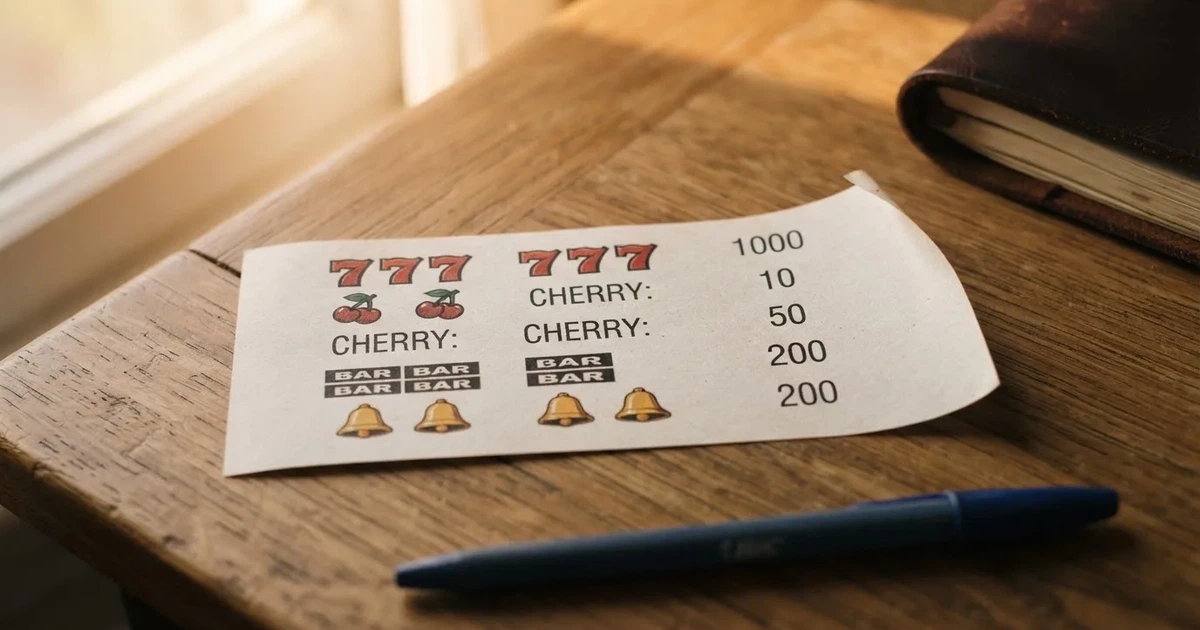
- What a pokie paytable actually shows
- What a fair comparison would weigh
- What an “Australian online pokies” page is actually about
- Legality: the Australian position, stated plainly
- The eleven brands the ACMA has warned
- What the blocking rate looks like
- FAQ
Responsible play: the help that is already paid for and waiting
The first thing to say about online pokies in Australia is that the help line, the self-exclusion register and the counselling network exist for the reason these products exist. None of them is hidden, all are free, and all are reachable from inside the search results this page ranks alongside.

Gambling Help Online runs 24/7 by phone on 1800 858 858 and by live chat, free and confidential. It is run by a national network of counselling providers funded by the Commonwealth and is the front door for anyone whose play is starting to feel compulsory rather than chosen. The service is built for the moment a session stops being a session — when a top-up chase starts, when the time spent stops being the time intended, when the deposit limit written down is the one that gets revised upward.
BetStop, the National Self-Exclusion Register, went live in August 2023 and binds every Australian-licensed online and phone wagering service. A person who registers chooses an exclusion period — from three months to a lifetime — and every operator on the register is required to refuse their account, refuse their deposits, and not market to them. BetStop is honest about its limits: it covers wagering services that hold an Australian licence, and offshore casinos that have never held one are not part of the system. If a site is offshore, registering with BetStop does not stop it contacting you, and it does not stop you logging in. That gap is structural — the register cannot enforce against an operator it has no jurisdiction over — and the way to close it on the player’s side is to play only where the register binds.
Financial counsellors are free through the National Debt Helpline on 1800 007 007, and they see what offshore play does to a household budget with a regularity that is worth naming here. The cycle is well understood: a deposit goes in, a bonus “wins” extend the session, the withdrawal is refused or capped, the next deposit is funded from credit the player intended to repay, and the loss becomes invisible to the player until it is visible to the family. None of this is hypothetical — it is the recurring pattern that financial counsellors and the helpline talk through with callers every week. The page that talks about pokie bonuses and PayID deposits without naming it is a page that has skipped the first conversation any honest operator would have.
PayID and the money side of online pokies
PayID is the deposit rail Australians see most often on offshore pokie sites, and it is worth being clear about what it is and is not. PayID is an account-to-account transfer running on the New Payments Platform, using Osko for instant settlement — it links a phone number, email or ABN to a bank account and the funds arrive in seconds. PayID itself is a rail, not a regulator: it does not check whether the merchant is licensed, it does not check whether the product on the other side is legal in the buyer’s jurisdiction, and it does not put a chargeback mechanism in place if the merchant refuses the withdrawal. The speed is real. The protection is not.
The licensed Australian wagering market — bookmakers and the lottery — takes PayID as one of its standard deposit routes, alongside debit card, bank transfer and BPAY. Credit cards and credit-related products were banned as a payment method for licensed online wagering on 11 June 2024, with penalties up to A$247,500 per breach. Digital currency, including crypto, is banned the same way. If a site asking an Australian player for a deposit is happy to take a credit card or a Bitcoin address, it is operating outside the Australian rules — the absence of those rails is itself a tell.
What an offshore site offers is usually a near-instant PayID deposit followed by a withdrawal that the player is told will take “24 to 48 hours” and that the player discovers, in practice, takes somewhere between three and ten business days. Some sites add their own verification step after the first withdrawal request — a request for documents that has nothing to do with the deposit method and everything to do with creating a reason to refuse the payout. A pattern that has shown up repeatedly in dispute adjudications is the offshore operator that holds the verification request until after the bonus has been cleared and the wagering requirement has been re-applied, so that what looks like a withdrawal becomes a deposit back into the bonus balance. PayID does not cover this loss; the bank has no record of a transaction it can reverse, because the transfer was authorised.
The net effect: PayID is fast on the way in and slow on the way out, and the asymmetry is the product. The faster an offshore operator can take the deposit, the less time the player has to notice that the bonus on the welcome page has a wagering requirement attached that has not been read. The slower the withdrawal, the more time the operator has to attach new conditions to the cash-out.
Bonuses, free spins and what they cost the player
The single most expensive phrase in any pokie bonus is “free spins.” Free spins are not free — they are a number of spins at a stake size the operator chooses, paid out as bonus money that the player has to wager before they can withdraw. The cost is not in the spin, it is in the wagering requirement that sits behind it.
A welcome package is usually built out of a deposit match plus a fixed number of free spins. The match turns the player’s own deposit into something that has to be cleared — a 100% match on a A$200 deposit adds A$200 to the bonus balance, and on a 40x wagering requirement that means A$8,000 of betting before the bonus cash is convertible to a withdrawal. The free spins add their own requirement: the winnings from a 50-spin bundle at A$0.20 are credited as bonus money, and that bonus money runs through the same multiplier. The arithmetic is not hidden in the terms — it is sitting there in plain sight — but it is buried in a section of the bonus terms most players do not read.
The figures that change the calculation are three. The wagering multiplier — 30x, 40x, 50x — is the largest. The stake size per spin matters because the spins the bonus pays out at are fixed at a low value, and the spins a player would choose to play at, with their own balance, are usually higher. The game contribution rate is the third: most slots contribute 100% of each spin’s value to the wagering requirement, table games often contribute 10% or less, and a few games are excluded entirely. A player who tries to clear the bonus on a table game they enjoy will find they have to bet ten times more to move the requirement. The terms are designed so the requirement is cleared on the slots the operator wants played, at the stake size the operator has set.
Max-cashout caps are the third cost layer and the least discussed. Many welcome bonuses cap the withdrawal from bonus play at a multiple of the bonus amount — five times the bonus is common — so that a player who clears A$8,000 of wagering on a 100% match can withdraw only A$1,000 of winnings, regardless of what the bonus cleared on the reels. Any winnings above the cap are removed at withdrawal. The cap is not advertised on the welcome page. It sits in the bonus terms next to the wagering multiplier, in the same paragraph, in the same small font.
The player-side cost, written honestly: a player who accepts a A$200 deposit match with a 40x wagering multiplier and a 5x max cash-out has committed A$8,000 of betting to access at most A$1,000 of withdrawal. The expected loss on A$8,000 of spins at a 95% return-to-player is about A$400 in statistical terms — a band, not a figure, because variance on any individual session will be wider. That is the bonus’s real price before the deposit is even considered. The deposit is a separate A$200 of risk on the same wagering requirement, with its own expected loss of around A$10 over the clearing volume. A “free” welcome package is, in practice, a package whose price is the expected loss on the playthrough. The marketing word is “free.” The terms word is “wager.”
The mobile version of an offshore pokie site
A mobile browser is the way most Australians reach an offshore pokie site, and most operators are built mobile-first — the site is responsive, the games run in HTML5, the cashier is one tap from the home screen. What is not built mobile-first is the protection layer, and that is the gap to be clear about.
A licensed Australian wagering app — the kind a Sportsbet or a Ladbrokes customer installs from the App Store or Google Play — sits inside the Australian regulatory perimeter. Age verification is real, deposit limits are enforced, BetStop applies, and a complaint has a body to take it to. The mobile app in the App Store that markets itself as an “Australian pokies app” and is not run by an Australian-licensed wagering provider is, in the plain reading of the Interactive Gambling Act 2001, providing a prohibited interactive gambling service to a person in Australia. The App Store and Google Play have removed a number of these apps over recent years, but new ones appear under different names. The presence in a store is not a check on legality; it is a content-moderation gap that varies by store and by country.
The practical cost of mobile play is the cost of the session itself plus the friction cost of doing it in small deposits. A mobile session is shorter than a desktop session — five to fifteen minutes is typical — and the deposit amounts are smaller, often A$20 to A$50. The compounding cost is the number of sessions: a player who would not sit at a desktop for two hours will run six fifteen-minute sessions in an evening, and the deposit total by midnight is what would have been a single deposit on desktop. Mobile is not a smaller version of the same play. It is a different cadence of the same play, and the cadence is built into the design.
What a mobile user does not get from an offshore operator is the same protection a desktop user does not get — there is no real difference in regulatory exposure, only in the screen size the page loads on. The BankID-style verification that an Australian licensed wagering provider carries out is replaced by an email and a phone number, and the verification that does happen is typically a deposit-side check, not a withdrawal-side check. A player who finds a withdrawal pending on mobile will often find the same withdrawal pending on desktop, because the request lives on the operator’s side, not the device’s.
What a pokie paytable actually shows
A pokie paytable is the screen a player is supposed to read before they play and almost never does. It is worth describing because it is the single piece of information on an offshore site that is regulated by someone, even if the regulator is not Australian.
A paytable lists the symbols the game uses and the value of each combination at the stake being played. Lower-value symbols are usually the high-cards — nine through ace — paying a small multiple of the line bet for three of a kind. Higher-value symbols are themed to the game and pay more for three or four of a kind and a much larger amount for five. The scatter symbol is the one that pays anywhere on the reels, regardless of lines, and usually triggers the free-spins feature. The wild substitutes for other symbols and sometimes carries a multiplier on its own.
The numbers that matter are two. Return-to-player is the percentage of all money wagered that the game is designed to return to players over the long run — usually 94% to 97% on a modern video pokie, with a few high-volatility titles running lower. The figure is theoretical and applies across millions of spins; in any individual session of a few hundred spins, the actual return will swing widely around that average. Volatility is how the return is distributed: a low-volatility game returns small wins frequently, a high-volatility game returns most of its payout through rare bonus features and long stretches of low or no return. The pokie does not change between spins — the random-number generator produces an outcome each spin independent of what came before — but the structure of the payouts is what produces the two different experiences.
An honest read of the paytable treats the RTP as the house’s published estimate of the long-run cost and volatility as the shape of the variance around it. A 96% RTP game played at A$1 a spin returns about A$96 for every A$100 wagered across the long run, and the player pays A$4 to the house per A$100 of action. The fact that the RTP is published by the game provider and certified by an independent testing lab is what makes it trustworthy in a market where little else is — Pragmatic Play, BGaming and the other studios named on the offshore sites’ game lobbies do put their RTPs through a third-party check. That trust does not transfer to the operator hosting the game.
What a fair comparison would weigh
A comparison page on this subject that did not pretend there was a fair comparison to make would say what a comparison would actually weigh, in the order the weight sits.
The first weight is the legal status of the operator. Online casino games cannot be licensed anywhere in Australia, so the licence shown on an offshore site is a licence somewhere else — Curaçao, Anjouan, the Kahnawake Territory — and it carries none of the protections an Australian licence would. A player comparing sites that all run offshore is not comparing a licensed site against an unlicensed one; they are comparing one unlicensed site against another. The Australian-licensed comparison set on this subject is empty, and any page that ranks it has misread the market.
The second weight is the regulator’s action against the brand. The Australian Communications and Media Authority publishes a register of formal warnings, and the warnings it has issued over the brands most heavily marketed to Australian players are the most useful comparison data point available. A formal warning under the Interactive Gambling Act 2001 is the regulator saying, on the public record, that this operator has offered a prohibited service to Australians. It is not a conviction and it does not end the operator’s activity, but it is the closest thing the comparison has to a regulator’s view of the brand.
The third weight is the operator’s track record on withdrawals. The published complaint data on offshore operators is thin, but the patterns are consistent: the operators that have been warned by the ACMA more than once, that have changed their operating company to a new jurisdiction after the first warning, and that delay withdrawals behind repeated verification requests are the operators to weight least. The operators that pay within a stated window without adding conditions are the operators to weight most. Neither end of that range is a licensed Australian operator.
The fourth weight is the player’s own protection, and this is the weight no offshore operator can carry. BetStop does not bind offshore operators. Australian consumer law does not reach offshore operators. The bank cannot reverse a PayID deposit. A complaint to the ACMA can produce a warning, but it cannot produce a refund. A player reading a comparison page should read the comparison with this in mind: every operator on the list is operating outside Australian law, and the comparison is between operators in that position, not between offshore and licensed.
What an “Australian online pokies” page is actually about
A search for online pokies in Australia is, in practice, a search for one of three things. It is a search for the legal pokies inside an Australian pub, club or casino, where the machines are licensed and the play is regulated. It is a search for the offshore online pokie sites that market themselves to Australian players, where no licence is possible and the play is in a regulatory grey area that is not grey at all — it is prohibited. Or it is a search for what an honest pokie experience looks like, in the sense of a game someone wants to play without being misled about what it costs.
The first category is real. Pokies inside licensed Australian venues operate under each state and territory’s own rules — New South Wales, Queensland, Victoria, Western Australia, South Australia, Tasmania, the Northern Territory and the ACT each maintain their own gambling regulator and their own minimum-return rules. The minimum return-to-player a pokie has to deliver is set per jurisdiction: 85% in NSW, the NT, Queensland and most of Victoria, 87% in the ACT and Tasmania, 87.5% in South Australia, 90% in Western Australia. The number is the floor, not the ceiling — most machines operate close to the floor because the venue’s revenue model is built on the gap.
The second category is what most search results return, and it is the category this page has been writing about. The offshore sites have brand names that look Australian, marketing pages that read as if they are written for Australians, deposit rails that work for Australians and customer service teams that respond to Australians in Australian English. None of that is the same as being licensed in Australia, and the distinction is not a technicality. A licensed venue can be inspected by the state regulator, can have its games audited, can be fined for breaching its licence conditions, and can lose its licence. An offshore operator can do any of the things a licensed operator can refuse to do — refuse a withdrawal, change a term, close the account — and the player has no Australian body to take it to.
The third category is what an honest comparison looks like. It is not a top ten. It is a clear statement that the licensed set is empty, the offshore set is unregulated by Australia, and the player-facing protections live in the player’s own decisions: the deposit limit they set before they start, the session time they commit to, the willingness to walk away from a bonus whose terms they have not read. The page that is honest about that is the page that is useful to the player who actually ends up at one of these sites.
Legality: the Australian position, stated plainly
The Interactive Gambling Act 2001, as strengthened by the Interactive Gambling Amendment Act 2017, makes it an offence to provide online casino games, online pokies or in-play betting to a person physically in Australia. The offence sits with the provider, not the player — Australian law does not prosecute individuals for placing a bet on an offshore site. But the provider is the one being acted against, and the action the regulator takes is the public data the comparison has to work with.
The Australian Communications and Media Authority, the ACMA, is the regulator that enforces the Act. It investigates complaints, issues formal warnings, and can direct Australian internet service providers to block illegal sites at the network level. The blocking is not theoretical: as of the ACMA’s June 2026 update, 1,751 illegal gambling and affiliate marketing websites had been blocked since the first blocking request in November 2019, and more than 230 unlicensed gambling services had left the Australian market since enforcement was strengthened in 2017. The list of sites blocked in a single June 2026 round — 12 at once, including 7Signs, ChromaBet, Donbet, Duospin, Freshbet, Slots Gem, Jacks Club, Lucky Start, Pointsbetz, Spinrise, Vinyl Casino and Wildsino — is the visible edge of a much larger enforcement picture.
The IGA is federal. State and territory law adds the licensing of the land-based machines — every Australian state and territory regulates its own poker machines, with each jurisdiction separately controlling the design, the return floor and the venue rules. New South Wales had 87,298 gaming machines outside casinos across 2,195 venues as of June 2023, with player losses of A$8.18 billion in 2022–23. Queensland had 21,122 machines in 351 venues as of October 2023. Victoria operates under a 30,000-machine statewide cap, with 26,380 outside Crown Casino in 488 venues in 2021–22. Western Australia banned poker machines in pubs and clubs entirely when Crown Perth opened in 1985; Crown Perth’s own machine count has grown from about 200 in 1985 to roughly 2,500 since, all approved by the state’s Gaming and Wagering Commission. Tasmania ended the Federal Group’s monopoly over its poker machines in November 2021 and moved oversight to the Tasmanian Liquor and Gaming Commission; its nation-leading mandatory pre-commitment cards were delayed into late 2025 and are now in the implementation phase.
What can be licensed in Australia is wagering on races and sport placed before the event, lotteries, and keno. The licensing is dominated by the Northern Territory — the NT Racing and Wagering Commission regulates 52 of Australia’s online bookmakers, including Sportsbet, Bet365 and Ladbrokes, all licensed in the Territory largely for tax reasons. The commission is small enough to meet once a month in Darwin and has no full-time staff, a fact that has drawn commentary from the ABC and elsewhere over how a Territory with 1% of the country’s population came to license half of its online bookmakers. The point for a player is that licensed Australian wagering is licensed in the NT for reasons of tax competition between states, not because the NT regulator is the natural home for the product. The product itself — sports and race betting placed before the event — is the licensed set. Online pokies are not.
The Interactive Gambling Amendment (Gambling Reform) Bill 2026 passed Parliament on 19 August 2026. Its advertising and inducement measures commence on 1 January 2027. The bill is law with a start date, not yet in force on a 2026 page, and what it changes is the marketing rather than the underlying prohibition. The prohibition has been in place since 2001 and the 2017 amendments; the 2026 reform layers on restrictions on how licensed wagering services advertise, not a new licence for online casino games.
The taxation position: gambling winnings of a recreational player are not assessable income under section 6-5 of the ITAA 1997, and losses are not deductible, unless the person is carrying on a business of gambling. The phrase “check with the ATO” is the right answer for any player in a non-standard situation, but for the casual player the position is that a pokie win is not taxable income and a pokie loss is not a deduction. The relevance for an offshore site is that the ATO has no jurisdiction to collect from an offshore operator, so an unpaid withdrawal has no tax-side remedy either.
The eleven brands the ACMA has warned
The operators below are not ranked. They are listed in the order the ACMA has formally warned them, and each entry states only what the regulator has said and what the public record shows. None of them is licensed in Australia and none of them can be licensed here. The page that treats them as a top ten is reading the brief wrong.
RocketPlay — two warnings, six years apart
RocketPlay is the clearest case in the set of an operator the ACMA has come back to. In May 2022 the regulator issued a formal warning to Dama N.V. over RocketPlay and five other brands at once — Bambet, Dazard, Level Up, Wild Tornado and Cobra Casinos. In March 2026 the ACMA issued a fresh warning to Pulsup Ltd specifically over Rocketplay. Two warnings across the same brand under two different operating companies is the public record on this brand. The cost a player reading this pays in is the time spent on a site whose regulator has had to name it twice.
Level Up Casino — warned once, still operating
Dama N.V. was the operator named in the May 2022 warning that covered Level Up Casino, alongside five other brands. The ACMA’s formal warning is the public record. What is not on the public record, because no affiliate marketing page is a source a player should rely on, is what the operator’s current bonus terms look like. A player who arrives at Level Up Casino’s site will see a welcome package; the cost of that package is the wagering requirement and the max cash-out that sits behind it, not the headline number. The brand has not been the subject of a second warning as of the ACMA’s June 2026 update, but it is not on the licensed Australian list either, because no online casino brand is.
Woo Casino — the Dama N.V. warning returned
In March 2025 the ACMA issued a formal warning to Dama N.V. specifically over Woo Casino, two and a half years after the May 2022 batch warning. The repetition matters because it tells a player the operator’s response to the first warning was not to withdraw from the Australian market. Woo Casino is still marketed to Australian players as of the ACMA’s most recent round, and a player who reaches the site through an affiliate link is reaching a brand the regulator has had to formally address twice in three years. The cost is not in the bonus. It is in the absence of an Australian complaints body for a withdrawal dispute.
Spirit Casino — the second Dama N.V. warning in 2025
In May 2025, two months after the Woo Casino warning, the ACMA issued another formal warning to Dama N.V., this time over Spirit Casino. Two warnings to the same operator in three months is the regulator saying the operator is continuing to offer prohibited services after being told to stop. The brand is marketed as a fresh alternative to Woo Casino, which is itself a fresh alternative to the older Dama N.V. brands. The marketing layer is not the regulator layer, and a player who reads the welcome page is not reading the ACMA register.
National Casino — the Consolutetish S.R.L. warning
In July 2025 the ACMA issued a formal warning to Consolutetish S.R.L. over National Casino, alongside warnings over Bizzo Casino and Ignition Casino. National Casino had been one of the more heavily marketed brands to Australian players under earlier Dama N.V. ownership, and the shift in operating company is the only material change. A player who reads the new operating company’s licence on the footer of the site is reading a licence in a jurisdiction outside Australia. The ACMA’s July 2025 warning is the more useful data point.
Bizzo Casino — warned twice under two operators
Bizzo Casino is the brand in the set with the longest ACMA paper trail. In 2022 the regulator issued a formal warning to TechSolutions (CY) Group Limited and TechSolutions Group N.V. over Bizzo Casino. In July 2025 the ACMA issued a fresh warning to Consolutetish S.R.L. over the same brand. Two warnings, two operating companies, the same brand. A player who arrives at Bizzo Casino after reading about the warning once should know there is a second one. The cost of playing on a brand the regulator has had to warn twice under two different owners is that the operator has demonstrated it is willing to re-form rather than withdraw.
Ignition Casino — the Bamboo Media warning
In July 2025 the ACMA issued a formal warning to Bamboo Media over Ignition Casino. The warning is the more useful data point than any footer licence on the Ignition Casino site. Bamboo Media is not an Australian operator, the licence Bamboo Media holds is not an Australian licence, and the formal warning is the regulator’s statement that the service has been offered to Australians in breach of the Interactive Gambling Act 2001. The cost a player reads off this page is the cost of every deposit to a brand whose regulator-side status is on the public record.
Instant Casino — the EOD Code SRL warning
In February 2025 the ACMA issued a formal warning to EOD Code SRL over Instant Casino. The operator’s name on the warning is the operator the player is paying; the brand name is the marketing layer. The warning sits alongside the six other 2025 warnings, and the pattern across the warnings — different operating companies, similar brand templates, similar welcome packages — is what the regulator has acted against. A player who reaches Instant Casino through an affiliate page should read the warning before reading the welcome offer.
Jackbit — the Ryker B.V. warning
In April 2026 the ACMA issued a formal warning to Ryker B.V. over Jackbit and CasinOK. The brand markets itself as a casino-and-sportsbook combination, which is the same marketing structure as several other operators in the set, and the same regulatory exposure. Jackbit was one of the 12 sites blocked in the June 2026 round, which means the formal warning preceded the blocking by two months and the blocking followed the standard ACMA sequence of warn, then block if the service continues. The cost a player pays is in the deposit and the unreturned balance if the site is blocked mid-session.
Casino Intense — the Sterplay Holding Ltd warning
In April 2025 the ACMA issued a formal warning to Sterplay Holding Ltd over Casino Intense. The brand’s marketing emphasises the pokies library and the bonus structure, and the ACMA’s action is the regulator’s view that the brand has been offered to Australian players in breach of the IGA. A player comparing Casino Intense to the rest of the set is comparing one unlicensed, ACMA-warned brand against other unlicensed, ACMA-warned brands. The comparison is not with a licensed Australian operator because there is no such operator on this product.
Sky Crown — the Hollycorn N.V. warning
The ACMA issued a formal warning to Hollycorn N.V. over Sky Crown and Blue Leo in September 2022. The warning is the earliest in the set from the same operator, and Hollycorn N.V. operates a portfolio of similarly-marketed casino brands under different names. The pattern is consistent with the broader offshore market: one operator, several brands, several warnings. A player reading Sky Crown’s welcome page is reading marketing material written by the same team that wrote the welcome pages the ACMA has warned against.
What the blocking rate looks like
The ACMA’s June 2026 update gives the running total of blocked sites since the first blocking request in November 2019. The total is 1,751 illegal gambling and affiliate marketing websites blocked, over a period of roughly six and a half years from November 2019 to June 2026. The blocking rate is the number of sites blocked per month across that window — a band, not a figure, because the rounds are uneven. Some months have no blocks; some rounds block a dozen sites at once. The published data supports a band of roughly twenty to twenty-five sites blocked per month on average, with single rounds clustering as high as twelve in a single announcement.
The condition that makes this a band rather than a figure is the cadence. The ACMA blocks in rounds, not continuously, and the rounds are not evenly spaced. A round in June 2026 named 12 sites. Earlier rounds named different numbers. A player reading the blocking rate as “the ACMA is taking down about twenty sites a month” is reading a statistical average over a window that includes both the quiet months and the heavy rounds. The honest reading is that the regulator is acting at a pace that has produced 1,751 blocks in six and a half years and that shows no sign of slowing, but the rate per month is a band whose width is determined by the round structure rather than a steady drip.
The cost a player reads off the blocking rate is not the regulator’s cost. It is the player’s risk that the site they are on will be the next round’s list. A site that is blocked while the player has a balance on it gives no withdrawal path — the Australian ISP-side block removes access to the site, not the operator’s books, but the operator has no incentive to process a withdrawal to a customer who cannot reach the support page. The block does not return the balance. It removes the only route the player had to ask.
FAQ
Are online pokies licensed anywhere in Australia?
No. Under the Interactive Gambling Act 2001, online casino games and online pokies cannot be licensed for supply to a person in Australia, and no state or territory regulator issues a licence for them. What is licensed is wagering on races and sport placed before the event, lotteries and keno. An offshore pokie site is operating outside Australian law regardless of what other licence it displays.
Is there a legal Australian online pokies app?
No. The licensed Australian wagering apps in the App Store and Google Play are run by sports and race bookmakers, not by online casino operators. Any app marketing itself as an Australian pokies app and not run by an Australian-licensed wagering provider is providing a prohibited service. The mobile browser version of an offshore site is the same product under a different interface.
What is the difference between online pokies and pokies in an Australian venue?
The land-based pokies inside a licensed Australian pub, club or casino are regulated by the relevant state or territory authority, with each jurisdiction setting its own minimum return-to-player, design rules and venue requirements. Online pokies are the digital version of those machines, offered from offshore, outside Australian jurisdiction. The land-based machines are legal where they operate; the online version is prohibited.
Do sign-up bonuses on these sites come from an Australian operator?
No. The bonuses are offered by offshore operators, funded from outside Australia, and the terms are written under the operator’s home jurisdiction, not Australian consumer law. A wagering requirement, a max-cashout cap or a withdrawal condition cannot be challenged through an Australian complaints body, because there is no Australian body with jurisdiction over the operator.
Can a PayID-friendly site still be offshore?
Yes. PayID is a payment rail, not a regulator. An offshore operator can accept PayID deposits from an Australian bank account and remain outside Australian law. The presence of PayID on the cashier page indicates only that the operator has connected to the New Payments Platform, not that the operator holds an Australian licence.
Does the word “Australian” in a pokies site’s name indicate its licensing jurisdiction?
No. The brand name is a marketing choice and has no connection to the licence the operator holds. Several of the brands named in this set use Australian-themed naming without being licensed in Australia. The ACMA register of formal warnings is the more reliable indicator of an operator’s regulatory status than the brand name on the homepage.