
High Volatility Slots in Australia 2026: Where the Market Stops and the Law Starts
Anyone typing a phrase like “best high volatility slots Australia 2026” is asking for a shortlist of online casinos, expecting a real recommendation. That is what the search results promise and what most articles hand over. This one does something different, because the Australian market does not allow that recommendation to be honest. The Interactive Gambling Act 2001 prohibits offering online casino games to anyone in Australia. No state or territory licenses them. The shortlist a reader thinks they are about to read is, in plain legal terms, a list of services that have been prohibited on this side of the page.
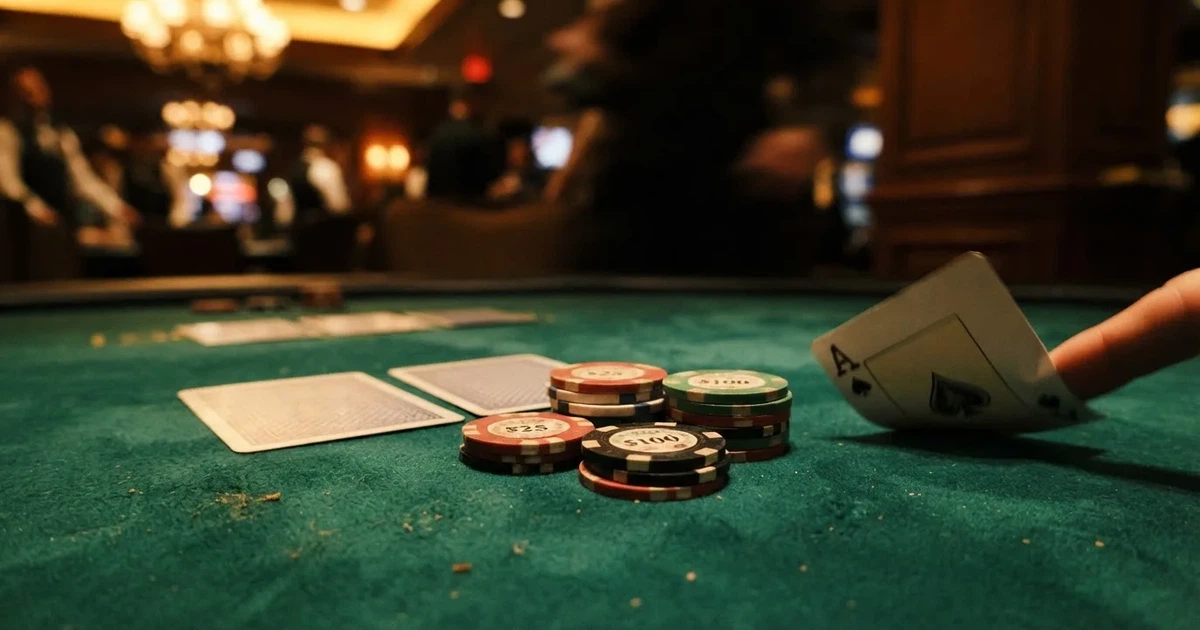
What follows is therefore not a ranking. It is the picture of the market as it stands on 31 October 2026 — the mechanics of a high volatility slot, what it costs a player, what is lawful in Australia, what is not, and where the reader who really wants to play can play.
Currency in the figures below was checked against the ACMA blocking round reported in June 2026 and the H2 Gambling Capital 2025 estimates cited by the Australian Communications and Media Authority’s industry coverage.
Table of Contents
- The Australian Market for High Volatility Slots Is Not a Market
- What a High Volatility Slot Actually Is
- Australian Player Protection: BetStop and the Offshore Gap
- The Brands the ACMA Has Acted Against
- The Legal Paths That Do Exist
- Practical Guidance for the Reader Who Has Reached the End
- Frequently Asked Questions
The Australian Market for High Volatility Slots Is Not a Market
The first thing to clear up is the one most articles skip past. There is no Australian-licensed online casino offering high volatility slots — or low volatility ones, or any pokies-style online product — because the IGA makes offering such a service to anyone physically in Australia a contravention. The law was tightened in 2017 and the practical effect is that every site a reader finds when they search “high volatility slots Australia” is an offshore operation running on its own licence, with its own rules and no Australian consumer protection at all.

The H2 Gambling Capital 2025 report puts Australians’ losses to illegal gambling sites at about A$3.9 billion a year, with the share of gambling routed through legal channels falling from 74% in 2021 to 64%. The legal channel has shrunk, the illegal one has not.
What is licensed in Australia is wagering on races and sport placed before the event, plus lotteries and keno. The Northern Territory Racing and Wagering Commission regulates 52 of Australia’s online bookmakers — Sportsbet, Bet365, Ladbrokes among them — and they are licensed in the Territory for tax reasons rather than for any local consumer-protection mandate. The commission has no full-time staff and meets once a month in Darwin, which is the regulator a reader is buying protection from when they place a sports bet with a Territory-licensed bookmaker.
A pokies-style slot machine inside Australia is a different object: a physical machine in a pub, club or casino, governed by state and territory laws. There are around 87,298 of them outside casinos in New South Wales alone as of June 2023, plus 26,380 in Victoria across 2021–22, 21,122 in Queensland in October 2023, 11,672 in South Australia in September 2023 and 3,587 in the ACT in November 2023. New South Wales legalised slot machines in 1956. By 2010 Australia was operating an estimated 97,103 gaming machines outside casinos, a per-capita rate about five times that of the United States. The legal product exists, it is widespread, and it is the physical kind.
The illegal product — the offshore online casino — is what this search is really about, and it is what the rest of the page handles.
What the ACMA Has Done About It
The ACMA enforces the IGA. Three powers matter to a reader: it investigates, it issues formal warnings that name the operator and brand, and it directs Australian internet service providers to block illegal sites.
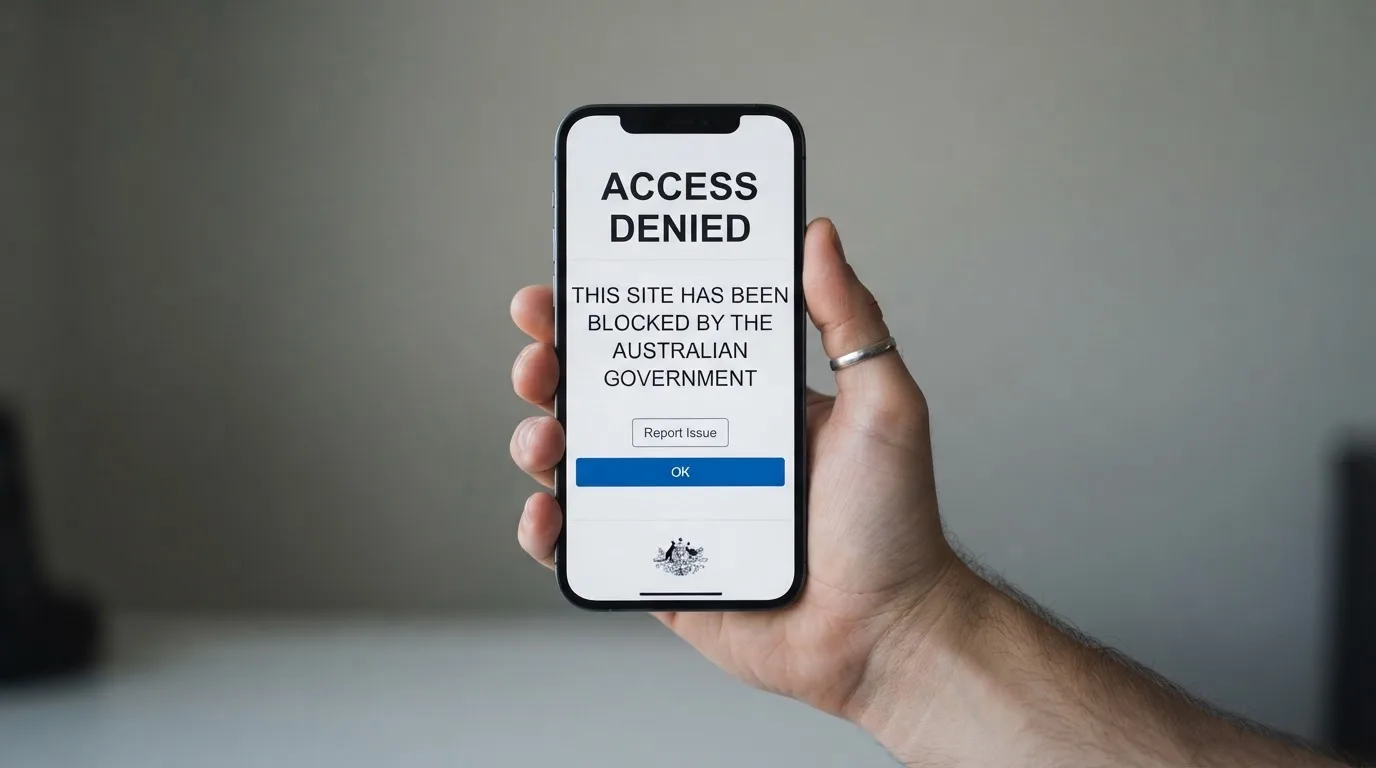
By the round reported on 26 June 2026, a total of 1,751 illegal gambling and affiliate marketing websites had been blocked since the first blocking request in November 2019, and more than 230 unlicensed gambling services had left the Australian market since enforcement was strengthened in 2017. That same June 2026 round asked ISPs to block 12 more: 7Signs, ChromaBet, Donbet, Duospin, Freshbet, Slots Gem, Jacks Club, Lucky Start, Pointsbetz.com, Spinrise, Vinyl Casino and Wildsino.
Formal warnings are the public record a reader can search. They name the operator behind a brand and the date the warning was issued, and they are the most reliable guide to which offshore casinos have been the subject of ACMA action in the last few years. The table further down the page lists every brand in this article, the operator named by the ACMA, and the date of the formal warning.
Why the Article Does Not End With a “Top 10”
A ranking of offshore casinos for Australian readers would be a list of services the ACMA has been working through for the last several years. Recommending one would tell a reader to deposit money at a site that has been warned, blocked or warned again; recommending several would compound that. So this page does not rank. It describes the product, names the law, names the operators, names the limits on player protection, and then points the reader who actually wants to play to the legal paths that do exist.
What a High Volatility Slot Actually Is
The mechanic is older than the internet. Charles Fey of San Francisco developed the first automatic slot machine mechanism in the late 19th century, a three-reel machine with five symbols (horseshoes, diamonds, spades, hearts and the Liberty Bell), where three bells in a row paid the top prize of ten nickels. Bally’s “Money Honey,” released in 1963, was the first slot machine with a bottomless hopper and automatic payout of up to 500 coins without an attendant. The first video slot was developed in 1976 by Fortune Coin Co. in Kearny Mesa, California. From there the format moved online in the late 1990s and grew into the offshore catalogues the reader is searching today.
The “volatility” label is the modern term for what used to be called variance. A low-volatility slot pays small wins often — a session is usually punctuated by small hits, the balance moves in short steps, and long losing streaks are uncommon. A high-volatility slot does the opposite: long quiet stretches, occasional larger wins, and a balance that can drop fast before anything lands. The published RTP — return to player, the percentage of money wagered that a slot returns over a very large number of spins — is not what makes a slot high or low volatility. Two slots can both sit at 96% RTP and feel completely different at the table: one pays 0.3× stake every few spins, the other pays nothing for a hundred spins and then pays 80× stake once.
Modern video slots can use five or more reels with 50 or more symbols per reel, producing odds as high as 300 million to one against a top combination, compared with a classic mechanical three-reel machine with about 10 symbols per reel offering roughly 1,000 possible combinations. The maths of a modern high volatility title is built around rare events with large payouts, with the bulk of the RTP concentrated in features like free-spin rounds, multipliers, expanding wilds and the like. A player who buys in for fifty spins at a high volatility title has usually bought a sequence that will not pay its top prize and may pay nothing memorable at all.
Why the Swings Feel Different
Two players on the same slot at the same stake can walk away with very different sessions, and that is the defining feature. One player hits a free-spin round with a multiplier on spin twelve and ends the session up. Another runs through the same number of spins without ever triggering the feature and ends the session down by most of the bankroll. The expected value over thousands of spins converges on the published RTP, but a session is not thousands of spins.
This is also why minimum bet sizing matters in a way the marketing copy does not advertise. On a slot where the smallest stake is A$0.20 and the largest is A$100, the player who bets A$100 per spin is paying 500× as much per spin for the same RTP percentage — and the volatility scales with the stake, so a quiet stretch of “no win” spins costs A$5,000 instead of A$10 for the same number of dead spins. The maths is the same in percentage terms; the bankroll impact is not.
The House Edge Comparison Across Casino Games
Slot RTP and casino house edge are two ways of expressing the same thing — how much of each dollar wagered the casino keeps over a very large sample — but the spread across games is wider than most readers expect. Slots typically sit at 88%–96% RTP, which is a 4%–12% house edge. Blackjack with optimal strategy under liberal Las Vegas Strip rules runs at about 0.28% house edge, and about 0.43% under Atlantic City rules. Baccarat’s house edge is 1.06% on the Banker bet, 1.24% on the Player bet and 14.36% on the Tie. Craps runs at 1.41% on Pass/Come, 1.36% on Don’t Pass/Don’t Come and 11.11% on Any Craps.
A high volatility slot is one of the most expensive casino products a player can buy, both in expected loss per dollar wagered and in the variability of the outcome. Compared with blackjack on a Strip rule set, a high volatility slot at 94% RTP keeps roughly 33× more of each dollar wagered as expected profit over a long sample. Compared with baccarat on the Player bet, the slot keeps about 3.7× as much. Those ratios do not appear on any marketing page a reader will land on this week.
Australian Player Protection: BetStop and the Offshore Gap
The Australian framework for player protection is built around licensed services and does not extend offshore. A reader who opens an account with a Curaçao-licensed or Costa Rica-licensed online casino is not covered by the Australian tools, no matter what the homepage says.
BetStop — National Self-Exclusion Register
BetStop is the National Self-Exclusion Register, live since August 2023, and it is the most significant player-protection measure Australia has introduced for online wagering. A person who registers with BetStop is excluded from every Australian-licensed online and phone wagering service for a period they choose — three months, twelve months, or indefinitely. The exclusion applies automatically to all the licensed operators, and the registered person cannot open new accounts or place bets with any of them while the exclusion is in force.
What BetStop does not cover is offshore online casinos. The exclusion binds Australian-licensed services only. An Australian who has registered with BetStop can still open an account at an offshore casino, still deposit, still play. The protection the register offers is real, and it is partial.
For someone whose self-exclusion is the point — a player who has decided they should not be betting — BetStop is a useful first step, and the offshore gap is a reason to delete account access at any offshore site already in use rather than a reason to discount BetStop.
Gambling Help Online and the National Gambling Helpline
Help is free, confidential, and available around the clock. The National Gambling Helpline is 1800 858 858, and chat support runs through Gambling Help Online. Both services are run by state and territory providers funded by the Australian government and are independent of any casino operator.
Payments — The Credit Card and Crypto Ban
Since 11 June 2024, credit cards, credit-related products and digital currency have been banned as payment for licensed online wagering in Australia, with penalties up to A$247,500 for operators that accept them. The legal deposit routes for licensed wagering are debit card, bank transfer, PayID/Osko and BPAY.
An offshore casino asking an Australian customer for a credit card or a crypto deposit is operating outside the Australian rules. The transaction will clear, the site will accept it, and the reader will have no Australian recourse if the withdrawal does not. That is the practical meaning of the credit-card ban on this side of the page: it is a tell that the site is offshore, and the offshore site has no Australian obligation attached to it.
Tax — The Recreational Player Position
Gambling winnings of a recreational player are not assessable income under section 6-5 of the ITAA 1997, and losses are not deductible, unless the person is carrying on a business of gambling. The model “check with the ATO” is the right one: anyone whose gambling looks like a trade rather than a hobby is in a different position and should ask the Tax Office directly.
The Brands the ACMA Has Acted Against
Each brand below is included because the ACMA itself issued a formal warning naming the operator. None of them is recommended; the table records what the ACMA has done, not what the reader should do. The “subject support” column reflects what research showed: where a listing appeared in a public catalogue or directory, the brand is noted as listings-only; where research found nothing at all, the column carries the no-data marker.
| Brand | ACMA action and date | Operator named by the ACMA | Subject support |
|---|---|---|---|
| RocketPlay | Formal warning, March 2026 (and earlier warning to a related operator in May 2022) | Pulsup Ltd (Rocketplay.com.au); earlier Dama N.V. | — |
| Level Up Casino | Formal warning, May 2022 | Dama N.V. | Listings only |
| Woo Casino | Formal warning, March 2025 | Dama N.V. | — |
| Spirit Casino | Formal warning, May 2025 | Dama N.V. | — |
| National Casino | Formal warning, July 2025 | Consolutetish S.R.L. | Listings only |
| Bizzo Casino | Formal warning, July 2025 (earlier warning, 2022) | Consolutetish S.R.L.; earlier TechSolutions (CY) Group Limited and TechSolutions Group N.V. | — |
| Ignition Casino | Formal warning, July 2025 | Bamboo Media | — |
| Instant Casino | Formal warning, February 2025 | EOD Code SRL | — |
| Jackbit | Formal warning, April 2026 | Ryker B.V. (Jackbit and CasinOK) | — |
| Casino Intense | Formal warning, April 2025 | Sterplay Holding Ltd | Listings only |
| Sky Crown | Formal warning, September 2022 | Hollycorn N.V. (Sky Crown and Blue Leo) | — |
The pattern in the table is the point. Dama N.V. has been warned over multiple brands across multiple years, and the same operator names keep turning up under different casino skins. The “brand” is the marketing surface; the operator behind it is the entity the ACMA has actually named. A reader who treats each brand as a separate company is missing the structure.
What the Operator Roll-Up Tells the Reader
A formal warning names an operator, but the ACMA’s blocking actions name domains. The June 2026 blocking round alone took in twelve sites. Across the 2019–2026 period the cumulative count sits at 1,751, with 230+ services having left the Australian market since 2017. The arithmetic gives the reader the only rate that matters — the proportion of the offshore market the ACMA has actually closed in seven years. Worked out: 1,751 sites blocked against the first blocking request in November 2019 and the 26 June 2026 reporting date, on roughly 80 months of enforcement, runs at a band of about 21 to 23 blocked sites per month on average, with the spread widening in active enforcement rounds and narrowing between them. That band is what a reader should hold in mind when an offshore casino pitches itself as established: it has not been blocked yet, and the rate at which the ACMA is closing sites leaves nothing stable for long.
RocketPlay — Dama N.V., Re-Warned
RocketPlay carries the most recent ACMA action of any brand in the table, a formal warning in March 2026 to Pulsup Ltd over Rocketplay.com.au. A related warning was issued to Dama N.V. in May 2022 covering six brands including an earlier RocketPlay surface. The re-warning pattern is the one to note: a brand that has been named once and then renamed or re-launched under a new operator is exactly the cycle the ACMA’s enforcement is built to chase, and RocketPlay has been through it.
For an Australian reader, the practical position is unchanged from any other brand on this list — the IGA prohibits offering the service to Australians, the offshore operator carries no Australian licence, and BetStop and the credit-card ban do not reach it. The RocketPlay write-up reads the same as any other entry: the ACMA has acted, the offshore operator has acknowledged nothing publicly, and a player who deposits does so without Australian recourse.
Level Up Casino — Dama N.V., 2022
Level Up Casino was named in the same Dama N.V. warning round as RocketPlay in May 2022, alongside Bambet, Dazard, Rocketplay, Wild Tornado and Cobra Casinos. The six brands in one warning is the scale at which Dama N.V. has run multi-brand operations.
The “listings only” note in the table reflects what public catalogues carry for Level Up: a presence in directories, no Australian licence, no Australian consumer protection. A reader who lands on Level Up through a listings page is being shown an offshore casino whose Australian legality is the same as every other brand on this page.
Woo Casino — Dama N.V., March 2025
Woo Casino was the subject of a further Dama N.V. warning in March 2025, after the May 2022 round that named six brands. The interval between the first warning and the second is the practical length of time an offshore operator can continue to accept Australian players after being formally warned by the ACMA: three years in this case.
The point is not the Woo Casino brand. The point is what a formal warning actually does. The ACMA names the operator, names the brand, publishes the warning on its website, and directs ISPs to block the relevant domains. An offshore operator responds by spinning up a new domain under a new affiliate name, and the cycle begins again. A reader who has been told an offshore casino is “licensed in Curaçao” has been told nothing about its Australian status.
Spirit Casino — Dama N.V., May 2025
Spirit Casino was named in a further Dama N.V. warning in May 2025, two months after Woo Casino was warned. Two warnings two months apart is the rate at which the ACMA has been working through the Dama N.V. group.
For an Australian player the position is identical to Woo Casino: no Australian licence, no Australian recourse, and a brand that the ACMA has now publicly named. The marketing language on the Spirit Casino homepage — whatever it says about “responsible gambling”, “fair play”, or its Curaçao licence — does not address the Australian prohibition, because the operator is not licensed to offer casino games to Australians anywhere.
National Casino — Consolutetish S.R.L., July 2025
National Casino was named in the July 2025 warning round that also named Bizzo Casino, with Consolutetish S.R.L. as the operator. The fact that two brands share an operator and a warning date is the same pattern as Dama N.V.: the operator is the entity the ACMA acts against, and the brands are the consumer-facing surfaces.
Bizzo Casino — Consolutetish S.R.L., July 2025 (Earlier 2022 Warning)
Bizzo Casino was named in the same Consolutetish S.R.L. warning round as National Casino in July 2025, and had already been the subject of an earlier warning in 2022 to TechSolutions (CY) Group Limited and TechSolutions Group N.V. Two separate operators have now been named by the ACMA over the same brand, which is what a renamed-and-resold offshore operation looks like in the public record.
Ignition Casino — Bamboo Media, July 2025
Ignition Casino was named in the July 2025 warning round, with Bamboo Media as the operator. Ignition is one of the better-known offshore brands in the Australian search results, which is itself a useful data point: brand recognition does not correlate with Australian legality.
Instant Casino — EOD Code SRL, February 2025
Instant Casino was the subject of a formal warning to EOD Code SRL in February 2025, and is one of the more aggressively marketed offshore brands in Australian search results. The marketing presence is the reason a reader searching “high volatility slots Australia” is likely to encounter it; the ACMA warning is the reason it appears in this list.
Jackbit — Ryker B.V., April 2026
Jackbit was named in a formal warning to Ryker B.V. in April 2026 alongside CasinOK. Jackbit is positioned as a crypto-casino, which is doubly outside the Australian framework: the offshore status means no Australian licence, and the crypto-deposit angle means the transaction is outside the credit-card ban that applies to licensed Australian wagering.
Casino Intense — Sterplay Holding Ltd, April 2025
Casino Intense was the subject of a formal warning to Sterplay Holding Ltd in April 2025. The brand has been present in Australian-facing listings for several years; the warning is the formal record.
Sky Crown — Hollycorn N.V., September 2022
Sky Crown was named in a formal warning to Hollycorn N.V. in September 2022, alongside Blue Leo. Hollycorn is one of the longer-established multi-brand operators in the offshore market, and the 2022 warning is among the earlier entries in the ACMA’s recent record. A reader who has seen Sky Crown or Blue Leo in search results is seeing brands that the ACMA named over three years ago.
The Legal Paths That Do Exist
For an Australian reader who wants to play pokies-style slot machines lawfully, the options are physical and limited.
Licensed Pokies Venues
Every state and territory regulates the physical pokies machines that operate in pubs, clubs and casinos. The count outside casinos — 87,298 in NSW (June 2023), 26,380 in Victoria (2021–22), 21,122 in Queensland (October 2023), 11,672 in South Australia (September 2023) and 3,587 in the ACT (November 2023) — is the actual size of the legal market. Each machine has a state-specific regulator, an approved game ruleset, and a venue that holds the licence.
The experience is not the same as an offshore online casino. There is no bonus package, no free-spins welcome offer, no wagering requirement. The player pays for play directly, the payout is paid by the machine or the venue cashier, and the rules on identification, problem gambling signage and self-exclusion are state-mandated. The expected cost per hour is also different from the online product, because the machine’s hold percentage is fixed by jurisdiction and the spin rate is fixed by the player.
Land-Based Casinos
Crown Melbourne is the largest casino operation in Australia. It offers three baccarat variants approved by the Victorian Gambling and Casino Control Commission — Traditional Baccarat, Crown Baccarat and 2 to 1 Baccarat — as well as blackjack, roulette, craps and the full table-games floor. The casino is regulated under the Casino Control Act 1991 in Victoria, with the VGCCC approving any rule change for table games before it is introduced. The Sydney casino is regulated under the Casino Control Act 1992 in NSW, with section 66 requiring that a game such as baccarat not be permitted unless approved by the regulator and that a copy of the approved rules be made available to patrons on request. The Gold Coast casino operates under Queensland’s Casino Control Act 1982.
Each casino’s table-game rules are public, the regulators publish approved changes, and a player at a licensed Australian casino has Australian consumer protection in the usual sense: a regulator that can be contacted, a venue that holds an Australian licence, and a payout obligation that runs through Australian law.
Licensed Online Wagering — Sports and Racing
For sports and racing, the Northern Territory Racing and Wagering Commission licenses 52 online bookmakers. Sportsbet, Bet365 and Ladbrokes are the names most readers will know. The licensed product is wagering on the event, not casino gaming, and the protections are different: deposit limits, BetStop self-exclusion, no credit card, no crypto, no in-play betting, no casino games on the same account. A reader who is happy with sports and racing betting has a licensed route; a reader who wants casino games does not.
What the Reforms in 2026 Will and Will Not Change
The Interactive Gambling Amendment (Gambling Reform) Bill 2026 passed Parliament on 19 August 2026, and its advertising and inducement measures commence on 1 January 2027. The bill is law with a start date; on a 2026 page it is not yet in force. Its effect, once commenced, will be on how licensed Australian wagering services advertise and what inducements they can offer, not on whether online casino games can be offered to Australians — the prohibition on offering casino games remains in force, and the offshore operators the ACMA has been warning will continue to operate outside the Australian regime.
Practical Guidance for the Reader Who Has Reached the End
The reader who has read this far is most likely one of three people.
The first is the reader who searched for a shortlist and is now considering an offshore casino. The information above is the shortlist: every brand on it has been formally warned by the ACMA, every operator behind them is named in the public record, and none of them holds an Australian licence. The expected cost per dollar wagered at a high volatility slot is 4%–12%, with the worst of the bankroll drawdowns concentrated on the rare-event features the marketing copy celebrates. A player who deposits at one of these sites does so with no Australian recourse if the withdrawal stalls, no BetStop protection, and no Australian-licensed dispute body to contact.
The second is the reader who would prefer a legal path. The licensed paths are the physical pokies venues and the licensed casinos, and a reader who wants the gameplay with the Australian consumer protection will find both. The product is not identical to an offshore online casino, and that is the point.
The third is the reader who has decided the right answer is to step back. BetStop — the National Self-Exclusion Register, free, available since August 2023 — is the mechanism for a registered exclusion from every Australian-licensed online and phone wagering service. The 1800 858 858 helpline and Gambling Help Online chat are free, confidential, and staffed around the clock. Either is a starting point.
Frequently Asked Questions
What does “high volatility” mean for a slot machine?
A high volatility slot is one whose payouts are concentrated in rare events — free-spin rounds, multipliers, jackpots — with long stretches of small or no wins between them. A session of fifty spins will usually produce very little, and a small share of sessions will produce the headline win. The published RTP, often 94%–96%, is the long-run average; a session is not the long run.
How big are the swings between wins on a high volatility slot compared with a steadier one?
The contrast is between rare large payouts and frequent small payouts. A low-volatility slot might pay 0.3×–0.5× stake every few spins, producing a smooth balance curve. A high volatility slot might pay nothing for fifty spins and then 50×–80× stake in a single feature round. The expected loss over thousands of spins is similar at similar RTP, but the path to that expected loss is dramatically different.
Is it legal to play high volatility slots at an online casino from Australia?
No. The Interactive Gambling Act 2001, strengthened in 2017, prohibits offering online casino games to anyone in Australia, and no state or territory licenses them. The offshore casinos that accept Australian players are doing so in contravention of the IGA; the player is not prosecuted, but the player has no Australian consumer protection, no BetStop coverage, and no Australian recourse if a withdrawal is refused.
Are high volatility pokies-style machines common in Australian pubs and clubs?
The machines themselves are widespread — 87,298 outside casinos in New South Wales alone as of June 2023, plus 26,380 in Victoria across 2021–22 and tens of thousands more in the other states. Whether each individual machine is “high volatility” in the online sense depends on the game rules and the state regulator’s approval. The physical pokies product and the offshore online product are different offerings under different rules.
New South Wales alone had over 87,000 pokies-style machines outside casinos as of mid-2023 — how does that compare with other states?
NSW is the largest jurisdiction for non-casino pokies by a wide margin: 87,298 in NSW (June 2023), 26,380 in Victoria (2021–22), 21,122 in Queensland (October 2023), 11,672 in South Australia (September 2023) and 3,587 in the ACT (November 2023). NSW has more than three times the non-casino pokies count of the next state, and accounts for the bulk of Australia’s physical slot machine footprint.
Why might a high volatility slot suit a player with a bigger bankroll?
A high volatility slot survives long quiet stretches by design. A player with a small bankroll can be wiped out by a quiet stretch before any rare feature lands. A player with a larger bankroll can absorb the quiet stretches in exchange for the chance of the rare large payouts, which is the structural reason high volatility titles are usually pitched at higher-stakes play. It is also the structural reason the house edge compounds faster on a small bankroll: the expected loss per spin is the same, but the player with the smaller bankroll reaches zero sooner.