
Big jackpot slots from Australia: what the ACMA’s enforcement record actually shows
A reader searching for big jackpot slots from Australia is asking for a shortlist of online casinos – and the honest answer is that the regulator’s shortlist is a list of warnings, not recommendations. The Interactive Gambling Act 2001 prohibits offering online casino games, jackpot slots included, to anyone in Australia, and the Australian Communications and Media Authority has been moving through that prohibition one operator at a time: 1,751 websites blocked since November 2019, more than 230 unlicensed services pushed out of the Australian market since 2017, and a fresh round of 12 sites added in June 2026. This page lays out what that enforcement record actually looks like, what a big jackpot slot is for an Australian reader who reaches one anyway, and what a lawful alternative costs.
Data current as of 30 October 2026 and cross-checked against the ACMA’s formal warning register.
Table of Contents
- Reading this page from Australia first
- How a big jackpot slot works, fundamentally
- The paytable of action: 11 operators the ACMA has named
- The Australian market for big jackpot slots
- Where the prohibition lands: how the IGA 2001 is enforced
- Brand by brand: every operator the ACMA has named since 2022
- The blocking rate: how quickly the ACMA clears the field
- Frequently asked questions
Reading this page from Australia first
A search for “big jackpot slots” from Australia runs into a wall the marketing doesn’t advertise. The Interactive Gambling Act 2001 makes it an offence for an operator to offer online casino games – jackpot slots included – to anyone in Australia. The IGA targets the operator, not the player. Nobody is prosecuting the punter. What the player gets instead is no Australian licence, no complaints body, and no recourse if a withdrawal stalls or the site disappears the moment the ACMA orders it blocked. That gap is the frame for everything that follows.
H2 Gambling Capital’s 2025 estimate puts the flow of money at roughly A$3.9 billion a year leaving Australia for illegal offshore operators. The legal share of Australian gambling has slipped from 74% in 2021 to 64%. The protection that does exist runs through two main routes. BetStop, the National Self-Exclusion Register, has been live since August 2023 and lets a player exclude themselves from every Australian-licensed online and phone wagering service in a single registration. The minimum exclusion period is three months, with options extending to a permanent ban. The National Gambling Helpline runs free on 1800 858 858, staffed around the clock, with chat available at Gambling Help Online. Both tools bind only Australian-licensed services.
An offshore casino is not connected to either. A BetStop listing excludes a player from licensed bookmakers. It does not exclude them from a Curacao site that has never heard of BetStop, that does not honour an Australian self-exclusion, and that has no obligation to enforce a ban the player requested elsewhere. The offshore site’s deposit button does not check BetStop. Its withdrawal button does not check BetStop either. Self-exclusion is a tool the Australian system built for the operators it licenses, and the offshore operator is, by definition, not licensed.
BetStop’s three-month minimum exclusion reflects a deliberate design choice: long enough to work as a circuit-breaker, short enough to be available without committing a player to a permanent ban they might regret. Registration runs through the BetStop website, and exclusion takes effect across every participating Australian-licensed wagering service within days. The system does what it was built to do for the operators it covers. It does not pretend to cover the operators it does not.
The cost to the reader is not the house edge alone. It is the loss of every protection the Australian system was built to provide: a regulator to complain to, a court to apply to, a self-exclusion register that the operator honours. The rest of this page adds up what that protection would have been worth on the bets the ACMA has actually moved against.
How a big jackpot slot works, fundamentally
A progressive jackpot is not a static prize pool. It grows with every losing wager placed on the linked game, then resets to a preset minimum the moment it is won and starts climbing again. The pool is funded from a slice of the operator’s margin rather than from the player’s stake, and machines can be linked locally inside a single venue or across a wide-area network spanning many. The mechanic is older than the internet. International Game Technology’s Megabucks progressive paid out its inaugural jackpot of $4,988,842.17 on 1 February 1987, three years after the first wide-area progressive slots went live in 1986.

The headline number for online slots is Mega Moolah. The series’s largest online payout on record is €19,430,723.60, won on 27 April 2021 by a player in Belgium at Napoleon Sports & Casino on Microgaming’s “Absolootly Mad: Mega Moolah”. Games Global, the company that absorbed Microgaming’s distribution business, has since announced later Mega Moolah wins of £11.5 million and 13.5 million. The Mega Moolah network sits at the top of the progressive slot market by both the size of its prize and the visibility of its payouts – and “visibility” is doing work in that sentence, because the marketing celebrates every seven-figure hit.
A “must-hit-by” progressive works differently. A random number generator sets the exact payout amount within a preset range – say $1,000 to $3,000 – immediately after the previous jackpot is won. The player does not need to land a specific combination of symbols to win. The game can stop paying out the moment the ceiling is reached. Both flavours sit underneath the same fundamental problem: between the big wins, the base game pays out less often, because part of every wager is funding the pool. The headline prize and the everyday return are not separate budgets. They are the same budget, drawn from a slice of every losing spin.
In rare configurations – certain video poker and Caribbean Stud Poker variants – the pool can grow large enough to push the theoretical return above 100%, creating a positive-expectation bet. For slot machines that calculation is impossible to do precisely because reel layouts are not published. The edge sits with the house in essentially every configuration an Australian player can actually reach. The marketing likes the word “jackpot”. The arithmetic funds it.
A wide-area progressive links machines across many venues, and the prize pool grows faster than a single machine can fund alone. A local progressive is confined to one venue, and the pool grows at a slower rate. Mega Moolah’s online network is the most prominent wide-area example, with games linked across hundreds of operators. The mathematics are the same; the velocity of the prize growth is not. A reader who sees a headline prize in the millions is looking at the output of the network, not the contribution of any single operator’s margin.
For comparison, the games the ACMA is not policing – baccarat, blackjack, craps on the regulated floor – publish their numbers openly. Baccarat’s house edge runs 1.06% on the Banker bet, 1.24% on the Player bet and 14.36% on the Tie. Blackjack with optimal strategy under liberal Las Vegas Strip rules sits at about 0.28%; Atlantic City rules push that to 0.43%. Craps has 1.41% on Pass/Come and 1.36% on Don’t Pass/Don’t Come, with Any Craps at 11.11%. Those are the house edges the licensed system discloses because the licensed system has to. The progressive slot industry discloses none of them, because the reel math is hidden inside the game client.
The shape of the disclosure is itself part of the cost. A player walking into Crown Melbourne can find the baccarat edge on a printed card. A player loading a jackpot slot client cannot find the RTP at all, because the operator is not required to publish it. The marketing calls that “mystery”. The math calls it a missing line on the spec sheet.
The paytable of action: 11 operators the ACMA has named
The shortlist this page can offer is not a recommendation. Every brand below is one the ACMA has acted against under the Interactive Gambling Act 2001 – a formal warning issued, or an operator behind it warned – for offering prohibited online casino games to Australians. None is licensed by an Australian regulator, and any licence the site displays is not a substitute. What follows is the ACMA’s record, not a buyer’s guide.
| Brand | ACMA action and date | Operator the warning named | Subject support |
|---|---|---|---|
| RocketPlay | Formal warning, March 2026 | Pulsup Ltd | — |
| Level Up Casino | Formal warning, May 2022 | Dama N.V. | BGaming listings |
| Woo Casino | Formal warning, March 2025 | Dama N.V. | — |
| Spirit Casino | Formal warning, May 2025 | Dama N.V. | — |
| National Casino | Formal warning, July 2025 | Consolutetish S.R.L. | Wikipedia listings |
| Bizzo Casino | Formal warning, July 2025 (and 2022 to TechSolutions) | Consolutetish S.R.L. | — |
| Ignition Casino | Formal warning, July 2025 | Bamboo Media | — |
| Instant Casino | Formal warning, February 2025 | EOD Code SRL | — |
| Jackbit | Formal warning, April 2026 | Ryker B.V. | — |
| Casino Intense | Formal warning, April 2025 | Sterplay Holding Ltd | ABC, ACMA, Crown Melbourne listings |
| Sky Crown | Formal warning, September 2022 | Hollycorn N.V. | — |
Dama N.V. appears four times across this table within a twelve-month window: the ACMA’s first warning covering six brands in May 2022, then follow-ups over Woo Casino in March 2025 and Spirit Casino in May 2025. A single corporate group showing up this often is the kind of repeat business a reader does not want to be inside. The dashes in the right-hand column are not evidence the brand offers nothing; they are absences of evidence that the brand specifically supports big jackpot slot content in the consulted record. The brand is on this page because the ACMA named it, not because the catalogue has been verified for what a search for “big jackpot slots” implies the reader wants.
The Consolutetish S.R.L. cluster is the second most visible. National Casino and Bizzo Casino both appeared in the July 2025 round, with Bizzo carrying an additional 2022 warning issued to TechSolutions under an earlier corporate wrapper. The pattern is the same as Dama N.V.’s: corporate clusters attract regulatory attention, and the attention does not retire when the cluster’s name on a regulator’s file changes. Five other operators – Bamboo Media, EOD Code SRL, Ryker B.V., Sterplay Holding and Hollycorn N.V. – appear once each, which is the regulator’s baseline. Where the table reads thin, it is because the consulted record is thin; that is itself the point of looking at the regulator’s file rather than the brand’s.
The Australian market for big jackpot slots
The legal floor in Australia is shaped by what can be licensed, not by what searchers might want to play. Wagering on racing and sport placed before the event can be licensed. Lotteries and keno can be licensed. The Northern Territory Racing and Wagering Commission – the NTRWC – regulates 52 of the country’s online bookmakers, including Sportsbet, Bet365 and Ladbrokes, for tax reasons, with no full-time staff and a single monthly meeting in Darwin. Online casino games, online pokies and in-play betting are not on the licensed list. Minimum age is 18.
The flow of money away from that licensed core is the figure that frames this market. H2 Gambling Capital’s 2025 estimate put the leakage at roughly A$3.9 billion a year to illegal offshore operators, and the share of Australian gambling going through legal channels has fallen from 74% in 2021 to 64%. Those numbers describe the gap the licensed system has been unable to close, even with BetStop and the advertising restrictions that came in alongside the 2017 amendments to the Interactive Gambling Act. The numbers are not describing the offshore market. They are describing what the licensed system has been unable to close.
The phrase “crypto jackpot slots” turns up frequently in search terms. What it points at is an offshore casino that accepts Bitcoin or another digital currency for a progressive jackpot slot. Since 11 June 2024, credit cards, credit-related products and digital currency have been banned as payment for licensed online wagering in Australia, with operator penalties of up to $247,500 for breaches. The licensed rails are debit card, bank transfer, PayID/Osko and BPAY. An offshore casino asking an Australian for a crypto deposit is operating outside the Australian rules in two different ways at once: first by offering the product, then by accepting a payment the licensed rails forbid. Each layer is independent. Each one costs the operator a separate route into the Australian wallet.
What the Australian-licensed side does offer, for someone who wants a regulated casino floor, is a network of physical venues. Crown Melbourne runs three baccarat variants – Traditional Baccarat, Crown Baccarat and 2 to 1 Baccarat – under rules approved by the Victorian Gambling and Casino Control Commission, the body that replaced the VCGLR on 1 July 2022. The same logic governs blackjack: the VGCCC’s public log records Crown Melbourne renaming its “Perfect Pairs” side bet to “Crown Pairs” on 23 December 2024, and introducing a “Free Bet” option with a new “Pot of Gold” side bet on 25 March 2024. These are the kinds of rule change a regulator publishes because the regulator has approved them. No offshore jackpot site has ever submitted a Mega Moolah paytable to the VGCCC.
What the licensed floor does and does not offer a jackpot seeker
For an Australian reader who wants to play inside the licensed system, the closest analogues to a progressive jackpot are the table games approved by state regulators. Crown Melbourne runs three baccarat variants under VGCCC-approved rules. Baccarat’s history is older than Australian federation: disputed 19th-century French origins, with the Italian introduction during the reign of King Charles VIII, and the modern punto banco variant developed in Havana during the 1940s. In punto banco the casino banks the game at all times and plays both hands by fixed drawing rules; cards 2-9 count at face value, 10/J/Q/K count as zero, aces count as one, and hand totals are taken modulo 10. None of this is on a progressive slot.
Blackjack sits beside baccarat on the same licensed floor. The game’s predecessor was the English vingt-un, with a related veintiuno described in Miguel de Cervantes’ work around 1601-1602; the modern name “blackjack” dates from around 1899, with Klondike Gold Rush prospectors credited. Number cards count at their number, jack/queen/king at 10, ace at 1 or 11, and a starting two-card 21 is the strongest hand. The dealer must keep drawing until reaching 17 or higher. None of this is on a progressive slot either.
Under section 66 of the NSW Casino Control Act 1992 a casino operator must not permit a game to be played unless the game and its rules are approved by the regulator, with copies of the approved rules made available to patrons on request. The same logic governs baccarat, blackjack and craps on every Australian-licensed casino floor. The games carry disclosed house edges – baccarat 1.06% on the Banker bet, blackjack 0.28% under optimal Las Vegas Strip strategy, craps 1.41% on the Pass Line – because the rules are public and the math is reproducible. The progressive slot industry’s product cannot fit inside this framework, because the reel layouts are not published and the RTP is not disclosed. The licensed floor offers games with disclosed math. It does not offer the seven-figure prize.
The corollary is unavoidable. An Australian reader who wants the size of a progressive jackpot prize cannot, today, take that bet with an Australian-licensed operator at all. The only Australian-licensed route to a prize of that scale is the physical casino floor. The marketing the search engine returns is for everything but that route.
Where the prohibition lands: how the IGA 2001 is enforced
The Interactive Gambling Act 2001 has been the central instrument since 2001, with the Interactive Gambling Amendment Act 2017 sharpening it. The amended Act makes it an offence for an operator to provide online casino games, online pokies or in-play betting to a person in Australia. The IGA targets the provider, not the punter, and no Australian state or territory issues a licence for what it prohibits. The legal architecture is consistent with that prohibition – what is licensable runs through the NTRWC and the state-based casino regulators, and what is not licensable is the offshore jackpot slot.
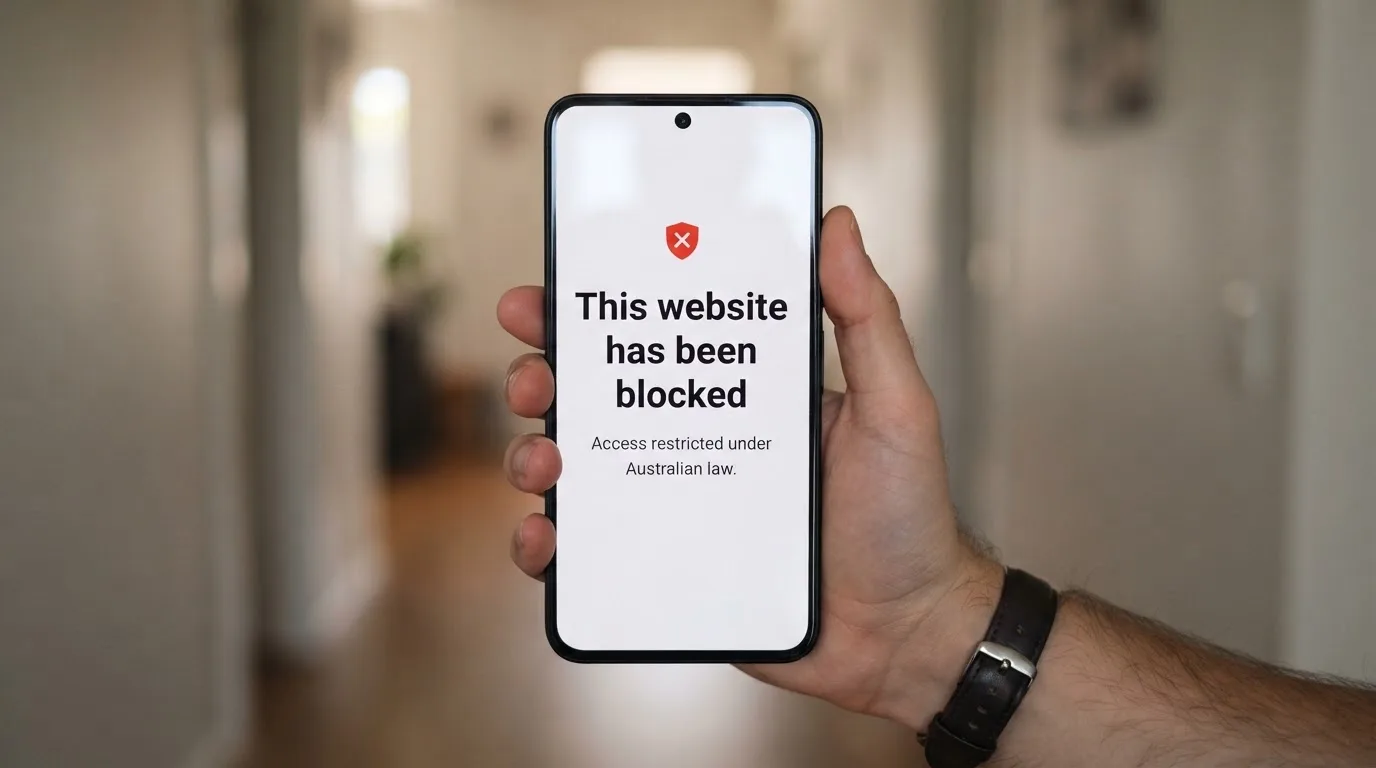
The enforcement sits with the Australian Communications and Media Authority. The ACMA investigates, issues formal warnings, and directs Australian internet service providers to block illegal sites. As of June 2026, 1,751 illegal gambling and affiliate marketing websites had been blocked since the first blocking request in November 2019, with more than 230 unlicensed gambling services leaving the Australian market since enforcement was strengthened in 2017. The pace has not slowed: in a single round reported on 26 June 2026, the ACMA asked ISPs to block another 12 names – 7Signs, ChromaBet, Donbet, Duospin, Freshbet, Slots Gem, Jacks Club, Lucky Start, Pointsbetz, Spinrise, Vinyl Casino and Wildsino. That is one round, in one month.
The payment rails reinforce the prohibition. Since 11 June 2024, credit cards, credit-related products and digital currency have been banned as payment for licensed online wagering, with penalties of up to $247,500 for operators who break the rule. Legal deposit routes for licensed wagering are debit card, bank transfer, PayID/Osko and BPAY. A deposit from an Australian credit card or a crypto wallet is one the licensed system cannot process and the offshore site will. The site that accepts it is operating on a payment rail that has no Australian consumer protection – because the rail is not Australian, and the consumer is on their own when something goes wrong.
The Interactive Gambling Amendment (Gambling Reform) Bill 2026 passed Parliament on 19 August 2026; its advertising and inducement measures commence on 1 January 2027. This is law with a future start date, not a rule already in force. What it changes, once it begins, is the inducement architecture around licensed wagering – the bonus code, the “deposit now and get X” message, the targeted advertising a searcher meets. The offshore jackpot slot is still prohibited at the offer, not just at the marketing around the offer. The reform closes one door harder; it does not open another one.
The offshore site’s blocked status does not return a player’s balance. The ACMA’s blocking request goes to the ISP, not to the operator; there is no Australian mechanism to recover funds sitting on a Curacao platform whose domain has been redirected. A reader who finds their offshore site returning a “site blocked” page in their browser is looking at a casino that has stopped responding, with their money still inside. The licensed system has no equivalent risk because the operator behind a licensed wager cannot disappear the moment the regulator moves against it. That is the asymmetry the marketing does not advertise.
For a player weighing the cost of using an offshore site, the calculation is simpler than the marketing makes it look. No Australian consumer protection. No Australian complaints body. No recourse if a withdrawal is refused. A balance on the site when the ACMA orders it blocked, with no Australian body to ask for the money back. The house edge is the cost the player accepts. The legal exposure is the cost the marketing never names.
Brand by brand: every operator the ACMA has named since 2022
Dama N.V. appears four times in this section’s brand list, with the May 2022 and March/May 2025 warnings covering RocketPlay, Level Up, Woo Casino and Spirit Casino. Consolutetish S.R.L. picks up two (National Casino and Bizzo Casino). Pulsup Ltd is the operator the ACMA named when RocketPlay reappeared in March 2026, a separate warning from the 2022 Dama N.V. action. Five other single-brand operators – Bamboo Media, EOD Code SRL, Ryker B.V., Sterplay Holding and Hollycorn N.V. – account for the remaining five. The cluster structure is itself a finding: how often the regulator has had to return to the same operator is the most concrete signal of how the prohibition is enforced.
RocketPlay — warned twice under two different operators
RocketPlay has appeared in the ACMA’s enforcement record twice: first in May 2022 as one of six Dama N.V. brands named in a single formal warning, then again in March 2026 under Pulsup Ltd. The corporate wrapper changed. The regulator’s record did not. For an Australian reader, the question is whether a reshuffle under a new operator is a clean slate: the answer in this record is no. The brand name keeps coming back through different corporate doors, and the ACMA keeps naming it. RocketPlay is the entry on the table where the regulator’s longer file is most visible, because the regulator has acted against it under two different operators in less than four years.
Level Up Casino — the 2022 batch, listed by BGaming
Level Up was one of the six brands named in the ACMA’s May 2022 formal warning to Dama N.V. The consulted record surfaced no jackpot slot catalogue of its own; the only confirmation of a connection comes from BGaming’s listings, where Level Up appears as a partner studio integration rather than as a casino offering a Mega Moolah-branded progressive. The brand is on this page because the ACMA warned it. The jackpot slot angle is thinner than the brand’s general casino profile suggests – BGaming’s listing is a directory mention, not a catalogue verification. A reader who reaches Level Up through a search for jackpot slots is reaching a brand on the regulator’s list, in a category where the catalogue is not what the directory mentions imply.
Woo Casino — Dama N.V.’s first follow-up
In March 2025 the ACMA issued a formal warning to Dama N.V. specifically over Woo Casino. It is the first Dama N.V. follow-up after the May 2022 batch of six. Two and a half years between warnings suggests the ACMA was content to leave the file; the March 2025 action suggests something reopened it. The brand is recent enough in the regulator’s record to be current on a page read in 2026, and old enough to have been on a Dama N.V. page for some time before. Woo is the brand where the regulator’s longer memory is most useful: the May 2022 batch and the March 2025 follow-up are the same operator, treated as the same case.
Spirit Casino — second Dama N.V. warning within twelve months
Two months after the Woo Casino warning, in May 2025, the ACMA returned to Dama N.V. for Spirit Casino. Two follow-up warnings inside twelve months to the same operator are a different signal from one follow-up. They suggest the ACMA is treating the operator as a continuing file rather than a closed one. For a reader, the implication is that a Curacao-licensed Dama N.V. brand is, in practice, in active enforcement scope on a page read in 2026, regardless of what the casino’s footer says. Spirit is the table entry where the regulator’s pace on a single operator becomes visible: two warnings to Dama N.V. in two months is not a routine repetition.
National Casino — moved to a new operator, still on the ACMA’s list
The July 2025 warning to National Casino was issued to Consolutetish S.R.L., not to Dama N.V. The operator behind the brand has changed since the casino’s earlier profile, but the ACMA’s action did not depend on the operator remaining the same. National Casino is one of three brands Wikipedia listings cite as connected to Consolutetish S.R.L., which is a thin positive footnote rather than a recommendation. A reader looking for a fresh operator is looking at the same brand. The 2025 warning is the regulator saying the new wrapper did not change the legal exposure, and Wikipedia’s listing of the connection is the operator’s acknowledgement that the connection exists.
Bizzo Casino — warned twice, three years apart
Bizzo’s first appearance in the ACMA’s record is a 2022 formal warning to TechSolutions (CY) Group Limited and TechSolutions Group N.V. The second came in July 2025 to Consolutetish S.R.L., again over Bizzo. The brand has cycled through operators and come back into the ACMA’s view both times. Two warnings across three years is the regulator’s clearest signal that the brand’s offer to Australians has not changed with the corporate wrapper. Bizzo is the table entry where the brand-warned-twice pattern is most explicit: 2022 to TechSolutions, 2025 to Consolutetish, same brand on both warnings. Operator changes do not move the brand off the ACMA’s list.
Ignition Casino — named under Bamboo Media
In July 2025 the ACMA’s formal warning went to Bamboo Media, with Ignition Casino as the named service. Bamboo Media is a different operator from the Dama N.V. cluster or the Consolutetish S.R.L. cluster, and Ignition is one of the smaller ACMA files by operator. The pattern is the same regardless: a brand the ACMA has named in the current page’s window, with no Australian licence to point to. For an Australian reader, the specific operator changes – the legal status does not. Ignition sits outside the main corporate clusters, confirming that the ACMA’s reach extends to standalone operators just as it does to the larger groups.
Instant Casino — EOD Code SRL’s February 2025 action
The February 2025 warning to EOD Code SRL was issued specifically over Instant Casino. It is the earliest of the four 2025 warnings on this page, predating the Woo Casino action by a month. EOD Code SRL is not the same operator as Dama N.V. or Consolutetish S.R.L., so the brand belongs to a different corporate cluster than its neighbours on this list. The action is recent enough that an Australian reader in 2026 is looking at a live file, not a closed one. Instant Casino marks the start of the 2025 enforcement year, proving that the ACMA’s scrutiny of offshore platforms remains consistent years after the 2017 amendments took effect.
Jackbit — the most recent action on the list
Jackbit was named in the ACMA’s April 2026 formal warning to Ryker B.V., alongside CasinOK. It is the most recent action on this list by a margin. A warning this recent is not a stale record; it is an ongoing file. The consulted research pool surfaced no jackpot-slot-specific connection for Jackbit. The brand is on the page because the ACMA put it there in the most recent enforcement cycle. Jackbit is the table entry where the regulator’s current file is most visible: April 2026 is two months before the June 2026 blocking round, and the brand has had no time to age out of the regulator’s active scope.
Casino Intense — Sterplay Holding, named across three sources
The April 2025 formal warning to Sterplay Holding Ltd over Casino Intense appears in the consulted record across three sources – the ABC, the ACMA’s own register, and Crown Melbourne’s coverage of the regulator’s enforcement rounds. Triple sourcing does not change the legal status. Casino Intense is still a brand without an Australian licence. What the triple sourcing does show is that the brand has been visible enough in the Australian enforcement conversation to be picked up by more than one outlet, including an Australian casino operator covering it as news. Casino Intense is the table entry where the brand’s visibility in Australian media is most explicit, and visibility is not the same as a clean record.
Sky Crown — the 2022 Hollycorn file, still on the page
The ACMA’s formal warning over Sky Crown was issued to Hollycorn N.V. in the regulator’s own September 2022 publication. It is the oldest named warning on this list. A 2022 warning is not stale – the IGA’s prohibition does not sunset – but it is also not the freshest file the ACMA has open. For an Australian reader, Sky Crown’s age on the list signals a brand the regulator has had under review for longer than any of its neighbours, with no Australian licence issued in the interval. Sky Crown is the table entry where the regulator’s longest memory is most useful: four years on the file with no licence issued and no warning withdrawn.
The blocking rate: how quickly the ACMA clears the field
The arithmetic behind the ACMA’s blocking record is straightforward. From the first blocking request in November 2019 to the June 2026 figure of 1,751 websites blocked is roughly 79 months – a span of just over six and a half years. That works out to about 22 sites blocked per month, or 265 per year on average across the whole period. The number is a band, not a single figure, because the year-by-year count has not been uniform. The early years were slower. The recent rounds are larger.
The most recent single round, reported on 26 June 2026, added another 12 names in one decision: 7Signs, ChromaBet, Donbet, Duospin, Freshbet, Slots Gem, Jacks Club, Lucky Start, Pointsbetz, Spinrise, Vinyl Casino and Wildsino. That is more than half a month’s average enforcement, applied in one regulatory letter. The pace has not slowed. The supply has not dried up.
For a reader, the cost of that arithmetic is not the blocked site itself. It is the brand that re-emerges under a new corporate wrapper three months later, with the same catalogue and a fresh URL. The blocking rate measures the regulator’s throughput, not the offshore industry’s. The throughput has been increasing, but so has the supply. Both sides of that equation are working harder than they were in 2019.
The blocking record also shows where the regulator’s enforcement has reached. The June 2026 round alone names brand-new titles – Slots Gem, Vinyl Casino, Wildsino – that did not appear in earlier blocking rounds. New sites enter the field faster than the regulator can route them through warnings. The accumulated list grows, but so does the gap between the operator’s first appearance and the regulator’s first action. That gap is the cost an Australian player carries in the meantime, depositing into brands the regulator has not yet named, on sites the regulator has not yet blocked.
The accumulation is also a measure of the offshore industry’s supply. Between the first blocking request in November 2019 and the June 2026 figure, an average of 265 sites a year have entered the regulator’s blocking queue. That rate is the regulator’s throughput. The supply of new offshore operators has had to exceed that rate just to keep the ACMA’s working list growing – which is to say, the offshore industry’s new-entry rate has been at least 265 a year, with new entrants replacing the blocked ones faster than the regulator can retire them. The gap between a brand’s first appearance and its first warning is the window during which Australians can deposit, lose and withdraw (or fail to) without the regulator’s name in the file. That window is where the cost is paid.
Frequently asked questions
Is it against the law for offshore casinos to offer jackpot slots to Australians?
Yes. The Interactive Gambling Act 2001, as amended in 2017, makes it an offence for an operator to provide online casino games to anyone in Australia, jackpot slots included. No state or territory licenses what the IGA prohibits. The law targets providers, not players. No Australian-licensed route to an online progressive jackpot slot exists.
What is the largest online slot jackpot ever paid out?
The record online slot jackpot is €19,430,723.60, won on 27 April 2021 by a player in Belgium at Napoleon Sports & Casino on Microgaming’s “Absolootly Mad: Mega Moolah”. Games Global, successor to Microgaming, has since reported later Mega Moolah wins of £11.5 million and 13.5 million.
Why is the base game less generous on progressive jackpot slots than on regular ones?
Because every wager funds the prize pool. The headline prize and the everyday return are not separate budgets – they are the same budget, drawn from the operator’s margin. The bigger the pool grows, the longer the gap between wins can stretch. The marketing celebrates the payout; the arithmetic funds it.
Do jackpot slot casinos accept cryptocurrency deposits?
Some do, though not at any Australian-licensed wagering site. Since 11 June 2024, credit cards, credit-related products and digital currency have been banned as payment for licensed online wagering, with operator penalties up to $247,500. An offshore casino that takes crypto is operating outside the Australian rules in two ways at once.
Can an Australian play real-money jackpot slots through any licensed route?
Not online. The IGA does not license online casino games anywhere in Australia. What is licensed is wagering on racing and sport before the event, plus lotteries and keno. The licensed route to a casino-style experience is the physical floor – Crown Melbourne runs VGCCC-approved baccarat and blackjack tables.