
What It Costs to Spin a Pokie in Australia This Year
Choosing a pokie machine in Australia looks simple: walk into a pub, club or casino, feed a note in, press a button. The harder question is what that spin is doing to your wallet over an hour, an evening or a year, and harder still is the question of where a person in Australia can actually play one without falling outside the law. This page answers both questions in that order. The first half is about the cost mechanics: volatility, bet size, payout percentage and the rules each state has written into the machines themselves. The second half is about the legal frame around any “online pokie” an Australian might be offered, because those offers are the ones this guide spends most of its warning on.
Current as of 7 November 2026. Operator and licence claims were verified against the Australian Communications and Media Authority’s formal warning register.
Table of Contents
- The Real Cost of a Spin
- State-Level Rules That Change the Math
- Responsible Gambling: Where Help Lives
- Payments and Payouts: What Settles, What Does Not
- Mobile and Apps: The Touchscreen Question
- The Specifics of a Pokie Game
- Putting the Comparison Together
- The Offshore Casino Question
- The Legal Frame Around the Question
- Choosing Without Spending
- Frequently Asked Questions
The Real Cost of a Spin
Every poker machine in Australia is built around the same arithmetic, even when the screen looks different. The machine keeps a percentage of every dollar wagered. The state decides the floor that percentage cannot fall below. The player sees a themed game with bonus rounds and free spins layered on top, but underneath all of it sits one number: the return to player.

Return to Player and the Jurisdictional Floor
Return to player — RTP — is the share of money a machine is programmed to return to players over the very long run. A 90 percent machine keeps ten cents in every dollar; an 87 percent machine keeps thirteen. Across Australia, the legal minimum varies by state. New South Wales, the Northern Territory, Queensland and most of Victoria sit at 85 percent, with Crown Melbourne’s machines at 87 percent. The ACT and Tasmania require 87. South Australia sits at 87.5 percent. Western Australia is the outlier at 90 percent, set in part because poker machines were banned outside the state’s single casino when Crown Perth opened in 1985.
These are floors, not averages. Many machines return more than the minimum, some considerably more, and the rest of the spread is where a player’s choice happens to bite. A pokie advertised at 95 percent will, in expectation, return A$95 for every A$100 put through it over a long session. The gap between 87 and 95 percent is the same gap as a hidden eight percent fee on every spin.
Volatility: What Smooth Winnings Actually Cost
Volatility is the second number that decides what a session feels like, and it is the one the marketing screen buries. A low-volatility machine pays out small amounts often: lots of small wins, few empty stretches, the balance drifting down gently. A high-volatility machine pays out rarely but heavily: long losing runs, then a feature round that returns fifty or a hundred times the stake.
The dollar cost per hour is not the same. Both machines can return 95 percent in the long run. The low-volatility one bleeds you slowly over a three-hour session, and the high-volatility one strips you in twenty quiet minutes before either paying out or refusing to. A player who budgets by time will see the same expected loss on both. A player who budgets by emotional tolerance will find the high-volatility version much more expensive, because the long dry stretches encourage larger bets “to recover” — and that recovery is itself the design.
Volatility also explains why the same machine can feel generous in a pub at 11pm and cruel the next morning. Session outcomes scatter wildly around the long-run average. A short session on a high-volatility game is closer to a lottery ticket than to an investment.
Bet Size and the Multi-Line Trap
Bet size does not change the underlying odds of a machine. The probability of any individual symbol combination landing on the reels is fixed at the factory. What changes is the prize ladder relative to your stake, and the rate at which you move through it. A 1 cent bet on 50 lines is a A$0.50 spin, and on a modern multi-line game it can hit on any of those lines. Doubling the per-line bet to 2 cents lifts the same spin to A$1, quadruples the top prize but does nothing to the symbol frequency.
This is where the multi-line trap lives. Older three-reel pokies ran one payline down the middle, and a spin that did not match it returned nothing. Modern five-reel video pokies offer anything from 20 to 243 lines, plus “ways to win” structures that count adjacent symbols regardless of fixed lines. The marketing pitch is “more chances to win.” The reality is more spins per dollar, more features triggered, more money moving through the machine per minute. A A$0.50 spin with all lines active can chew through A$30 in an hour far faster than a A$1 spin on a single line at one spin every six seconds, because the multi-line spin also runs at a higher hit frequency.
The honest test of bet size is this: pick the bet you would play if the machine paid out a fixed 95 percent no matter what. Then play it. The arithmetic of which line structure is “more likely to pay out” is settled: all of them pay out at the same programmed percentage. The decision is about how fast you want your bankroll converted, not about your chance.
A Worked Example: Three Hours on a 90 Percent Machine
A player sits at a pub pokie in Western Australia — 90 percent RTP, the most generous floor in the country — and sets a steady bet of A$1 per spin at one spin every five seconds. Over three hours that is 2,160 spins, A$2,160 in handle, and on a 90 percent machine the expected return is A$1,944. The expected loss is A$216, or A$72 an hour.
The same player on a New South Wales 85 percent machine at the same bet size and the same spin rate sits with A$2,160 turned over and an expected return of A$1,836. The expected loss is A$324, or A$108 an hour. That A$108 an hour gap is the entire difference between the most player-friendly floor in Australia and the most common one, and it comes from five percentage points of RTP that the machine display never makes obvious.
The numbers are averages. They assume nothing about bonus rounds, feature buys or the irregular hit patterns of high-volatility games, and they assume the player runs the spin rate steadily for three hours, which almost nobody does. A player who chases a near-miss will press the button faster; a player who hits a feature will slow down to enjoy it. Real session outcomes scatter around these averages by a wide margin. Over a year, though, the average is what your bank statement looks like.
Cost Across Australia: Where the Spend Actually Goes
In 2020 and 2021 Australians bet almost A$150 billion through gaming machines and lost A$12.18 billion on them. Australia has roughly three percent of the world’s pub and club poker machines, and about 0.3 percent of the global population. New South Wales alone had 87,298 machines outside casinos across 2,195 venues in June 2023, and players in that state lost A$8.18 billion on them in 2022 and 2023. Queensland had 21,122 machines operating in 351 venues in October 2023. Victoria had 26,380 outside Crown Casino in 488 venues under a statewide cap of 30,000.
The cost, then, is not theoretical. Pokies are the dominant gambling product in Australia by handle, by losses and by the number of machines per adult. The cost arithmetic above applies at scale, and the public-health response in some jurisdictions — Tasmania’s mandatory pre-commitment cards, due to come in from late 2025 — is a direct reaction to what that arithmetic produces over years rather than hours.
State-Level Rules That Change the Math
The same machine running the same software can pay out differently depending on which state regulator approved it, and the surrounding rules can be as important as the RTP floor.
The Western Australia Outlier
Western Australia is the only Australian jurisdiction where poker machines are essentially confined to the one casino, Crown Perth. The ban on pub and club machines came in when Crown Perth opened in 1985. The casino’s machine count has grown from around 200 in 1985 to roughly 2,500 today, all under the Gaming and Wagering Commission’s approval, and every one of them sits on the 90 percent floor.
Tasmania’s Pre-Commitment Reform
Tasmania ran poker machines under a single-operator monopoly held by the Federal Group from 1968 until legislation passed in November 2021 ended it. Oversight moved to the Tasmanian Liquor and Gaming Commission. The state then planned mandatory pre-commitment cards for every player, requiring them to set a loss and time limit before they could play, with implementation delayed into late 2025. The reform is a structural change to how the machine reads the player, and it pushes against the volatility-driven “chase” pattern that high-volatility games are designed to trigger.
The Northern Territory Bookmaker Loophole
The Northern Territory Racing and Wagering Commission regulates 52 of Australia’s online bookmakers — Sportsbet, Bet365 and Ladbrokes among them — which are licensed in the Territory for tax reasons. The commission runs with no full-time staff and meets once a month in Darwin. The bookmakers themselves are licensed for wagering on racing and sport, not for casino games or online pokies; the distinction matters because the next section turns on it.
Responsible Gambling: Where Help Lives
This page is built around the assumption that the reader is choosing how to spend their own money, and the responsible-gambling supports in Australia exist for exactly that reader.
BetStop, the National Self-Exclusion Register
BetStop went live in August 2023 and binds every Australian-licensed online and phone wagering service. A person who registers with BetStop is excluded from opening new accounts and from depositing into existing ones at any of those services for a period of their choosing. The catch sits in the word “licensed”: BetStop does not cover offshore operators, and an Australian who has registered with BetStop can still reach an unlicensed offshore casino through a fresh email address. The register is a wall against the licensed side of the market; it is not a wall against the offshore side.
Gambling Help Online and the National Helpline
The National Gambling Helpline runs on 1800 858 858, free, twenty-four hours a day. The same service operates the Gambling Help Online chat. Both are run by state and territory funded providers under a national arrangement. They are independent of any operator and they exist for the player who has decided the spend has gone past where they wanted it to.
State Self-Exclusion Registers
Beyond BetStop, each state and territory runs its own register covering the land-based venues in that jurisdiction. The mechanics differ — some states bar the person from every venue in a council area, others hand the venue a photo to refuse entry — but the function is the same: a registered self-excluded person who tries to play is breaking an enforceable venue direction, not just a personal promise.
Cost as the Reason This Section Exists
The arithmetic in the previous section is what makes these supports necessary. A 90 percent machine still keeps ten cents in the dollar; an 85 percent machine keeps fifteen. The player who runs a high-volatility machine for an evening can leave with nothing, and the player who runs a low-volatility machine for an evening can leave with what feels like a soft win — because the small payouts feel like a win even when the net position is down. The responsible-gambling infrastructure is the answer to the question this whole page keeps arriving at: what does this cost you, and what support exists if the answer is more than you meant to spend.
Payments and Payouts: What Settles, What Does Not
The deposit and withdrawal question looks different for a pokie machine in Australia than for an online casino, because most of the money that goes through Australian pokies goes through cash.
The Land-Based Cash Path
In a pub or club the machine takes notes and coins and pays out the same way, in jurisdictions that allow it. The state regulators handle the rest: machine accounting, prize claims above the machine’s printed limit, and dispute processes through the relevant state gaming authority. A player who has a dispute about a malfunctioning machine in New South Wales escalates it through Liquor and Gaming NSW; in Victoria through the Victorian Gambling and Casino Control Commission; in Queensland through the Office of Liquor and Gaming Regulation.
Credit Cards, Debit Cards and the 2024 Ban
From 11 June 2024, credit cards, credit-related products and digital currency are banned as a payment method for licensed online wagering in Australia. The penalty for an operator accepting one is up to $247,500. The legal deposit routes for a licensed wagering account are debit card, bank transfer, PayID, Osko and BPAY. A wagering site that asks an Australian customer for a credit card or a crypto deposit is operating outside the Australian rules, and the next section explains what that means for the rest of the offer.
Withdrawal Times Where They Apply
Online wagering on racing and sport is the only online gambling product that is licensable in Australia, and that is the only product where a withdrawal time question can come up. The major licensed bookmakers typically process withdrawals back to the original deposit method within one to three business days, with PayID and Osko often clearing on the same day. None of this applies to a pokie machine in a pub.
Mobile and Apps: The Touchscreen Question
The third question a person searching this subject brings to the page is about apps — whether there is a real pokie machine app that mirrors what is in a pub, and what “pokie app” actually delivers.
What “Pokie App” Usually Means
The phrase “real pokie machine app” in an Australian app store almost always points to one of two things. The first is a free-play or social casino app: themed slot games with no real-money payout, run by a developer that sells ad views or in-app purchases of extra credits. The second is an offshore casino app, accessed through a direct download or a redirect, where the games are real-money slots and the operator is unlicensed in Australia.
There is no third category. The pub or club machine cannot be played for real money on a phone. There is no Australian app that connects a touchscreen to a land-based pokie, because the regulatory and commercial structure that runs the 87,298 NSW machines, the 21,122 Queensland machines and the 26,380 Victorian machines does not include an online channel.
Performance of a Touchscreen Version
The offshore casino apps themselves vary widely. Load times on a modern phone are rarely the problem; the problem is what happens after the app loads. An unlicensed operator has no obligation to publish an audited RTP for any of the games it hosts, no obligation to honour a withdrawal request inside any timeframe, and no Australian complaints body to escalate to if a balance disappears. The “best pokie machine app” question is, in practice, a question about which offshore operator the reader is willing to take a risk with — and that question sits in the legality section, not the performance section.
Browser Play and Account Security
For the licensed Australian wagering products that do exist — bookmakers licensed for racing and sport — the mobile browser experience has converged on the app experience. The Sportsbet, Bet365 and Ladbrokes sites and apps are functional on both, and a payment method that fits the credit card ban is the same in either. For unlicensed casino apps the security question is unanswerable from outside the operator.
The Specifics of a Pokie Game
This section is the one this topic asks for, so it deserves more than a paragraph.
Reading the Paytable
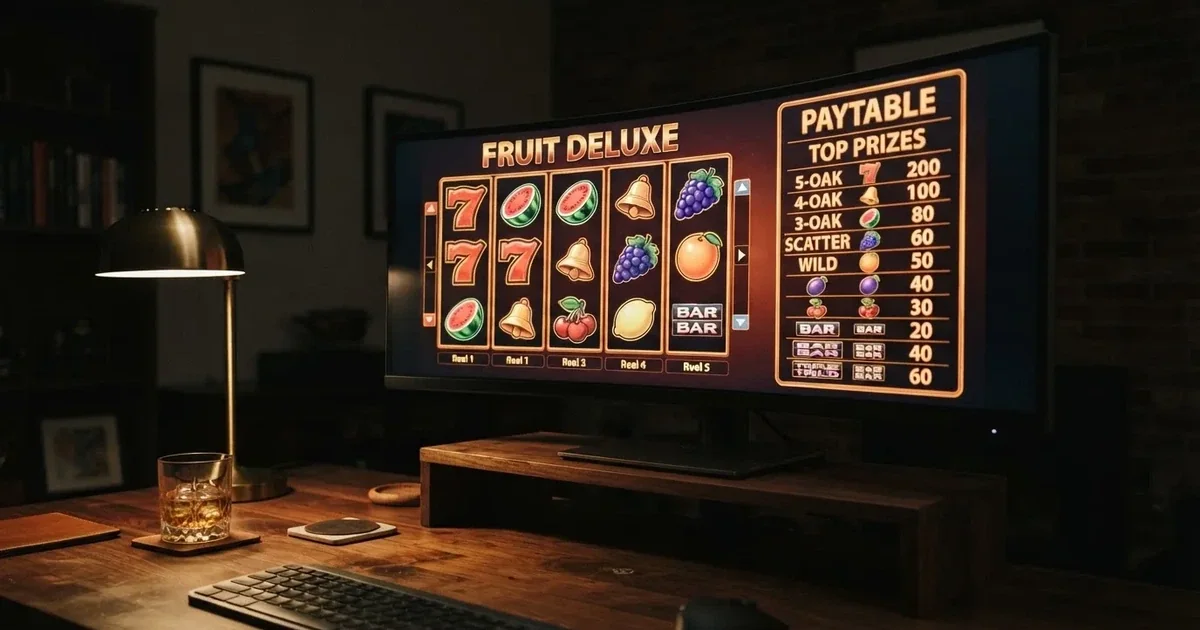
The paytable is the small printed panel, usually a button on the machine, that lists every symbol combination, every line structure and the prize for each. It is the document that shows the player what the machine actually does, and it is the document the marketing screen buries.
A player who wants to read the paytable properly is looking for four things. First, the highest-paying combination and what it pays at the minimum bet. Second, the wild symbol and how it substitutes, because some wilds carry multipliers and some do not. Third, the scatter symbol and whether it triggers free spins regardless of line position. Fourth, any bonus rounds and the conditions that trigger them, because feature buy options on modern video pokies let the player pay a fixed multiple of the bet to enter a bonus round directly.
Reels, Lines and Megaways
The shift from three-reel to five-reel pokies in the 2000s added enough positions to make multi-line play viable. The shift from fixed lines to “ways to win” — adjacent symbols on adjacent reels, regardless of fixed line position — added more combinations and more frequent small wins. The Megaways mechanic, licensed by Big Time Gaming and now used under licence by other developers, varies the number of symbols per reel on every spin, producing hundreds of thousands of possible combinations. The effect on volatility depends on the game: Megaways pokies tend toward high volatility, with the long quiet spells and occasional large payouts that mark the format.
Bonus Features and Free Spin Mechanics
The free spins round is where a session either recovers or burns out. Most modern pokies trigger ten to twenty free spins on three scatter symbols, often with a multiplier attached. Some attach sticky wilds to the reels during the free spin round. Some escalate the multiplier on every successive spin. The cost arithmetic of a free spin round is the same as the base game: each free spin still carries the machine’s programmed RTP, and the bonus round is where the volatility becomes most visible. A 50-times-bet hit in the bonus round is what a high-volatility machine exists to deliver, and the long quiet stretch before it is what it costs.
Live Tables Are Not Pokies
The specific subject touches on baccarat and blackjack tangentially, through the “live tables” framing of any modern casino floor. Live tables at Crown Melbourne — Traditional Baccarat, Crown Baccarat and 2 to 1 Baccarat — are approved table games regulated by the Victorian Gambling and Casino Control Commission, which replaced the VCGLR on 1 July 2022. They sit alongside three-reel and five-reel pokies on the same casino floor but operate under entirely different rules: a fixed house edge (1.06 percent on the Banker bet in baccarat, about 0.28 percent in blackjack under liberal Strip rules), no volatility slider, no free spin mechanics. The cost arithmetic is real and visible, which is part of why serious table players prefer them.
Putting the Comparison Together
This is the shelf where any shortlist of “best pokie machines” would sit, and where this guide declines to write one in the conventional sense.
What Separates One Option From Another
A conventional ranking of pokie machines would compare theme, max jackpot, RTP and volatility across a handful of titles. The harder part is the “best for whom” question, and that question carries the rest of this page’s argument with it.
For a player who wants the slowest bleed of bankroll per hour, a low-volatility video pokie at the highest jurisdictional RTP floor — 90 percent in Western Australia — is the cheapest machine on the table. For a player who wants a session with a real chance of a large payout, a high-volatility Megaways title at a pub in NSW or Victoria will deliver the long quiet stretches and the occasional large hit. The arithmetic does not pick a winner; it tells each player what their chosen style will cost.
Criteria That Actually Matter
Five criteria separate one pokie option from another in a way that survives scrutiny.
The first is RTP, and the player should know whether the machine they are about to play sits at the jurisdictional floor or above it. The second is volatility, and the player should know what kind of session their chosen machine is designed to produce. The third is bet size relative to bankroll, because the machine does not care about the player’s plan. The fourth is the venue’s responsible-gambling setup — pre-commitment in Tasmania, mandatory breaks in some jurisdictions, voluntary card systems in others. The fifth is the player’s own session length and loss limit, because the most expensive variable in the entire equation is the one the player sets.
Why There Is No Single Best Machine
The “best pokie machine to play” question is, in the end, a question about the player’s own tolerance. A machine that suits a Saturday-night punter who wants a shot at a feature round will not suit a player who wants three quiet hours and a small win at the end. The page that names a single machine as “best” is doing the reader a disservice by collapsing five criteria into one marketing claim. The page that names the criteria and the costs lets the reader do their own picking.
The Offshore Casino Question
This is the section this guide most often hides from, and it is the one the angle of this page insists on leading with.
What the ACMA Has Done
The ACMA has been blocking illegal online gambling websites since November 2019, after the Interactive Gambling Amendment Act 2017 strengthened enforcement. As of June 2026, the ACMA has asked Australian internet service providers to block 1,751 illegal gambling and affiliate marketing websites, and more than 230 unlicensed gambling services have left the Australian market since 2017. The most recent round reported on 26 June 2026 added 12 more: 7Signs, ChromaBet, Donbet, Duospin, Freshbet, Slots Gem, Jacks Club, Lucky Start, Pointsbetz, Spinrise, Vinyl Casino and Wildsino.
The blocking rate tells its own story. Between November 2019 and June 2026 is about 79 months, and 1,751 sites blocked across that span is roughly 22 sites a month on average, with the monthly rate running higher in recent years as the ACMA has scaled its enforcement. The first year of enforcement produced a fraction of the blocks that the most recent year did, and the rate has accelerated rather than slowed.
Estimated Losses to Illegal Sites
H2 Gambling Capital’s 2025 report estimates that Australians lose about A$3.9 billion a year to illegal gambling sites, and that the share of gambling going through legal channels in Australia fell from 74 percent in 2021 to 64 percent. The legal channel share is falling even as the ACMA blocks more sites, which suggests that enforcement is keeping up with new supply rather than shrinking the offshore market.
Formal Warnings Issued by the ACMA
A formal warning is one step short of a court-enforceable injunction. The ACMA has issued formal warnings under the Interactive Gambling Act 2001 to a long list of operators for offering prohibited services to Australians.
The first wave in May 2022 went to Dama N.V. and covered six casino brands: Bambet, Dazard, Level Up, Rocketplay, Wild Tornado and Cobra Casinos. Bamboo Media received one in July 2025 over Ignition Casino, and Consolutetish S.R.L. received one in the same month over National Casino and Bizzo Casino, with Bizzo already the subject of a 2022 warning to TechSolutions. Hollycorn N.V. was warned over Sky Crown and Blue Leo in 2022. Sterplay Holding Ltd received a warning in April 2025 over Casino Intense. EOD Code SRL received one in February 2025 over Instant Casino. Dama N.V. received further warnings over Woo Casino in March 2025 and Spirit Casino in May 2025. Pulsup Ltd received one in March 2026 over RocketPlay. Ryker B.V. received one in April 2026 over Jackbit and CasinOK.
The pattern is clear: warnings stack on the same operators. A brand that gets a warning in 2022 and re-appears under a new operator name in 2025 is not a different business; it is the same business moving to a fresh corporate wrapper.
Brand Snapshot: Eleven Sites the ACMA Has Acted Against
The table below lists every brand in this guide’s featured set, the date of the ACMA action and the operator the warning named. None of these is recommended as a place to play, and the warnings exist for a reason.
| Brand | ACMA action and date | Operator named by the ACMA | Subject support |
|---|---|---|---|
| RocketPlay | Formal warning, March 2026; earlier Dama N.V., May 2022 | Pulsup Ltd | — |
| Level Up Casino | Formal warning, May 2022 | Dama N.V. | listings-only |
| Woo Casino | Formal warning, March 2025 | Dama N.V. | — |
| Spirit Casino | Formal warning, May 2025 | Dama N.V. | — |
| National Casino | Formal warning, July 2025 | Consolutetish S.R.L. | listings-only |
| Bizzo Casino | Formal warning, July 2025; earlier TechSolutions, 2022 | Consolutetish S.R.L. | — |
| Ignition Casino | Formal warning, July 2025 | Bamboo Media | — |
| Instant Casino | Formal warning, February 2025 | EOD Code SRL | — |
| Jackbit | Formal warning, April 2026 | Ryker B.V. | — |
| Casino Intense | Formal warning, April 2025 | Sterplay Holding Ltd | listings-only |
| Sky Crown | Formal warning, September 2022 | Hollycorn N.V. | — |
Every brand in the table sits outside the Australian licensing regime. The licences any of them display on their websites are issued by overseas regulators whose consumer protection does not extend to a person sitting in Sydney or Perth.
RocketPlay
RocketPlay sits under the most recent ACMA action in the set: a formal warning to Pulsup Ltd in March 2026 over the RocketPlay address. Dama N.V. was warned over the same brand back in May 2022, which means the brand has cycled through two operators in four years and remains on the ACMA’s list. The site markets itself as a licensed casino and accepts Australian players; it is neither licensed in Australia nor reachable through every Australian ISP without workarounds.
Level Up Casino
Level Up Casino was one of the six Dama N.V. brands caught in the May 2022 warning round. The site continues to operate offshore, and the listings that mention it describe a multi-provider lobby with games from BGaming among other studios. The Dama N.V. corporate wrapper has since reappeared under a string of new brands, which is the pattern the ACMA has been forced to chase.
Woo Casino
Woo Casino received its own Dama N.V. warning in March 2025, four years after the original umbrella warning. The intervening period is the useful data point: a brand that the ACMA warns in 2022 and warns again in 2025 is a brand that the 2022 warning did not deter.
Spirit Casino
Spirit Casino joined the Dama N.V. warning list in May 2025. It is the most recent of the Dama brands to draw a formal ACMA letter, and the cycle from the May 2022 batch to May 2025 is the most direct evidence of how the warning framework handles repeat offenders.
National Casino
National Casino received the Consolutetish S.R.L. warning in July 2025. The brand is listed across affiliate pages as a multi-provider site with a long-running loyalty programme. None of that changes the legal status: the site cannot offer online casino games to Australians.
Bizzo Casino
Bizzo Casino received the same Consolutetish S.R.L. warning in July 2025, layered on top of a 2022 warning to TechSolutions for the same brand. Two operators over four years for a single brand is the warning pattern that the ACMA’s enforcement is built around.
Ignition Casino
Ignition Casino is the Bamboo Media brand that drew the July 2025 warning. It targets Australian and US players through the same offshore wrapper, and the warning is the only Australian-side action on file.
Instant Casino
Instant Casino received the EOD Code SRL warning in February 2025. The brand is positioned as a fast-withdrawal casino, which is the part of the offer that needs the closest reading: a fast withdrawal from an unlicensed operator is still a withdrawal from an operator that the Australian regulator has asked ISPs to block.
Jackbit
Jackbit is the Ryker B.V. brand that received the April 2026 warning alongside CasinOK. The site leans on a crypto-first deposit model, which puts it inside the credit card and digital currency ban for licensed Australian wagering and underlines the offshore-only nature of the offer.
Casino Intense
Casino Intense received the Sterplay Holding Ltd warning in April 2025. The brand has surfaced across listing pages as a long-running offshore operator; the formal warning is the relevant Australian fact.
Sky Crown
Sky Crown is the Hollycorn N.V. brand that drew the formal warning published in 2022. Hollycorn N.V. was also warned over Blue Leo in the same action, and the wider Hollycorn portfolio has continued to operate offshore despite the warning.
The Common Thread
Eleven brands, eleven formal warnings, none of them reachable inside Australia without circumvention. The cost of playing on any of them is not just the published RTP of the games. It is the loss of Australian consumer protection, the inability to complain through an Australian body, the inability to enforce a withdrawal dispute, and the risk that the operator is blocked by an ISP with a balance still on the account. The marketing promise of any offshore casino — generous welcome bonus, fast withdrawal, big game library — is paid for in the absence of everything BetStop and the state regulators provide.
The Legal Frame Around the Question
The Interactive Gambling Act 2001, strengthened by the Interactive Gambling Amendment Act 2017, makes it an offence for any operator to provide online casino games, online pokies or in-play betting to a person in Australia. No state or territory licenses these products. The minimum age is 18. The individual player is not prosecuted under the Act; the Act targets the provider. But an offshore site offers no Australian consumer protection and no complaints body, and the ACMA’s enforcement is what eventually catches up with it.
What Is and Is Not Licensable
The legal products in Australia are wagering on racing and sport placed before the event, lotteries, and keno. Online casino games, online pokies and in-play betting are not licensable. A licensed online bookmaker is licensed for the wagering side of its business only; if the same operator also offers a casino lobby, the casino lobby is the offshore, unlicensed part.
The 2026 Reform Package
The Interactive Gambling Amendment (Gambling Reform) Bill 2026 passed Parliament on 19 August 2026. Its advertising and inducement measures commence on 1 January 2027, which means the law is on the books but not in force on a page dated to 2026. The reform is the legislative response to the A$3.9 billion a year being lost to illegal sites, and it sits alongside the ACMA’s continuing blocklist work.
Tax and the Recreational Player
Gambling winnings of a recreational player are not assessable income under section 6-5 of the ITAA 1997, and losses are not deductible, unless the person carries on a business of gambling. That is the model; the only safe move for a reader with a non-trivial win is to check with the Australian Taxation Office directly, because the rule and the threshold are not the same thing for every person.
Where the Rule Draws the Line
The line is on the provider side, not the player side. A person in Australia who chooses to play at an offshore casino is not committing an offence under the IGA. The offshore operator is committing the offence by offering the product, and the ACMA’s enforcement machinery is the consequence. BetStop does not cover the offshore side; the offshore side does not cover the player in the event of a dispute; and the only practical recourse when an offshore operator refuses a withdrawal is the regulator that licensed the operator offshore, which is a slow and uncertain path.
Choosing Without Spending
The page has walked through the cost arithmetic, the responsible-gambling supports, the legal frame and the offshore alternatives. The remaining question is what the player who arrived at this page should actually do.
Land-Based Pokies in Licensed Venues
A player who wants to play a real pokie machine in Australia plays one in a pub, club or casino licensed by the relevant state or territory regulator. The cost is what the cost is: a percentage kept by the machine, a session length set by the player, a loss limit set by the player before the session starts. The venue is bound by state rules on machine design, advertising and responsible gambling. The machine’s RTP sits at the jurisdictional floor or above it. The player’s recourse in a dispute is the state regulator.
Offshore Sites Are a Different Decision
A player who chooses an offshore site has stepped outside the Australian framework. The cost is no longer the published RTP plus a state regulatory floor. It is the same RTP, plus the absence of a working complaints body, plus the risk that the ACMA’s next blocking round includes the site the player has a balance on. The marketing of these sites — the welcome bonus, the fast payout, the live dealer lobby — is the same marketing that every licensed site uses, and the licensed site delivers it inside a framework the offshore one does not.
The Cost First
The angle this page was written under was the cost. The cost is real at the machine, real at the venue, real across a year of regular play, and real in the public-health response that several state governments have put in place. The arithmetic does not pick a single machine for the reader. It does pick a single rule, which is that the cheapest pokie machine to play is the one the player approaches with a fixed session length, a fixed loss limit and a working knowledge of what the machine is doing to their balance.
Frequently Asked Questions
What is the difference between low-volatility and high-volatility pokie machines?
Low-volatility machines pay out small amounts often, with the balance drifting down over a session. High-volatility machines pay out rarely but heavily, with long losing stretches followed by an occasional large hit. The expected loss per hour can be similar, but the high-volatility version exposes the player to a wider range of session outcomes.
Does bet size change the odds on a pokie machine?
No. The probability of any symbol combination is fixed in the machine’s programming. Raising the bet size raises the prize ladder and the rate at which money moves through the machine, but does not change the chance of any given combination landing on the reels.
Are mobile pokie-machine apps the same as the licensed machines in a pub or club?
No. The pub and club machines cannot be played for real money on a phone. Apps marketed as “real pokie apps” are either free-play social casino games with no real payout, or offshore casino apps accessed through a workaround. Neither is an Australian-licensed product.
How can a player find the payout percentage of a specific pokie machine before playing?
In a licensed venue, the help desk or the state regulator’s website can confirm the machine’s approval and its minimum return. In New South Wales the floor is 85 percent, in Queensland 85 percent, in Victoria 85 percent generally and 87 percent at Crown Melbourne, in the ACT and Tasmania 87 percent, in South Australia 87.5 percent and in Western Australia 90 percent.
Are multi-line pokie machines more likely to pay out than single-line ones?
No. All machines are programmed to return a fixed percentage of handle over the long run, regardless of the number of lines. Multi-line games produce more frequent small wins, which feels like a higher hit rate but does not change the long-run return.
Who audits pokie machines in licensed Australian venues?
State and territory gaming regulators approve the machines and their settings, with testing typically carried out by independent laboratories whose reports the regulator relies on. The exact testing body varies by jurisdiction, and the relevant state regulator is the public point of contact for any approved machine in that state.