
Dragon Link Online Pokies Australia: The Gap Between the Game People Want and the Site That Can Offer It
Australians searching for Dragon Link online pokies in 2026 are chasing one of the country’s most recognisable pokie formats. The title is everywhere in pubs and clubs, the linked-jackpot concept has its own draw, and a phone screen would feel like a natural place to find it. None of that changes the legal position: there is no online casino licence available in Australia, so any site serving Dragon Link to a person physically in the country is operating outside the Interactive Gambling Act 2001. The Australian Communications and Media Authority has now issued formal warnings to eleven offshore operators over exactly this kind of offering, and the blocking list it maintains keeps growing.
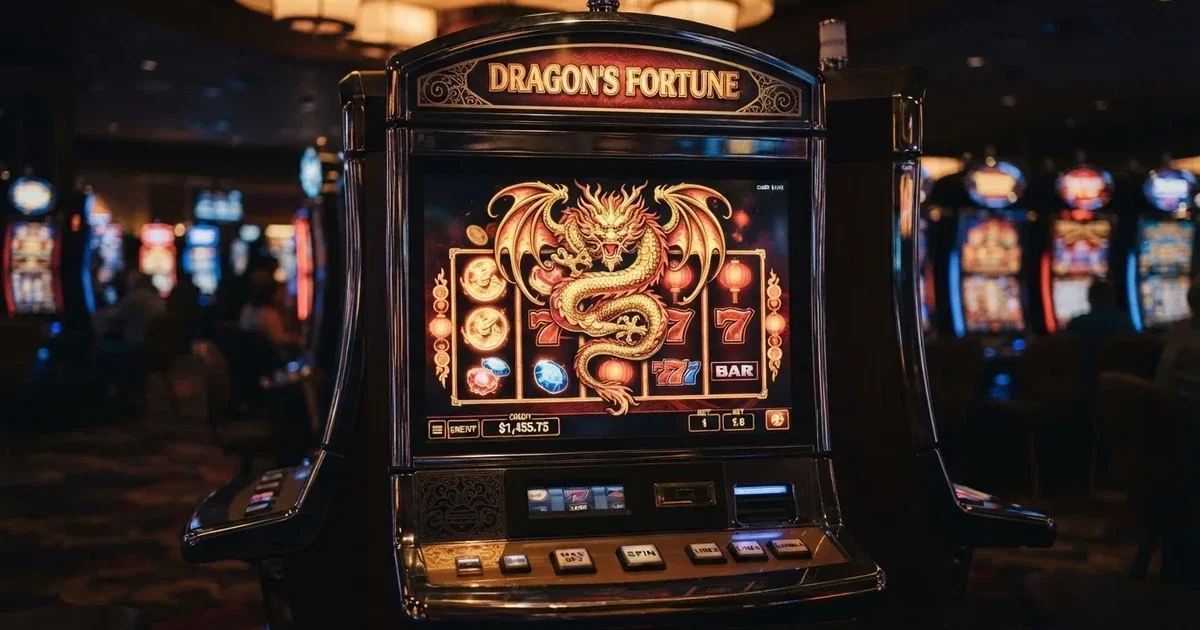
This page lays out the fundamentals of the Dragon Link format, the legal frame that shapes where it can lawfully be played, the operators the ACMA has acted against for serving Australians, and the practical implications for anyone who has searched for an “app” or a “site” to play it on. The angle is the cost to the reader: the wagering rule, the payment rule, the offshore caveat, the loss rate that compounds behind a promotional word.
Data current as of 7 November 2026, checked against the ACMA’s published formal warnings and operator notices.
Table of Contents
- Responsible Play Comes Before the Spins: Why Dragon Link Needs a Time Limit More Than a Prompt
- The Mobile Pitch, and Why an App Changes Nothing About the Licence Question
- The Dragon Link Format Itself: Reel Sets, Tiers and a Bonus Round Built to Extend Sessions
- The Operators the ACMA Has Warned — and What That List Tells a Reader
- What the Numbers Say About a Market Where Most Money Goes Off-Licence
- The Legal Frame a Player Is Actually Inside
- How the Payment Rules Make the Site Illegal at the Cashier
- How the State-by-State Treatment of Pokies Constrains What “Online” Even Means
- Frequently Asked Questions
Responsible Play Comes Before the Spins: Why Dragon Link Needs a Time Limit More Than a Prompt
Dragon Link is a linked-jackpot pokie, and the linked format is engineered to keep the reels in front of the player. A standalone jackpot is paid by one machine; a linked jackpot is paid by a bank of machines feeding the same prize pool, and the meter climbs with every bet placed across the whole bank. Several cabinets within the same venue — and several venues within a state — can share a single top-tier jackpot, and the smaller tiers (Mini, Minor, Maxi) tend to hit on any individual cabinet. That structure keeps the screen visually live between wins: the meter ticks, the “must hit by” figure for the smaller prizes puts a ceiling on how long it can go without paying out, and the bonus round itself can stretch for many free games while chasing a larger progressive prize.

None of those mechanics respect the player. They respect the math, which assumes the player will sit through the dry stretch to catch the wet one. A linked jackpot’s expected value per spin does not change much when the meter is high — the meter mainly changes the volatility around that expected value — but the player’s behaviour often does. Studies on similar formats consistently show that session length extends when the progressive climbs, and the longer the session, the closer the realised outcome gets to the long-run house edge. The long-run edge is itself opaque: pub and club machines in New South Wales, Queensland, the Northern Territory and most of Victoria hold at least 15 per cent of every dollar turned over, and the Crown Melbourne floor must hold at least 13 per cent. The Western Australian floor must hold at least 10 per cent — the lowest statutory floor in the country, but applied to far fewer machines, because WA’s licence structure has refused new pubs and clubs the format since 1985.
What protects a player on a land-based Dragon Link cabinet is the same thing that protects a player on any other pokie: a hard limit on session length, set before play starts and not renegotiated mid-session. The machine’s in-game prompts are not designed to enforce one. The “session timer” offered by some cabinets is a courtesy feature that can be dismissed without consequence, and the “reality check” pop-ups that some state regulators require are typically configurable to high thresholds and long intervals. The figure that a player should set themselves, rather than rely on the cabinet to enforce, is a clock-based one: how long, in minutes, before the session is over regardless of the meter, the bonus trail or the next “must hit by” estimate. A discipline that the game has no incentive to support is the only one that survives it.
The same applies offshore. An online casino offering Dragon Link to an Australian resident is not connected to BetStop, the National Self-Exclusion Register that went live in August 2023 — BetStop covers Australian-licensed wagering services, not unlicensed offshore sites, and a self-excluded player is technically still on the device that the offshore casino serves. The National Gambling Helpline on 1800 858 858 remains the right call whether the venue is licensed or not: free, 24 hours a day, with chat available through Gambling Help Online.
The Mobile Pitch, and Why an App Changes Nothing About the Licence Question
Search interest in Dragon Link splits across several near-identical queries: dragon link pokies app, dragon link casino app, dragon link slot app, dragon link slots app — and several variations longer than that. They land on the same answer. An app is just a wrapper. The same offshore operator that runs Dragon Link titles on a browser will let a player download an Android APK or an iOS web app, and the licence behind the games is unchanged. Whether the cashier runs in-app, the bonus rounds trigger from the phone, or the account verification opens from a notification, the offering itself is what determines whether it is lawful to provide to an Australian — and the offering has been unlawful for the entire life of the IGA, regardless of distribution channel.

A complication in 2026 is that Apple and Google have spent several years tightening what their app stores allow. Google’s real-money gambling app policy has progressively closed off Play Store distribution to apps that target regions where online casino is prohibited, and Apple’s App Review Guidelines carry similar language for the App Store. The result is that most apps targeted at Australians get distributed through direct-download APKs from operator sites rather than through the stores. The direct channel is itself a signal: a brand that cannot pass a mainstream store’s content review and routes players through a sideload is a brand whose offering exists outside the rules a mainstream store would check. The signal is not conclusive on its own, but the direction is the same one the ACMA’s blocking list is moving in.
What players sometimes mean by “Dragon Link app” is slightly different: not an app that runs Dragon Link reels, but an app that aggregates pokies-style content in a free-play or sweepstakes wrapper. Those products also do not deliver the genuine Dragon Link game — the genuine game is Aristocrat’s intellectual property, and any social casino or sweepstakes version published without that licence is a knock-off, with RTP, volatility and bonus mechanics set by the clone’s own developer. They look the same on the screen and they pay nothing in return.
For players whose interest is in the format on a phone — the linked meter, the hold-and-spin bonus rounds, the gold-themed Wild and the Pearl icons — the lawful alternative is one of the legitimate social-casino-style products that operate in Australia without offering real-money play. They are not the same game, and any comparison that calls them the same is not being honest about the difference. What they offer is the experience of the format without the wagering, and that is a different proposition for someone who has searched for “dragon link slots app” and was hoping for a download that meets the search.
The Dragon Link Format Itself: Reel Sets, Tiers and a Bonus Round Built to Extend Sessions
Dragon Link is a product line rather than a single title. The cabinet runs several themed reel sets, each with its own paytable and a shared jackpot ladder. The classics include Golden Century (the most common flavour in Australian venues, with the gold-themed Chinese New Year visuals), Autumn Moon, Happy & Prosperous, Panda Magic, Bengal Treasure and several newer additions. Each reel set has a slightly different symbol roster and a slightly different bonus structure, but the operating mechanics share three things — the linked jackpot, the hold-and-spin bonus round, and the denomination structure that lets the same cabinet run pennies, dollars and hundreds.
The linked jackpot reads as a single prize ladder displayed above the reels. Four tiers are common: Mini, Minor, Maxi and Grand. The Mini and Minor tiers tend to have a “must hit by” figure visible on the screen — a ceiling past which the prize will trigger on the next qualifying spin. The Maxi tier is usually paid as a “mystery” jackpot that triggers under a specific value. The Grand is the major prize, often a six-figure sum, with no ceiling shown because it is allowed to grow until a cabinet finally lands the symbol combination that pays it. The shared nature of the pool is the part that distinguishes Dragon Link from a standalone progressive on a regular pokie — the Grand pulls from the wagers of a whole bank’s worth of players, not from the one cabinet in front of the player.
The bonus round is the “hold and spin” feature, fired by six or more pearl-or-gold-icon scatter symbols on a paid spin. Three free respins reset to three; new pearls reset the count; the round ends when respins run out without a new symbol. Most of the round is collecting more pearls, with a possible outcome of filling the grid or holding a Grand-jackpot pearl if one lands. The feature is durable: sessions of twenty or thirty respins are common, and fifty-respin sessions are plausible when the meter is high. That is the durability that keeps the player in front of the cabinet — and the same durability translates one-to-one into extended sessions on whatever app or browser client borrows the format.
What does not transfer is the denomination. A land-based cabinet lets the player drop a penny at a time, find a dollar at a time, or play a credit-level bet up to several hundred dollars per spin. The wider the spread, the longer the possible session at the same bankroll, and the harder it is for a player to track the actual spend on a credit that’s ten cents. A player on a credit-denomination cabinet at one cent per credit who plays “max bet” is placing one dollar per spin; a player three credits away is placing thirty cents. The wide-spread mechanic is part of what makes the cabinet format last through long sessions — and part of what the regulator talks about when it talks about “harmful” design features. The format is built to last.
For someone who wants to play it lawfully in Australia, that is what is on offer: a land-based cabinet at a licensed pub, club or casino, with a denomination structure and a jackpot ladder that has been engineered for the venue. No phone, no browser, no app provides the same offering lawfully.
The Operators the ACMA Has Warned — and What That List Tells a Reader
Eleven brands appear on the operator list below, and they have one thing in common: each has been the subject of a formal ACMA warning for offering online casino-style gambling to Australians under the Interactive Gambling Act 2001. The list is not a recommendation. It is a record, in the ACMA’s own publication, that the regulator has formally notified the operator that the activity it provides is prohibited. Some operators have been warned more than once. Several share corporate parents. None of them are reviewed here as a place for a reader to play — they are reviewed so that a reader who has already seen the brand in search results or affiliate marketing knows what the regulator has done about it.
| Brand | ACMA action and date | Operator named by the ACMA | Subject support |
|---|---|---|---|
| RocketPlay | Formal warning, March 2026 (also: earlier action against operator Dama N.V., May 2022) | Pulsup Ltd (also: Dama N.V.) | — |
| Level Up Casino | Formal warning, May 2022 | Dama N.V. | listings-only |
| Woo Casino | Formal warning, March 2025 | Dama N.V. | — |
| Spirit Casino | Formal warning, May 2025 | Dama N.V. | — |
| National Casino | Formal warning, July 2025 | Consolutetish S.R.L. | listings-only |
| Bizzo Casino | Formal warning, July 2025 (also: earlier warning to TechSolutions, 2022) | Consolutetish S.R.L. (also: TechSolutions) | — |
| Ignition Casino | Formal warning, July 2025 | Bamboo Media | — |
| Instant Casino | Formal warning, February 2025 | EOD Code SRL | — |
| Jackbit | Formal warning, April 2026 (covering Jackbit and CasinOK) | Ryker B.V. | — |
| Casino Intense | Formal warning, April 2025 | Sterplay Holding Ltd | listings-only |
| Sky Crown | Formal warning (formal warning record, with Sky Crown and Blue Leo casino services named together) | Hollycorn N.V. | — |
A pattern jumps out of the publication record without needing to be loaded as an inference. Dama N.V. is the named operator on three of the eleven brands: Level Up Casino, Woo Casino and Spirit Casino, with the Woo Casino warning in March 2025 and the Spirit Casino warning in May 2025 coming after the May 2022 warning over Level Up and two other brands. Consolutetish S.R.L. is the named operator on another two: National Casino and Bizzo Casino, with the Bizzo Casino warning coming on top of a 2022 warning to TechSolutions. Group operators are recurring on the list, which suggests that the corporate parent is at least as relevant as the brand asset. The individual brand is a brand asset; the corporate parent is the entity the ACMA has decided needs the warning.
A few of the warnings are large in scope even within their single publication. The April 2026 action against Ryker B.V. is named as covering Jackbit and CasinOK together. The July 2025 action against Hollycorn N.V. is recorded on the ACMA site as warning to Hollycorn over its Sky Crown and Blue Leo casino services together. A reader who treats a brand-level warning as the only criterion is missing the parent-level pattern, where one warning can quietly catch several consumer-facing brands under the same corporate roof.
The blocking list is what makes the warnings material rather than merely notional. As of June 2026, the ACMA has directed Australian internet service providers to block 1,751 illegal gambling and affiliate marketing websites since the first blocking request was issued in November 2019 — a six-and-a-half-year span, and roughly 270 per year on average. The most recent reported blocking round in that data, from June 2026 itself, took out 12 more: 7Signs, ChromaBet, Donbet, Duospin, Freshbet, Slots Gem, Jacks Club, Lucky Start, Pointsbetz.com, Spinrise, Vinyl Casino and Wildsino. The blocking request is what the ISP-side block actually keys off, and a brand that shows up on a warning list in one cycle can find its domains on the blocking list in the next.
The broader enforcement picture also reaches the operator’s wallet. More than 230 unlicensed gambling services have left the Australian market since 2017, when the IGA was last strengthened and enforcement tools were widened. The blocking, the warnings and the exit notices are different tools aimed at the same effect, and an operator that has not appeared on a published warning yet is not the same as an operator that the ACMA has cleared. The ACMA’s enforcement record is a public ledger of who has been told what; an absence from the ledger is not a clearance.
What the Numbers Say About a Market Where Most Money Goes Off-Licence
The narrow reading of the prohibition rule is that the offering itself is unlawful, and a player is left to figure out the rest. The broader reading is that the prohibition is also a market description. Australians lost roughly A$3.9 billion to illegal gambling sites in the year covered by the recent estimate from the research firm Gambling Capital, and the share of gambling going through legal Australian channels has fallen from 74 per cent in 2021 to 64 per cent in the period since. The legal channel has been compressing while the illegal channel has been growing. Two ways to read that: the prohibition is not stopping Australians from gambling, and a meaningful share of that money is settling on operators with no Australian licence and no BetStop binding.
Land-based gambling is the other side of the same picture, and the figures there describe an enormous shadow around the online prohibition. In 2020–21 Australians bet close to A$150 billion through gaming machines — pokies — and lost A$12.18 billion on them. The country holds about 3 per cent of the world’s pub and club poker machines with 0.3 per cent of the global population. The discrepancy is the headline; the volume is the scale. New South Wales alone had 87,298 machines outside casinos across 2,195 venues as of mid-2023, with player losses of A$8.18 billion in 2022–23. Queensland ran 21,122 machines in 351 venues in October 2023. Victoria had 26,380 machines outside Crown Casino across 488 venues in 2021–22, capped by statute at 30,000 statewide. Western Australia is the exception that proves the rule: Crown Perth’s machine count has grown from around 200 in 1985 to roughly 2,500, and the state’s Commission has approved each addition individually.
The legal minimum return-to-player is also a tell. The statutory floor ranges by jurisdiction: 85 per cent in New South Wales, Queensland, the Northern Territory and (generally) Victoria, 87 per cent in the ACT and Tasmania, 87.5 per cent in South Australia, and 90 per cent at Crown Perth — which is the only pub-and-club-style venue in WA. The “100 minus return” figure is the house edge: a 90 per cent return is a 10 per cent house edge; an 85 per cent return is a 15 per cent edge. The geographic spread on that statutorily mandated floor is itself a story about which state government has chosen how much of the dollar it is willing to leave on the player’s side of the counter. Western Australia has priced poker machine play out of the ordinary pub and club market entirely, leaving a single licensed venue; the most populous state has priced it at the lowest permissible floor and watched the loss rate scale with the venue count.
Tasmania is the jurisdiction that the rest of the country tends to be measured against, because it tried to introduce mandatory pre-commitment cards that would have been the first in the country. The Federal Group held a monopoly on Tasmanian poker machines from 1968; the monopoly-ending legislation passed in November 2021 and the mandatory pre-commitment cards that were to be the centrepiece of the reform were then delayed until late 2025. The reform finally began to be implemented; the original schedule did not hold. That history now informs the 2026 federal reform discussion and informs the conditions on which any future pre-commitment card might be required elsewhere.
The Legal Frame a Player Is Actually Inside
The Interactive Gambling Act 2001 is the operative federal statute, reinforced by the Interactive Gambling Amendment Act 2017. The 2017 amendments closed the loophole for licensed online wagering that had been offering in-play betting and online casino games, and gave the ACMA the tools to issue formal warnings, request internet service provider blocks and pursue civil penalty proceedings. The 2026 reform bill — the Interactive Gambling Amendment (Gambling Reform) Bill — passed Parliament on 19 August 2026, and its advertising and inducement measures commence on 1 January 2027. The 2026 page is not yet inside the advertising regime; the in-force phase begins on a known date and the law will read differently from that date forward.
The Australian-licensed space outside the prohibitions is narrow on purpose. It covers wagering on races and sport placed before the event — that is, fixed-odds and pool betting, not in-play, offered by a bookmaker licensed in an Australian jurisdiction. It covers lotteries. It covers keno. It does not cover online casino games, online pokies, or in-play betting. What is sometimes presented as “Australian-licensed” to a player using a search result is, on inspection, an Australian-licensed wagering service offering the in-play or casino-style product from an offshore partner, which is not the same thing and is not what the licence covers.
The licensing itself runs through the Northern Territory Racing and Wagering Commission for most Australian-facing online bookmakers — Sportsbet, Bet365, Ladbrokes and the like, all licensed in Darwin for tax reasons even when their customers are in Sydney or Melbourne. The NTRWC has no full-time staff, meets once a month in Darwin, and licences 52 of the country’s online bookmakers. That structure is the subject of its own reform discussion, much of which turns on the same point that the prohibition on casino games turns on: the licensing regime is set up for product categories the consumer treats as one thing, and the consumer’s reasonable expectation is that an “Australian-licensed” brand is licensed to offer whatever it is offering in that moment. The regulator’s licensing footprint and the consumer’s experience footprint are not the same shape.
The Interactive Gambling Act targets the provider, not the player. The player is not prosecuted for placing a bet; the operator is the entity that the regulator pursues. What that means for a player is not a permission slip — it is a different kind of risk. An offshore brand has no Australian consumer protection: no complaints body, no recourse if a withdrawal is refused, and a clear possibility that the brand’s own payment terms keep the money on the operator’s side of the line for as long as the small print allows. The ACMA’s blocking requests add another layer. A blocked site cannot be reached from an Australian IP without workarounds, and the site may continue to hold the player’s balance after the player can no longer log in. The bet loss is already realised; the withdrawal never was. That asymmetry is what the prohibition rule is built around.
How the Payment Rules Make the Site Illegal at the Cashier
The payment rules that started on 11 June 2024 are a sharper enforcement lever than the prohibition itself, because they fire on the operator’s bank rails rather than on its website. Credit cards, credit-related products and digital currency are banned as payment for licensed online wagering — an operator accepting them from an Australian player commits an offence carrying penalties up to A$247,500 per instance. The lawful deposit routes for licensed wagering are debit card, bank transfer, PayID, Osko and BPAY.
A site asking an Australian resident for a credit card or a crypto deposit is operating outside the Australian rules. The site may still operate openly under a Curaçao or Comoros licence, and the player may still be able to register and deposit; what is being asked is not whether the site accepts the payment, but whether the site’s acceptance of it is consistent with the regulatory perimeter the Australian government has set. A licensed Australian operator cannot accept a credit card and could not accept Bitcoin on or after 11 June 2024; an unlicensed operator can do either and does. The cue is not subtle.
The payment rule also closes off a route some players have used to recover funds, namely a credit card chargeback on the basis that the transaction was unauthorised or that the merchant sold a service it could not lawfully deliver. Once credit cards are out of the picture, the chargeback path narrows substantially. Crypto deposits add a different problem: a transaction once sent to a casino wallet is recovered through the casino, not through a card issuer or a bank, and the casino’s willingness to recover is the casino’s decision. The loss path for an Australian player on an offshore site is materially worse than the loss path for a player on a licensed Australian wagering service, and the payment rules are part of why.
How the State-by-State Treatment of Pokies Constrains What “Online” Even Means
Dragon Link’s venue footprint in Australia is pub, club and casino; the online offering is not the same thing on the same machine. The legal minimum RTP for the venue floor varies by jurisdiction, and so does the venue count. The NSW pub-and-club machine count has held above 87,000 across the post-pandemic period, and the NSW Casino Control Act 1992 requires a casino operator not to permit a game such as baccarat to be played unless both the game and its rules are regulator-approved and a copy of the approved rules is available to patrons on request — a transparency rule that the online space has no analogue of. Queensland runs more than 21,000 machines across 351 venues. Victoria runs 26,380 non-Crown machines under a 30,000 ceiling. Tasmania’s monopoly reform displaced a 1968 arrangement but only finished the implementation phase in late 2025.
The statutory RTP floor is also what makes the math on the cabinet specifically tilted against the player. A 90 per cent return at the venue floor is a 10 per cent loss on every dollar turned over, before considering the bonus structure that determines how unevenly the actual experience varies around that average. The numbers cited in the firm’s 2025 estimate and elsewhere describe the system before any individual cabinet’s particular structure — they are an average over a category. Within the category, Dragon Link is engineered to give wide variance: a small handful of mega-jackpot-style hits, a slightly higher frequency of mid-tier pearls, and a long tail of small paying combinations that are close to the floor but rarely the entire session. The session structure is not random — the meter, the “must hit by” threshold and the bonus round are each designed to keep the screen active.
For the player who wants to read the official version: the jurisdictional regulations on poker machines are published on the regulator’s own website in each state and territory, and the ACMA’s published formal warnings over offshore sites are also on the regulator’s website. The starting point for what is lawful in Australia is not a marketing site or an affiliate review; it is the regulator’s record, with the IGA and its enforcement record sitting behind it.
Frequently Asked Questions
Is it legal to play Dragon Link online pokies for real money in Australia?
No. The Interactive Gambling Act 2001 prohibits offering online casino games and online pokies to a person in Australia, and no state or territory licenses them. A site that takes real-money bets from an Australian is operating outside the law; the player is the entity that has no Australian recourse if the operator refuses to pay out, and the ACMA can direct Australian ISPs to block the site with the balance still on it.
What triggers the bonus round on a Dragon Link machine?
Six or more pearl-or-gold scatter symbols on a paid spin. Three free respins reset to three whenever a new pearl lands, and the round ends when respins run out without one. The round is built to run long — twenty and thirty-respin sessions are common — and the Grand-tier jackpot can be awarded directly if the right pearl lands during the feature.
Is Dragon Link available at regulated land-based venues in Australia?
Yes. Dragon Link is a standard cabinet in licensed Australian pubs, clubs and casinos; it is a land-based format that runs under each state or territory’s poker machine regime. The minimum RTP and the maximum machine count vary by jurisdiction — 85 per cent in NSW, Queensland, the NT and most of Victoria, 87 per cent in the ACT and Tasmania, 87.5 per cent in South Australia, 90 per cent at Crown Perth — and a player experiences the same game under a different rule set in each state.
How does the linked jackpot feature on Dragon Link differ from a standalone jackpot?
A standalone jackpot is paid by one cabinet; a linked jackpot is paid from a pool fed by every cabinet in the same bank, often across multiple venues within a state. The Mini and Minor tiers usually carry a “must hit by” ceiling and trigger on individual cabinets; the Maxi and Grand tiers are paid from the shared pool and the Grand in particular can climb into the high six figures before it pays.
Does a Dragon Link app on a phone offer a different game to the desktop version?
No, not in any way that matters for the legal position. The same offshore operator that runs Dragon Link titles in a browser will offer them on Android and iOS through an APK or a web app, and the licensing and the prohibition are unchanged. A “Dragon Link app” obtained from a sideload is not licensed by Australian standards, and a social-casino-style free-play app is a knock-off format, not the genuine Dragon Link title.
What separates the different Dragon Link reel sets from each other?
Each reel set has its own symbol roster, its own bonus math, and its own theme — Golden Century, Autumn Moon, Happy & Prosperous, Panda Magic and Bengal Treasure among the most common. They share the linked jackpot ladder and the hold-and-spin bonus structure, but the paytable and the volatility around it differ enough that a player who prefers one set over another has a real preference rather than an aesthetic one.