
The cost of gambling casino sites, online pokies and crypto slots for Australian players in 2026
Every gambling casino site listed below targets Australians, none of them holds an Australian licence, and every figure on this page sits inside that single uncomfortable fact. A player in Sydney or Perth typing “gambling casino sites Australia slots” into a search bar is not choosing between licensed and unlicensed options — they are choosing between one set of offshore brands, with the Interactive Gambling Act 2001 sitting underneath all of them. That shapes the price of every bonus, the value of every “trusted” badge, and the meaning of every payout speed on the comparison table further down.

This page treats that as the starting point rather than the disclaimer. It runs through what a slot’s random number generator actually decides, how online pokies and pub pokies differ under the hood, what a crypto deposit changes and what it doesn’t, and what the Australian Communications and Media Authority (ACMA) has been doing to the brands in its sights. The angle is the one a reader has the least help with: not which site is “best”, but what the offer actually costs in time and money — and what the reader is exposed to when the site is, by definition, outside Australian consumer protection.
7 November 2026 — register and licence claims were checked against the ACMA’s own formal-warning publications and the 2025 market estimate.
Table of Contents
- The Australian gambling landscape in numbers: how big the prohibited side really is
- How the Interactive Gambling Act 2001 leaves every offshore site exposed
- Responsible play without a licensed register: what actually protects an Australian player
- Crypto deposits: same slots, different funding route, different risk profile
- What a slot machine’s random number generator actually decides
- Online slots and pub pokies: what is actually different
- Other table games in the licensed Australian casino room
- Eleven offshore brands reviewed for an Australian player: comparison and write-ups
- How often the ACMA is actually blocking offshore sites — the arithmetic
- Choosing offshore under Australian rules: what the reader has to weigh
- What the offshore catalogue cannot tell a reader
- Frequently asked questions about gambling casino sites and online slots in Australia
The Australian gambling landscape in numbers: how big the prohibited side really is
A few figures from the ACMA and from Gambling Capital market reports set the scale of what follows.

The ACMA’s own running total, as of June 2026, is 1,751 illegal gambling and affiliate marketing websites blocked since the first blocking request in November 2019 — more than 230 unlicensed gambling services have left the Australian market since enforcement was strengthened in 2017. 2025 estimates put Australian losses to illegal gambling sites at roughly A$3.9 billion a year, with the share of gambling going through legal channels falling from 74% in 2021 to 64% in the 2025 reading. The illegal side of the market is no longer a marginal slice — it is, by market reckoning, the larger of the two.
The legal side looks small in comparison, and it sits in two different rooms.
| State | Machines (Outside Casinos) | Data Date |
|---|---|---|
| New South Wales | 87,298 | June 2023 |
| Victoria | 26,380 | 2021–22 |
| Queensland | 21,122 | October 2023 |
| South Australia | 11,672 | September 2023 |
| ACT | 3,587 | November 2023 |
| ACT | 3,587 | November 2023 |
How the Interactive Gambling Act 2001 leaves every offshore site exposed
The Interactive Gambling Act 2001 (IGA), strengthened by the Interactive Gambling Amendment Act 2017, makes it an offence to provide online casino games, online pokies or in-play betting to a person physically in Australia. No state or territory issues such a licence. What the law does license is wagering on races and sport placed before the event, lotteries and keno. The IGA targets the provider, not the individual player — a reader is not at risk of prosecution for placing a bet — but the consequence falls entirely on the player: an offshore site gives no Australian consumer protection, no complaints body and no recourse if a withdrawal is refused, and it can be blocked with a balance still sitting on it.
Enforcement runs through the ACMA, which investigates, issues formal warnings and directs Australian internet service providers to block illegal sites. The first blocking request went out in November 2019; in a single round reported on 26 June 2026 the regulator asked ISPs to block 12 more sites — 7Signs, ChromaBet, Donbet, Duospin, Freshbet, Slots Gem, Jacks Club, Lucky Start, Pointsbetz, Spinrise, Vinyl Casino and Wildsino. The full running total of 1,751 blocked domains against 12 brand-new additions in one round tells a reader something useful: the regulator is not catching up, it is maintaining a permanent pressure on a market that respawns as fast as it can be culled.
A few formal-warning milestones from the ACMA matter for what comes later in the comparison, because each is the regulator’s own published record that the named operator offered prohibited services to Australians:
- Pulsup Ltd over Rocketplay, March 2026.
- Ryker B.V. over Jackbit and CasinOK, April 2026.
- Bamboo Media over Ignition Casino, July 2025.
- Consolutetish S.R.L. over National Casino and Bizzo Casino, July 2025 (Bizzo had already been the subject of a 2022 formal warning to TechSolutions).
- Dama N.V. over Woo Casino (March 2025) and over Spirit Casino (May 2025) — both follow an earlier May 2022 warning to Dama over six brands.
- EOD Code SRL over Instant Casino, February 2025.
- Sterplay Holding Ltd over Casino Intense, April 2025.
- Hollycorn N.V. over Sky Crown and Blue Leo, September 2022.
Two payment rules finish the picture. Credit cards, credit-related products and digital currency have been banned as funding for licensed online wagering since 11 June 2024, with penalties up to A$247,500 for operators. A site that asks an Australian for a credit card or for a crypto deposit is not just offshore — it is asking the reader to use a payment route the Australian rules actively close off for licensed play. The legal deposit routes for licensed wagering are debit card, bank transfer, PayID/Osko and BPAY.
The 2026 reform context is also worth noting because the law is in motion. The Interactive Gambling Amendment (Gambling Reform) Bill 2026 passed Parliament on 19 August 2026; its advertising and inducement measures commence 1 January 2027. On a 2026 page that is a law with a start date, not yet in force, and the comparison further down still runs against the pre-reform landscape.
Responsible play without a licensed register: what actually protects an Australian player
A site calling itself “trusted” or “safe” is making that claim about itself. The audit that would test that claim does not run in Australia for offshore casinos, because the licence that would authorise the audit does not exist. Self-exclusion, deposit limits, loss limits and reality checks are tools every reviewed brand on this page offers — but they are tools the site itself controls, and they bind only as long as the player keeps playing on that site.
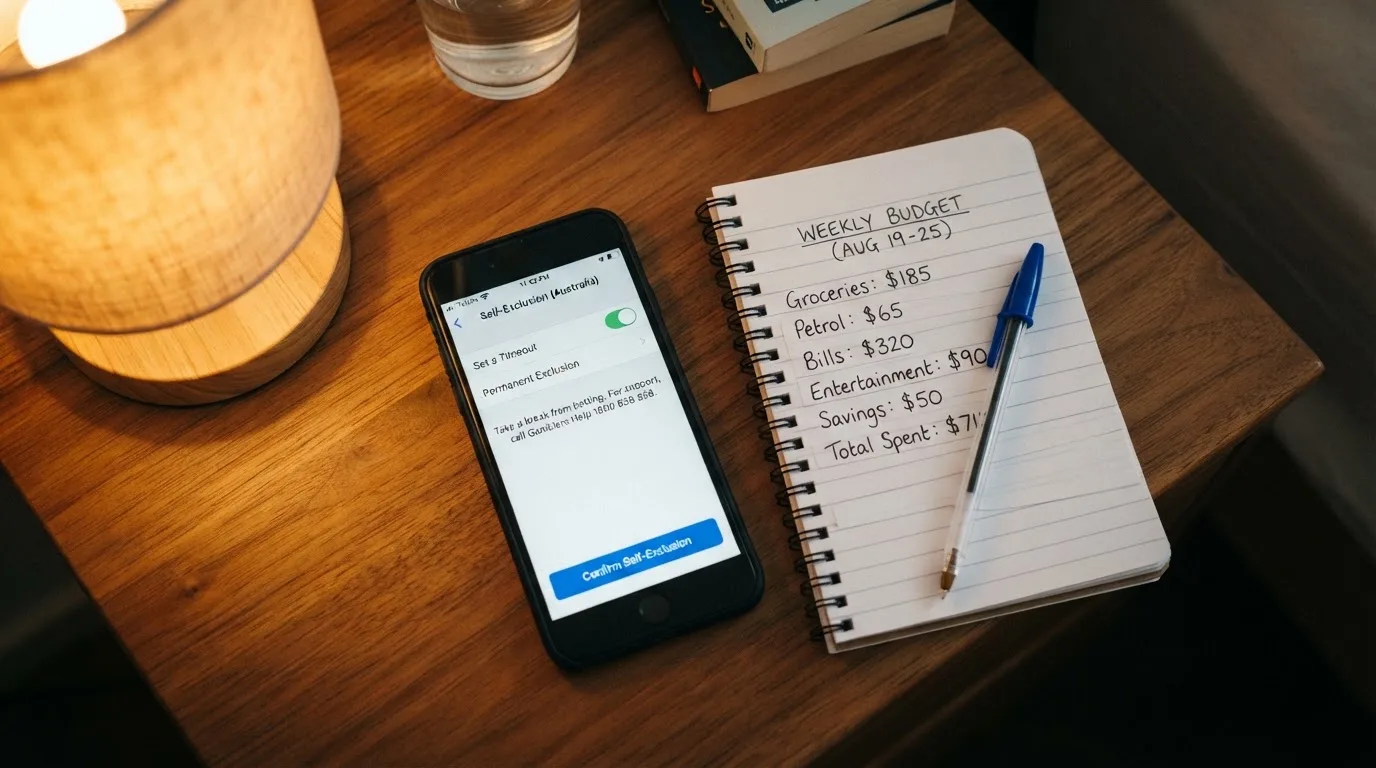
The single piece of Australian infrastructure that does run nationwide is BetStop, the National Self-Exclusion Register, live since August 2023. BetStop excludes a player from every Australian-licensed online and phone wagering service for a chosen period — three months, one year, or a minimum of five years. The catch is the same one the rest of this page keeps coming back to: an offshore casino is not connected to BetStop. A self-exclusion through BetStop does nothing for an account on any of the eleven brands reviewed further down. The reader who wants the protection needs to understand that distinction before they trust the limits a site offers.
For ongoing support, the National Gambling Helpline on 1800 858 858 is free and runs 24/7, with chat through Gambling Help Online. Both are Australian-funded services and are not bound to any operator. The financial side of gambling is no less important: gambling winnings of a recreational player are not assessable income under section 6-5 of the ITAA 1997, and losses are not deductible, unless the person carries on a business of gambling — at which point the ATO, not this page, is the reference.
Crypto deposits: same slots, different funding route, different risk profile
Crypto gambling casinos run the same slot titles as card-funded sites — the same studios, the same reels, the same bonus features, just with a blockchain wallet swapped in for a bank card. The mechanics of a spin do not change when the deposit is in Bitcoin or Litecoin; what changes is the chain of recourse when something goes wrong.
A card-funded deposit at an Australian-licensed operator leaves the player with a chargeback path through their bank. A crypto deposit at an offshore casino leaves the player with a wallet address and no intermediary, and the value of the coin between deposit and withdrawal is the player’s problem, not the site’s. The 11 June 2024 ban on digital currency as a payment for licensed online wagering is the regulator’s own answer to that mismatch: the rule closes the funding route on the licensed side precisely because the Australian consumer protections do not work once the money has been turned into a coin.
For a reader who specifically wants crypto play, the practical question is not “is this casino safe” but “is this casino licensed anywhere I can enforce against”. The reviewed brands further down are not. The same self-exclusion limit, the same reality-check prompt and the same “responsible gambling” page can sit on a site the regulator has already issued a formal warning over, and the site does not change.
What a slot machine’s random number generator actually decides
Every online slot, every pub pokies machine, every Bitcoin casino game of pokies-style type, runs on a random number generator (RNG). The RNG produces a stream of numbers; each number maps to a symbol on a reel; the combination of symbols across the visible reels is what the player sees as the outcome of a spin. Three things follow from that, and they are the three things every marketing page about slots is quiet about.
First, each spin is independent of the one before it. The machine does not “owe” the player a win after a run of losses, and it does not cool down after a jackpot. The RNG has no memory of what came before. Second, the symbols on each reel are weighted — a reel might show twenty symbol positions but a particular symbol may only appear on two of them, with the rest split across lower-paying symbols. The “50 paylines” or “243 ways” number on a modern video slot is the number of patterns the game will pay on, not a measure of how likely any one of those patterns is to hit. Third, the long-run return to player (RTP) is set at the game design stage and runs over millions of spins; on any single session the player sees variance, not the RTP.
Modern video slots can use five or more reels with 50 or more symbols per reel, producing odds as high as 300 million to one against a top combination. A classic three-reel mechanical machine with about ten symbols per reel offers roughly 1,000 possible combinations. The visual difference is enormous; the underlying RNG principle is the same. That is why an online slot and a pub pokies machine are not different games in any structural sense — they are the same kind of game, running at different speeds, with different prize ladders.
The history behind those numbers is short. Charles Fey of San Francisco developed the first automatic slot mechanism in the late 19th century, a three-reel machine with five symbols — horseshoes, diamonds, spades, hearts and the Liberty Bell — where three bells in a row paid the top prize of ten nickels. Bally’s “Money Honey”, released in 1963, was the first slot with a bottomless hopper and automatic payout of up to 500 coins without an attendant. The first video slot machine came out of Fortune Coin Co. in Kearny Mesa, California, in 1976. Each step changed what the player saw on the cabinet, not the principle under it. The principle under it remains an RNG producing weighted symbols on each spin.
Online slots and pub pokies: what is actually different
The differences between an online slot and a pub or club pokies machine are mostly surface — reel count, paylines and bonus features — rather than the way outcomes are decided. The Australian legal landscape is what sets them apart in any practical sense, and it sets them apart sharply.
A pub pokies machine in NSW, Victoria, Queensland, South Australia or the ACT is regulated under that state’s gambling regime. It has a payout percentage approved by the state regulator, a cabinet physically located in a licensed venue, and a paper trail that an inspector can audit. An online slot at an offshore casino is none of those things. It sits on a server, usually in Curaçao or another small-jurisdiction licence, and the “96% RTP” stamp on the game’s information page is a value the operator’s own game studio publishes. The reader cannot walk into a venue and inspect the cabinet, and there is no Australian inspector to call.
The scale of the two markets, in machines alone, is striking. New South Wales alone had 87,298 pokies-style machines outside casinos in June 2023. The whole of the ACT had 3,587 in November 2023. Australia operated an estimated 97,103 gaming machines outside casinos in 2010 — a per-capita rate about five times that of the United States, where state regulation sets minimum payout percentages that vary by jurisdiction: Nevada at least 75%, Mississippi at least 80%, New Jersey at least 83%. None of those percentages is enforceable on an offshore slot. They are useful as a comparison point — a benchmark for what an Australian player’s local pub machine actually returns — not as a guarantee.
Other table games in the licensed Australian casino room
A small detour from slots is worth taking, because the comparison a reader may be making between online slots and online table games turns on a feature the Australian legal frame is clear about: licensed Australian casinos are licensed to offer table games. The same is not true online. Three table games set the standard against which the slot’s house edge reads small.
In baccarat the house edge is 1.06% on the Banker bet, 1.24% on the Player bet and 14.36% on the Tie. Punto banco, the variant most played today, was developed in Havana during the 1940s; the casino banks the game at all times and plays out both hands by fixed drawing rules. Chemin de fer, French for “railway”, emerged as a two-player variant from baccarat banque in the late 19th century. Under section 66 of the NSW Casino Control Act 1992, a casino operator must not permit a game such as baccarat to be played unless the game and its rules are approved by the regulator, and the operator must make a copy of the approved rules available to patrons on request. Crown Melbourne offers three approved baccarat variants — Traditional Baccarat, Crown Baccarat and 2 to 1 Baccarat — regulated by the Victorian Gambling and Casino Control Commission, which replaced the VCGLR as Victoria’s casino regulator on 1 July 2022.
In blackjack, optimal play brings the house edge to about 0.28% under liberal Las Vegas Strip rules (dealer stands on soft 17, double on any two, double after split, resplit aces, late surrender) and about 0.43% under Atlantic City rules. The game’s immediate predecessor was the English vingt-un; a related game called veintiuno was described in Miguel de Cervantes’ Rinconete y Cortadillo, written around 1601–1602, with formal rules for the game published in Britain in 1800. The name “blackjack” dates from around 1899, with Klondike Gold Rush prospectors credited. Established variants include Spanish 21 (no 10s but liberal player-favourable rules), Double Exposure (both dealer cards face-up), Blackjack Switch (swap cards between two hands) and Super Fun 21 (up to four splits). In Victoria the Casino Control Act 1991 requires the VGCCC to approve any rules for table games and any change to them before they are introduced at the Melbourne casino. The VGCCC’s public log of approved changes to Crown Melbourne’s blackjack variants includes renaming the “Perfect Pairs” side bet to “Crown Pairs” on 23 December 2024 and introducing a “Free Bet” option with a new “Pot of Gold” side bet on 25 March 2024.
In craps the Pass/Come bet carries a house edge of 1.41%, Don’t Pass/Don’t Come 1.36%, and Any Craps 11.11%. None of these numbers is small in absolute terms, but they are smaller than the slot’s effective house edge on any single session for most players — a fact that matters less than it looks online, because the Australian reader cannot play craps, baccarat or blackjack on a licensed Australian server. They can play them on offshore sites, with the same exposure as the offshore slot.
Eleven offshore brands reviewed for an Australian player: comparison and write-ups
The table below covers the eleven offshore brands the ACMA has formally warned for offering prohibited online casino services to Australians. Each row lists the ACMA action and date as published by the regulator, the operator entity the ACMA named, and the subject-support token from research — translated into what it actually means for a reader. “Confirmed” means research found the brand tied to the slot or provider as a direct subject. “Listings only” means the brand appears in third-party listings that mention a slot, provider or subject, with no direct confirmation. “No data” means the brand is not attached to the slot, provider or subject in any source research examined, and the brand is presented on its other fields without claiming a relationship to that subject. None of these is a recommendation to play.
| Brand | ACMA action and date | Operator named by the ACMA | Subject support |
|---|---|---|---|
| RocketPlay | Formal warning, March 2026 | Pulsup Ltd | No data |
| Level Up Casino | Formal warning, May 2022 | Dama N.V. | Listings only (Bgaming) |
| Woo Casino | Formal warning, March 2025 | Dama N.V. | No data |
| Spirit Casino | Formal warning, May 2025 | Dama N.V. | No data |
| National Casino | Formal warning, July 2025 | Consolutetish S.R.L. | Listings only (en.wikipedia.org) |
| Bizzo Casino | Formal warning, July 2025 (earlier 2022 to TechSolutions) | Consolutetish S.R.L. | No data |
| Ignition Casino | Formal warning, July 2025 | Bamboo Media | No data |
| Instant Casino | Formal warning, February 2025 | EOD Code SRL | No data |
| Jackbit | Formal warning, April 2026 | Ryker B.V. | No data |
| Casino Intense | Formal warning, April 2025 | Sterplay Holding Ltd | Listings only (ABC, ACMA, Crown Melbourne) |
| Sky Crown | Formal warning, September 2022 | Hollycorn N.V. | No data |
The columns were chosen to put the regulator’s own record in front of the reader first, the operator entity behind the brand second, and the research-only relationship to slots, providers or other subjects third. The “subject support” column is the part most readers will underweight, which is why it sits at the end rather than being left implicit. A “no data” tag is not a claim that the brand does not host a particular slot — it is a record that research could not confirm it does, and that the comparison should not pretend otherwise.
The repeated operator names matter as much as the rows. Dama N.V. sits behind four of the eleven — Level Up, Woo, Spirit, and through earlier warnings several others — and a single regulator action against an operator can read as a much larger market signal than the same action against a brand. Hollycorn N.V. sits behind Sky Crown and Blue Leo, which the reader will meet in passing as a related domain. Consolutetish S.R.L. and TechSolutions share the Bizzo Casino row across two warnings five years apart. The lesson the regulator’s record teaches is that offshore operators recycle brands faster than the ACMA can warn them, and the brand is rarely the same legal entity the reader thinks it is.
RocketPlay
Pulsup Ltd, the operator the ACMA named in its March 2026 formal warning, sits behind Rocketplay. This is the most recent formal warning in the comparison, and it follows an earlier May 2022 warning to Dama N.V. that covered Rocketplay among six brands. The same operator name appearing under two warnings years apart is the single most useful piece of information on this row: the site changed hands or changed operator entities and kept the brand.
Rocketplay is presented here based on its regulatory record. Research has not confirmed a direct link between this brand and specific slot studios or game providers, and this page does not repeat unsubstantiated marketing claims. The formal warning in March 2026 confirms the site was active and targeting Australians at that time, mirroring the operator’s previous 2022 warning record.
The verdict on Rocketplay is that the brand’s recency in the ACMA’s sights does not put it ahead of the rest of the comparison — it puts it at the front of it. A reader choosing among offshore sites for any reason is choosing among brands the regulator has acted against; choosing the most recently warned of them does not change what they are choosing.
Level Up Casino
Dama N.V., May 2022. Level Up was named in the same 2022 warning that covered Bambet, Dazard, Rocketplay, Wild Tornado and Cobra Casinos. That makes it one of six brands under a single formal warning, which is more useful than a single warning would be: it tells the reader that the operator behind Level Up was running a portfolio, not a single site.
The “listings only” tag for Level Up comes from the brand’s appearance in BGaming’s own listings of operators hosting its games. That is the lowest tier of confirmation research carries for any subject relationship — the studio says the brand is among its licensees, without specifying which games, what RTP settings, or whether the brand runs the studio’s full catalogue. It is enough to say the brand has had a relationship with BGaming at some point; it is not enough to say anything about how that relationship shows up on the site today.
The verdict on Level Up is that the brand sits inside the Dama N.V. cluster, which means the regulator’s record against the operator applies across the cluster, not just to Level Up. A reader who has rejected another Dama brand is not picking up something meaningfully different by picking up this one.
Woo Casino
Dama N.V., March 2025. Woo is the first of the two 2025 Dama warnings, with Spirit Casino following in May 2025. The gap between the 2022 warning and the 2025 warning is three years, during which the operator ran Woo as a continuing offering to Australian players despite the earlier formal action.
Woo lacks verifiable evidence of ties to major slot studios or game providers in current research data. As with other offshore brands, the absence of confirmation is not proof of inactivity, but rather an indicator that the brand has not surfaced in the primary research sources reviewed for this comparison.
The verdict on Woo is that the brand’s most useful feature, for a reader trying to compare it to anything else in this list, is that the regulator has now formally warned the operator twice in three years. That is not a record that suggests the operator has changed its practice.
Spirit Casino
Dama N.V., May 2025. Spirit follows Woo into the same Dama cluster, and the two 2025 warnings are the freshest pair in the comparison after Rocketplay’s March 2026. The reader looking at the back end of the table should not lose sight of the front: the regulator was acting on Dama in 2022, paused, and was acting again in 2025 — the same operator, different brand names, same offer.
Spirit similarly operates without publicly confirmed ties to verifiable slot studios or game providers. The absence of specific catalogue data means the brand is presented here based solely on its formal warning record from the regulator, rather than on any characterisation of its game library.
The verdict on Spirit is that it is the second brand the regulator has formally warned Dama over in 2025. The brand offers nothing the operator’s earlier warnings did not already cover, and the regulator’s continued action against the same operator suggests the operator’s behaviour has not shifted.
National Casino
Consolutetish S.R.L., July 2025. National Casino shares its formal warning with Bizzo Casino, and the two brands sit under the same operator entity as far as the ACMA’s publication goes. National’s appearance in third-party listings on en.wikipedia.org is the source of its “listings only” tag — the encyclopedia mentions the brand in passing, without specifying a confirmed slot, provider or game subject.
The July 2025 warning is the freshest action against a Consolutetish brand in this comparison. The reader looking for a single “is this brand licensed” answer should know that the ACMA’s record is not a licensing check — it is an enforcement record. A brand the regulator has not yet warned is not the same as a brand that is licensed; the regulator warns when it acts, and most of the offshore market sits outside any single warning round.
The verdict on National Casino is that the brand’s most useful information for a reader is that it shares an operator with Bizzo Casino. A reader comparing the two should treat them as the same operator’s two marketing fronts rather than as two independent sites.
Bizzo Casino
Consolutetish S.R.L., July 2025, with an earlier 2022 warning to TechSolutions (CY) Group Limited and TechSolutions Group N.V. Bizzo is the only brand in the comparison with two formal warnings across different operator entities and a gap of three years between them, and the only brand where the ACMA’s record explicitly names the previous operator. That is the most regulator-documented brand in this table.
Bizzo stands out as the most documented brand in the regulator’s records, having been subject to formal warnings under two different operator entities. Research has not yielded independent confirmation of specific provider relationships for this brand, though its long-standing presence on the regulator’s radar is well-established through multiple enforcement rounds.
The verdict on Bizzo is that the brand’s regulator record is unique in the comparison: it is the only brand the ACMA has warned twice, under two different operator entities, across two enforcement rounds five years apart. That does not make Bizzo worse than the rest — the rest are also unlicensed, also offshore, also outside the Australian consumer-protection regime — but it makes the regulator’s pattern of action against it the clearest.
Ignition Casino
Bamboo Media, July 2025. Ignition sits alongside the other July 2025 warnings in the comparison — Bamboo Media is the operator entity named, and Ignition is the only brand attributed to that operator in the ACMA’s publication.
Ignition does not appear in current research sources with confirmed links to identifiable slot studios or game providers. The brand’s extended history in the offshore market, combined with the ACMA’s recent 2025 warning, serves as a primary indicator of its status and the operator’s decision to continue targeting Australian players despite ongoing regulatory scrutiny.
The verdict on Ignition is that the brand’s record tells a reader something useful about the operator behind it. Bamboo Media is named once in the ACMA’s 2025 enforcement round; the operator’s wider portfolio is not part of this comparison, and the reader should not assume the brand runs alone.
Instant Casino
EOD Code SRL, February 2025. Instant is one of the earlier 2025 warnings in the comparison, sitting three months before the March 2025 Dama warning to Woo Casino and ahead of the April 2025 warning to Sterplay. The February 2025 date matters because it tells the reader that the ACMA’s enforcement did not pause for the calendar year — the 2025 round of warnings started early and ran continuously.
Instant is presented here strictly on the basis of its regulator record. Independent research has not turned up verifiable connections to specific gaming studios, so the brand’s profile is limited to the enforcement action taken against it, with no additional information regarding its current library or operational ties.
The verdict on Instant Casino is that it is one of the earliest 2025 warnings and one of the few in the comparison under EOD Code SRL rather than the more familiar Dama or Hollycorn clusters. The reader looking for an operator that has not been the subject of earlier warnings on the same page will find it here, which is also a reason to read “earlier clean record” as a thin comfort rather than an endorsement.
Jackbit
Ryker B.V., April 2026. Jackbit shares its April 2026 warning with CasinOK, and the operator entity Ryker B.V. sits behind both. Jackbit is the brand the comparison lists because it is the one with a crypto-focused offering; CasinOK is the partner brand under the same warning.
Jackbit is positioned in the market with a crypto focus, but research into its specific game library has not confirmed direct agreements with major slot studios. As a result, the brand’s catalogue characteristics remain unverified by independent sources, and its profile is primarily defined by the operator’s formal warning.
The verdict on Jackbit is that the brand’s positioning on crypto funding is the feature a reader searching this subject is most likely to come for, and it is also the feature that places the player furthest from any Australian consumer protection. A crypto deposit at an offshore site leaves the player with no chargeback path, no intermediary, and a regulator that has now formally warned the operator once. The page does not recommend the brand; it states the record.
Casino Intense
Sterplay Holding Ltd, April 2025. Casino Intense is the second-earliest 2025 warning in the comparison, sitting between Instant Casino (February 2025) and Woo Casino (March 2025). The “listings only” tag carries three sources: ABC, the ACMA and Crown Melbourne. The first two are predictable — Australian media and the regulator itself — and the third is less so. Crown Melbourne’s site is referenced as a source for the brand’s appearance in third-party listings; the page does not claim any commercial relationship.
Casino Intense is the brand in this comparison most often surfaced by Australian media coverage of offshore casino activity, partly because the regulator’s 2025 round drew local press attention. The reader who has seen the brand’s name in Australian reporting is not seeing a recommendation — they are seeing coverage of a regulator action.
The verdict on Casino Intense is that the brand is the comparison’s best-documented in third-party sources, but the documentation is of the regulator action, not of the brand’s catalogue. A reader who came to Casino Intense because they saw the name in Australian reporting should read the coverage as news about the ACMA, not as a review of the brand.
Sky Crown
Hollycorn N.V., September 2022. Sky Crown sits at the back of the comparison because it is the oldest formal warning in the table — a 2022 action, and the only 2022 entry not paired with a more recent warning under the same operator. Hollycorn N.V. is the operator entity the ACMA named, and Blue Leo is the partner brand covered by the same warning.
Sky Crown appears here based on its regulatory enforcement history, without verifiable independent data regarding its current slot or game provider relationships. The brand is listed alongside its partner sites, highlighting the operator’s portfolio approach rather than confirming the specifics of the games available on the site.
The verdict on Sky Crown is that the brand is the comparison’s longest-running regulator action under a single operator, and the most useful piece of information on the row is the partner brand under the same warning. A reader treating Blue Leo as a separate site is treating two brands the regulator treated together.
How often the ACMA is actually blocking offshore sites — the arithmetic
The regulator’s blocking rate is a useful metric for understanding enforcement, and it is worth doing the arithmetic on because the numbers are stated in research in a way that shows how fast the regulator is moving.
The first blocking request went out in November 2019. The total of 1,751 sites was reported on 26 June 2026 — a span of about 79 months from the first request to the running total. Across those 79 months the ACMA has averaged roughly 22 blocked sites per month, or about 266 blocked sites per year. The single round reported on 26 June 2026 added 12 more, so on a per-round basis that round alone moved the monthly average by more than half.
The condition that has to sit beside that number is that the ACMA’s blocking list is not the same as the offshore market. The same market that the regulator blocks respawns through new domains, new operators, and the same operator reappearing under a new brand name. A reading of 266 blocked sites per year is therefore not “266 sites taken out of the market” — it is 266 sites the regulator has moved against, with the implicit counter of new entries that the regulator’s own figures do not capture. 2025 industry estimates of A$3.9 billion in annual losses to illegal sites is the consumer-side measure of what that gap looks like.
The honest way to state this on the page is as a band: somewhere in the range of roughly 250 to 300 blocking actions per year, against a market whose illegal side has grown faster than the legal side over the past five years. The arithmetic does not put a single number on enforcement effectiveness — it puts a running speed on one side of the regulator’s work and leaves the other side for the reader to read against industry loss estimates.
Choosing offshore under Australian rules: what the reader has to weigh
Three things recur across every row of the comparison above, and a reader who reaches the end of the table should be able to weigh them without re-reading the rows.
First, the licence on the site is not an Australian licence, and it does not authorise the offering the reader is being invited to use. The offshore licences — Curaçao, Anjouan, occasionally the Malta Gaming Authority — authorise the operator in the jurisdiction that issued them, and they have no reach into Australian consumer protection. The reader who wants a complaints body, a chargeback path, or a regulator that can compel a payout has none of them.
Second, the payment route matters as much as the operator. The 11 June 2024 ban on credit cards and digital currency for licensed online wagering is the regulator’s own judgement that those routes do not work for the consumer once the money leaves the bank. A site asking for a credit card or a crypto deposit is not asking for a payment the Australian rules would protect at the licensed end.
Third, BetStop does not cover any of the eleven brands in the comparison. A reader who has self-excluded through BetStop and then opened an account on any of them has not self-excluded. The brand’s own deposit limits, loss limits and reality checks are useful as far as they go — they bind only as long as the player is on that site, and they bind against the player’s stated limits rather than against a regulator-set default.
The page does not recommend any brand and does not describe any as “safe”. Every brand reviewed is unlicensed in Australia, and the regulator has formally warned all of them for offering the very service the comparison describes. The reader who goes on to play any of them is making that choice on top of every caveat above.
What the offshore catalogue cannot tell a reader
A few things belong on this page that the comparison table cannot carry. They are the questions a reader might reasonably ask after scanning eleven rows of regulator actions and finding nothing the table says is a recommendation.
The first is the question of why these eleven and not others. The honest answer is that these are the eleven brands the research pass found formal ACMA warnings against, and the ACMA’s warning list is the only Australian-published record of regulator action that research could anchor to. There are offshore brands without a formal warning that still sit outside the Australian regime, and there are offshore brands with operator entities the ACMA has not yet named. The reader should not read the eleven as a complete list of the offshore market and should not read the warnings as a complete record of regulator action.
The second is the question of what an Australian player should actually do. The strict answer is that an Australian resident cannot legally be offered online casino games or online pokies by any operator, and any site offering them is breaking Australian law by offering them. The reader’s choice is not between licensed and unlicensed online casinos — there is no licensed option in this product category — but between playing on offshore sites or playing on legal alternatives: licensed pub and club pokies, NT-licensed sports and racing wagering, lotteries and keno.
The third is the question of where to get help if the choice has already been made and the reader wants to step back. The National Gambling Helpline on 1800 858 858 is free, runs 24/7 and connects to Gambling Help Online chat. Both are independent of any operator, both are Australian-funded, and both are available whether the reader has been playing offshore or on licensed machines.
Frequently asked questions about gambling casino sites and online slots in Australia
Is real-money online casino gambling legal for an Australian resident?
No. The Interactive Gambling Act 2001, strengthened by the Interactive Gambling Amendment Act 2017, makes it an offence for any operator to provide online casino games, online pokies or in-play betting to a person physically in Australia. No Australian state or territory issues such a licence. What is licensed is wagering on races and sport placed before the event, lotteries and keno. An Australian resident playing on an offshore site is not prosecuted — the law targets the provider — but the offshore site gives no Australian consumer protection, no complaints body and no recourse if a withdrawal is refused.
How does a slot machine’s random number generator decide the result of a spin?
The RNG produces a stream of numbers; each number maps to a symbol on a reel; the combination across visible reels is the spin’s outcome. Each spin is independent of the one before it — there is no “owed” win and no cool-down. Symbols on each reel are weighted, so a 50-symbol reel might only show the top-paying symbol on two positions. Modern video slots can use five or more reels with 50 or more symbols per reel, producing odds as high as 300 million to one against a top combination, against roughly 1,000 combinations on a classic three-reel machine.
Do crypto gambling casinos use the same slot software as card-funded sites?
Yes. Crypto gambling casinos run the same slot titles as card-funded sites — the same studios, the same reels, the same bonus features — with a blockchain wallet swapped in for a bank card. The mechanics of a spin do not change with the deposit type; what changes is the consumer protection. A card-funded deposit at an Australian-licensed operator leaves the player with a chargeback path. A crypto deposit at an offshore casino leaves the player with a wallet address and no intermediary, and the coin’s value between deposit and withdrawal is the player’s problem. The 11 June 2024 ban on digital currency as funding for licensed online wagering is the regulator’s own judgement on that mismatch.
What is the difference between an online slot and a pub or club pokies machine?
The differences are mostly surface — reel count, paylines and bonus features — rather than the way outcomes are decided. A pub pokies machine is regulated under that state’s gambling regime: it has a payout percentage approved by the state regulator, a cabinet physically located in a licensed venue, and a paper trail an inspector can audit. An online slot at an offshore casino has none of those things. The same RNG principle runs both, but the legal frame around them is not comparable. New South Wales alone had 87,298 pokies-style machines outside casinos in June 2023, and Australia operated an estimated 97,103 gaming machines outside casinos in 2010 — a per-capita rate about five times that of the United States.
Does a site calling itself trusted or safe mean it has been independently checked?
No. A site calling itself “trusted” or “safe” is making that claim about itself. The independent audit that would test the claim does not run in Australia for offshore casinos, because the licence that would authorise the audit does not exist. Self-exclusion, deposit limits, loss limits and reality checks are tools every reviewed brand on this page offers — but they are tools the site itself controls and they bind only as long as the player plays on that site. The single piece of Australian infrastructure that does run nationwide is BetStop, the National Self-Exclusion Register, live since August 2023, which excludes a player from every Australian-licensed online and phone wagering service — and does not cover any of the eleven offshore brands reviewed on this page.
What tools can help someone track and limit time spent playing online slots?
BetStop, the National Self-Exclusion Register, is the Australian-wide tool for online and phone wagering services, with minimum exclusion periods of three months, one year or five years; it does not cover offshore casinos. The National Gambling Helpline on 1800 858 858 is free, runs 24/7 and connects to Gambling Help Online chat. On-site, every offshore brand reviewed here offers deposit limits, loss limits and reality checks — but those limits are set by the player, controlled by the site, and bind only on that site. The financial side is equally important: gambling winnings of a recreational player are not assessable income under section 6-5 of the ITAA 1997, and losses are not deductible unless the person carries on a business of gambling.