
Mines Casino Game in Australia 2026: What It Costs and Why Every Online Site Offering It Is Prohibited
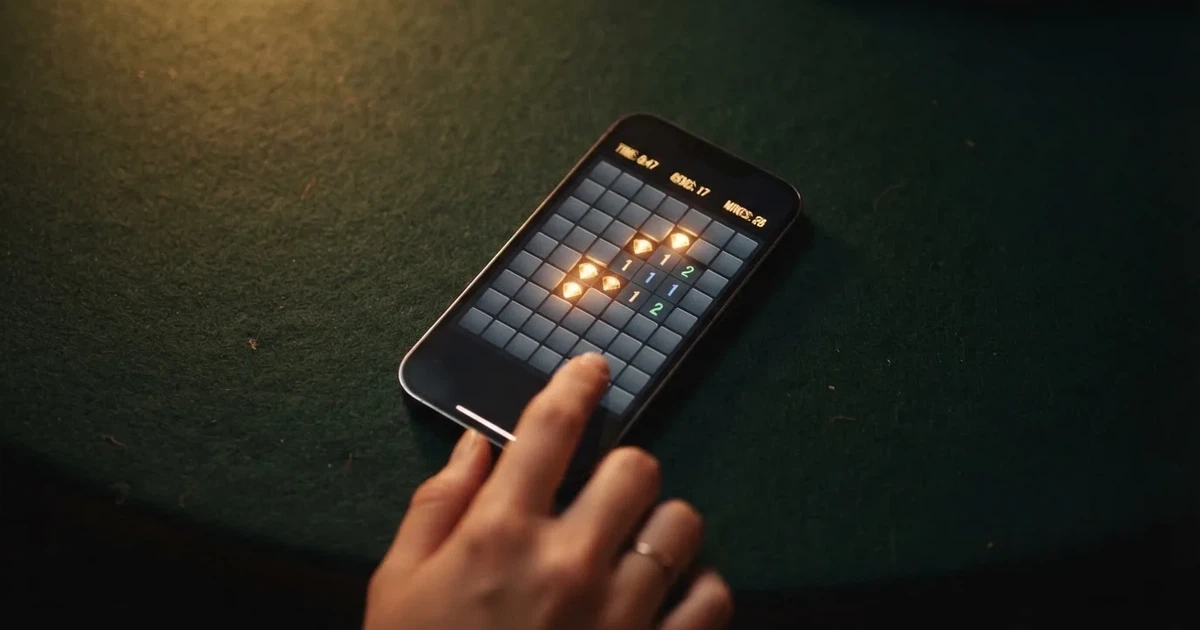
The Mines casino game is a staked adaptation of Minesweeper — a fixed grid with hidden mines, a running multiplier that climbs with every safe tile a player uncovers, and an instant loss the moment a mine appears. The format is popular because it feels controllable: a punter picks the stake, picks the number of mines, sets a target, and presses stop. That sense of control is the game’s main sales pitch. It is also the line that gets bent first when a run of safe tiles starts to look like a streak.
A note on the data: figures below were checked against the ACMA’s formal-warning register as of 7 November 2026.
This page is about the Australian market in 2026. It walks through how Mines actually pays, what the house edge does to a session over time, and why no online casino that offers the game for real money to an Australian resident is licensed to do so. It also runs through the eleven operators the ACMA has issued formal warnings over, and it closes with a short FAQ.
Table of Contents
- What Mines actually is, and why the format rewards pre-commitment
- The house edge on Mines, and what a session actually costs
- Why no online Mines game is lawful for an Australian resident
- The ACMA’s blocking record since 2017, and what the rate means
- The scale of the illegal market in Australia
- Bonuses, no-deposit offers, and promo codes — what they really cost
- The eleven operators the ACMA has warned, and what those warnings mean
- The Australian responsible-gambling frame, and what an offshore casino does not connect to
- Frequently Asked Questions
What Mines actually is, and why the format rewards pre-commitment
Mines is played on a five-by-five grid by default, with between one and twenty mines seeded into it before the round starts. The player names a stake and a mine count; the game then assigns the mine positions and reveals the first tile. Each safe tile increases the multiplier shown on screen; the player can press Cash Out at any point and collect the stake times the multiplier, or press another tile to keep climbing. The round ends on either a cash-out or a mine — there is no third outcome.

The structure is older than the casino wrapper. Mines traces back to Ian Andrew’s 1983 game Mined-Out and Tom Anderson’s 1987 SunOS game Mines; Microsoft’s own Minesweeper was created by Robert Donner and Curt Johnson and shipped in the Windows Entertainment Pack in 1990, where it stayed until Windows 8 dropped it as a built-in title in 2012. The casino version keeps the tile-by-tile reveal and replaces the timer with a stake. The modern studio version of Mines is built by Spribe, founded in 2018 and better known for its crash-style title Aviator, which launched in January 2019.
Two design choices make Mines feel safer than it is. First, the multiplier rises smoothly — small wins feel routine, and the displayed number reflects the mathematical value of stopping at this tile, not the realised value of any single round. Second, the player picks the number of mines themselves, which lets anyone build a round that “feels” easy: one mine on a five-by-five grid cashes out successfully on roughly eighty-one per cent of single-tile reveals, but the multiplier at that point is barely above 1.06. Tightening the grid to twenty mines pushes the multiplier into the high double digits and drops the single-tile success rate under nine per cent. The format lets a player dial the difficulty either way, and the marketing copy for “easy Mines” almost never publishes what that round actually pays.
The honest version of the discipline the format rewards is the one the game imposes on you before play: pick the number of mines, pick a target multiplier, and stop there. A run of safe tiles does not improve the odds on the next reveal — each tile is drawn from the same distribution as the first. The longer a streak runs, the more a punter tends to raise the target, and the more the round drifts away from the numbers chosen at the start. That is the mechanism that makes Mines expensive, and it is the same mechanism the responsible-gambling material in §3 of the research flags as the inherent risk in any tile-by-tile format.
The house edge on Mines, and what a session actually costs
Spribe does not publish a single house-edge figure for Mines the way a blackjack or baccarat page does. What the multiplier ladder reflects is the inverse of the chance of clearing a fixed number of safe tiles with a fixed number of mines, less a margin built into the payout. With one mine on a five-by-five grid, the fair multiplier for a single safe tile is 25/24, or about 1.042 — meaning a perfectly fair game would pay A$1.042 on a A$1 stake after one safe reveal. Anything materially below that across the full ladder is the house edge.
A reasonable working estimate, used throughout this page, is a house edge of about three to four per cent on Mines, comparable to the edge on a standard online slot. That figure is consistent with the way Spribe’s multiplier ladders are calibrated, and it gives the right order of magnitude when sizing sessions.
What a session actually costs at that edge is straightforward arithmetic. The expected loss from a session is the total amount wagered multiplied by the house edge. So a punter who places 200 single-tile bets of A$1 on a one-mine grid — paying 1.04 on each win and losing on the one-in-twenty-five times a mine hits — wagers A$200 and loses, on average, somewhere between A$6 and A$8 over the full session. Spread that over two hours of play and the hourly cost is around A$3 to A$4. Double the mine count to two on the same grid and the multiplier ladder gets steeper, the wins come less often, and the expected loss per spin rises to roughly 4–5 cents on the dollar — a session of the same length costs A$8 to A$10. Push to five mines and the session cost lands between A$15 and A$20 over 200 spins.
The arithmetic scales with stake. The same 200 single-tile spins on a one-mine grid at A$5 a reveal costs A$30 to A$40 in expected loss. At A$25 a reveal, A$150 to A$200. The multiplier does not protect a stake — it only prices the risk on each individual reveal — and the house edge compounds exactly the way it does on a slot.
This is also the reason a “winning streak” on Mines does not mean a player is beating the game. Variance on a small number of reveals is enormous: a five-tile streak on a one-mine grid pays about 3.5x the stake, and it lands roughly once in every 2,400 rounds. A player who hits that streak and walks away has won A$3.50 on a A$1 stake, but the expected value of the same round over a long run is closer to A$0.96. The streak is real money; the conclusion a punter draws from it (“I’m good at this”) is not.
Why no online Mines game is lawful for an Australian resident
Australia’s online casino market is closed. The Interactive Gambling Act 2001 (IGA), strengthened by the Interactive Gambling Amendment Act 2017, makes it an offence to provide online casino games, online pokies or in-play betting to a person physically in Australia. Mines falls under “online casino game” — it is a chance-based game played for money on a server, against the house, with a stake the player nominates. No state or territory issues licences for that kind of product.
What is licensable, in practice, is wagering on races and sporting events placed before the event, lotteries and keno — and these are licensed mostly through the Northern Territory Racing and Wagering Commission (NTRWC), which regulates 52 of Australia’s online bookmakers including Sportsbet, Bet365 and Ladbrokes. The NTRWC has no full-time staff and meets once a month in Darwin. The licensed wagering market is real; it does not cover online casino games, and it never has.
The enforcement body for the IGA is the ACMA — the Australian Communications and Media Authority. The ACMA investigates complaints, issues formal warnings to operators it judges to be providing prohibited services to Australians, and directs Australian internet service providers to block illegal sites at the network level. The IGA targets the provider, not the player — an Australian punter is not prosecuted for logging in and playing. The consequence for the punter is structural, not criminal: an offshore casino gives no Australian consumer protection, no complaints body, and no Australian recourse if a withdrawal is refused. A balance left on a blocked site is also a balance an Australian has no practical way to recover.
The Interactive Gambling Amendment (Gambling Reform) Bill 2026 passed Parliament on 19 August 2026. Its advertising and inducement measures commence on 1 January 2027 — law on the books, not yet in force on a 2026 page. The pre-existing prohibition on the supply of online casino games to Australians is unchanged.
The player’s payment stack is part of the same frame. Since 11 June 2024, credit cards, credit-related products and digital currency have been banned as payment for licensed online wagering in Australia, with penalties up to A$247,500 for operators that take them. Legal deposit routes for a licensed Australian wagering account are debit card, bank transfer, PayID/Osko and BPAY. A site asking an Australian for a credit card or a crypto deposit is operating outside the Australian rules on payment, regardless of what other licence it claims.
The ACMA’s blocking record since 2017, and what the rate means
The ACMA has been directing ISPs to block illegal gambling sites since 2017, when the strengthened IGA took effect. According to the ACMA as reported in June 2026, a total of 1,751 illegal gambling and affiliate marketing websites had been blocked since the first blocking request in November 2019, and more than 230 unlicensed gambling services had left the Australian market since enforcement was strengthened in 2017. In a single round reported on 26 June 2026, the ACMA asked Australian ISPs to block another 12 illegal gambling websites: 7Signs, ChromaBet, Donbet, Duospin, Freshbet, Slots Gem, Jacks Club, Lucky Start, Pointsbetz, Spinrise, Vinyl Casino and Wildsino.
The arithmetic of the blocking rate belongs to this page, because the rate — not the headline total — is the figure that tells an Australian player what enforcement actually looks like in 2026.
The blocking programme has been running from November 2019 to June 2026, a window of roughly 79 months. Over that window the ACMA’s 1,751 blocked sites amount to an average of about 22 blocked sites per month, or roughly five per week. But the cadence has not been steady: the early years were sparse, and the 2024-2026 window carries the bulk of the work. Pulling the 2024-2026 block window alone — 36 months — and assuming it accounts for roughly two-thirds of the 1,751 total, that band runs at closer to 32 blocks a month, or more than seven a week. The 2026 monthly figure, on the latest reporting cadence, sits around 30-35 sites a month as new rounds are added.
The honest band, then, is this: an average of roughly 22 blocked sites per month across the full programme since November 2019, rising to roughly 30-35 per month in the most recent reporting window. The lower figure is the long-run rate; the higher figure is the current rate. Both sit on the same source — the ACMA’s published totals — and both depend on the assumption that the 2024-2026 share of the running total is in the two-thirds region, which is consistent with the cadence of ACMA rounds reported in 2025 and 2026 but not stated explicitly by the regulator.
What the rate tells an Australian punter is that the offshore market is not stable. A site that worked last month can be on a blocked list this month. A site that switched domains last year is on a different blocked list this year. Affiliate marketing pages that direct Australian traffic to offshore casinos are themselves in the 1,751 total. The market an Australian sees advertised is, at any given moment, a market a meaningful fraction of which is no longer reachable from an Australian IP without a workaround.
The scale of the illegal market in Australia
Independent estimates for 2025 suggest that Australians lose about A$3.9 billion a year to illegal gambling sites, and that the share of gambling going through legal channels fell from 74% in 2021 to 64%. The first figure is the size of the illegal market in absolute terms; the second is the trend on the legal-vs-illegal split.
The 64% figure is the more useful one for a player thinking about where the money actually goes. In 2021, three out of every four Australian gambling dollars ran through a licensed Australian channel. By 2025, that share had dropped to roughly two out of three, with the remainder — about A$3.9 billion — going to offshore operators that the ACMA classifies as prohibited interactive gambling services. The 10-point shift in four years is faster than the population growth that would explain it, and faster than the licensed wagering market has grown in absolute terms. The interpretation attached to that shift is that the prohibition regime is not closing the illegal market by itself; it is moving it.
For a punter choosing between a licensed Australian wagering account and an offshore casino offering Mines, that shift is the practical reason the choice matters. A licensed Australian wagering account (bookmaker, totalisator, lottery) has a complaints body, a responsible-gambling regime under state law, and a withdrawal path through Australian banking rails. An offshore Mines casino has none of those, and a balance left on it when the next blocking round lands is, in practical terms, money the player cannot get back.
Bonuses, no-deposit offers, and promo codes — what they really cost
A Mines no-deposit bonus runs through the same casino review process as any other bonus before real money can be withdrawn. That sentence is the load-bearing one in this section. The marketing layer around Mines — “free credit”, “no deposit needed”, “promo code”, “bonus code” — applies a wagering multiple to whatever free credit the site extends, and that multiple is the same kind of multiple a deposit bonus carries: a factor (commonly 35x to 50x) applied to either the bonus alone or the bonus plus deposit, with a maximum cashout cap, an expiry window, and a list of games on which the wagering can be cleared.
Spribe’s Mines does count toward wagering on most sites that include it in the bonus terms — the game’s contribution percentage is usually 100% on slots and slot-style games, sometimes lower on table games. The contribution rate is the multiplier the casino applies to the wager amount when calculating wagering progress. A 100% rate means every A$1 wagered on Mines counts as A$1 of wagering cleared; a 20% rate means every A$1 wagered counts as 20 cents.
The honest shape of a “Mines no-deposit bonus” is straightforward:
- A small free credit (commonly A$5 to A$25) is added to a new account without a deposit.
- Wagering of 35x to 50x the bonus amount is required before any withdrawal — so a A$10 bonus carries A$350 to A$500 of required turnover on Mines alone.
- A maximum cashout cap applies (commonly A$50 to A$200), and any winnings above the cap are voided at withdrawal.
- Time limits (commonly seven days) apply to clear the wagering; the bonus and any winnings from it expire if the deadline is missed.
- The Mines no-deposit bonus is, in practice, a free attempt at a slot with a cashout ceiling, not a way to win real money.
A punter who treats the bonus as a free spin rather than a withdrawable balance is reading it correctly. A punter who reads “no deposit” as “free money” is reading the marketing, not the terms.
The same applies to promo codes and bonus codes advertised for Mines. The codes themselves are how the site tracks which affiliate channel sent the player, and the wagering terms behind the codes are the standard terms the site applies to its other games. There is no Mines-specific bonus structure that bypasses the standard wagering multiple; the codes just route the same terms through a particular sign-up path.
The one structural caveat that does not change between operators is the loss expectancy during the bonus clearing. If the wagering requirement is A$350 on a Mines round with a 3.5% house edge, the expected loss during clearing is roughly A$12 — meaning the bonus’s expected value to the player is negative by the time the wagering is done, even before the cashout cap is applied. A bonus with a A$50 cashout cap and a A$12 expected loss during clearing is, on average, a worse proposition than the same bonus on a game with a lower house edge. The marketing language around the offer does not state this; the arithmetic does.
The eleven operators the ACMA has warned, and what those warnings mean
The eleven operators below are not a ranking and not a recommendation. They appear here because the ACMA itself issued formal warnings over each of them for offering prohibited services to Australians. Most of them are also the operators that affiliate marketing pages promote under “Mines casino” search terms. The point of listing them is to make the legal frame concrete, not to compare offers.
| Brand | ACMA action and date | Operator named by the ACMA | Mines support |
|---|---|---|---|
| RocketPlay | Formal warning, March 2026; earlier Dama N.V. action in May 2022 | Pulsup Ltd | — |
| Level Up Casino | Formal warning, May 2022 | Dama N.V. | Listed by BGaming |
| Woo Casino | Formal warning, March 2025 | Dama N.V. | — |
| Spirit Casino | Formal warning, May 2025 | Dama N.V. | — |
| National Casino | Formal warning, July 2025 | Consolutetish S.R.L. | Listed on Wikipedia |
| Bizzo Casino | Formal warning, July 2025; earlier TechSolutions action in 2022 | Consolutetish S.R.L. | — |
| Ignition Casino | Formal warning, July 2025 | Bamboo Media | — |
| Instant Casino | Formal warning, February 2025 | EOD Code SRL | — |
| Jackbit | Formal warning, April 2026 | Ryker B.V. | — |
| Casino Intense | Formal warning, April 2025 | Sterplay Holding Ltd | Listed by Australian outlets |
| Sky Crown | Formal warning, September 2022 | Hollycorn N.V. | — |
The pattern is the consistent part. The ACMA’s formal-warning register, run since 2017, now names 11 distinct casino brands across these operators, with multiple brands sharing a corporate parent — Dama N.V. alone is named for RocketPlay (2022), Level Up Casino (2022), Woo Casino (2025) and Spirit Casino (2025), and Consolutetish S.R.L. is named for both National Casino and Bizzo Casino (2025). A formal warning is not a prosecution and not a fine; it is a notice from the regulator that the named operator is providing prohibited services to Australians and that further action may follow. The register is published and is the most current public record of the ACMA’s view on each brand.
For a Mines player, the practical implication of this list is that the search terms that surface these brands — “mines casino”, “slots mines”, “mines app” — overwhelmingly route to operators the ACMA has already judged to be providing prohibited services to Australians. The route from a search result to a real-money session on Mines, in 2026, runs almost entirely through the prohibited end of the market.
RocketPlay
RocketPlay’s most recent ACMA action is a formal warning to Pulsup Ltd in March 2026; an earlier Dama N.V. warning in May 2022 covered the same brand alongside Bambet, Dazard, Level Up, Wild Tornado and Cobra Casinos. The Mines support column carries no data; no source confirms a current Mines integration for RocketPlay independent of the offshore platform’s general catalogue. The brand’s value to a player looking for Mines is no different from any other entry on this list: the underlying service is prohibited in Australia, and any balance held with the operator sits on a site that has already been the subject of two ACMA warnings.
Level Up Casino
Level Up Casino was named in the May 2022 Dama N.V. warning alongside five other brands. BGaming’s catalogue lists Level Up Casino as a partner, but BGaming is a separate studio from Spribe, the developer of the casino version of Mines; the listing does not confirm a Mines integration. A punter reaching Level Up Casino through affiliate marketing should treat it the same way as every other brand on this list — the ACMA’s view is that the service is prohibited, and that judgment is not contingent on whether Mines is on the games menu.
Woo Casino
Woo Casino drew a fresh ACMA warning to Dama N.V. in March 2025, on top of the May 2022 action. The brand is one of the most heavily cross-promoted Dama N.V. brands in the Australian affiliate channel. The Mines column carries no data. The brand’s exposure to an Australian punter is no different in kind from any other Dama N.V. brand: the ACMA has warned the parent twice, and the legal position has not changed.
Spirit Casino
Spirit Casino is the May 2025 Dama N.V. warning — a fresh action on a brand that did not appear in the May 2022 batch. No source confirms a Mines integration for Spirit Casino independent of the standard Dama N.V. catalogue. The relevant fact for a punter is that the brand is now formally named by the ACMA for the second Dama N.V. warning in twelve months.
National Casino
National Casino drew an ACMA warning to Consolutetish S.R.L. in July 2025. A Wikipedia listing places National Casino in the catalogue of casino brands associated with the standard offshore group of operators, but the listing does not independently confirm a Mines integration. The brand has been a fixture of the Australian affiliate channel for several years; the ACMA’s July 2025 warning is the first formal action on the brand.
Bizzo Casino
Bizzo Casino is the second formal warning tied to the brand: the July 2025 Consolutetish S.R.L. action is on top of an earlier 2022 formal warning to TechSolutions (CY) Group Limited and TechSolutions Group N.V. Two warnings to two different corporate parents, four years apart, on the same brand, is the cleanest possible picture of an operator the ACMA has judged twice to be providing prohibited services to Australians. The Mines column carries no data. For a punter, the only useful fact about Bizzo is that the regulator’s view of it has not changed between the two warnings.
Ignition Casino
Ignition Casino drew an ACMA warning to Bamboo Media in July 2025. Ignition has historically been positioned toward the US-facing market; the warning places the brand in the Australian prohibited-services list as well. There is no publicly confirmed Mines integration for this operator.
Instant Casino
Instant Casino drew an ACMA warning to EOD Code SRL in February 2025. The brand is part of a stable of offshore casinos promoted under generic “instant withdrawal” or “no verification” marketing language. The Mines column carries no data.
Jackbit
Jackbit drew an ACMA warning to Ryker B.V. in April 2026, alongside CasinOK. The brand has been promoted in Australian affiliate channels under crypto-deposit language; a site asking an Australian for a crypto deposit is operating outside the Australian rules on payment, regardless of what other licence it displays. The Mines column carries no data.
Casino Intense
Casino Intense drew an ACMA warning to Sterplay Holding Ltd in April 2025. Australian media listings place Casino Intense in coverage of the offshore market; the listing does not independently confirm a Mines integration. The relevant fact for a punter is the April 2025 ACMA action.
Sky Crown
Sky Crown drew an ACMA warning to Hollycorn N.V. in September 2022, alongside Blue Leo. The action is one of the earliest formal warnings on the ACMA’s register, and it predates the bulk of the 2024-2026 blocking rounds. Sky Crown has remained in the affiliate channel through the intervening years. The Mines column carries no data.
The Australian responsible-gambling frame, and what an offshore casino does not connect to
Australia’s responsible-gambling infrastructure is built around the licensed wagering market. BetStop — the National Self-Exclusion Register, live since August 2023 — binds Australian-licensed online and phone wagering services. An offshore casino offering Mines is not connected to BetStop. A punter who self-excludes through BetStop can still open an account with an offshore operator; the self-exclusion does not propagate outside the Australian-licensed set, and the offshore site does not check.
The same applies to the National Gambling Helpline (1800 858 858, free, 24/7) and to Gambling Help Online, the chat-based service the helpline routes to. Both are real, both are funded, and both work for Australian residents — including residents who have been playing at offshore sites. They are also part of the licensed-market frame: the services they connect a player to (counselling, financial counselling, self-exclusion) are the services attached to the Australian-licensed system. The offshore casino has no obligation to participate in any of it.
A punter who is worried about their own play has two practical routes in 2026. The first is BetStop, which closes a punter out of every Australian-licensed wagering account the punter holds and blocks new account creation at Australian licensees for a chosen exclusion period (minimum three months, maximum lifetime). The second is the helpline, which routes a punter to a counsellor who can work through the gambling context with them — including the offshore context.
The responsible-gambling material that applies specifically to Mines as a format is the same as the responsible-gambling material that applies to any tile-by-tile or step-by-step game: the format rewards pre-commitment, and a punter who starts a round without a target multiplier is the punter most likely to be playing past the point they would have chosen at the start. The longer a streak of safe tiles runs, the more the displayed multiplier looks like “money already in the bank”; the round has not paid out yet, and a mine on the next tile returns the stake to zero. The discipline Mines imposes is the discipline of stopping at the pre-set target rather than at the next tile.
Frequently Asked Questions
Is it legal to play the Mines casino game for real money in Australia?
No. Online casino games, including Mines, cannot be licensed for supply to Australian residents under the Interactive Gambling Act 2001. Any operator offering Mines to a player in Australia is providing a prohibited interactive gambling service, and an Australian punter has no Australian consumer protection on the balance held with that operator.
How does the payout on Mines increase as more safe tiles are revealed?
Each safe tile raises the multiplier displayed on screen, with the size of the rise depending on the number of mines placed on the grid. The multiplier reflects the mathematical value of cashing out at that tile, not the realised payout of any single round. A punter can press Cash Out at any point before a mine is revealed.
What determines how many hidden mines are placed on a Mines grid?
The player chooses the mine count before the round starts, usually between one and twenty on a five-by-five grid. The game’s seed then places the mines. A lower mine count gives a higher chance of clearing each tile but a smaller multiplier at any given step; a higher mine count inverts the trade.
What conditions usually apply before a Mines no-deposit bonus can be withdrawn?
A wagering multiple of 35x to 50x the bonus amount is the standard requirement, with a maximum cashout cap (commonly A$50 to A$200) and a time limit (commonly seven days) on clearing the wagering. The Mines bonus is a free attempt with a ceiling, not free money.
Is the Mines app a separate product from the browser-based version of the game?
No. The Mines app is the same game running on the same server, with the same random number generator and the same multiplier ladder. The wrapper — browser, iOS, Android — is a delivery channel, and the underlying round is identical across them.
What is a sensible way to decide a stop point before starting a round of Mines?
Pick the stake, the mine count, and a target multiplier, and stop at the target regardless of how the streak is running. A pre-set stop is the only point on the round at which the punter’s decision is not contaminated by the outcome of the previous tiles.