
Real cash online pokies in Australia: 2026 picture for offshore “real cash” claims
“Real cash” lands on Australian inboxes as a marketing word, and the arithmetic it hints at is the opposite of what most players take from it. Offshore casino sites running real-cash pokies campaigns cannot be licensed in any Australian state or territory, the Australian Communications and Media Authority (ACMA) has now directed internet providers to block 1,751 such services since the first blocking request in November 2019, and H2 Gambling Capital estimates Australians lose about A$3.9 billion a year to illegal gambling sites. This page works through what those numbers mean for the person sitting in front of one of these sites — what the bonus actually requires, what gets left on the table if a withdrawal stalls, and where the regulator’s record leaves each brand on the featured list.
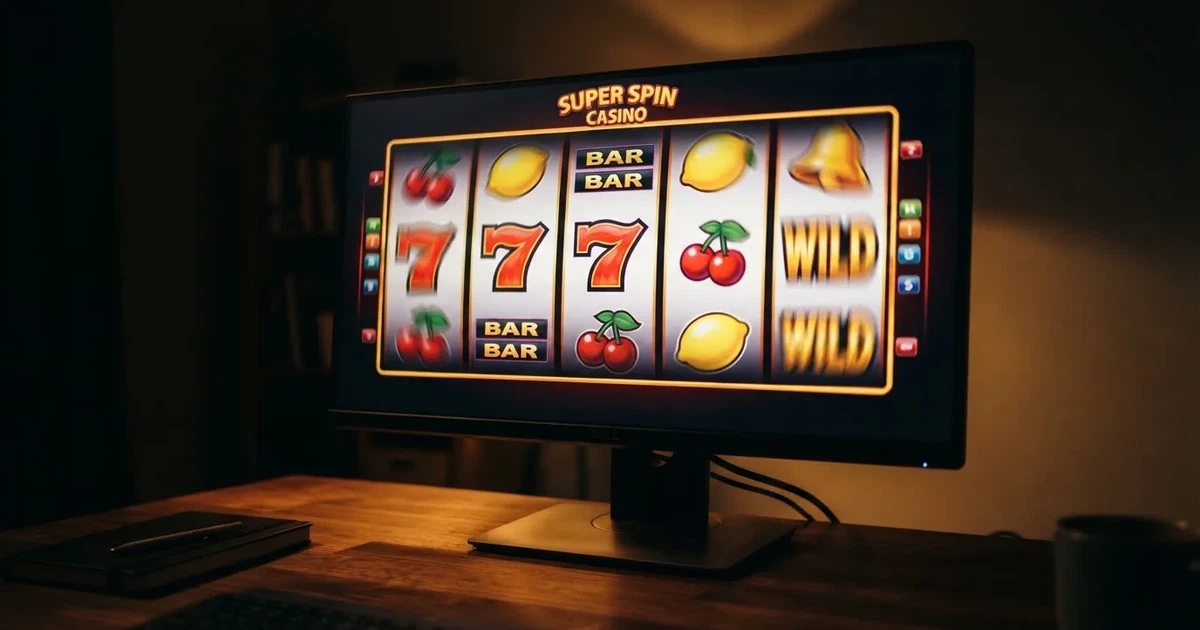
Currency stamp: figures verified as of 7 November 2026 against the ACMA’s published blocking list and formal warning register.
Table of Contents
- Responsible gaming: the first shelf, deliberately
- Payments and payout speed: what “instant” actually costs
- Bonuses and free spins: the offer behind the offer
- Mobile and app: the channel and its gap
- Specific games and providers: the paytable behind the screen
- Eleven operators named by the ACMA
- Overview and core: what “real cash online pokies” actually refers to
- Legality and regulation: the law that frames every number above
- FAQ
Responsible gaming: the first shelf, deliberately
A page about real-cash online pokies has to start where the dollar signs do not, because the cost a reader is most likely to pay is not the one the marketing names. Gambling harm in Australia runs at a level few comparable countries match, and the offshore channel only adds to it.

What the figures on harm already show
In 2020–21 Australians wagered almost A$150 billion through gaming machines and lost A$12.18 billion on them, a turnover-to-loss ratio that holds roughly steady year on year. New South Wales alone recorded A$8.18 billion in player losses across 87,298 machines outside casinos in 2022–23. Queensland had 21,122 machines across 351 venues in October 2023; Victoria capped its outside-Crown count at 26,380 under a 30,000 statewide limit. These are land-based pokies, licensed state by state, and they are not the subject of this page — but the same population is being courted online, with no venue licensing, no staff observing play, and no clock in the room.
The BetStop gap an offshore site does not close
BetStop, the National Self-Exclusion Register, has been live since August 2023 and binds every Australian-licensed online and phone wagering service. Offshore casino sites are not connected to it. A person who has self-excluded through BetStop and then opens a real-cash pokies account at an offshore operator has excluded from exactly nothing — the offshore site has no obligation to honour the registration, no system to receive the data, and no Australian complaints body to answer to if a withdrawal is later refused.
Where to get it instead
The National Gambling Helpline (1800 858 858) is free, runs 24/7, and offers callback and webchat through Gambling Help Online. Financial Counselling Australia and the state-based problem gambling services take self-referrals. Lifeline (13 11 14) covers crisis calls that are not gambling-specific but often sit behind one. The point of naming these services on a page about real-cash pokies is not editorial throat-clearing — it is that every other number on this page becomes irrelevant the moment a reader needs one of them.
Payments and payout speed: what “instant” actually costs
Real-cash pokies marketing leans hard on payment rails: PayID, $10 deposits, no-deposit entries, “instant payouts.” Each of those names carries a claim, and each claim has a price the marketing does not name.
PayID, Osko and BPAY: legal rails, not offshore ones
PayID and Osko are real-time payment services run over Australia’s New Payments Platform. They are free to use, settle in seconds, and are accepted by every Australian-licensed wagering operator for the simple reason that the law permits them. The 11 June 2024 ban on credit cards, credit-related products and digital currency as payment for licensed online wagering narrowed the legal deposit list to debit card, bank transfer, PayID/Osko and BPAY. An offshore site accepting a credit card or a crypto deposit from an Australian is operating outside that frame, and a player has no Australian recourse if the deposit is lost.
The $10 deposit and the no-deposit claim
The $10 deposit real-cash pokies pitch exists because the marketing needs a low barrier, not because the maths works at that level. A A$10 deposit against any reasonable wagering requirement (35×, 40×, 50×) does not produce enough turnover to clear the bonus; it produces a small number of bets with a bonus balance attached that cannot be withdrawn until the multiplier is met. The no-deposit version is sharper: a small credit to play with, attached to a max-cashout cap that converts the credit into a token gesture the moment a win arrives.
Fast payouts against a blocked site
“Fast payouts” is the other half of the pitch, and it is the half that interacts directly with the ACMA’s blocking list. The 1,751 sites blocked since November 2019 are blocked at the ISP level — the URL goes dead, the account may still have a balance on it, and there is no Australian complaints body to chase it through. A player who values fast payouts and ignores the blocking record is choosing a one-way transaction: money in, often money out, then a regulator-driven outage with no recourse. The maths that makes a fast payout attractive is identical to the maths that makes a blocked balance a total loss.
What research does not give us
No published figure in the source material gives a typical offshore real-cash pokies payout time. The omission matters: it means the marketing claim of speed is unsupported by any independent measurement in the research, and that is the right way to read the silence. Affiliate pages list hours; independent measurements do not exist for the brands covered here because the brands do not operate under any Australian measurement regime.
Bonuses and free spins: the offer behind the offer
A real-cash bonus is the most heavily advertised feature of an offshore pokies site, and the feature the reader is least equipped to value without a calculator.
What “real cash bonus” actually means
A real-cash bonus in the offshore context is almost always a matched-deposit credit with a wagering requirement attached — turn the bonus over a stated number of times before any winnings become withdrawable. The multiplier is rarely below 35× and is often 40× or 50×. A A$200 bonus at 40× requires A$8,000 of turnover before any winnings withdraw, on a slot machine with a return-to-player that sits well below 100%. The bonus is a way to extend play, not a way to make money; the only honest reading of “real cash bonus” is a marketing label for an extension of session time at the house’s edge.
Free spins: the credit with a ceiling
Free spins promotions pair a fixed number of spins at a fixed stake with a max-cashout cap on whatever the spins produce. A common structure runs 50 free spins at A$0.20 with a max cashout of A$100 and a 40× wagering requirement on the winnings. The cap turns a 50-spin run into a bounded event — if the player hits a feature and wins A$500 in spins, the cap converts it to A$100 of bonus balance that must still be turned over before withdrawal. Free spins are not free in the marketing sense; they are a credit with two binding conditions.
Sign-up offers and the welcome package
A “welcome package” is a sequence of matched deposits, often three or four stages, each with its own multiplier and its own game weighting. Table games are usually weighted at 10–20% of slots, so a bonus that looks generous on the headline turns into a thin offer the moment the player strays from pokies. The cumulative turnover required to clear a four-stage welcome package at 40× each is substantial, and the RTP reduction on a low-RTP slot cuts into it further.
What research does not give us — Bonuses and free spins
No published figure in the source material gives a real wagering multiple or bonus amount for any specific brand on the featured list. The omission is structural: the only sources for those figures were affiliate marketing pages, and the research explicitly excludes affiliate pages as a primary source. The qualitative reading the page can stand behind is that offers on this list exist in the same broad band as the offshore market generally, with the additional caveat that the operator itself is unlicensed here.
Mobile and app: the channel and its gap
A real-cash pokies app is a marketing term as much as it is a software category, and the difference matters.
What “real cash casino app” actually denotes
A real-cash casino app is an Android or iOS application that loads real-money pokies, accepts deposits and pays out withdrawals through the same offshore payment rails the desktop site uses. The category overlaps heavily with browser-based mobile play: most offshore operators run their entire real-cash catalogue through a mobile browser with an optional app wrapper. The app wrapper is a delivery mechanism, not a separate product, and the underlying terms — bonus conditions, max-cashout caps, payment rails — are the same.
The Australian app-store gap
Apple’s App Store and Google Play both enforce policies that restrict real-money gambling apps to operators licensed in the user’s jurisdiction. An offshore real-cash pokies app for Australians is not available through the standard app stores in the way a licensed operator’s app would be; it is usually loaded through a direct download from the operator’s site or via an APK sideload on Android. The sideload step puts the responsibility for installation security on the player, which is itself a small cost the marketing does not price.
Free-to-play apps with the same name
The “real cash slots app” search returns a mix of free-to-play apps and real-money apps under similar names. A free-to-play app is a different product: it takes deposits that cannot be cashed out, runs on virtual currency with no real-money payout, and falls outside the Interactive Gambling Act because no real-money gambling is being offered. A reader who installs a free-to-play app thinking it is the real-money version has not signed up to gamble; a reader who installs the real-money app on a sideload has done both, and is outside any Australian consumer protection on top.
Specific games and providers: the paytable behind the screen
A pokies paytable is the closest thing a player has to a contract with the game, and it is also the document the marketing points to least often.
RTP, volatility and the jurisdictional floor
Return-to-player is the share of wagered money a slot is designed to return over a long run. Australian land-based poker machines are subject to state-level minimums: 85% in NSW, the NT, Queensland and (generally) Victoria (87% at Crown Melbourne), 87% in the ACT and Tasmania, 87.5% in South Australia, and 90% in Western Australia. Online pokies offered offshore to Australians are not bound by any of these floors. The marketed RTP on an offshore slot can be, and often is, lower than the worst Australian land-based minimum — a slot can advertise 92% on its paytable while another variant of the same title is set to 88% in markets with no floor. The reader cannot tell which variant the offshore site is running without reading the in-game help file.
The “big red” naming and what is behind it
Big Red is a pokies title Aristocrat developed for Australian land-based play. Online versions bearing that name on offshore sites are typically not Aristocrat-served; they are knock-offs or rebranded international slots with similar themes. The name carries trust that the title does not always earn, and the paytable behind the name may not match the land-based version any reader remembers from a club.
Baccarat and blackjack: the table-game flank
A real-cash pokies site is rarely a pokies-only site. Most of the brands on this list also run table games, and the table games carry their own edge. Baccarat’s house edge is 1.06% on the Banker bet, 1.24% on the Player bet and 14.36% on the Tie — the Tie is the bet the marketing calls “the long shot,” and at 14.36% it is. Punto banco, dealt from a six- or eight-deck shoe, is the variant most sites run, and the casino banks the game at all times. Blackjack with optimal strategy runs about 0.28% under liberal Las Vegas Strip rules and about 0.43% under Atlantic City rules; the site’s specific rules matter more than the headline, and they are usually buried two clicks deep. Both games sit on the table-game side of the welcome package, which is where the 10–20% game weighting does the most damage to a bonus’s apparent value.
Eleven operators named by the ACMA
The eleven brands below are not a recommended list and not a ranking. Each is included because the ACMA itself issued a formal warning under the Interactive Gambling Act 2001 for offering prohibited online casino services to Australians. The names carry the operator the ACMA named, the date the warning was published, and the cost to the reader of treating the warning as a marketing footnote.
| Brand | ACMA action and date | Operator named by the ACMA | Subject support |
|---|---|---|---|
| RocketPlay | Formal warning, March 2026 (Pulsup Ltd); earlier Dama N.V., May 2022 | Pulsup Ltd / Dama N.V. | — |
| Level Up Casino | Formal warning, May 2022 | Dama N.V. | BGaming |
| Woo Casino | Formal warning, March 2025 | Dama N.V. | — |
| Spirit Casino | Formal warning, May 2025 | Dama N.V. | — |
| National Casino | Formal warning, July 2025 | Consolutetish S.R.L. | Reported in Wikipedia listings |
| Bizzo Casino | Formal warning, July 2025 (Consolutetish S.R.L.); earlier 2022 (TechSolutions) | Consolutetish S.R.L. / TechSolutions | — |
| Ignition Casino | Formal warning, July 2025 | Bamboo Media | — |
| Instant Casino | Formal warning, February 2025 | EOD Code SRL | — |
| Jackbit | Formal warning, April 2026 | Ryker B.V. | — |
| Casino Intense | Formal warning, April 2025 | Sterplay Holding Ltd | Reported by ABC and ACMA |
| Sky Crown | Formal warning, September 2022 | Hollycorn N.V. | — |
RocketPlay
RocketPlay has had two ACMA interventions on the public record: a May 2022 warning to Dama N.V., and a March 2026 warning to Pulsup Ltd over RocketPlay. The same brand, two operators, four years apart, and the regulator’s view has not changed. The BGaming-listed “real cash” pokies games on the site are the kind the ACMA’s warning cites. None of the wagering or bonus terms the affiliate pages describe are carried in the research, which means the page cannot quantify the cost of clearing any bonus the site advertises — the cost is therefore whatever the bonus term turns out to be, plus the cost of having no Australian complaints body if a withdrawal stalls.
Level Up Casino
Dama N.V. received an ACMA formal warning covering Level Up Casino in May 2022 alongside five other brands. The site’s BGaming-listed catalogue is the only fact the research carries about its game supply, and that listing comes from the provider’s own site, not from an independent measurement. The verdict on the block is the block itself: a brand the regulator has formally named in the same enforcement notice as five others, with no Australian licence available to it.
Woo Casino
Dama N.V. received a separate ACMA formal warning over Woo Casino in March 2025, three years after the May 2022 round. A second warning to the same operator group over a different brand is a regulator returning to the same operator with the same message: the IGA covers this. The research carries no wagering, payout or game-RTP figure for Woo Casino, and the qualitative read is that the cost of playing there is the cost of playing at any offshore site on this list — the bonus terms, whatever they are, plus the absence of Australian recourse.
Spirit Casino
Dama N.V.’s May 2025 ACMA warning covered Spirit Casino. The brand sits one warning away from Woo Casino in the public record, and the two warnings share an operator group. The structural cost — no Australian licence, no BetStop coverage, no complaints body — applies in full, and the specific cost of the bonus is what the bonus term turns out to be.
National Casino
The July 2025 ACMA formal warning to Consolutetish S.R.L. covered National Casino alongside Bizzo Casino. National Casino appears in third-party listings of online casino operators, which is the only subject-support fact the research carries. The listings status is what it is: a brand mentioned on a list, with no Australian licence, and the regulator has formally said so.
Bizzo Casino
Bizzo Casino was the subject of an earlier ACMA formal warning to TechSolutions (CY) Group Limited and TechSolutions Group N.V. in 2022, and a second warning to Consolutetish S.R.L. in July 2025. Two operators, two warnings, three years apart — a brand the regulator has had to name twice. The reader’s cost here is the same as the cost on every other brand on this list, plus the compounding fact of repeated regulatory attention.
Ignition Casino
The July 2025 ACMA formal warning over Ignition Casino was issued to Bamboo Media. Ignition Casino is one of the offshore brands that markets to Australian players from a US-facing base; the ACMA’s action is over the Australian end of that marketing. The research carries no game, RTP or bonus figure for the brand, which means the page cannot quantify the bonus cost and cannot check whether any advertised payout time is honoured.
Instant Casino
EOD Code SRL received the February 2025 ACMA formal warning over Instant Casino. The brand is one of the more recent additions to the offshore real-cash pokies market that courts Australian players, and the warning is one of the more recent entries in the ACMA’s register. The cost profile matches the rest of the list: unlicensed in Australia, no BetStop binding, no Australian complaints body, and a regulator that has now named the operator by name.
Jackbit
Ryker B.V. received an ACMA formal warning over Jackbit in April 2026. Jackbit is a crypto-friendly offshore casino, and the payment-rail profile is itself part of the cost: a site accepting crypto from an Australian is outside the legal deposit rails the 11 June 2024 reforms defined for licensed wagering, and an Australian has no Australian recourse if the deposit is lost. The research carries no wagering, payout or RTP figure for the brand.
Casino Intense
Sterplay Holding Ltd received the April 2025 ACMA formal warning over Casino Intense. The brand appears in third-party listings of online casino operators alongside the ACMA’s own formal-warning publication — two independent listings, both pointing the reader at the same brand with the same regulatory note attached.
Sky Crown
Hollycorn N.V. received an ACMA formal warning over Sky Crown and Blue Leo in September 2022. Hollycorn N.V. is a long-standing offshore operator group, and the Sky Crown warning is one of the earliest entries on this list. The research carries no game, bonus or RTP figure for the brand; the qualitative read holds.
The blocking-rate calculation
The 1,751 blocked sites the ACMA has directed ISPs to block since the first blocking request in November 2019, against the time elapsed, runs as follows. From November 2019 through the June 2026 round reported on 26 June 2026, that is roughly 79 months of blocking activity, with 1,751 sites blocked over that span. 1,751 divided by 79 is roughly 22 sites per month, or about one site every 33 hours — a steady, ongoing rate, not a one-off enforcement exercise. The 12-site round in June 2026 sits at the upper end of the recent cadence: roughly one block per working day across that single enforcement action. The condition on the band is that the ACMA’s public blocking rounds do not capture every individual site that has gone offline, only those the regulator has chosen to publish, so the true figure is at least 1,751 and the rate is at least one site every 33 hours. The cost to the reader is the corresponding fraction of accounts that have been frozen mid-balance: every blocked site is one or more Australian accounts that cannot withdraw, with no complaints body to chase.
Overview and core: what “real cash online pokies” actually refers to
A “real cash online pokie” is the online version of an Australian gaming machine that takes real-money deposits and pays real-money winnings through an offshore operator’s site. The category exists in marketing but not in Australian law.
What an Australian player can and cannot access
No state or territory licenses an online casino to offer online pokies for real cash to Australians. The Interactive Gambling Act 2001, strengthened by the Interactive Gambling Amendment Act 2017, makes it an offence to provide such a service to a person in Australia; the individual player is not prosecuted, but the offshore site can be, and the ACMA’s enforcement record shows it has been. What is licensable is wagering on races and sport placed before the event, lotteries and keno — in practice licensed by the Northern Territory Racing and Wagering Commission (NTRWC), which regulates 52 of Australia’s online bookmakers (Sportsbet, Bet365, Ladbrokes) and meets once a month in Darwin.
The terminology gap
“Real cash,” “real money,” “real money pokies” and “cash casinos” are all marketing labels for the same product: a real-money online casino running slot games. The terms do not vary in substance; they vary in how directly they hide the offshore, unlicensed nature of the offer. The plainest reading of any of them is that real money changes hands on a site not licensed by any Australian regulator.
The legal minimum age and the minimum deposit
The legal minimum age for any form of gambling in Australia is 18. The minimum deposit at the brands on this list is typically A$10–A$20, with the no-deposit versions offering a small credit (A$5–A$20) attached to a max-cashout cap and a wagering multiplier. Neither figure changes the legal status of the offer; both numbers are simply where the marketing meets the reader’s wallet.
Legality and regulation: the law that frames every number above
The numbers in the rest of this page sit inside a legal frame the marketing never acknowledges, and the frame is what makes the offshore offer what it is.
The Interactive Gambling Act 2001 and its 2017 amendment
The IGA, as amended in 2017, makes it an offence to provide online casino games, online pokies or in-play betting to a person physically in Australia. Wagering on races and sport placed before the event is licensable; lotteries and keno are licensable; everything else falls outside the law. The ACMA is the regulator: it investigates, issues formal warnings, and directs ISPs to block illegal sites. The individual player is not the target of prosecution; the operator is.
BetStop and the limit of self-exclusion
BetStop, the National Self-Exclusion Register, has been live since August 2023 and binds every Australian-licensed online and phone wagering service. An offshore casino is not bound by it, not connected to its registration data, and not required to honour a BetStop exclusion. For a reader who has self-excluded and is now considering an offshore site, the exclusion does not travel with them.
The 11 June 2024 payment reforms
Since 11 June 2024, credit cards, credit-related products and digital currency have been banned as payment for licensed online wagering in Australia, with penalties up to A$247,500 for operators accepting them. Legal deposit routes for licensed wagering are debit card, bank transfer, PayID/Osko and BPAY. An offshore site asking an Australian for a credit card or crypto is operating outside the Australian rules, and the absence of a legal payment rail is itself part of the cost.
The 2026 reform package
The Interactive Gambling Amendment (Gambling Reform) Bill 2026 passed Parliament on 19 August 2026; its advertising and inducement measures commence on 1 January 2027. As of 2026 the law is on the books with a start date in the next calendar year. The reform’s effect on the marketing of “real cash” pokies offers to Australians will not be visible until 2027.
Gambling winnings of a recreational player are not assessable income under section 6-5 of the ITAA 1997, and losses are not deductible — unless the person carries on a business of gambling, which is the ATO’s test, not the player’s. The model is one to check with the ATO directly; the page’s role is to flag the question, not answer it.
FAQ
Does “real cash” mean the same thing as “real money” when a pokies site advertises it?
Yes — the two terms are interchangeable marketing labels for the same product: a real-money online casino running slot games. Neither term signals a separate Australian licence, because no state or territory licenses the product at all. The variation between the two phrases is in how directly each hides the offshore, unlicensed status of the offer.
How does a $10-deposit real-cash pokies claim compare with a no-deposit real-cash offer?
A $10-deposit offer requires a real-money deposit against a matched bonus with a wagering multiplier, typically 35×–50×, that must be cleared before any winnings withdraw. A no-deposit offer skips the deposit and credits a small bonus balance (A$5–A$20) attached to a max-cashout cap and a multiplier; the cap turns any big win into a bounded event. The no-deposit version looks cheaper up front but caps the upside; the deposit version looks more generous but extends play into a long-turnover obligation.
Is playing online pokies for real cash from an offshore site something an Australian can legally do?
The player is not prosecuted; the Interactive Gambling Act 2001 targets the provider, not the individual. The provider, however, is acting illegally by offering the service to a person in Australia, and the ACMA has issued formal warnings and directed ISPs to block 1,751 such sites since November 2019. The legal status of the offer is what it is; the practical status is that the player has no Australian consumer protection, no BetStop coverage, and no complaints body if a withdrawal is refused.
What’s the difference between a real-cash pokies app and a free-to-play pokies app with the same name?
A real-cash app takes deposits that can be cashed out, runs on real money, and falls foul of the Interactive Gambling Act because no Australian licence covers it. A free-to-play app takes deposits that cannot be cashed out, runs on virtual currency, and falls outside the Act because no real-money gambling is offered. The two share names; they do not share products, and the marketing often blurs them in the same app-store listing.
Why would a site advertise “free slots” that can win real cash, when the two seem contradictory?
“Free slots win real cash no deposit” describes a no-deposit bonus: the slots are free to play, but the cash has a ceiling. The credit is small, the wins are usually capped at a small multiple of the credit, and the capped win must still be turned over before withdrawal. The contradiction is the marketing point — the “free” describes the entry, the “real cash” describes a bounded ceiling, and the conditions sit in the terms the marketing does not always quote.
How fast does a real-cash pokies withdrawal typically move compared with the original deposit?
The deposit is usually instant through PayID, debit card or crypto. The withdrawal is what the marketing names “fast payout,” and it is the point at which the offshore site’s actual operation becomes visible. Independent measurements of withdrawal times for the brands on this list are not in the research, and the absence is itself information: an offshore site is not measured by any Australian regime, the ACMA’s blocking list can freeze the balance before the withdrawal is processed, and the player has no Australian recourse once the site is unreachable.