
Quickspin Online Casinos in Australia: What the 2026 Market Actually Looks Like
Latest data: 7 November 2026 — checked against the ACMA’s published register of formal warnings and blocking requests.
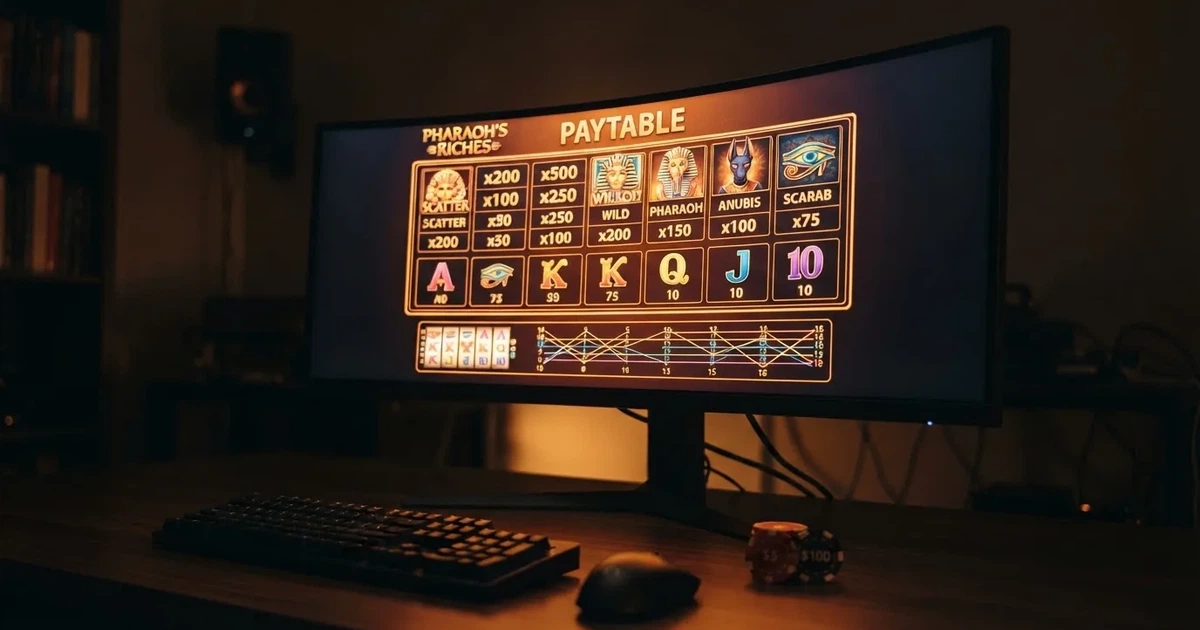
A search for “best Quickspin online casinos Australia” returns a thicket of offshore sites carrying the studio’s games. Every one of them is offering a product Australia has prohibited for almost a decade. The Interactive Gambling Act 2001 makes it an offence to provide online casino games — slots included — to a person physically in Australia, and no state or territory licenses online casinos. The Australian Communications and Media Authority enforces this by issuing formal warnings and ordering ISPs to block sites; offshore operators continue to market Quickspin titles to Australian visitors anyway.
This page sets out what Quickspin actually is as a studio, why its slots surface on sites the ACMA has acted against, and what an Australian reader should weigh before any site displaying those games accepts a deposit. The shape of the answer is unflattering: there is no licensed Australian online casino on which to play Quickspin, and the offshore shortlists that rank them are not the consumer guide they present themselves as.
Table of Contents
- Responsible-Gaming Reality in Australia
- Payments, Payout Speeds, and the Real Rails
- Bonuses and Free Spins Around Quickspin Titles
- Mobile and App Play
- Specific Quickspin Titles and Their Mechanics
- The Comparison That Isn’t
- The Blocking-Rate Calculation
- Operator Reviews: The Brands the ACMA Has Warned
- The Australian Offshoring Picture
- Where Australians Can Play Quickspin-Style Slots Legally
- Costs and Conditions an Australian Should Run
- Legal Frame: What the IGA Says
- Money In, Money Out: The Real Rails
- KYC, Withdrawal Checks, and the Real Payout
- Close Reading of the Comparison Set
- The Honest Frame
- Frequently Asked Questions
Responsible-Gaming Reality in Australia
Offshore sites offer no Australian consumer protection. That is the first sentence to internalise, because every other safety claim a casino page makes is built on top of it.

The safety net is real, but it does not reach an offshore operator. Australia runs the National Self-Exclusion Register under the name BetStop, live since August 2023, and a national helpline at 1800 858 858, with chat at Gambling Help Online, both free and around the clock. State and territory bodies run their own exclusion and counselling programmes on top of that. Every measure listed requires the operator to be licensed in Australia to bind it. An offshore casino has no obligation to honour an Australian self-exclusion, refuses to enrol a player in BetStop even if asked, and can withdraw only into the rails its own terms authorise.
A reader with a hard limit on spend, time at the tables, or chasing losses should treat those supports as their actual safety layer. Offshore Quickspin sites may have their own responsible-gaming toggles — deposit caps, session reminders, “take a break” buttons. The implementation is self-policed; the operator’s incentive runs the other direction.
A harder fact belongs beside this: the IGA targets the provider, not the player. Australians are not prosecuted for opening an account and depositing. They are also left without a complaints body, a regulator to escalate to, or any recourse when a withdrawal stalls. That asymmetry — no protection but full risk exposure — is what every responsible-gaming page on this site has to start from.
Quickspin’s own footprint gives the rest of the picture. The studio runs an active MGA licence and is covered by Playtech’s UK Gambling Commission account. Those licences only matter where the studios and operators behind them are licensed to serve the player. An Australian player sitting in front of an offshore site is not inside either jurisdiction, regardless of what the cashier page says.
Payments, Payout Speeds, and the Real Rails
A Quickspin-branded slot on an offshore site is paid for through the rails that site’s cashier displays. Those rails are not Australia’s, and the difference shows up in three places.
Legal deposit routes for Australian-licensed wagering are debit card, bank transfer, PayID/Osko and BPAY. Since 11 June 2024, credit cards, credit-related products and digital currency have been banned as payment for any licensed online wagering service in Australia, with penalties up to A$247,500 per breach. An offshore site asking an Australian for a credit card or a crypto deposit is operating outside the Australian rules entirely; the cashier page is a tell, not a detail.
Withdrawal timelines depend on the rail and the operator’s compliance team, and the published numbers tend to widen at payout time. Card withdrawals may quote one to three business days but tend to sit closer to the upper end when the operator’s KYC department pings back with another document request. Bank transfers take longer; crypto is fastest in clock time and worst for traceability. The licensed Australian wagering sites that exist — sports and racing, not casinos — are the only ones whose payout rails are independent of the operator’s discretion in any meaningful way.
Chargebacks are the other angle. A bank can reverse a card transaction, and Australian consumer law still applies to money a cardholder has paid. It is not a lever a reader should plan around; the operator can respond by closing the account and walking away from any account balance still under wagering. Self-exclusion through BetStop is the lever with teeth, and again, it binds only Australian-licensed operators.
A blunt summary for the picture this section draws: offshore sites set the payment terms, offshore sites keep the money until their compliance team releases it, and Australian consumer law has very little purchase on the result. A reader who recognises that is no longer comparing payment methods — they are reading the actual contract.
Bonuses and Free Spins Around Quickspin Titles
Bonus offers on Quickspin slots look like the same promotions found anywhere else in the iGaming market. Wagering requirements, max-cashout caps, game-weighting rules, time limits. The structure is familiar; the change is what they’re attached to.
An offer landing at a licensed Australian online casino does not exist for online slots. There is no licensed Australian online casino. The bonus can only ever be presented by an offshore operator that the ACMA has warned or blocked for offering exactly this product to Australians. The welcome package, the deposit match, the free-spin bundle tied to Quickspin titles — every one of those is published by an entity operating outside Australian law, on a site the ACMA can order blocked with a balance still in it.
Two conditions recur. The first is a wagering requirement, the multiple of the bonus that must be turned over before a withdrawal is allowed. Quickspin slots typically count 100 percent toward wagering, but the requirement itself can run anywhere from low to severe by offshore norms. The second is a maximum-cashout cap on free-spin winnings, often a fixed ceiling a hundred times smaller than the headline number. Both conditions are written into the offer’s terms in the language the operator chooses, and the operator’s choice tends to favour the house.
A worked feel for the kind of numbers in play. A typical offshore welcome offer might be a 100 percent match up to a few hundred dollars with a 40x bonus wagering requirement. The reader who claims the maximum bonus now needs to wager sixteen thousand dollars on slots before any withdrawal is allowed — at a slot house edge of three to four percent, that is several hundred dollars in expected loss on the wagering requirement alone. Free-spin winnings, with their cashout caps, return a fraction of what the headline figure implied. This is what an “inducement” looks like on a prohibited product: it leads with a number and sets the rules after.
The 2026 reform sits in this shelf too. The Interactive Gambling Amendment (Gambling Reform) Bill passed Parliament on 19 August 2026 and brings fresh advertising and inducement measures on stream from 1 January 2027. The provisions are law with a start date — not yet in force on a page dated to this year. They tighten what licensed operators can promote; they do not extend a licence to the offshore sites this page is about.
Mobile and App Play
Quickspin games are built in HTML5 and run on modern phone browsers. The slots themselves are mobile-ready: load quickly, rotate cleanly between portrait and landscape, and the paytable and bet controls adapt to a thumb. Performance is not the obstacle to considering an offshore Quickspin casino — the obstacle is that there is no licensed one.
What an Australian reader sees instead is a download prompt from an offshore site, or an app that routes through a third-party installer because it is not on Google Play or the Apple App Store. The framing — “our dedicated mobile app” — does the work of implying legitimacy. The actual product is a licensed-by-no-one shortcut to the same cashier and the same offshore operator.
Browser play is the more honest option where it is on offer. A modern phone browser opens the game in the same window the operator is offering to European players. The wrapper is the same wrapper — an offshore operator’s terms of service, an offshore operator’s payment rails, an offshore operator’s compliance team. The device the player is holding does not change any of that. The best mobile Quickspin casino is no different in standing from the best desktop one; the licence question is the same in both directions.
Two operational points sit in this shelf because they recur. Touch inputs at high bet sizes are easy to misfire on, and a single accidental tap can outscale what the player intended. The session reminder, when the operator has bothered to implement one, takes longer to notice on a phone than on a desktop. Both factors favour a slower bet cadence and a firm session cap before a deposit is made.
Specific Quickspin Titles and Their Mechanics
Quickspin’s catalogue includes well-known slot titles in the studio’s distinctive style, and the comparison shelves that rank “best Quickspin slots” tend to list the usual flagship names. The mechanics the studio is known for — high-volatility paytables, well-developed free-spin features, polished art direction — show up in those titles. None of that changes the regulatory status of where the games can be played.
| Quickspin slot | Distinctive mechanic | Genre anchor |
|---|---|---|
| Sakura Fortune | Respins with expanded wilds, free-spin retriggers | Asian-themed video slot |
| Sticky Bandits | Wild symbol locking across reels | Western-themed video slot |
| Big Bad Wolf | Blowing-down-the-house bonus round | Fairy-tale retelling, high volatility |
| Northern Sky | Respin chain mechanic with re-locking symbols | Crystal-themed video slot |
| The Wild Chase | Moving wilds across the reels | Heist-themed video slot |
The detail that matters here is what the comparison shelves in the wider market rarely say: a Quickspin slot’s published RTP and volatility are stated for that exact title, in a context where it is offered by a licensed operator. Australian readers see the same RTP and volatility figures attached to the same titles on offshore sites — the slots are identical, the operator’s standing is not.
A reader who wants to verify a Quickspin title can do so without ever signing up to a casino. The studio’s games are tested by independent labs in the jurisdictions where Quickspin holds licences, including the MGA regime and the UKGC account held at the parent-company level. Test certificates list the software version, the RTP, and the RNG outcome. A reader’s job is to confirm the operator is inside that regime; the offshore shortlist does not.
The Comparison That Isn’t
A ranking of the “best Quickspin online casinos in Australia” is in practice an ordered list of offshore sites that accept Australian deposits and carry Quickspin games. The categories these shortlists sort on — bonus size, game catalogue, payout speed — assume the operator is licensed and overseen. In Australia, none of the sites on such a shortlist is.
The comparison that would actually help looks like the one below. The columns are the matters a reader needs to weigh, not the matters a marketing page rewards. “Subject support” in the final column means the operator carries Quickspin-branded slots in its public-facing catalogue. Where the answer is no-data, the page does not attach the studio to the operator at all — neither affirmatively nor by negative implication.
| Brand | ACMA action and date | Operator named by the ACMA | Subject support |
|---|---|---|---|
| RocketPlay | Formal warning, March 2026 | Pulsup Ltd | — |
| Level Up Casino | Formal warning, May 2022 | Dama N.V. | Listed on adjacent studio pages |
| Woo Casino | Formal warning, March 2025 | Dama N.V. | — |
| Spirit Casino | Formal warning, May 2025 | Dama N.V. | — |
| National Casino | Formal warning, July 2025 | Consolutetish S.R.L. | Listed on adjacent studio pages |
| Bizzo Casino | Formal warning, July 2025 (earlier 2022) | Consolutetish S.R.L. / TechSolutions | — |
| Ignition Casino | Formal warning, July 2025 | Bamboo Media | — |
| Instant Casino | Formal warning, February 2025 | EOD Code SRL | — |
| Jackbit | Formal warning, April 2026 | Ryker B.V. | — |
| Casino Intense | Formal warning, April 2025 | Sterplay Holding Ltd | Listed on adjacent studio pages |
| Sky Crown | Formal warning (original date pre-2026) | Hollycorn N.V. | — |
The column the marketing comparison suppresses is the ACMA action column. Every brand here has been the subject of a formal warning under the Interactive Gambling Act. Most have been warned before for the same product to Australian customers. The blocking rate tells the rest of the story.
The Blocking-Rate Calculation
The blocking-rate calculation helps clarify the scale of enforcement. It is what turns the ACMA’s published totals into a usable number for a reader deciding how seriously to take offshore advertising.
According to the ACMA, 1,751 illegal gambling and affiliate marketing websites had been blocked since the first blocking request in November 2019, with the running total reported on 26 June 2026. The arithmetic: sites blocked per year, averaged across the roughly six-and-a-half-year span since November 2019, runs in the order of 270 sites blocked each year. Year-on-year, blocks have trended upward, not down — the June 2026 round alone directed ISPs to block another 12 sites. Run as a year-on-year figure for the rolling twelve months, the pace is closer to one blocking round every few weeks. The honest reading is a band, not a number: between roughly 250 and 300 blocks a year, conditioned on the ACMA continuing to fund enforcement at the current level.
The conditioning matters. The June 2026 figure spans November 2019 to June 2026 — a window that includes the entire post-2017 enforcement regime. If the ACMA’s resources narrowed, the blocks would too; if the regime broadened further, the total would compound faster. The blocking round that delivered the latest 12 — 7Signs, ChromaBet, Donbet, Duospin, Freshbet, Slots Gem, Jacks Club, Lucky Start, Pointsbetz, Spinrise, Vinyl Casino and Wildsino — is itself a data point: each is a new market name the operator set up after the previous warnings.
A reader doing the math can also see why the offshore Quickspin market keeps relaunching. Each blocked site costs its operator days, not months, to replace with a new domain. A small, well-funded affiliate network can rotate through a hundred skins a year, and the ACMA plays catch-up at one-tenth that pace. The economics of the chase are not in the regulator’s favour, and the cost of staying on the wrong side of it is paid by an Australian reader, not by the operator.
Operator Reviews: The Brands the ACMA Has Warned
What follows are the brands the ACMA has formally warned for offering prohibited Quickspin-style online casino services to Australians. They are not a recommendation. They are the comparison a reader is being asked to make whenever an offshore casino advertises to them.
RocketPlay
The ACMA issued a formal warning in March 2026 to Pulsup Ltd over the operator’s .au domain, an Australian-targeted site that the operator registers rather than the international RocketPlay site that older warnings reached. The .au suffix suggests a deliberate Australian marketing channel that the more generic domains avoid. The ACMA can order ISPs to block the .au domain specifically, which it did.
Pulsup Ltd is not an Australian company. The ACMA can warn the operator and direct Australian ISPs to block the site; it cannot shut the operator down. Australian readers opening an account there are doing so against an operator that, in their own market, has been formally warned specifically for offering this product.
A reader looking at RocketPlay should treat the .au domain, the offshore operator behind it, and the formal warning for offering exactly that product to Australians, as one and the same fact.
Level Up Casino
Level Up Casino was named in the ACMA’s May 2022 warning to Dama N.V. alongside five other Dama brands. The operator has been on the radar for almost five years, which makes it one of the longer-warned sites in the comparison set. Dama N.V. was warned again in March 2025 and May 2025 over Woo Casino and Spirit Casino — the same operator, different brand skins, same product. The pattern is the Australian marketing side of the broader offshore-market practice of cycling brands.
A reader looking at Level Up Casino is looking at one of the older skins in a multi-brand rotation. The formal warning is four years old; the operator’s conduct has not changed.
Woo Casino
Woo Casino is one of two Dama N.V. brands the ACMA warned in March 2025. That is three years after the original May 2022 warning that covered other Dama brands. The repeated action is the point — Dama N.V. is one of the more persistent operators in the comparison set, and the ACMA’s continued action is itself the comparison that matters.
A reader looking at Woo Casino is looking at an operator that has been told to stop marketing this product to Australians and has continued. The freshest warning is the recent one, not the original.
Spirit Casino
Spirit Casino is the second of the Dama N.V. brands the ACMA warned in May 2025. The warning structure is identical to Woo Casino’s — same operator, different skin — and the conclusion is identical. Dama N.V. has continued to operate other brands targeting Australians after the May 2022 action.
A reader looking at Spirit Casino is looking at the same trade pattern under a new name, with the same product and the same formal-warning record.
National Casino
National Casino is one of two brands Consolutetish S.R.L. was warned over in July 2025. The operator is recorded as the named Consolutetish entity; the brand carries an Australian-aligned name. The studio-availability signal is recorded as listings-only from the public-facing pages of adjacent slot studios — meaning National Casino advertises Quickspin-adjacent titles through catalogue listings that the studios themselves publish, not a direct Quickspin integration.
A reader looking at National Casino is examining an offshore brand with confirmed Quickspin-adjacent content; its regulatory standing in Australia is identical to every other site named by the ACMA.
Bizzo Casino
Bizzo Casino was warned in July 2025 over Consolutetish S.R.L. The same operator was previously subject to a 2022 formal warning to TechSolutions (CY) Group Limited and TechSolutions Group N.V. The ACMA’s record on this brand predates the current Consolutetish ownership. Two operators, both warned, both covering the same brand.
A reader looking at Bizzo Casino is looking at a brand the ACMA has now treated as a serial product for at least two different operators. The current formal warning is from Consolutetish; the brand’s earlier warning is a deeper datapoint.
Ignition Casino
Ignition Casino was named in the ACMA’s July 2025 warning to Bamboo Media. The brand carries an Australian-aligned name; the operator is offshore. No direct Quickspin studio availability is recorded, only what Bamboo Media’s own catalogue pages advertise.
For Ignition Casino, there is no direct evidence of Quickspin-brand availability on the studio’s side, though the brand remains subject to the same ACMA warnings as its peers.
Instant Casino
Instant Casino was the subject of an ACMA formal warning to EOD Code SRL in February 2025, very early in that year’s enforcement round. EOD Code SRL sits in a chain of operators with overlapping marketing infrastructure for the Australian market. No direct Quickspin studio availability is recorded here.
A reader looking at Instant Casino is looking at a brand that carries a fresh ACMA warning from the same fiscal year as its operations against Dama N.V. and Hollycorn N.V.
Jackbit
Jackbit was the subject of an April 2026 ACMA warning to Ryker B.V., alongside CasinOK. The brand operates as a crypto-friendly casino; the formal warning is recent and tracks the same product that the ACMA has been warning operators over for five years. No direct Quickspin studio availability is recorded.
A reader looking at Jackbit is looking at the freshest batch of warnings — April 2026 — against a brand whose payment rails include cryptocurrency, which is one of the methods the Australian credit-and-crypto ban explicitly removes from any operator legally serving Australians.
Casino Intense
Casino Intense was warned in April 2025 over Sterplay Holding Ltd, with the formal warning published by the ACMA the same month. Sterplay Holding Ltd sits in an extended family of offshore operators using overlapping marketing and platform infrastructures. The studio-availability signal is recorded as listings-only — multiple adjacent studio public pages list Casino Intense as a host of their titles.
Casino Intense advertises Quickspin-adjacent titles that appear across several game studios’ public-facing listings.
Sky Crown
Sky Crown was covered by an ACMA formal warning to Hollycorn N.V., the same warning that also covered Blue Leo. Hollycorn N.V. has been on the ACMA’s radar since at least September 2022. No direct Quickspin studio availability is recorded here; the brand carries the same standing as the other no-data entries in the comparison set.
A reader looking at Sky Crown is looking at one of the longest-warned operators in the comparison set, with the ACMA’s most recent published warning the formal record on file.
The Australian Offshoring Picture
The common thread across the warnings is older than the comparison set. Since 2017, when the Interactive Gambling Amendment Act strengthened the regime, more than 230 unlicensed gambling services have left the Australian market. H2 Gambling Capital’s 2025 estimate puts annual losses to illegal Australian gambling sites at roughly A$3.9 billion and tracks the share of gambling going through legal channels falling from 74 percent in 2021 to 64 percent. The proportion of Australians gambling illegally has been climbing for years; the dollar volume is up with it.
Two things sit in that finding. The first is that the Australian market for online slots is large and growing, and offshore operators compete for it on price. The second is that the licensed side — wagering on sport and racing, lotteries, keno — is a small share of what Australians actually spend on gambling. Quickspin’s slots are part of the larger illegal-market picture, not a separate one.
The structural contradiction is built into the warnings. Every brand the ACMA has formally warned over has continued operating elsewhere in Australia or in fresh domains. The legal regime has the offshore operators on a treadmill; it does not have them boxed in. A reader’s decision is not about whether the ACMA is doing its job — it is about whether the reader wants to be on the treadmill with them.
Where Australians Can Play Quickspin-Style Slots Legally
There is no legal online casino in Australia. That is the whole answer; the elaborations are about which kind of physical or licensed venue an Australian reader can step into instead.
Pokies are the local term for the slot machines Australians can play legally, and they sit in licensed venues — pubs, clubs, and the casino floors of Crown Melbourne, Crown Perth, The Star Sydney, The Star Gold Coast, The Star Brisbane and Lasseters Alice Springs, among others. State and territory regulators — the Victorian Commission for Gambling and Liquor Regulation, Liquor & Gaming NSW, the Office of Liquor and Gaming Regulation in Queensland, the Department of Local Government, Sport and Cultural Industries in Western Australia, Consumer and Business Services in South Australia, the Tasmanian Liquor and Gaming Commission, the Northern Territory’s Licensing NT — oversee the machines and the venues. Quickspin-branded online slots are not in this mix; what the venues operate are Australian-developed and licensed pokies.
A reader who wants the same kind of experience in a legal envelope walks into a licensed pub, club or casino. They will not find a Quickspin slot. They will find an Aristocrat, IGT or Ainsworth machine, regulated by a state body whose job is the local protection the offshore market does not offer. The standout publisher of those machines, in the Australian context, is Aristocrat Leisure Limited — listed on the ASX under ALL, headquartered at North Ryde in Sydney, employing some 7,400 staff, reporting A$6.30 billion in revenue in 2025. The studio is the Australian original.
Aristocrat’s regulated online real-money arm, Aristocrat Interactive, was formed in April 2024 by merging the Anaxi unit with the newly acquired NeoGames group, which includes Aspire Global, BtoBet and Pariplay. Aristocrat Interactive does not currently serve the Australian online casino market for the same reason Quickspin does not — the IGA. Aristocrat Interactive serves other regulated markets; the Australian connection runs through physical pokies.
The licensing that does operate online in Australia is wagering. The Northern Territory Racing and Wagering Commission regulates 52 of Australia’s online bookmakers — Sportsbet, Bet365, Ladbrokes among them — through its operations base in Darwin. The commission is small; it has no full-time staff and meets once a month. It licenses wagering on sport and racing in the Territory, where most of the country’s online bookmakers base themselves for tax reasons. Lotteries and keno are licensed by the state and territory bodies of the jurisdictions they operate in.
A reader who wants to place a bet on a horse race, a football match or a cricket game can do so with an Australian-licensed operator, on rails the ACMA enforces, with payouts on Australian rails and recourse through Australian consumer law if the operator does not pay. None of that is an online casino, none of it carries Quickspin slots, and the distinction is exactly the point.
Costs and Conditions an Australian Should Run
Two mechanics are worth carrying forward from the offshore comparison set, because they describe what the reader pays beyond the deposit.
The first is the wagering requirement on a bonus. A bonus that looks like free money is the same money turned into a requirement to wager a multiple before any withdrawal is allowed. On a Quickspin-branded slot paying an RTP in the mid-nineties, a 40x bonus wagering requirement at typical offshore stakes costs the reader more in expected loss on the wagering itself than the headline bonus was worth. The math tends to disclose that to anyone who runs it; the marketing stops short of doing so.
The second is the max-cashout cap on free-spin winnings, which can sit at a hundredth of the headline number. The advertisement writes a large number; the terms page writes a small one; the difference is what the reader actually ends the session with.
The condition the page has to restate is the standing one. Quickspin slots on offshore sites are a prohibited product in Australia. The ACMA can warn the operator, can direct ISPs to block the site, can leave a balance stranded. The reader can pick from a wallet of bonuses, payment rails and game catalogues. The regulatory imbalance is what makes the comparison set a “how they market” list rather than a “where to play” list.
Legal Frame: What the IGA Says
The Interactive Gambling Act 2001, as strengthened by the Interactive Gambling Amendment Act 2017, makes it an offence to provide online casino games, online pokies or in-play betting to a person physically in Australia. The 2017 amendments added the civil penalty regime and the formal-warning power the ACMA uses today. No state or territory licenses online casino games. The product is prohibited at the federal level and stayed out of the state and territory licensing schemes by design.
The 2026 reform — the Interactive Gambling Amendment (Gambling Reform) Bill 2026 — passed Parliament on 19 August 2026. The advertising and inducement measures in the bill commence on 1 January 2027 and are aimed at licensed operators. The bill does not create a new class of licensed online casino; it tightens the rules around the wagering and lottery products the existing regime already permits. A page dated this year is reading law that has passed but has not yet commenced.
Tax is the quieter side. Recreational gambling winnings are not assessable income under section 6-5 of the Income Tax Assessment Act 1997; losses are not deductible. A professional gambler carrying on a business of gambling is a different case, and the ATO’s published guidance is the source for anyone approaching that line. The model is to confirm with a tax agent; the law does not write the reader a cheque just because the offshore operator paid out.
Money In, Money Out: The Real Rails
A licensed Australian wagering operator pays out on Australian rails — debit card, bank transfer, PayID/Osko, BPAY. The account is denominated in Australian dollars; the rails sit inside Australian consumer law. An offshore Quickspin site operates on whatever rails it has wired up, denominated in whatever currency the cashier page offers. The deposit-from-Australia end often runs through a third-party processor, a crypto on-ramp or a card payment that gets categorised differently when the issuing bank looks at the merchant category code.
A bank may reverse a card transaction, and that is the consumer-protection tail end of the picture. The leverage is small and slow. The bigger protection lever is the licensed side of the market; the bigger exposure is the unlicensed side.
The credit and crypto ban, in force since 11 June 2024, closed two more rails on the licensed side. Penalties of up to A$247,500 attach to a licensed operator’s non-compliance. An offshore site that advertises credit card deposits to an Australian reader, or asks for crypto, is sitting outside that regime entirely. The choice to use it is on the reader; the licence is not.
KYC, Withdrawal Checks, and the Real Payout
Every offshore casino has a KYC process. The withdrawal that fails almost always fails at KYC — the second document request, the third proof-of-address, the surprise source-of-funds request that arrives after two weeks of wagering have already cleared. The reader has a well-thumbed passport; the operator has a compliance team that escalates only when the player asks for the money. That is the typical payout story, and the KYC page is the lever.
The reader who wants a fast payout should not need a KYC stalling tactic to get one. A clear account at a licensed Australian wagering operator, with a bank transfer rail and a debit card on file, will pay in hours to days. An offshore Quickspin site can match that, can beat it, or can stall. The published payout window is the operator’s marketing answer; the realised payout time is the only number that matters.
Close Reading of the Comparison Set
The comparison table earlier in this page is the only field where the ACMA action is the column that does the comparison’s work. Reading it again, three things stand out that the marketing comparisons leave out.
The first is the persistence. Four operators appear twice or more in the record: Dama N.V. with three warnings across multiple brands, Consolutetish S.R.L. across two, TechSolutions across two, and Hollycorn N.V. at the original pre-2026 entry. The ACMA’s record names the operator, not the brand; a reader looking at a fresh domain from a familiar operator is looking at the same conduct under a new name.
The second is the recency. Three of the eleven brands carry formal warnings from 2026 — RocketPlay, Jackbit and Casino Intense’s own warning was issued in April 2025, but the round of warns that includes Jackbit landed in April 2026. The market is not stabilising; it is rotating.
The third is the studio availability signal. Three brands — Level Up Casino, National Casino and Casino Intense — are recorded as listings-only from adjacent studios’ public pages. The eight remaining brands in the comparison have no-data on the studio’s availability side. The page does not attach Quickspin to brands where the studio has no record of doing so, and a reader doing the comparison does well to mark those rows as unconfirmed.
The Honest Frame
There is no licensed Australian online casino. Quickspin’s titles appear on offshore sites. The ACMA has formally warned every brand in the comparison set. The Australian onshore legal routes are physical pokies, online wagering on sport and racing, and lotteries and keno. The reader has a real choice between two markets; the comparison page is here to keep the choice honest.
A reader who treats the comparison table as a ranking will pick the brand with the smallest recent warning. A reader who treats it as a regulator’s record will see that the choice that matters was made at the deposit, not at the comparison.
The most useful sentence on this page is that the ACMA can warn, can block, can leave the balance stranded, and has been doing all three. The rest is detail.
Frequently Asked Questions
Is Quickspin legally available to players in Australia?
No. Quickspin is a licensed software supplier; the product is offered by casino operators, and online casino games cannot be licensed in Australia under the Interactive Gambling Act 2001. Every Australian-targeted offshore site carrying Quickspin titles is operating outside the law.
What kinds of games does Quickspin make?
Quickspin is a slot-focused studio based in Stockholm, with offices in Sliema and Kyiv and around 100 staff. The studio was acquired by Playtech in 2016 and now sits inside Playtech’s slot portfolio alongside its own branded releases, with a heavy emphasis on HTML5 video slots.
Are Quickspin games offered at land-based venues in Australia?
No. Land-based Australian venues operate licensed pokies from manufacturers such as Aristocrat Leisure, IGT and Ainsworth, not Quickspin. Quickspin is an online slot studio. Pokies at pubs and clubs and the casino floors of Crown and Star properties are the legal alternative, and they do not share a publisher with the offshore Quickspin sites.
How can Australians check whether a Quickspin title is fair before ever considering play?
The studio holds an MGA Critical Gaming Supply Corporate licence (number MGA/CRP/137/2007, issued 6 December 2018) and is covered by Playtech’s UK Gambling Commission account. Test certificates for individual titles sit on the MGA and UKGC registers. The verification is independent of where the game is offered, but the protection it provides does not extend to an Australian player at an unlicensed offshore site.
Why do offshore sites keep advertising Quickspin games to Australian visitors?
Because the Australian market is large and the offshore operators are outside the ACMA’s enforcement reach. H2 Gambling Capital’s 2025 estimate puts annual losses to illegal Australian gambling sites at A$3.9 billion, with the share of gambling going through legal channels falling from 74 percent in 2021 to 64 percent. The block-and-relaunch treadmill costs the operator little and runs faster than the ACMA’s blocking rate.
What should an Australian do if they see a Quickspin game promoted by an unlicensed site?
Report the site to the ACMA. If a balance is already on an account at such a site, expect the site to be the party that decides whether to return it; Australian consumer law has limited reach. The licensed alternatives are Australian-licensed wagering, lotteries and keno, and physical pokies at licensed venues. None of those carry Quickspin slots.