
What the search for “best RTG casinos Australia” actually delivers in 2026
An Australian running the search for “best RTG casinos Australia” in 2026 is asking a question the country’s regulators have spent six years actively answering. Real Time Gaming is a slot studio founded in Atlanta in 1998 and now operated from Curaçao, whose games appear across hundreds of offshore casinos that accept Australian players in open defiance of the Interactive Gambling Act 2001. None of those sites holds an Australian wagering licence, none connects to the BetStop self-exclusion register, and eleven of them are the subject of ACMA formal warnings in the last four years. The write-up below sets out what those eleven actually offer, what they cost the reader playing them, and where help reaches an Australian punter when the search itself is the warning sign.
Data current as of 7 November 2026 and verified against the Australian Communications and Media Authority’s formal-warning register and the Interactive Gambling Act 2001.
Table of Contents
- Help that actually reaches Australians when play gets out of hand
- RTG slot paytables and the wider studio catalogue
- How any shortlist comparing RTG casinos gets built
- The fundamentals of RTG in the Australian market
- Australia’s interactive gambling prohibition and how it is enforced
- Eleven brands, eleven formal warnings
- How fast is the cleanup?
- Frequently asked questions
Help that actually reaches Australians when play gets out of hand
Before the list of brands, the picture of RTG slots, or the legal frame, the first thing to set down is what help looks like for an Australian punter — and the limits of what is on offer.
BetStop and the offshore gap
BetStop, the National Self-Exclusion Register, has been live since August 2023 and is the first national instrument of its kind in Australia. A punter who signs up excludes themselves from every Australian-licensed online and phone wagering service for a chosen period — three months, six months, or up to five years. The exclusion is binding on the operator: the operator must close any open account, refund the balance, and stop marketing to the person for the duration.
What BetStop does not do is bind offshore casinos. The register covers wagering services licensed in Australia — primarily bookmakers licensed through the Northern Territory — and an offshore site has no obligation to consult it, recognise it, or honour it. A reader who has signed up to BetStop and then opens an account at one of the eleven brands covered in this page is not protected by the exclusion they thought they had. The exclusion works against licensed operators; the offshore market is not licensed in Australia.
This is the first and largest cost difference between the licensed onshore market and the offshore market. One of them enforces your decision to stop. The other does not have to.
The 24/7 line and chat
The National Gambling Helpline is 1800 858 858 — free, around the clock, and routed to the state or territory counselling service. The web equivalent is Gambling Help Online, with live chat and self-help material.
These supports reach Australians regardless of where they have been playing. They do not require a player to disclose an offshore site, and they take the call on its own terms. If the search for “best RTG casinos” is itself a sign that the reader’s relationship with play is shifting, this is where that call lands before any further decision about which site to use.
What an exclusion costs the offshore reader that it does not cost the licensed reader
The cost of an exclusion differs sharply between the two markets. A punter on a licensed Australian bookmaker excludes themselves, the operator closes the account, and the balance is returned. A punter on an offshore RTG casino excludes themselves, the offshore operator has no obligation to act on it, and any balance still on the site is at the mercy of a withdrawal decision the operator can refuse without recourse.
There is no complaints body, no ombudsman, and no enforceable right of return. The money stays where the operator decides to leave it. Where BetStop’s enforcement is reliable, it is only because the operators subject to it are licensed in Australia. The remaining offshore brands are not, and BetStop does not extend to them.
Where the cost falls hardest
The reader who feels the gap most is the reader who has done the right thing on the licensed side and is now considering an offshore site for the bonus terms, the game catalogue, or a credit card deposit the licensed operator cannot legally take. The licensed-side protections — exclusion, deposit limits, identity checks — were the price of playing inside the law. Moving offshore to escape those prices is the move that puts the punter outside the protections too.
This is the structural reading of “the offshore market gives no Australian consumer protection”. The protection was never free; it was paid for by the licence, by the regulator, and by the operator’s obligation to honour it. Offshore, none of those costs are paid, and none of those protections exist.
RTG slot paytables and the wider studio catalogue
Real Time Gaming is one of the longer-running online slot studios, and the offshore casinos that carry its games cluster around a recognisable catalogue. The section below walks through what the studio publishes about its own slots, what the studio has published about its own history, and where RTG sits next to other studios whose names appear on the same offshore brands.
The studio itself
RTG was founded in Atlanta, Georgia in 1998, moved all development to Heredia, Costa Rica in 2007–2008, and was acquired in January 2007 by Hastings International of Curaçao. The company does not list an Australian office or an Australian licence. Its titles are licensed for distribution through operators, not directly to players, and the bulk of its distribution is to Curaçao-licensed offshore casinos.
In 2004, a player won US$1.3 million from a US$1,000 deposit playing Caribbean 21 on RTG software at the Hampton Casino. The studio subsequently capped Caribbean 21’s maximum bet at US$5 before removing the game from its portfolio entirely. The episode is the cleanest published example of how RTG manages the boundary between a payout it allows and a payout it will not. The cost of running the game for the studio was a US$1.3 million payout that did not match the studio’s risk model. The cost of removing it was a popular table game off the catalogue.
Crystal Palace Group, RTG’s largest operator in 2005, was owned by Warren Cloud and reported £20.4 million in pre-tax profit that year. Cloud died in July 2008, aged 34. The group has no continuing Australian-facing presence on the public record. Its heyday is a useful reminder that the offshore RTG market has been generating significant operator-level profit for two decades, and that a meaningful share of that profit has historically been drawn from Australian players.
What the paytable looks like for an RTG slot
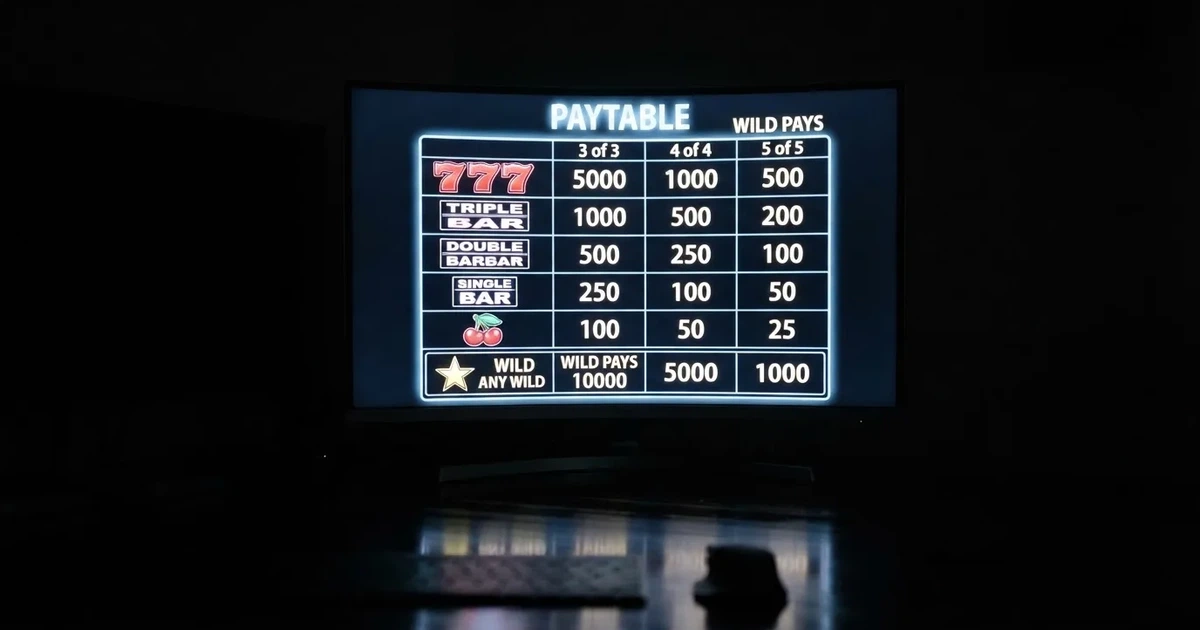
RTG does not let casino operators alter payout settings on its slot and video poker games, and caps its own liability through maximum-bet restrictions intended to keep any single progressive jackpot game’s payout at or below US$50,000. In practical terms, the headline figure on a jackpot is the largest amount a player can win from a single game on a single spin.
The combination — fixed settings across operators, capped jackpots, no operator-tunable RTP — is what makes an RTG paytable a published object rather than a per-casino secret. A punter comparing two RTG-branded casinos is comparing the same game, with the same theoretical return. What changes between operators is everything outside the paytable: bonus terms, withdrawal rules, the country the licence is held in, and whether the site is on the ACMA’s record.
The cap sits at the studio level, not at the operator level. The two caps stack, and the more restrictive of them is the one that binds. The player who wins an RTG jackpot above the studio’s cap does not collect the balance; the studio does not pay it.
The wider catalogue around RTG
Offshore casinos that carry RTG typically carry other studios as well, and the combination is a marker of what the operator can source rather than what the player is buying. Three studios illustrate the breadth of the offshore offering and the gap between it and what is licensed in Australia.
1spin4win was founded in 2021 by a team with fifteen years of iGaming experience and is headquartered at Scharlooweg 39, Willemstad, Curaçao, where it holds a Curaçao gaming licence. The studio’s portfolio spans more than 190 online slots, with HTML5 builds designed for low-bandwidth connections. The studio reports more than 1,000 partnerships with online casinos and aggregators, and reports that its total bet sum grew 46% in the first half of 2025 against the same period in 2024.
Aristocrat Leisure is the Australian gambling-machine manufacturer that the offshore market is not. Headquartered in the Sydney suburb of North Ryde, with marketing and development offices in South Africa, Russia and the United States, Aristocrat was founded in 1953 and listed on the Australian Securities Exchange in 1996 under the ticker ALL. The 2025 revenue figure was A$6.30 billion, with normalised net profit after tax and amortisation of A$1.55 billion and 7,400 employees. The studio is described as the largest gambling-machine manufacturer in Australia and the second-largest slot-machine manufacturer worldwide, behind International Game Technology. Aristocrat Interactive, the regulated online real-money arm, was formed in April 2024 by combining the Anaxi unit with the newly acquired NeoGames group — which is the only piece of this picture that lands inside Australian licensing rules.
Betsoft was founded in 2006 and publishes a catalogue of more than 200 RNG games across slots, table games, video poker and specialty titles. Two of its slots are documented with full published specifications. Good Girl Bad Girl 2 carries a published RTP of 96.22%, “Very High” volatility, a 15.59% hit rate, played on 5 reels and 20 paylines. The Slotfather, live since 13 December 2012, carries a published RTP of 95.69%, “Medium” volatility, an 8.17% hit rate, played on 5 reels and 30 paylines. Betsoft describes itself as operating in compliance with licensing authorities including Italy’s ADM, with RNG certification from Quinel and Gaming Labs International (GLI), and states it partners with more than 500 operators across regulated markets in Europe, Scandinavia, Latin America and Africa. The certified-jurisdictions list does not include Australia.
The shape of the catalogue that ends up at an Australian offshore casino is therefore not “Australian gambling”. It is a Curaçao-licensed aggregator’s catalogue that happens to include games from an Australian-listed manufacturer (Aristocrat Interactive), an Australian-founded slot studio that left the country (RTG), and a number of studios with no Australian connection at all. None of those games is licensed for online supply in Australia, and the Australian-listed studio is the only one whose commercial interest is in seeing Australian readers playing legitimately.
How any shortlist comparing RTG casinos gets built
What follows does not rank eleven brands the way a casino review page might. None of them is licensed to serve Australians, none is connected to an Australian regulator, and the comparison is built from a single record: the Australian Communications and Media Authority’s register of formal warnings under the Interactive Gambling Act 2001.
The criterion that does the work
The only criterion that separates one of these eleven from another is the date and corporate entity on the ACMA warning. Everything else a comparison might normally use — bonus size, game count, payout speed, wagering multiple — comes from affiliate marketing pages whose data the ACMA’s enforcement notice does not endorse, and which are not reproduced here.
That is the structural honesty of the comparison. The brands are listed in the order the ACMA’s record places them. Earlier warnings mean the brand has been on the regulator’s record longer. Two warnings to the same corporate entity mean the brand has been harder to dislodge. A brand that surfaces once in 2022 and once again under a different parent in 2026 is a brand whose conduct has continued across a reorganisation, and that is information a comparison of bonus terms will never surface.
What the criteria cannot measure
Several things a reader might want to know are simply not on the public record. The current bonus terms at each brand change frequently and the affiliate sites that publish them have an interest in presenting at their best. The current payment routes vary by jurisdiction and by player. The current game count depends on which aggregator the operator is using this quarter. Whether the site is currently accepting Australian players is a moving target as the ACMA’s enforcement continues.
A reader who wants to compare any of these should treat any source that publishes them as a marketing channel rather than a regulator. The numbers they publish are the numbers the operator wants published, and the rankings they produce are built from those numbers. The ACMA’s record is built from the regulator’s correspondence.
What a useful comparison looks like here
A useful comparison on this subject does three things. First, it sets out the legal frame and explains why none of the listed brands is a lawful option for an Australian player. Second, it lists the brands with the regulator’s action as the source of the list. Third, it tells the reader what to do if the search itself is signalling a problem — which is the responsibility a casino review page otherwise evades.
The order here follows that structure. The legal frame is laid out in the section on the Interactive Gambling Act. The brands are listed in the section on the ACMA’s record. The help lines are at the top because they are the first thing the reader needs if any of this is starting to feel familiar.
The cost of a comparison that ranks anyway
Many of the pages a reader will find by searching this term do rank these offshore brands against each other. The ranking is usually built from bonus size, withdrawal speed, game count and “user experience”, and the page that publishes it is typically funded by the brands being ranked.
The cost of that comparison to the reader is the information that does not appear on it. The legal status of the brand does not appear. The ACMA’s enforcement record does not appear. The BetStop exclusion that will not reach the brand does not appear. The absence is the cost: the reader sees a ranking, treats it as a guide, and acts on a comparison that excludes the only fact that determines the choice.
What an Australian reader is actually choosing between
Stripped of marketing, the choice an Australian reader faces is not between one offshore brand and another. It is between the offshore market — none of which is licensed in Australia — and the onshore market — licensed wagering on racing and sport, lotteries, keno, and licensed land-based pokies at clubs and pubs in the relevant state or territory.
The onshore market has its own costs: a fixed-odds bookmaker takes its margin; a poker machine at a club takes its share over the long run. But the costs are visible, the operator is licensed, and the BetStop exclusion works. The offshore market trades visibility for marketing and licensing for none, and the difference is what shows up on the regulator’s record.
The fundamentals of RTG in the Australian market
A reader approaching this subject for the first time usually lands on three pieces of information: that RTG is an online slot studio, that it is widely available at offshore casinos, and that those casinos take Australian players. The first two are correct. The third is the part that costs the reader.

What an “RTG casino” actually is
An “RTG casino” is, in the working sense of the term, an offshore casino whose games catalogue includes titles from Real Time Gaming. The casino is not operated by RTG, and the licence the casino displays is the casino’s licence — typically Curaçao, occasionally another small jurisdiction. RTG supplies the software and takes a cut of the house edge; the casino supplies the front-end, the bonus terms, the payment routes, and the player relationship.
This is why an “RTG casino” is not a single product. Two casinos carrying the same RTG slot can differ in everything that matters to a player: the bonus terms, the withdrawal rules, the regulator’s record against them, and whether the player can actually get their money out. The RTG part of the experience is the part that does not change. The casino part of the experience is the part that does.
RTG’s history in Australia
The clearest documented Australian-facing incident in RTG’s history is the ACMA’s blocking of Ozwin Casino, an Australian-facing operator running on RTG software, for violating the Interactive Gambling Act 2001. The site is no longer reachable from an Australian IP address, which is the practical outcome of an ACMA blocking request.
A blocking request does not require the operator to refund balances, does not notify the player that the block is coming, and does not interrupt whatever withdrawal the player had in flight. The cost is borne by the player who happened to be holding a balance when the block landed. The site has not been reachable from Australia for several years, and the public record does not show a refund process for players who were on the site at the time of blocking.
What the cap on liability means for a player
RTG caps its own liability through maximum-bet restrictions intended to keep any single progressive jackpot game’s payout at or below US$50,000. The cap sits at the studio level, not at the operator level — it is the largest amount the studio is willing to pay out on a single game on a single spin, regardless of which operator carries it.
For a player, this means two things. First, the headline figure on a progressive jackpot at an RTG casino is the most that game will pay out, full stop. Second, the cap is the studio’s cap, and it applies before any operator-side terms on maximum winnings or maximum withdrawals. The two caps stack, and the more restrictive of them is the one that binds.
The 2004 Caribbean 21 episode is the studio-level version of the same rule. A US$1.3 million payout did not match the studio’s risk model, and the studio’s response was to cap the game and then remove it. The cost of a game that pays out is the cost of the game being on the catalogue. For a player, the rule is straightforward: do not read a payout you cannot win as a payout you might win.
The current Australian offering
What the current Australian reader can actually access is the offshore RTG market, accessed either directly or through a chain of redirections the ACMA has not yet blocked. The offering is the same as it has been since the late 2000s: a downloadable or instant-play casino client, a slots-heavy catalogue, a Curaçao-licensed operator, and a regulator on the other side of the world who has no Australian complaints body to answer to.
This is what “the offshore RTG market” means in practice. It is not a category of legitimate Australian gambling. It is the residue of an enforcement gap that the ACMA has been closing since 2017.
What a typical RTG casino looks like to the player
The player-facing experience at an offshore RTG casino is built around three elements: the games catalogue, the bonus structure, and the banking page. The games catalogue is the same RTG slots and video poker the studio publishes across all its operators, with whatever other studios the operator has licensed on top. The bonus structure is the part the operator builds — the welcome package, the wagering multiple, the game-weighting rules, the maximum cashout, the expiry. The banking page is where the cost of the offshore route becomes most visible: deposit and withdrawal methods that may not include anything an Australian bank will process cleanly, exchange-rate exposure if the account is held in a currency other than A$, and no Australian complaints body if the operator refuses a withdrawal.
This is the structure the ACMA’s record is built on. The regulator’s formal warnings are sent to operators, not to RTG. The operator is the entity that decides whether to offer to Australians, and the operator is the entity the ACMA writes to.
What an Australian reader sees at the front of the search
The first results an Australian reader sees for this search are typically the affiliate marketing pages — the ones that list “best RTG casinos” and rank them by bonus size. Several of the brands covered in this page appear in those lists. The list is not the regulator’s list; the bonus numbers are not the regulator’s data; and the comparison the affiliate page offers is built from data the affiliate page is paid to publish.
A reader who wants to know which of these brands the ACMA has acted against has to read past the affiliate pages to the ACMA’s own enforcement register. That is the document the eleven brands are drawn from, and the document treated here as the authoritative source.
Australia’s interactive gambling prohibition and how it is enforced
What the IGA prohibits
The Interactive Gambling Act 2001 (IGA), strengthened by the Interactive Gambling Amendment Act 2017, makes it an offence to provide online casino games, online pokies or in-play betting to a person physically in Australia. No state or territory licenses these products. What is licensable is wagering on races and sport placed before the event, lotteries and keno — in practice licensed by the Northern Territory Racing and Wagering Commission (NTRWC), which regulates 52 of Australia’s online bookmakers, including Sportsbet, Bet365 and Ladbrokes. The commission has no full-time staff and meets once a month in Darwin. Minimum age across all licensable wagering is 18.

The offshore RTG market is operating against this prohibition, full stop. A Curaçao licence displayed on an offshore casino’s footer is a Curaçao licence; it is not an Australian licence, and it does not authorise the operator to take an Australian deposit. The brand, the marketing, and the bonus terms are aimed at the Australian reader because the prohibition is enforced on the operator, not the player, and because the Australian reader is profitable.
What the ACMA does about it
The Australian Communications and Media Authority (ACMA) is the enforcement body. It investigates complaints, issues formal warnings to operators found in breach, and directs Australian internet service providers to block offending sites.
By the ACMA’s own count, a total of 1,751 illegal gambling and affiliate marketing websites had been blocked since the first blocking request in November 2019, with more than 230 unlicensed gambling services having left the Australian market since enforcement was strengthened in 2017. The most recent round, reported on 26 June 2026, added 12 more sites to the block list: 7Signs, ChromaBet, Donbet, Duospin, Freshbet, Slots Gem, Jacks Club, Lucky Start, Pointsbetz, Spinrise, Vinyl Casino and Wildsino.
The cost of an ACMA blocking request to a player is direct. A balance still on the site when the ISP block lands is a balance the operator may or may not return. The player’s recourse is whatever the operator chooses to offer, plus whatever can be recovered through the Curaçao regulator — a route that runs in months, not days, and that costs more in time than the balance is usually worth. This is the operative cost of choosing the offshore market: the operator can be shut down with your money still on it, and there is no Australian body to complain to.
The payment rules
Since 11 June 2024, credit cards, credit-related products and digital currency have been banned as payment for licensed online wagering, with penalties of up to A$247,500 for operators that accept them. Legal deposit routes for licensed wagering are debit card, bank transfer, PayID/Osko and BPAY. A site that asks an Australian player for a credit card or a crypto deposit is operating outside the Australian rules from the moment the deposit is taken.
The payment ban is enforceable on Australian-licensed operators. It is not enforceable on offshore operators, which is part of the structural reason offshore brands continue to take Australian deposits. The reader’s protection here is the same as it is on the bonus terms and the game catalogue: licensed onshore operators are bound, offshore operators are not.
The 2026 reform bill
The Interactive Gambling Amendment (Gambling Reform) Bill 2026 passed Parliament on 19 August 2026. Its advertising and inducement measures commence on 1 January 2027 — law with a start date, not yet in force on a 2026 page. The bill’s effect when commenced is to tighten the inducement rules around licensed wagering marketing; it does not legalise the offshore market. None of the eleven brands covered in this page becomes lawful on 1 January 2027.
Tax: what recreational players should know
Gambling winnings of a recreational Australian player are not assessable income under section 6-5 of the Income Tax Assessment Act 1997, and losses are not deductible. The exception is a player who carries on a business of gambling, which is a separate ATO test. For a punter whose gambling is recreational, the practical reading is that a jackpot at an offshore casino is not taxed by the ATO, but the offshore operator’s refusal to pay out is also not arbitrated by the ATO. The tax treatment and the consumer protection are not the same thing.
The cost of the offshore route, summed up
Three costs recur across the offshore market and none of them appears on the affiliate pages that rank these brands. The first is the blocked-balance risk: an ACMA blocking request can land with funds still on the site, and there is no Australian complaints body to take the case. The second is the exclusion gap: BetStop does not bind offshore operators, so a self-exclusion does not exclude. The third is the recourse gap: there is no Australian ombudsman, no enforceable right of return, and no local regulator with jurisdiction over the operator.
These three costs are the reason the comparison the ACMA’s record enables is a different comparison from the one an affiliate page runs. The affiliate page compares bonuses. The ACMA record compares a brand against the prohibition. The first is a marketing question. The second is the only one that determines the choice.
Eleven brands, eleven formal warnings
Eleven offshore brands are the subject of formal ACMA warnings under the Interactive Gambling Act 2001 in the four years to mid-2026. The table below lists them with the date and operator corporation named on the warning, and with what the developer-side listings report about whether they stock the relevant game provider. No bonus terms, payment routes, game counts or wagering multiples are included: the only public sources for those are the brands’ own affiliate marketing pages, and they are not endorsed by the ACMA’s enforcement notice.
The full ACMA warning list
| Brand | ACMA action and date | Operator named by the ACMA | Subject support |
|---|---|---|---|
| RocketPlay | March 2026; May 2022 | Pulsup Ltd; Dama N.V. | None |
| Level Up Casino | May 2022 | Dama N.V. | Wazdan |
| Woo Casino | March 2025 | Dama N.V. | None |
| Spirit Casino | May 2025 | Dama N.V. | None |
| National Casino | July 2025 | Consolutetish S.R.L. | Betsoft, Pragmatic Play |
| Bizzo Casino | July 2025; 2022 | Consolutetish S.R.L.; TechSolutions | None |
| Ignition Casino | July 2025 | Bamboo Media | None |
| Instant Casino | February 2025 | EOD Code SRL | None |
| Jackbit | April 2026 | Ryker B.V. | None |
| Casino Intense | April 2025 | Sterplay Holding Ltd | 1spin4win |
| Sky Crown | September 2022 | Hollycorn N.V. | None |
RocketPlay: two warnings, two corporate wrappers
RocketPlay was warned under Pulsup Ltd in March 2026 for the domain RocketPlay, and warned again under Dama N.V. in May 2022 for an earlier phase of the same brand. The corporate wrapper changed between the two warnings; the conduct that triggered them did not. The ACMA’s record places this brand in two of its published enforcement rounds, separated by four years and a change of operating company.
The verdict: a brand on the regulator’s record twice, under different names, is the pattern the ACMA’s enforcement is designed to expose. The operator rotates the wrapper, and the regulator’s file follows. The Australian-facing domain RocketPlay is named on the most recent warning, which makes the current incarnation of the brand the one to watch.
Level Up Casino: the oldest action on the list
Level Up Casino was warned under Dama N.V. in May 2022, and is the earliest of the eleven entries on the ACMA’s recent record. The same Dama entity was warned again in March 2025 for Woo Casino and in May 2025 for Spirit Casino. The Wazdan partner listings place Level Up on its operator list, which is what those listings report; it is not a confirmation that the operator lawfully offers Wazdan’s games to Australians.
The verdict: this brand has been on the regulator’s record longer than any other on the list — the file is older, and the conduct it documents is older. The Dama N.V. name still appears on two of the eleven, and Level Up is the one that started the file.
Woo Casino: the same Dama letter, sent a second time
Woo Casino was warned under Dama N.V. in March 2025, three years after the same entity was warned for Level Up. Two warnings to the same corporate entity across three years for two different brands is the clearest available evidence that the operator has continued the conduct regardless of the regulator’s correspondence.
The verdict: the same corporate letter, sent a second time to the same parent for a different brand, makes the regulator’s case stronger the more often it is repeated. A first warning can be read as a misunderstanding. A second is not.
Spirit Casino: same month, same parent
Spirit Casino was warned under Dama N.V. in May 2025, two months after Woo. The same parent, the same year, two separate brand warnings — the corporate entity is being told the same thing about two different names. The pattern is the pattern the ACMA’s enforcement notices have been designed for since 2017: rotate the brand, keep the parent.
The verdict: two warnings to the same corporate entity inside a single year, with the corporate name unchanged, is a sign that the entity is absorbing the regulator’s correspondence as a cost of doing business.
National Casino: developer listings, no Australian shield
National Casino was warned under Consolutetish S.R.L. in July 2025. Betsoft and Pragmatic Play’s operator listings reference it as a partner, and that is what those listings report — a partnership between a developer and an operator. It is not a confirmation that the operator lawfully offers the developer’s games to Australians; the developer’s listings do not extend that far.
The verdict: a brand whose existence is documented in third-party developer listings, and whose unlawful offering to Australians is documented in the ACMA record, sits on both lists simultaneously. Only one of those lists is the regulator’s.
Bizzo Casino: warned twice under different corporate names
Bizzo Casino was warned under Consolutetish S.R.L. in July 2025, having already been warned under TechSolutions in 2022. The brand has crossed a corporate boundary between the two warnings; the conduct has not.
The verdict: a brand with two ACMA warnings under two different legal names is a brand the regulator has had to write to twice because once was not enough. The corporate reorganisation did not interrupt the regulator’s file; it added a chapter to it.
Ignition Casino: a US-facing brand, an Australian-facing problem
Ignition Casino was warned under Bamboo Media in July 2025. The brand has historically been US-facing, which is the segment of the offshore market the ACMA has most recently turned its attention to as Australian-facing brands have been progressively blocked.
The verdict: a brand whose primary market is not Australia has nonetheless earned a place on the Australian regulator’s record, which is the kind of cross-jurisdictional reach that makes the offshore market hard to police from a single jurisdiction. The Australian reader who sees Ignition’s branding may assume it is a US-poker-facing site that has nothing to do with them; the ACMA’s record says otherwise.
Instant Casino: EOD Code SRL’s only entry
Instant Casino was warned under EOD Code SRL in February 2025. EOD Code SRL does not appear elsewhere on the ACMA’s recent enforcement record on this list. The brand is the only one on the page with an EOD Code SRL-named warning, which is a narrower public footprint than the other operators here carry.
The verdict: the sole formal warning to EOD Code SRL on the ACMA’s list does not change the legal status of the brand — an unlicensed operator with one warning is in the same position as an unlicensed operator with several. It does mean the ACMA’s case against the brand is younger than the cases against the Dama cluster.
Jackbit: the freshest action
Jackbit was warned under Ryker B.V. in April 2026, alongside CasinOK, in the most recent ACMA enforcement round on this list. The action is the freshest of the eleven, and it is paired with a second brand on the same warning.
The verdict: the regulator’s enforcement is not slowing. The April 2026 round is two months old as of the page’s reference date, and the operator named on it is one the ACMA has now written to directly. The most recent action is also the most recent reminder that the cost of the offshore route is the same now as it was in 2022.
Casino Intense: listings, no Australian licence
Casino Intense was warned under Sterplay Holding Ltd in April 2025. 1spin4win’s partner listings reference it, and that is what those listings report — a partnership between a slot studio and an operator, not an authorisation to take Australian players.
The verdict: a brand listed in a developer’s partner registry is still operating outside the Australian licensing frame, and the developer’s listing is not a substitute for the Australian licence the offering needs. The reader who treats the developer’s listing as a quality signal is reading a different document than the ACMA’s record.
Sky Crown: Hollycorn surfaces twice
Sky Crown was warned under Hollycorn N.V. (formal warning published September 2022). Hollycorn N.V. also appears in a separate ACMA formal warning covering Blue Leo. The corporate identity is the one the regulator has decided to keep writing to.
The verdict: a corporate identity the regulator has had cause to write to more than once is a corporate identity the regulator has decided to keep writing to, and the player-facing brand is the part that rotates. The brand on the page is Sky Crown; the file on the regulator’s record is Hollycorn N.V.
How fast is the cleanup?
Between the ACMA’s first blocking request in November 2019 and the June 2026 round that brought the cumulative total to 1,751 blocked sites, the elapsed window is 79 months. Spread across that window, the average comes out at somewhere in the band of 21 to 23 sites blocked per month — or 250 to 270 per year, depending on whether the partial month at either end is counted inclusively. That is the rate of new additions to the block list, on the assumption the cumulative total is accurate and assuming the ACMA’s published total includes only sites it has publicly named.
The 12 sites blocked in the single 26 June 2026 round sit modestly above the monthly average, and individual rounds can clear more or fewer depending on what the ACMA has under investigation at the time. The longer-run trend is the more informative figure. The ACMA started with an empty list in 2017 when enforcement was strengthened; more than 230 unlicensed gambling services had already left the Australian market by the time the first blocking request landed in November 2019. Since then, the list has grown at roughly the pace above, and the share of gambling going through legal channels has fallen from 74% in 2021 to 64%, against losses to illegal sites estimated at A$3.9 billion a year by H2 Gambling Capital.
The cost the reader pays if the trend continues is the one the rest of this page is built around: more brands added to the block list, more balances left on the wrong side of an ISP-level block, more Australians who signed up to BetStop but found out the register does not reach the brand they were actually playing at. The rate of blocking is a measure of how fast the regulator is closing the back door. The cost of playing on the wrong side of the door is the figure that does not appear in the regulator’s data.
The calculation is a statistical average, not a guarantee. Individual rounds can clear more or fewer than the monthly average, and the ACMA does not publish every site it investigates. The figure to take from the calculation is the order of magnitude: the block list is growing at a pace that, if sustained, doubles the cumulative total in roughly three years. The list is not going to be empty by the end of the decade at this rate. It will be longer, and the brands on it will be a different mix than the brands on it now.
Frequently asked questions
Is RTG legally available to players in Australia?
No. The Interactive Gambling Act 2001 prohibits the supply of online casino games to a person physically in Australia. RTG titles are distributed exclusively through offshore operators, none of which holds an Australian wagering licence, and the ACMA has warned several RTG-affiliated brands.
What kinds of games does RTG make?
RTG’s catalogue is built around online slots and video poker, with a smaller table-games line. Most titles are delivered as instant-play HTML5 builds that run in a browser, and the studio does not publish a live-dealer product. None of the titles are present in Australian-licensed land-based venues.
Are RTG games offered at land-based venues in Australia?
No. RTG is an online-only studio; Australian land-based pokies are made by manufacturers such as Aristocrat Leisure and International Game Technology. Aristocrat is the largest domestic manufacturer, with A$6.30 billion in 2025 revenue and an ASX listing under the ticker ALL.
How can Australians check whether an RTG title is fair?
An Australian player cannot check the fairness of an RTG title through any Australian regulator, because the offering is not licensed in Australia. Outside Australia, RTG games are typically certified by testing houses such as Gaming Labs International, but the audit certificate sits with the offshore licensing authority, not the Australian reader.
Why do offshore sites keep advertising RTG games to Australian visitors?
Because enforcement happens after the offer is made. The ACMA investigates, warns and asks ISPs to block; the same operator typically returns with a new domain under a different corporate wrapper. The economics favour the operator: H2 Gambling Capital estimated A$3.9 billion a year in losses to illegal sites.