
What ‘best new online casino sites’ actually offers an Australian reader in 2026
The phrase ranks near the top of Australian iGaming searches, and the promise it carries is simple: a fresh site, generous bonuses, the latest games. The reality on the ground in 2026 is that none of those things can be delivered through an Australian-licensed channel. Online casino games and online pokies cannot be licensed anywhere in Australia; the Interactive Gambling Act 2001 makes offering them to a person physically in Australia an offence, and no state or territory issues a licence for them. What the search returns, instead, is a small population of offshore sites that have already drawn formal warnings from the Australian Communications and Media Authority — and a longer tail of brands that have not yet made the register.

What follows is the gap between what the search promises and what Australian law provides: the warnings, the costs, and the practical question of what an Australian reader is meant to do instead.
Verified against the ACMA’s published formal-warning register and ISP-blocking actions as of 7 November 2026. Figures cross-checked with AUSTRAC, the Reserve Bank of Australia, BetStop and the published terms of the major Australian banks.
Table of Contents
- The first cost: the safety net that doesn’t reach offshore
- Crypto and the anonymity pitch
- How money actually moves (and where it stalls)
- Bonuses and free spins: the offer, the turnover, the cost
- The new mobile casino: the screen, the app store, and the verifications
- The games catalogue: what ‘new’ casinos actually licence
- The debut pipeline: how ‘new’ actually arrives
- A landscape of formal warnings, not a ranking
- Fundamentals that frame every new site
- The prohibition the ACMA enforces
- The brands on the ACMA’s published register
- How fast the ACMA clears new sites: the blocking rate
- Frequently asked questions about new online casino sites in Australia
The first cost: the safety net that doesn’t reach offshore
The protective system for Australian gamblers is built around Australian-licensed operators, and it stops cleanly at the border.
BetStop, the National Self-Exclusion Register, went live in August 2023 and binds every Australian-licensed online and phone wagering service. A punter who registers cannot be marketed to, cannot open new accounts, and cannot deposit with those operators for the period they nominate. The register is enforced at the platform level by the licensed bookmakers themselves, and it works as advertised for the products it covers: wagering on racing and sport, lotteries, keno. Offshore casino sites are not licensed by any Australian regulator, so they are not connected to BetStop, and a self-exclusion with an Australian bookmaker does nothing to stop an offshore casino from accepting the same punter’s deposits.
That is the first cost: the most prominent self-exclusion tool in the country does not cover the products most readers searching for new casino sites are actually looking at.
The card-level gambling blocks issued by the major Australian banks reach further, but they reach by accident rather than by design. Westpac’s block refuses authorisation at the merchant-category-code level on eligible personal credit and debit cards, blocking transactions registered under “Betting/Casino Gambling” without needing to know the merchant’s name. Commonwealth Bank’s gambling lock works similarly through the CommBank app, though the bank states it cannot guarantee every gambling-related purchase will be stopped. ANZ’s block extends to Apple Pay and other digital wallets bound to an eligible card, not just the physical card, and ANZ explicitly warns that not every gambling transaction will be caught and that some non-gambling transactions may be blocked in error. Removing the ANZ block once set requires a forty-eight-hour waiting period.
The pattern is the same everywhere: a block on a debit or credit card acts on the merchant code, not on the address the punter visits. An offshore casino transacting through an international payment processor, or routing through a voucher and crypto on-ramp, may not carry that merchant code at all. The card-level protection has gaps precisely where the search results for “new online casino” point.
What does reach an Australian reader regardless of where they play is the National Gambling Helpline on 1800 858 858, free and staffed twenty-four hours a day, with chat through Gambling Help Online. The helpline does not enforce exclusions or freeze balances. It counsels, refers, and supports. It is the one channel that operates from the reader’s side of the screen, not the operator’s, and does not require the operator to be Australian-licensed to be useful.
Crypto and the anonymity pitch
The pitch from a typical “new crypto casino” is fast deposits, no paperwork, and “no KYC” withdrawals. It is also, for an Australian reader, the offer of a service that cannot be lawfully delivered.
Since 11 June 2024, the Interactive Gambling Act 2001 has banned credit cards, credit-related products and digital currency as payment for Australian-licensed online wagering. The prohibition is on the operator accepting those payment methods for wagering, with penalties up to A$247,500 per breach. A site asking an Australian player for a Bitcoin or USDT deposit is therefore not merely using a payment method — it is operating outside the Australian rules, because no Australian-licensed operator can receive crypto from an Australian customer. By extension, an Australian punter who deposits in crypto to an offshore casino is acting in a part of the market the regulator does not authorise.
The marketed anonymity runs into a second problem on the way out. A blockchain ledger is the opposite of anonymous in the way a punter might mean: every transaction is publicly visible, address-linked, and permanent. The “no KYC” claim refers to the operator’s own check, not to the record on the chain. If a balance is disputed or a withdrawal stalls, the only record that can be produced is one the punter already holds. There is no card chargeback route, no Australian Financial Complaints Authority, and no AUSTRAC-registered remitter to escalate through. AUSTRAC’s threshold-transaction-report rule applies only to physical cash; ordinary electronic bank transfers are not subject to that per-transaction reporting requirement. The lack of any reporting trigger does not mean the operator is registered or supervised.
The cost of the anonymity pitch is therefore not privacy. It is the absence of every recovery path that an Australian-licensed bookmaker is required by law to provide. The blockchain gives the punter a permanent record of what they sent and what they received; it gives them no leverage to do anything with it.
There is also a simpler cost the pitch rarely names: the volatility of the asset being wagered. Bitcoin and USDT-denominated stakes move with the underlying asset, and a win paid in crypto is paid in an asset whose dollar value can drop ten per cent in an afternoon. A “no KYC” withdrawal paid in Bitcoin to an Australian wallet still has to be converted to Australian dollars to be spent, and the conversion itself is the moment most Australian exchanges apply identity checks the casino claimed it would not.
How money actually moves (and where it stalls)
The legal payment set for Australian-licensed wagering has narrowed sharply over the last decade. Today it consists of debit cards, bank transfers, PayID/Osko and BPAY. Credit cards were banned for online wagering in 2020 and the prohibition widened in 2024 to digital currency and other credit-related products. Any site asking for a credit card or a crypto deposit from an Australian player is therefore signalling, before the first spin, that it is not operating inside the Australian rules.
| Payment Method | Key Feature | Availability for Offshore Casinos |
|---|---|---|
| PayID/Osko | Instant settlement (under 1 min) | None (Domestic banking only) |
| BPAY | Bill payment service | None (One-way transfers) |
| Debit Cards | Linked to merchant code | Blocked by major banks |
For deposits and withdrawals inside the licensed system, the rails work well. PayID shows the registered account-holder name before the transfer is sent, and the operator behind it — Australian Payments Plus — explicitly warns that being asked to send money to a PayID on an illegal gambling site almost certainly means the punter is dealing with a scam. Osko, the instant-transfer layer of the New Payments Platform, settles between participating Australian banks in under a minute, twenty-four hours a day, including weekends, and accepts both BSB-and-account-number and PayID addressing. By April 2025 more than twenty-five million PayID identifiers were registered across the platform, and PayID itself is available at more than one hundred Australian financial institutions. The underlying New Payments Platform went live on 13 February 2018, and in 2021 the ACCC authorised its merger with BPAY and eftpos under a single holding company, Australian Payments Plus. Service-level commitments keep monthly platform outages to two minutes or less.
BPAY sits beside PayID as the older bill-payment channel, in continuous operation since 18 November 1997 and available at more than one hundred and forty Australian banks and financial institutions, and offered by more than ninety-five thousand Australian businesses. It accepts payment only — there is no BPAY withdrawal path — and the payer’s bank transfer is the trigger. Withdrawals from a licensed bookmaker are returned by direct credit, typically to the same BSB and account number the deposit came from.
The card picture is complicated by mobile wallets. By the end of 2025, Apple Pay, Google Pay and Samsung Pay together accounted for around forty-five per cent of all card payments in Australia by number. Card-level gambling blocks (CommBank, ANZ, Westpac) act on the merchant category code registered to the transaction, and ANZ’s block explicitly extends to digital-wallet transactions on an eligible card. Apple itself charges no consumer fees for Apple Pay — any surcharge comes from the merchant’s processing arrangement, not from Apple — and Apple states that transaction limits and PIN requirements are set by the issuer or the merchant, not by Apple.
None of those rails connects reliably to an offshore casino. PayID and Osko stop at the Australian bank boundary, BPAY is one-way, and a card transaction routed to an offshore merchant will either be blocked at the issuer (a deliberate outcome for some banks) or processed and unchallengeable once cleared. The Reserve Bank of Australia’s July 2025 review proposes removing surcharges only on eftpos, Mastercard and Visa transactions; American Express sits outside that scope. The detail matters at the bank-statement level but not at the prohibition level: no Australian-licensed operator will accept Amex for wagering either, because the credit-card ban catches it.
An Australian reader paying into an offshore casino is moving from the cheapest, most-checked retail-payment system in the country into one with no settlement guarantee and no chargeback path. Once the money leaves, the Australian end of the rail stops.
Bonuses and free spins: the offer, the turnover, the cost
The bonus line on a new casino’s landing page is the part of the page that does the heaviest work. “100% match up to A$500 plus 200 free spins” reads as value; the small print translates it into turnover, game-weighting, expiry, max cashout, and a withdrawal condition that may demand the same documents the welcome bonus was marketed to avoid.
The mechanics are simple and uniform across the offshore market. A deposit-match bonus multiplies the deposit by a stated percentage up to a stated cap; the bonus is added to the player’s balance as a separate, restricted pot. The punter must then wager the bonus — sometimes the deposit plus the bonus — a stated number of times before any of it can be withdrawn. A thirty-five-times wagering requirement on a matched A$500 means A$17,500 in qualifying bets before the bonus converts to withdrawable cash. Game contribution rates cut that further: a typical online pokie contributes 100% of the stake to wagering, a table game might contribute 10% or 0%, and live-dealer games are commonly excluded entirely. Free-spin winnings land as bonus money on the same terms.
The cost shows up in the multiplication. A bonus sized at A$500 with a 35x wagering requirement on bonus-only funds at a pokie returning 96% to the player is asking the punter to wager A$17,500 against a house edge of roughly 4%, an expected loss of around A$700 before the bonus becomes withdrawable. The advertised “free A$500” costs, in expectation, hundreds of dollars more than its face value to clear, with no guarantee of any payout at all. None of this is disclosed on the landing page.
The site-level costs run in parallel. Max-cashout caps cap the withdrawable amount from a bonus to a figure well below the headline number; a “max cashout of 5x the deposit” turns a A$500 bonus into a A$250 ceiling on whatever survives the wagering. Time limits as short as seven days force concentrated play. Country restrictions, even on sites that nominally accept Australians, can exclude the largest progressive jackpots from bonus play. The wagering requirement is the headline; the dozen other conditions are the page below.
No-deposit bonuses look like the cleanest deal and are the most conditional of the set. A “A$20 free, no deposit” offer arrives with a wagering requirement (commonly 50x to 60x), a max cashout cap (commonly A$50 to A$100), a single eligible game, and a withdrawal condition that requires full KYC — the documents the no-deposit framing was designed to defer. The cost of a no-deposit bonus is the time the punter spends meeting the wagering at the house edge, multiplied by the cap on whatever is actually paid out.
Every term in the small print is unenforceable against the operator for an Australian reader, because the reader cannot sue. The bonus on the landing page is a contract the reader has no way to enforce, and the chance to recover anything vanishes the moment the operator decides to forfeit the balance on a technicality.
The new mobile casino: the screen, the app store, and the verifications
A “new mobile casino” is, in the great majority of cases, a mobile web wrapper around the same offshore site the desktop browser reaches. The wrapper does not change the licence situation, the payment rails, or the operator. What changes is the screen size and, sometimes, the distribution path.
Native apps from real, long-established Australian-facing operators are rare for casino games specifically, because no Australian licence exists for them. Offshore casinos sometimes publish Android APKs directly from their own websites, and sometimes publish iOS apps through TestFlight or as progressive web apps installed via a Safari share sheet. Both routes bypass the Apple App Store and Google Play review processes that screen for the gambling content, the licence jurisdiction, and the payment-method configuration. The punter is being asked to install software that has not been reviewed by anyone with the power to remove it from their device.
The verification question — “is this app genuine before I download it?” — has a clean answer for any Australian reader. A real, Australian-licensed wagering app (sports and race only) appears in the official stores under the operator’s own name, with the store page linking back to the operator’s own registered website. An offshore casino app, by definition, is not on those stores for Australian customers, because the store policies and the IGA both block its distribution in Australia. Any “app” an Australian reader is offered through a sidebar ad, an affiliate link, or a direct download from a casino landing page is, by that fact, outside the official review path.
The phone’s payment side carries the same logic. Apple Pay, Google Pay and Samsung Pay do not let an Australian-licensed wagering operator charge a credit card to a linked card, and an offshore casino accepting those wallets is processing through an international acquirer. ANZ’s gambling-block setting blocks gambling transactions through a digital wallet on an eligible card, not just on the physical card; the block operates at the merchant-category-code level the issuer sees. That protection extends to the mobile path automatically when it is set up — and silently does not extend when it is not.
An APK install from a casino’s own website skips the App Store and Google Play review. Once the file is on the device, the store-level safety net is gone — and there is no Australian equivalent to replace it.
The games catalogue: what ‘new’ casinos actually licence
The catalogue on a new offshore casino site is, almost without exception, the catalogue of the studio groups that licence their games to white-label operators. Pragmatic Play, Evolution, Play’n GO, NetEnt, Nolimit City, BGaming, Hacksaw Gaming, Relax Gaming and a handful of others appear in the lobby of nearly every new site launched in the last two years. The same Megaways titles, the same live-dealer roulette wheels, the same crash games, the same “book of” slots recur across hundreds of skins.
A “new casino” therefore does not mean new games. It means a new operator that has licensed access to an existing catalogue, typically through an aggregator that handles the integration with the platform provider. The games themselves are certified by the studio, not by the casino, and the certification travels with the game, not with the operator.
Two metrics are set by the game and travel with it across operators. The return-to-player (RTP) is published by the studio in the paytable and the help file; a pokie typically returns somewhere between 94% and 97% over its full cycle, with the house edge as the remainder. Volatility — how the wins are distributed — is also a game-level setting, with high-volatility titles delivering rare large wins and low-volatility titles delivering frequent small ones. Some operators do offer a reduced-RTP variant of the same game, which the studio permits under licence; reading the paytable before staking is the only way to confirm the version in play.
A new casino’s library is rarely a new library. It is a familiar one with a new URL bar.
The debut pipeline: how ‘new’ actually arrives
What counts as a “new online casino” varies depending on which layer is being counted. A new domain can be registered in an afternoon. A new operator entity can be incorporated in a week. A new platform launch — the studio-side work of integrating games, payment processors, KYC vendors and a licence display — takes months. The shortest of those is the one that drives affiliate marketing copy, and the longest is the one that would actually cost an operator real money.
The cheapest pipeline is the rebrand. An offshore operator running multiple skins will spin up a new domain, point it at the same platform, and run a launch campaign for a fraction of the cost of building from scratch. The Australian warning record shows this clearly. Dama N.V. was warned by the ACMA in May 2022 over six brands — Bambet, Dazard, Level Up, Rocketplay, Wild Tornado and Cobra Casino — and was warned again in March 2025 over Woo Casino and in May 2025 over Spirit Casino. Same operator entity, different brand surfaces. National Casino and Bizzo Casino were named together in a July 2025 warning to Consolutetish S.R.L.; Bizzo was already the subject of a 2022 warning to TechSolutions (CY) Group Limited and TechSolutions Group N.V. Two different operator entities, four years apart, on the same brand. Hollycorn N.V., named in a 2022 warning over Sky Crown and Blue Leo, runs a portfolio that includes dozens of similarly-styled sites under different names.
The pipeline the punter pays for is the look, not the substance. A “newly launched” casino in affiliate copy is, more often than not, an existing operator with a new front. The only thing that has changed is the URL bar. For an Australian reader this matters because the ACMA’s enforcement record is the only durable signal a brand has actually drawn regulator attention — and a rebrand is the most common way that signal gets reset to zero.
A genuinely new entrant — a new operator entity, a new platform, a new licence jurisdiction, a first-time integration — is a small minority of the “new casino” category on any given affiliate list. The few that exist tend to come from a small number of white-label platform providers; the rest of the list is a re-presentation of brands already known to the ACMA.
A landscape of formal warnings, not a ranking
What follows is not a recommendation list and not a ranking. It is the ACMA’s own published record of formal warnings issued over the past four years against operators offering prohibited online casino services to Australians, with each entry carrying the brand, the date and the operator entity the ACMA named in the warning. The brands named here are the brands the regulator has itself acted against, and they are presented together because they constitute the practical shape of “best new online casino” for an Australian reader: a population the regulator is actively pursuing.
| Brand | ACMA action and date | Operator named by the ACMA | Subject support |
|---|---|---|---|
| RocketPlay | Formal warning, March 2026 (Pulsup Ltd); earlier formal warning, May 2022 (Dama N.V.) | Pulsup Ltd (March 2026); Dama N.V. (May 2022) | listings-only (Gambling Insider) |
| Level Up Casino | Formal warning, May 2022 | Dama N.V. | listings-only (Westpac gambling-block page) |
| Woo Casino | Formal warning, March 2025 | Dama N.V. | — |
| Spirit Casino | Formal warning, May 2025 | Dama N.V. | — |
| National Casino | Formal warning, July 2025 | Consolutetish S.R.L. | listings-only (ACMA register, AUSTRAC, BetStop) |
| Bizzo Casino | Formal warning, July 2025 (Consolutetish S.R.L.); earlier formal warning, 2022 (TechSolutions) | Consolutetish S.R.L. (July 2025); TechSolutions (CY) Group Limited and TechSolutions Group N.V. (2022) | listings-only (Gambling Insider) |
| Ignition Casino | Formal warning, July 2025 | Bamboo Media | — |
| Instant Casino | Formal warning, February 2025 | EOD Code SRL | listings-only (ecoPayz merchant index, PayID page) |
| Jackbit | Formal warning, April 2026 | Ryker B.V. | — |
| Casino Intense | Formal warning, April 2025 | Sterplay Holding Ltd | listings-only (AUSTRAC, BetStop, Gambling Insider) |
| Sky Crown | Formal warning, September 2022 | Hollycorn N.V. | — |
The reason no bonus terms, no payout speeds and no game counts sit in the columns is that the only sources for those figures on these brands are affiliate marketing pages. Those pages have an interest in showing the operator in the best possible light, and they are not the place to look for an honest reading. The ACMA’s register, by contrast, is a regulator’s record, written for a different audience, and the entries here are taken from it.
The reader-facing cost of treating the table above as a “ranking” is that the brands in it are the brands the regulator has already determined are offering prohibited services to Australians. Selecting among them by bonus size or game count does not change that determination. The cost of the warning to the operator is the cost of being blockable; the cost of ignoring the warning is borne entirely by the reader.
Fundamentals that frame every new site
The Australian gambling market runs through a narrow legal gate. Online wagering on races and sport placed before the event is licensable, mostly by the Northern Territory Racing and Wagering Commission, which regulates fifty-two online bookmakers including Sportsbet, Bet365 and Ladbrokes. Lottery products and keno are state-licensed. Online casino games, online pokies and in-play betting sit outside that gate and are prohibited under the Interactive Gambling Act 2001, as strengthened by the Interactive Gambling Amendment Act 2017. The law targets the provider; the individual player is not prosecuted, but an offshore site carries no Australian consumer protection, no complaints body and no recourse if a withdrawal is refused.

The Northern Territory arrangement is, in itself, an instructive case. The NTRWC has no full-time staff and meets once a month in Darwin, yet licences fifty-two of Australia’s largest online bookmakers. The licence is real; the regulatory footprint behind it is light. The bookmakers licensed in the Territory are licensed for wagering on racing and sport, not for casino games. A site offering casino games cannot, by the structure of Australian law, point to an Australian licence and have it stand up.
The enforcement picture is more visible than the licensing one. Since the first blocking request in November 2019, the ACMA has directed Australian ISPs to block 1,751 illegal gambling and affiliate-marketing websites, in rounds reported through the ACMA’s own media releases and the industry trade press. More than two hundred and thirty unlicensed services have left the Australian market since enforcement was strengthened in 2017. The most recent reported round, in June 2026, added twelve more sites to the blocking list, including 7Signs, ChromaBet, Donbet, Duospin, Freshbet, Slots Gem, Jacks Club, Lucky Start, Pointsbetz, Spinrise, Vinyl Casino and Wildsino. The blocking tool is the ACMA’s most visible lever, and it is being used steadily.
H2 Gambling Capital’s 2025 report estimates that Australians lose around A$3.9 billion a year to illegal gambling sites, and that the share of gambling going through legal channels has fallen from 74% in 2021 to 64%. The decline is structural: the supply of offshore casino sites is increasing, the marketing reach of affiliate networks is wide, and the legal alternative (sports and race wagering, lotteries) does not include the products most readers are searching for.
The supply keeps growing. The legal alternative does not. The reader’s gap is the entire addressable market for the brands named in the table above.
The prohibition the ACMA enforces
The Interactive Gambling Act 2001 creates two categories. The first is “regulated interactive gambling services,” which covers wagering on racing and sport placed before the event, lotteries and keno. These are licensable in Australia and operate under state and territory supervision. The second is “prohibited interactive gambling services,” which covers online casino games, online pokies and in-play betting. Offering a prohibited service to a person physically in Australia is an offence; no state or territory issues a licence for a prohibited service, and an offshore licence (Curaçao, Malta, Anjouan, the Isle of Man) does not authorise an operator to take Australian customers.
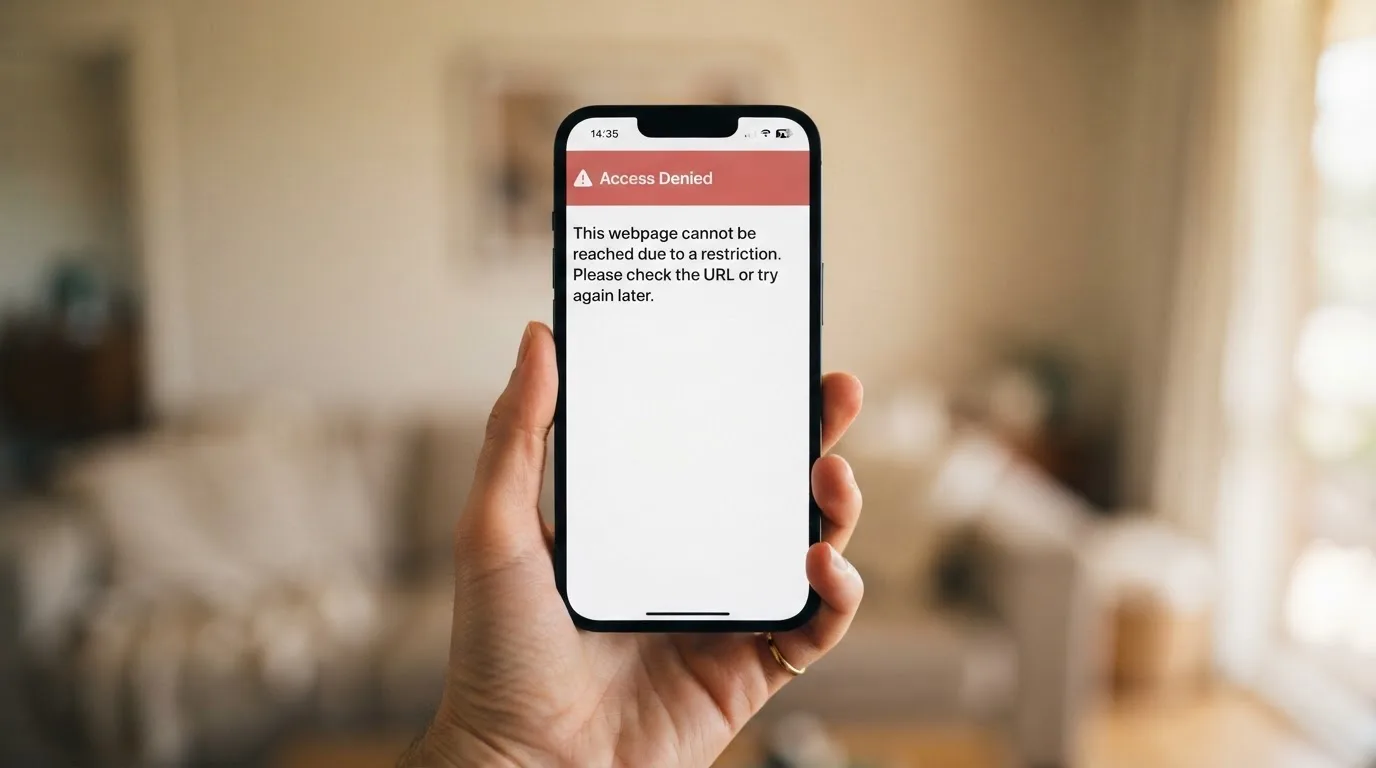
The ACMA’s enforcement toolkit has three components. First, the formal warning: a written notice to an operator identifying the prohibited service, the relevant sections of the Act, and the consequences of continuing. Many of the warnings listed in the table above were published on the ACMA’s website within weeks of being issued. Second, the formal infringement notice: a financial penalty, escalating for repeated breaches. Third, the blocking request to Australian ISPs, which is the lever that has driven the cumulative total of 1,751 blocked sites since November 2019.
The individual player is not prosecuted under the IGA. The Act targets the provider. The reader’s exposure is therefore not criminal; it is civil and practical. An offshore casino can be blocked with a balance still on it, leaving the punter with no Australian-licensed counterpart to escalate to and no chargeback route to invoke. A balance frozen on a site that disappears entirely is a balance lost; the operator does not need to steal it for the punter to lose it.
The credit-and-crypto prohibition that took effect on 11 June 2024 closes one of the offshore operator’s payment routes into Australia. The amendment that took effect that day extended the existing ban on credit cards for online wagering to credit-related products and digital currency, with penalties up to A$247,500 per breach for the operator. A licensed bookmaker accepting an Australian credit-card deposit is committing an offence; an offshore casino accepting one is operating outside the regime entirely.
The 2026 reform — the Interactive Gambling Amendment (Gambling Reform) Bill 2026, passed by Parliament on 19 August 2026 — tightens the inducement side. From 1 January 2027, advertising inducements tied to sign-up offers, “free” bonuses and the like are restricted under tighter rules, and the ACMA’s enforcement powers expand. The bill does not legalise online casino; it does not open a path to a licence. It reduces the marketing surface for the products that remain prohibited.
The cost of the prohibition, for the reader, is the set of choices the prohibition forecloses. The lawful Australian products are sports and race wagering, lotteries and keno. The products most readers are searching for are online casino games and online pokies, and they are not available through any Australian channel. The honest reading of “best new online casino sites Australia” in 2026 is that the answer to the question is none, and the practical question is what an Australian reader is actually meant to do with the gap.
The brands on the ACMA’s published register
RocketPlay: a brand warned under two operator names, four years apart
RocketPlay is the clearest example in the ACMA’s published record of a brand re-emerging under a new operator entity while keeping its customer-facing identity. The ACMA issued a formal warning to Dama N.V. over RocketPlay in May 2022, and a second formal warning to Pulsup Ltd over the same brand in March 2026. The brand name survives; the operating entity behind it has changed.
The practical effect for an Australian reader is that the warning on the brand does not transfer with the operator. A punter who looks up RocketPlay and sees the May 2022 warning against Dama N.V. may conclude that the brand is no longer the subject of an active ACMA matter, only to find the same brand running under Pulsup Ltd’s registration and warned again. The ACMA’s enforcement record tracks the operator, not the surface; the reader’s “is this brand safe to use” question therefore has to track both.
The listings-only marker here refers to Gambling Insider’s industry index, which lists RocketPlay as a current offshore casino brand. The listing is a directory-side claim about the brand’s continued market presence, not a RocketPlay-published fact about features or licences.
The dual-operator history documents that the brand has been the subject of ACMA action twice, under two different operator structures, in four years. The brand name survived; the warning did not.
Level Up Casino: one of six Dama brands in the May 2022 round
Level Up Casino was one of six brands named in a single ACMA formal warning to Dama N.V. in May 2022, alongside Bambet, Dazard, Rocketplay, Wild Tornado and Cobra Casino. The warning was published on the ACMA’s website. The brand has not been the subject of a further published warning since.
The listings-only marker here refers to the Westpac gambling-block page, which lists gambling merchants blocked under the merchant category code on eligible personal cards. The presence of Level Up on that list is a bank-side statement about how Westpac processes transactions to that brand, not a Level Up-published claim about its features or its licence.
The May 2022 warning remains in force. The ACMA has not retracted it, and the absence of a fresh warning does not signal that the prohibition has been lifted.
Woo Casino: the second Dama brand warned in March 2025
Woo Casino drew a formal warning from the ACMA in March 2025, the same year Dama N.V. had been warned over six brands back in May 2022. It is one of two Dama N.V. warnings in 2025; the second was issued in May 2025 over Spirit Casino. Dama N.V. is the named operator in both 2025 warnings, on two distinct brand surfaces.
The no-data marker applies: there is no Australian-facing listings source the page can cite for Woo Casino outside the ACMA’s own warning.
The 2025 warning was published three years after Dama N.V.’s 2022 round, on a brand surface that did not exist in the original action. A punter using Woo Casino in 2026 is using a brand the ACMA has named in the same calendar year the marketing copy was aimed at them.
Spirit Casino: the May 2025 Dama re-warning
Spirit Casino received its ACMA formal warning in May 2025, two months after Woo Casino and three years after the original Dama N.V. round. Dama N.V. is the named operator in both 2025 warnings, on two distinct brand surfaces.
The no-data marker applies: no Australian-facing listings source corroborates Spirit Casino’s continued operation outside the ACMA’s published record.
Two Dama N.V. warnings in three months is the publication pattern, not the enforcement ceiling. The ACMA’s blocking power has not changed between the two warnings.
National Casino: Consolutetish’s first ACMA-named brand
National Casino received a formal ACMA warning in July 2025, with Consolutetish S.R.L. named as the operator. It was one of two brands named in that warning — the other was Bizzo Casino — and the first time Consolutetish S.R.L. had appeared in a published ACMA action.
The listings-only marker refers to three Australian-facing sources: the ACMA’s own register (the source of the warning), AUSTRAC’s published material on remittance reporting, and BetStop’s National Self-Exclusion Register page. None of those is a National Casino-published claim; all three are records in which National Casino appears by virtue of the warning, not by virtue of the brand having a registered Australian presence.
Consolutetish S.R.L.’s first appearance on the ACMA’s register is also the first published signal an Australian reader has to weigh when looking at either of its brands.
Bizzo Casino: two warnings, two operators, four years apart
Bizzo Casino is the only brand in the ACMA’s published record to have been the subject of formal warnings issued to two distinct operator entities. The first, in 2022, named TechSolutions (CY) Group Limited and TechSolutions Group N.V. The second, in July 2025, named Consolutetish S.R.L. — the same operator entity named in the same round over National Casino. The brand has survived the warning; the operating layer underneath it has changed.
The listings-only marker refers to Gambling Insider’s industry index, which lists Bizzo Casino among current offshore casino brands. Again, this is a directory-side claim about market presence, not a Bizzo-published feature statement.
The two-warnings-over-four-years record is the longest compliance history any brand in this table carries.
Ignition Casino: the only Bamboo Media brand on the register
Ignition Casino received a formal ACMA warning in July 2025, with Bamboo Media named as the operator. It is the only brand on the ACMA’s published list named to that operator entity.
The no-data marker applies: no Australian-facing listings source corroborates Ignition Casino’s operation outside the ACMA’s own record.
Bamboo Media has no prior ACMA entries to dilute the signal. The single warning stands on its own.
Instant Casino: an EOD Code SRL warning, February 2025
Instant Casino drew a formal ACMA warning in February 2025, with EOD Code SRL named as the operator. The brand appears alongside the operator in a single warning published on the ACMA’s website.
The listings-only marker refers to two listings sources: the ecoPayz merchant index and the PayID page operated by Australian Payments Plus. Both list Instant Casino in contexts where the brand appears on payment-rail merchant lists; neither is an Instant Casino-published feature claim.
A warning published in February 2025 is still on the ACMA’s register in 2026. The landing page does not mention it.
Jackbit: a Ryker B.V. warning dated April 2026
Jackbit was the subject of a formal ACMA warning issued in April 2026, with Ryker B.V. named as the operator. The same April 2026 warning also named CasinOK. Jackbit is, as of the ACMA’s published record, the most recently warned Ryker B.V. brand on the page.
The no-data marker applies: there is no Australian-facing listings source the page can cite for Jackbit outside the ACMA’s own warning.
April 2026 is the most recent record any brand in this table carries. CasinOK, the operator’s other named brand, sits in the same warning.
Casino Intense: a Sterplay warning, April 2025
Casino Intense drew a formal ACMA warning in April 2025, with Sterplay Holding Ltd named as the operator. The warning is the only published ACMA action naming Sterplay Holding Ltd.
The listings-only marker refers to three Australian-facing sources: AUSTRAC’s published material on remittance reporting, BetStop’s National Self-Exclusion Register page, and Gambling Insider’s industry index. The same caveat applies as elsewhere: these are records in which Casino Intense appears by virtue of the warning, not by virtue of the brand having a registered Australian presence.
Sterplay Holding Ltd has no other ACMA-named brands. The single warning is also the entire record.
Sky Crown: a Hollycorn N.V. warning, named alongside Blue Leo
Sky Crown received a formal ACMA warning in September 2022, with Hollycorn N.V. named as the operator. The same warning named Blue Leo. Hollycorn N.V. operates a broad portfolio of similarly-themed offshore casino brands, and the September 2022 warning is one of several ACMA actions naming operators running multiple skins.
The no-data marker applies: no Australian-facing listings source corroborates Sky Crown’s operation outside the ACMA’s own record.
Hollycorn N.V.’s portfolio context makes the September 2022 warning a sample rather than an isolated observation. The brand is named; the operator runs a great many more.
How fast the ACMA clears new sites: the blocking rate
The arithmetic that matters on a page like this is the rate at which the ACMA is actually moving against the offshore supply, not the headline total.
Since the first blocking request in November 2019, the ACMA has directed Australian internet service providers to block 1,751 illegal gambling and affiliate-marketing websites. From November 2019 to June 2026 is roughly seventy-nine months. On those inputs, the lifetime blocking rate is approximately twenty-two sites per month — just over five sites every week.
The figure is a band, not a single number. Blocking has not been uniform across the period: rounds of twelve or more sites appear in the published record in 2024, 2025 and 2026, and other months see none. The rate is an average over the full enforcement period, and what a reader can carry from it is the cadence rather than the total: five sites a week, every week, since November 2019.
Frequently asked questions about new online casino sites in Australia
How can someone tell how new an online casino site actually is?
A WHOIS lookup shows when the domain was registered — that date can pre- or post-date the brand by years. The operator’s “About” page usually states a launch year, but the same operator often runs multiple brands with different stated years. The cleanest external signal is the ACMA register: a warning there cannot post-date the marketing launch.
Do brand-new casino sites carry more risk than established ones?
The risk a reader actually cares about is a balance lost when the site is blocked, regardless of brand age. The rebrand risk is different: a brand newly launched under a new operator entity carries no ACMA history, while the operator behind it may already have been warned under another brand surface.
Is it legal for a newly launched online casino to accept Australian players?
No. Online casino games and online pokies are a prohibited interactive gambling service under the Interactive Gambling Act 2001, and no state or territory issues a licence for them. An offshore licence (Curaçao, Malta, Anjouan) does not change that. The legal position is the same whether the brand launched last week or five years ago.
What should someone check before trusting a casino site that only just launched?
First, the ACMA’s register of formal warnings. Second, the operator entity: a brand run by an operator previously warned under another surface is, in regulatory terms, a familiar operator under a new name. Third, the payment rails — a site asking for credit cards or crypto signals it operates outside the Australian rules.
Can a new mobile casino app be verified as genuine before downloading it?
For an Australian reader, yes, in one step: an app offered through the App Store or Google Play under the operator’s registered name, linking back to its Australian-facing website, is verifiable through those stores’ own publisher records. Anything offered as an APK, through TestFlight, or via a Safari share-sheet install sits outside both stores’ review.