
Inclave casinos in Australia: what the list really contains, and why the list itself does not save anyone
The phrase “Inclave casinos list Australia 2026” turns up in search results because a cluster of offshore operators share one login system, and aggregators publish those brands together as if that were a recommendation. It is not. Every casino offering online pokies, table games or other internet casino product to a person in Australia is operating against the Interactive Gambling Act 2001, regardless of whether the player logs in through a shared credential, a one-off email form, or a thumbprint on a phone. The login mechanism is plumbing. The legal position is the law. The cost of confusing the two falls on the player who finds a balance locked behind a blocked site, a complaint address in Curaçao, and no Australian regulator to escalate to. This page walks through what the list actually contains, who has acted against each brand, and what the choice to use one of them costs in 2026.

Current as of 7 November 2026 and reconciled against the Australian Communications and Media Authority’s published formal warnings register.
Table of Contents
- The block rate: how fast the ACMA is removing access
- What an Inclave login actually connects
- The cost of an offshore session that the list does not mention
- The legality shelf, stated plainly
- The eleven brands on the list, in the order the ACMA has acted
- Landscape
- What an Australian player actually has to work with
- What the responsible-gaming picture looks like from inside an Inclave network
- The verifiable position
- If a balance is held at one of the brands above
- Help and further information
- The cost, restated
- Frequently asked questions
The block rate: how fast the ACMA is removing access
By the time the most recent count was published, the ACMA had asked Australian internet service providers to block 1,751 illegal gambling and affiliate marketing websites since the very first blocking request in November 2019, and more than 230 unlicensed services had withdrawn from the Australian market since enforcement was widened in 2017. The arithmetic of that record is the cleanest measure of how seriously the regulator treats the offshore trade.

First blocking request: November 2019. Total blocked by mid-2026: 1,751. That is a band of roughly 260 sites per calendar year removed from reach on average across the years since the regime began — though the rate stepped up after the 2017 amendments and the launch of the blocking tool itself in 2019, so the early years carry a thinner share. The relevant figure for someone reading the page is not the precise year-by-year count, which the ACMA publishes in rounds rather than as a clean series, but the band itself: somewhere between one and three illegal sites pulled from Australian reach every working day on average since the regime took effect. A reader who treats that band as background noise is treating a steady stream of enforcement actions as background noise, which is what the offshore marketing pages rely on them doing.
The most recent published round, reported on 26 June 2026, named twelve additional services: 7Signs, ChromaBet, Donbet, Duospin, Freshbet, Slots Gem, Jacks Club, Lucky Start, Pointsbetz, Spinrise, Vinyl Casino and Wildsino. Each of those was on an active Australian-accessible URL the day the round was announced. Each becomes unreachable through the largest residential ISPs shortly afterwards, unless the operator rotates to a fresh mirror, which the regulator then names in a later round. The cycle is the page, not an exception to it.
What an Inclave login actually connects
Inclave is a shared identity layer: a single username, password and biometric handle that the same operator network reuses across several brands. The mechanism is real and it works as described. What it does not do is change any of the legal, financial or protective positions that apply when an Australian opens one of the sites behind it.
A single credential across several brands means three things in practice. The same email and password unlock the cashier, the bonus page and the live chat widget on brand A, brand B and brand C, because the back end treats them as the same player account wearing a different logo. KYC documents uploaded once propagate across the network so the player does not re-submit a passport at every site. And the wallet is per-brand, not shared — the balance at one casino does not appear at its sister site, which is the single most common misconception players arrive with when they first meet the network.
The login system is not the product. The product is what the casino sells on the other side of it: casino games, pokies, live dealer tables. None of those are licensable in Australia. The list of brands using Inclave is therefore not a list of legal alternatives to a domestic casino — there is no domestic online casino to be an alternative to — but a list of operators the ACMA has been progressively working through.
The cost of an offshore session that the list does not mention
Three costs arrive with the first deposit at an offshore Inclave casino, and none of them appear on the brand’s own marketing page. They are worth naming before any comparison of operators, because the differences between individual brands are smaller than the gap that any one of them shares with a legal wagering service.
The first cost is the one most players never budget for: the site can be blocked while the balance is still on it. The ACMA’s blocking requests do not require a casino to settle open accounts. Withdrawal policies at the brands named below vary from days to weeks; a block during that window can leave a player waiting on a Curaçao-licensed operator whose domain now fails to load through their home ISP. Some mirrors are reachable through a VPN, but accessing an ACMA-blocked site from behind a VPN is itself a posture most Australian consumer-protection bodies take a dim view of.
The second cost is the absence of Australian complaint recourse. A dispute over a withheld withdrawal at a licensed Australian wagering service goes to a state or territory regulator, then to an external dispute resolution scheme. At an offshore operator, the complaint goes to the licensing authority the operator displays on its footer — usually Curaçao, occasionally Anjouan — and the player funds the cost of chasing it. The footer licence is real as a legal instrument in that jurisdiction. It is not a consumer protection for an Australian.
The third cost is the one nobody frames in marketing language: the same shared identity that lets a player log into four sister casinos with one credential also lets those four casinos share a player profile, a self-exclusion flag (if any), and a deposit-limit setting that defaults to whatever each brand individually sets. There is no network-wide limit knob. H2 Gambling Capital’s 2025 report estimates that Australians lose about A$3.9 billion a year to illegal gambling sites, and that the share of gambling going through legal channels fell from 74% in 2021 to 64% — a ten-point migration toward the offshore side of the market in four years. The number is a national one. The mechanism behind it is a series of small individual choices that look free at the moment of signing up.
Summary of ACMA Actions by Parent Company
| Parent Company | Warning count | Brands warned |
|---|---|---|
| Dama N.V. | 4 | Level Up, RocketPlay, Woo, Spirit |
| Consolutetish S.R.L. | 2 | National, Bizzo |
| Pulsup Ltd | 1 | RocketPlay |
| Hollycorn N.V. | 1 | Sky Crown, Blue Leo |
The legality shelf, stated plainly
The Interactive Gambling Act 2001, as strengthened by the Interactive Gambling Amendment Act 2017, makes it an offence to provide online casino games, online pokies or in-play betting to a person physically in Australia. No state or territory issues an online casino licence. What is licensed is wagering on racing and sport placed before the event, lotteries and keno — in practice the Northern Territory Racing and Wagering Commission, a part-time body of 52 bookmakers including Sportsbet, Bet365 and Ladbrokes, that has no full-time staff and meets monthly in Darwin. The minimum age is 18.
The ACMA is the regulator that acts on the offshore side. It investigates complaints, issues formal warnings under the Act, and can direct Australian ISPs to block non-compliant sites at the DNS level. The player is not prosecuted; the Act targets the provider. That distinction does not change the absence of recourse for the player. A formal warning carries weight because it precedes a block, and a block is what actually changes the URL bar for an Australian.
BetStop, the National Self-Exclusion Register, has been live since August 2023 and binds only Australian-licensed online and phone wagering services. An offshore casino is not connected to it. Self-excluding through BetStop does not stop a player opening an account at a brand on this list. The National Gambling Helpline on 1800 858 858 is free, 24/7, with chat at Gambling Help Online.
The payment side of the law completes the picture. Since 11 June 2024, Australian-licensed online wagering services have not been allowed to accept credit cards, credit-related products or digital currency, with penalties up to A$247,500 for operators that breach the rule. Legal deposit routes for licensed wagering are debit card, bank transfer, PayID and Osko, and BPAY. An offshore site asking for a credit card or a crypto deposit is asking for payment in a form Australian law does not permit a licensed operator to take — which is itself a signal of which side of the line the operator sits on.
The 2026 reform is worth naming so it does not get mistaken for something already in force. The Interactive Gambling Amendment (Gambling Reform) Bill 2026 passed Parliament on 19 August 2026; its advertising and inducement measures commence on 1 January 2027. It is law with a start date. It is not yet operating on a page read in 2026.
The eleven brands on the list, in the order the ACMA has acted
The eleven operators below are listed because the ACMA itself has issued a formal warning over each for offering prohibited interactive gambling services to Australians. They are not ranked for safety, payout speed or any other consumer criterion — no such ranking is possible for a prohibited product, and no bonus terms are reproduced here, because the only sources for them were affiliate marketing pages. The order is the ACMA’s chronological sequence of formal warnings, not an endorsement.
RocketPlay — warned twice, under two different parent companies
RocketPlay is the brand the ACMA has chased twice. The first formal warning went to Dama N.V. in May 2022, alongside five other Dama brands. The second went to Pulsup Ltd in March 2026 over Rocketplay, an Australian-facing mirror. Two operators, one consumer-facing brand, four years between actions. Each warning is published on the ACMA’s own register, in the regulator’s own words.
The brand surfaces on Inclave-related aggregators in the listings the marketing pages maintain. The presence on those listings is not the same thing as the brand being endorsed by them. It is a record of where the brand is available to log into.
Level Up Casino — Dama N.V., May 2022
Level Up was one of six Dama N.V. brands named in the May 2022 formal warning — Bambet, Dazard, Level Up, Rocketplay, Wild Tornado and Cobra Casinos. The list itself is the warning: six brands, one corporate parent, one regulator action. A reader who lands on any of them through a single Inclave credential is, in the ACMA’s published record, on a site the regulator has already named.
The Dama cluster has since grown. Dama N.V. was warned again in March 2025 over Woo Casino and again in May 2025 over Spirit Casino. Same parent, different brands, different years. The pattern is the relevant datum, not the calendar dates.
Woo Casino — Dama N.V., March 2025
Woo Casino was named in the Dama N.V. formal warning published in March 2025. The brand has continued to operate through its own domain and through aggregator listings that present it alongside other Inclave-network brands. The ACMA’s March 2025 warning is the regulator’s published position; nothing in that record softens in the eighteen months since.
Spirit Casino — Dama N.V., May 2025
Spirit Casino was the second Dama N.V. brand named in 2025, two months after Woo Casino. Two warnings to the same corporate parent in a single calendar year is the ACMA working through an operator that has not changed its posture toward Australian players.
National Casino — Consolutetish S.R.L., July 2025
National Casino was named in a July 2025 formal warning to Consolutetish S.R.L., alongside Bizzo Casino in the same regulatory action. The brand surfaces on industry listings that track the Inclave login network. The ACMA record is the only one that matters for the legal position; the listings record is where a curious player is most likely to first meet the brand.
Bizzo Casino — Consolutetish S.R.L., July 2025, after a 2022 warning to a different owner
Bizzo Casino has the longest ACMA history on the list. The first formal warning was issued to TechSolutions (CY) Group Limited and TechSolutions Group N.V. in 2022. The July 2025 warning went to Consolutetish S.R.L., a different corporate entity. The brand continued to operate across the change of operator, which is itself the most common offshore pattern: a regulator acts against a parent, the brand re-emerges under a new parent, the regulator acts again. The aggregator listings treat the brand as continuous. The ACMA register treats it as two separate actions against two separate operators.
Ignition Casino — Bamboo Media, July 2025
Ignition Casino was named in the same July 2025 enforcement round, with the formal warning going to Bamboo Media. The brand’s appearance in Inclave-related listings reflects the operator network it sits inside, not any endorsement of its Australian availability.
Instant Casino — EOD Code SRL, February 2025
Instant Casino was the subject of a February 2025 formal warning to EOD Code SRL. The brand appears on payment-method listings and on Inclave network lists maintained by affiliate sites. Neither listing changes the regulator’s published position, which is that the brand is offering prohibited services to Australians.
Jackbit — Ryker B.V., April 2026
Jackbit was named in an April 2026 formal warning to Ryker B.V., alongside CasinOK in the same action. Ryker B.V. is one of the more recent corporate parents to appear on the ACMA register. The brand surfaces on Inclave aggregators without any acknowledgement of the warning.
Casino Intense — Sterplay Holding Ltd, April 2025
Casino Intense was named in an April 2025 formal warning to Sterplay Holding Ltd. The brand appears in affiliate-maintained Inclave lists and in industry tracking. It does not appear in the BetStop register, because BetStop binds only Australian-licensed services and this is not one of them.
Sky Crown — Hollycorn N.V.
Sky Crown was the subject of a formal warning to Hollycorn N.V., published by the ACMA alongside the warning for Blue Leo. The PDF is on the regulator’s site, dated September 2022. Hollycorn N.V. is one of the more active operators across the Inclave ecosystem, and the formal warning is the regulator’s standing record on the brand. The brand continues to surface on third-party Inclave lists.
Landscape
The only comparison a regulator’s record supports is the regulator’s record itself. The table below lines the brands up against the published warning, the named operator, and the date, with the additional column showing where each brand surfaces outside the regulator’s own publications.
| Brand | ACMA action and date | Operator named by the ACMA | Subject support |
|---|---|---|---|
| RocketPlay | Formal warning, March 2026 — earlier Dama N.V., May 2022 | Pulsup Ltd (March 2026); Dama N.V. (May 2022) | Listings-only |
| Level Up Casino | Formal warning, May 2022 | Dama N.V. | Listings-only |
| Woo Casino | Formal warning, March 2025 | Dama N.V. | — |
| Spirit Casino | Formal warning, May 2025 | Dama N.V. | — |
| National Casino | Formal warning, July 2025 | Consolutetish S.R.L. | Listings-only |
| Bizzo Casino | Formal warning, July 2025 — earlier TechSolutions, 2022 | Consolutetish S.R.L. (July 2025); TechSolutions (CY) Group Limited and TechSolutions Group N.V. (2022) | Listings-only |
| Ignition Casino | Formal warning, July 2025 | Bamboo Media | — |
| Instant Casino | Formal warning, February 2025 | EOD Code SRL | Listings-only |
| Jackbit | Formal warning, April 2026 | Ryker B.V. (alongside CasinOK) | — |
| Casino Intense | Formal warning, April 2025 | Sterplay Holding Ltd | Listings-only |
| Sky Crown | Formal warning, September 2022 | Hollycorn N.V. (alongside Blue Leo) | — |
The table is read across the row, not down a column. Each row is its own discrete ACMA action; the columns do not aggregate into a market view. What the column set shows in aggregate is that the warnings cluster around a small set of recurring parent companies — Dama N.V. alone accounts for four of the eleven — and that the operator landscape is thinner than the brand count suggests. Where the subject-support column is blank, the brand does not appear on the kind of third-party listing research surveyed for this page. Where it shows “Listings-only”, the brand surfaces on affiliate or industry pages whose independence from the operator is not established by the listing alone.
What an Australian player actually has to work with
The legal Australian market for online wagering is narrower than most search results imply. Sports betting and racing, placed before the event, are licensed and regulated. Lotteries and keno are licensed. Online casino games and online pokies are not licensed in any state or territory, which is why every brand on this list operates offshore.
For the licensed side of that market, the deposit rails are deliberately conservative. Debit card, bank transfer, PayID and Osko, and BPAY are the four channels a legal operator can offer. Osko delivers a bank-to-bank transfer in under a minute, 24/7, addressed either to a BSB and account number or to a PayID, and more than 100 Australian financial institutions participate. PayID shows the registered account name before the transfer is sent — an Australian Payments Plus warning makes the point sharply: a PayID on an illegal gambling site is almost certainly a scam site. BPAY, run by Australian Payments Plus since the September 2021 ACCC-authorised merger, has handled bill payments since 18 November 1997 and is offered by more than 95,000 businesses through over 140 banks.
Credit cards and credit-related products are off the table for licensed wagering. The rule came in on 11 June 2024. Apple Pay, Google Pay and Samsung Pay together accounted for around 45% of all card payments in Australia by number at the end of 2025, so the rule has practical reach: a digital wallet funded by a credit card is a credit-related product for these purposes, and the wallet itself is constrained accordingly. The big four Australian banks each offer a gambling transaction block in their app — ANZ, Commonwealth Bank and Westpac all publish them — that stops authorisation at the merchant category code level, with the standard caveat that no block is a perfect filter and some legitimate transactions can be caught in the net. ANZ’s block applies through digital wallets, not just the physical card; turning it off carries a 48-hour waiting period. These blocks are the consumer-side counterweight to the marketing machine on the other side.
AUSTRAC’s threshold transaction reporting rule, requiring reports on transfers of A$10,000 or more, applies only to physical cash. Ordinary electronic bank transfers do not trigger a per-transaction report, regardless of the amount sent. That detail matters because it is often quoted the other way round — and the player making a bank transfer to any of the brands above is not crossing any reporting threshold by doing so.
What the responsible-gaming picture looks like from inside an Inclave network
The single feature that distinguishes an Inclave login from a per-site email-and-password account is the cross-site identity. A player logging into Woo Casino and finding the same email already verified at Spirit Casino is logged into a network, not a casino. The marketing calls this convenience. The wellbeing reading is more specific.
A single login across several sites means there is no per-network deposit cap. Each brand sets its own deposit limit, in its own currency, against the same player. The deposit-limit settings do not aggregate. A player who has set a A$200 weekly limit on one of the sister sites can deposit a fresh A$200 at each of the other four without the first limit registering. The aggregator’s tracking is the player’s own tracking.
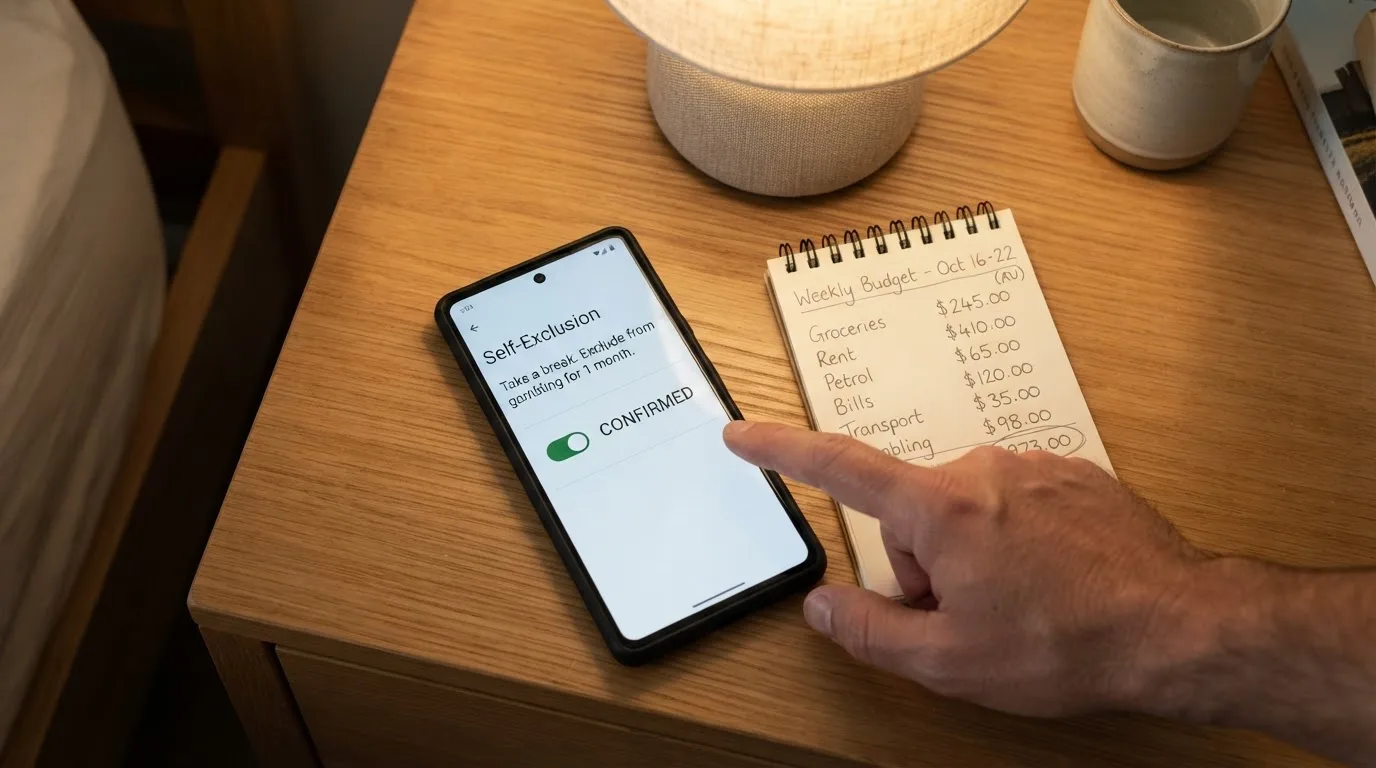
Self-exclusion is the same shape. BetStop covers Australian-licensed services only. A player who has registered with BetStop can open an account at any of the eleven brands on the day after registration, because none of them is plugged into the register. The self-exclusion function on each individual brand — if the brand offers one — applies only to that brand. The shared identity layer does not propagate a self-exclusion across the network.
The ACMA’s published record carries no per-brand wellbeing assessment, because the regulator’s remit stops at the legality of the offering rather than the conduct of the player. The player-side advice is the same advice that applies to any offshore gambling site: track the total spend manually across every site you log into, set a single weekly or monthly cap that you treat as the network cap, and assume that any tool the site offers will not extend beyond that site’s own logo.
The verifiable position
The verifiable position is the regulator’s, because the regulator is the only party with the authority to act and the publication to match. The Australian Communications and Media Authority has, as of mid-2026, asked Australian ISPs to block 1,751 illegal gambling and affiliate marketing websites, warned 230 or more services off the market, and named every brand above in a published formal warning. Each warning is on the ACMA’s own site, in a dated publication, naming a corporate parent. There is no parallel register on the brand side. The brand-side footer licence — usually Curaçao, sometimes Anjouan — is a real licence in its jurisdiction and not a consumer-protection arrangement for Australian players. The eleven brands on this list operate offshore; each has been the subject of an Australian enforcement action; none is licensed to offer online casino games to a person in Australia. The list itself, whether published by the brands, by an Inclave-focused aggregator, or by an affiliate marketing page, does not change any of that.
The remainder of this page is the practical shape of that position: what to do if a player has an open balance with one of the brands, where the help lines sit, and what the answer to the most common questions about the network looks like.
If a balance is held at one of the brands above
Withdrawal timelines at offshore casinos are not standardised and not subject to Australian consumer law. The first step is to read the brand’s own withdrawal terms before requesting the payout, paying particular attention to the section on identification — operators will often request fresh documents even when the original KYC has been completed, and the additional request is the most common delay point.
If a withdrawal is refused, the complaint path runs through the licensing authority in the footer of the site. The response time at the Curaçao Gaming Control Board is not the same as at an Australian state regulator; a player should plan for months rather than weeks. A formal complaint to the ACMA about the operator is appropriate because the ACMA is the regulator that has already named the brand in a formal warning, and a fresh complaint adds to the record that drives the next blocking round.
If the player’s domain is already blocked, mirror sites under the same brand often work through the same wallet backend. The KYC documents are shared across the network, which means a verified account at one mirror can usually withdraw through another. The catch is the legal posture: accessing an ACMA-blocked site from behind a VPN is itself a posture most Australian consumer-protection bodies take a dim view of, and the cure is not obviously better than the condition.
Help and further information
- National Gambling Helpline: 1800 858 858, free, 24/7, with chat at Gambling Help Online.
- BetStop, the National Self-Exclusion Register, covers Australian-licensed online and phone wagering services; registration does not extend to offshore brands.
- The Australian Communications and Media Authority publishes formal warnings and blocking notices on its own site; the formal warning register is the primary source for the dates and operators named on this page.
- The Australian Transaction Reports and Analysis Centre (AUSTRAC) operates the financial-intelligence side of the regime; the threshold transaction reporting rule applies to physical cash and not to ordinary electronic bank transfers.
The cost, restated
The cost is not the deposit. The cost is the absence of an Australian complaint body when the withdrawal stalls. The cost is the block that can arrive while a balance sits on the other side of it. The cost is the network identity that gives every sister casino the same verified KYC without giving the player a network-wide deposit limit or a network-wide self-exclusion. The list itself is a record of brands the ACMA has acted against, not a market map. Reading it as a market map is the mistake the marketing pages are designed to encourage.
Frequently asked questions
Is a casino using the Inclave login system legal for an Australian player to use?
No. The legality of an online casino in Australia does not depend on the login system. Under the Interactive Gambling Act 2001, providing online casino games or online pokies to a person in Australia is an offence; no state or territory licenses online casino games, so the licence the operator displays on its footer is a licence in another jurisdiction. The ACMA enforces the rule from the Australian side; the player is not prosecuted, but the site can be blocked while a balance remains.
What does the Inclave system actually connect between different casino sites?
A single credential, biometric handle and KYC profile that propagates across every brand in the operator’s network. The same email and password unlock each sister site’s cashier, bonus page and live chat. The same uploaded documents satisfy verification at each of them. The wallet and the bonus balance, however, do not share — those are per-brand, and the misconception that they do is the most common one new players arrive with.
Do new Inclave casinos share the same account balance as older ones on the network?
No. The wallet is per-brand. A A$200 balance at one sister site is not visible, withdrawable or playable at another, even though the same username and password log into both. The shared identity is the login and the verification layer. The money sits where it was deposited, in the brand-specific cashier.
Is signing up once through Inclave different from creating a separate account at each site?
The account-creation step is the only one that is genuinely shared. Once the Inclave credential is set up, every network brand recognises it, which removes the per-site registration form but does not change the underlying per-brand account structure. Verification documents, deposit history, withdrawal requests and loyalty points remain per-brand; the network sees the player as one identity, and the player sees the network as a stack of separate casinos.
How can someone track total spend across several sites linked by one Inclave login?
The shared identity layer does not aggregate spend, so the tracking is the player’s own. A weekly or monthly spreadsheet of deposits and withdrawals per brand, totalled across the network, is the closest available approximation of a network deposit cap. The bank-side gambling transaction blocks at ANZ, Commonwealth Bank and Westpac can refuse authorisation at the merchant category code level — useful as a hard ceiling, though the banks state explicitly that not every gambling transaction will be caught and some legitimate ones may be refused in error.
What should raise concern about a casino that only recently joined an Inclave list?
Three things. First, the ACMA’s published register of formal warnings is the right place to confirm whether the parent company has been the subject of a prior action; a new brand on an old parent’s network inherits the parent’s record. Second, the licensing jurisdiction in the footer is the only regulator with practical authority over the operator, and a Curaçao or Anjouan licence resolves disputes in that jurisdiction, not in Australia. Third, the absence of any Australian-facing payment rail — debit card, bank transfer, PayID, BPAY — is a strong signal that the site is operating outside the Australian framework, because legal Australian wagering services cannot accept credit cards, credit-related products or digital currency, and an offshore brand asking for those is asking for payment in a form Australian law does not permit.